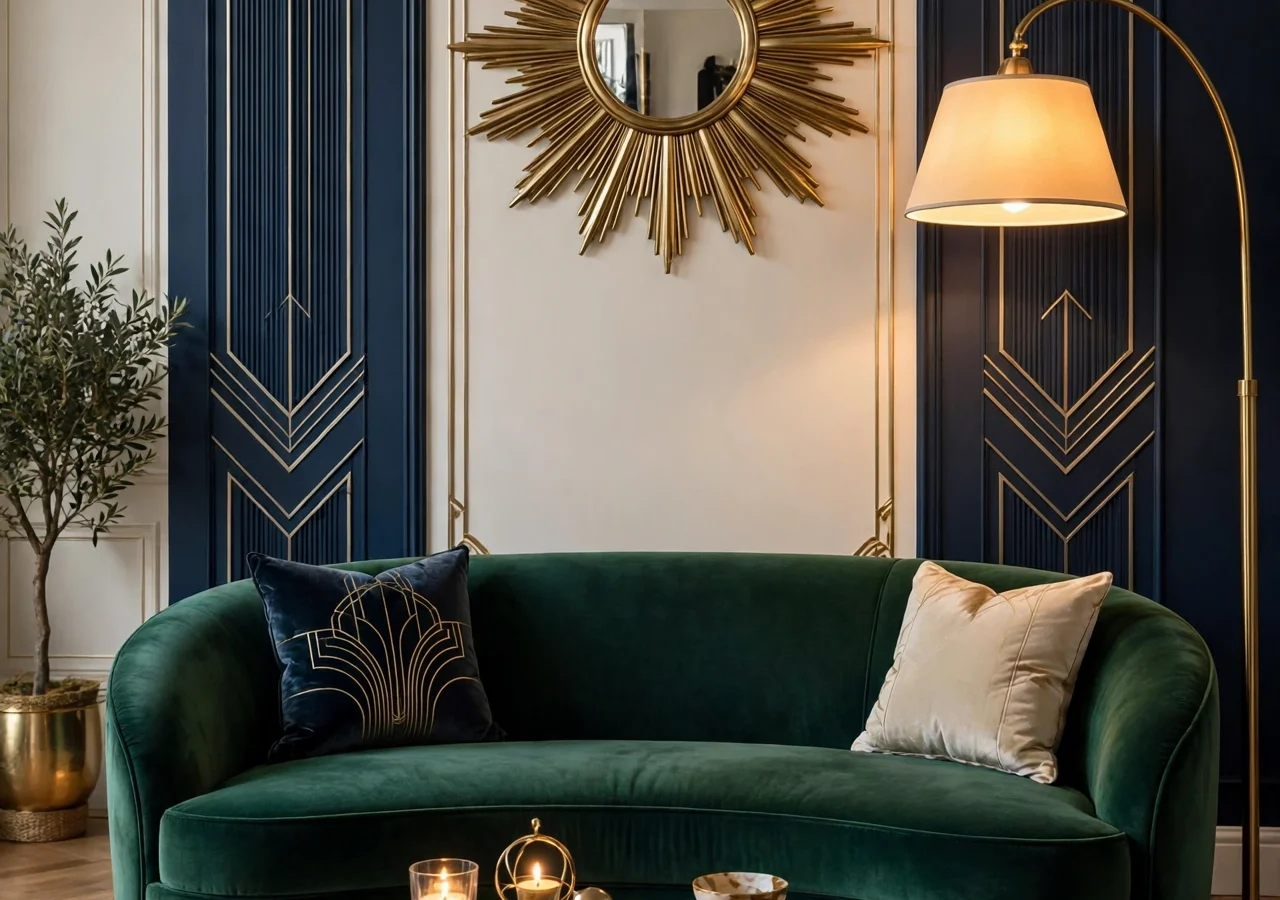
Some trends whisper. This one arrives in brass and black and announces itself at the door. Neo Deco, the modern revival of 1920s Art Deco style, is having its biggest moment in a century, and it fits 2026 homes better than you might expect. This is not the museum version of Deco, all roped-off antiques and untouchable lacquer. It is Deco softened for real life: geometric shapes, warm metallics, and high-contrast colour palettes, mixed freely with the comfortable furniture you already own.
The original movement loved luxury, but it was never really about spending a fortune. The 1920s designers used geometry and contrast to make rooms feel glamorous, and that trick still works. A sunburst mirror, a velvet cushion in deep emerald, a brass lamp against a dark wall, and suddenly the room has a point of view. You do not need a penthouse or a renovation budget to get there.
This guide walks through the six moves that matter, from shapes and metals to the small-dose rule that keeps the whole thing feeling modern. Each one is something you can start this weekend, with a mix of investment pieces and honest budget swaps.
Let the Geometry Lead: Shapes First, Furniture Second
 Save
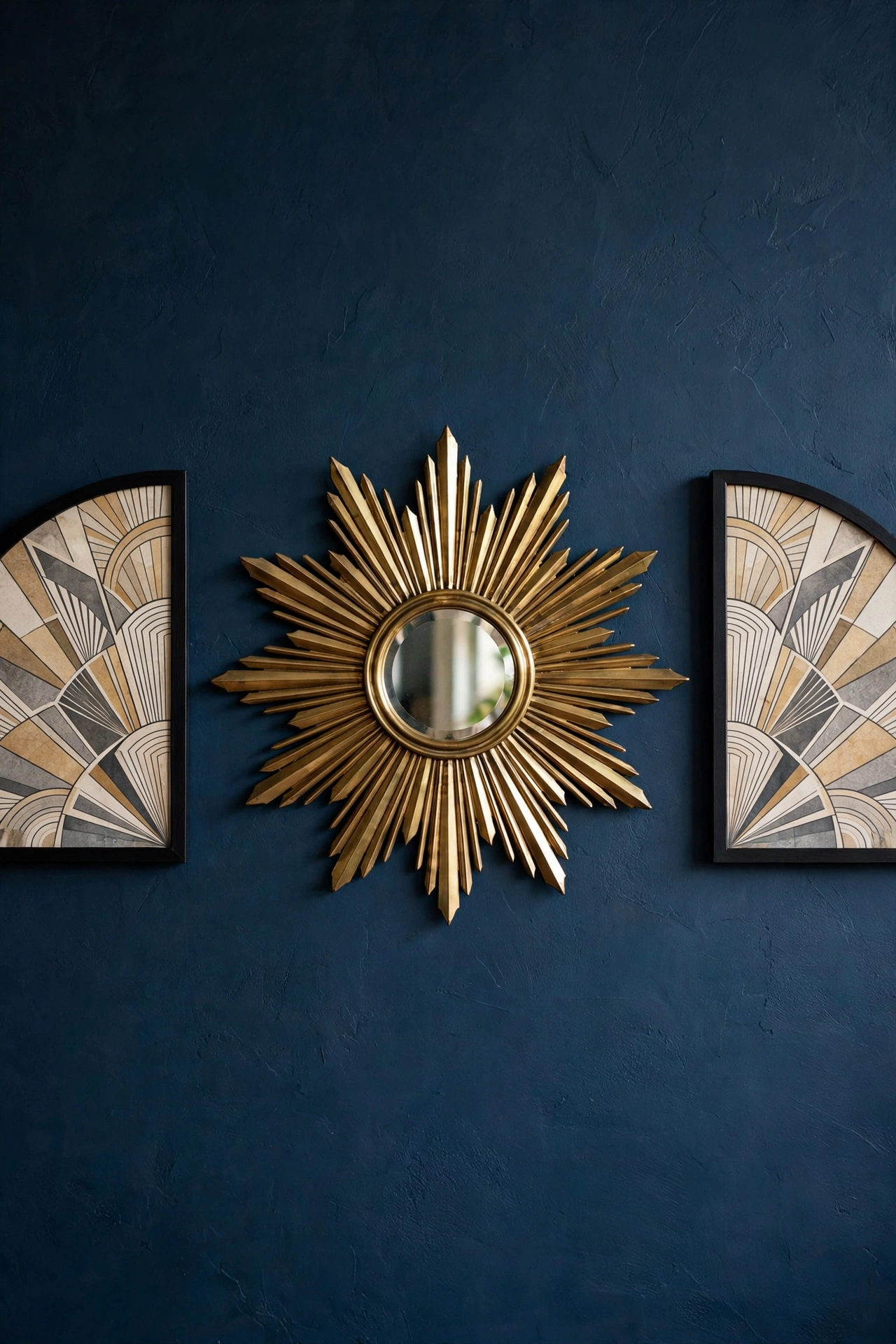
If you take one thing from Deco, make it the shapes. The style is built on confident geometry: fans, sunbursts, chevrons, arches, stepped skyscraper profiles, and bold symmetry. When a room feels flat or shapeless, it is usually because everything in it is a soft rectangle. Adding even two geometric pieces changes the whole composition.
Start with the wall. A sunburst mirror above a console, a fan-shaped print in a slim black frame, or a set of three arched prints in a row will pull the eye upward and give the wall a focal point it probably lacks. Mirrors work hardest here, since they bounce light and double whatever greenery or candlelight sits across from them. Look for a mirror with radiating brass rays or a stepped black-lacquer frame rather than a plain round one.
Floor-level geometry matters too. A rug with a chevron or bold fan pattern anchors a seating area and sets the Deco tone before you add a single accessory. If a patterned rug feels like a lot, try a small geometric runner in an entryway or along the side of a bed. It reads as intentional without demanding the room match it.
Furniture shapes count as well. Curved velvet armchairs, a barrel-back dining chair, or an oval-backed headboard all nod to Deco without shouting it. Symmetry is your quietest tool: matching lamps on either side of a console, or a pair of chairs flanking a fireplace, gives instant structure. Styling tip: when you are deciding between two accessories, pick the one with the stronger silhouette. Deco rewards bold outlines over fussy detail.
Warm Metals Make the Room Glow
 Save
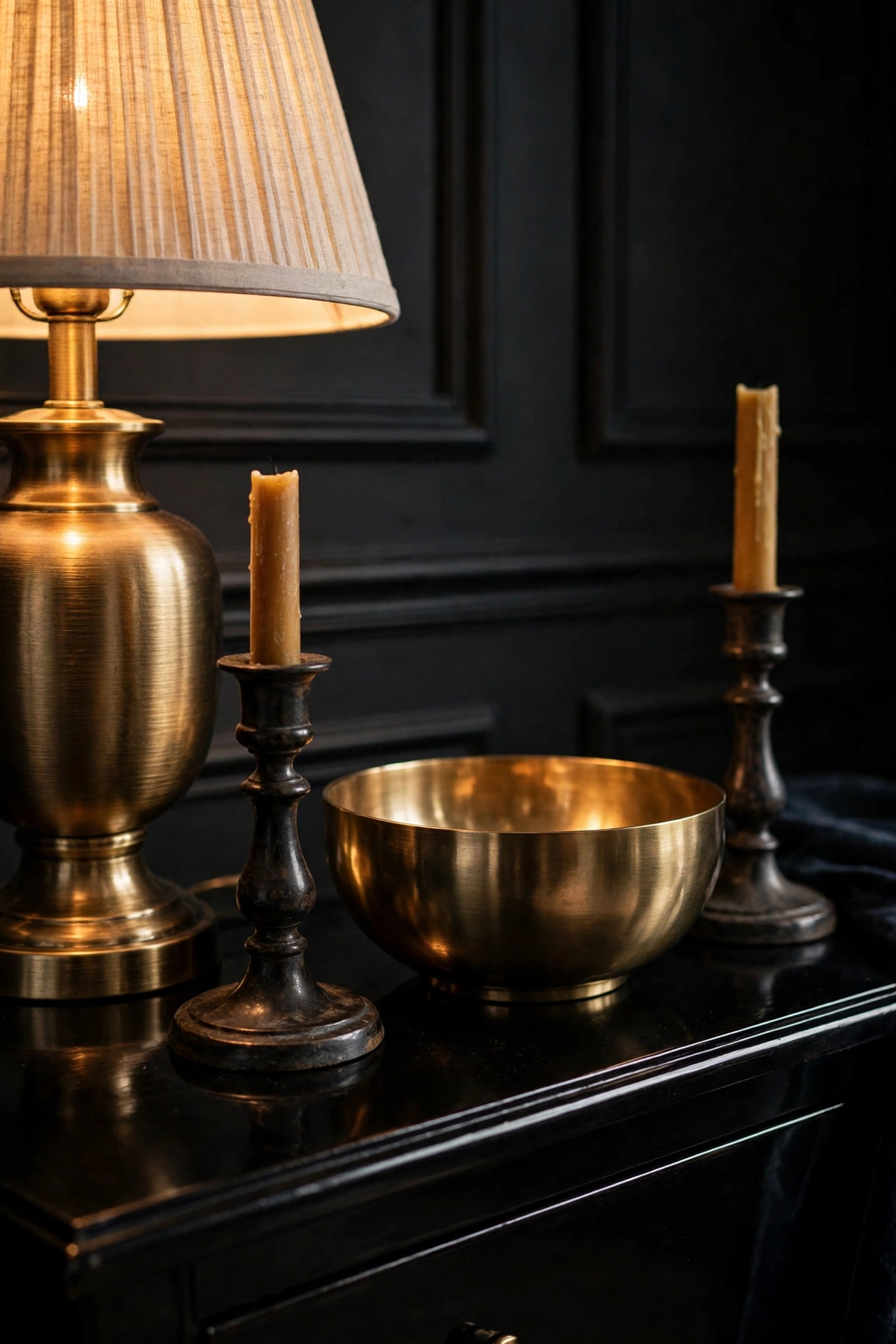
Deco was born metallic, and Neo Deco keeps that warmth at the centre. Brass is the star of the revival, in finishes that range from brushed and satin to polished and patinated. Champagne gold runs close behind, a little softer and easier to mix into rooms that are not fully committed to glamour. These metals read warm and welcoming where chrome can feel cold, which is why they work so well in homes that are otherwise neutral and relaxed.
The trick is placement. Metals do the most when they sit against something dark: a brass floor lamp beside a navy sofa, a gold picture light over a black console, brushed-brass handles on deep green cabinets. The contrast is what makes the metal glow, and it is also what keeps a room from looking like a jeweller’s window. One or two confident metallic pieces per room is usually the sweet spot.
Vary the finish on purpose. All polished brass can feel showroom-flat; mixing a brushed-brass lamp with a polished-brass bowl and a blackened-bronze candlestick gives the metalwork a collected feel. This layering is what separates modern Deco from the matchy-matchy sets of the original era. Budget swap: keep your furniture and swap the hardware. Brass cabinet pulls, door handles, and curtain rods are cheap, reversible, and surprisingly transformative. The room looks redecorated for the price of an afternoon.
The link to warm palettes runs deep, and warm earthy palettes sit beautifully under Deco metallics when you want the look to feel grounded rather than glossy.
Build on High Contrast: Black, Ivory, and Smoky Neutrals
 Save
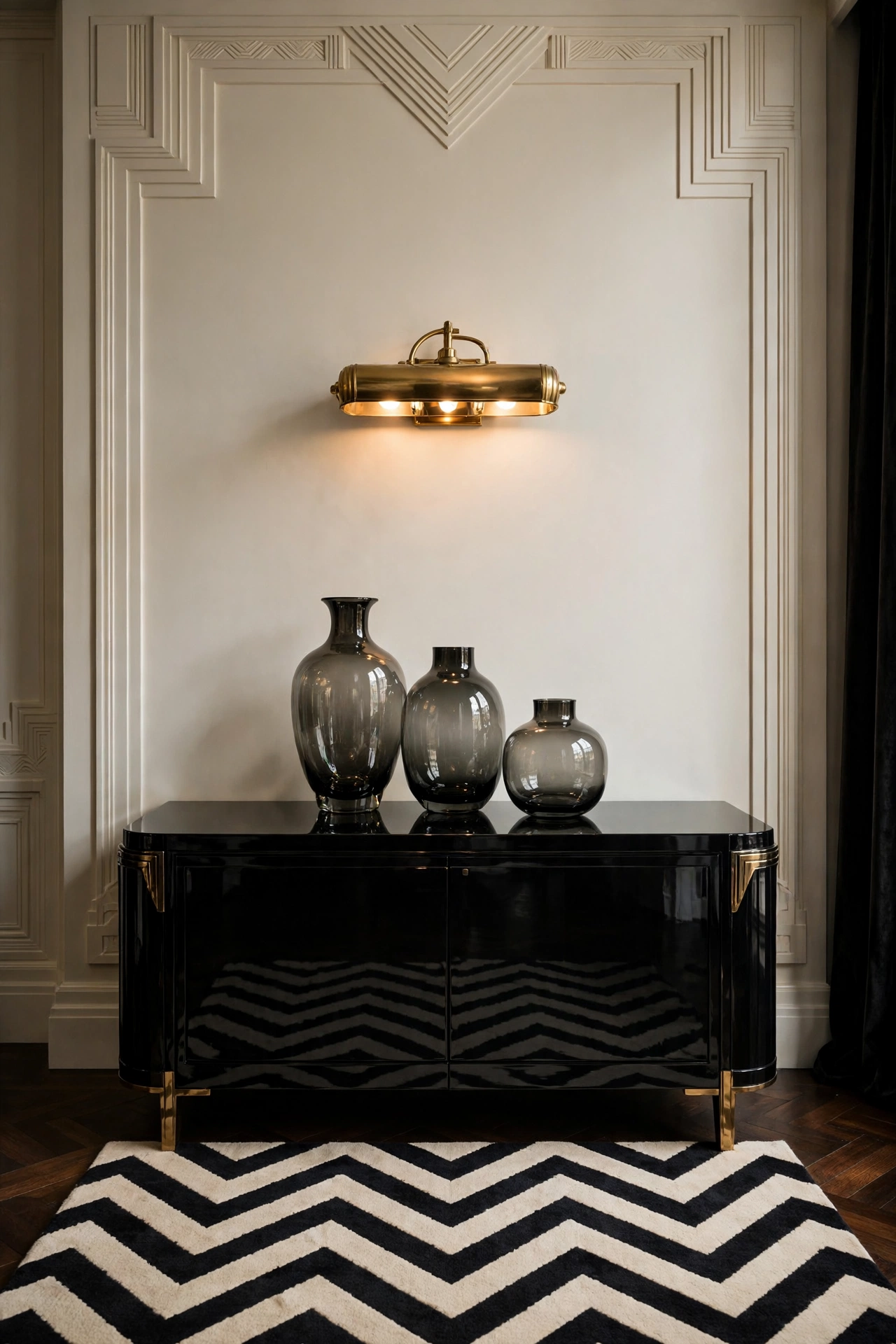
Deco interiors are rarely built on beige. The classic foundation is high contrast: glossy black against ivory, deep ink-blue against warm white, charcoal against cream. That contrast is the engine of the whole style, so get the background right before you fall in love with accessories. If your walls are already white, you are halfway there; the missing piece is usually the dark anchor.
A black console, a charcoal velvet sofa, or a single ink-blue accent wall gives the metallics something to shine against. You do not need to paint everything. One dark wall behind a brass mirror, or a black media unit against pale walls, creates enough tension to carry the look. Keep ceilings and at least some trim light so the contrast feels dramatic rather than heavy.
Smoky neutrals bridge the two extremes. Greige, warm taupe, and smoked glass soften the black-and-ivory pairing so it does not feel like a film noir set. A taupe wool rug under a black coffee table, or smoked-glass vases on an ivory shelf, keeps the contrast livable.
Metals and what they love
| Metal finish | Best against | Pairs well with |
|---|---|---|
| Polished brass | Ink blue, black, emerald | Ivory, smoked glass, walnut |
| Brushed brass | Charcoal, deep green | Cream, boucle, travertine |
| Champagne gold | Greige, soft black | Warm white, velvet, marble |
| Blackened bronze | Ivory, warm white | Emerald, cognac leather, oak |
Designer note: when the contrast feels too sharp, add one smoky neutral between the extremes rather than softening the dark. Deco needs its backbone; the fix is a bridge, not a retreat.
Layer Luxe Textures: Velvet, Marble, and Glass
 Save
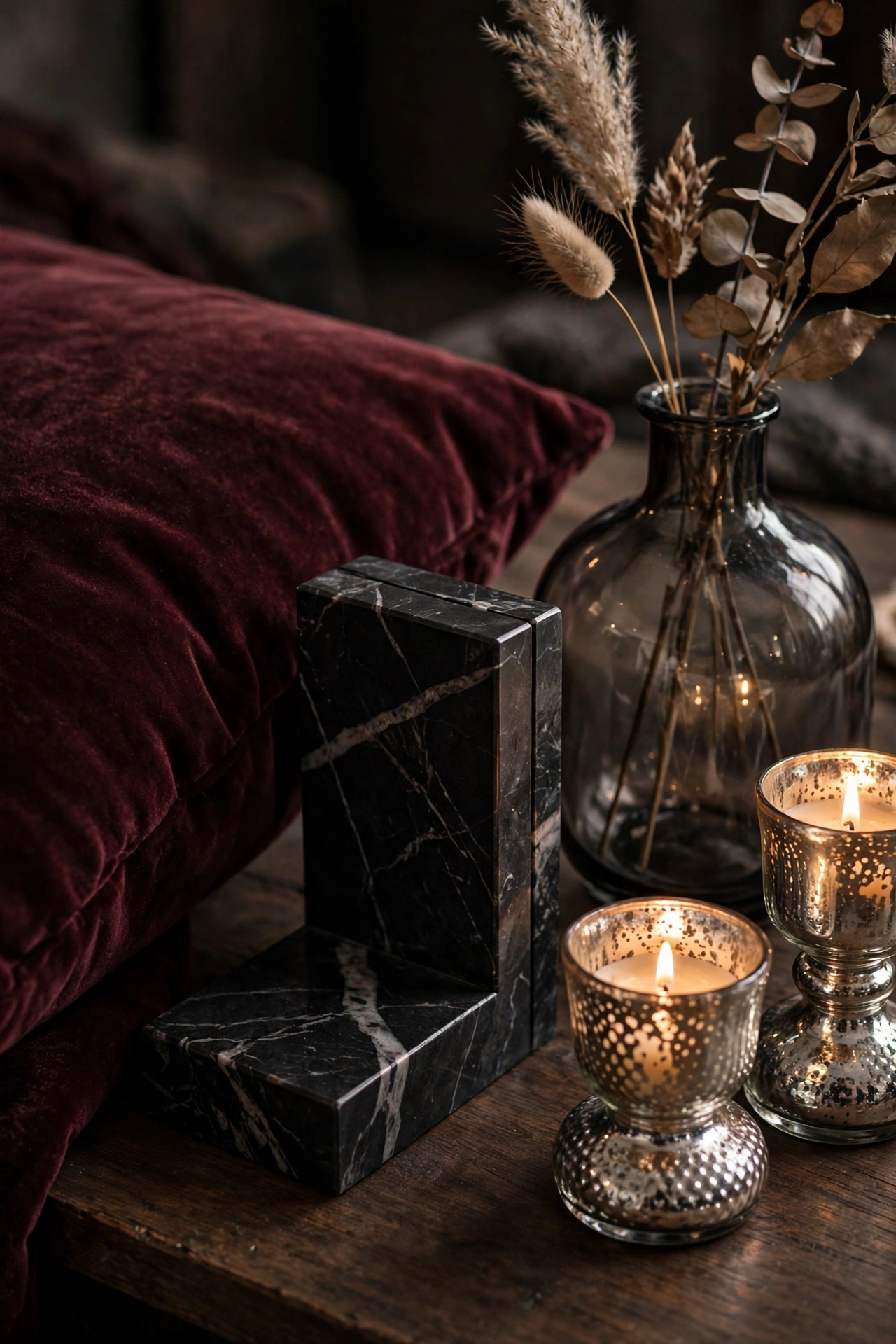
Original Deco loved materials that felt expensive to the touch, and the revival keeps that instinct. Velvet is the headline act: a velvet armchair, a pair of velvet cushions in jewel tones, or a velvet headboard instantly reads Deco. Choose colours with depth, like emerald, sapphire, burgundy, or cognac, since flat primaries look costume-y. Velvet also forgives: it hides small stains and wear better than linen, which makes it practical for real sofas.
Marble brings the cool counterpoint. A marble side table, a pair of marble bookends, or even a marble-patterned tray introduces the veined stone Deco designers adored. You do not need real stone everywhere; a single honest marble piece reads more expensive than five convincing fakes. Green or black marble leans Deco more strongly than classic white Carrara.
Glass and mirror surfaces complete the layering. Smoked-glass vases, a mirrored tray on a coffee table, or mercury-glass candleholders catch light the way polished metal does, and they keep dark rooms from feeling closed in. Mirrored furniture, once a hallmark of the look, still works in small doses: a mirrored side table in an entryway doubles as jewellery for the room. Try this: style a coffee table as a materials still life, one velvet box, one marble object, one mirrored piece. Three textures, five minutes, instant Deco.
Light It Like Jewellery
 Save
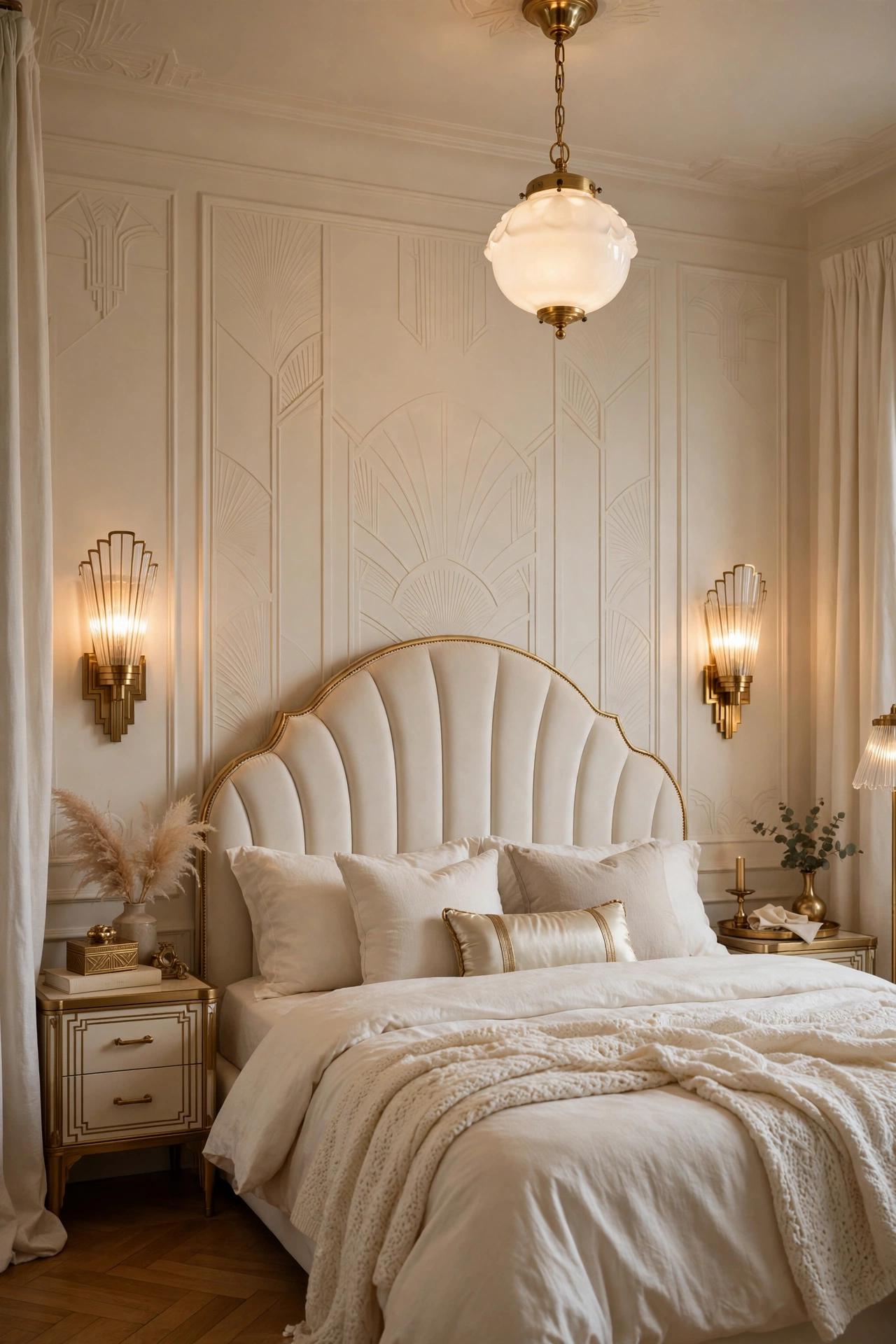
In Deco, lighting is not background infrastructure; it is the jewellery of the room. The original movement produced some of the most beautiful light fittings ever made, and today’s versions carry that DNA. Fluted-glass sconces, globe chandeliers on brass arms, and shaded table lamps with stepped bases all belong. If your current lighting is all recessed spots and nothing else, this is the layer your room is missing.
Sconces are the easiest entry point. A pair of fluted or frosted-glass sconces flanking a mirror or a bed gives symmetry and glow at once, and most styles hardwire into existing wiring points. Choose brass or blackened-bronze mounts to keep the Deco register. For renters or anyone avoiding an electrician, plug-in picture lights and battery-operated sconces now come in genuinely good designs.
Overhead, go bold. A single statement chandelier, a flush-mount with fan-shaped glass, or even a cluster of milk-glass globes over a dining table becomes the room’s anchor. Hang it lower than you think; over a dining table, the bottom of the fitting should sit roughly 30 to 34 inches above the tabletop so it reads as jewellery, not ceiling hardware.
Table lamps earn their place too. A lamp with a stepped base, a drum shade in silk or linen, or an opaline-glass body beside a sofa is Deco in miniature. Styling tip: warm the bulbs to 2700K or below. Cool daylight bulbs flatten brass and make velvet look grey; warm light is half the Deco effect.
The Small-Dose Rule: Neo Deco in Every Room
 Save
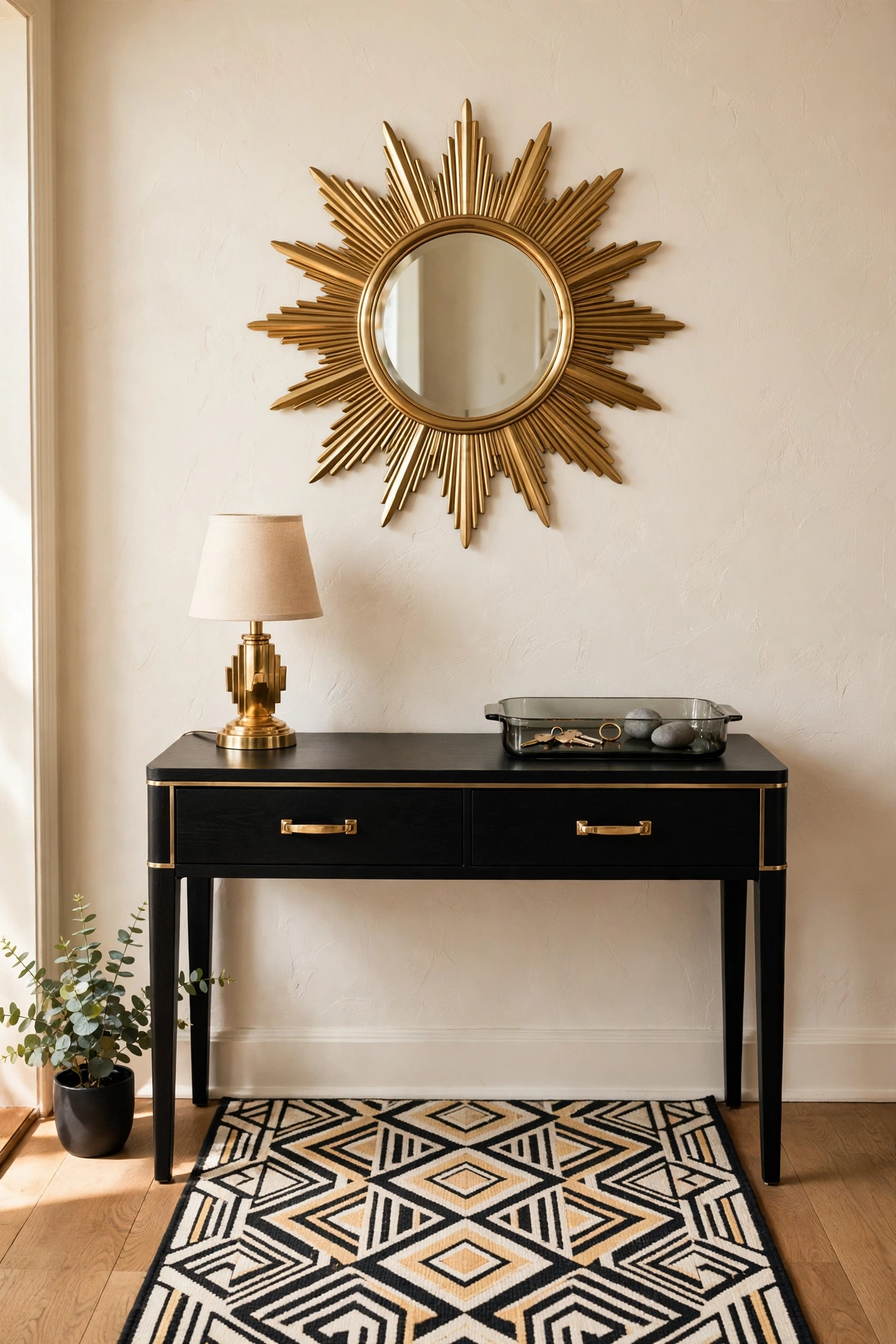
Here is the part that keeps the revival modern: Deco works best as seasoning, not a full-room costume. Pick two or three Deco elements per room and let the rest of your furniture stay as it is. A Scandinavian living room plus a sunburst mirror and a brass lamp is Neo Deco. A full parlour of lacquered reproductions is a theme park. The small-dose rule is what makes the style livable, affordable, and safe from looking dated in five years.
Living room
One statement mirror, one metallic lamp, and velvet or jewel-tone cushions on your existing sofa. If you want a bigger move, swap the rug for a geometric pattern. A fan-patterned tray on the coffee table ties the look together without touching a single large piece.
Bedroom
Deco suits bedrooms because the style is naturally calm when you keep it quiet. An oval or arched headboard, matching bedside lamps with stepped bases, and a pair of fluted sconces above the headboard give the room symmetry and glow. If you love bold wallpaper, a Deco fan-print in muted tones works behind the bed; keep the bedding ivory so the pattern breathes.
Dining room
This is Deco’s home turf. A globe chandelier or fan-shaped pendant over the table, a bar cart stocked like a 1920s hotel, and high-backed or barrel dining chairs carry the whole look. A mirrored or marble serving tray on the sideboard finishes it. The warm metals read especially well here under evening light.
Entryway and small spaces
Small spaces are ideal for Deco because the style rewards boldness at a small scale. A round sunburst mirror, a geometric runner, one brass lamp on a console, and a smoked-glass catchall tray is a complete Deco entryway. Styling a mantel with the same logic, one mirror, two matching candlesticks, one metallic object, gives fireplaces the Deco treatment too.
Budget swap: thrift stores are Deco goldmines. Brass candlesticks, mirrored trays, and stepped-glass pieces turn up constantly for a few pounds or dollars each. A quick polish with metal cleaner makes them look new, and mixed patinas actually suit the modern version better than perfect matching sets.
If you are planning a seasonal party, masquerade-themed party decor shares Deco’s love of drama, masks, and metallics, and the two styles layer together beautifully.
Bringing It All Together
Neo Deco is really a permission slip: to love geometry, to mix metals with confidence, and to treat lighting as decoration instead of utility. Start with shapes, warm the room with brass, build the contrast, layer the textures, and light it like jewellery. Keep it to two or three Deco moves per room, and the look will feel collected and current rather than costumed.
The best part is how forgiving the formula is. You can start with a single sunburst mirror this weekend and let the room grow Deco slowly, one brass lamp or velvet cushion at a time. That is how the original 1920s interiors were built too, piece by collected piece.
Frequently Asked Questions
What exactly is Neo Deco?
Neo Deco is the modern revival of Art Deco, the 1920s design movement known for geometric patterns, luxurious materials, and bold symmetry. The “neo” version keeps the shapes, warm metals, and high contrast but mixes them with contemporary furniture and relaxed layouts, so it works in real homes rather than period rooms.
Is Art Deco decor coming back in 2026?
Yes. Designers and retailers are showing strong Deco signals for 2026, from brass lighting and fan motifs to velvet upholstery and geometric rugs. The revival favours a modern mix, two or three Deco elements in an otherwise contemporary room, rather than full period recreations.
How do I decorate in Art Deco style on a budget?
Start with the cheapest high-impact pieces: thrifted brass candlesticks and mirrored trays, swapped cabinet hardware in brass, a geometric rug or runner, and warm 2700K bulbs in your existing lamps. Paint is powerful too; one dark accent wall in ink blue or charcoal gives metallics something to shine against for very little money.
What colours go with Art Deco interiors?
The classic foundation is black and ivory or white, with jewel tones like emerald, sapphire, and burgundy, plus warm neutrals like greige and cognac. Warm metals, brass and gold, tie the palette together. Smoky neutrals like taupe bridge the high contrast so it feels livable rather than theatrical.
Can you mix Art Deco with modern or minimalist furniture?
Absolutely, and the modern revival depends on it. Deco elements like a sunburst mirror, a brass lamp, or a geometric rug add shape and warmth to clean-lined furniture without clashing. The rule is proportion: let the modern furniture dominate and use two or three Deco accents per room as the jewellery.
4 thoughts