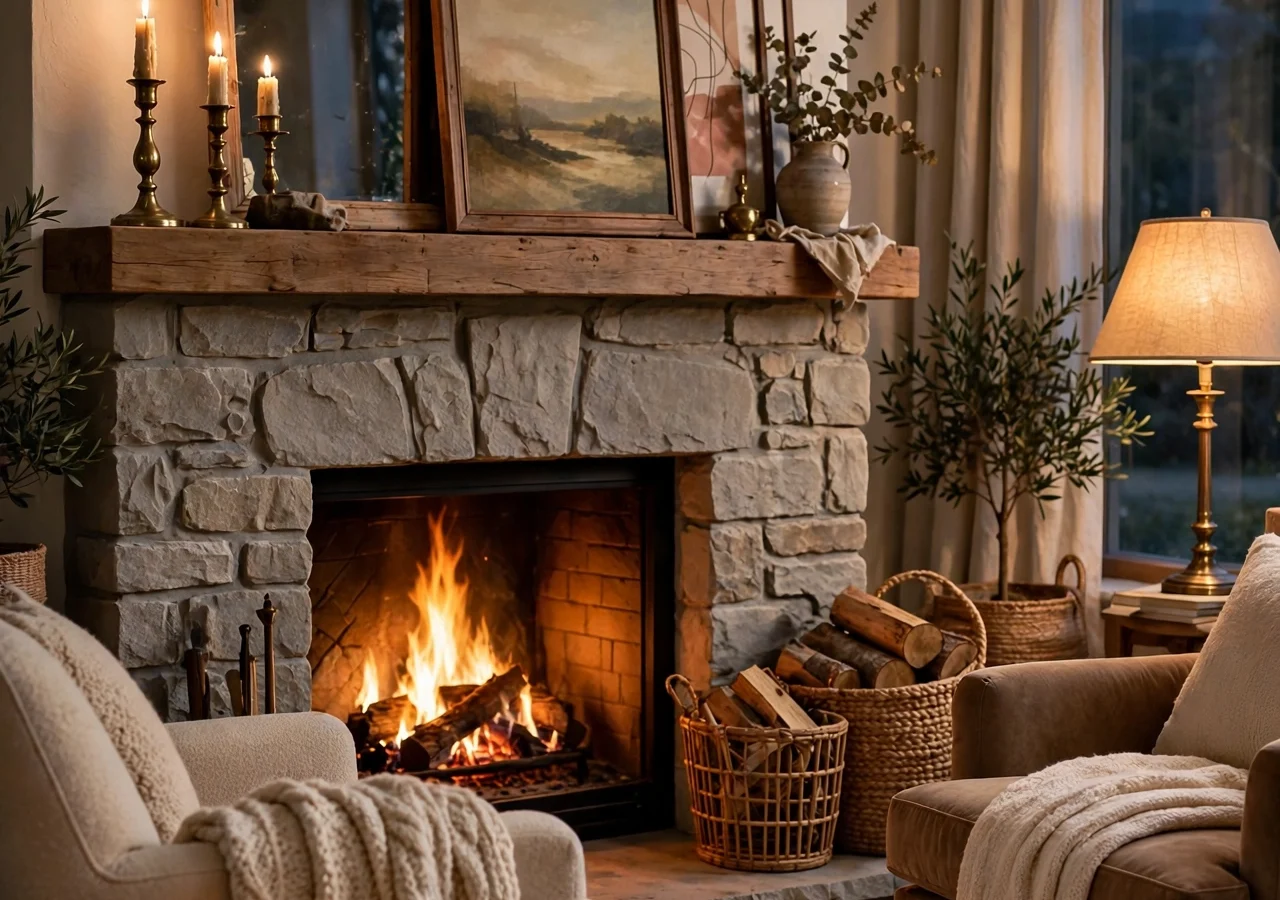
There’s a particular kind of quiet that settles into a room when the fireplace becomes its heart. Not the grand, catalogue version of a fireplace: the real one. The one with soot smudges you keep meaning to clean, a basket of kindling that never quite stays tidy, and a mantel that currently holds three half-burned candles, a dusty plant, and a photo frame you bought in 2019.
If your fireplace is underperforming, you’re not alone. Most of us inherit a beautiful architectural feature and then leave it to fend for itself while the coffee table gets all the attention. It doesn’t have to be that way.
Cosy fireplace styling isn’t about expensive mantel decor or a basket of fireplace accessories you’ll use twice. It’s about understanding how the fireplace works visually (as an anchor, a gathering point, and the one spot in your home that does atmosphere almost by itself) and then giving it just enough intention to let it do its job.
Ground the Wall: Treat the Fireplace as the Room’s Anchor
 Save
Before you touch the mantel, step back and look at the whole wall. A fireplace is the heaviest visual element in any room, which means everything around it either supports that weight or fights it. The most common styling mistake isn’t on the mantel at all: it’s in the four feet on either side.
Start by giving the fireplace breathing room. If you’ve wedged a bookshelf hard against one side and a leaning floor lamp against the other, the wall feels crowded and the fireplace reads smaller. Pull pieces six to eight inches away from the firebox surround. You want the fireplace’s outline (the mantel shelf, the surround, the hearth) to be fully visible, not competing with neighbouring furniture edges.
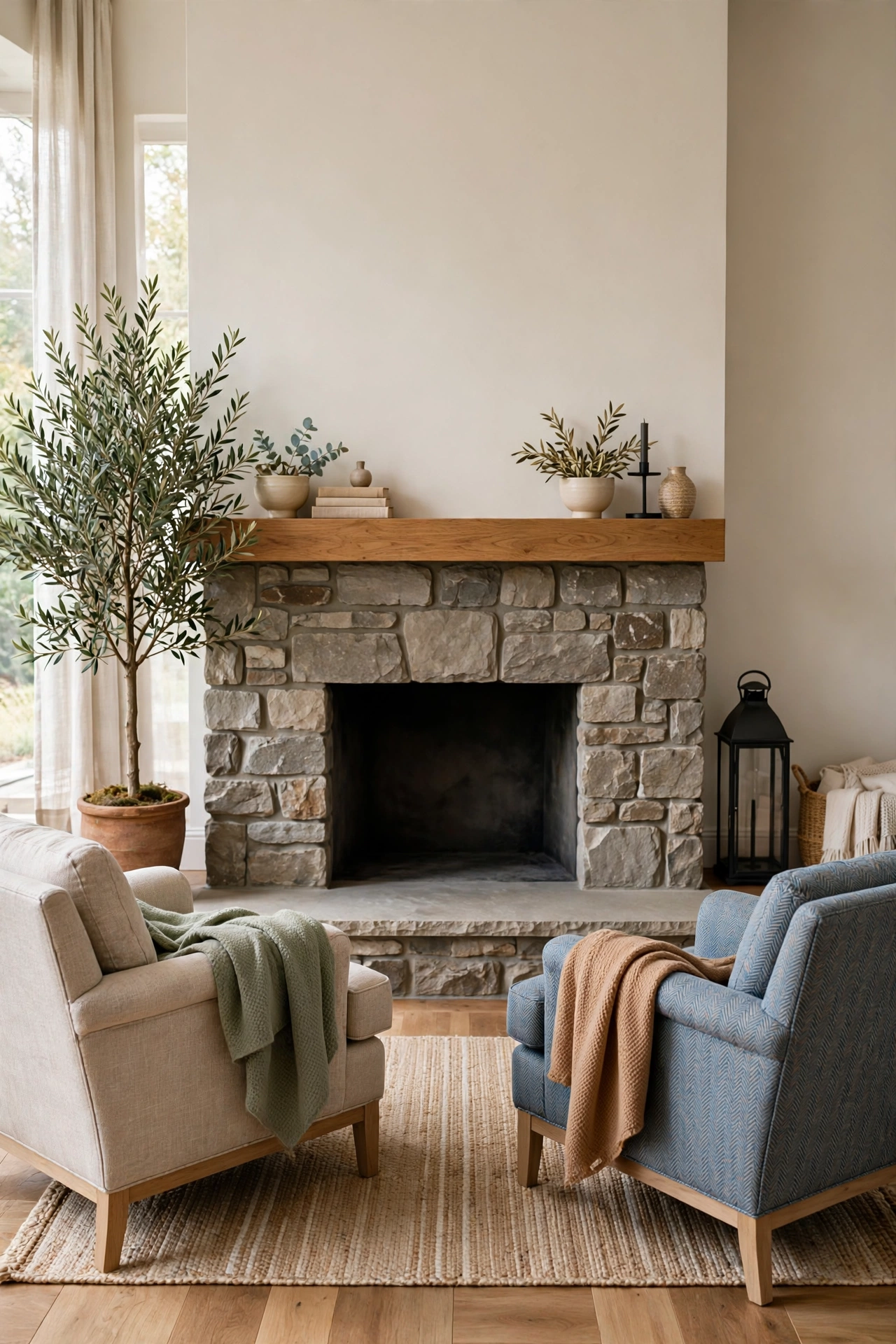
Then think in symmetry, but don’t worship it. Two chairs of similar height and silhouette in different fabrics, or a tall plant on one side balanced by a floor lantern on the other: echo the shape, vary the detail. Styling tip: stand in the doorway and squint. If one side reads much heavier than the other, that’s where you need to add or subtract.
The wall above the mantel deserves a decision too. One oversized piece of art, a mirror, or a deliberately empty stretch of wall all work; a scattered collection of small frames rarely does: small pieces get visually swallowed above a large firebox. One bold gesture beats five tentative ones here.
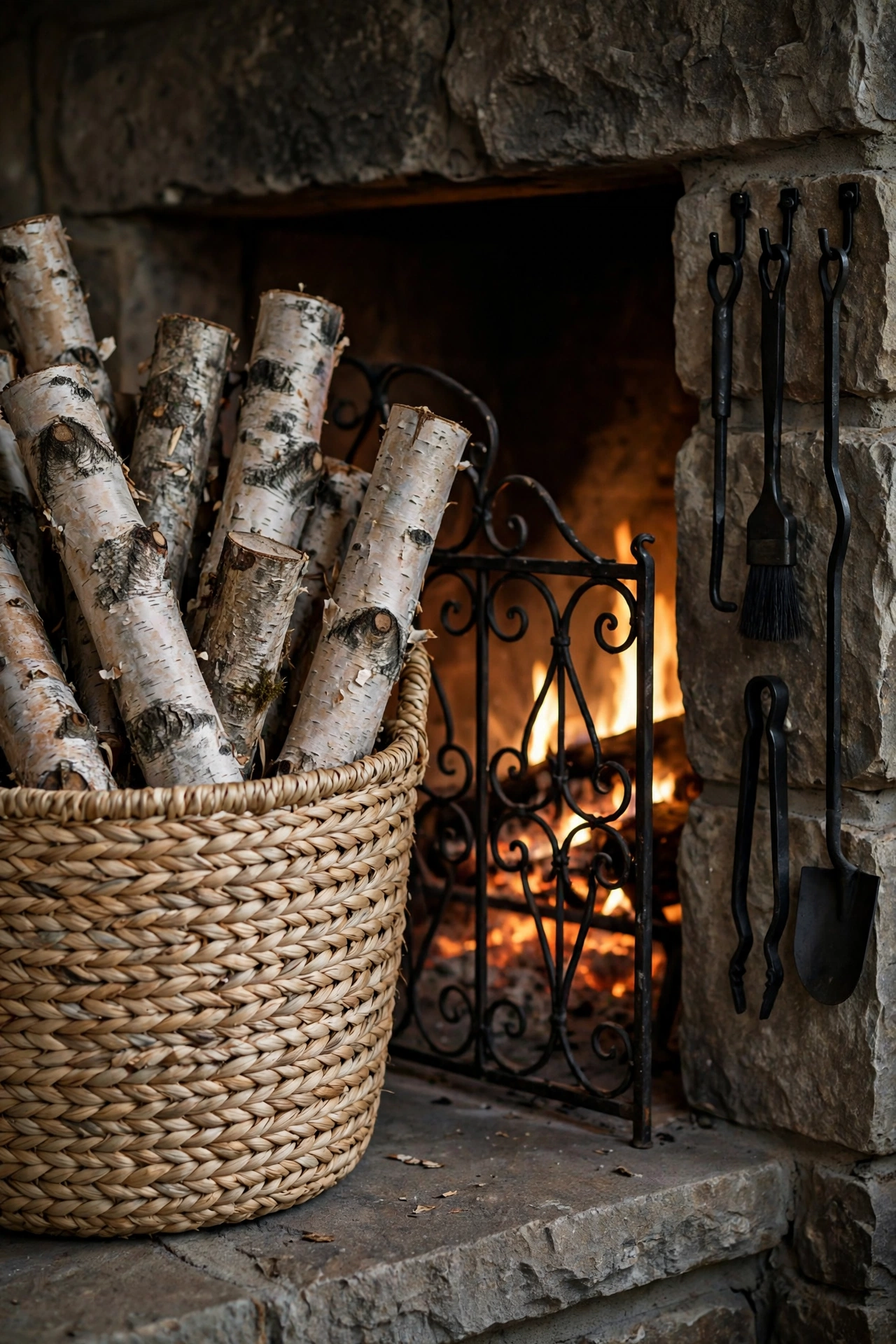
Finally, the hearth itself. A bare hearth is a missed opportunity and, honestly, a slightly sad one: it’s the one horizontal surface in the room that’s designed to be looked at. A low pile of birch logs, a chunky woven basket, or even a simple stack of two or three large books can give it purpose. What you put here should look like it belongs to the fire: wood, iron, stone, candlelight. The hearth is not a storage shelf.
Budget swap: a bundle of birch logs from a garden centre costs less than a takeaway pizza and transforms a bare firebox instantly. Even if your fireplace is decorative and never lit, logs in the grate are what make it read as a fireplace instead of an empty hole.
The Art of the Layered Mantel
 Save
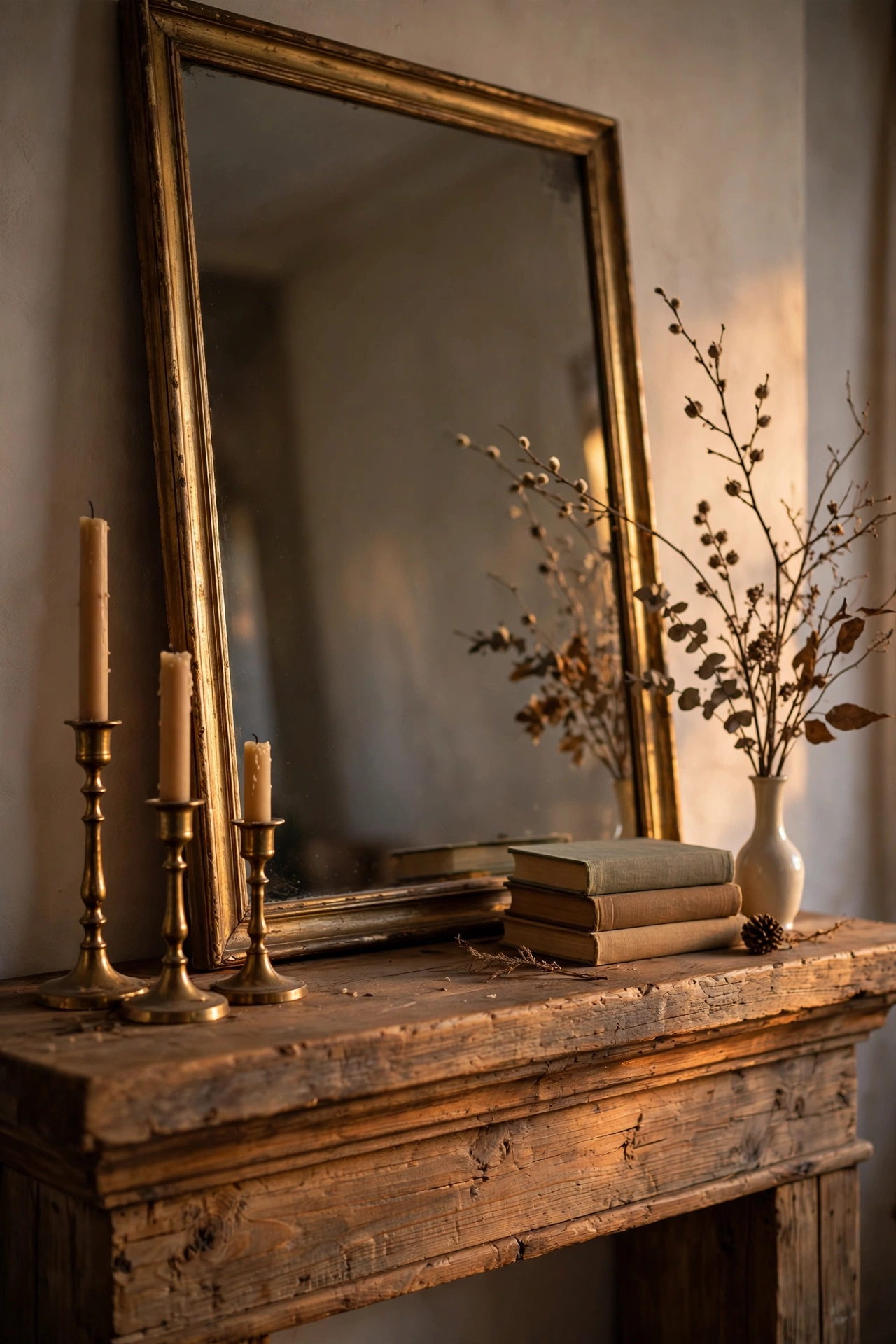
The mantel is where styling either sings or collapses. The difference usually comes down to one thing: depth. A flat line of same-height objects across the shelf looks like a display case. A layered mantel (pieces at different heights, different depths, some overlapping) looks like someone actually lives here.
Start at the back, with your tallest element in the centre or slightly off-centre: a large framed print, a leaning mirror, or a tall arrangement of branches in a vase. Then build forward and outward: medium pieces flanking the anchor (a pair of candlesticks, stacked books), and small pieces in front (a bud vase, a found stone).
What actually matters is the rhythm: tall, medium, small; then a gap; then the same rhythm in reverse. Those gaps are as important as the objects. A mantel with no breathing space between groupings looks like an estate agent photo shoot: technically correct and completely lifeless.
Mirrors above the mantel deserve special mention because they solve two problems at once: they bounce light around the room and they double the glow of candles and flames below. Lean one slightly larger than you’d think: a cautious small mirror centred precisely reads timid. Designer note: if you have a television above the fireplace (no judgement, most of us do), stop styling the mantel altogether. A TV plus decor competes for attention and loses every time. Move your styling to the hearth and the flanking walls instead.
Garlands and seasonal foliage follow the same layering logic, just in green. The mistake is draping a garland like a necklace: a single neat curve across the mantel’s front edge. Instead, let it be asymmetrical: fuller on one side, trailing down over the edge on the other, with gaps where the bare wood shows through. Realistic is more persuasive than perfect. If you’re using faux, fluff every branch and wire in a few real eucalyptus sprigs: the smell does half the work of convincing.
Accessories That Actually Earn Their Spot
 Save
Fireplace accessories have a reputation problem. Too many homes have the matching brass five-piece set sitting untouched since installation day (poker, tongs, brush, shovel, stand) gathering dust as a kind of chimney-adjacent sculpture. Functional tools you actually use beat decorative tools you never touch, every time.
For a working fireplace, the essentials are simple: a way to carry wood in, something to set it down in, and tools you can grab without thinking. A sturdy log basket or canvas carrier by the hearth, and a compact tool set hung on the side of the firebox rather than parked in front of it. Front-and-centre tools block the view of the fire; side-mounted keeps them invisible until you need them.
For a non-working or decorative fireplace, accessories are purely atmospheric, and that’s a different shopping list. You’re styling for the *idea* of fire: candles at varying heights inside the firebox, a neat stack of logs, a lantern or two. The firebox is dark by nature, so whatever you put in it should catch or hold light.
Here’s where material choices matter more than anywhere else in the room. Fireplace accessories sit next to heat, soot, and hard surfaces: the materials should be able to take it and look better for it. Natural materials age gracefully around a fireplace; thin, shiny finishes do not.
| Accessory | Best materials | Where it sits | What to avoid |
|---|---|---|---|
| Log basket/holder | Woven seagrass, canvas, blackened steel | Beside the hearth, within arm’s reach | Tiny decorative baskets that fit three twigs |
| Fireplace tools | Cast iron, forged steel | Side of the firebox or wall-mounted | Oversized matching sets that block the firebox |
| Fire screen | Wrought iron, aged brass | In front of an open firebox | Glass screens that smudge and need constant cleaning |
| Andirons/log grates | Solid iron or steel | Inside the firebox | Flimsy decorative grates that wobble |
| Mantel candles | Beeswax pillars, glass hurricanes | Grouped, varied heights | Scented candles that clash with woodsmoke |
Try this: group your candles in odd numbers and at three different heights on one side of the mantel. Light only that group. One lit cluster beats a whole mantel of unlit candles every time: the eye goes to the flame, and the rest of the mantel becomes a supporting cast. The same odd-number trick anchors the candle clusters in our cosy home checklist.
And a word on the poker you never use: if your tools are decorative, be honest about it and style them as objects. A single beautiful iron poker leaned against the hearth wall reads as intentional. The full five-piece set in a brass stand that you’ve never touched reads as a showroom.
The Seating Circle: Texture, Light and Everything Within Reach
 Save
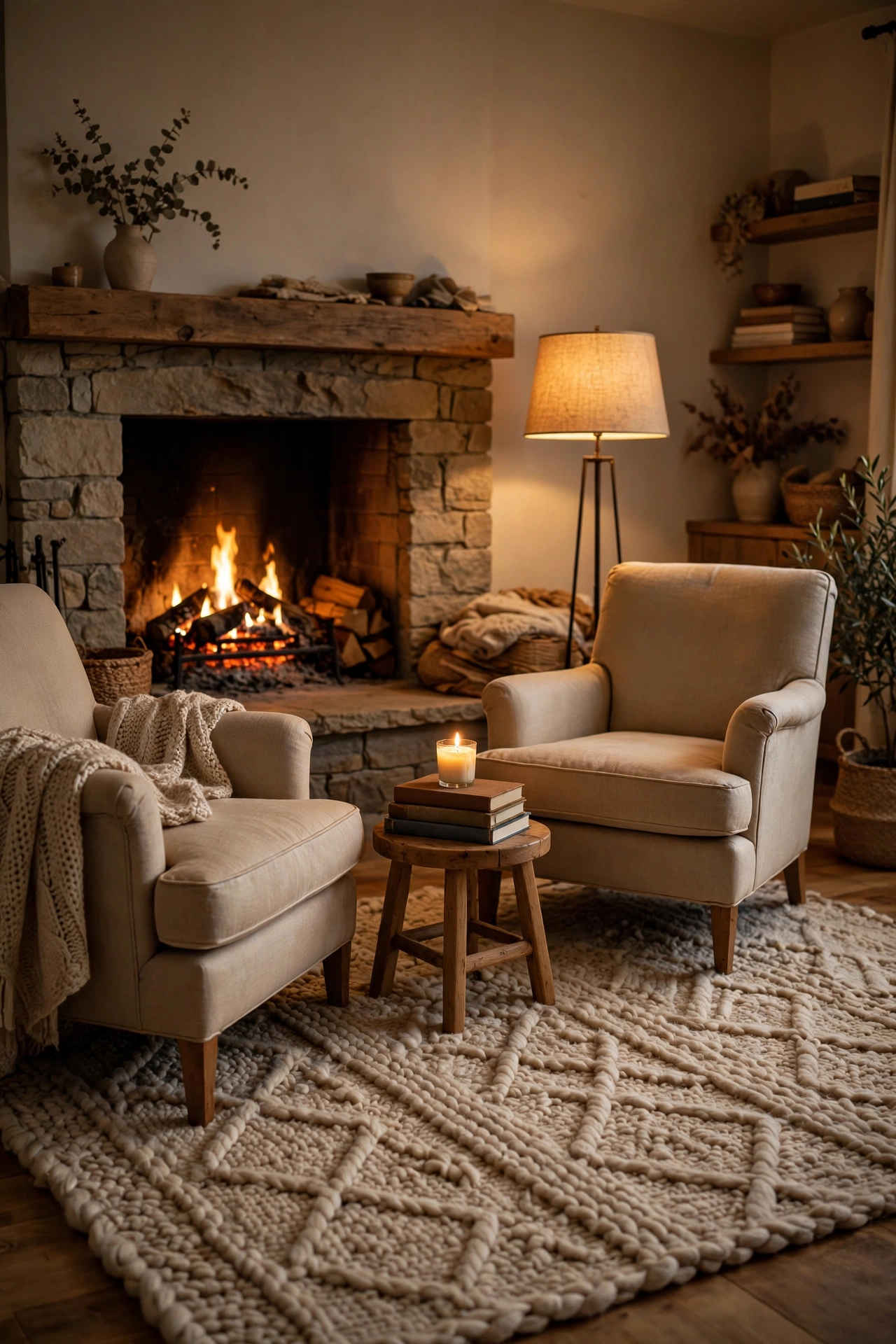
Here’s the truth about fireplace styling that nobody’s mantel photos show you: the fireplace doesn’t end at the surround. It ends at the furthest chair anyone sits in. The entire seating zone around the fire is part of the composition.
Start with the floor. A rug that extends under the front legs of the facing chairs pulls the seating zone together and, practically speaking, catches the crumbs and ash that fireplaces generate. Wool or jute handle this better than anything synthetic: they hide the mess and they look right next to stone and iron.
Then the seating itself. Fireplace-facing chairs should be angled, not parallel: slightly turned toward each other so the arrangement invites conversation, not a queue for the fire. A small side table between them is non-negotiable: somewhere to set the mug, the book, the phone you’re pretending not to check. A stack of two books, a candle, a small tray for the remote. That’s it. Anything more migrates off within a week anyway.
Lighting completes the circle. Overhead lights kill fireplace cosiness faster than anything except a cold draught: the whole point of firelight is that it’s low and warm. A floor lamp with a fabric shade behind one chair, angled down, gives you reading light without flooding the zone. Table lamps at mantel height or lower echo the fire’s glow. And this is where candles earn their reputation: three or four lit candles scattered through the seating zone (on the hearth, the side table, a low shelf) multiply the fireplace’s warmth without competing with it. Styling tip: keep every light source in the fireplace zone below eye level when seated. High lights flatten the room; low lights make it glow.
Finally, the textiles. A throw draped over one chair arm (not both: symmetry in throws looks staged), a cushion or two in a heavier fabric than the rest of the room. These are the pieces people touch, and they’re what make the difference between a fireplace that looks warm and a fireplace that feels warm. Swap the lightweight summer cushions for wool, velvet, or a good chunky knit when the season turns. Your hands will notice before your eyes do.
A Mantel That Changes With the Seasons
 Save
The best fireplace styling has a permanent layer and a seasonal layer, and knowing which is which saves you from re-doing the whole mantel every October. The permanent layer is your anchor piece, your candle groupings, your books: the bones. The seasonal layer is the stuff that comes and goes: foliage, garlands, a pumpkin, a string of lights, the wreath you finally replace this year.
Autumn is the fireplace’s home turf, so this is where most of the effort goes, and where most mantels go wrong. The instinct is to pile on: pumpkins, pinecones, wheat, faux leaves, the lot. Restraint is the actual seasonal skill. Pick one seasonal material and use it in two places. Dried wheat in a vase plus a wheat-wrapped garland. Eucalyptus sprigs in the vase and tucked into the garland. One material, two placements, done. For a full natural-material palette, see our woodland fall decor ideas.
Winter shifts the palette rather than the approach. Greens go deeper (cedar and fir instead of eucalyptus) and metallics appear: brass candlesticks, a gold-framed mirror you already own, ribbon on the garland. Keep the mantel’s winter palette distinct from the tree’s (greens, candlelight, one metallic) so it holds its own across the room instead of looking like an afterthought. When December arrives, our Christmas decor ideas take it from here.
Spring and summer are when fireplaces get ignored, which is exactly why a little attention goes a long way. Clear the winter weight: fewer candles, lighter foliage, maybe a stack of art books where the garland was. If your firebox sits empty all summer, fill it with something that catches the light: a cluster of white candles at different heights, a large fern in a brass pot. An empty, dark firebox in July reads as an absence; a styled one reads as a choice.
The practical version of all this: keep your seasonal box small. One storage box per season, not five. When the box is full, something has to leave before something new comes in. Budget swap: forage before you buy. Seed heads, interesting branches, dried grasses: most of autumn’s best mantel material is free on the side of the road. A £5 bundle of eucalyptus from the supermarket outlasts any faux garland and smells like the season actually arrived.
Glow Without Flames: Styling the Firebox and Off Hours
 Save
Not every fireplace has a fire in it. Some are decorative by design, some are dormant for half the year, and some of us rent. The firebox (that dark, empty cavity) is the part of fireplace styling people struggle with most, because our instinct is either to hide it or fill it with clutter.
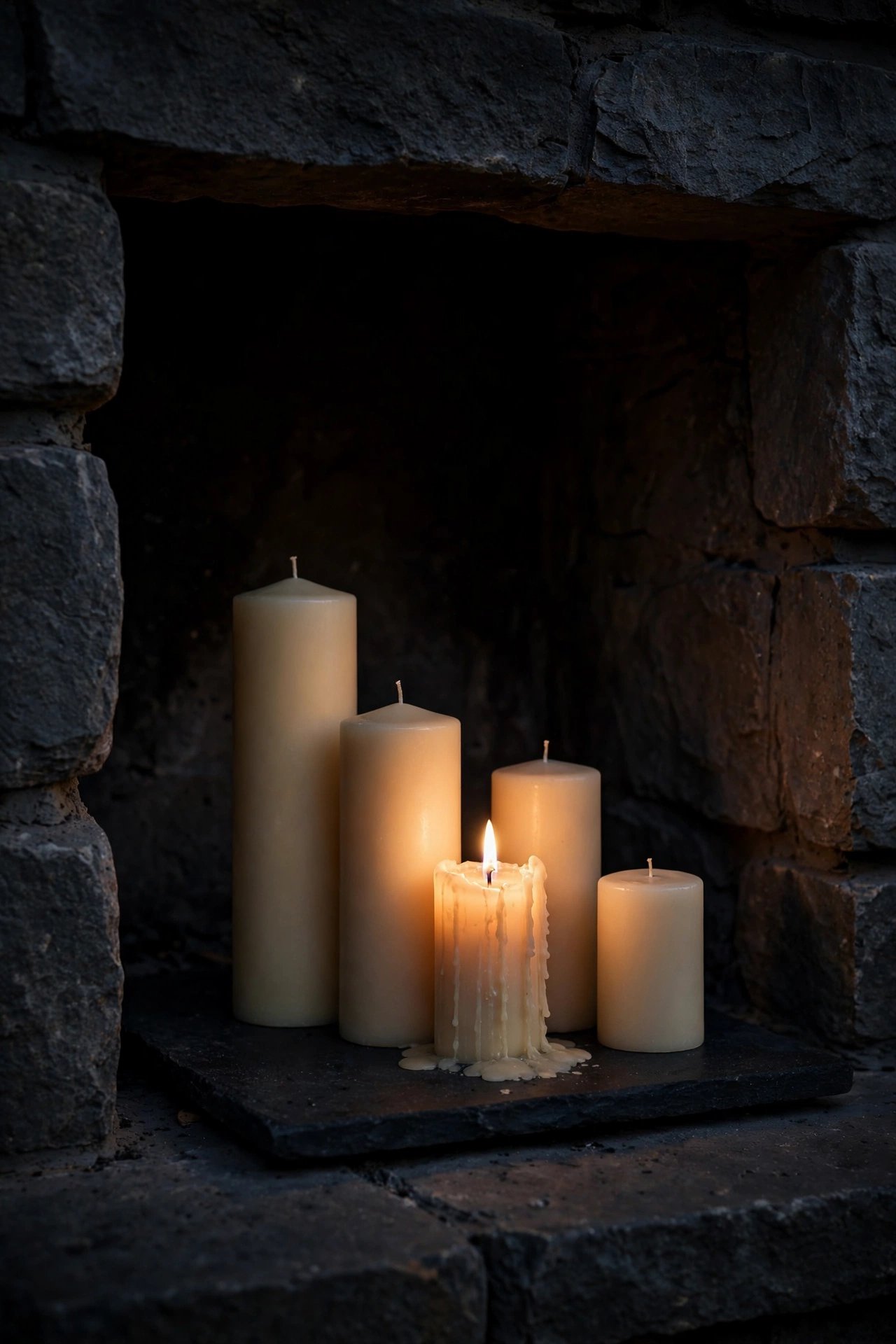
A firebox styled well is about one idea: hold light, or hold something that catches it. The simplest version: a cluster of pillar candles at staggered heights on a tray inside the firebox. Lit in the evening, they give you 80% of a fire’s atmosphere with none of the ash. Unlit during the day, the wax and glass still catch daylight and stop the firebox from reading as a black hole.
Beyond candles, the firebox accepts things that would look odd anywhere else in the room. A large ceramic vase. A stack of coffee-table books laid flat. A small lantern. In summer, a potted fern or a bowl of moss turns the firebox into a tiny garden: the dark surround makes green look impossibly vivid. Scale matters most: whatever goes in should fill the firebox generously, roughly two-thirds of it. A single tiny candle in a cavernous firebox looks lost; a cluster that fills the space looks deliberate.
One more use for the off-season fireplace: the mantel becomes your room’s best display shelf precisely because nobody’s looking at the firebox. Summer is when you rotate in the art, the collected ceramics, the pieces that deserve attention without competing with flames. Think of it as the fireplace’s sabbatical: it rests from heating the room and takes up curating it instead.
For renters with non-working fireplaces (blocked, sealed, or purely decorative), lean all the way in. Style the firebox with candles or plants, dress the mantel properly, and nobody will know it doesn’t work. The cosiness was never really about the fire. It was about the hearth as a place: the candlelight, the feeling that this corner of the room has a job. Give it one, and it does it beautifully.
Bringing It All Together
A well-styled fireplace isn’t a project: it’s a rhythm. Anchor the wall, layer the mantel, choose accessories you’d actually use, build the seating zone around the warmth, and let the seasons change the details while the bones stay put. None of this requires a shopping trip. Most of it requires moving what you already own six inches to the left.
Light the candles tonight. Sit in the chair. That’s the whole point of the thing.
Frequently Asked Questions
What should I put on my mantel if I have a TV above the fireplace?
Almost nothing, and that’s the honest answer. A TV above the fireplace is already the visual anchor, and mantel decor competes with it. Move your styling energy to the hearth and the flanking walls: a basket of logs, a floor lantern, art on either side. If you must put something on the mantel, keep it very low: a slim tray or a single low bowl.
How do I style a fireplace I never use?
Treat the firebox as a light-catcher rather than an empty hole. A cluster of pillar candles at staggered heights is the classic solution: lit in the evening it gives you most of a fire’s atmosphere. In summer, swap candles for a large potted fern: the dark surround makes greenery look vivid. Fill about two-thirds of the firebox so it reads as deliberate, not forgotten.
What fireplace accessories do I actually need?
For a working fireplace: a log basket or carrier, a compact tool set (side-mounted rather than blocking the firebox), and a fire screen if the firebox is open. That’s genuinely it. For a decorative fireplace: candles of varying heights, a neat stack of logs, and maybe a lantern. Skip the oversized five-piece brass set unless you actually use it.
How do I keep mantel decor from looking cluttered?
Layer by depth and leave gaps. Start with a tall anchor piece at the back, build medium pieces forward, and place small pieces in front: but leave visible breathing space between groupings. If in doubt, remove one thing. The single most effective decluttering move is taking everything off, then putting back only half of it.
Can I style a fireplace in a rental where I can’t use it?
Absolutely: sealed and decorative fireplaces are often the prettiest ones, with original surrounds that deserve attention. Style the firebox with candles or plants, dress the mantel fully, and build the seating zone around it. Nobody needs to know it doesn’t light. The cosiness comes from the hearth as a place, not from actual flames.
7 thoughts