For the last few years, home decor has whispered. Greige walls, beige sofas, quiet luxury everything. Lovely, but after a while even the prettiest neutral room starts to feel like it is holding its breath.
The FunHaus trend is the exhale. Named for the playful “fun house” spirit of old amusement parks and vintage big-top tents, it trades restraint for joy: broad awning stripes, carousel reds, brass that actually gleams, and circus posters treated like gallery art. Think of it as the maximalist answer to years of minimalism, but a grown-up one.
The good news: you do not need a tent in your garden to pull it off. Done right, circus-chic decor brings energy into a room without turning it into a theme park. This guide breaks down exactly how to get the look, from the stripe patterns that anchor it to the vintage details that keep it classy.
What the FunHaus Trend Is Really About
 Save
Strip away the name and the FunHaus trend comes down to three things: pattern, colour, and playfulness. It borrows the visual language of the vintage circus, the striped big top, the painted wagon, the old-time ticket booth, and translates it into pieces that work in a modern home. The inspiration is nostalgia, but the execution is firmly 2026.
What makes it different from ordinary maximalism is its discipline. FunHaus has a strict palette and a signature pattern, and it sticks to them. That restraint inside the exuberance is exactly why it reads as design-forward rather than chaotic.
The palette is tight: cream or warm white, one saturated red (think pillar-box or barn red rather than cherry), black for graphic punch, and warm gold or brass as the metal. Occasionally a deep teal or forest green steps in as a supporting act, but the headliners are always red, cream, and black.
Styling tip: Before buying a single thing, pin down your red. Hold paint swatches and fabrics against your existing furniture in daylight. A red that looks electric in the shop can turn muddy against warm wood, and the whole trend hinges on the red feeling confident, not aggressive.
Stripes First: The Pattern That Does the Heavy Lifting
 Save
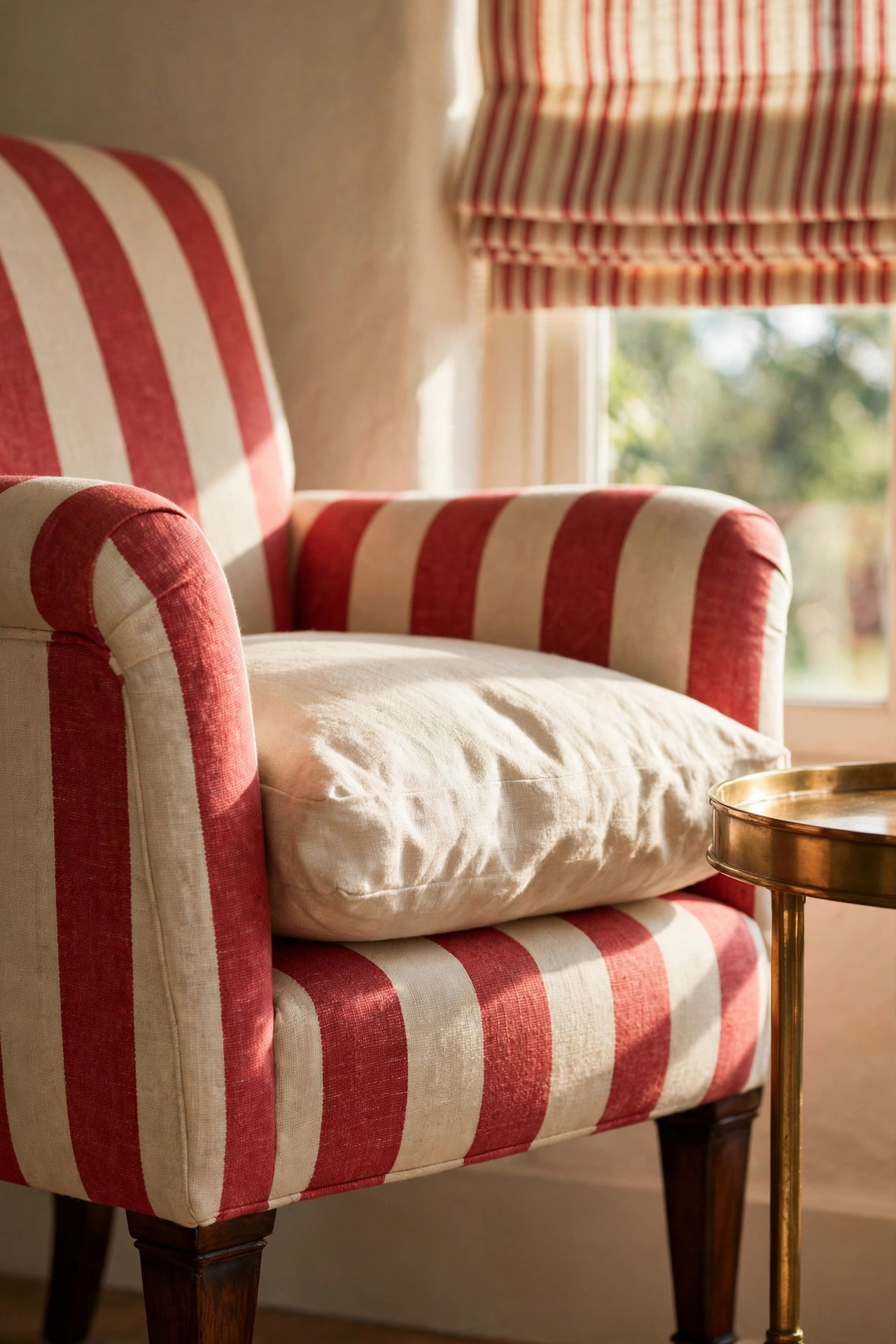
Stripes are the engine of the entire look. In a FunHaus room, one strong stripe application does the work of five accessories, which is why getting this layer right matters more than any single piece of furniture.
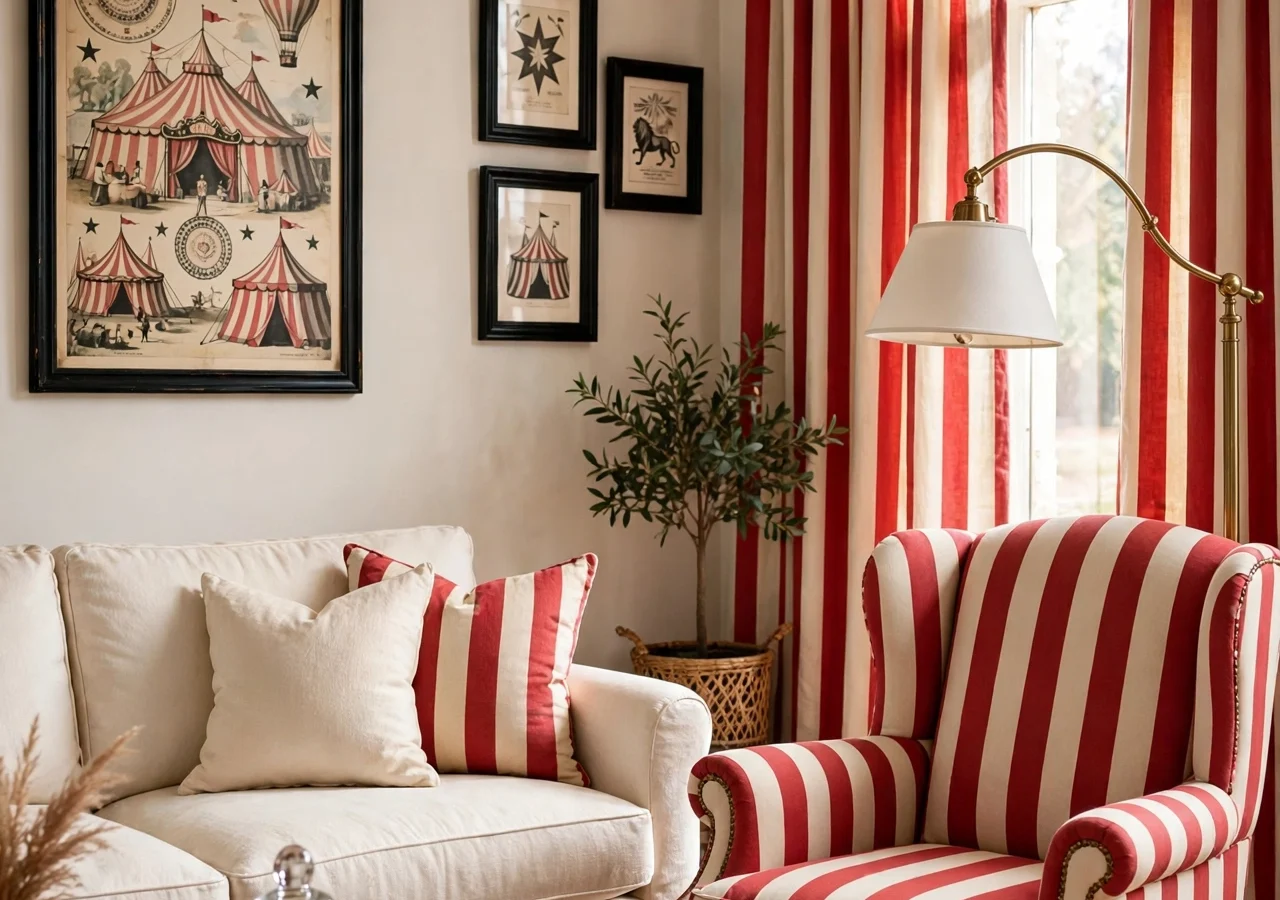
Start with scale. Big-top energy lives in broad stripes, roughly 8 to 15 centimetres wide, like a classic awning stripe or a beach-hut panel. Thin pinstripes read preppy; thick stripes read playful. If you are doing upholstery or curtains, look for outdoor-grade canvas or ticking fabric in red and cream. These fabrics were literally made for awnings and deck chairs, so they bring the reference authentically, and they are hard-wearing enough for real family sofas.
The most forgiving way in is textiles: striped curtains, a striped slipcover on an armchair, a broad-striped flatweave rug. These can be swapped out without redecorating the whole room, which keeps the look flexible.
Painted stripes are the commitment version, and they are spectacular in the right spot. A striped ceiling in a hallway or a striped alcove in a bedroom gives the full big-top thrill in a contained dose. The rule that keeps it from going dizzy: stripes go on one surface only. Striped walls plus a striped rug plus striped cushions is a fun house of the literal headache kind.
Designer note: Match your stripe widths across pieces. A 12-centimetre stripe on the curtains and a 3-centimetre stripe on the cushions fight each other. Two matching scales, max, and the room stays calm.
Colour Like You Mean It
 Save
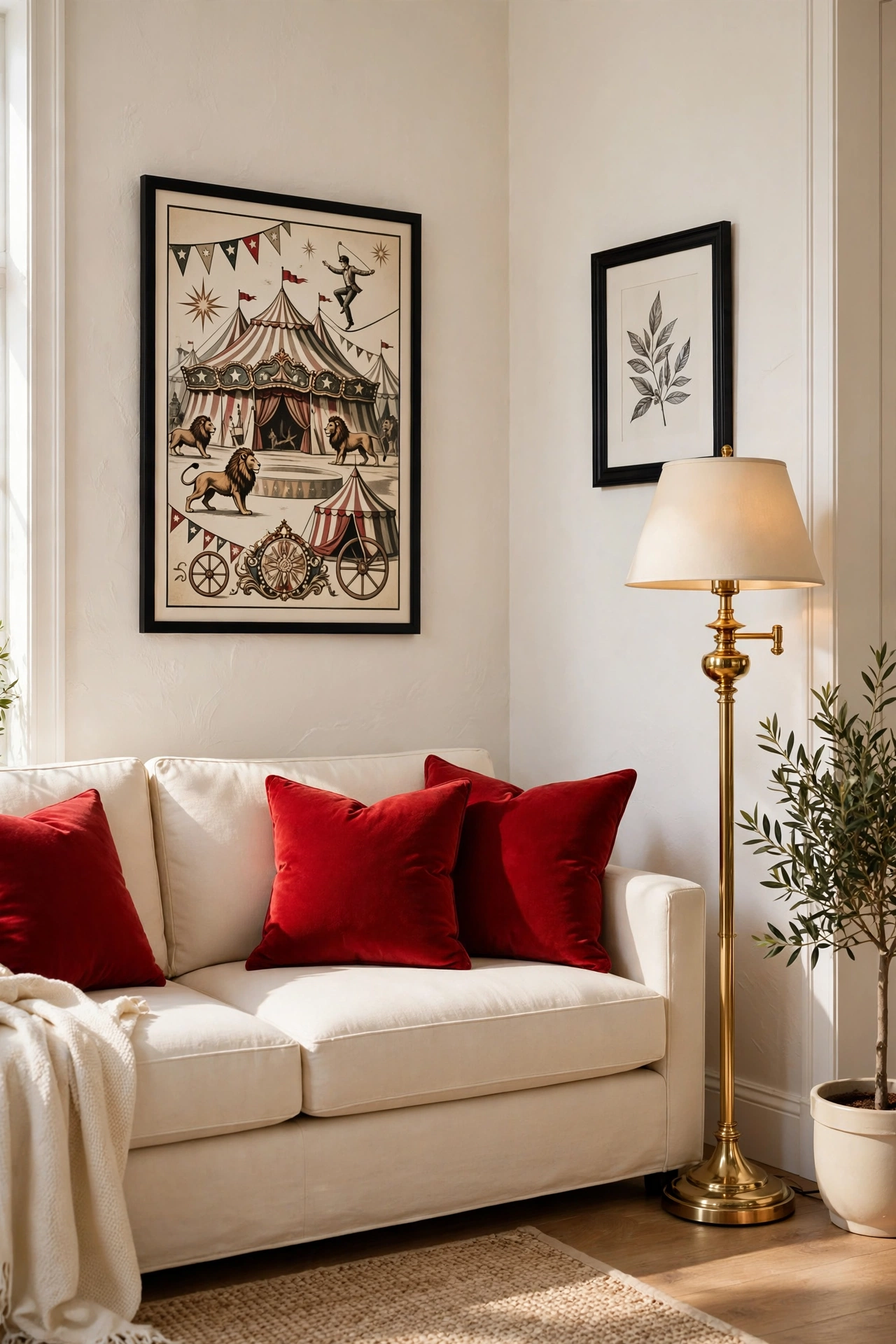
FunHaus colour is confident, which means it rewards decisions rather than dithering. The classic build is a cream or warm-white base, red as the star, black as the graphic outline, and brass as the shine.
Here is how much of each to use. This is the ratio that keeps the look joyful instead of alarming:
| Role | Colour | Rough share | Where it lives |
|---|---|---|---|
| Base | Warm white or cream | 60% | Walls, ceiling, large furniture |
| Star | Saturated red | 20% | Stripes, one hero piece, accents |
| Graphic | Black or near-black | 10% | Frames, lamp bases, outlines |
| Shine | Brass or gold | 10% | Lighting, hardware, small objects |
Black deserves a special mention because it is what stops the red and cream from feeling sugary. A black picture frame, a black floor-lamp base, or black edging on a striped blind acts like the ink outline in a vintage poster. It sharpens everything around it.
Brass is the non-negotiable metal. Chrome is too cold, matte black hardware is too industrial. Polished or unlacquered brass echoes the ticket-booth rails and carousel poles of the reference, and it warms up every red it sits next to. You do not need much: swap your cabinet knobs, your curtain rod finials, or your mirror frame and the room picks up the signal immediately.
What about paint finishes
Finish matters as much as colour in a FunHaus room. Cream walls want a flat or eggshell finish, nothing glossy, because shine on the base colour makes the room feel hard. The red, on the other hand, loves a bit of sheen: satin or semi-gloss on a painted red side table, a striped blind, or a front door gives the colour a lacquered, fairground-poster richness that flat paint cannot reach.
Black should be matte. Glossy black reads modern-luxe; matte black reads graphic and vintage, like the ink on an old handbill. This small distinction is one of those things nobody can name but everybody feels when they walk into the room.
Budget swap: Brass-look pieces from thrift stores, spray-painted gold furniture pulls, and secondhand brass candlesticks give you the shine for almost nothing. Real unlacquered brass ages beautifully, so the charity-shop find often looks better than the new one.
Vintage Circus Details, Minus the Kitsch
 Save
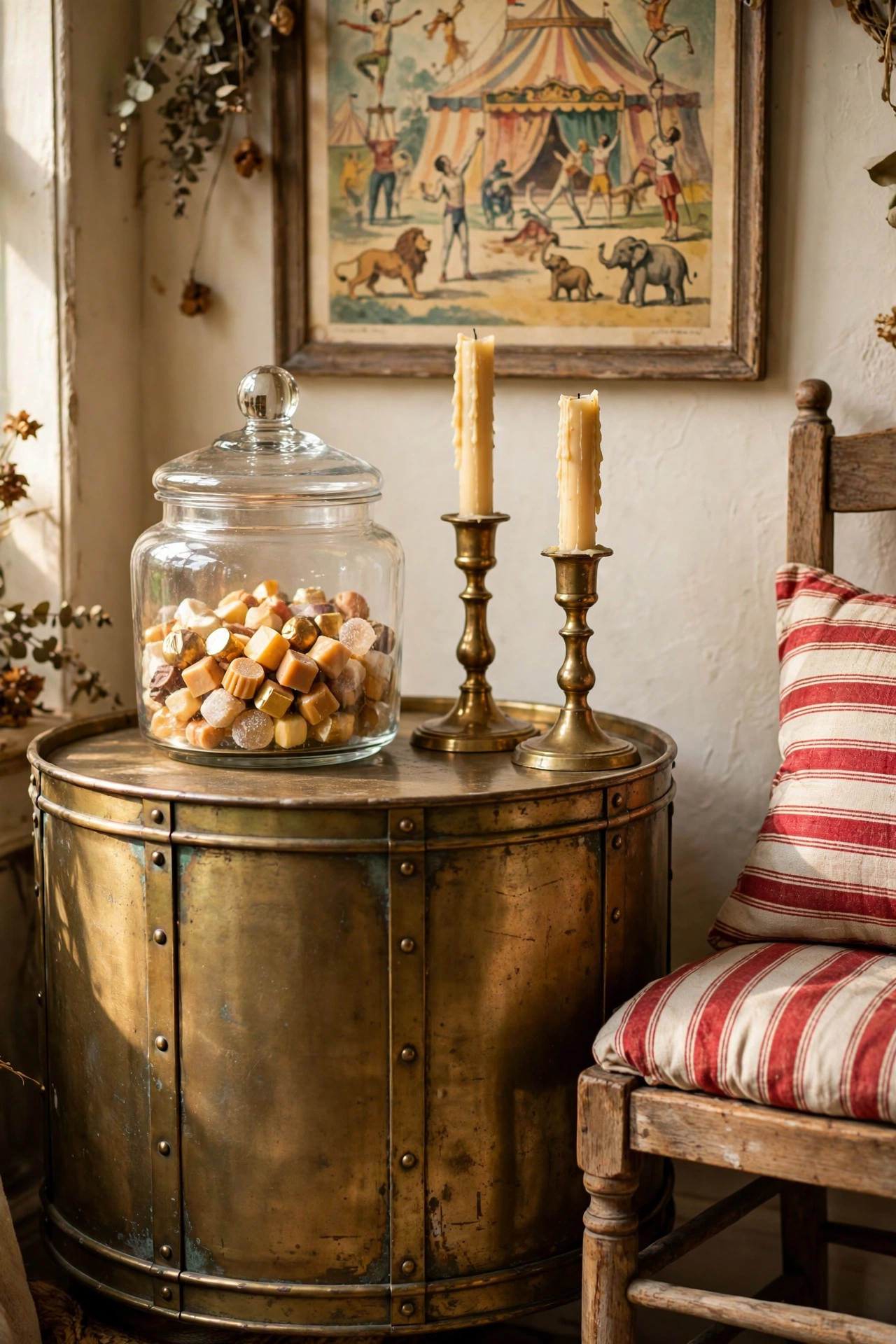
This is where the trend gets its soul. The stripes and colours build the stage, but the details are what make guests lean in and look closer. The trick is choosing references to circus craft rather than circus clichés.
Marquee letters are the obvious one, and they work precisely because they read as signage, not costume. One word, not a sentence: BAR, JOY, or your family name in warm-bulb marquee lights above a sideboard. Keep it to a single piece per room.
Framed vintage circus posters are the wall art of this look, but frame them like art. A black or brass frame, a proper mount, hung at gallery height. The poster itself should feel like a found object, aged typography, faded ink. One large poster beats three small ones.
Drum tables are a furniture gift to this trend: round, graphic, and cheap. A red-and-cream drum table next to a striped armchair basically stages itself. Popcorn carts are too literal, but a small brass popcorn-bowl lamp or a glass sweet jar on the coffee table nods to the midway without winking.
Try this: Hunt flea markets for old wooden ticket stubs, juggling pins, or painted wooden blocks. One or two genuine vintage objects give the whole room credibility that new reproduction pieces cannot.
Room by Room: Where Circus-Chic Actually Works
 Save
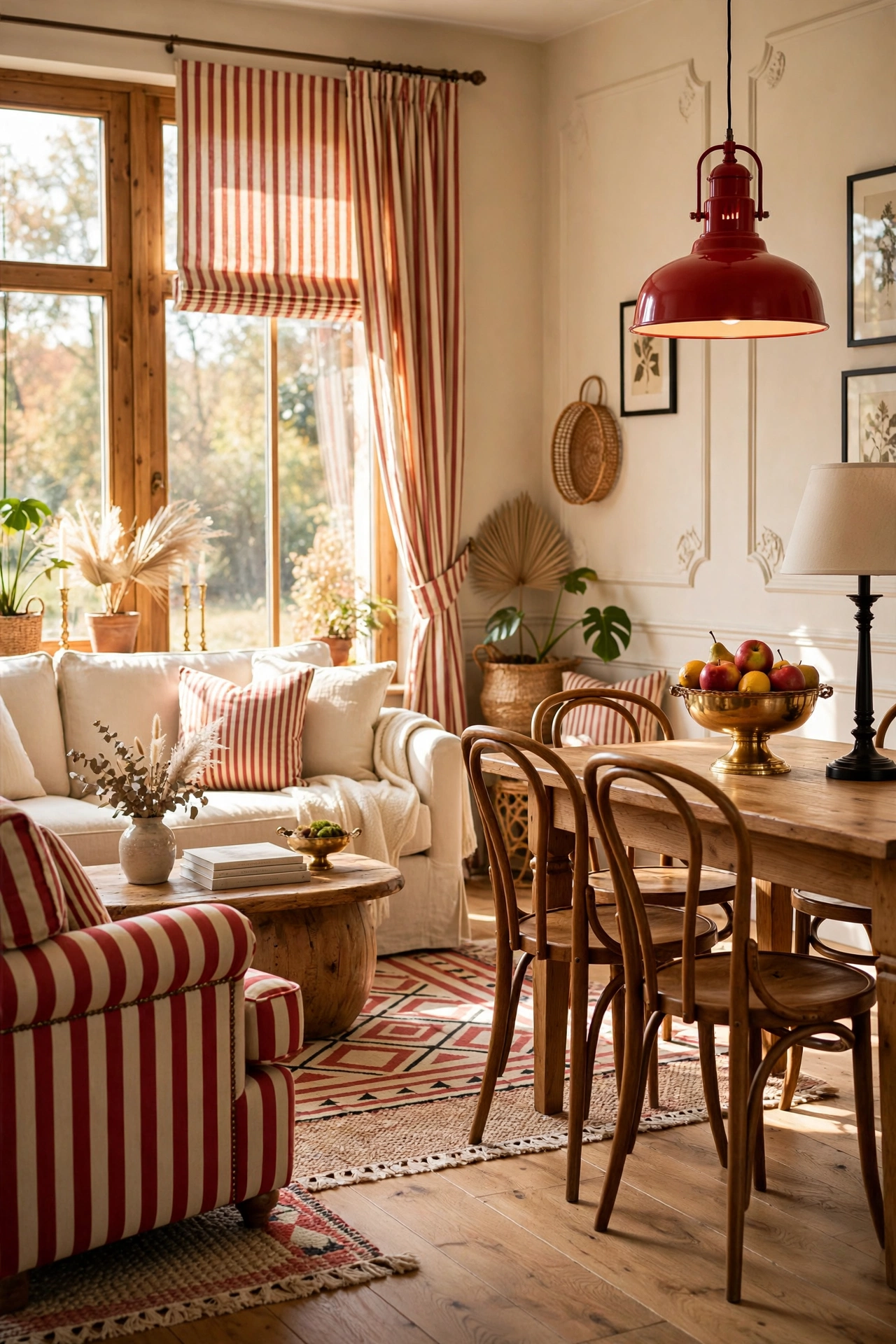
Not every room wants the full big top. Here is how the trend lands best, space by space.
Living room. This is the natural home of the look. A striped armchair or striped curtains, a cream sofa, a brass floor lamp, one framed poster, and a black-framed gallery element. If you already own a neutral living room, three swaps (curtains, cushions, lighting) get you 80 percent of the way there. Our guide to warm metallic styling ideas has more on getting brass right in a living space.
Bedroom. Go softer here: a striped headboard or striped bed skirt, cream bedding, one red throw, and a brass table lamp. The bedroom version should feel like a vintage railway carriage, cosy and rhythmic, not like the midway at midnight. Similar statement ceilings work in bedrooms too; the geometric confidence of 2026’s Art Deco revival pairs beautifully with circus stripes.
Kitchen and dining. The dining room is where circus-chic is most at home, honestly. Striped cafe curtains, a red pendant light over the table, bentwood chairs in black, and a brass fruit bowl. A striped table runner on a plain wood table is the five-minute version.
Hallway. Narrow spaces love stripes because they add drama without furniture. A striped runner, one marquee word, and a row of framed vintage posters turns a forgettable corridor into the best part of the house.
Kids’ rooms. The one space where you can go bigger: a striped ceiling, a red bed frame, circus-animal prints. Even here, keep the palette to the core four colours so it still feels designed rather than decorated-by-a-party-shop.
Keeping It Grown-Up: The Anti-Kitsch Checklist
 Save
The line between circus-chic and circus-costume is real, and it is crossed one novelty item at a time. Run every purchase through this checklist before it comes home.
One, limit literal references. A room can hold a marquee light or a popcorn motif, but not both, and never a clown anything. The trend references the craft of the circus, its tents, its typography, its brass, not its performers.
Two, keep the palette honest. The moment a turquoise elephant or a purple velvet cape enters the room, the four-colour discipline breaks and the look slides into costume. Red, cream, black, brass. That is the whole band.
Three, balance pattern with plain. For every striped surface, you need a solid one to rest the eye. Cream walls, a plain sofa, a solid-colour rug under a striped chair. Negative space is what makes the stripes feel intentional.
Four, invest in one real piece. A genuinely old brass lamp, a properly framed vintage poster, or a well-made striped armchair anchors the room and makes the affordable pieces around it look deliberate. FunHaus done cheaply everywhere reads as a party; FunHaus with one serious piece reads as a style.
Five, mind the lighting. Warm bulbs only, 2700K or lower. Cool white light on red and cream looks clinical and kills the vintage warmth instantly. If your marquee letters have daylight bulbs, swap them before you hang anything.
Designer note: Snap a photo of the room and switch it to monochrome in your camera roll. If the pattern layout still looks balanced with the colour gone, the composition is doing its job. If the whole thing falls flat, the red was carrying the design and the stripes need rethinking.
Choosing your red
Not all reds play nicely with this look. Pillar-box red, barn red, and classic circus red all have enough warmth to sit comfortably against cream. What you want to avoid is anything leaning orange (it turns the room tropical) or anything leaning blue-purple (it turns the room gothic).
Test properly: paint a large card, not a tiny swatch, and look at it at different times of day. Red shifts dramatically under warm evening lamps versus grey morning light. The right red looks inviting in both; the wrong one looks shouty after dark. If you are buying fabric rather than paint, order a sample and drape it over your actual sofa before committing to curtains in the same cloth. A red you love in isolation and a red you love next to your furniture are not always the same red.
Bringing It All Together
The FunHaus trend is really a permission slip: permission to enjoy your home a little louder, to pick the red cushion instead of the safe one, to hang something that makes you smile. Its secret is that the joy is engineered. Broad stripes in a strict palette, vintage craft references instead of novelty, and warm brass holding it all together.
Start with one striped textile and one brass swap. Live with it for a week. If the room feels happier every time you walk in, you have your answer, and you can build from there. The big top was always meant to be fun. Your living room can be too.
Frequently Asked Questions
What exactly is the FunHaus decor trend?
It is a 2026 maximalist trend inspired by vintage circuses and old amusement-park fun houses. It is built on broad red-and-cream stripes, a tight palette of cream, red, black and brass, and vintage craft details like marquee lights and circus posters, styled with enough discipline to feel designed rather than themed.
Will bold stripes make a small room feel smaller?
Not if you use them right. Vertical stripes on curtains or a striped ceiling actually draw the eye up and can make a low room feel taller. Keep stripes to one surface, use cream as the dominant colour, and the room will feel lively, not cramped.
How do I do circus-chic without it looking childish?
Three rules: keep the strict four-colour palette, choose craft references (stripes, brass, typography) over character references (no clowns, no cartoon animals), and anchor the room with one genuinely good piece, like a real brass lamp or a properly framed vintage poster. Restraint inside the exuberance is the whole trick.
What colours go with red and cream stripes?
Black for graphic definition and brass or gold for warmth. A deep teal or forest green can appear in very small doses as a supporting colour, but the classic FunHaus palette stays at cream, saturated red, black, and brass.
Is the FunHaus trend expensive to try?
It is one of the cheaper trends to test. Striped canvas fabric, a tin of red paint for one piece of furniture, thrifted brass objects, and a printed vintage poster in a proper frame can transform a room for very little. The expensive version is reupholstery and real vintage finds, but the budget version reads just as well.