Shiplap had a long run. For years it was the default answer whenever a wall looked too plain, and for a while it worked. Then it started showing up everywhere, in every colour, in rooms where it had no real reason to be, and the charm wore thin. If your walls feel flat now, you do not need another horizontal board. You need a texture with a bit more rhythm.
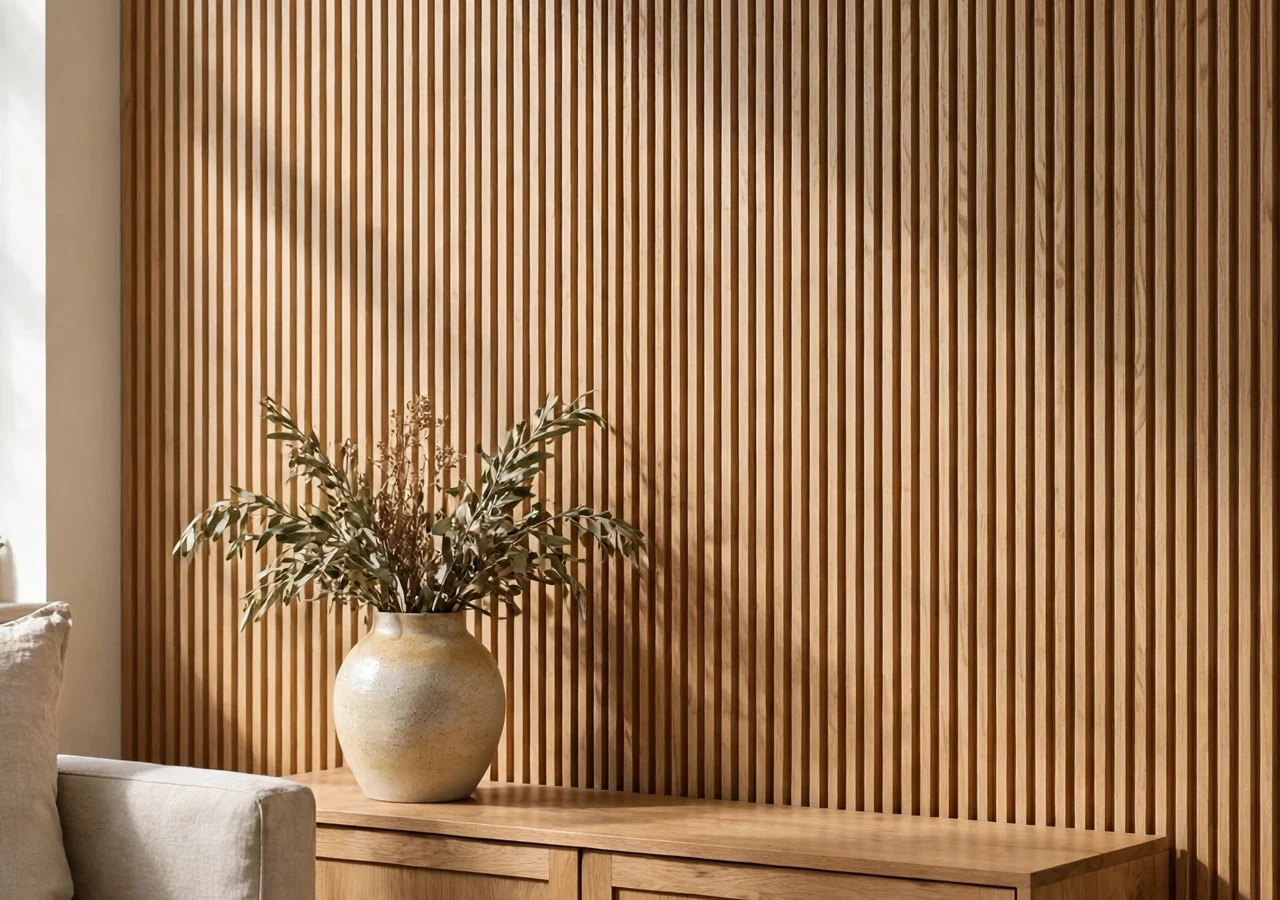
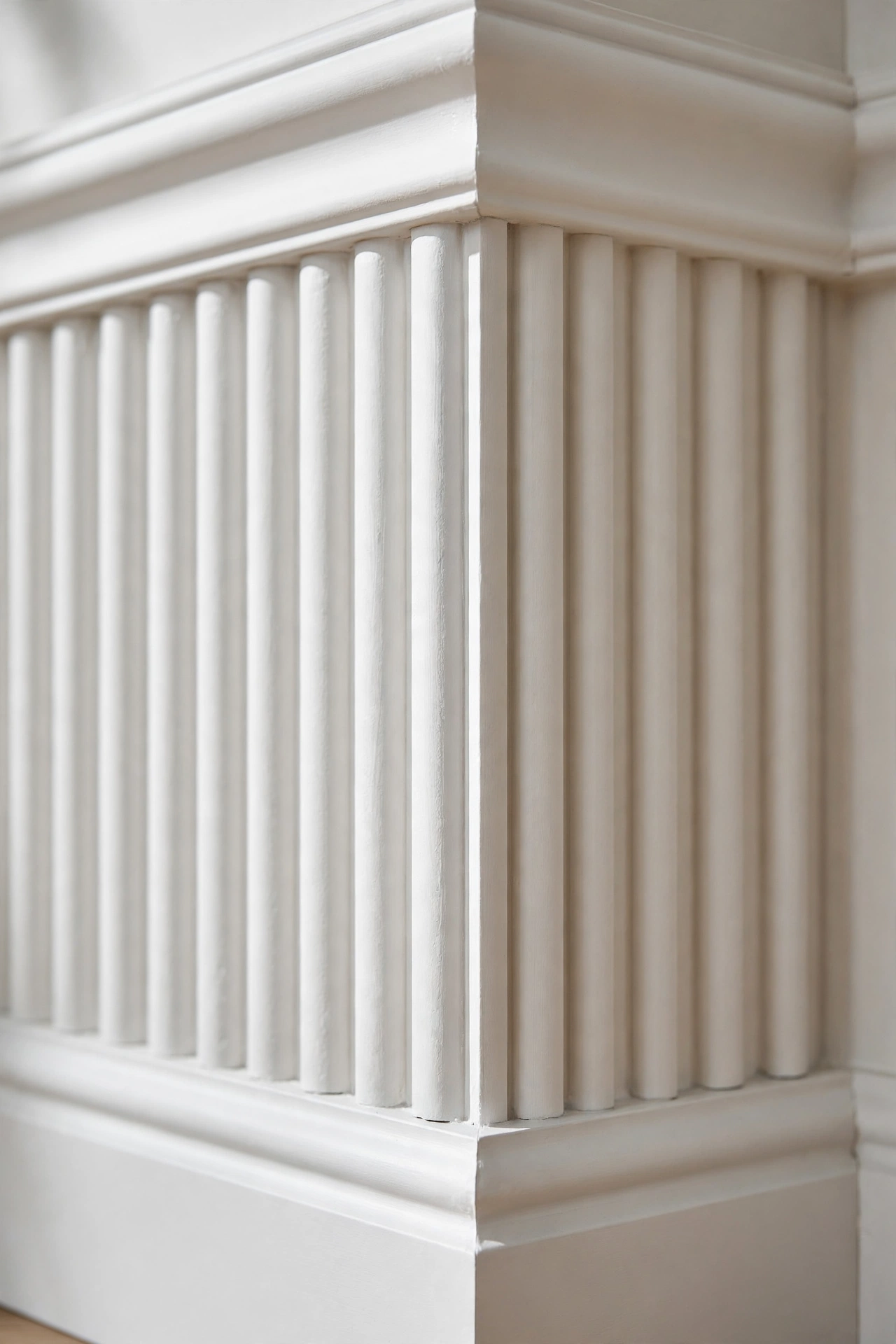
That is where fluted wall panels come in. Fluted panels are made from narrow vertical ribs, set side by side so the wall reads as a series of soft ridges and shadows. From across the room the effect is calm and tailored. Up close, it has real depth. It suits homes that want warmth without clutter, and it works in far more places than most people expect.
This guide explains what fluted panels actually are, which material makes sense for your room and budget, where to put them, how to finish them, and how to fit them without turning the job into a renovation. It also covers the mistakes that make the look fall flat, so you can get it right the first time.
What Fluted Panels Actually Are
 Save
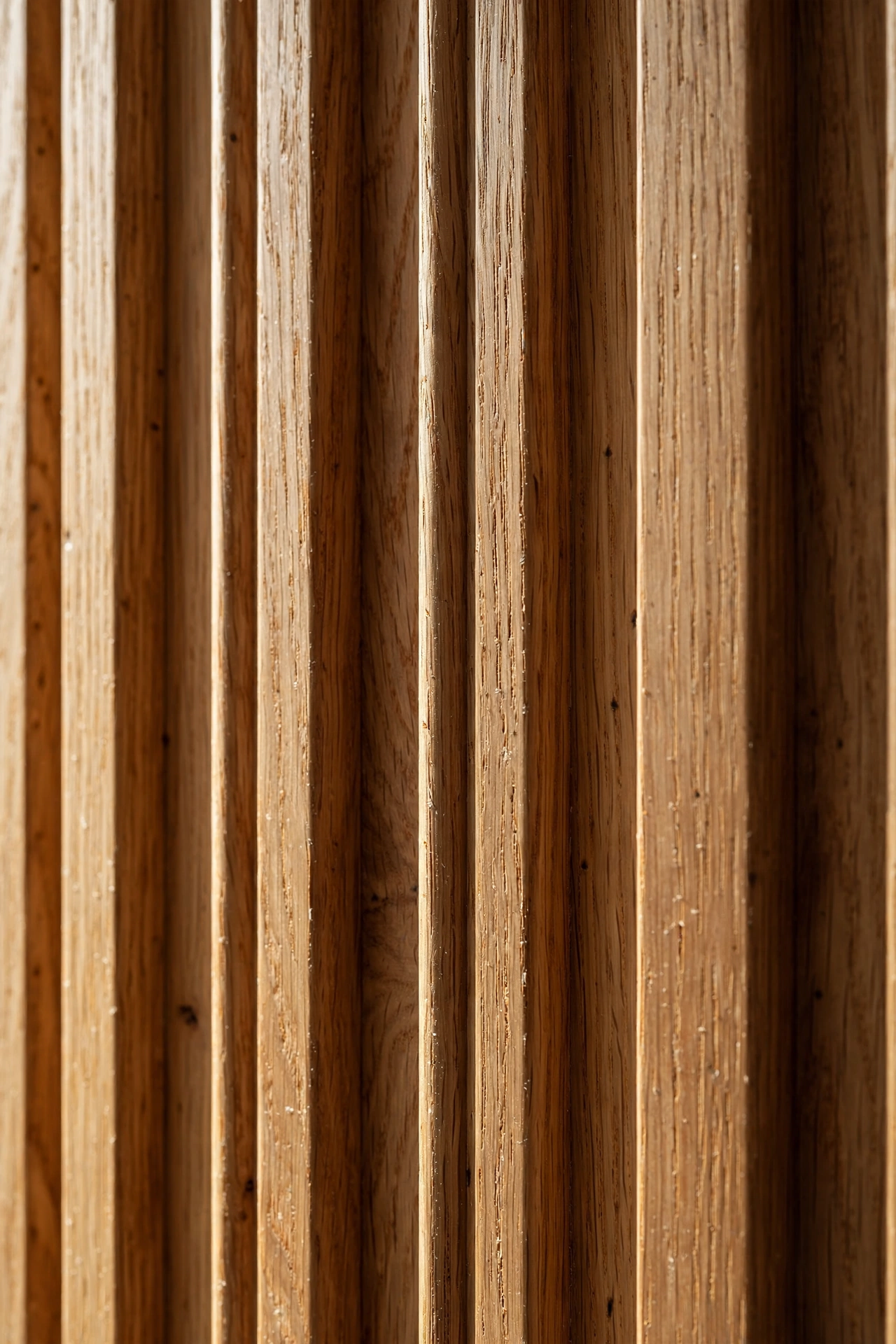
A fluted panel is a board, usually sold in a sheet or a slat, covered in narrow vertical grooves. The ribs might be slim and close together, or wider and more spaced out. Slim ribs give a fine, almost fabric-like texture. Wider ribs cast stronger shadows and read as more architectural. Neither is better in the abstract. The right choice depends on the size of the wall and how close people will stand to it.
The reason fluted panels feel different from shiplap is the direction of the lines. Shiplap runs horizontally, and horizontal lines tend to pull the eye sideways and settle a room. Vertical ribs do the opposite. They draw the eye upward, which can make a ceiling feel a little higher and a narrow room feel less squeezed. In a hallway, that vertical lift is genuinely useful. In a bedroom, it gives the wall behind the bed a sense of structure without needing a headboard that dominates the room.
Fluted panels also handle light well. Because each rib catches light on one edge and falls into shadow on the other, the wall changes through the day. Morning light makes the texture crisp. Evening lamplight softens it. A flat painted wall cannot do that, and a heavily patterned wallpaper often does it too loudly. Fluted panels sit in the middle: interesting, but not demanding.
Styling tip: Stand back at least three metres before you judge a sample. A single small offcut always looks busier than a full wall will, because your eye has no rhythm to settle into.
Choosing Your Material
 Save
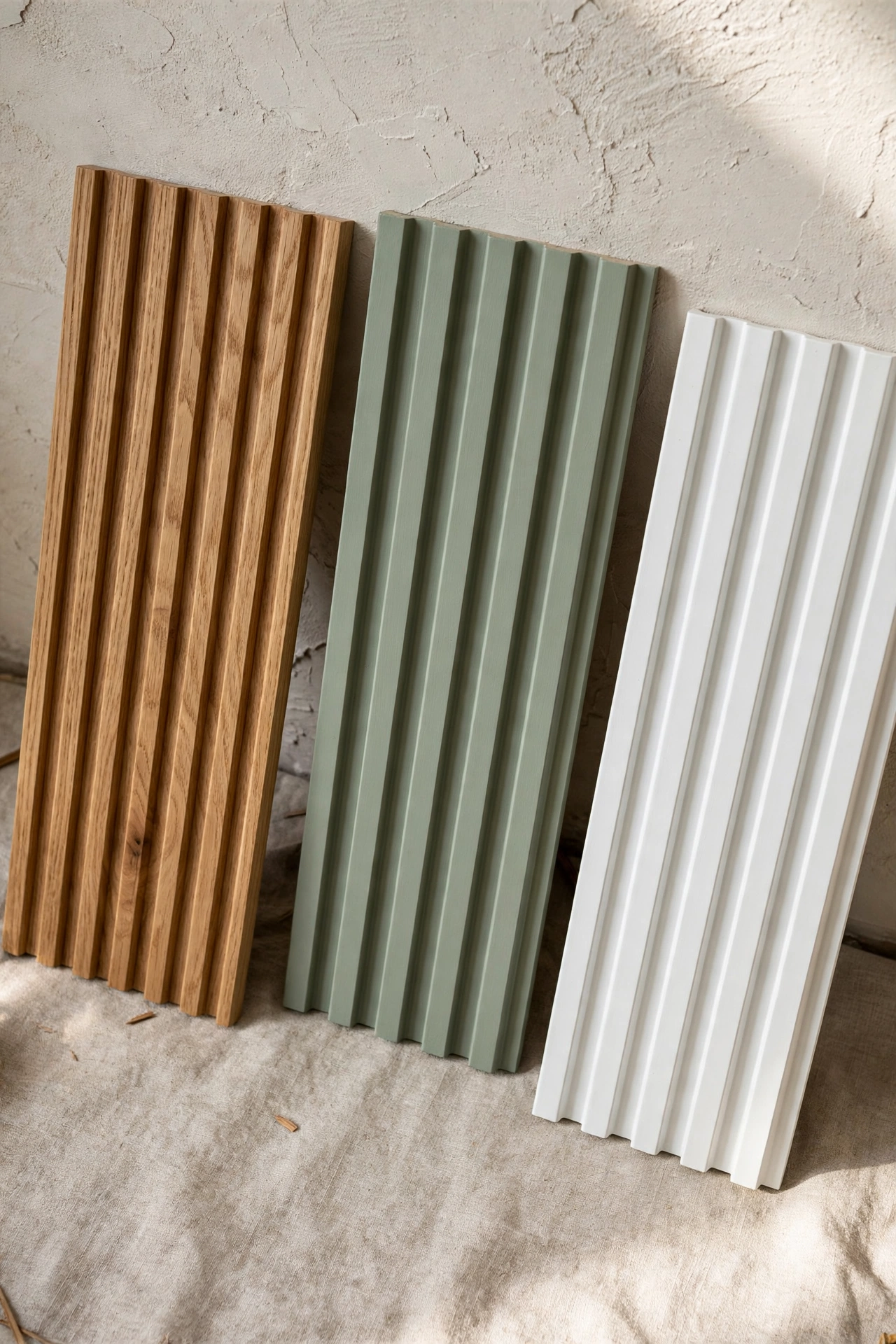
The panel you choose matters more than the colour you paint it, because each material behaves differently with moisture, weight, and wear. Solid wood looks beautiful and takes stain well, but it costs more and needs sealing in damp rooms. MDF is the workhorse choice: smooth, stable, easy to paint, and far cheaper than hardwood. PVC and polystyrene panels are light and moisture resistant, which makes them sensible for bathrooms and kitchens, though they can look less convincing up close if the ribs are too shallow.
Before you order, check how the panels are sold. Some come as full sheets that you cut to size. Others come as individual slats that you fix one by one. Sheets are faster on a large flat wall. Slats give you more control around sockets, skirting boards, and awkward corners, and they make a repair simpler later, since you can replace one slat instead of a whole sheet.
| Material | Best for | Watch out for |
|---|---|---|
| Solid wood | Living rooms, bedrooms, feature walls | Cost, and sealing in damp rooms |
| MDF | Painted feature walls, most rooms | Weight, and swelling if it gets wet |
| PVC or polystyrene | Bathrooms, kitchens, rental-friendly jobs | Shallow ribs can look flat up close |
| Wood veneer on MDF | A timber look at a lower price | Chips at cut edges need touching up |
Budget swap: If solid oak is out of reach, choose MDF and paint it in a warm off-white or a deep green. The shadow pattern does most of the visual work, and a good paint finish closes much of the gap.
Where Fluted Panels Work Best
 Save
Fluted panels earn their keep in places where a plain wall feels unfinished but a busy pattern would be too much. The wall behind a bed is the classic spot, and it works because the ribs give the bed a backdrop without competing with bedding and cushions. A television wall is another strong choice. The vertical texture breaks up a large flat surface, and it makes the screen feel framed rather than just hung on plaster.
Hallways and entryways benefit too, especially narrow ones. A full-height fluted wall in a hallway adds depth without narrowing the space the way a dark paint colour might. In a dining room, panels behind a sideboard or along one wall give the room a finished feel that carries through a dinner party, even when the table is bare between meals.
They also work well as a partial treatment. You do not have to cover a whole wall. A panelled section from floor to picture-rail height, topped with a simple shelf ledge, reads as intentional and tailored. Full-height panels suit rooms with generous ceilings. In a room with a low ceiling, stopping at around two-thirds height keeps the proportions calm.
Think about what else is in the room before you commit. If you already have a strongly textured wall finish elsewhere, adding fluted panels on top can tip the room into busy territory. A room with one textured wall and otherwise calm surfaces tends to look considered. Two competing textures tend to look restless. For a softer wall treatment that still adds depth, see our guide to limewash walls and how their cloudy finish compares with a ribbed panel.
Colour and Finish
 Save
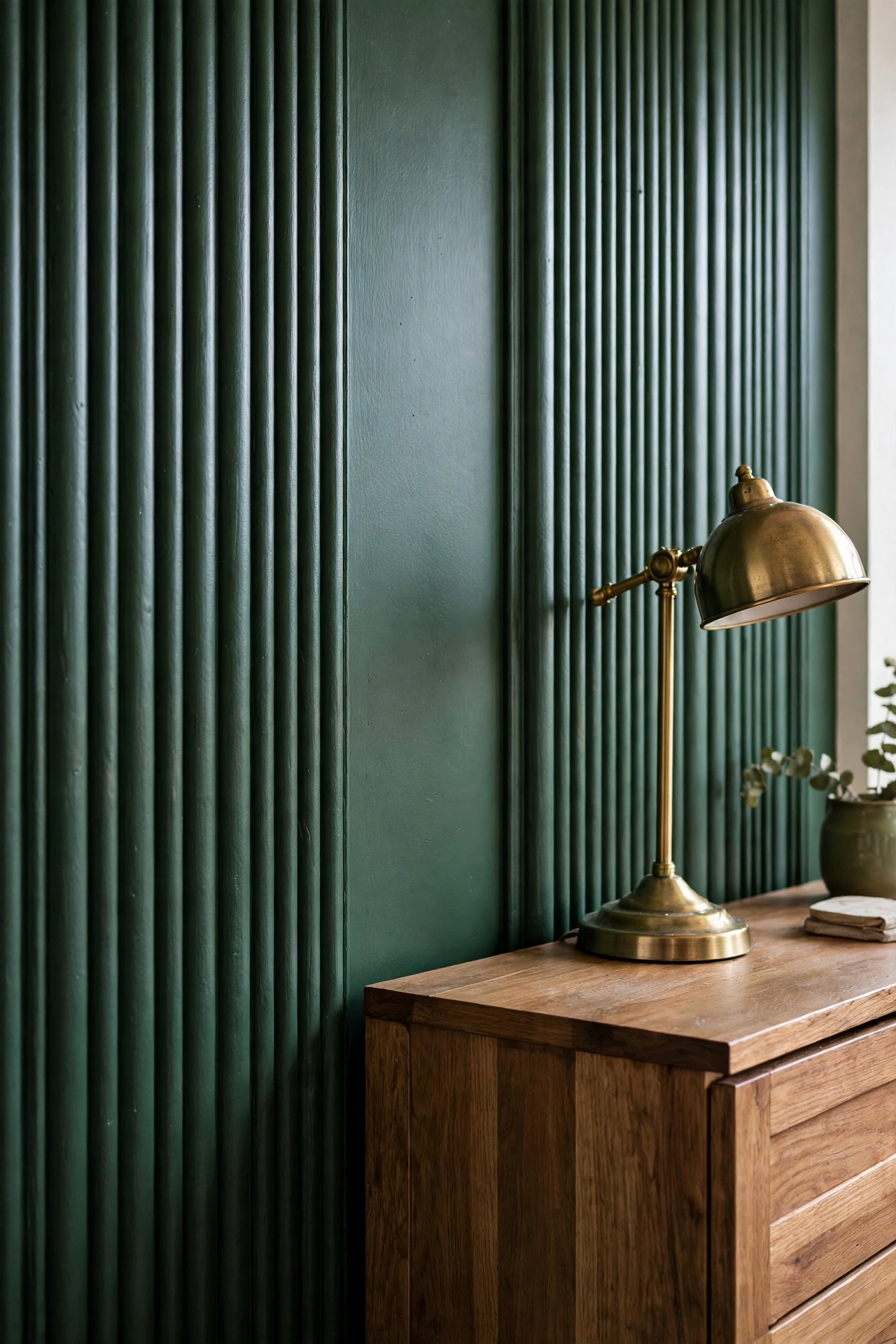
Colour changes the whole character of fluted panels, sometimes more than the rib width does. Painted in the same colour as the rest of the room, panels read as texture rather than as a feature. That is the safest route if you like a quiet room, and it is also the easiest to live with long term, because you can repaint the wall and the panels together when tastes change.
Painted in a contrasting colour, panels become the focal point. Deep green, navy, warm charcoal, and rich brown all work well, because darker colours deepen the shadows between ribs and make the texture read more strongly. In a small room, a dark panelled wall can still work, provided the other walls stay light and the room gets decent daylight or good lamps.
Stained timber is a different mood altogether. A clear or lightly tinted stain lets the grain show through the ribs, and the result feels warmer and more natural than paint. This suits rooms with wooden furniture, rattan, linen, and other natural materials. It also hides dust better than a dark painted finish, which is worth knowing if the panels sit near a front door or a kitchen.
Whatever finish you choose, test it on a spare offcut first, and look at it in both daylight and lamplight. A colour that looks soft at noon can turn muddy under a warm bulb at night. Two coats of paint, with a light sand between them, will give a smoother finish than one thick coat, especially on MDF where the first coat can raise the surface slightly.
Designer note: If you are painting panels a bold colour, paint the skirting board and any trim on that wall the same colour. A white line cutting across the bottom breaks the rhythm and makes the panels look like an add-on.
Fitting Them Without a Contractor
 Save
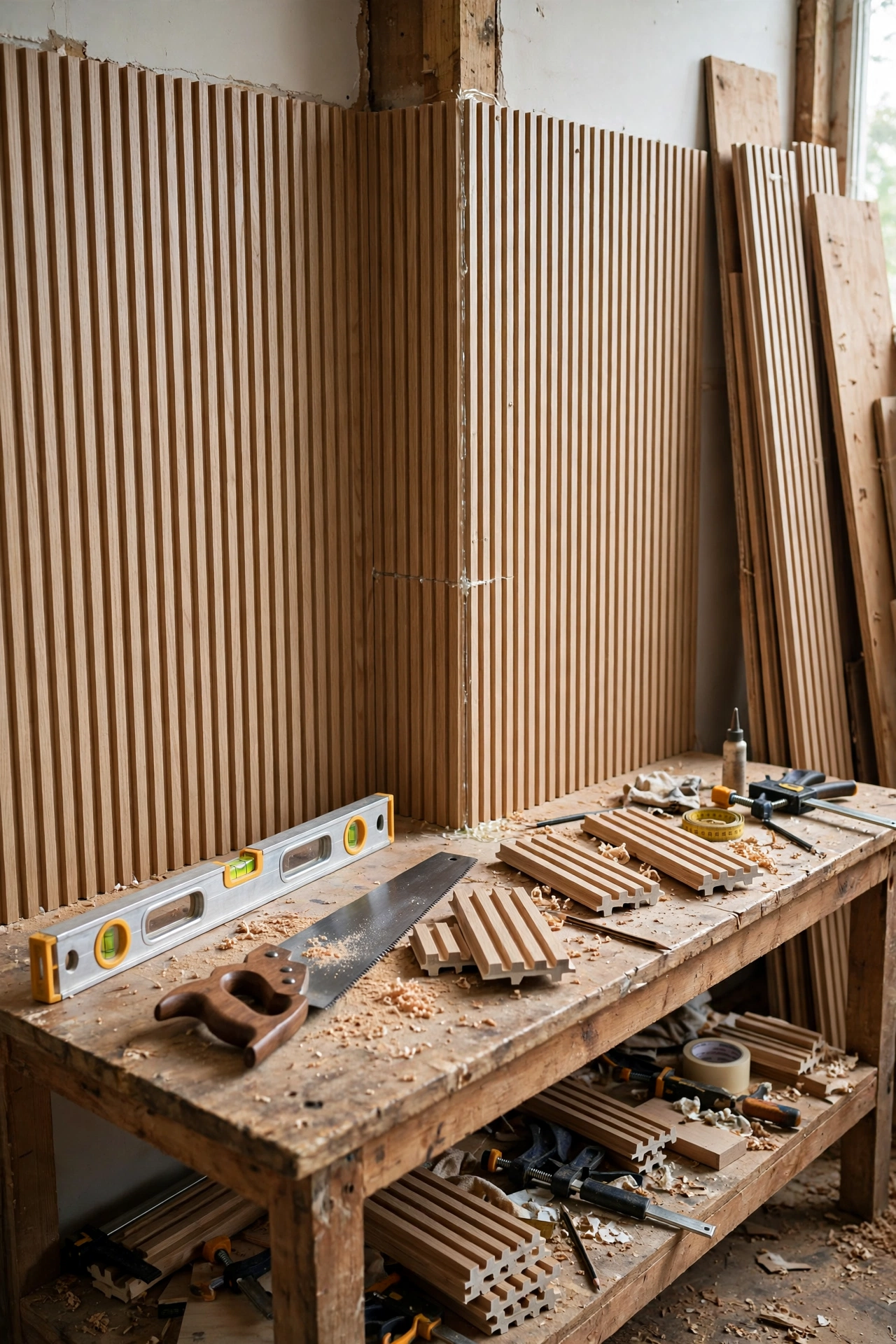
Fitting fluted panels is a realistic weekend job for someone comfortable with a saw, a level, and a tube of adhesive. It is not a job that needs specialist tools, but it does need patience at the measuring stage. Most of the visible mistakes in panelled walls come from rushing the first few boards, not from the fixing method itself.
Start by checking the wall. It should be clean, dry, and reasonably flat. Fill any large holes and sand down rough patches, because adhesive and pins will follow every bump. Mark a vertical line with a spirit level where the first panel will sit. That line is your anchor. If the first panel leans even slightly, every panel after it will follow, and the error grows across the wall.
Measure the full width of the wall and plan the last panel before you fix the first. It is better to trim two edge panels by a small amount than to end up with a narrow sliver at one end, which always looks like an afterthought. Cut panels face down where possible, so any chipping happens on the back. A fine-tooth saw blade gives a cleaner edge on MDF and veneer.
For fixing, a combination of construction adhesive and a few panel pins or a brad nailer gives a secure result. Adhesive alone can work on a flat wall, but pins hold the panel tight while the adhesive cures and stop it drifting. Fill pin holes with filler matched to your finish, and caulk the edges where panels meet skirting and ceiling for a clean join. If you are also painting the whole room one colour, see our guide to colour drenching for how a single-colour scheme changes the way panelled walls read.
Styling Around the Texture
 Save
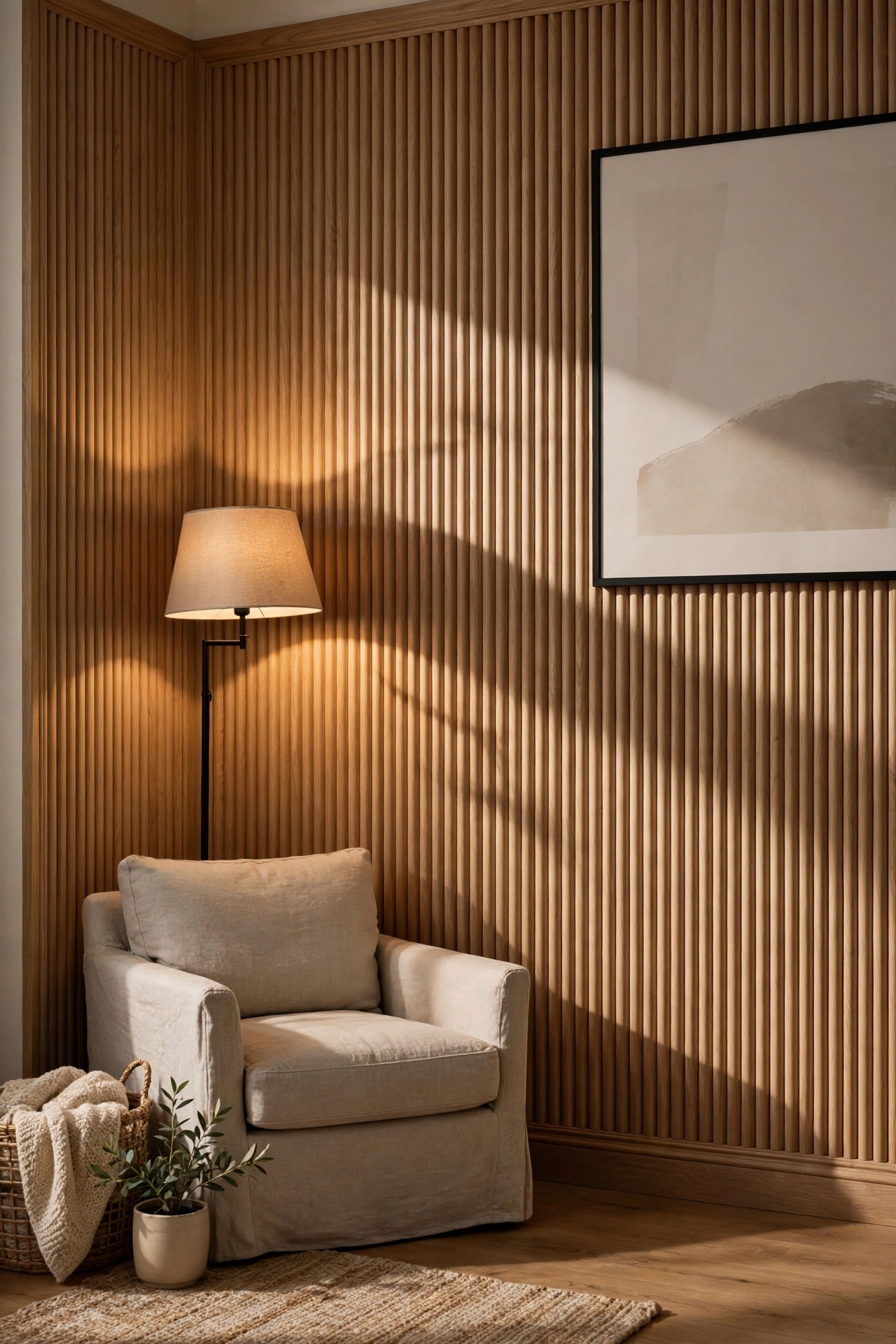
Once the panels are up, the styling should stay calm. Fluted texture is already doing a lot of work, so the room does not need heavy pattern on top of it. Plain linen bedding, a simple timber bench, a single large piece of art, or a low sideboard all sit well against ribbed walls. The texture becomes the backdrop, and the furniture gets to be the subject.
Lighting matters more than most people expect. A wall washer, a picture light, or even a floor lamp placed near the panelled wall will rake light across the ribs and bring out the shadows. A ceiling light in the middle of the room, on the other hand, tends to flatten the texture, because the light falls straight down. If you can, add a lamp or a wall light that sits close to the panels, and try it in the evening before you decide the job is done.
Art and mirrors need a little thought too. A large mirror hung on a fluted wall can look striking, but a small frame can get lost in the ribs. If you want art on the panelled wall, choose one generous piece rather than a cluster of small frames. A cluster works better on a plain wall, where each frame has room to breathe. In a bedroom, a pair of simple wall lights either side of the bed, mounted on the panels, can tie the whole wall together.
Try this: Hang nothing on the panelled wall for a week. Live with the texture on its own first. Many people find they need far less decoration than they planned, and the wall looks better for it.
Mistakes That Ruin the Look
 Save
The most common mistake is covering too much. Fluted panels on every wall in a room stop reading as texture and start reading as a box. One wall, or two at most in a large open space, is usually enough. The rest of the room needs plain surfaces to rest the eye.
The second mistake is choosing ribs that are too shallow for the room. Very fine ribs can disappear in a large room with soft lighting, leaving a wall that looks almost flat from the sofa. If the wall is large or the room is dim, go for a deeper rib. Save the fine, delicate profiles for small spaces viewed up close, like a powder room or a reading nook.
The third mistake is ignoring the edges. Panels that stop abruptly at a corner, with a raw cut edge showing, look unfinished. Plan how each edge will finish: a return into the corner, a slim trim piece, or a painted edge that matches the panels. The same applies at the ceiling. A small gap at the top, left unfilled, will catch the eye every time you walk in.
Finally, do not forget maintenance. Ribbed walls collect dust in the grooves, more than a flat wall does. A soft brush attachment on a vacuum, or a dry microfibre cloth run down the grooves every few weeks, keeps them looking sharp. In a kitchen, wipe the panels near the cooker more often, since grease settles into grooves just as it settles anywhere else. A ceiling with strong linear detail can compete with ribbed walls, so if you are planning both, read our guide to statement ceilings before you commit to two bold surfaces in one room.
Bringing It All Together
Fluted wall panels work because they are simple. They add texture, shadow, and a sense of finish without demanding attention the way a loud pattern does. Choose a material that suits the room, a rib depth that suits the wall size, and a finish you will still like in three years. Fit the first panel straight, plan the edges, and let the texture do its job.
Shiplap is not a bad choice, and in the right cottage-style room it still looks right. But if your home leans modern, warm, or simply a little more tailored, fluted panels are the more current answer. They give a plain wall a quiet confidence, and they do it without a full renovation.
Frequently Asked Questions
Are fluted wall panels better than shiplap?
They are different rather than strictly better. Shiplap suits cottage and coastal rooms with horizontal lines, while fluted panels suit modern and tailored rooms with vertical texture. If your room already has strong horizontal features, vertical ribs can balance it nicely.
Can fluted panels go in a bathroom?
Yes, provided you choose a moisture-resistant material such as PVC, and seal the edges properly. MDF and untreated timber are risky in a steamy bathroom, since moisture can swell the boards and lift the finish over time.
Do fluted panels make a small room look smaller?
Not usually, because the vertical ribs draw the eye upward and add depth without bulk. A dark colour on every wall could make a small room feel enclosed, but a single light-coloured panelled wall tends to make the room feel more finished, not smaller.
How do you clean fluted wall panels?
Run a soft brush or a vacuum brush attachment down the grooves to lift dust, then wipe with a dry or slightly damp cloth. Avoid soaking the panels, especially MDF, and clean kitchen panels near the cooker more often to stop grease building up in the grooves.
Can renters use fluted panels?
Lightweight PVC panels fixed with removable adhesive strips can work in a rental, but check your tenancy agreement first and test removal on a hidden spot. Heavier MDF or timber panels fixed with adhesive and pins are a permanent change, so they suit owned homes rather than rentals.