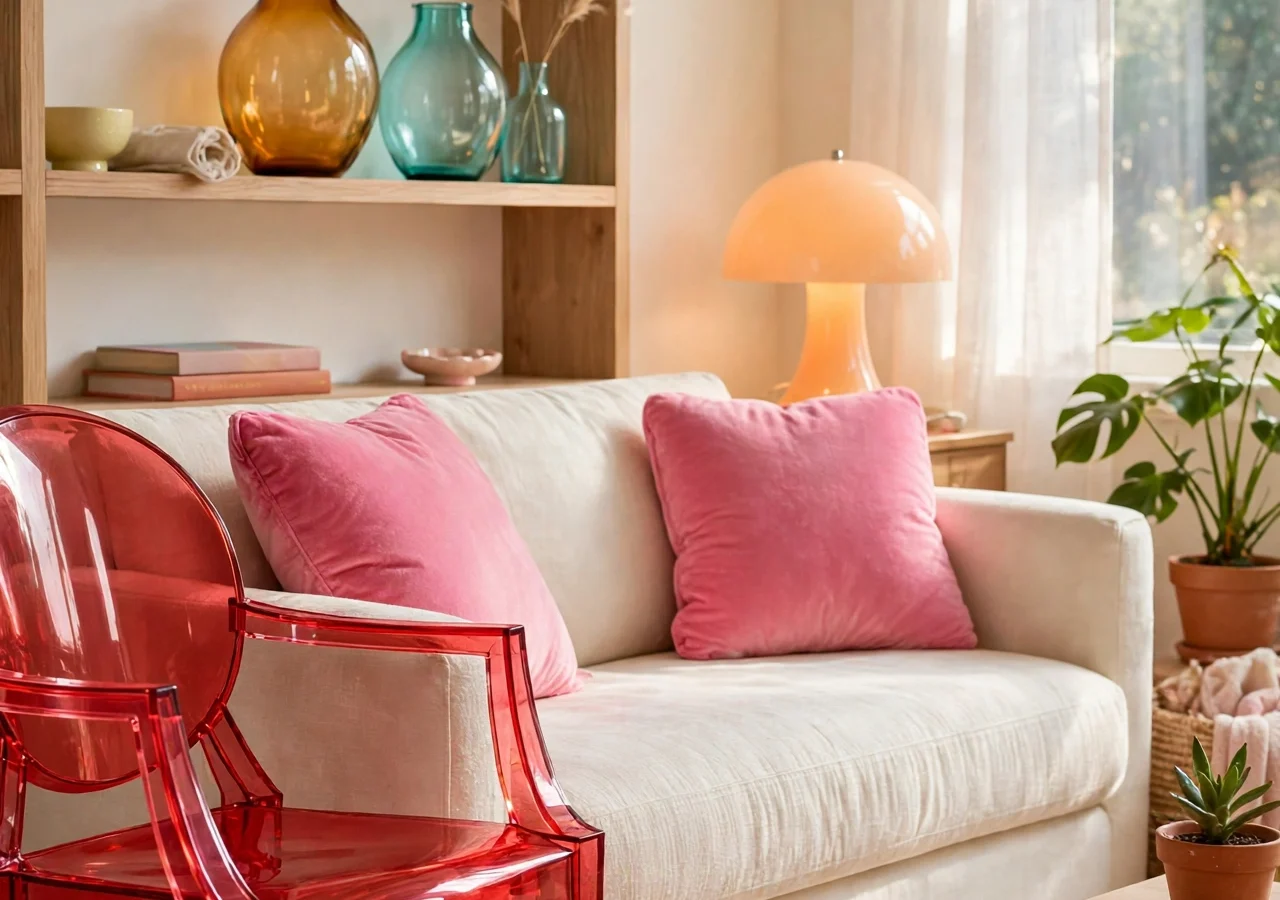
Does your living room feel a little too serious? Beige sofa, white walls, everything matching and nothing making you smile. Plenty of homes end up that way, not because the taste is bad, but because every choice was made to be safe.
The trouble starts when you try to fix it. A bright cushion here, a novelty ornament there, and suddenly the room tips from calm into cluttered, or worse, into something that looks like a children’s playroom. Playful decor is easy to get wrong, and most of us give up after one try and go back to beige.
That is exactly where gimme gummy decor earns its place. It borrows the soft, see-through colours of jelly sweets, gummy bears and bubble gum, then pairs them with squishy textures and glossy surfaces that beg to be touched. Done right, it feels joyful without feeling young, and it works in a grown-up living room just as well as in a bedroom. Here are eight ways to bring it home.
Quick Tips Before You Start
- Pick one jelly hero colour per room, then add one or two supporting shades in smaller doses.
- Balance every glossy piece with something soft, so the room feels touchable rather than plasticky.
- Keep the biggest surfaces calm. Jelly colours work hardest as accents, not as wall-to-wall paint.
- Mix one translucent piece with one opaque piece in the same colour family for depth.
1. Start With a Jelly-Tint Statement Chair
 Save
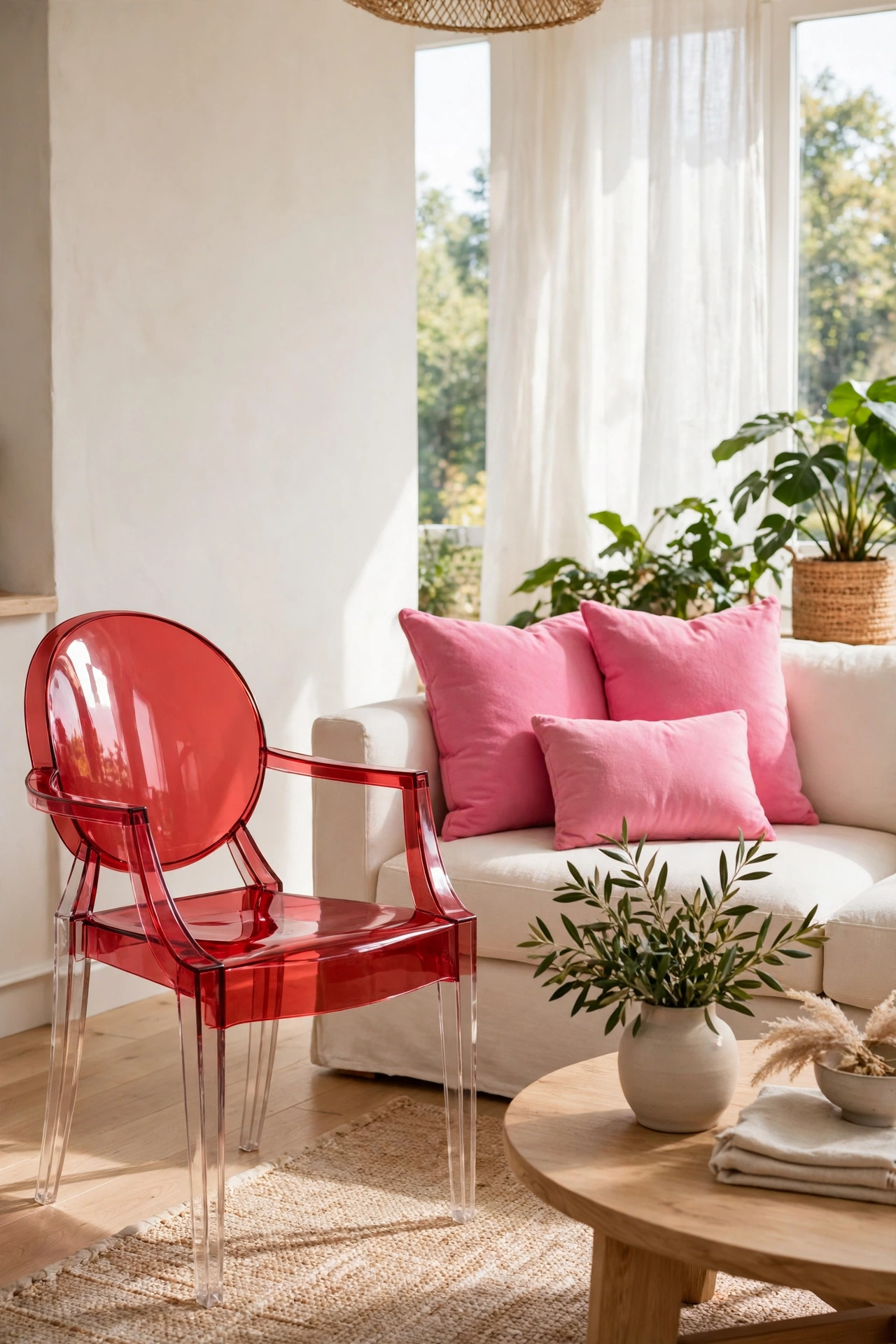
Every playful room needs one piece that sets the tone, and a jelly-tint chair does it better than almost anything else. Think of a moulded acrylic armchair in cherry red, a translucent lime side chair, or a bubblegum pink dining chair with a soft, rounded back. The colour is loud enough to anchor the room, while the see-through material keeps it from feeling heavy.
Test it first: before you buy the chair, put a cushion in your hero jelly shade on the plain chair that already sits in that spot and live with it for a week. Notice it in morning light and evening light, and notice if you still smile at it on day seven. If the colour still feels fun and the room still feels calm, buy the chair. If it starts to tire you, keep the cushion and spend the chair money on tinted glass instead.
Place the chair where it catches the light. Near a window it glows a little at golden hour, and in a dining setup it reads as a deliberate pop rather than a random bright spot. If a full acrylic chair feels too much, a solid chair in a jelly shade works too, especially in velvet or lacquered wood. The shape matters as much as the colour: rounded edges and soft curves sell the gummy feeling far better than sharp corners.
| Hero colour | Mood | Best spot |
|---|---|---|
| Cherry red | Bold, warm, confident | Living room chair near a window |
| Bubblegum pink | Soft, sweet, relaxed | Bedroom chair or dining chair |
| Lime green | Fresh, playful, bright | Chair in a pale, calm room |
Colour: cherry red, bubblegum pink or lime green, one chair only.
Texture: smooth acrylic or soft velvet against a matte rug.
Swap: a jelly-coloured cushion on a plain chair gives you the same hit for a fraction of the price.
2. Layer Translucent Colour on Open Shelves
 Save
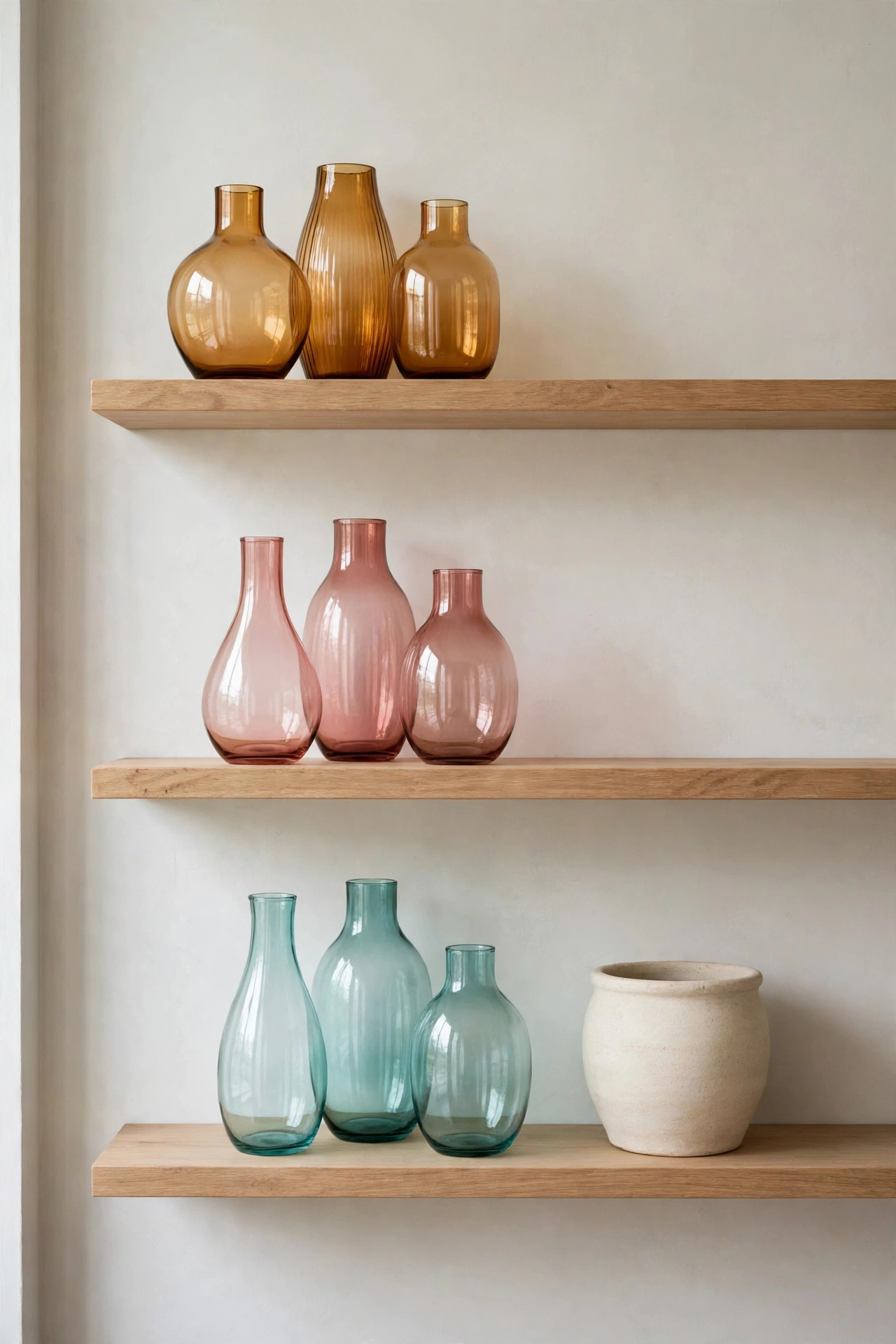
Open shelves are the easiest place to test jelly colours because nothing there is permanent. A row of tinted glass vases, a stack of coloured resin trays, or a few translucent storage boxes can change the whole feel of a shelf in ten minutes.
The trick is layering. Put a tall amber vase behind a short pink one, and let the colours overlap a little when you look at them from the side. Add one opaque object, a cream ceramic pot or a wooden box, so the shelf does not turn into a sweet shop display. Group in threes, leave breathing room between groups, and keep the shelf backing pale so the colours can shine. This is also a good spot to play with iridescent finishes, which catch the light in a similar way and sit happily next to jelly glass.
Wood and metal stop the shelf from feeling too sweet. A dark walnut tray under a pink vase, or a brass candlestick beside a green glass bottle, gives the eye something solid to rest on. The contrast is what makes the translucent pieces look deliberate instead of accidental, and it keeps the shelf feeling like part of a real room rather than a display case.
Placement: eye level on open shelving, grouped in threes.
Colour: amber, rose and aqua together, with one neutral to ground them.
Try this: fill one tinted vase with plain water and a single stem. The colour of the glass tints the whole arrangement.
3. Bring in Jelly Blush Bedding or Cushions
 Save
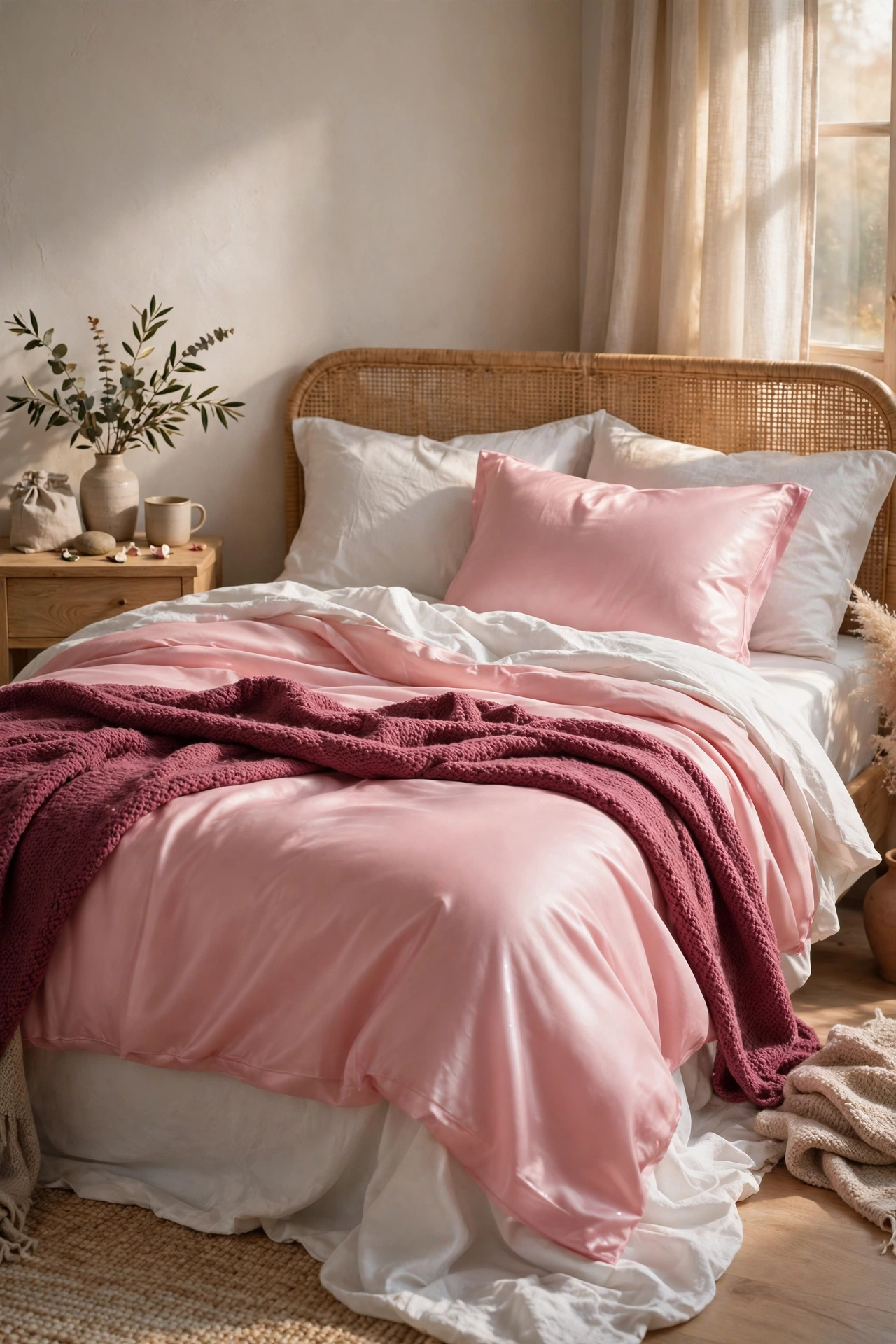
Jelly blush is the softest entry point into this look, and it suits bedrooms best. A blush pink duvet cover, a set of rose-tinted pillowcases, or a stack of cushions in strawberry milk shades can warm a pale bedroom without a single paintbrush.
Layer it the way you would any good bedding scheme. Start with white or cream sheets, add the blush as the middle layer, then finish with a throw in a deeper berry shade. The mix of tones keeps the pink from looking flat, and the softness of the fabric stops the colour from feeling sugary. In a living room, the same idea works on a smaller scale: two blush cushions and one berry one on a grey or cream sofa.
Colour: blush pink as the main shade, berry as the deeper accent.
Texture: washed cotton or soft velvet, never shiny satin.
Swap: blush pillowcases on your existing bedding cost almost nothing and change the room overnight.
4. Set the Table With Gummy-Tint Glassware
 Save
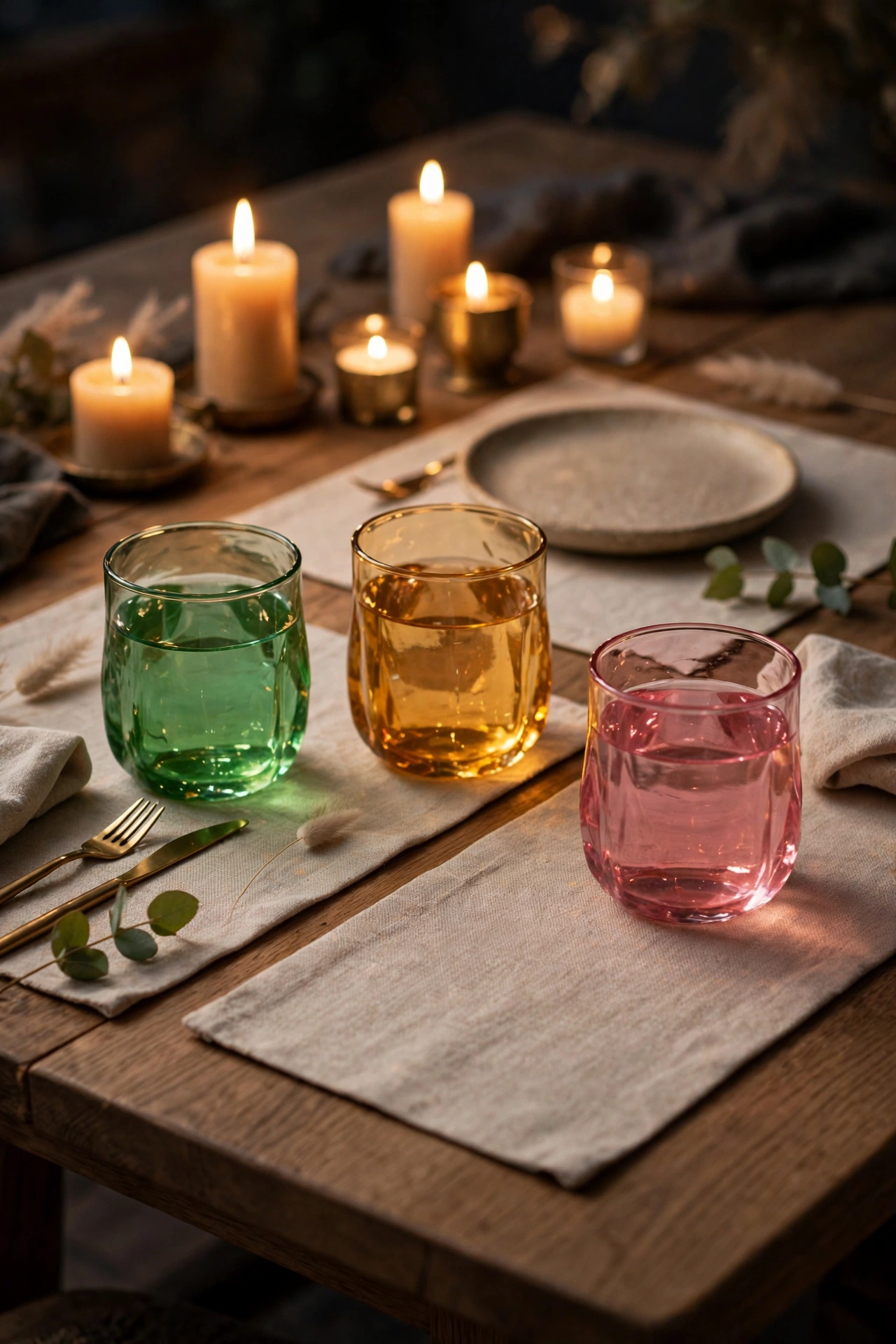
Dinnerware is where gummy decor feels most at home, because jelly colours were made for the table. Tinted drinking glasses in green, amber or pink turn an ordinary weeknight supper into something worth photographing, and they cost very little to collect.
Start with glasses, since they are the most forgiving. Four matching tumblers in one shade look intentional, while a mixed set of pastel tints looks collected and charming. Add coloured plates or a tinted serving bowl if you want to go further, but keep the tablecloth or placemats plain so the glass does the talking. Candlelight helps too: a tea light inside a coloured glass holder throws a soft tinted glow across the table.
Coloured glass also photographs beautifully, which matters if you share your table online. Shoot from slightly above so the light passes through the glasses and paints soft colour onto the tablecloth. Keep the rest of the table simple, plain cutlery and a linen napkin, so the glass stays the star of the picture.
Placement: matching sets of four on a plain tablecloth.
Colour: one shade per set, or a mixed pastel set for a collected feel.
Try this: use the same glasses as small vases for single stems when guests are not dining.
5. Add a Jelly-Hued Lamp or Light
 Save
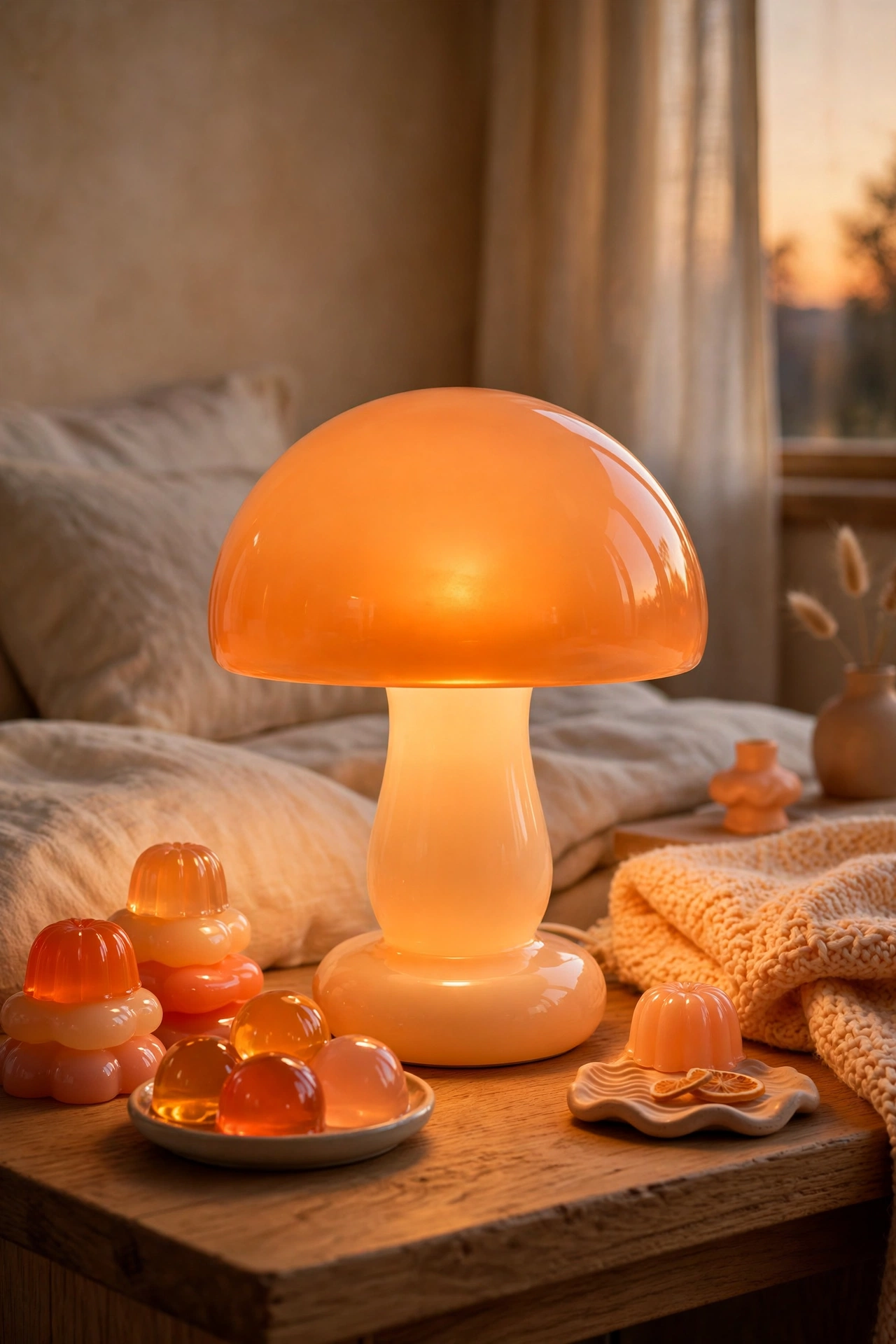
Lighting is the secret weapon of this trend. A lamp in a jelly colour changes the mood of a room twice: once as an object in daylight, and again when it is switched on and the shade glows.
A mushroom-shaped table lamp in milky orange is the classic choice, and it suits a bedside table or a hallway console perfectly. A pendant in smoky pink works over a dining table, and a small jelly-tint desk lamp can rescue a dull home office corner. Keep the bulb warm, around 2700K, so the colour stays soft rather than turning harsh. If you like the mood-lifting side of bright colour, our guide to dopamine decor has more ideas for rooms that make you feel good the moment you walk in.
| Lamp | Best spot | Glow |
|---|---|---|
| Mushroom table lamp | Bedside table, hallway console | Soft pool of light at eye level |
| Smoky pink pendant | Over the dining table | Tinted glow across the table |
| Jelly-tint desk lamp | Home office corner | Small, focused glow where you work |
Placement: bedside tables, consoles and desks, where the glow is close to eye level.
Colour: milky orange, smoky pink or soft mint, with a warm bulb.
Swap: a coloured bulb inside a plain white lamp gives a gentler version of the same effect.
6. Pile on Squishy, Tactile Textures
 Save
Gummy decor is not only about colour. The word itself promises something soft and squashy, and the room should deliver on that promise. This is where texture does the heavy lifting.
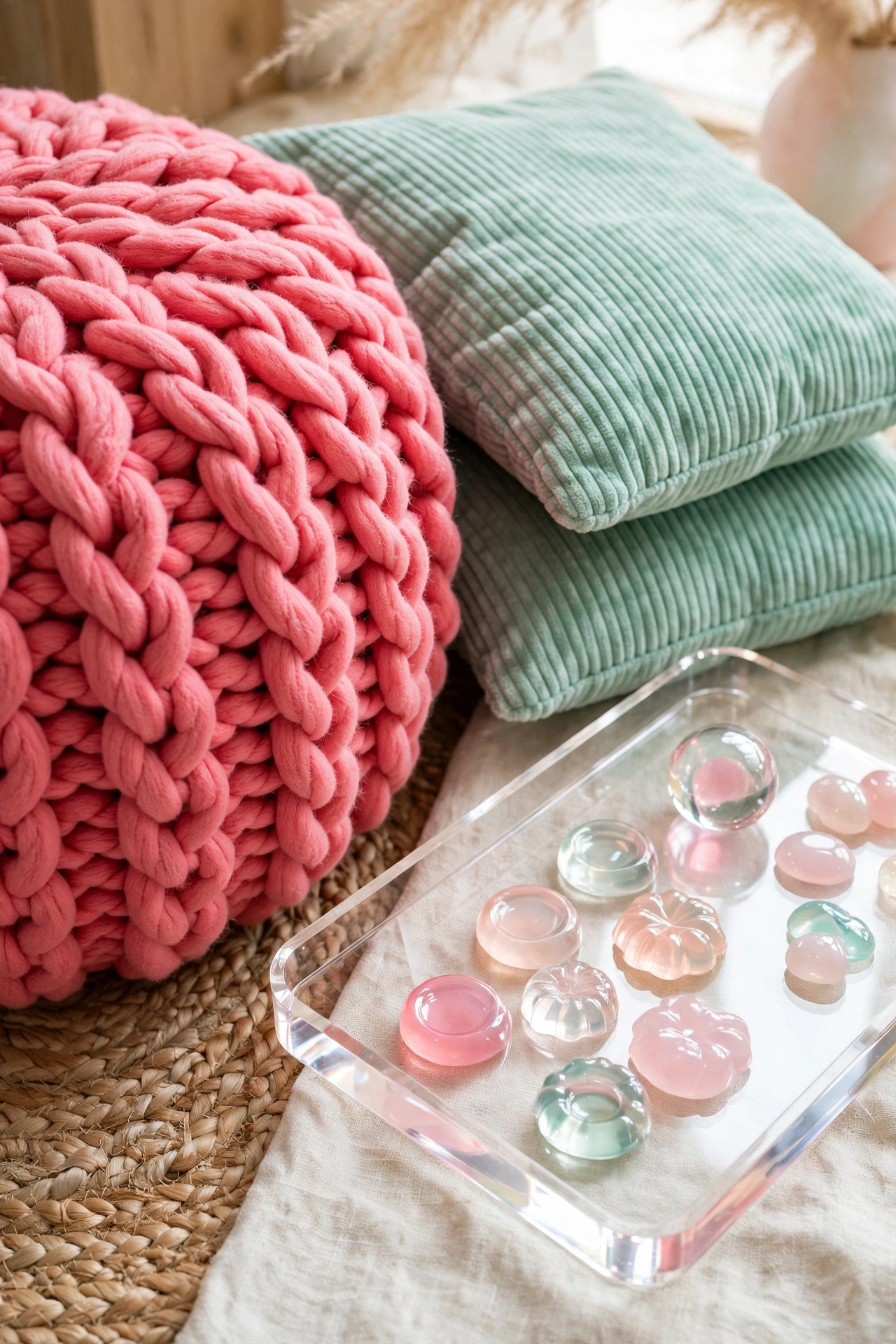
Think of a chunky knitted pouffe in strawberry pink, a corduroy cushion in mint, or a rug with a deep, soft pile that your feet sink into. The key is contrast: pair one squishy piece with one smooth, glossy piece nearby, so the room has both kinds of touch. A velvet cushion next to an acrylic tray, or a boucle throw draped over a lacquered chair, gives your hands something to notice every time you sit down. Avoid going all soft, or the room turns mushy and shapeless.
Scale matters here. One big soft piece, like a pouffe or a deep rug, grounds the room better than a dozen small cushions. If you already own a plain sofa, a single squishy throw in a jelly shade can do more than a whole basket of small cushions, and it is far easier to wash when life happens.
Texture: boucle, corduroy and chunky knit against acrylic or lacquer.
Colour: keep the soft pieces in the same jelly family as the glossy ones.
Try this: a round floor cushion in a jelly shade doubles as extra seating and a footrest.
7. Try Jelly Colours in the Bathroom
 Save
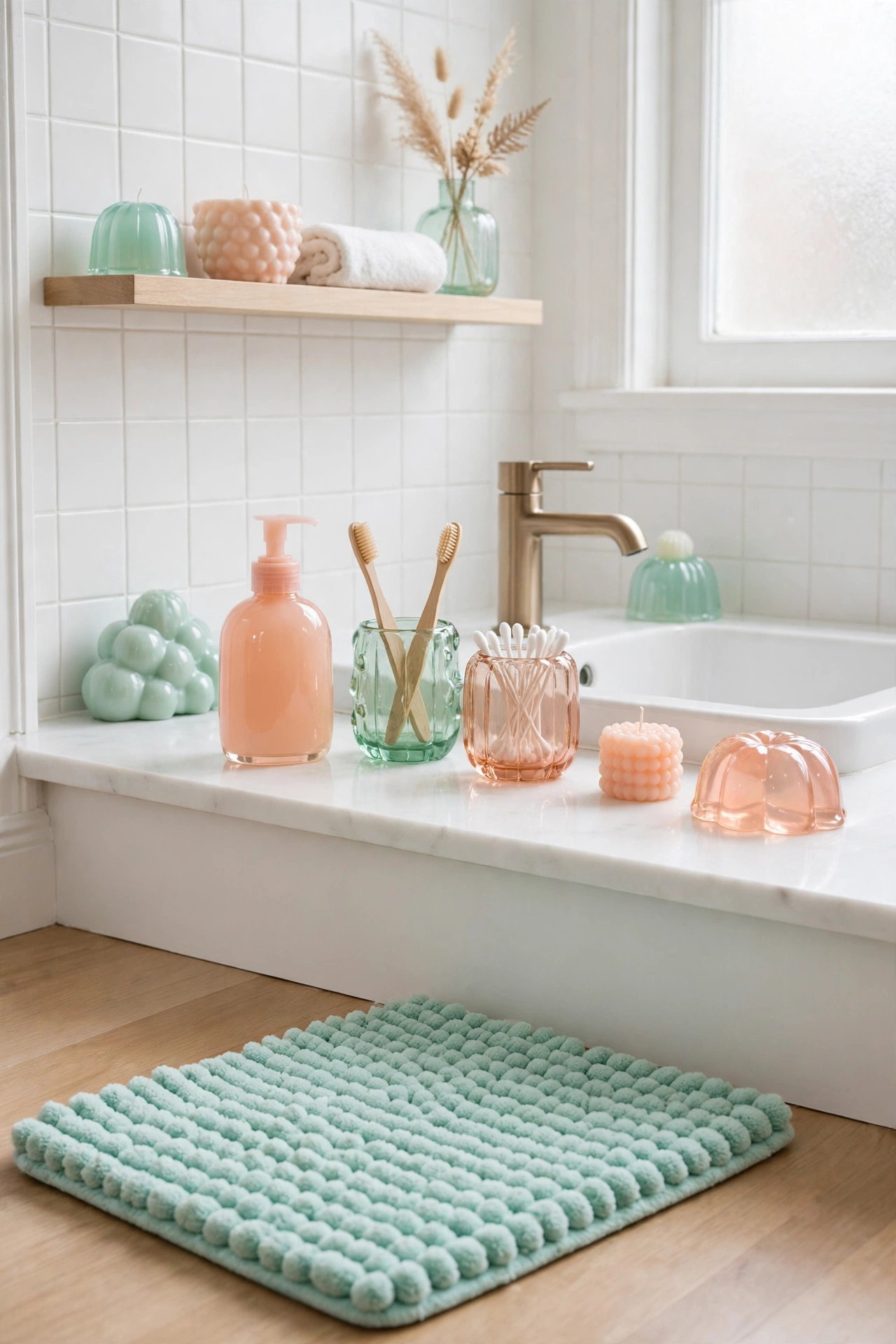
Bathrooms are small, tiled and easy to change, which makes them perfect for a playful experiment. A jelly-colour scheme here feels fresh rather than childish, especially when the fixtures stay white and the colour arrives through accessories.
Start with a tinted soap dispenser and a matching toothbrush holder, then add a bath mat in a soft mint or peach. A coloured shower curtain in a translucent material lets the light through and keeps the room feeling open. If you are feeling bolder, paint a single vanity unit in a glossy jelly shade, cherry red or bubblegum pink, and keep the walls pale. The gloss of the paint ties the whole look together and wipes clean easily, which matters in a room that gets wet.
Placement: accessories first, one painted piece only if you want to commit.
Colour: mint or peach for calm, cherry red for drama.
Swap: coloured towels in a jelly shade are the cheapest test of all, and easy to change back.
8. Finish With Small Gummy Accents That Tie It Together
 Save
The last step is the one people skip, and it is the step that makes the room feel finished rather than half-done. Small accents in your jelly colours, repeated in two or three spots, pull the whole scheme together.
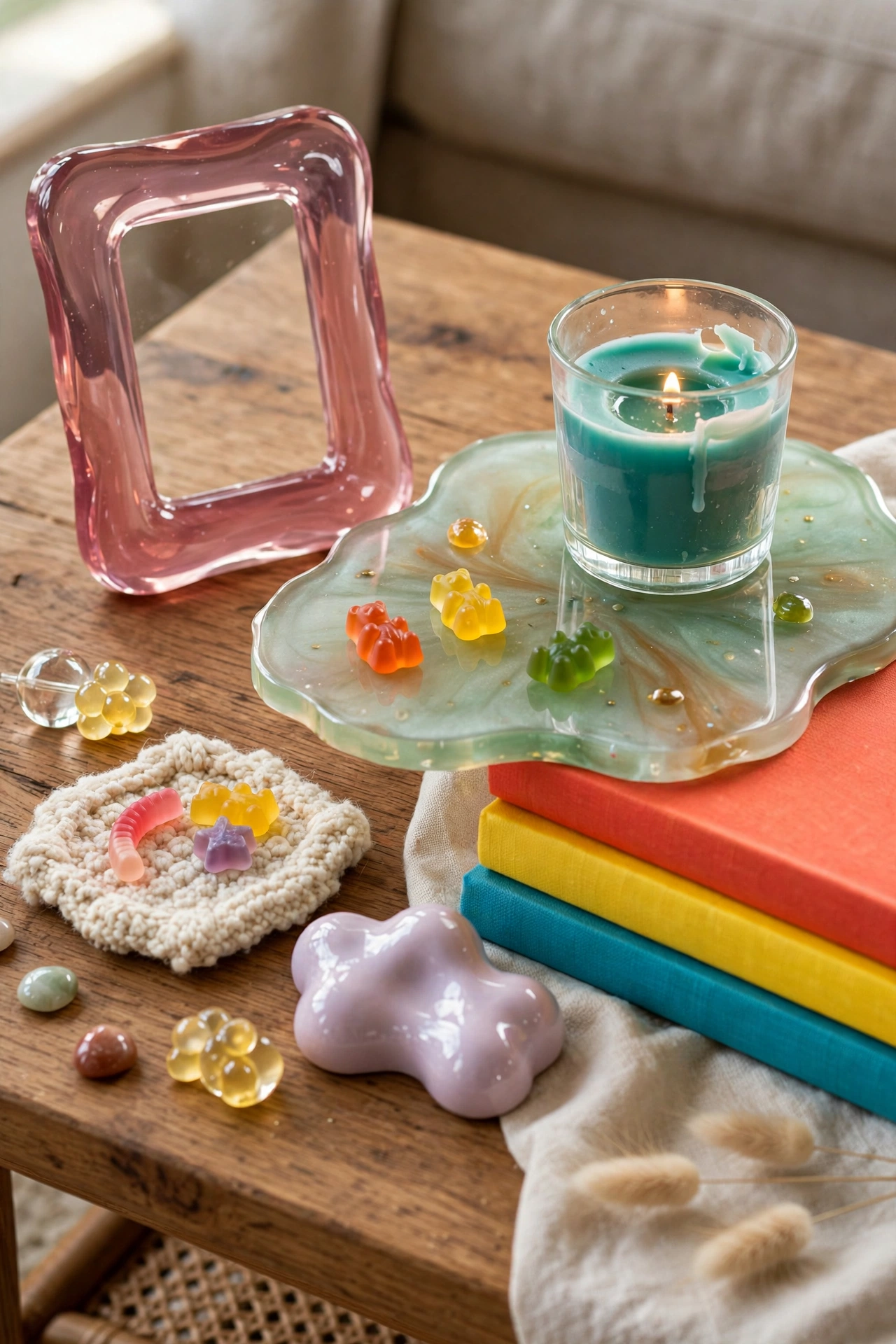
A jelly-coloured picture frame on a shelf, a small resin tray on a coffee table, a coloured candle in a glass holder, a stack of books with bright spines. None of these is expensive, and none of them is permanent, but together they echo the bigger pieces and stop the statement chair or lamp from looking lonely. The rule is repetition with restraint: the same colour should appear at least three times in the room, but never in more than five places, or it starts to shout. If you enjoy bold pattern as well as bold colour, the bold stripes and circus-chic style of the FunHaus trend pairs surprisingly well with jelly shades.
Walk the room once you have placed them and check the balance from the doorway. If all the colour sits on one side, move one small piece across the room. The eye should travel, not get stuck in a corner, and a single accent shifted a metre or two is often all it takes.
Placement: three small repeats of your hero colour, spread across the room.
Colour: echo the hero shade exactly, not a near match.
Try this: a coloured candle in a glass holder is the quickest finishing touch, and it adds scent too.
Your takeaway: one jelly hero colour, one glossy piece, one squishy piece, and three small repeats across the room. That is the full recipe, and it works in any room you try it in.
Bringing It All Together
Gimme gummy decor works because it is honest about what it is: colour you can see, texture you can feel, and a room that does not take itself too seriously. You do not need to repaint the house or buy a whole new furniture set. One jelly-tint chair, a few tinted glasses, a soft blush throw and a lamp that glows pink at dusk can carry the whole look.
Start small, live with it for a week, and add more only if the room asks for it. The best version of this trend is the one that still feels like your home, just a little sweeter. If you do want to take one wall further, colour drenching in a soft jelly shade is the next step, and it works best when the rest of the room stays calm.
Frequently Asked Questions
What is gimme gummy decor?
Gimme gummy decor is a playful home style built on jelly colours, translucent materials and soft, tactile textures. It takes its palette from gummy sweets, jelly and bubble gum, with shades like cherry red, bubblegum pink, lime green and jelly blush, and pairs them with glossy acrylic, tinted glass and squishy fabrics.
Does jelly colour decor look childish?
It can, if every piece is bright and every surface is glossy. The grown-up version balances jelly colours with calm neutrals, mature shapes and quality materials. One statement piece in a jelly shade, plus small repeats of the same colour, reads as confident and playful rather than young.
Which colours work best in gummy decor?
Cherry red, bubblegum pink, lime green, jelly blush, amber and aqua are the core shades. Pick one hero colour per room and support it with one or two softer shades from the same family. Pale walls and neutral floors let the colours stand out without overwhelming the space.
How do I add gummy decor to a rented home?
Stick to pieces you can take with you: cushions, throws, tinted glassware, lamps, removable shelves and accessories. A jelly-tint chair, a coloured rug or a set of tinted storage boxes changes the room completely without touching the walls, and everything moves with you when you leave.
Where can I buy jelly-coloured decor on a budget?
Start with charity shops and second-hand markets for tinted glassware and vases, which turn up often and cost very little. High street home stores carry jelly-tint lamps and cushions in seasonal ranges, and online marketplaces are good for acrylic chairs and resin trays. Buy the small pieces first and save the statement chair for last.