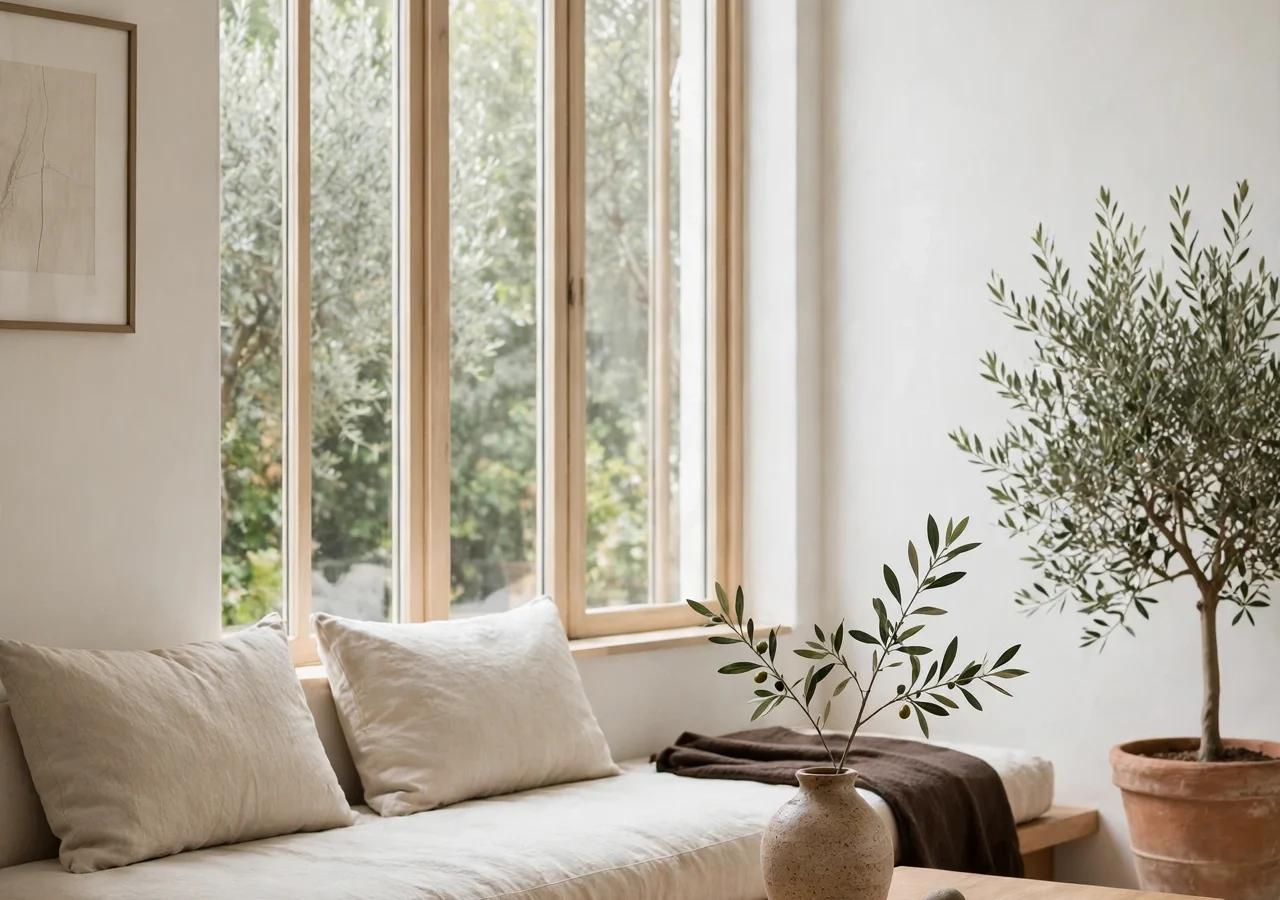
Japandi is the look you reach for when a room feels like it is trying too hard. You know the feeling. Too many cushions, too many colours, a shelf full of things you do not remember buying. The room is full, but it is not restful. Japandi fixes that, not by stripping everything away, but by choosing fewer things and choosing them well.
The style is a meeting point between Japanese wabi-sabi and Scandinavian hygge. From Japan it takes the love of imperfection, natural materials, and empty space that lets a room breathe. From Scandinavia it takes warmth, soft textiles, and furniture made for long evenings at home. Put together, you get rooms that feel calm without feeling cold, and simple without feeling unfinished.
Japandi decor is not a new idea, but the 2027 version has grown up. The early version was almost entirely pale wood and white walls. The new Japandi keeps the calm and adds depth: darker walnut, lacquered finishes, hand-thrown ceramics, and colours pulled from nature rather than from a paint chart. It is still minimal, but it is warmer, richer, and far more personal.
Quick Tips Before You Start
- Start with one room, not the whole house. Japandi works best when you can feel the difference in a single space first.
- Remove three things before you add one. Clear space is the whole point, and editing costs nothing.
- Pick a palette of three colours and repeat it. Warm white, a mid wood tone, and one deep accent is enough.
- Buy one crafted piece instead of five small decorations. A handmade bowl does more than a shelf of trinkets.
1. Build the Base in Warm Neutrals
 Save
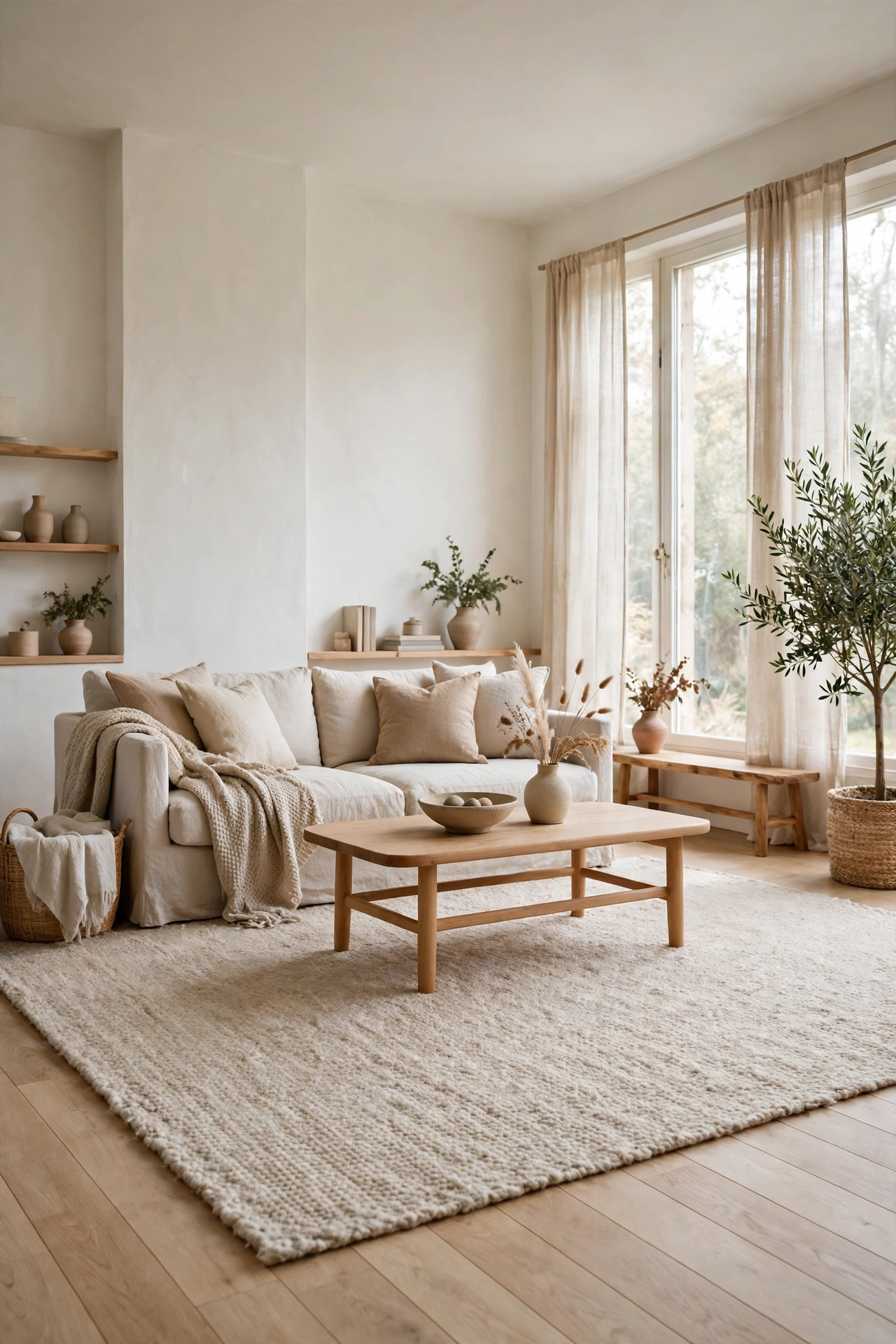
Every Japandi room starts with a quiet base. Walls in warm white, soft stone, or a pale greige give everything else room to stand out. The trick is choosing a white with warmth in it, not the blue-white that makes a room feel like a dentist’s waiting area. Look for paint names that mention warm, cream, or linen, and test a patch beside your wood floor before committing.
Floors do the heavy lifting in this look. Pale oak, ash, or a light walnut floor sets the tone for the whole room, and it pairs with almost any furniture you already own. If your floor is dark, do not panic. A large rug in natural wool or undyed cotton softens it and pulls the palette back toward the middle.
Keep the ceiling and trim the same colour family as the walls. Sharp contrast at the ceiling line breaks the calm, while one continuous wash of warm neutral lets the eye travel around the room without stopping. This is the cheapest change on this list and the one that makes the biggest difference on day one.
Colour: warm white walls, pale oak floor, one deep accent later. Texture: matte paint, bare wood, woven wool. Swap: if repainting is too much, swap bright white bedding and curtains for cream and oatmeal tones first.
2. Choose Low, Honest Furniture
 Save
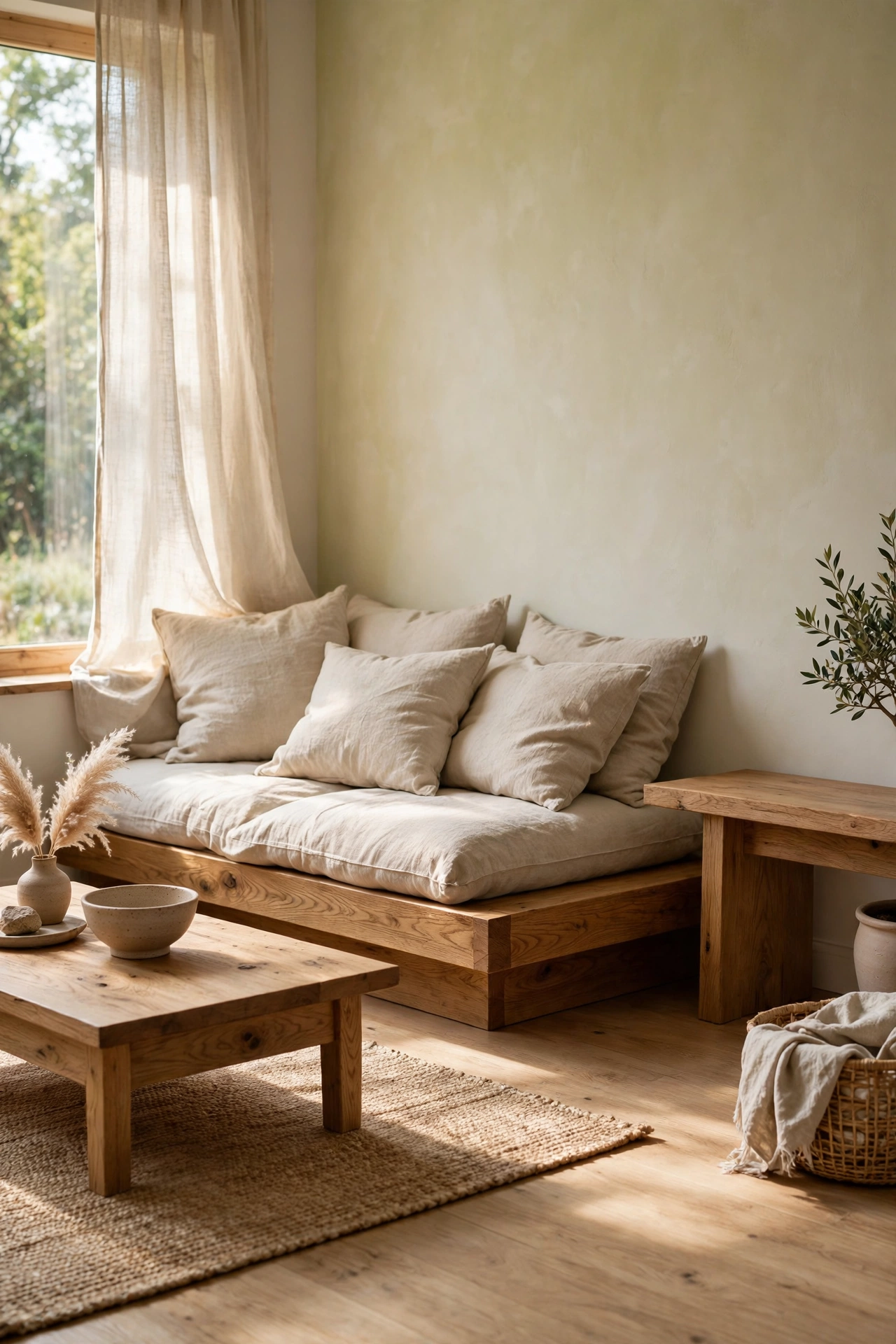
Japandi furniture sits low and looks like it was made by someone who cared. Think platform beds close to the floor, sofas with short legs, and coffee tables that are wider than they are tall. The low profile changes how a room feels. Ceilings seem higher, light moves further, and the whole space settles down a notch.
Look for pieces where you can see the joinery and the grain. A solid oak bench, a walnut side table, a rattan chair with a woven seat: these are the workhorses of the style. Avoid furniture that hides how it was made behind glossy lacquer and plastic chrome. Japandi is honest about materials, and that honesty is what makes a room feel expensive without a big budget.
Buy less, but buy better. One well-made armchair beats a three-piece matching set that fills the room and says nothing. If your budget is tight, start with the piece you touch most, usually the sofa or the bed, and let the rest wait. A room with one beautiful chair and an empty corner looks intentional. A room crammed with average furniture looks like a warehouse.
Test it first: before you buy a low sofa or platform bed, mark its footprint on the floor with painter’s tape and live with the outline for three days. Walk past it, open the doors nearby, and sit on the floor at the seat height to check the view from the new level. If the outline feels tight or blocks a walkway, choose the smaller size or a shorter depth before you spend anything.
Placement: keep furniture a few inches off the wall where you can, so light and air move behind it. Colour: natural wood tones, blackened steel accents, undyed linen. Swap: replace a bulky recliner with a low wooden frame chair and a sheepskin throw.
3. Layer Texture Instead of Colour
 Save
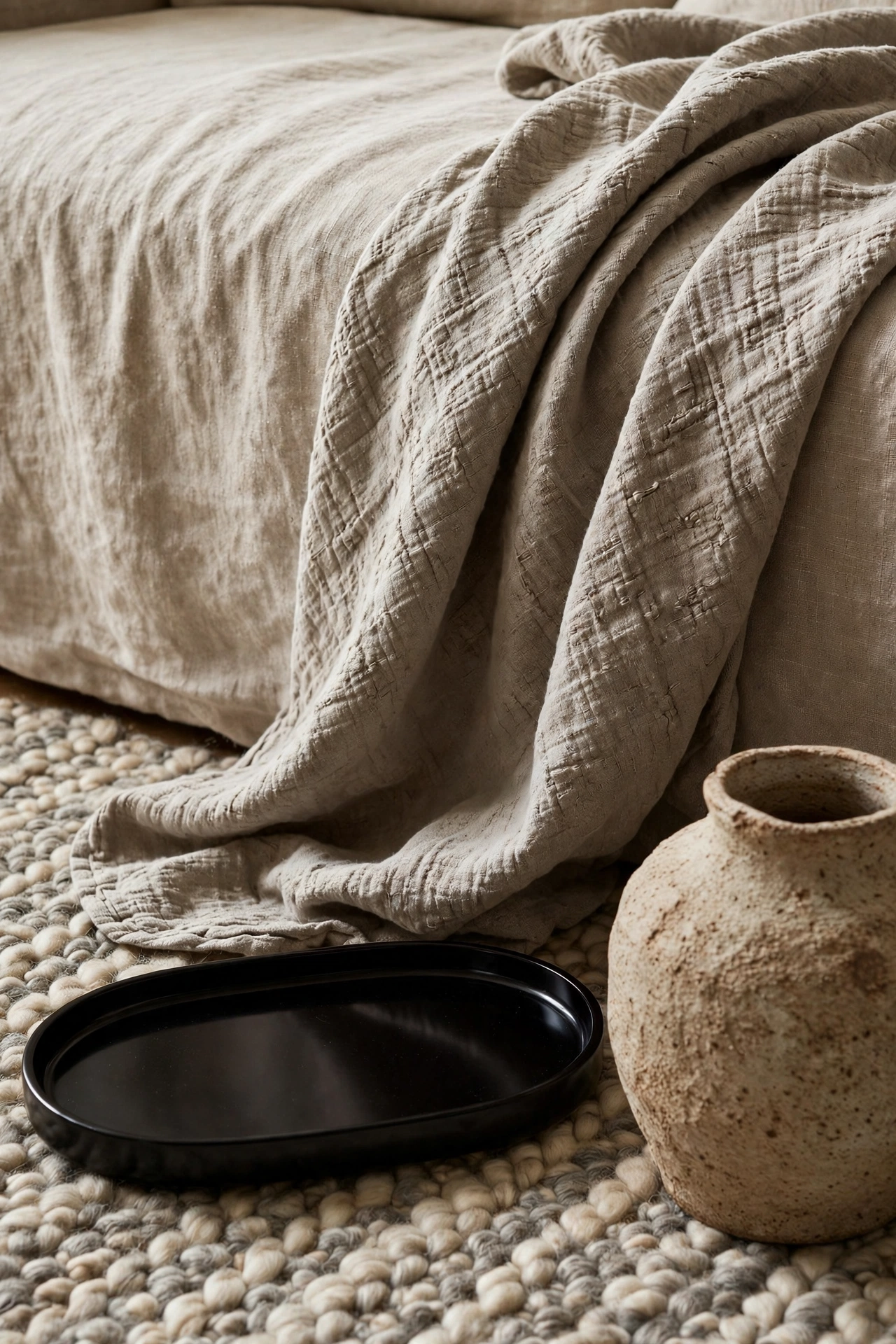
When the palette is quiet, texture does the talking. Japandi rooms layer it the way other styles layer colour: a linen sofa cover over a wool rug, a rough ceramic vase beside a smooth lacquered tray, a paper lantern glowing above a slubbed cotton throw. Each surface gives the eye something different to land on, so the room never feels flat.
Start with the big surfaces and work down. A woven rug underfoot, linen curtains at the window, and a boucle or wool throw on the sofa cover the three layers that matter most. Then add the small ones: a stoneware mug on the coffee table, a handmade paper shade, a rattan basket by the door. None of these is loud on its own. Together they make the room feel finished.
The rule is variety without clutter. If two textures look almost the same, pick one. A room needs contrast to feel layered: smooth against rough, soft against hard, matte against a single gentle shine. That one shine matters. A lacquered bowl or a dark glazed vase catches the light and stops the room from looking dusty.
Styling tip: run your hand over a surface before you buy it. If it feels the same as everything else you own, leave it on the shelf. Budget swap: a hand-woven basket and a linen cushion cover cost less than a new side table and change the room just as much.
4. Let One Crafted Object Carry the Room
 Save
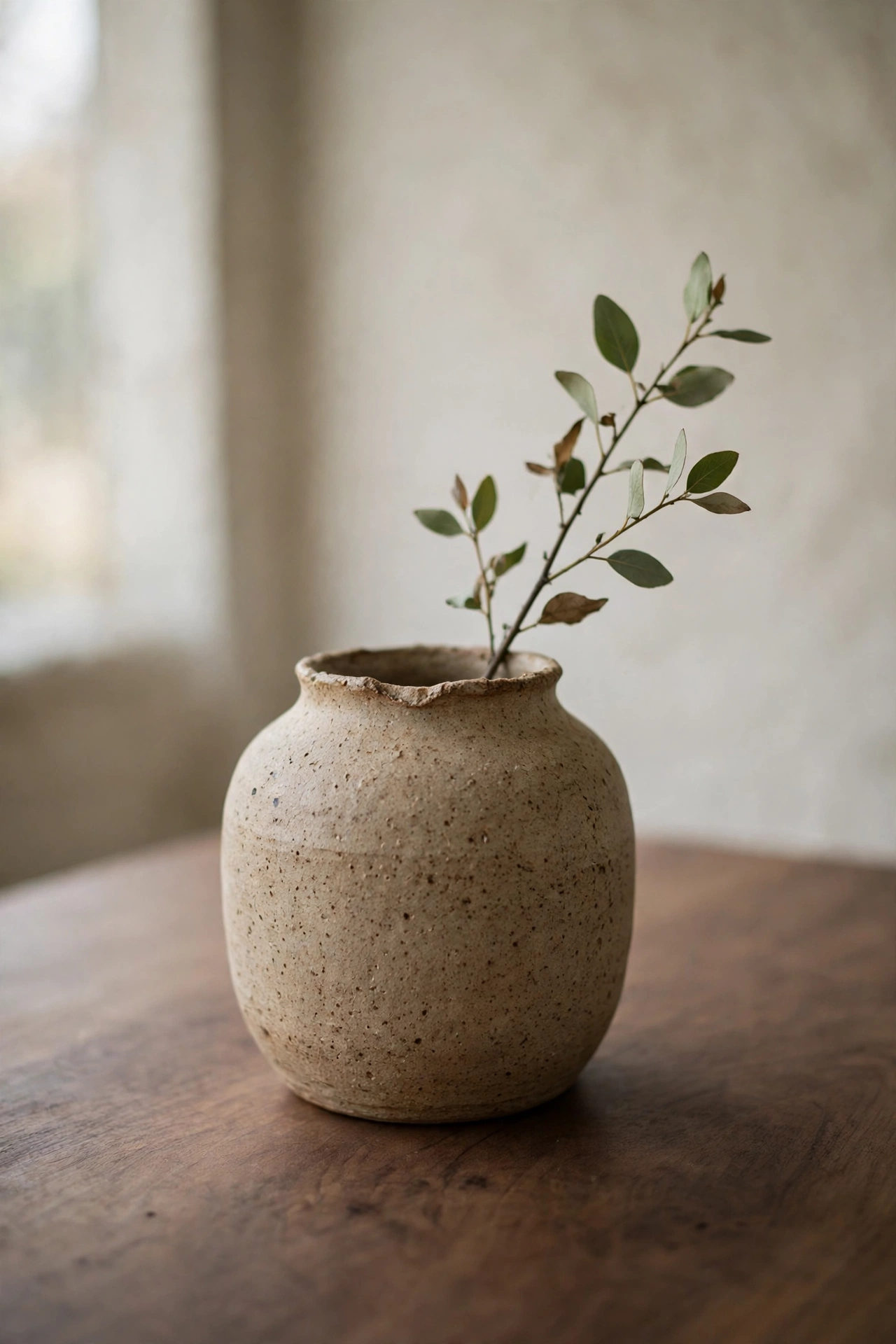
Japandi comes from cultures that respect the maker. A single handmade object, a thrown ceramic vase, a carved wooden bowl, a hand-stitched cushion, carries more weight than a dozen shop-bought decorations. The small imperfections are the point. A slightly uneven rim or a visible brush mark tells you a person made this, and that is exactly what makes a minimal room feel human.
Choose one hero object per surface. On a dining table, that might be a wide ceramic bowl holding three lemons. On a shelf, one tall vase with a single branch. On a coffee table, a low lacquered tray with a teapot and two cups. The object does not need to be expensive. A pot from a local maker or a thrifted wooden bowl you sanded and oiled yourself works just as well as anything from a design shop.
Resist the urge to fill the space around it. The empty space is part of the display. It is what lets the object breathe and what tells a visitor that this piece was chosen, not accumulated. If you are not sure whether to add something, leave the surface as it is for a week and see if you miss anything. Most of the time, you will not.
Placement: centre the object, or place it a third of the way along the surface, never pushed into a corner. Colour: earth tones, charcoal glaze, natural clay. Swap: move a beautiful object you already own from a crowded shelf to an empty table and watch it come alive.
5. Bring in Greenery, Sparingly
 Save
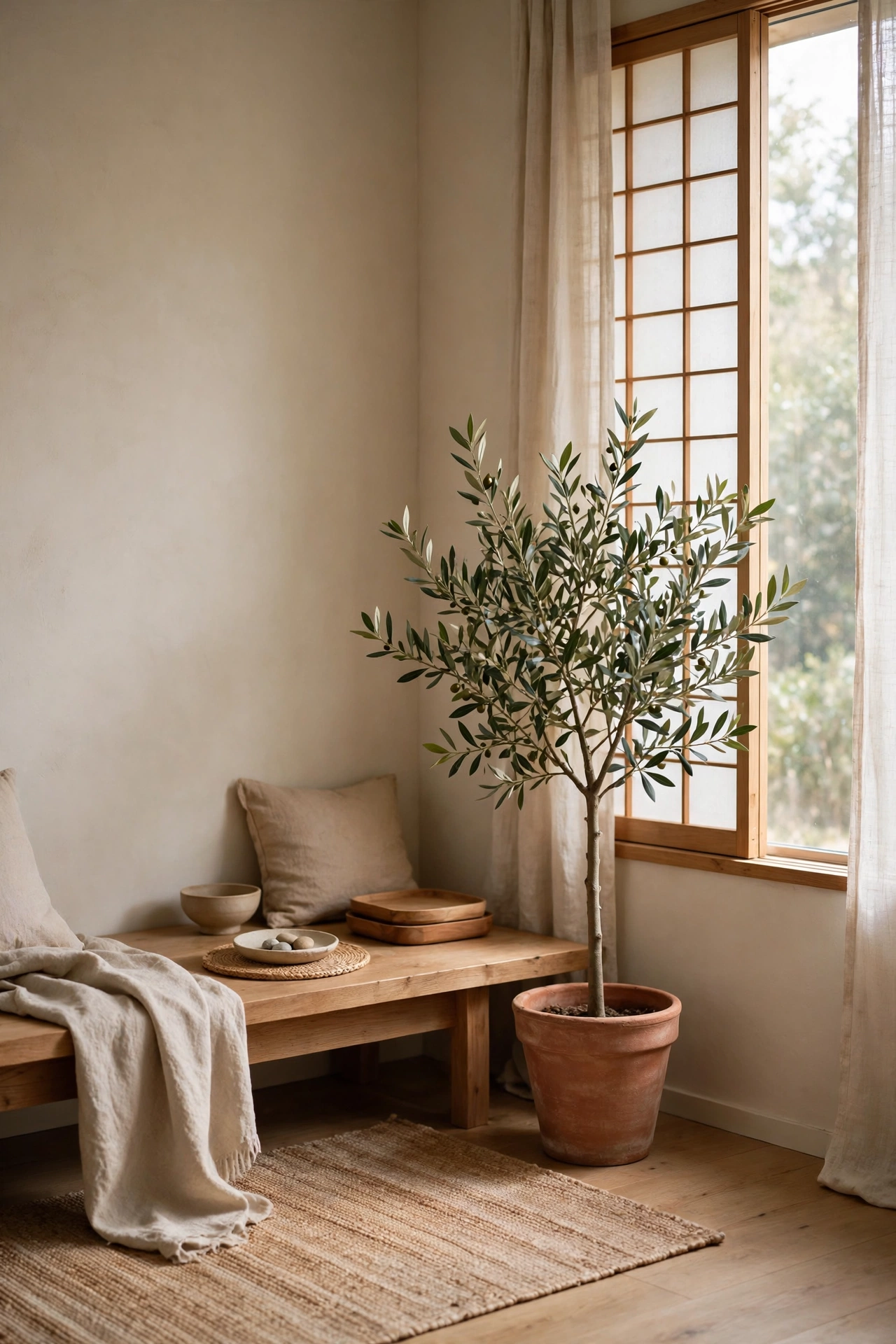
Plants are essential to Japandi, but the approach is restrained. One or two well-chosen plants beat a jungle. A single olive tree in a clay pot, a sculptural fiddle-leaf fig, or a low bonsai on a wooden stand gives a room life without turning it into a greenhouse. The plant should look like it belongs in the room, not like it escaped from a garden centre.
Choose plants with strong shapes and simple leaves. Olive, eucalyptus, and Japanese maple all fit because their forms are calm and architectural. Avoid anything with bright variegated leaves or fussy flowers. In Japandi, the plant is a piece of sculpture that happens to be alive, so its silhouette matters more than its colour.
Pots matter as much as plants. Unglazed terracotta, dark stoneware, or a simple wooden planter keeps the look grounded. Skip shiny plastic pots and bright patterns. If your plant came in a nursery pot, drop it inside a ceramic one and the whole thing instantly looks intentional. For more plant-filled inspiration that still keeps things calm, our greenery bedroom ideas show how to style plants in a restful room without overdoing it.
| Plant | Best spot | Light and care |
|---|---|---|
| Olive tree | Tall corner in a clay pot | Bright spot; water when the top soil dries |
| Fiddle-leaf fig | Open corner with room to grow | Steady bright light; keep away from draughts |
| Bonsai | Low table or wooden stand | Bright light; regular watering in small amounts |
Placement: one tall plant in a corner, one small one on a low table, and stop there. Texture: rough clay, smooth leaves, bare wood. Swap: if a plant keeps dying, a single dried branch in a tall vase gives the same shape with no watering at all.
6. Deepen the Palette for 2027
 Save
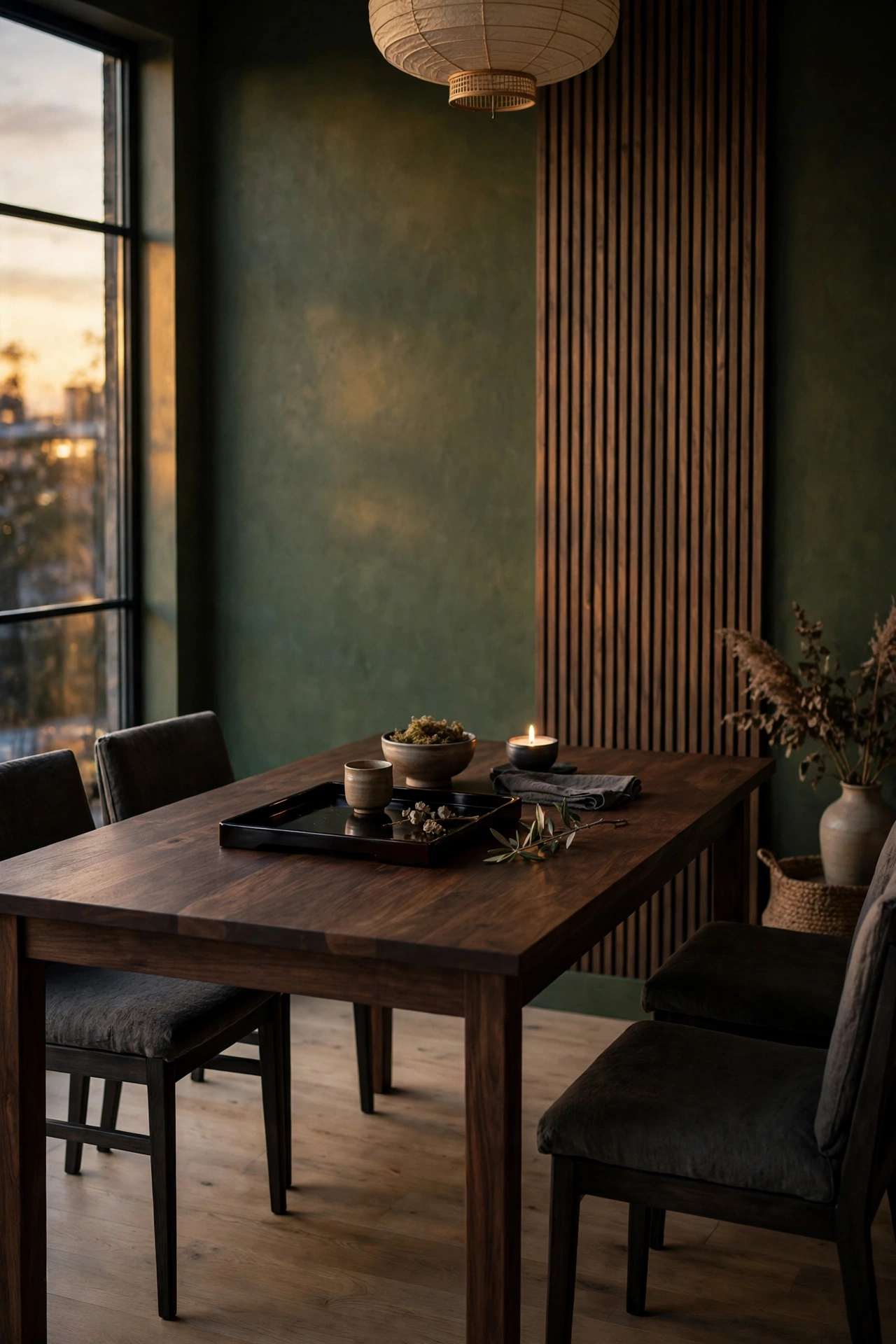
The new Japandi of 2027 is not afraid of depth. Alongside the pale woods and warm whites, designers are bringing in walnut, oxblood, deep moss, and ink black, used in small, deliberate doses. A dark walnut dining table, a charcoal linen sofa, or a single wall painted in deep green can anchor a pale room and give it the weight the early version sometimes lacked.
The key is proportion. Keep roughly seventy percent of the room light and let the deeper tones take the remaining thirty. That might mean dark wood furniture on a pale floor, or black window frames against cream walls. The contrast makes the light parts feel lighter and the dark parts feel richer, and the room gains a sense of occasion without losing its calm.
| Deep accent | Use it on | Keep it to |
|---|---|---|
| Walnut | Dining table, sideboard | One large furniture piece |
| Oxblood | Cushion, throw, lacquered bowl | One or two small pieces |
| Deep moss | Single wall, linen sofa | One wall or one large piece |
| Ink black | Window frames, tray, vase | Slim lines and small objects |
Lacquer is the finish to watch this year. A lacquered sideboard, a glossy black tray, or a deep red lacquered bowl adds a single reflective surface that catches lamplight in the evening. It is a small nod to traditional Japanese craft, and it stops a room full of matte textures from feeling flat. The look pairs naturally with the earthier palettes in our Dirtcore decor ideas, which share the same love of clay, moss, and honest brown tones.
Colour: warm white, pale oak, walnut, oxblood or deep moss as the accent. Texture: matte walls, lacquered wood, soft linen. Swap: paint one piece of furniture, a side table or a stool, in a deep lacquer colour instead of repainting a wall.
7. Soften the Light
 Save
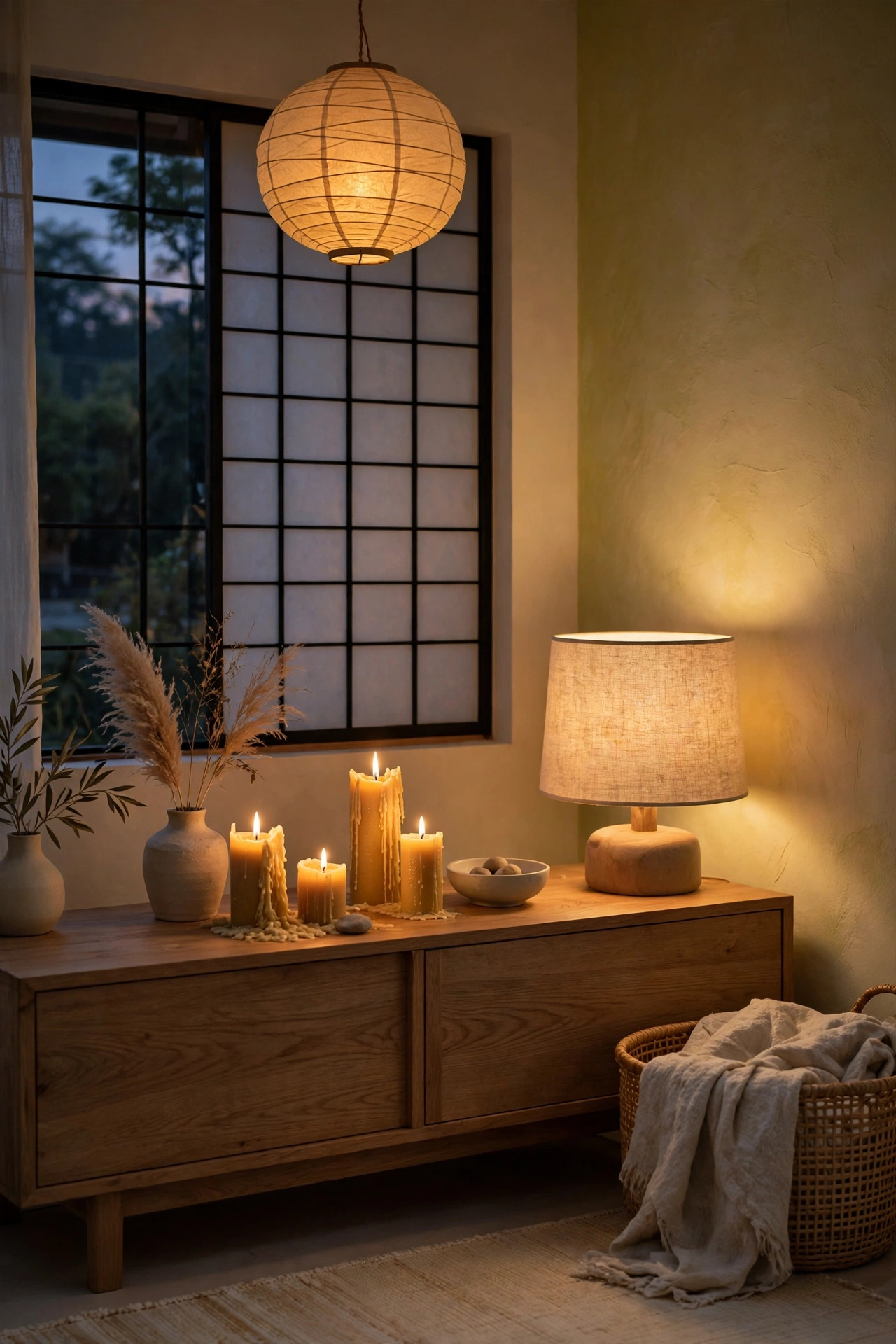
Light is the most overlooked part of Japandi, and the easiest to get wrong. Harsh overhead light kills the mood in seconds. The goal is low, warm, layered light that feels like late afternoon, even at nine in the evening. Paper lanterns, linen drum shades, and frosted glass globes all spread light softly instead of throwing it in a hard pool.
Use three levels of light and keep them all warm. A ceiling pendant on a dimmer, a floor lamp beside the sofa, and a small table lamp on a sideboard cover most rooms. Bulbs around 2700K give the golden tone this style needs. Anything cooler turns the warm woods grey and the linen blue, and the room loses its glow.
Candles finish the job. A pair of simple tapers in a ceramic holder, or a few tea lights in glass jars, add the flicker that electric light cannot copy. Keep them unperfumed and plain. The point is the light, not the scent, and a plain beeswax candle fits the palette better than anything coloured or patterned. If you want more ways to warm up a room after dark, our warm minimalist living room ideas use the same low-light tricks in a living room setting.
Placement: lamps at sitting height, never above eye level when you are seated. Colour: warm amber light, natural paper, undyed linen shades. Swap: change cool white bulbs to warm 2700K and put the main ceiling light on a dimmer before buying anything new.
8. Keep Surfaces Clear and Storage Hidden
 Save
The final Japandi habit is the one that holds all the others together: clear surfaces and hidden storage. A calm room is mostly an edited room. Cables tucked away, remotes in a drawer, books stacked neatly on a low shelf instead of scattered across every table. Nothing on this list costs much, but it is the difference between a room that looks Japandi in a photo and one that feels Japandi to live in.
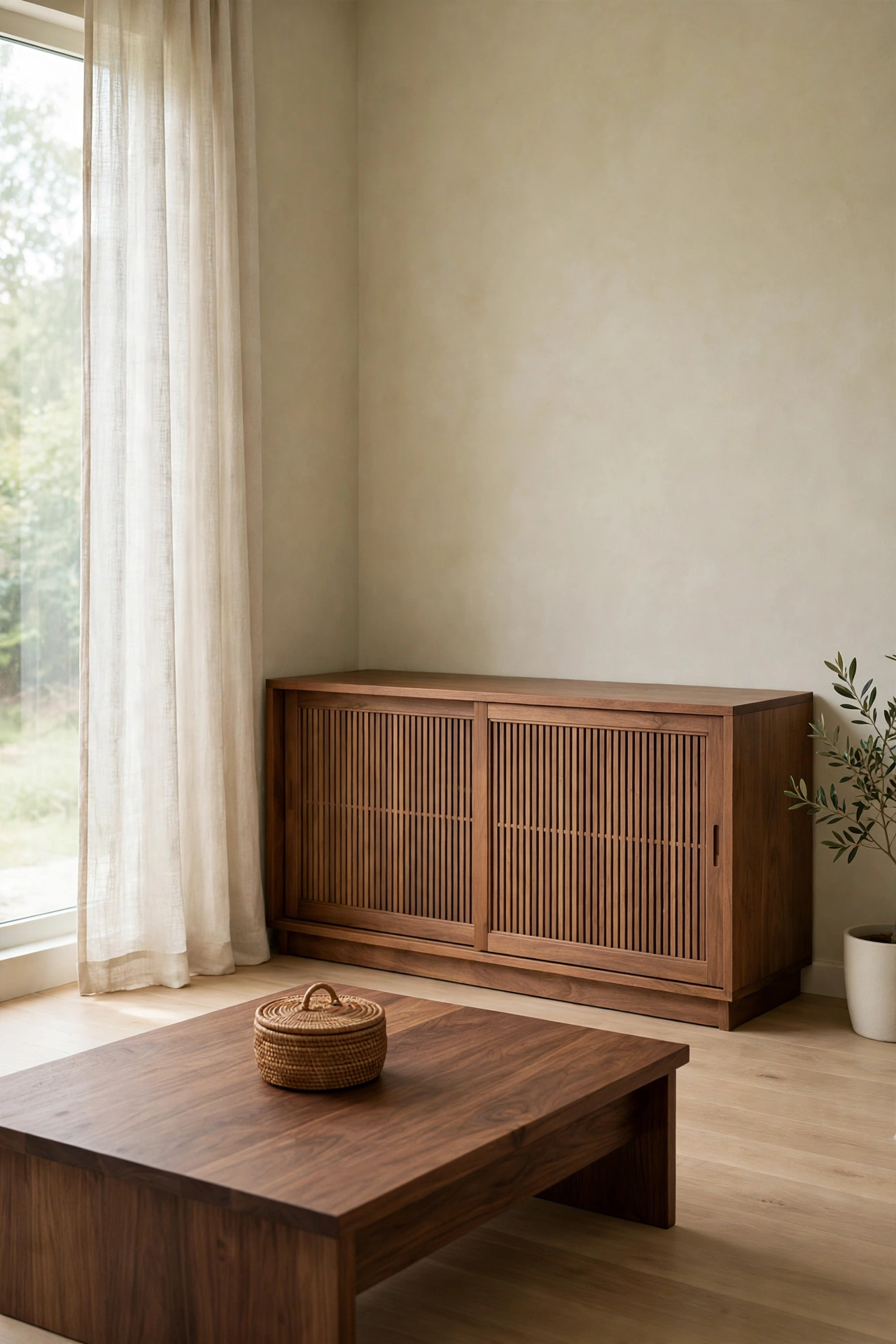
Storage should be part of the furniture, not an afterthought. A low wooden cabinet with sliding doors, a woven basket under a bench, a lidded box on a shelf: each one hides the everyday mess without adding visual noise. Choose storage in the same wood and fabric as the rest of the room, so it reads as furniture rather than as a container.
Build a small daily reset into your routine. Five minutes in the evening, clearing the coffee table, folding the throw, putting the mugs away, keeps the room at its best with almost no effort. Japandi is not about owning nothing. It is about owning things you chose and giving each one a place to live. The 2027 colour stories in our 2027 Colours of the Year guide work on the same principle: a few considered choices, repeated with confidence, beat a room full of maybes.
Styling tip: if a surface holds more than three objects, remove one and live with it for a week. Budget swap: a lidded rattan basket costs little and hides more clutter than any new piece of furniture.
The shortcut: warm white walls, one low wooden piece, three textures, and one crafted object on a clear surface. Build in that order and the room does the rest.
Bringing It All Together
Japandi works because it asks less of you and gives more back. Fewer colours, fewer objects, fewer decisions, and in return a room that stays calm through a busy week. Start with the base, warm neutrals and a low, honest piece of furniture, then add texture, one crafted object, and a plant. Deepen the palette with a touch of walnut or lacquer, soften the light, and keep the surfaces clear. That is the whole method, and it works in a studio flat just as well as in a family home.
The 2027 version is warmer and more personal than the original, and that is good news. You do not need a perfect white room to try it. You need a willingness to edit, a few natural materials, and one object you genuinely love. The rest is just giving the room room to breathe.
Frequently Asked Questions
What is Japandi decor?
Japandi is a blend of Japanese and Scandinavian design. It combines Japanese wabi-sabi, the appreciation of imperfection and natural materials, with Scandinavian warmth, comfort, and practical furniture. The result is a calm, minimal style that still feels warm and lived in.
What colours work best in a Japandi room?
Warm neutrals are the base: warm white, stone, pale oak, and soft greige. The 2027 version adds deeper tones in small doses, such as walnut, oxblood, deep moss, and charcoal. Keep about seventy percent of the room light and let the darker tones anchor the rest.
Is Japandi the same as minimalism?
Not quite. Minimalism often aims for as little as possible, while Japandi aims for as little as needed. It keeps texture, handmade objects, and warmth, so a Japandi room feels cosy rather than empty. The focus is on choosing well, not on owning nothing.
How do I start Japandi on a small budget?
Start by editing what you already own. Remove clutter, swap bright white textiles for cream and oatmeal, and change cool bulbs to warm ones. Then add one crafted object and one plant. A single well-chosen piece, like a handmade bowl or a woven basket, changes a room more than a trolley full of small decorations.
Can Japandi work in a small flat?
Yes, and it may work best there. Low furniture makes ceilings feel higher, a quiet palette makes rooms feel larger, and hidden storage keeps surfaces clear. Choose multi-purpose pieces, like a bench with storage or a low cabinet, and keep one clear surface in every room so the eye has somewhere to rest.
One Last Thought Before You Begin
Pick the room you spend the most time in and change one thing today. Swap the bulbs, clear one surface, or move a beautiful object somewhere you can actually see it. Small edits are how Japandi starts, and once you feel the difference in a single room, the rest of the house tends to follow.

1 thought