Some rooms feel like they were decorated from a catalogue, and some feel like they grew there. Whimsigoth belongs to the second kind. It is the look of a cottage apothecary crossed with a woodland walk, dark walls, dried herbs, amber glass, candlelight, and the sense that somebody in this house knows the Latin names of plants. It sounds dramatic, but in practice it is one of the easiest moody styles to live with, because it is built from things you can gather, dry, and rearrange, not things you have to buy in a set.
The trouble usually starts with going too far, too fast. A room full of skulls and black candles reads as a Halloween display, not a home, and a room with one dried sprig in a jar reads as a room that gave up halfway. Whimsigoth works when the botanical side and the moody side balance each other, green and gold against deep plum and charcoal, soft dried textures against smooth dark glass.
Whimsigoth decor sits at that balance point, part apothecary, part garden, part old storybook. The eight ideas below start with the smallest, cheapest touches and build toward the pieces that change a whole room, so you can stop after one or keep going until the house smells faintly of lavender and beeswax.
Quick Tips Before You Start
- Start with one dark corner, not a dark house. A single moody shelf or reading nook teaches you the palette before you commit a whole room.
- Dry your own botanicals first. Lavender, rosemary, eucalyptus and honesty seed heads cost almost nothing and look better than most shop-bought stems.
- Keep one light surface in every dark corner. A pale candle, a cream ceramic pot, or a gilt frame stops the look sliding into gloom.
- Mix living plants with dried ones. A room of only dried stems feels dusty, while a room of only living plants misses the apothecary mood entirely.
1. The Apothecary Shelf
 Save
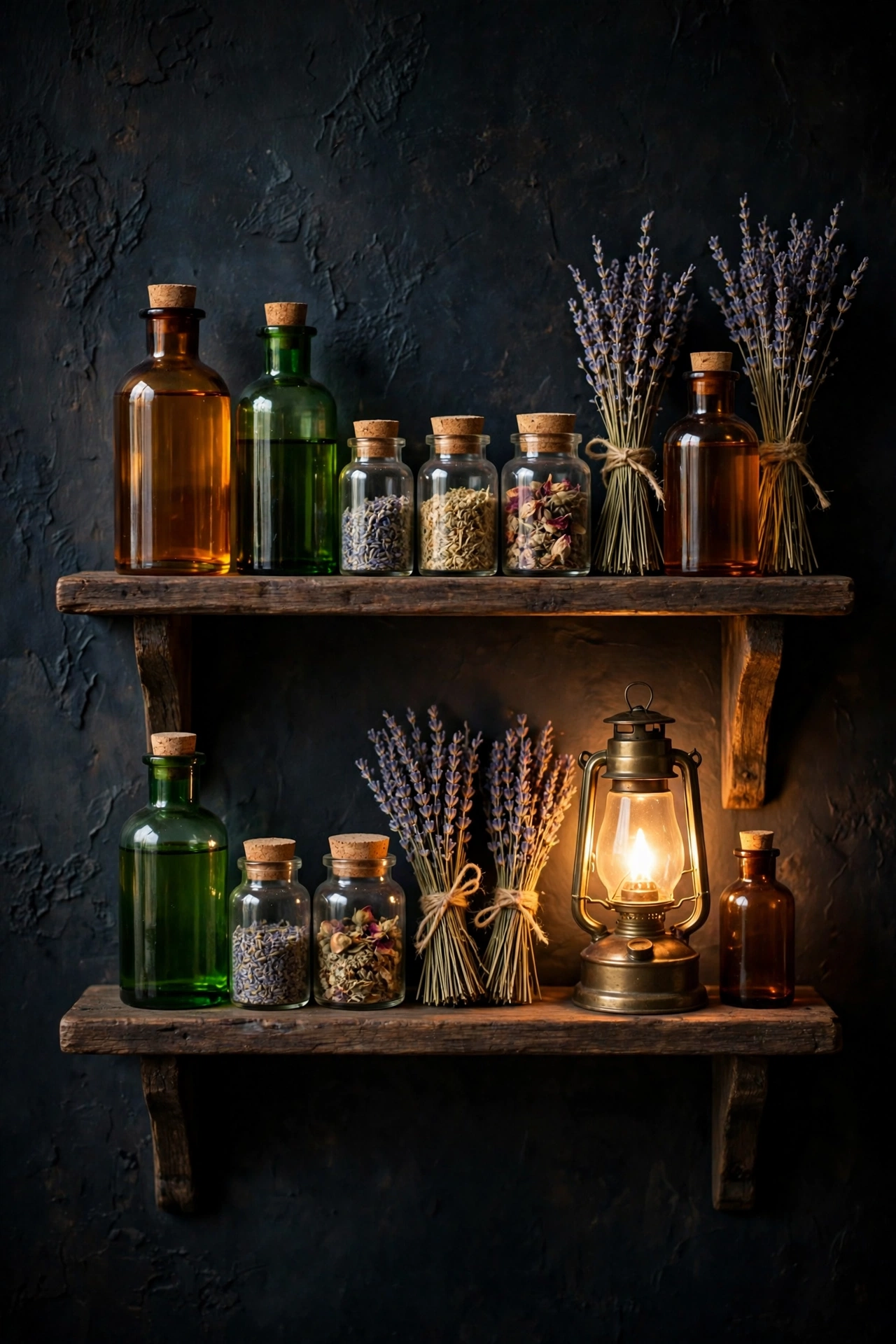
An apothecary shelf is the fastest way into this style, and it asks for almost nothing. One open shelf, or one tier of a bookcase, lined with amber glass bottles, small jars, and a few dried bundles, reads as a collection rather than clutter. The trick is the glass. Amber and green bottles catch candlelight and lamplight in a way clear glass never does, and they make even plain jars look like they hold something worth keeping.
Gather bottles in three heights and keep the labels quiet. Plain cork stoppers, handwritten paper tags, or no labels at all work better than printed pharmacy labels, which tend to look like a costume. Fill some jars with dried lavender, some with loose tea, some with nothing, and leave gaps between groups. A shelf packed edge to edge looks like a shop, while a shelf with breathing room looks like a home.
Placement: Hang it in a kitchen, a hallway, or above a desk, somewhere you pass daily. An apothecary shelf hidden in a spare room feels like a secret, and a secret nobody sees is just storage.
Colour: Amber, deep green, and dark brown glass against a wall painted plum, forest, or charcoal. If your wall is pale, stain the shelf itself dark walnut so the bottles have something to stand against.
Texture: Rough linen, cork, and dried stems soften the smooth glass. A folded piece of muslin under a jar or a small woven tray beneath the group keeps the shelf from looking like a laboratory bench.
Swap: If open shelving feels too dusty for your house, a glass-fronted cabinet gives you the same display with a door between the bottles and the cooking steam. It suits a kitchen better than an open shelf does.
Try this: Put one living plant at the end of the shelf, a small trailing pothos or a sprig of rosemary in water. The green shoot beside the dried stems is what makes the shelf feel alive rather than preserved.
A shelf like this sits naturally beside our guide to dark romantic decor, where the same deep palette carries a whole room instead of a single shelf.
2. Dried Botanical Bundles
 Save
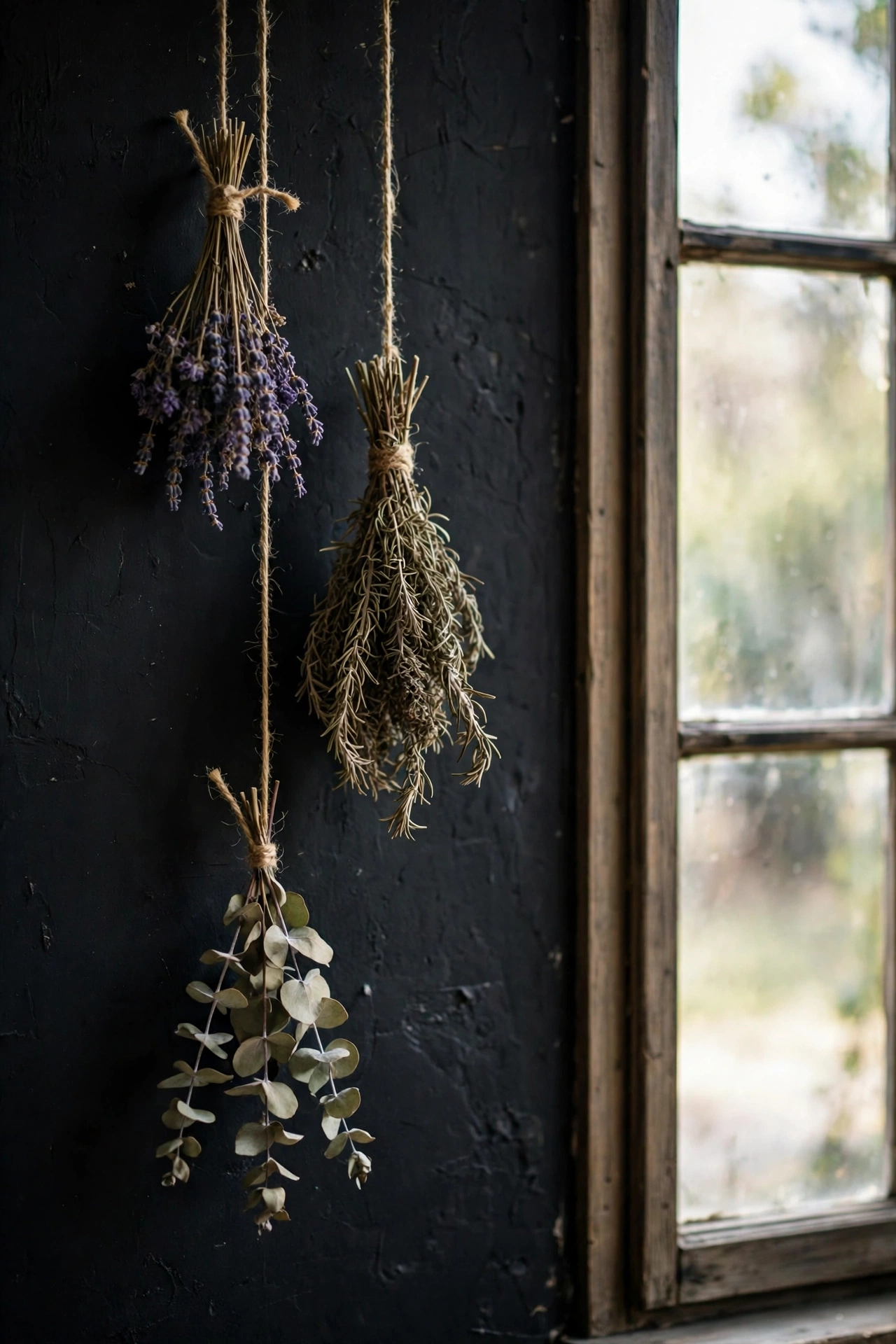
Dried botanical bundles are the signature texture of whimsigoth, and they cost less than any other idea on this list. Tie small bunches of lavender, rosemary, eucalyptus, and dried grasses with twine, hang them upside down from a hook or a picture rail, and let them dry in place. They fade to soft, dusty versions of their living colours, which is exactly the palette this style wants.
Hang them in odd numbers, three or five to a group, and vary the lengths so the bottoms do not line up. Bundles hung in a neat row at the same height look like a drying rack, while bundles at staggered heights look like a display. Keep them out of direct sun if you want the colour to last, and away from the cooker, where steam will soften them back into limp stems.
Placement: Hang a group beside a window, over a door frame, or at the end of a curtain rod. The place where two walls meet is often the best spot, since a bundle fills a corner that would otherwise sit empty.
Colour: Muted sage, dusty rose, pale gold, and the soft grey-green of dried eucalyptus. If the room is already dark, the pale dried tones are the contrast that keeps it readable.
Texture: This is the texture idea, so let it carry the room. Crisp seed heads, soft lavender buds, and papery honesty discs give you three different surfaces in one bundle, and the twine tie adds a fourth.
Swap: If hanging herbs feels too rustic for your room, lay a single dried bundle flat in a shallow ceramic dish on a coffee table. You lose the height but keep the scent and the shape, and it suits a tidier, more modern room.
Try this: Crush a few lavender buds between your fingers before guests arrive. The scent lasts an hour and does more for the mood than any candle.
3. Moody Botanical Wallpaper
 Save
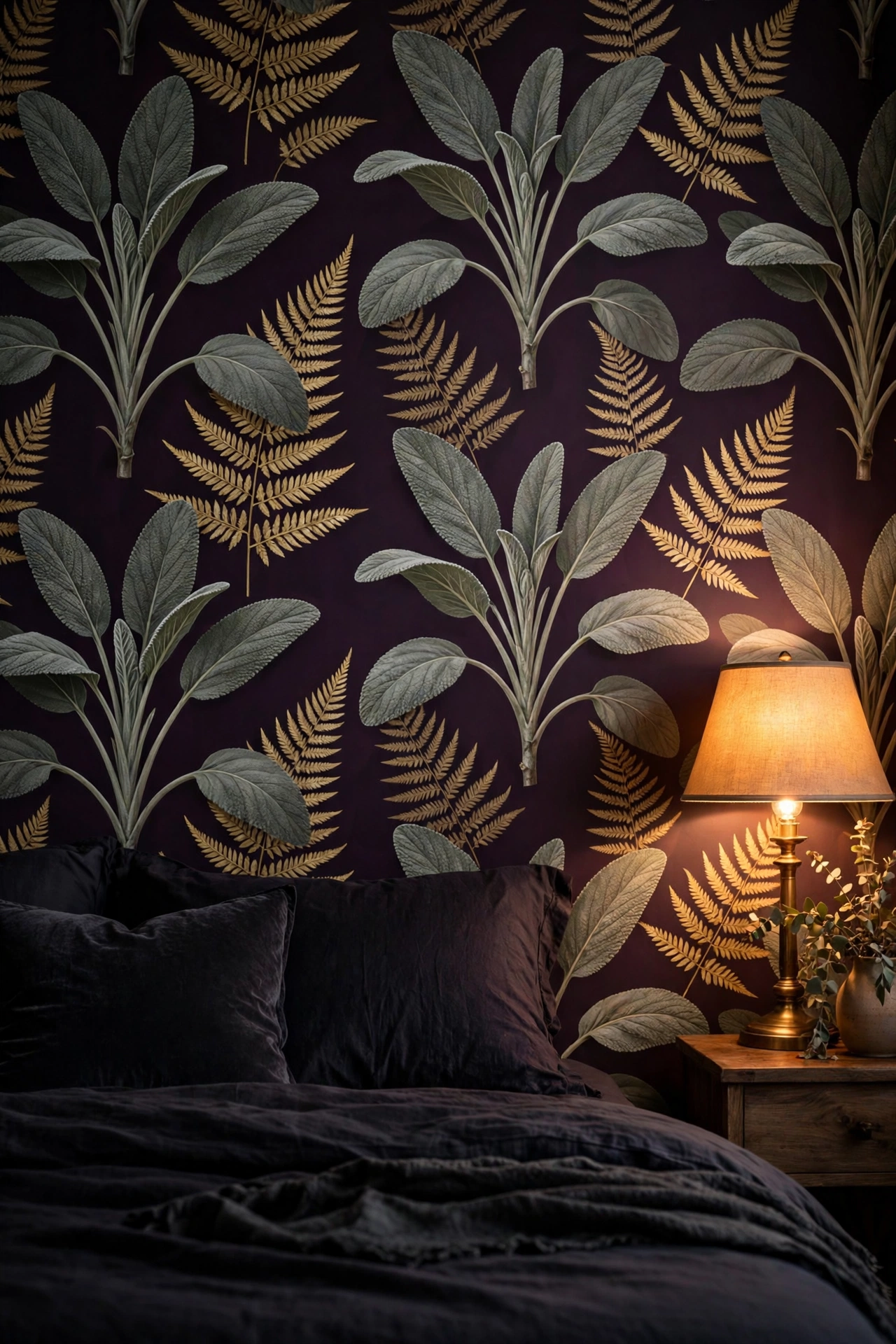
One wall of moody botanical wallpaper does the work of ten accessories. Dark grounds printed with oversized leaves, ferns, and trailing stems turn a plain wall into the garden this style imagines, and the pattern does the heavy lifting while the furniture stays simple. Pick a paper with a near-black or deep plum ground and leaves in sage, gold, or muted teal, so the wall reads as moody rather than gloomy.
Paper one wall only, the wall behind the bed or the sofa, and keep the other walls plain in a colour pulled from the paper. A whole room of dark botanical print overwhelms a small space and makes it hard to hang anything else, while a single feature wall gives you the drama and leaves the rest of the room calm. Peel-and-stick versions exist for renters, and they suit this style well, since the pattern matters more than the paper itself.
Placement: Behind the bed headboard or behind the sofa, where the pattern frames the furniture instead of competing with it. Avoid the wall with the television, where a busy print fights the screen.
Colour: Plum, charcoal, or deep forest grounds with sage and antique gold leaves. If the room gets little light, choose a paper with metallic gold in the print, since it catches lamplight and keeps the wall from going flat.
Texture: Pair the flat printed wall with something tactile in front of it, a velvet cushion, a woven throw, or a wooden frame. The contrast between the smooth paper and the rough textile is what keeps the wall from feeling like a backdrop.
Swap: If wallpaper feels too permanent, a large framed botanical print or a fabric wall hanging gives you the same dark garden feeling on one wall, and it comes down when you move. It suits a rental better than paste ever will.
Try this: Hold a sample up at dusk, in the light you actually live in, before you order a roll. A paper that looks rich in daylight can turn muddy under a warm lamp, and dusk is the hour this room is built for.
If the dark garden wall appeals to you, our poetcore reading corners use the same deep palette around books and lamplight, and the two looks share a shelf happily.
4. The Potion-Style Vase Cluster
 Save
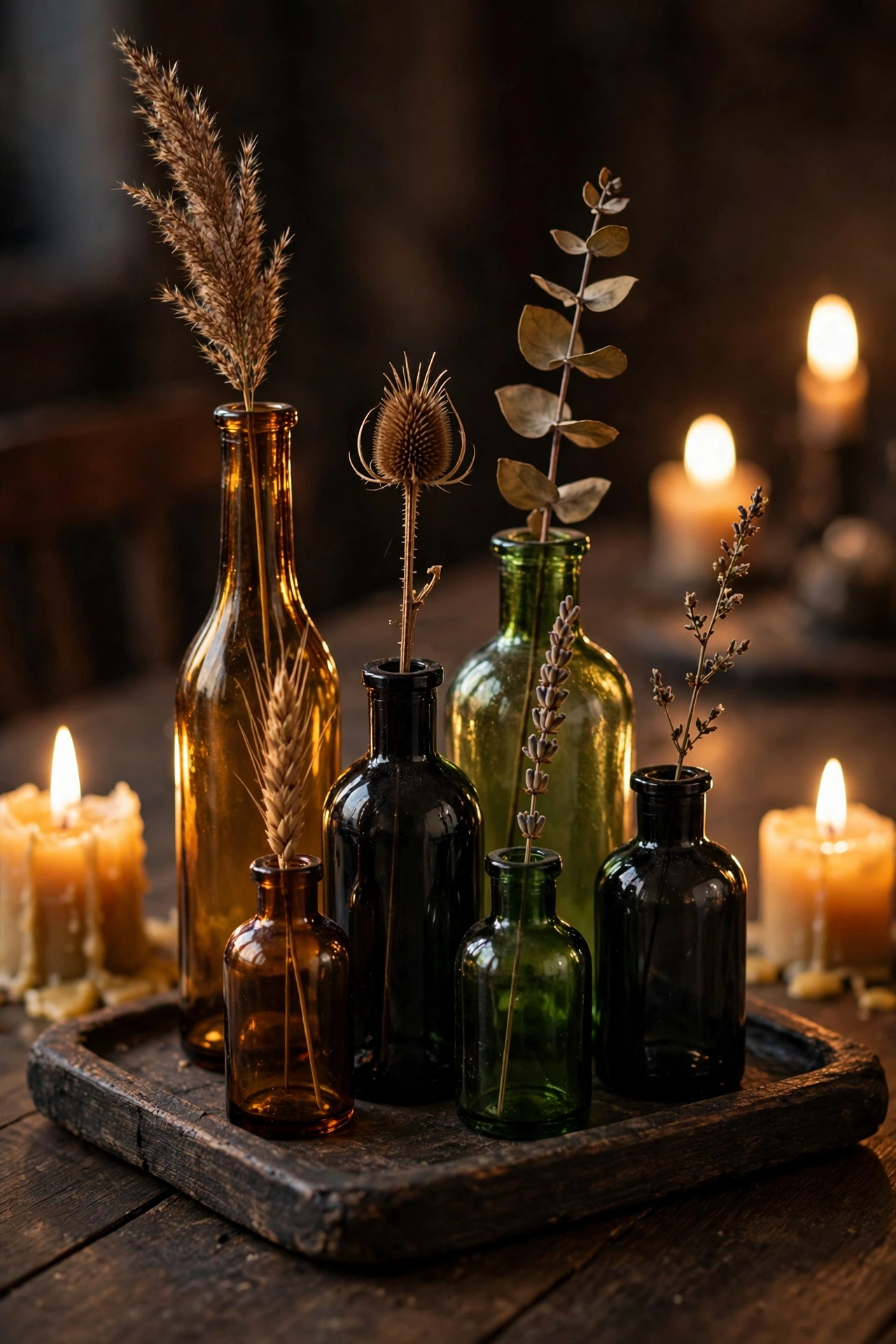
A cluster of dark glass bottles used as vases is the whimsigoth centrepiece that costs almost nothing and changes a table completely. Gather amber medicine bottles, green wine bottles, and one or two black glass vessels, fill each with a single stem, dried honesty, a eucalyptus sprig, a dried rose, and group them tight on a tray or a bare table. One stem per bottle keeps the cluster looking deliberate, while a mixed bouquet in each one turns it into a florist’s shop.
Height is the whole game. Mix tall bottles with short ones, and let one stem arch over the group while the rest stand straight. A cluster of identical bottles at identical heights looks like a chemistry set, while a cluster with a clear tall point and a clear low point looks like a still life. Keep the tray underneath small, a dark wooden board or a brass tray, so the bottles read as one arrangement instead of a row of separate objects.
Placement: Centre it on a dining table, a coffee table, or a mantel, where it can be seen from the doorway. A cluster tucked against a wall loses half its shape, since the bottles are meant to be seen in the round.
Colour: Amber, green, and black glass with pale dried stems. A single stem of dried white honesty in the tallest bottle lifts the whole group, and without it the cluster can read too dark.
Texture: Smooth glass against papery dried stems and the rough grain of a wooden tray. Add one small stone or a dried seed pod on the tray for a third texture, and stop there.
Swap: If you cannot find dark glass, wrap clear bottles in dark twine or paint them with a matte spray made for glass. It takes an afternoon and gives you the same silhouette at a fraction of the hunting time.
Try this: Change one stem each season. Swap dried roses for fresh rosemary in winter, and the cluster stays current without a single new bottle.
Which Whimsigoth Touch Fits Your Room?
 Save
| Idea | Best room | Cost and effort | Skip it if |
|---|---|---|---|
| Apothecary shelf | Kitchen, hallway, study | Low, an afternoon of gathering | You hate dusting open shelves |
| Dried bundles | Bedroom, bathroom, hallway | Lowest, mostly free | Anyone in the house has a pollen allergy |
| Botanical wallpaper | Bedroom, living room | Medium, one wall and a weekend | Your room is small and north-facing |
| Potion vases | Dining room, living room | Low, bottles and stems | You have toddlers who grab table displays |
| Candlelight | Living room, bedroom | Low, candlesticks and a tray | You prefer electric light only |
| Botanical prints | Any room, especially rentals | Low to medium, framing costs | Your walls are already busy with art |
| Reading nook | Living room, bedroom corner | Medium, one chair and textiles | You have no spare corner at all |
| Curio cabinet | Living room, hallway | Medium, the cabinet is the cost | You prefer clean, empty surfaces |
5. Candlelight in Brass and Black
 Save
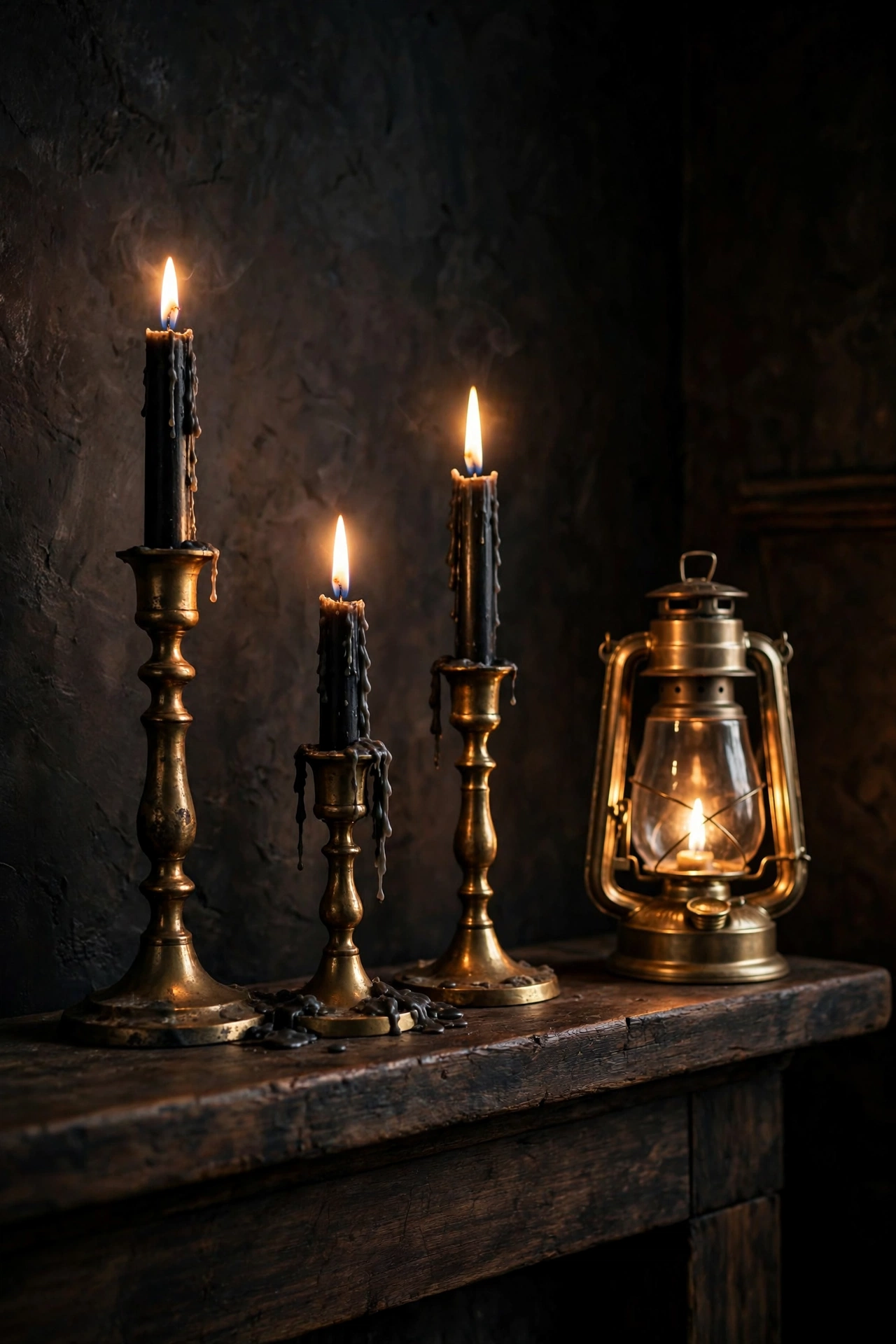
Candlelight is the light this style was built for, and it is the cheapest way to make a whimsigoth room feel intentional after dark. Brass candlesticks in mixed heights, black taper candles, and a few glass hurricane lanterns give you warm pools of light instead of one flat ceiling glow. The brass warms the dark palette, the black candles keep it moody, and the flicker does what no lamp can, it moves.
Group candlesticks in threes on a mantel or a sideboard, and keep one lantern on the floor beside the reading chair. Never light more than you need, five lit candles in one corner is a glow, fifteen lit candles across a room is a fire risk and a headache. Use a tray under every group, brass or dark wood, so wax has somewhere safe to land, and keep dried bundles well clear of any open flame.
Placement: Mantel, sideboard, and the floor beside a chair. Avoid the dining table centre unless the candles are short, since tall tapers at eye level block conversation across the table.
Colour: Brass, black, and the warm gold of the flame itself. If brass feels too bright, aged or unlacquered brass dulls to a soft brown that suits the palette better.
Texture: Smooth brass, rough beeswax, and the soft glow through hurricane glass. A beeswax pillar smells faintly of honey when it burns, which suits this style better than any scented candle from a shop.
Swap: If open flames worry you, battery candles with a warm flicker setting give you the same glow in a house with children or pets, and they sit safely inside a lantern. It is not the same as real flame, but it is close enough after dark.
Try this: Light the candles an hour before guests arrive and turn the ceiling lights off. The room will look like a different place, and you will see which corners still need a candle and which ones are already done.
Candlelight pairs naturally with the layered glow in our guide to ambient lighting for dark winter evenings, which covers the same low, warm light in a plainer room.
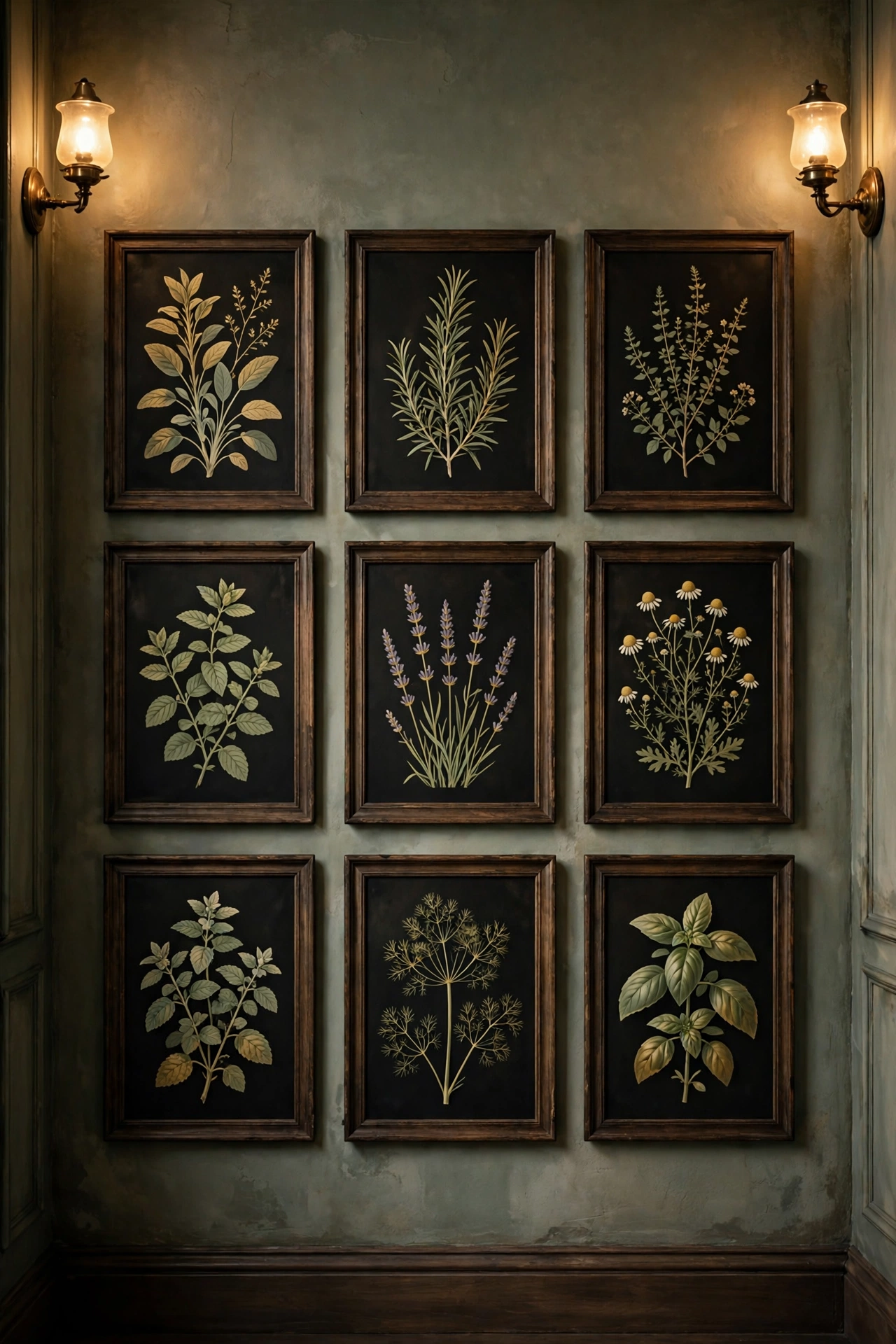
6. Vintage Botanical Prints
 Save
Vintage botanical prints are the art this style wants, and they are easy to find secondhand. Framed herbarium plates, fern prints, and old seed-catalogue illustrations in dark wood or brass frames give a wall the feeling of a naturalist’s study without a single new purchase. Look for prints with Latin names underneath the plant, since the small text is part of the apothecary charm, and choose images with plenty of dark background so the frame does not fight the wall.
Hang them in a loose grid, two over three, or a single large print above a chest, and keep the frames matched. Mixed frame styles suit a gallery wall in other looks, but here the matching dark wood or brass frames are what make five different prints read as one collection. If the prints are small, mount them on dark card inside a larger frame, so the plant has room to breathe and the wall does not look speckled.
Placement: Hallway, stairwell, or the wall beside a reading chair. A stairwell suits a vertical run of prints, since the rising line of the stairs echoes the rising stems in the pictures.
Colour: Sage, gold, and cream inks on dark grounds, inside dark walnut or brass frames. If your wall is already dark, a pale mount inside the frame lifts the print away from the wall.
Texture: Paper, glass, and dark wood. A linen mount adds a soft surface beside the smooth glass, and it stops the frame looking like a shop frame.
Swap: If original prints are dear where you live, good reproductions printed at home on cream paper and aged with weak tea give you the same look for the cost of the frames. Nobody will check the paper under glass.
Try this: Hang one print low, at eye level when seated, in the reading nook. Art hung for a standing person is wasted in a room built for sitting.
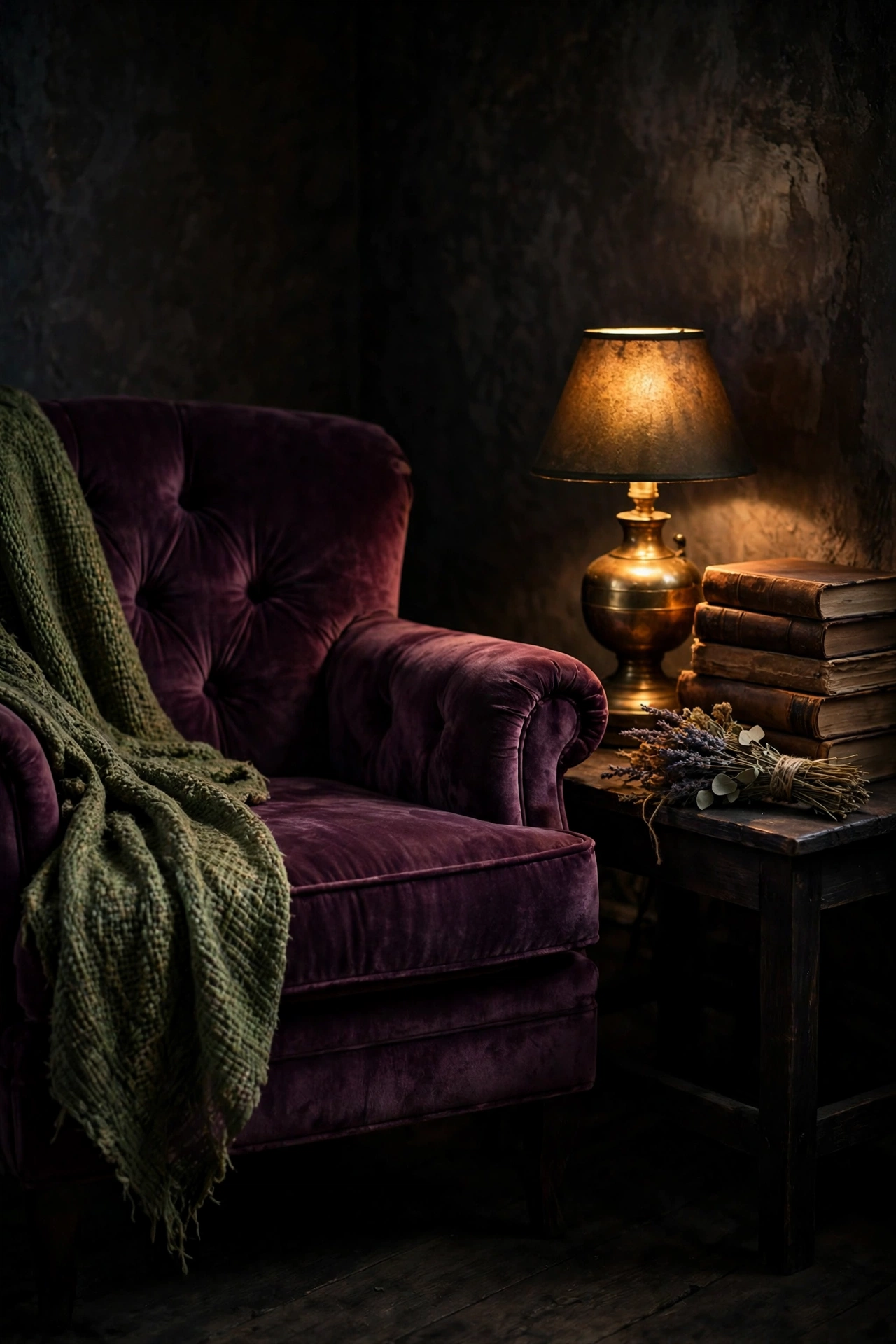
7. The Witchy Reading Nook
 Save
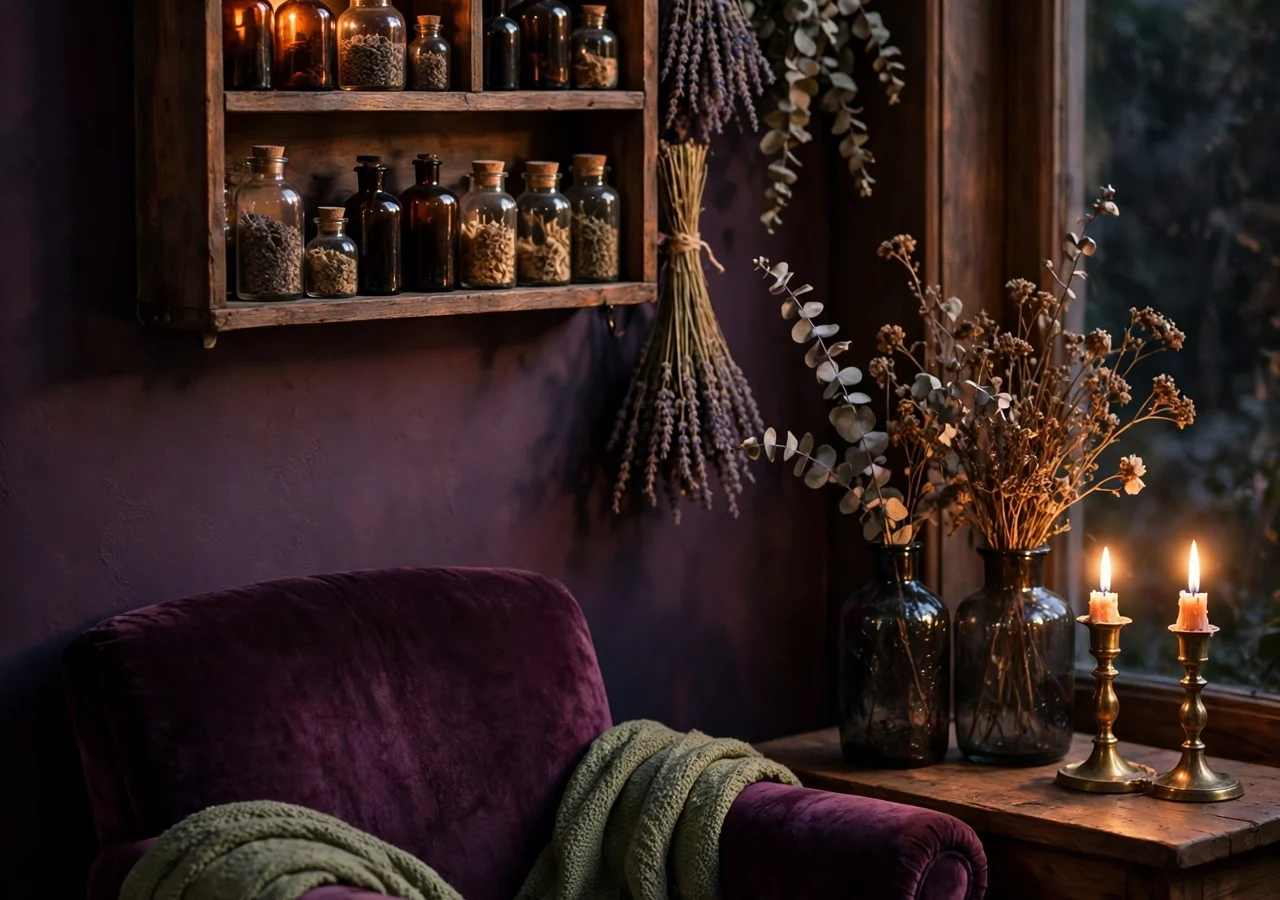
Every whimsigoth home needs one chair that belongs to the mood, and the reading nook is where the style becomes a place to sit. A deep armchair in plum or forest velvet, a small dark side table, a brass lamp, and a stack of books with a dried bundle tucked behind them, that is the whole nook. It does not need a theme, it needs a chair, a light, and a surface for a cup.
Put the chair in the darkest corner of the room, the one that gets the least daylight, and let the lamp do the work there. A pale chair in a dark corner looks like a mistake, while a dark velvet chair in a dark corner looks like it grew there. Add one soft textile, a woven throw in moss green or a cushion in dusty rose, so the chair invites sitting rather than just looking. Keep the side table small and dark, with room for a book, a candle, and nothing else.
Placement: The darkest corner of the living room or bedroom, near a window if you can manage it, so the chair gets daylight by day and lamplight by night. Avoid the middle of the room, where a reading chair blocks the walkway.
Colour: Plum, forest, or charcoal velvet with brass and moss green accents. If velvet feels too heavy for your climate, a dark linen slipcover gives you the same colour in a cooler fabric.
Texture: Velvet, wool, and worn timber. The throw should be the roughest thing in the nook, since a soft chair with a soft throw and a soft cushion all melt into one textureless lump.
Swap: If a new armchair is out of reach, a thrifted wooden chair with a dark cushion and a throw over the back gives you the same corner for the cost of the textiles. The chair shape matters less than the lamp and the books beside it.
Try this: Sit in it at dusk with the lamp on and the ceiling light off. If you reach for a book without thinking, the nook works. If you reach for your phone, the light is wrong, move the lamp closer and lower.
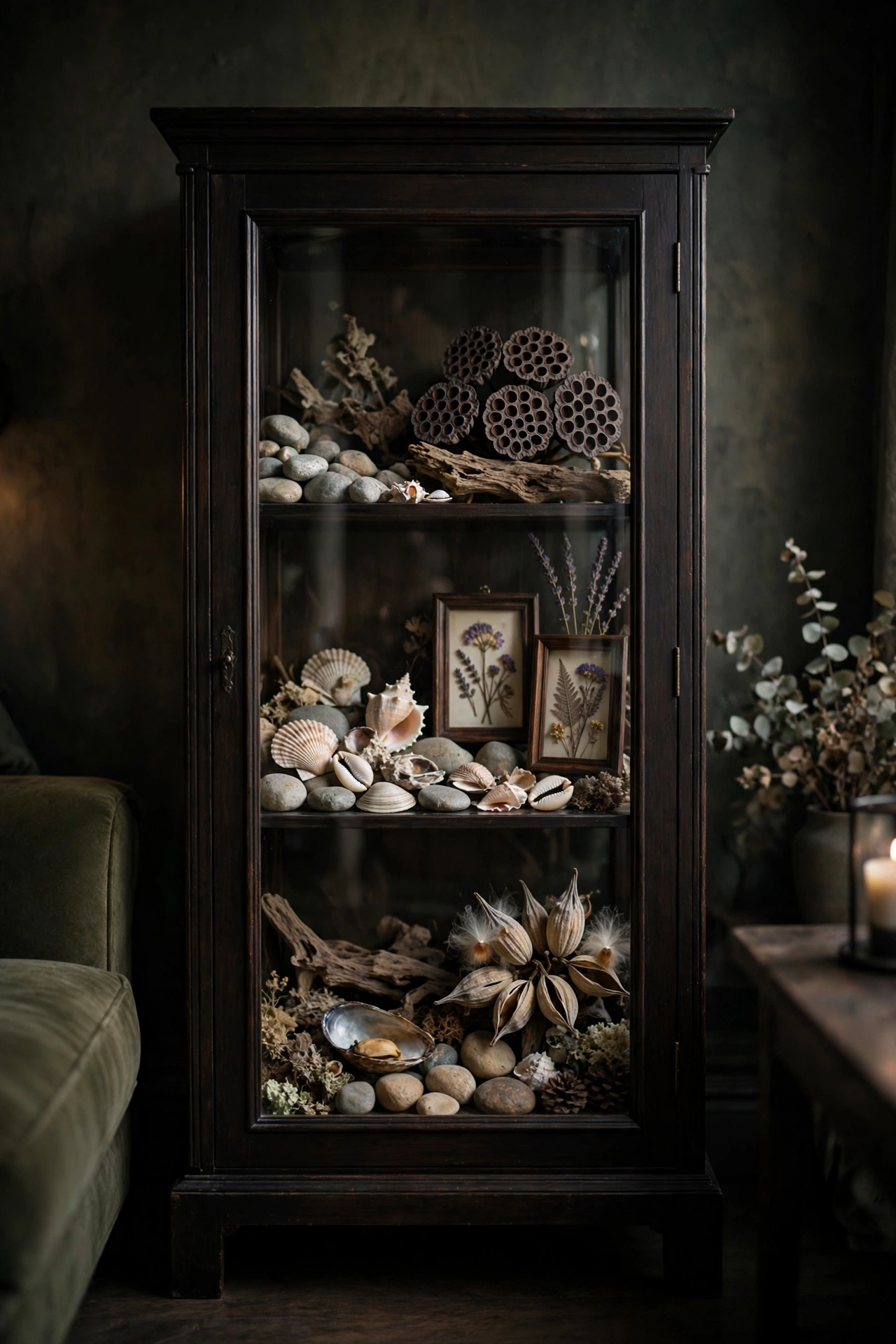
8. The Curio Cabinet of Natural Curiosities
A curio cabinet is the grown-up version of the apothecary shelf, a glass-fronted cabinet filled with the natural objects you have gathered. Dried seed pods, smooth stones, shells, a small crystal, pressed flowers in frames, and one or two pieces of driftwood, each with space around it, read as a personal collection rather than a shop display. The cabinet keeps the dust off and the objects safe, which is why this idea suits a house with children or pets better than an open shelf does.
Edit harder than you think you need to. One shelf with five objects looks curated, while one shelf with fifteen looks like a drawer that was emptied onto a shelf. Leave one shelf empty, or nearly so, so the cabinet has room to grow, and rotate one object each season so the display stays alive. Label nothing, or label everything in the same small handwriting, since a mix of printed labels and handwritten ones breaks the spell.
Placement: Living room or hallway, against a wall where the glass catches lamplight. Avoid the kitchen, where steam clouds the glass, and avoid direct sun, which fades dried flowers fast.
Colour: Natural tones, stone grey, shell cream, seed-pod brown, with the dark wood of the cabinet itself doing the moody work. If the objects are all pale, a dark velvet lining on one shelf gives them a background to stand against.
Texture: Smooth stone, rough bark, papery pressed flowers, and cool glass. Four textures in one cabinet is plenty, and the glass door adds the fifth.
Swap: If a cabinet is too dear, a deep picture box or a shadow box on the wall holds the same small objects in a single frame, and it costs a fraction of a cabinet. It suits a small room better than a full piece of furniture does.
Try this: Pick up one object on every walk for a month, a stone, a seed pod, a feather, and keep only the three you still like at the end of it. The cabinet should hold the things you chose twice, not the things you grabbed once.
Test it first: Before you buy a single dark paint tin or a velvet chair, try the candlelight test. One evening, light three candles in the corner you plan to change, turn off the ceiling light, and sit there for twenty minutes with a book. Ask yourself three questions, does the dark feel cosy or does it feel cramped, can you read comfortably in the lamplight, and does the corner still feel like part of your home or like a set from a film. If the answer to any of them is no, change the light before you change the colour, add one more candle, move the lamp lower, or pick a paler velvet. A corner that passes the candlelight test will take the wallpaper, the prints, and the dark paint happily. A corner that fails it will swallow every purchase you make.
Bringing It All Together
You do not need all eight ideas, and you should not buy them all at once. Start with the shelf and the bundles, since they cost almost nothing and teach you the palette, then add the candlelight and the prints once you know which dark tones your room actually likes. The wallpaper and the cabinet are the last steps, the ones you take when the small touches have already proven the style suits your house.
Keep one living plant in every room you darken, and one light surface in every dark corner. Those two rules are what separate a whimsigoth home from a Halloween display, and they are the reason this style photographs so well and lives so comfortably. The room should smell faintly of dried herbs, glow warmly after dark, and still be a room where you can read, eat, and sit with friends without thinking about the decor at all.
Frequently Asked Questions
What exactly is whimsigoth decor?
It is a moody, botanical style that mixes apothecary details, dried plants, dark colours, and candlelight with a soft, storybook feeling. Think dark walls and amber glass beside dried lavender and ferns, rather than the stark black and skulls people expect. It suits a home better than a costume version does, because the botanical side keeps it warm.
Does whimsigoth suit a small room?
Yes, if you keep it to one corner or one wall. A small room takes the shelf, the bundles, and the candlelight happily, but a whole small room in dark wallpaper can feel cramped. Start with the smallest ideas, live with them for a few weeks, and add the bigger ones only if the room still feels open.
Is whimsigoth the same as dark romantic decor?
They share the dark palette, but they are not the same look. Dark romantic leans toward velvet, roses, and drama, while whimsigoth leans toward herbs, apothecary glass, and woodland plants. The two styles sit well together in one house, and many rooms borrow from both, which is why the same deep plum wall works for either one.
How do I stop dried plants looking dusty?
Keep them out of the kitchen steam and direct sun, dust them gently with a soft brush once a month, and replace a bundle when it fades to grey. Dried botanicals last a year or two at their best, and swapping one bundle a season keeps the whole display fresh without any real cost.
Can I do whimsigoth in a rented home?
Yes, and it is one of the friendliest styles for renters, since most of it sits on surfaces rather than on walls. Bottles, bundles, prints in frames, candles, and a reading chair all move with you, and peel-and-stick wallpaper gives you the dark garden wall without touching the paint. Keep the landlord’s rules in mind for candles, and use battery candles where open flames are not allowed.
One Combination to Keep
The combination: one apothecary shelf + dried bundles at staggered heights + brass candlesticks on a dark tray, with one living plant at the end of the shelf. That is the whole look in one sentence, and every other idea on this list is a variation on it.