A bedroom full of plants sounds lovely until you try it. One pot on the nightstand looks lonely, three pots on the dresser look cluttered, and a big floor plant in the wrong corner makes the whole room feel smaller. Most of us start with good intentions and a plant we liked in the shop, then wonder why the result does not look like the calm, leafy rooms we had in mind.
The problem is rarely the plants themselves. It is placement. A bedroom needs sleep first, and greenery second, so plants have to earn their spot by softening a hard edge, filling an empty corner, or giving your eye something green to rest on when you wake up. When every plant has a job, even a small room can feel lush without feeling crowded.
These 18 greenery bedroom ideas are grouped by where plants actually live in a bedroom, from the bedside table to the windowsill to the dark corner everyone ignores. Pick two or three looks to start with, live with them for a few weeks, and add more only where the room still feels bare.
Start Beside the Bed, Not Across the Room
 Save
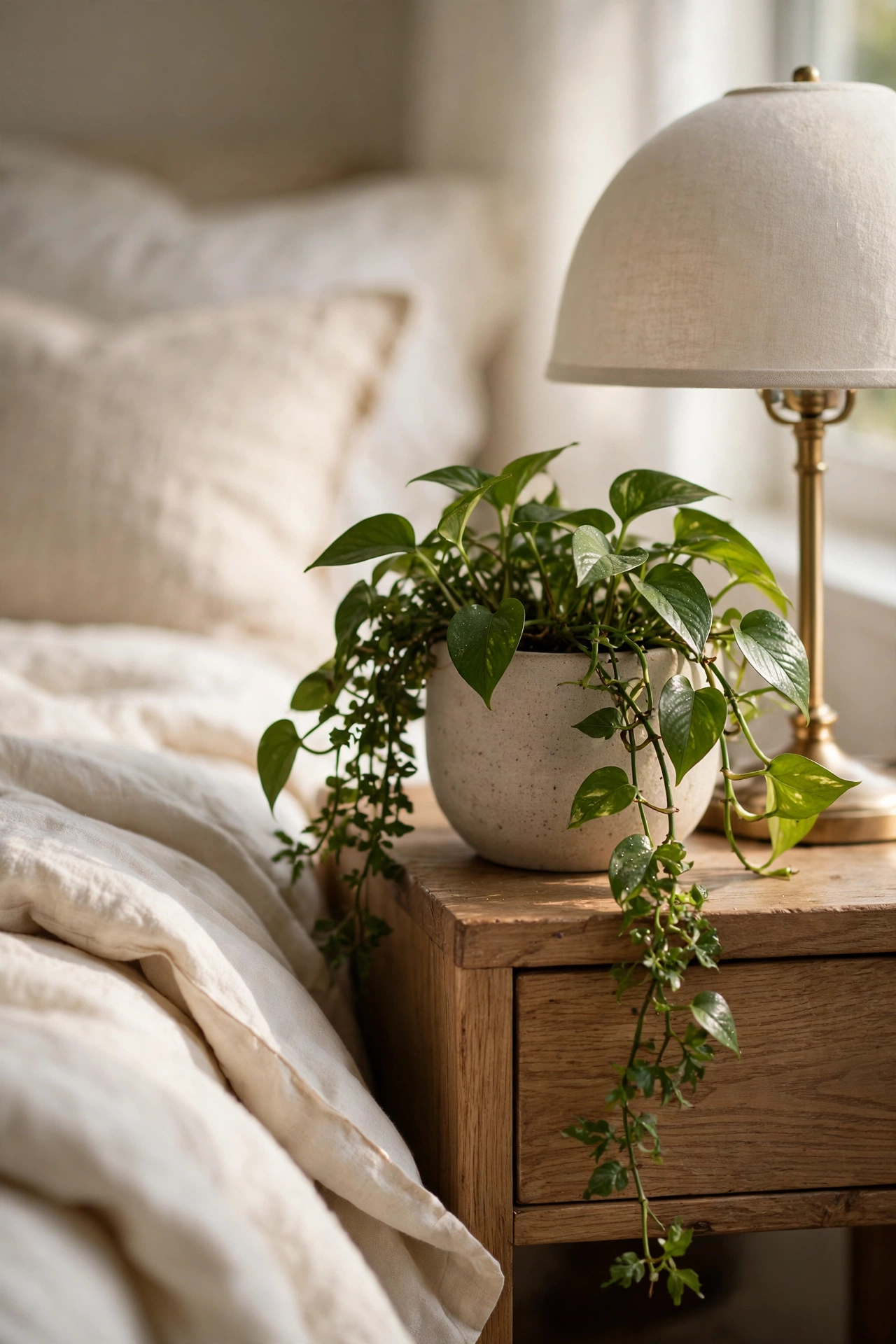
The bedside is where greenery pays off fastest because you see it first thing in the morning and last thing at night. Keep it simple here. One healthy plant, in a pot that matches your bedding or bedside lamp, will do more than a crowded shelf you have to dust around every week.
Look 1: A Trailing Plant on the Nightstand
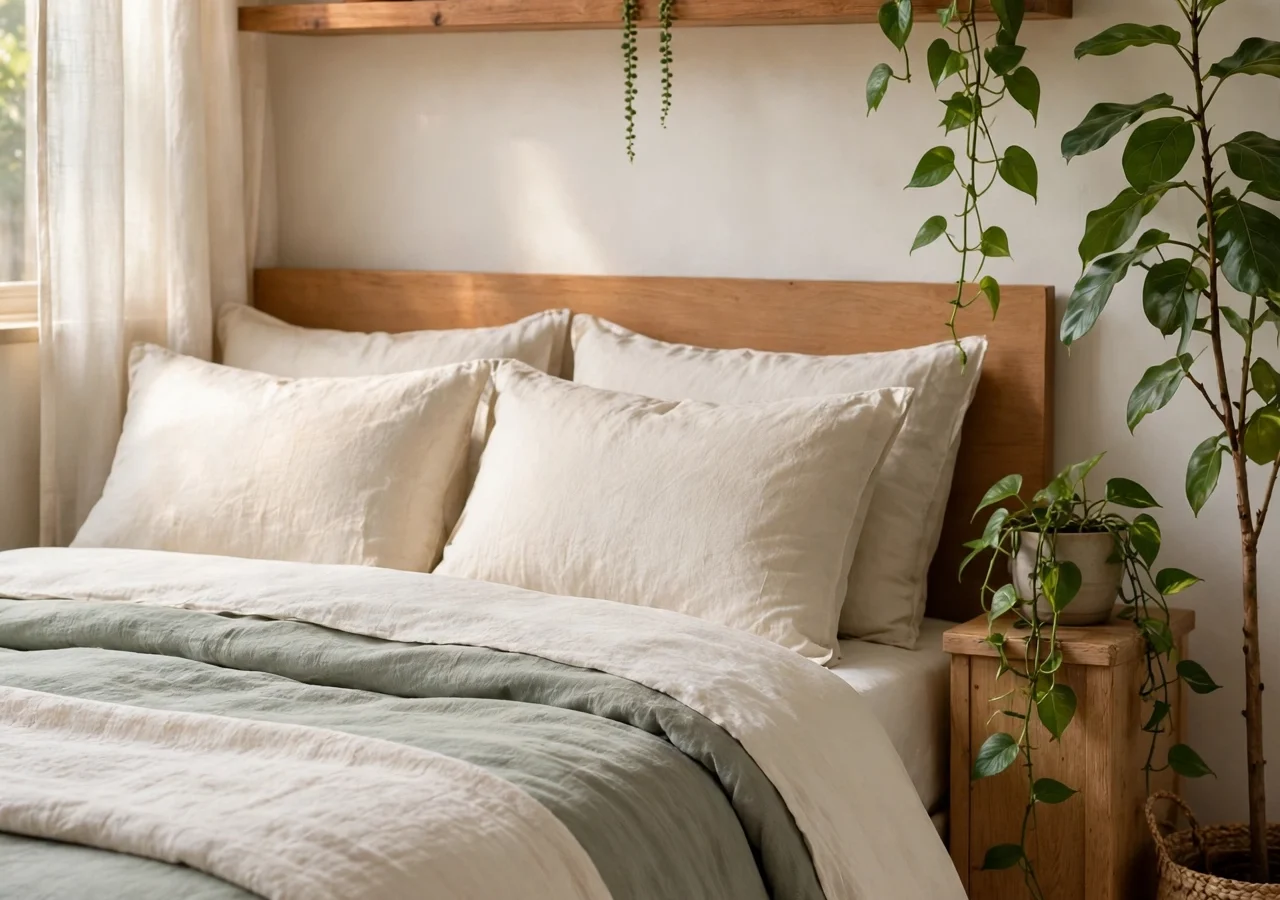
Choose a trailing plant with soft, flexible stems and let two or three strands fall over the front edge of the nightstand. It softens the hard corner of the table and draws the eye down, which makes a tall headboard feel less blocky. Keep the pot small enough that your lamp, book, and glass of water still fit without a shuffle every night. If the plant starts to creep onto your pillow, trim the longest strand back to just below the table edge and pop the cutting in water on the dresser until it roots.
Look 2: A Tall Floor Plant Beside the Bed
A single tall plant in a woven basket or plain ceramic pot works best on the side of the bed that faces the door, where it frames the bed instead of blocking a walkway. Leave at least a handspan between the pot and the bed frame so bedding does not snag on leaves when you make the bed. Styling tip: pick a plant whose leaves reach about two thirds of the height of your headboard. Much taller and it crowds the wall art; much shorter and it reads as a stray pot someone forgot to move.
Turn the Wall Above the Bed Into a Green Ledge
 Save
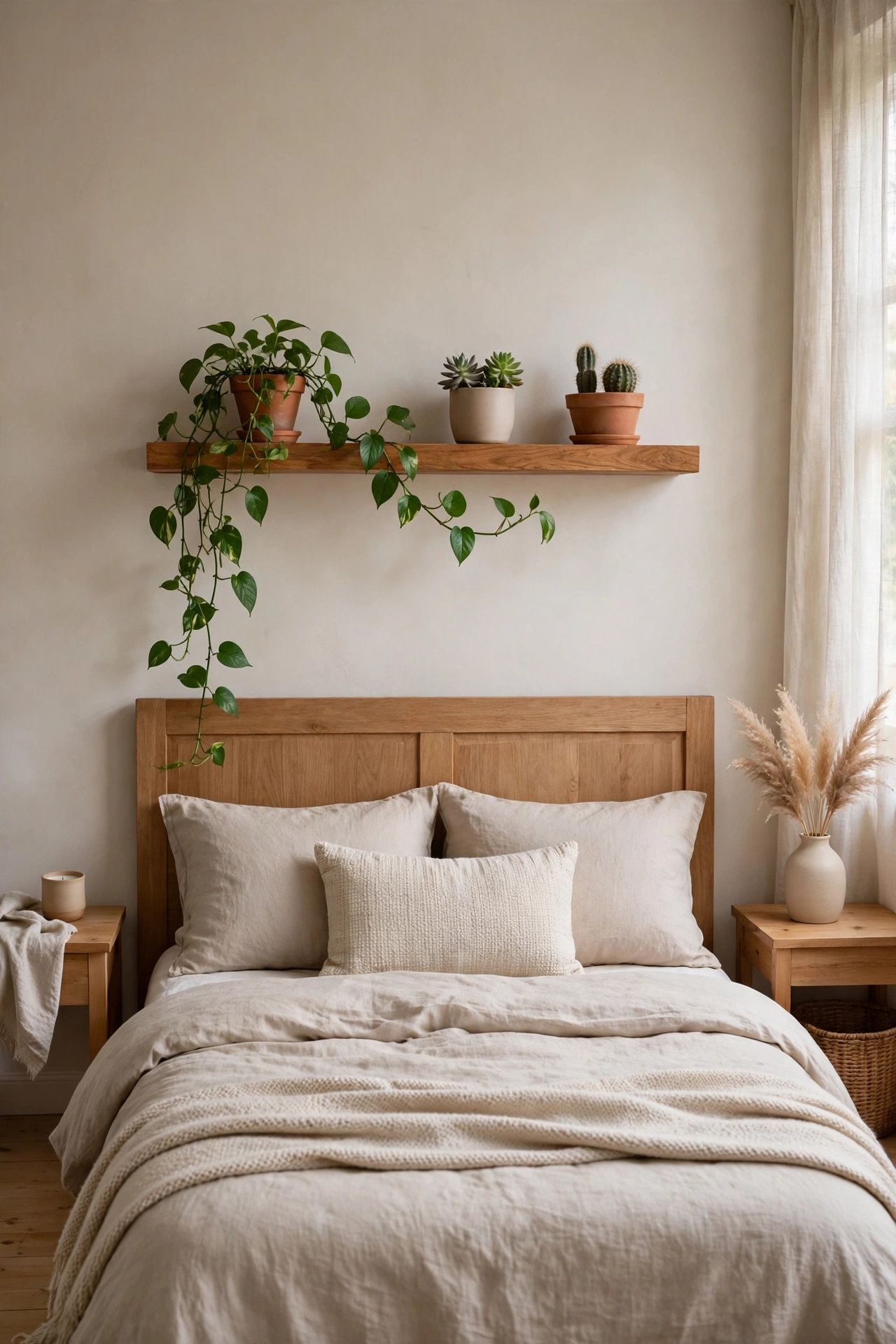
The wall above a bed is often the largest empty surface in the room, and it is also the hardest to decorate because anything heavy feels risky overhead. A shallow shelf with small plants solves that. It adds colour and life at eye level when you are lying down, without the weight or worry of a big framed piece.
Look 3: A Single Shelf Ledge Above the Headboard
Fit one wooden shelf about 30 centimetres above the headboard, long enough to hold three small pots with space between them. Vary the leaf shapes: one upright plant, one round-leaved plant, and one that trails a little over the edge. Leave the middle of the shelf slightly emptier than the ends so the arrangement feels calm rather than lined up like soldiers. Check the shelf fixings are solid and keep pots light, since you will be watering them over your bedding.
Look 4: A Pair of Hanging Planters Flanking the Bed
Hang one planter on each side of the bed at the same height, roughly level with the top of the headboard. Matching planters and similar plants keep the pair feeling intentional, even if the plants themselves grow at different speeds. Hang them far enough from the wall that leaves do not brush the paint all night, and use a small saucer inside the outer pot so drips never reach the pillow. This look suits rooms with no room for a shelf, and it pulls the eye upward in a low-ceilinged bedroom.
Build a Reading Corner That Feels Planted, Not Staged
 Save
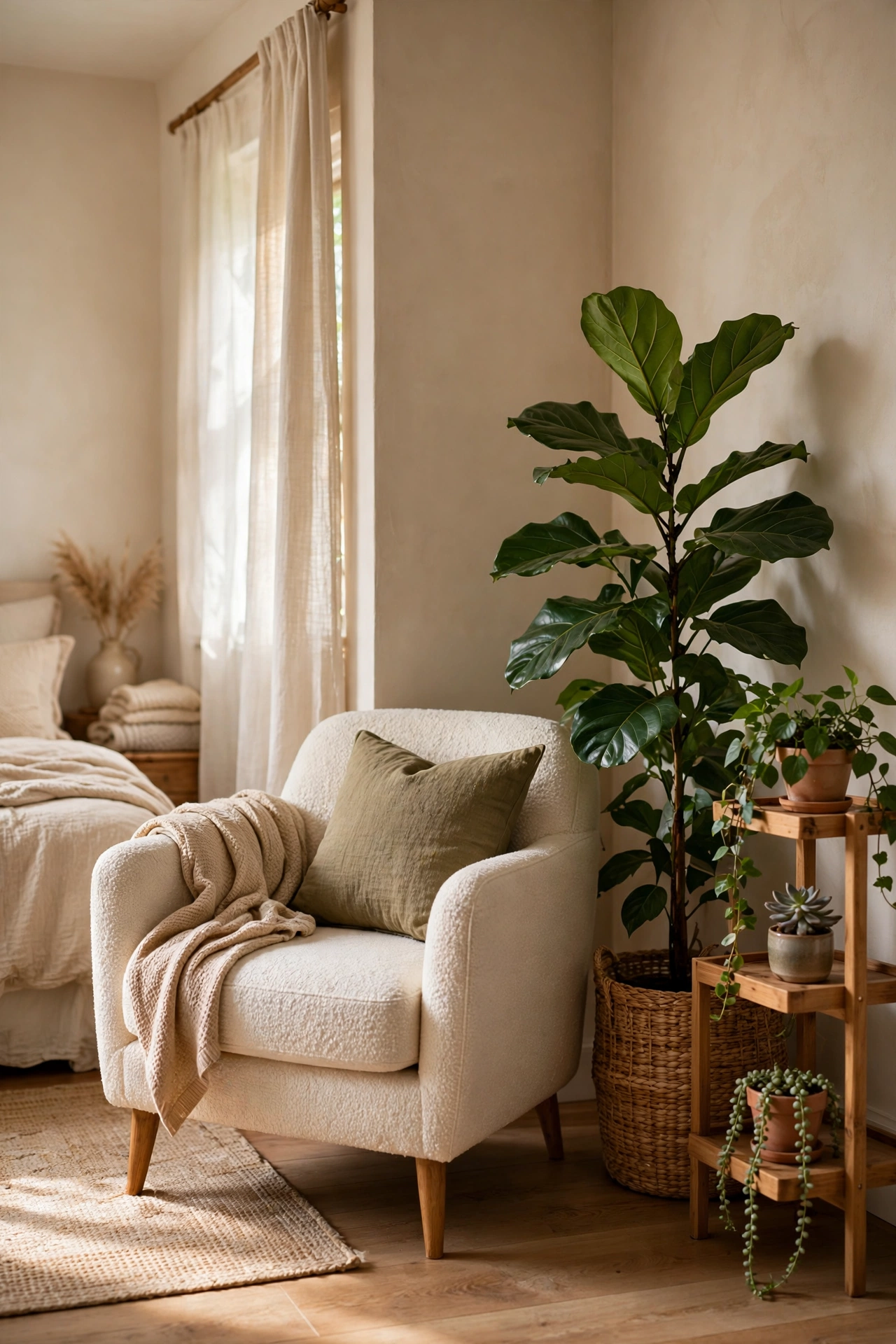
A reading corner only works if you actually sit in it, so plants here should make the chair more inviting, not fence it in. Think of one larger plant to anchor the corner, plus smaller pots you can move when you want to stretch your legs or put your feet up.
Look 5: An Armchair Anchored by One Large Leafy Plant
Place a large plant just behind and to one side of your reading chair, so its leaves frame the chair without shading your book. A plain pot in a warm neutral lets the leaves do the talking, and a small side table on the other side balances the weight of the plant. Keep a clear path into the chair. If you have to duck under leaves to sit down, move the plant back by one pot width and the whole corner will feel easier to use.
Look 6: A Trio of Small Pots on a Plant Stand
A tiered stand or a low stool holding three pots of different heights turns an awkward gap beside a chair into a deliberate display. Put the tallest plant at the back, the fullest in the middle, and the smallest at the front, and keep all three in pots from the same colour family. This is a good spot for plants you are still learning to care for, because they are close enough to notice when the soil dries out. It borrows the same cosy logic as our dark academia reading corners guide, where the chair, the light, and the texture matter more than the number of objects.
Look 7: A Climbing Plant Trained Up a Corner Trellis
A slim trellis in a corner, fixed a few centimetres off the wall, gives a climbing plant somewhere to go without taking over the room. Guide new stems loosely along the trellis with soft ties and trim any stem that heads for the curtains. This look takes patience, since a trellis fills in over months rather than days, but the result feels grown rather than arranged. It works especially well in a corner that gets steady, indirect light through most of the day.
Make the Windowsill Work Harder
 Save
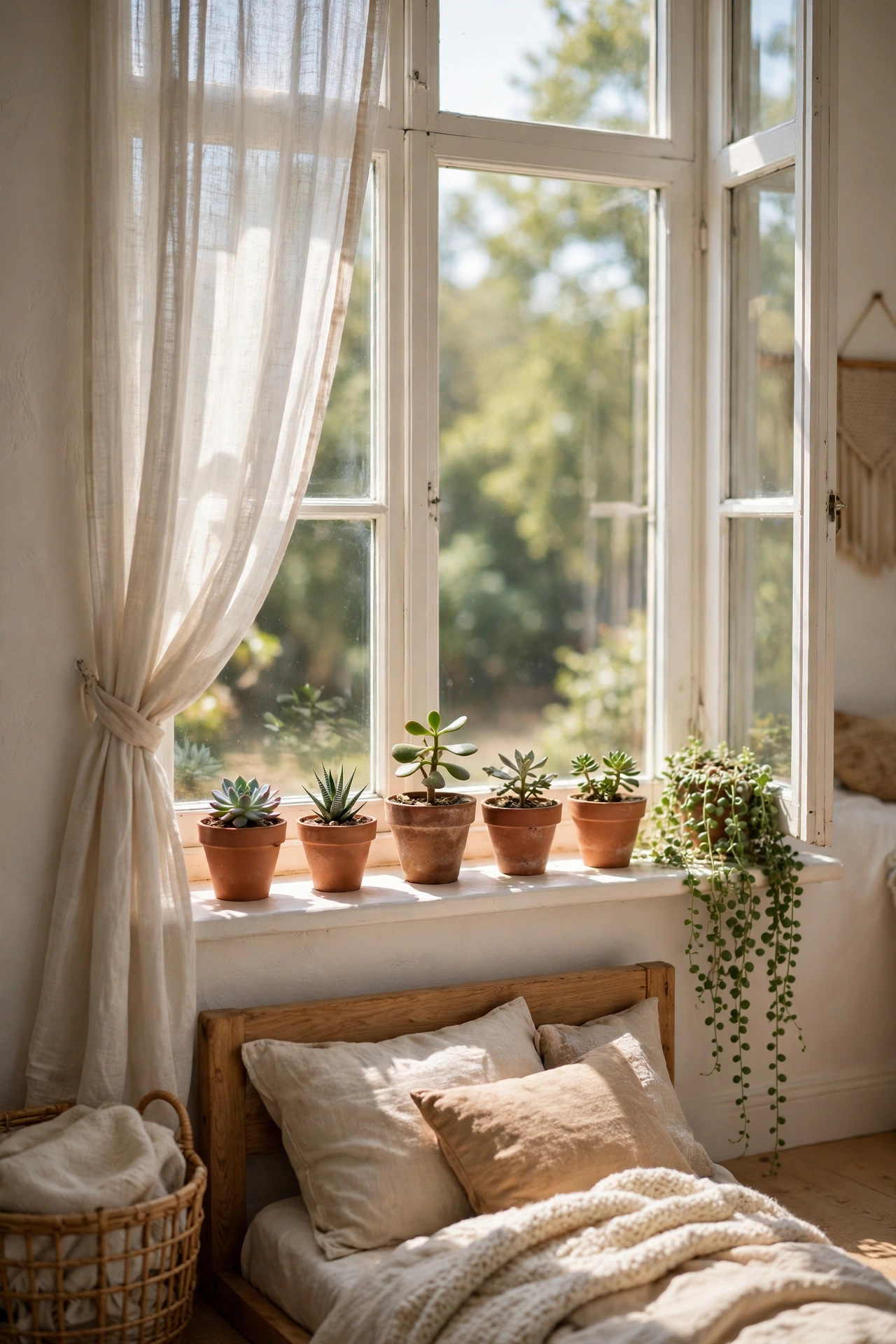
Windowsills are the most forgiving plant spots in a bedroom because light, air, and a view all arrive in one place. The trick is to treat the sill as a shelf with a purpose, not as the place where spare pots end up by default.
Look 8: A Row of Small Succulents on a Sunny Sill
On a sunny sill, group three to five small succulents in matching terracotta or stone pots, leaving a finger width between each pot so air can move and you can lift one out for watering. Keep them low enough that they do not block the view or snag the curtain when you open the window. Water sparingly and let the soil dry out fully between waterings, since a sunny sill dries pots faster than a shaded shelf and soggy roots are the usual reason these plants fail.
Look 9: A Trailing Plant in a Sunny Window Corner
Hang or perch a trailing plant in the corner of the window where it gets bright light but not harsh midday sun beating straight onto the leaves. Let the strands fall beside the curtain rather than across the glass, so you can still open and close the window without tangling stems. This look softens the hard rectangle of the window frame and gives the room a green edge first thing in the morning, when the light hits the leaves before anything else.
Dresser Tops, Desks, and Small Surfaces
 Save
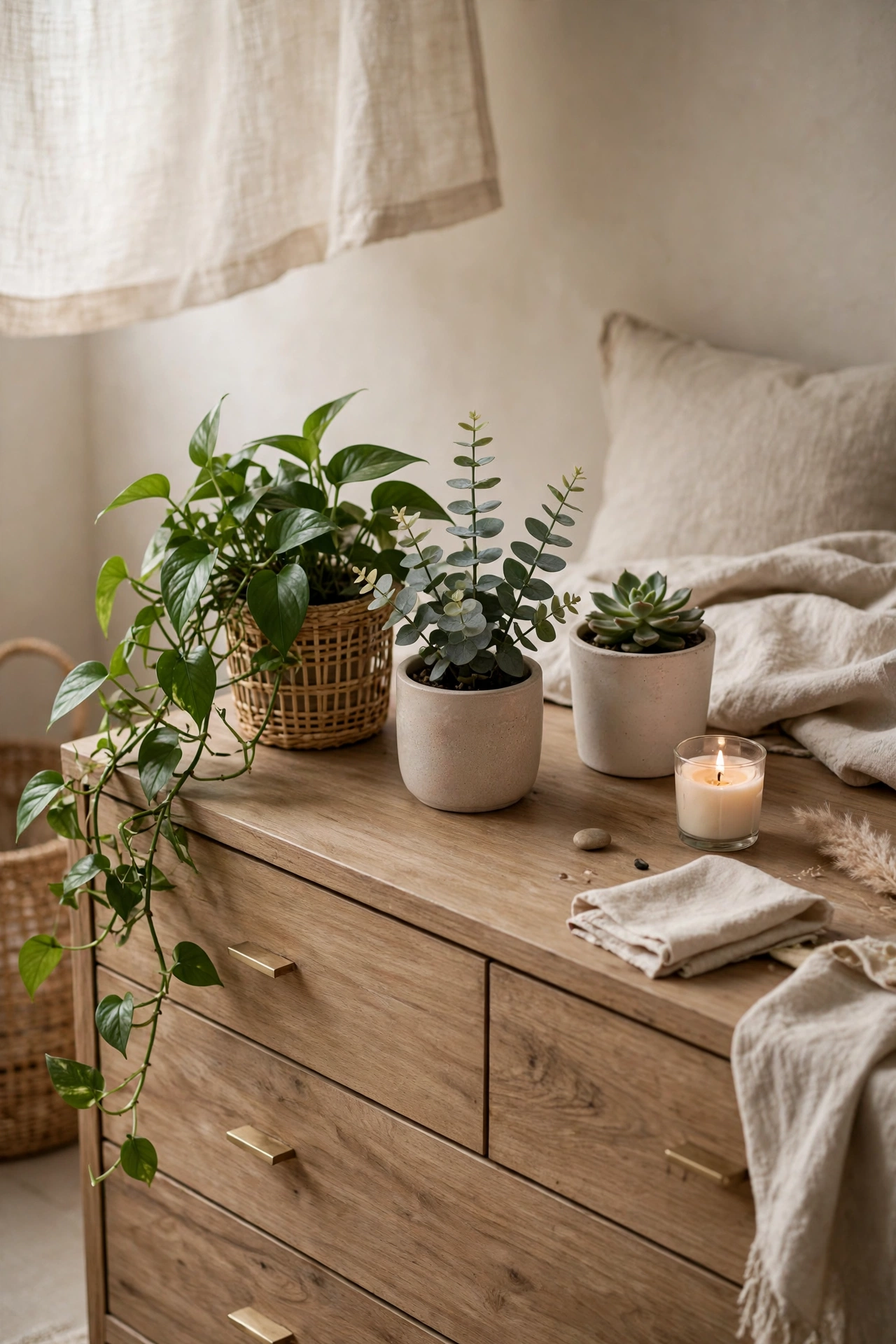
Small surfaces are where plant collections usually go wrong, because it is tempting to line up every pot you own. A dresser or desk looks best with a clear grouping: a few plants, one non-plant object like a candle or a small dish, and empty space around the group so it reads as a display.
Look 10: A Dresser Top Grouping in Odd Numbers
Arrange three or five plants on one end of the dresser, with the tallest at the back and a trailing plant at the front edge. Leave the other end of the dresser clear for the things you actually use every day, like a hairbrush or a watch tray. Odd numbers stop the group from looking like a shop display, and keeping all the pots in one area means watering takes two minutes instead of a tour of the room.
Look 11: Two Small Pots on a Bedroom Desk
A desk needs light and focus, so two small pots are plenty: one near the back corner and one beside a lamp or a pen pot. Choose compact plants that will not drop leaves onto your keyboard or grow over your notebook within a month. If your desk faces a wall, a small plant on a riser or a stack of books lifts the leaves into your line of sight without eating desk space.
Look 12: A Vine Trailing Along a Mirror Top
Let a trailing plant sit on top of a leaning mirror or a tall dresser mirror, with its strands falling down one side of the frame. Keep the vine to one side only, so the mirror still works and the room still gets the light bounce a mirror provides. Trim the vine when it reaches the middle of the mirror, and wipe leaves occasionally, since mirror tops collect dust that dulls both the glass and the plant.
Use the Floor, the Foot of the Bed, and Empty Corners
 Save
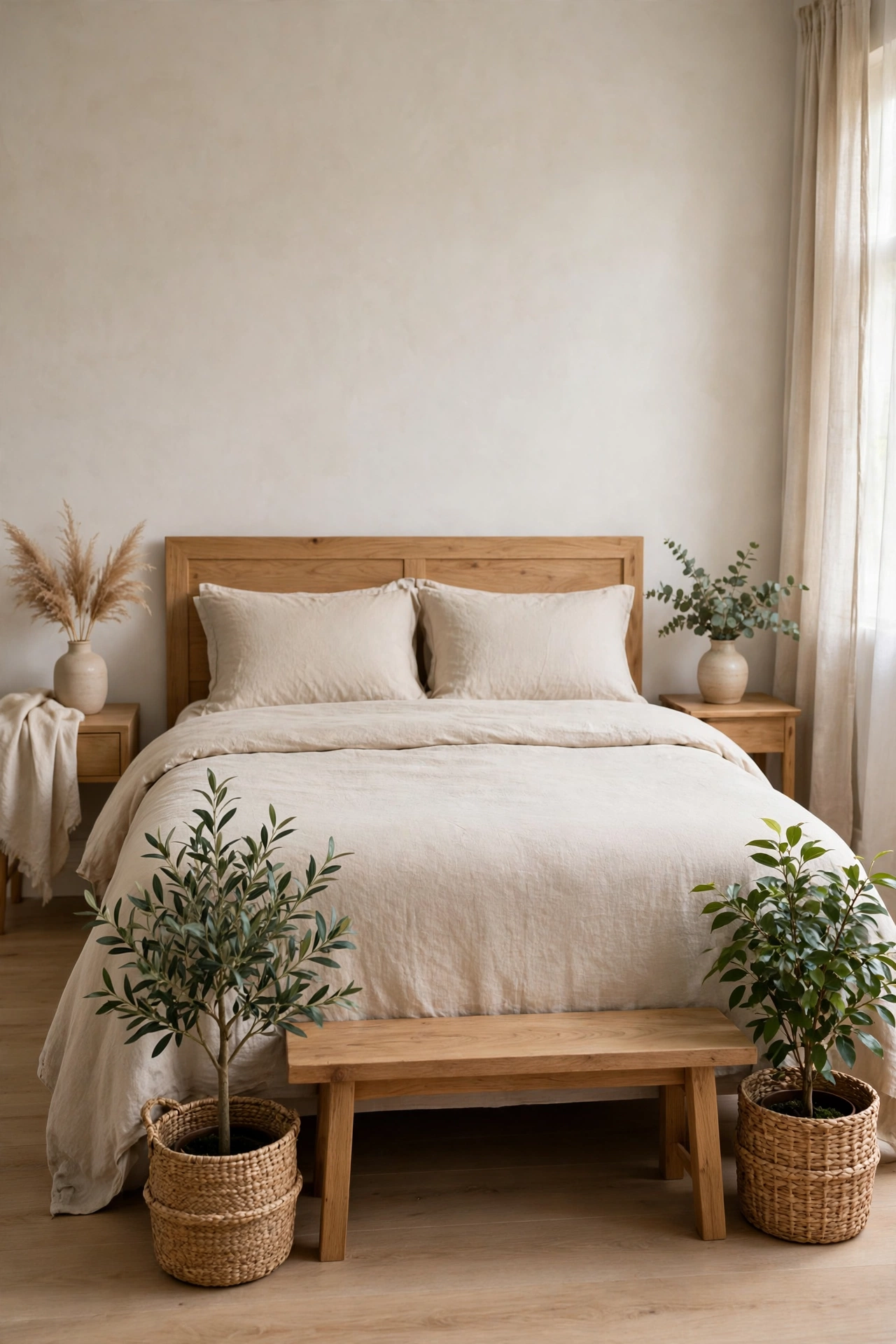
Floor plants give a bedroom its sense of scale. Without them, a room full of small pots can feel fussy. With one or two well placed floor plants, the small pots read as details rather than clutter.
Look 13: A Plant Bench at the Foot of the Bed
A low bench at the foot of the bed is a natural plant shelf if you do not use it for blankets. Place two medium pots on the bench, one at each end, and keep the middle clear so the bench still looks like furniture rather than a plant table. This look works best in bedrooms with space to walk around the foot of the bed, since a bench plus plants narrows the path more than a bench alone. Budget swap: a sturdy low stool or an upturned crate in a plain finish gives the same effect for far less than a purpose made bench.
Look 14: Basket Planters in an Empty Corner
A large plant in a woven basket softens an empty corner better than almost any other single object, because the basket adds texture while the leaves add height. Choose a basket slightly wider than the pot inside it, so the pot sits securely and you can lift it out for watering. Corners near a door work well, as long as the plant does not catch on the door swing or block a drawer. One basket plant per corner is enough; two corners filled is plenty for most bedrooms.
Dark Corners and Low-Light Bedrooms
 Save
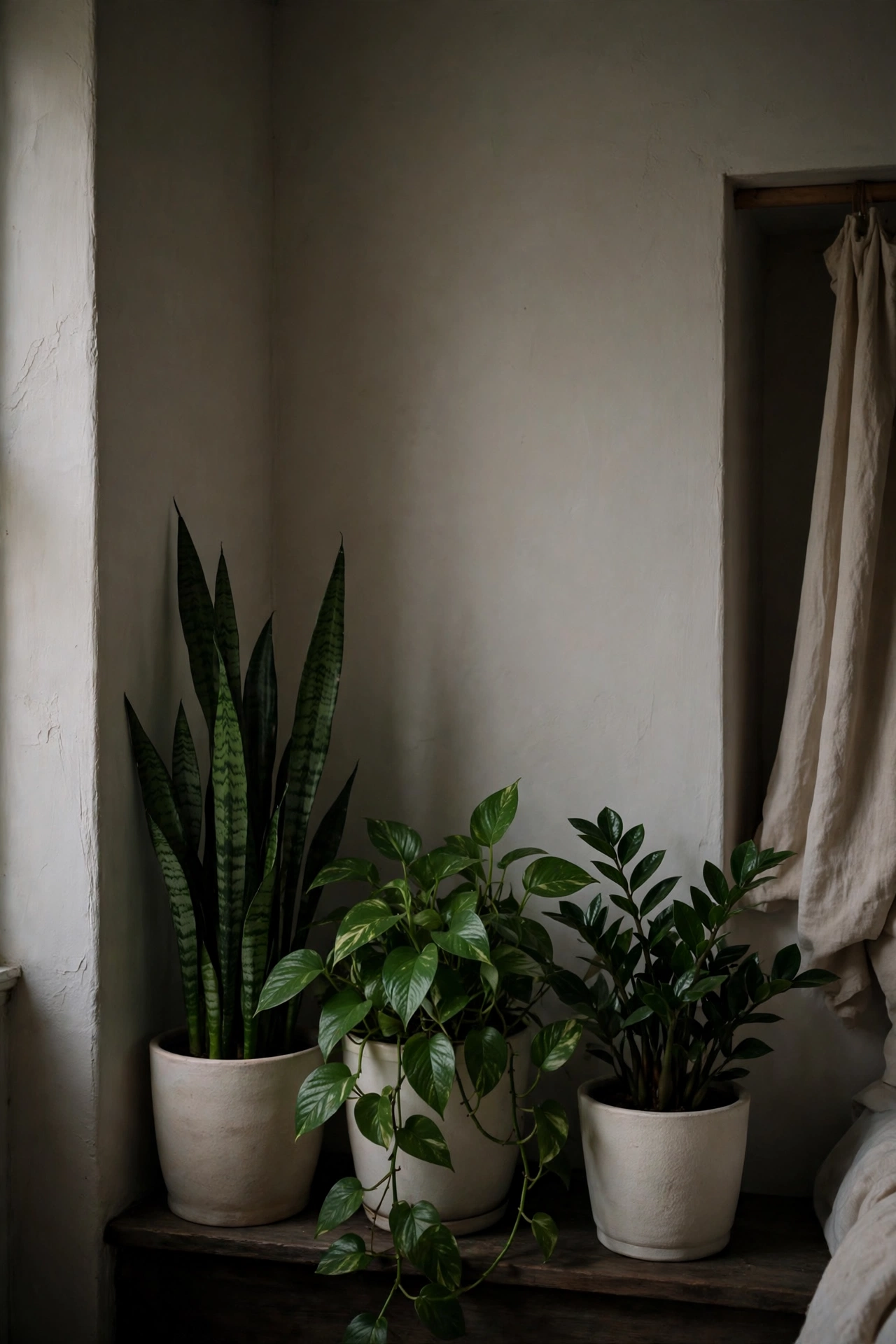
Not every bedroom gets generous light, and a north facing room or a room with one small window still deserves greenery. The answer is not to force sun loving plants into shade, but to choose plants that tolerate low light and to keep the rest of the room pale and uncluttered so the green stands out.
Look 15: Shade Tolerant Plants in the Darkest Corner
Place one or two plants that tolerate low light in the corner that gets the least sun, and resist the urge to add more until you see how they cope over a month. Check the soil before watering, since low light rooms dry pots slowly and overwatering is the most common mistake here. A pale pot and a light coloured wall behind the plant will help the leaves read clearly in dim light, rather than disappearing into shadow. This restrained approach echoes the palette in our warm minimalist living room ideas, where pale surfaces let a few strong pieces carry the room.
Look 16: A Plant on a Light Stand by the Bed
If your darkest corner is also your bedside, a small plant stand that lifts a pot to nightstand height puts the leaves where light from a lamp or a window can reach them. Use a stand with an open frame so light and air pass through, and keep the plant compact enough that it does not crowd your lamp. Rotate the pot a quarter turn each week so growth stays even instead of leaning hard toward the nearest light source.
Keep It Looking Good Week After Week
 Save
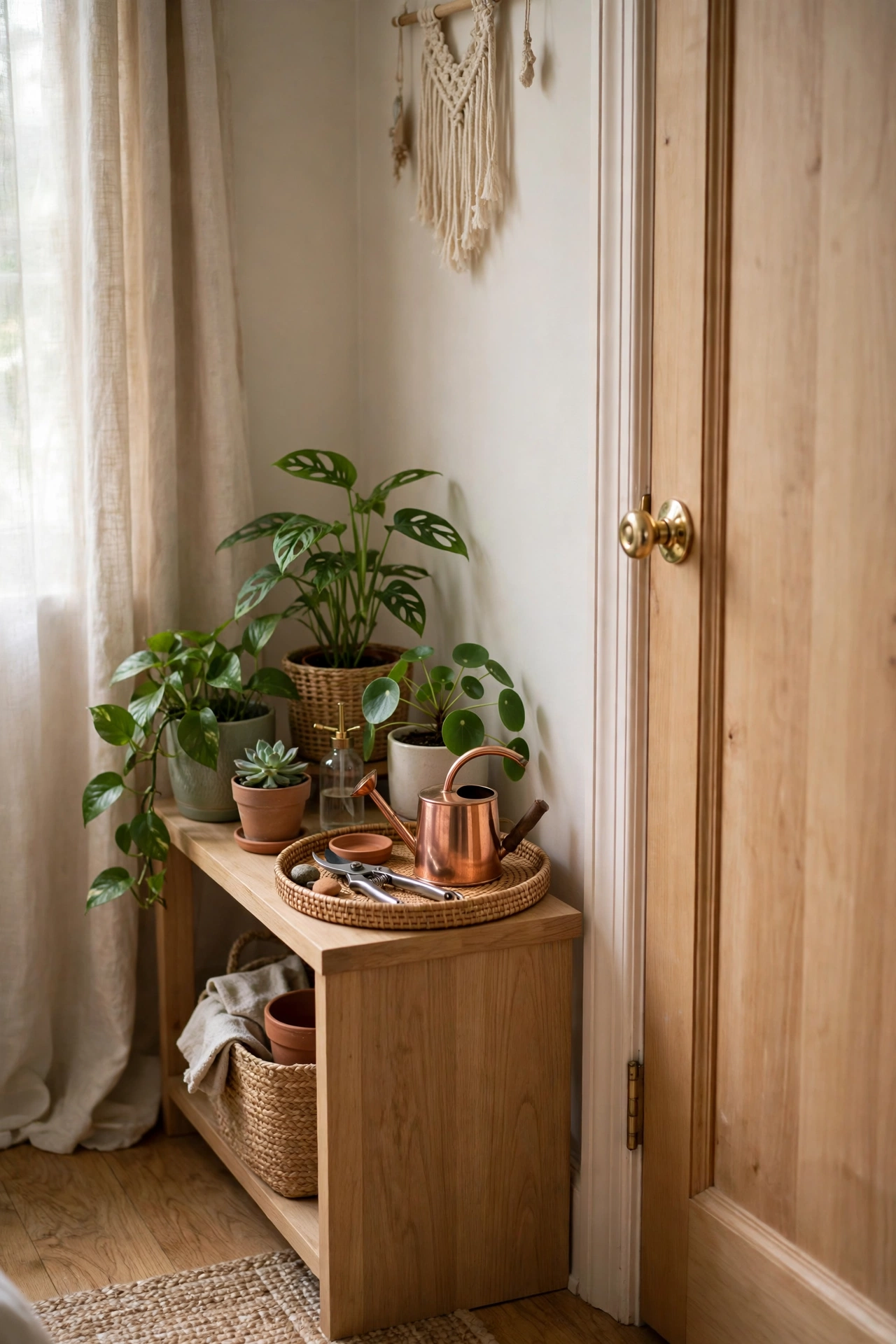
A plant filled bedroom only stays beautiful if the care fits your real routine. The prettiest arrangement will fade if watering means carrying ten pots to the sink, so build care into the room itself and keep the number of plants at a level you can actually maintain.
Look 17: A Simple Watering Spot by the Door
Keep a small watering can, a cloth, and a tray near the bedroom door or inside a wardrobe door, so watering becomes a five minute loop around the room rather than a chore you put off. A tray under grouped plants catches drips and saves the furniture, and wiping leaves while you water keeps them looking fresh. Greenery lasts longest when the rest of the room feels soft and lived in too, which is why our cosy home checklist pairs so well with a plant filled bedroom: warm bedding, a lamp at the right height, and a clear surface do as much for the mood as the plants themselves.
Look 18: A Seasonal Swap That Keeps the Room Fresh
Once a season, swap just two or three plants: move a tired plant to a brighter spot elsewhere in the house, bring a fuller one into the bedroom, or change a pot cover to match the bedding. Small swaps keep the room feeling current without a full rearrangement, and they give you a reason to check every pot for dust, pests, or roots poking out of the drainage holes. For a festive version of this swap, see our Christmas bedroom decor ideas, where greenery is layered with seasonal touches instead of replacing the plants you already love.
Bringing It All Together
Start with the bedside, add one wall or window look, and fill a single corner. That is enough for most bedrooms to feel green without feeling like a greenhouse. Live with that arrangement for a few weeks, notice which plants you enjoy caring for and which ones you keep forgetting, and let the room grow from there. The best plant filled bedrooms are not the fullest ones. They are the ones where every plant has a place, a pot that suits the room, and a spot you pass every day.
Frequently Asked Questions
How many plants should I put in a bedroom?
Start with three to five plants in a small bedroom and five to eight in a larger one. That range gives you greenery at the bedside, the window, and one corner without blocking walkways or making watering a long job. Add more only where a spot still looks bare after a few weeks.
Which plants are best for a bedroom with little light?
Choose plants labelled as low light tolerant and place them where they get whatever indirect light the room offers, such as near a window that never gets direct sun. Check the plant label before you buy, rotate the pot weekly for even growth, and water less often than you would in a bright room, since the soil dries slowly.
Should I keep plants away from my bed?
Keep plants a handspan away from the bed frame so leaves do not brush your pillow and bedding does not snag when you make the bed. Avoid heavy pots on shelves directly above the bed, and keep trailing stems trimmed so they do not creep onto pillows overnight.
How do I stop bedroom plants from making the room feel cluttered?
Group plants in odd numbers on one surface, leave empty space around each group, and use pots in a small colour range. One large floor plant usually calms a room more than six small pots scattered around, because it gives the eye a single green anchor instead of many competing spots.
Do bedroom plants need different care in winter?
Yes, in a small way. Shorter days and cooler rooms slow growth, so most bedroom plants need less water in winter and should sit away from cold draughts and radiators. Keep checking the soil with a finger before watering, and move plants a little closer to the window if their growth stalls badly.