Most Valentine’s decor fails for one simple reason. It looks like a party shop exploded in the living room, all shiny red hearts and foil balloons, and then it all comes down on February 15 because nobody wants to live with it for another day. That is a shame, because the feeling behind it is worth keeping around a little longer.
The trick is to decorate for romance, not for a holiday aisle. Think soft colour, low light, fresh flowers, and textures you actually want to touch. A room that feels warm on February 14 should still feel good on February 20, and most of the ideas below will do exactly that.
This guide walks through Valentine’s Day decor room by room, with practical details you can use this weekend: which shades sit well together, where candles belong and where they do not, how to set a table that feels special without feeling staged, and how to keep the whole look grown-up rather than costume-like. Nothing here needs a big budget or a full redecoration. A few thoughtful changes will carry the whole mood.
Start With a Softer Colour Story
 Save
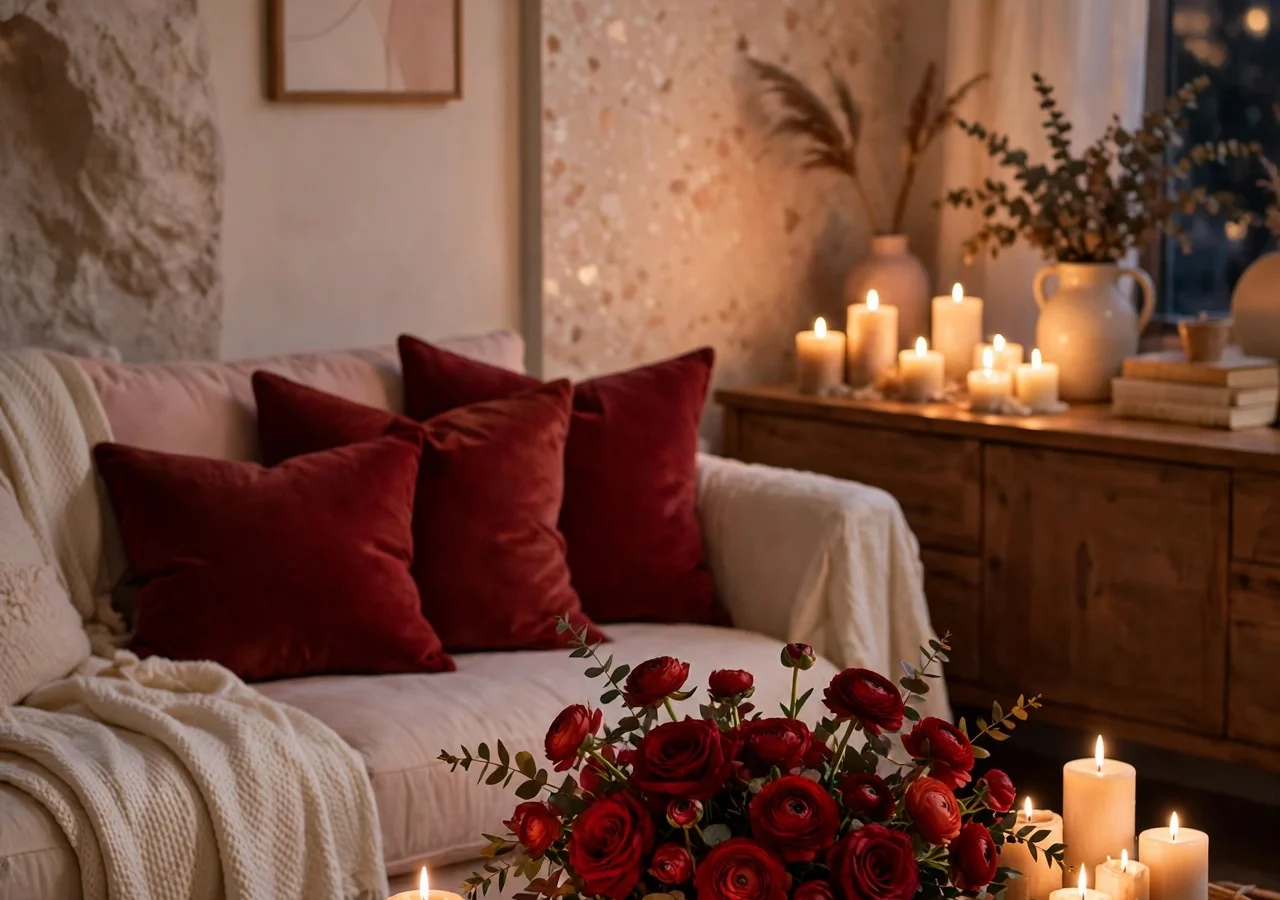
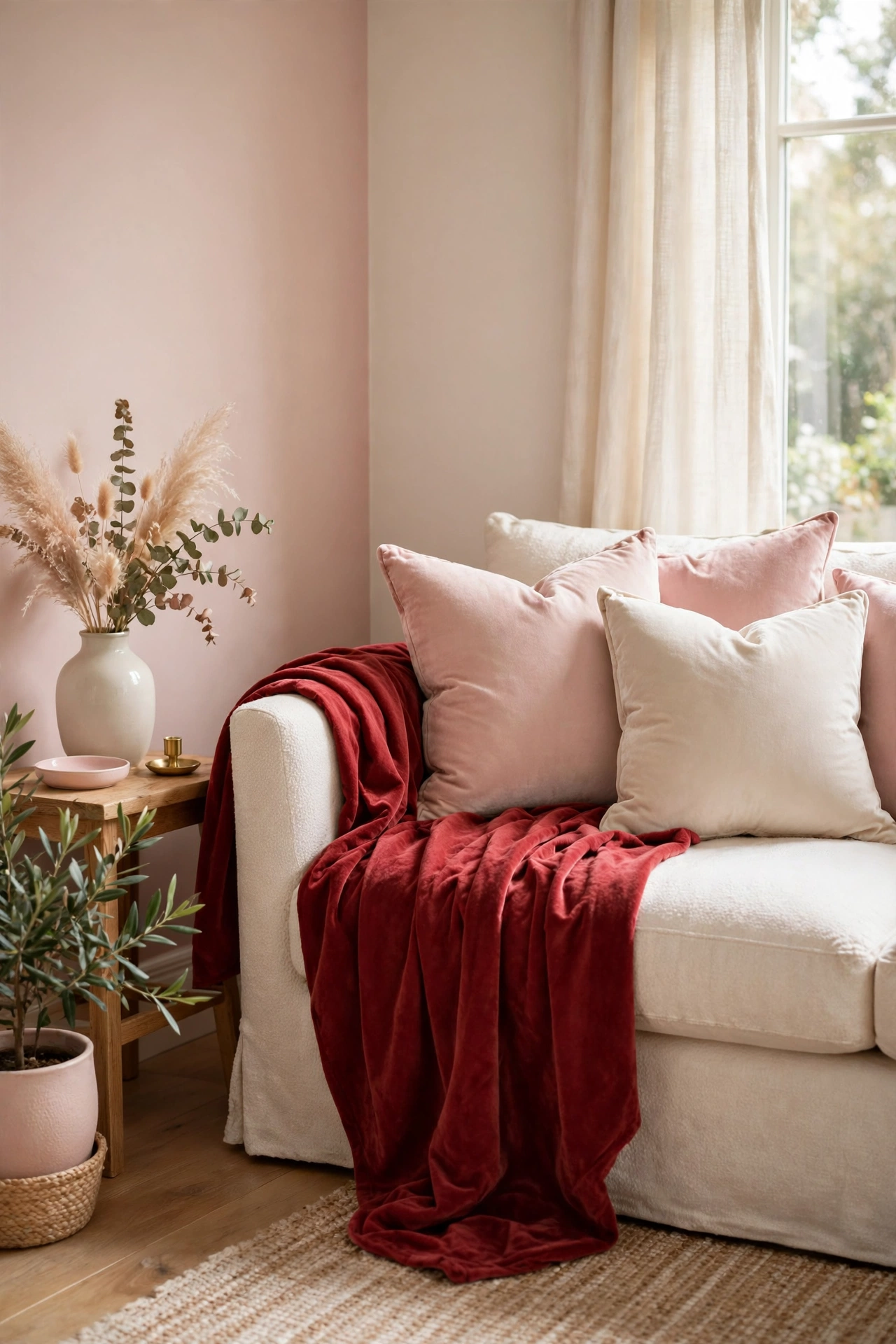
Red on its own can shout. Red softened with blush, cream, and a touch of deep plum whispers instead, and whispering suits a home far better than shouting. Pick one main shade and let the others support it. If your sofa is grey or cream, blush pink cushions and a single deep red throw will read romantic without turning the room into a theme park. If your room already runs warm, with wood floors and brass lamps, a dusty rose will sit more naturally than a bright cherry red.
Keep the strongest colour low in the room. Throws, cushions, and a table runner carry colour well because they sit at sitting height, where the eye lands naturally. Keep walls, curtains, and large furniture neutral, and the room stays calm while the accents do the romantic work. Two or three red or pink pieces per room is plenty. A fourth or fifth starts to feel like a display rather than a home.
Texture matters as much as colour here. Velvet cushions, a linen tablecloth, and a knitted throw each catch light differently, and that mix stops a pink-and-red scheme from looking flat. If you already own pink pieces from another season, pull them out now. The blush tones in our pink Christmas styling work just as well in February, which is one reason to buy soft shades you like rather than novelty prints you will hide by March.
Styling tip: Hold a cushion or throw up against your sofa in daylight before you buy a second piece in the same family. Colours that match under shop lights can clash badly at home, and one honest daylight check saves a return trip.
Candlelight, Layered Low
 Save
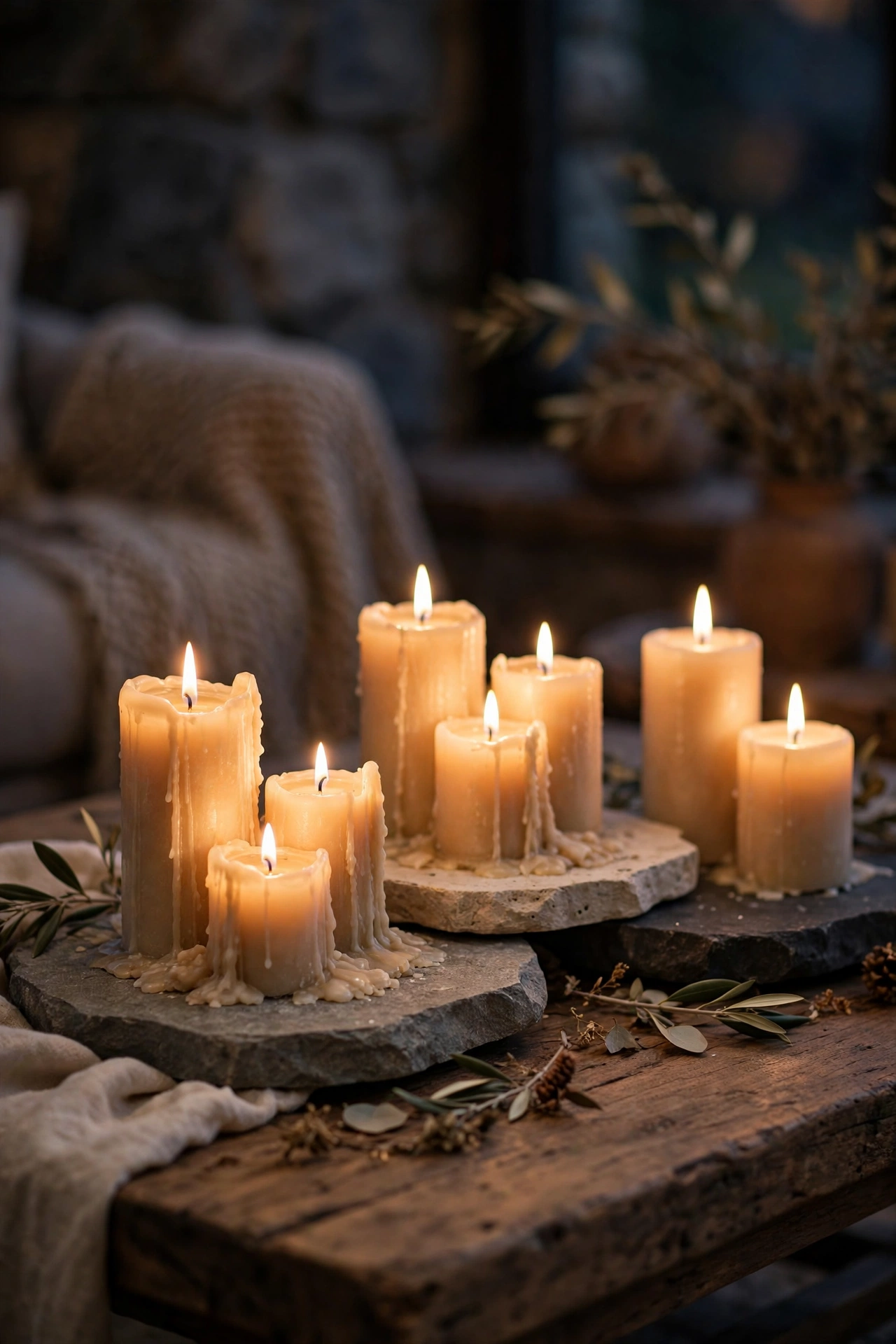
Nothing changes a room faster after dark than candlelight, and nothing ruins the effect faster than a single candle lost on a big table. Group candles in odd numbers, three or five, at different heights, and keep the groupings low so the flames sit below eye level when you are seated. A cluster on a coffee table, another on a sideboard, and one small group on a windowsill will make the whole room glow without any single spot looking overdone.
Mix real candles with battery candles where safety demands it. Real pillar candles belong on stone, glass, or ceramic trays, well away from curtains, throws, and paper garlands. Battery candles with a warm, flickering setting work well inside lanterns, on high shelves, and anywhere a real flame would sit too close to fabric. The warm white setting matters. A cool white battery candle reads like a torch, not a flame, and it will fight the mood you are building.
Scent deserves the same restraint as colour. One scented candle per room is enough, and a soft rose, vanilla, or sandalwood will sit in the background rather than taking over dinner. If you are cooking, skip scented candles near the table altogether. Food smells better than any candle, and the two together often smell like neither.
Try this: Place a tray under each candle group. A tray catches wax, keeps the grouping tidy, and lets you move the whole arrangement in one lift when you need the table back.
This low, layered approach is what makes dark romantic rooms feel inviting rather than gloomy. Light at sitting height, pools of warmth rather than one bright source, and plenty of shadow left alone.
A Table Set for Two, or a Few More
 Save
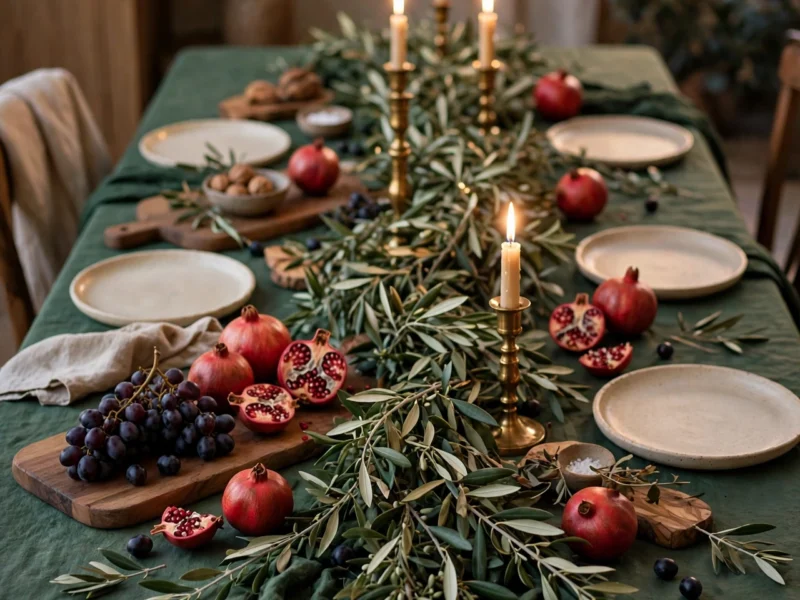
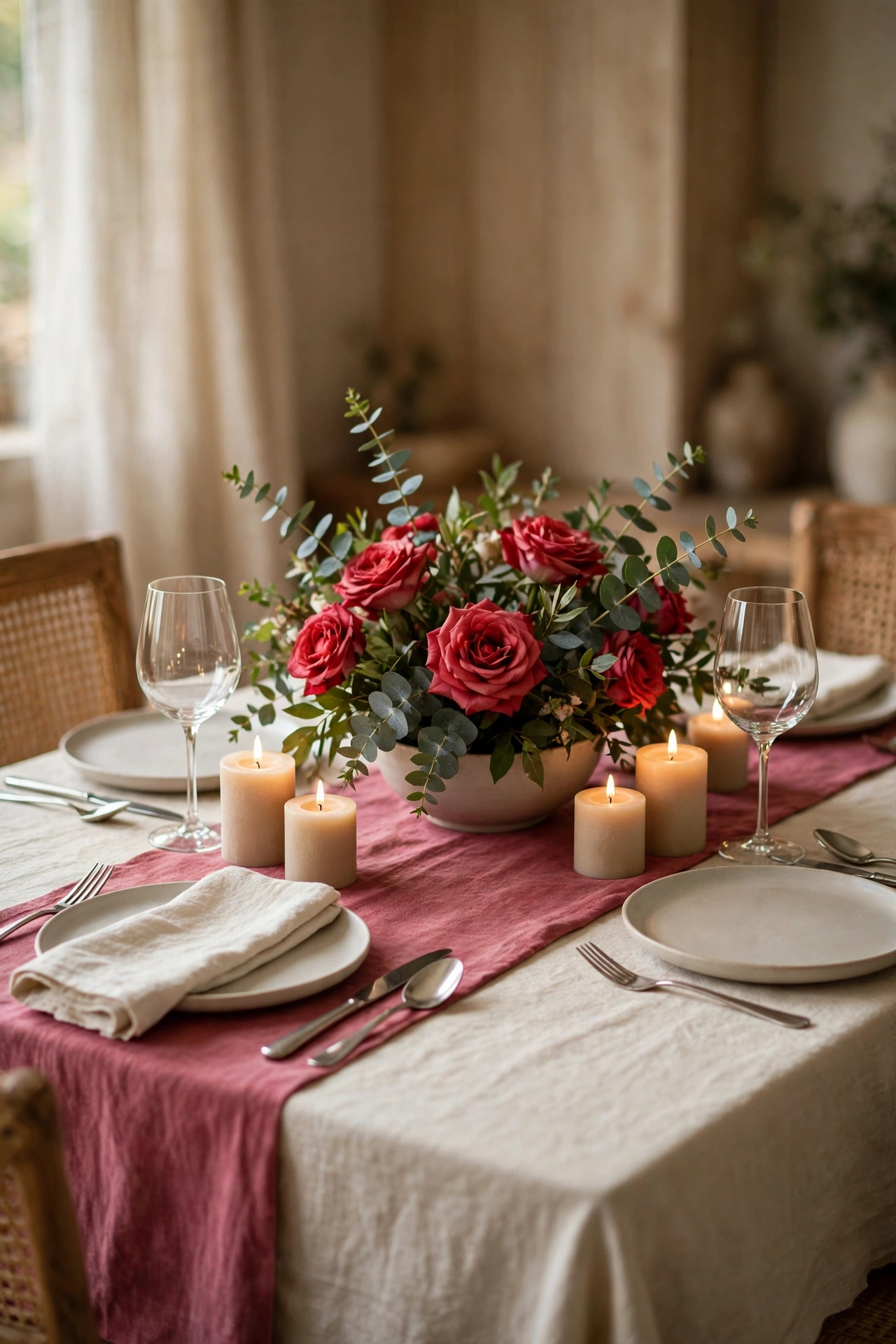
A Valentine’s table does not need heart-shaped plates. It needs a cloth that reaches the table edge, real glasses, and one centrepiece that sits low enough for people to see each other across it. Start with a plain linen or cotton cloth in cream or soft pink, then add a runner in a deeper shade down the middle. The runner is where your colour lives, and it keeps the place settings clean and simple.
For the centrepiece, a low bowl of roses or ranunculus mixed with a few sprigs of eucalyptus beats a tall bouquet every time. Tall flowers look impressive in photos and terrible across a dinner table, because guests spend the evening talking around stems. Keep everything below about 25 centimetres, add two or three short candles beside the bowl, and the table will feel dressed without feeling blocked.
Place settings can carry the theme quietly. A single stem laid across each plate, a handwritten place card, or a linen napkin folded simply and tied with thin ribbon all read as care rather than fuss. Avoid scattering loose petals across the table if you plan to serve food there. They stick to plates, end up in glasses, and spend the evening being brushed aside.
If friends are joining rather than just a partner, the same setup scales easily. Add places, stretch the runner, and use a longer low arrangement instead of one bowl. The mood stays the same, just with more laughter and more plates to wash.
Budget swap: Skip the florist arrangement and buy two supermarket bunches in the same colour family. Strip the lower leaves, cut the stems at an angle, and arrange them short and full in a bowl you already own. It looks generous for a fraction of the price.
The Bedroom, Dressed for the Season
 Save
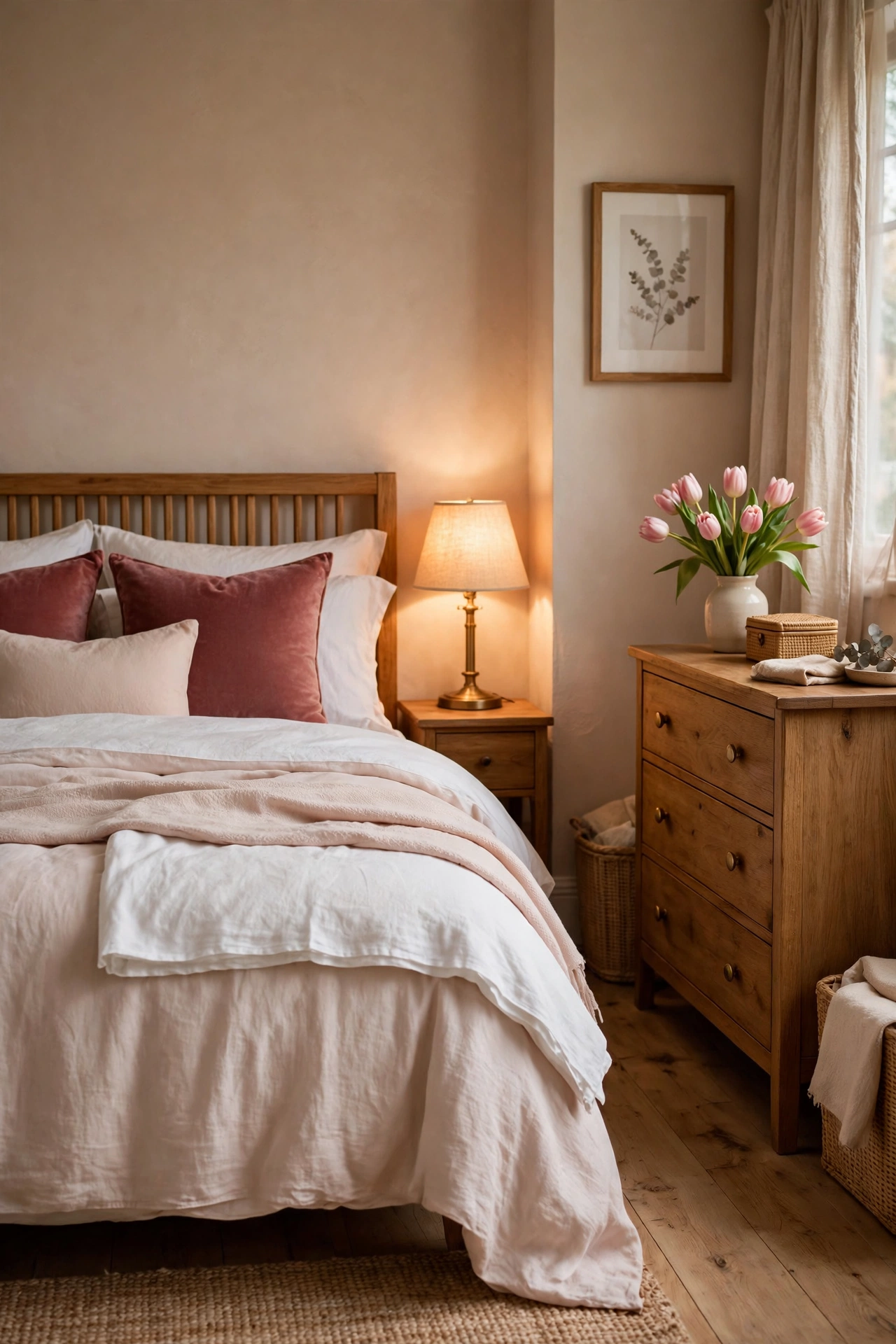
The bedroom is where Valentine’s decor earns its keep, because this is the room where soft light and soft fabric matter most. Start with the bed. A fresh set of sheets in white or pale blush, a folded throw across the foot, and two extra cushions in a deeper rose will change the whole room in ten minutes. You do not need themed bedding. Plain, good-quality fabric in a romantic shade lasts far beyond February.
Lighting does the rest. Swap a bright overhead bulb for a warm-toned one, or simply leave the overhead off and use bedside lamps with warm bulbs instead. A string of warm fairy lights along a headboard or draped over a mirror adds a gentle glow, but keep them to one strand. Two strands start to look like a student room, and the effect you want is calm, not festive overload.
Fresh flowers belong on a dresser or bedside table, not on the bed itself. Petals on pillows look romantic for about five minutes and then end up everywhere, including in the laundry. A small vase of roses or tulips where you will see them first thing in the morning is a better kind of romance, the kind that lasts all week.
The same calm, layered approach that makes a cosy Christmas bedroom work in December works here too: warm light, soft layers, and nothing that fights sleep.
Designer note: If your bedroom walls are a strong colour, keep Valentine’s accents to one shade family only. A busy wall plus mixed pinks and reds will argue with each other all month.
Fresh Flowers Without the Florist Price Tag
 Save
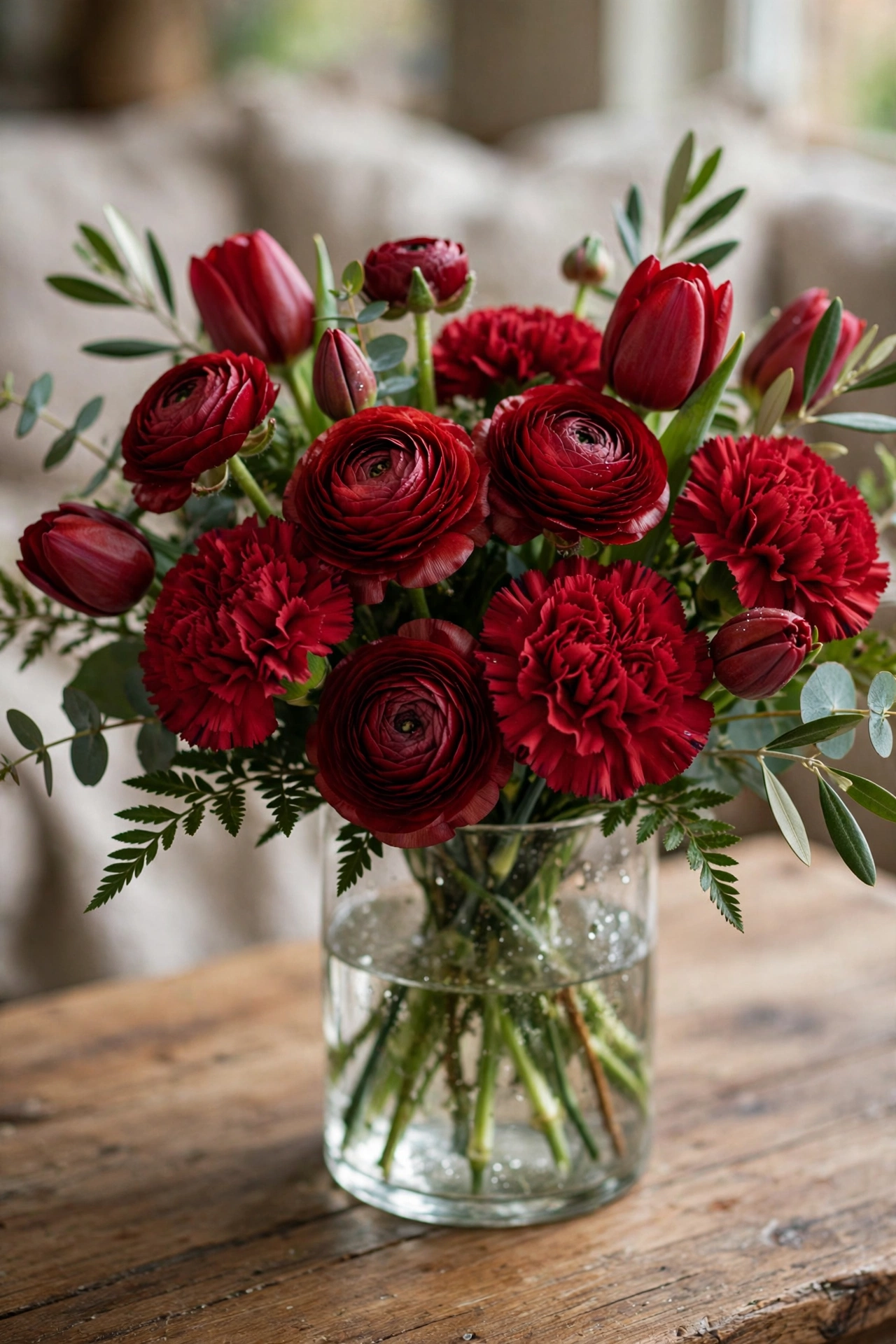
Roses get all the attention in February, and they also get the February price rise. You do not have to buy them to have beautiful flowers. Tulips, ranunculus, anemones, and carnations all look wonderful in a Valentine’s arrangement, and carnations in particular have shaken off their dull reputation. A bunch of deep red carnations, cut short and packed tightly, looks rich and deliberate rather than cheap.
Buy flowers two or three days before you need them, so buds have time to open. Cut an inch off each stem at an angle, strip any leaves that would sit underwater, and change the water daily. Flowers kept away from radiators and fruit bowls last noticeably longer, because heat and the gas given off by ripening fruit both shorten their life. A cool hallway overnight can add days to a bouquet.
Arranging is simpler than most people think. Pick one main flower, one supporting flower, and one type of greenery. That is it. Three elements, repeated, always look more pulled together than seven different flowers fighting for attention. Put the tallest stems in the middle, the shorter ones around the edge, and turn the vase as you work so the arrangement looks good from every seat in the room.
Styling tip: One big arrangement in the room where you spend the evening beats three small, thin ones spread around the house. Concentration reads as abundance.
Small Touches in the Hallway and Living Room
 Save
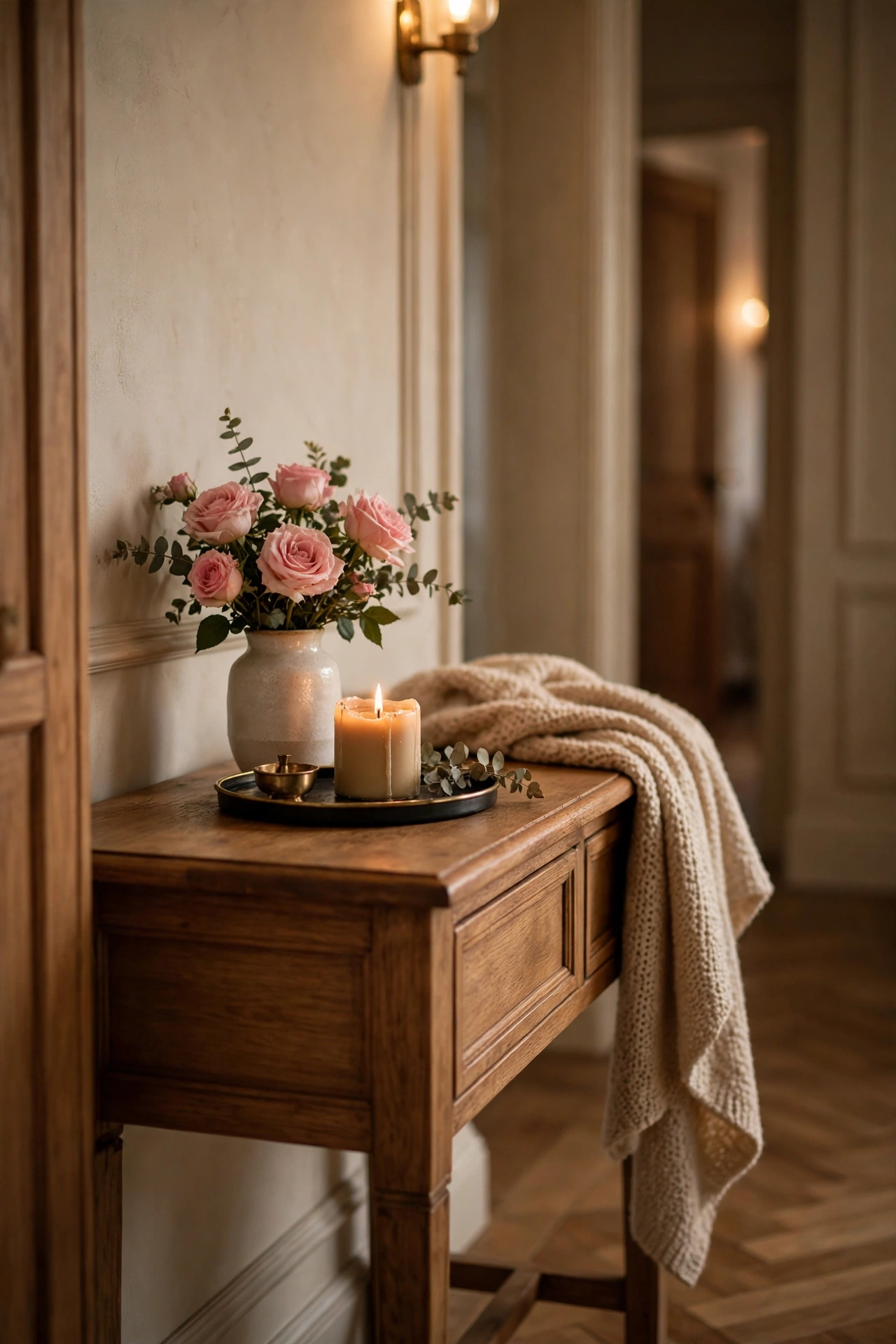
Valentine’s decor often stops at the living room, which is why the rest of the house feels left out. The hallway is the first room a guest sees, and it takes almost nothing to bring it into the mood. A small vase on a console table, a candle on a tray, and a throw draped over a hallway chair are enough. The hallway should hint at what is coming, not give the whole show away.
In the living room, work with what is already there. Swap two cushion covers, fold a throw differently, and move a vase of flowers to the coffee table. A bowl of deep red apples or pomegranates on a side table adds colour and doubles as a snack, which is more useful than most decor. A framed photo that means something to the two of you, moved to a spot where it catches the light, does more romantic work than any heart garland.
Artwork can shift the mood too. If you have prints in warm tones, bring one forward for the month. If your walls run cool and grey, a single warm-toned print or a piece of fabric draped over a chair back will warm the corner without repainting anything. The goal is a room that feels considered, not decorated for a single night.
Avoid anything that needs explaining. If a guest has to ask what a decoration is supposed to be, it is working against you. Simple, beautiful, and obvious always wins in a home.
A Mantel or Shelf That Says Romance, Quietly
 Save
A mantel is a natural stage, which makes it easy to overfill. For February, take everything off it and start again with three things: something tall, something low, and something living. Tall candlesticks at one end, a low stack of books or a small bowl at the other, and a trailing plant or a vase of fresh stems in the middle will give the mantel shape without clutter.
If you do not have a fireplace, a shelf or the top of a sideboard does the same job. The rule stays the same: odd numbers, varied heights, and space left empty on purpose. Empty space is what makes the pieces you kept look chosen rather than accumulated. A mantel crammed edge to edge reads as storage, not styling.
Garlands need a light hand here. A simple string of dried oranges, a length of plain greenery, or a few paper hearts strung on twine can work, but only one garland at a time, and only if it hangs naturally rather than drooping into the fire or across a mirror. If you already have a garland style you love from winter, a plain green one will carry over fine. The cosy fireplace mantel ideas that work in autumn work here too, with the colour shifted from orange to rose.
Try this: Photograph your mantel from the doorway before you call it done. The camera shows clutter and imbalance that your eyes miss when you are standing close to it.
Keep It Up Past the 14th
 Save
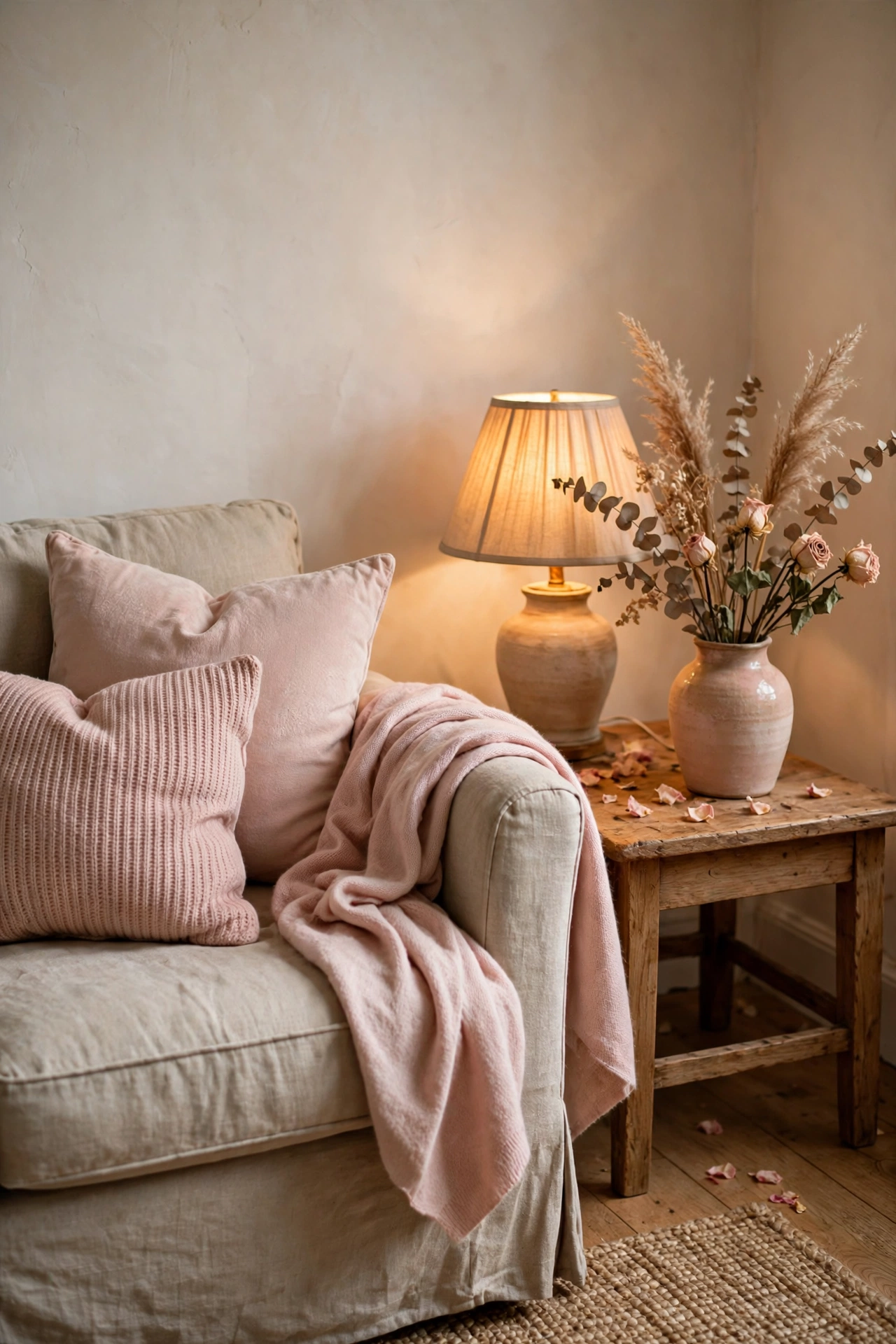
The best test of Valentine’s decor is whether you still like it on February 20. If the answer is yes, you decorated for romance. If the answer is no, you decorated for a date on the calendar. The pieces worth keeping are almost always the quiet ones: the blush cushions, the warm lamps, the good vase, the throw that actually keeps you warm.
Plan the takedown when you put things up. Anything that only works on Valentine’s Day itself, like novelty hearts or themed napkins, should come down the next day and go back in a labelled box for next year. Everything else can stay until the flowers fade, and then the room simply returns to itself without a big clear-out.
This is also the cheapest way to decorate next year. Soft pink and deep red cushions, candle trays, and a good vase are not single-use items. They will serve again next February, and in between they will work for anniversaries, birthdays, and any ordinary evening when you want the house to feel a little more cared for.
One last habit is worth building. When you take the Valentine’s pieces down, note what you actually used and what sat untouched. Next year, buy only the first list. Homes get better when we stop buying the decorations we admire in shops and start keeping the ones we genuinely live with.
Bringing It All Together
Romantic decor is not about spending more or buying louder things. It is about soft colour kept in check, light kept low, fresh flowers kept simple, and a table set with care. Start with one room, get the light right, and let the rest of the house follow at its own pace. The most romantic room is rarely the most decorated one. It is the one where someone thought about how it would feel to sit in it after dark, with a glass in hand and nowhere else to be.
Frequently Asked Questions
How far in advance should I decorate for Valentine’s Day?
A weekend before is plenty. Put up cushions, throws, and candles a few days early so you can live with them and adjust anything that feels too much. Buy flowers two or three days ahead so buds open in time, and set the table on the day itself so it feels fresh.
What colours work for Valentine’s decor besides red?
Blush pink, dusty rose, deep plum, cream, and soft gold all work beautifully, alone or with a small amount of red. A room in blush and cream with one deep red accent often feels more romantic than a room done entirely in red, because the eye has somewhere calm to rest.
How can I decorate for Valentine’s Day on a small budget?
Start with light and fabric, which cost the least and change the most. Rearrange candles you own, swap cushion covers, buy two supermarket flower bunches in one colour family, and set the table with a plain cloth and a handwritten place card. That combination will carry the whole evening.
Is Valentine’s decor suitable for a house with children?
Yes, if you keep it grown-up rather than novelty themed. Soft colours, flowers, and candles placed safely out of reach work for the whole family, and a special table setting can make children feel included rather than shut out. Keep real flames high, use battery candles at child height, and skip small loose decorations that could end up in little hands.
How do I store Valentine’s decorations for next year?
Keep only what you genuinely used, in one labelled box, with tissue between fragile pieces. Store candles upright in a cool place, wash cushion covers before packing them, and throw away anything faded or broken. A small, good box you open gladly beats a large box you dread.