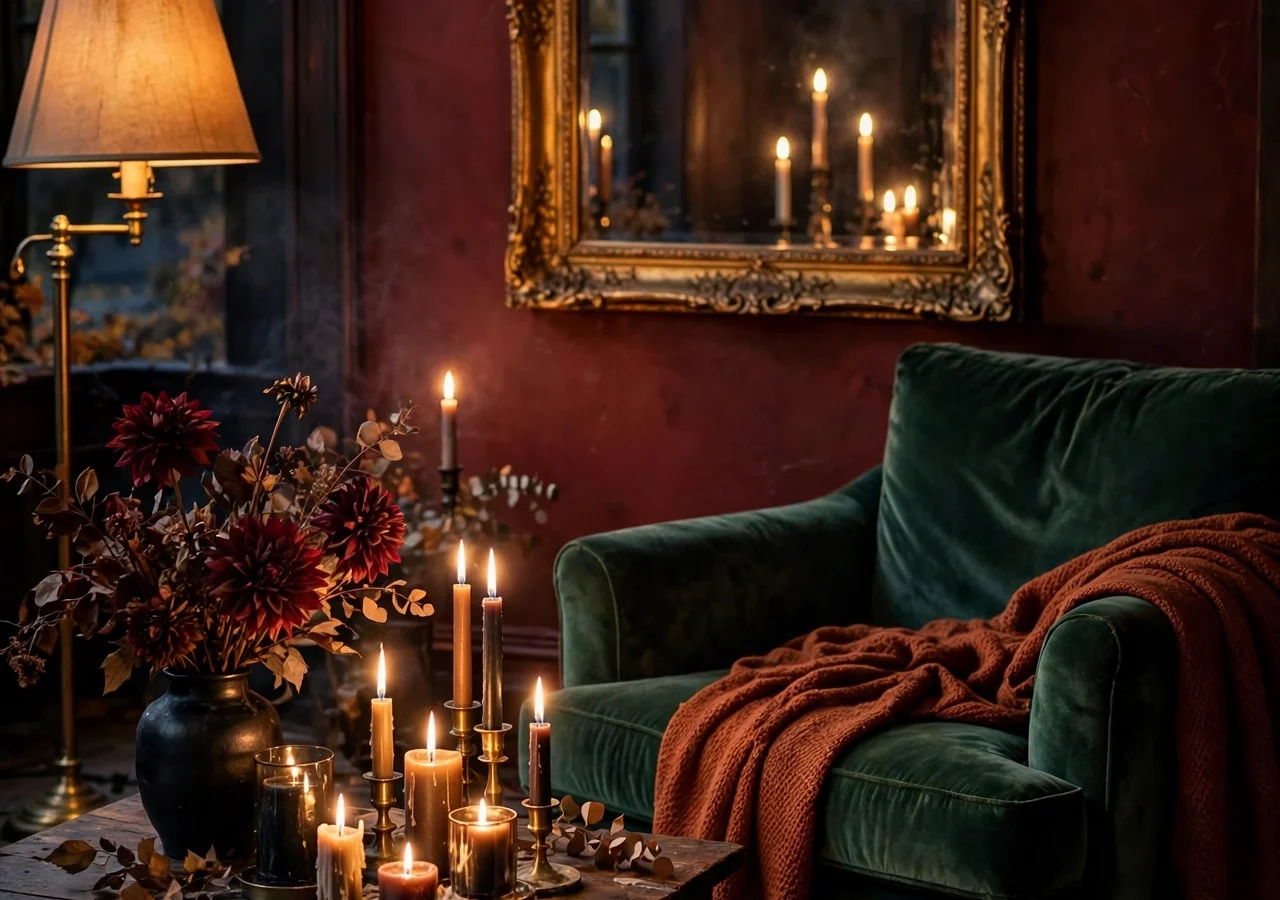
There’s a particular kind of autumn light that makes ordinary rooms feel like film sets. It slants in low and amber through the window around four in the afternoon, and suddenly the living room you barely noticed all summer has opinions. Dark romantic decor starts from that feeling: the sense that a room could hold a little drama without becoming a Halloween display.
The trouble is that most people either go too timid, a black cushion here and there, or they go full gothic and the room ends up feeling like a costume. The middle ground is where the style actually lives. Moody interiors are about depth and warmth layered together: paint colours with real pigment, textures you want to touch, light that’s deliberately low, and objects that look like they have a past.
This guide walks through every layer of the look, from wall colour to the small finishing touches that make it feel intentional rather than theatrical. Dark romantic decor is not about turning your home into a film prop; it is about giving autumn the interior it deserves.
Start With the Walls: Paint That Holds Candlelight
 Save
Nothing sets the mood faster than paint, and dark romantic interiors lean on colours that shift through the day. Aubergine, oxblood red, deep forest green, and ink navy are the usual suspects, and they all work for the same reason: they absorb the hard edges of a room and give lamp light something to pool against.
Pick the wall colour by the room’s natural light. A north-facing bedroom painted oxblood reads rich and cocooning. The same colour in a sun-drenched south-facing kitchen can look almost black at night and glowing rust in the afternoon, which some people love and others find exhausting. Sample on foam board and move it around for a full day before committing.
If a full room of dark paint feels like a leap, start with a single feature wall behind the bed or the fireplace. Our guide to Neo Deco styling explores how deep colours pair with glamorous detailing, and the same principles apply here: dark walls want something polished against them or the room goes flat.
Styling tip: paint the skirting boards and door frames the same colour as the walls, just in eggshell rather than matt. The room feels like one continuous envelope instead of a dark box with white trim shouting around the edges.
For renters or the paint-shy, moody wallpaper gives the same depth without a roller. Look for damask, botanical, or art-deco fan prints on a charcoal or chocolate ground. One roll on an alcove or behind open shelving can be enough.
Light It Low: The Case for Candlelight and Small Lamps
 Save
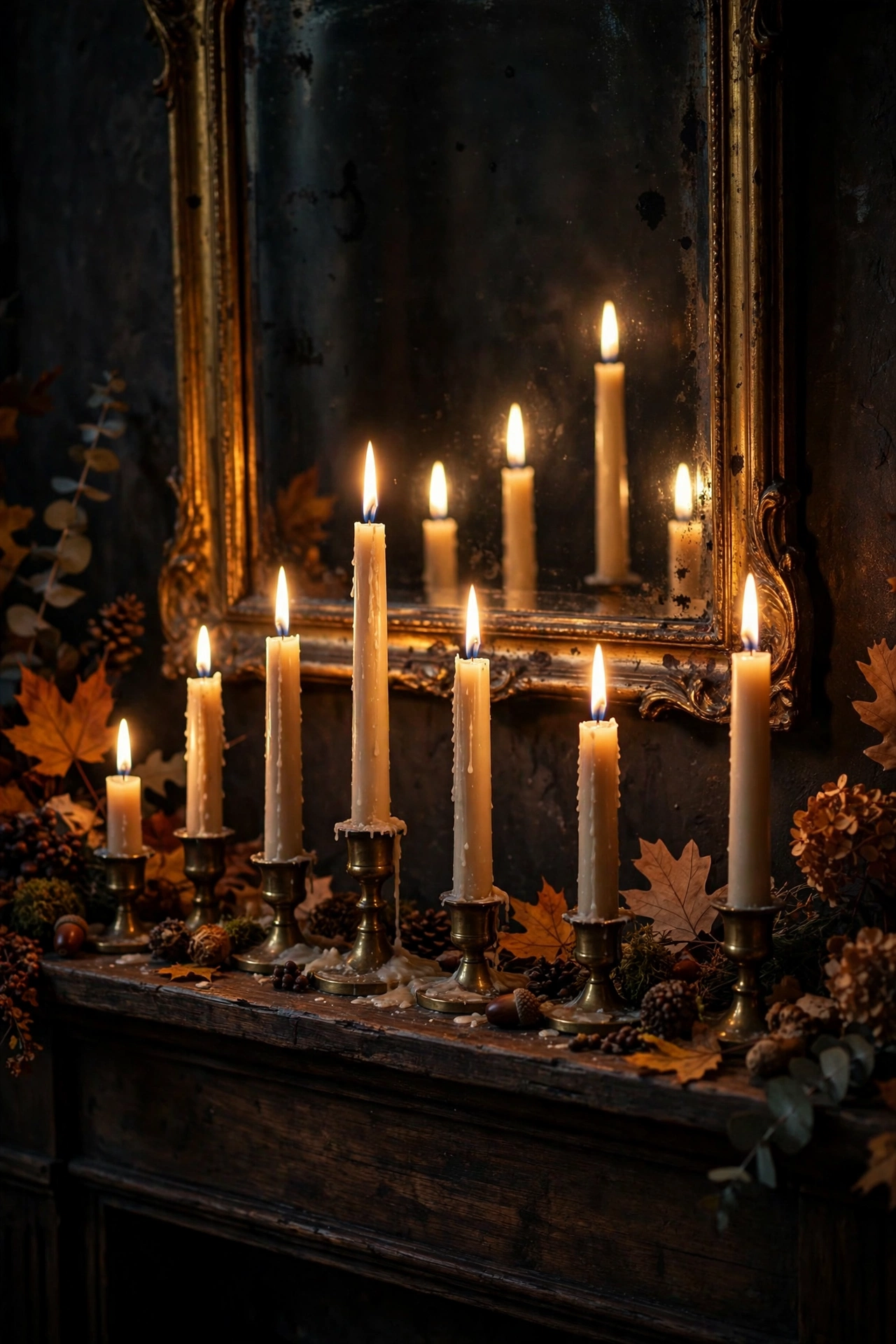
Dark walls without warm light just look dim. Dark romantic rooms need light at multiple low heights, the way old houses used to be lit: a table lamp here, candles there, nothing overhead if you can help it.
Start by swapping cool-white bulbs for 2700K warm bulbs everywhere in the room. It is a ten-minute change and it transforms how dark paint reads. Then add at least three light sources below eye level: a shaded table lamp on the sideboard, a floor lamp with a fabric shade behind the reading chair, and candles on the mantel or coffee table.
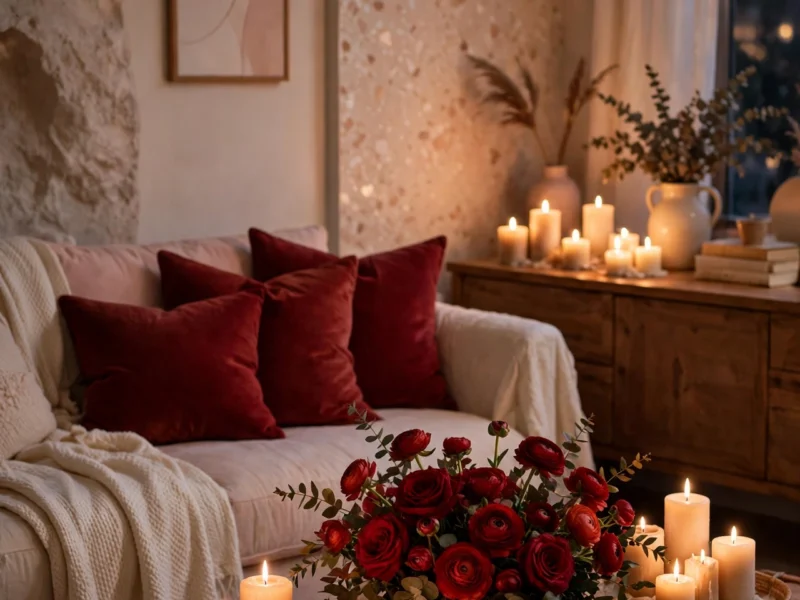
Cluster candles in odd numbers and mix heights. Pillar candles on brass saucers, a few taper candles in tall holders, and a couple of glass hurricanes to catch drips. Real flame is unbeatable for this style, but good LED candles have come a long way for rooms where open flame is not practical; just avoid the ones with obvious plastic wicks.
Try this: line up five taper candles of different heights along a mantel or windowsill and light only those after dinner for a week. You will be surprised how rarely you reach for the overhead switch again.
Fairy lights can work if you treat them like fireflies rather than Christmas: warm white, strung loosely through a garland or draped inside a glass vase, never zigzagged across the wall.
Velvet, Brocade and Draped Fabric Everywhere
 Save
Texture is what stops a moody room from feeling cold. Velvet is the obvious hero, and it earns its place: it catches light in that soft, expensive way that no flat fabric can match. But dark romantic decor also welcomes its slightly more formal cousins, brocade, damask, and heavy linen with a visible weave.
You do not need new furniture. A velvet throw folded over the arm of the sofa, two cushion covers in a dark botanical print, and a heavier curtain than whatever is currently hanging can shift the whole register of the room. The key is weight: thin, fluttery fabrics fight the mood; fabrics that drape with authority reinforce it.
Curtains matter more than people expect. If your current curtains skim the sill, replacing them with floor-length panels in a heavy fabric, even in a dark neutral like charcoal linen, will do more for the atmosphere than any accessory. Hang them high and let them puddle slightly; the small extravagance reads as confidence.
Layering rugs works the same way. A faded Persian or a deep-toned kilim over a neutral base rug adds pattern and warmth in one move, and in autumn it makes bare floors forgiving underfoot. Dark rooms forgive rug imperfections, so this is a good place for a secondhand find with a bit of wear.
Antiques and Patina: Objects That Look Like They Have a Past
 Save
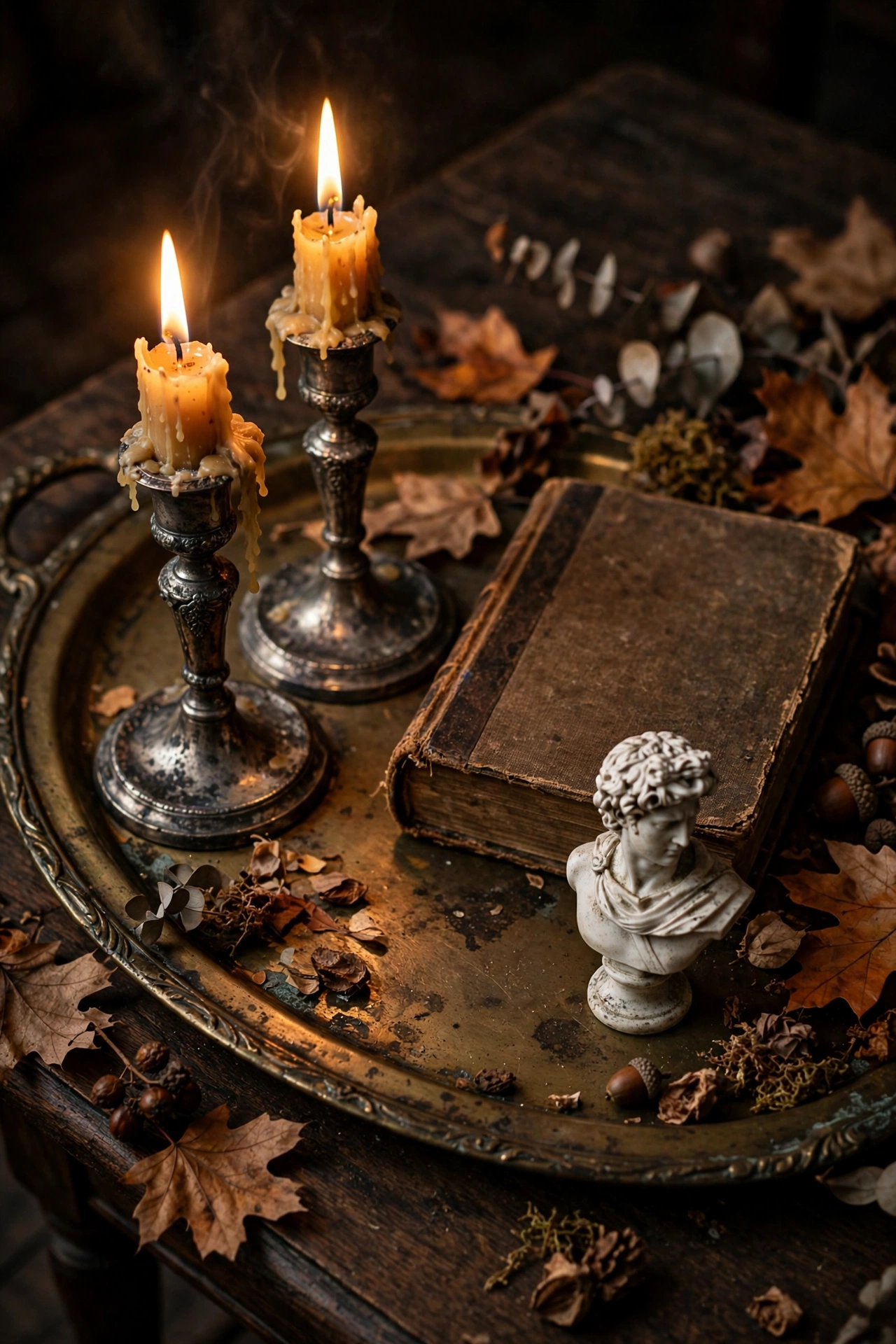
The romantic part of dark romantic comes largely from age. New furniture with crisp edges can look stiff against dark walls; objects with patina, a scratched brass tray, a mirror with foxing at the corners, a carved wooden box, give the room its story.
You do not need genuine antiques or a big budget. Charity shops, flea markets, and the back corner of your grandmother’s house are the usual sources. Look for tarnished silver, oil paintings in heavy frames (the subject hardly matters at this scale; moody landscapes and portraits are best), old books with cloth bindings, and anything marble or onyx.
Group your finds in threes or fives on a tray. A tray turns a scatter of objects into a considered arrangement, and it keeps candle wax and dust contained. On a coffee table, a stack of two old books, a small brass candlestick, and a dried flower arrangement reads instantly romantic; the same objects spread across the table read cluttered.
Budget swap: tarnished silver-plate costs a fraction of real silver and looks nearly identical in candlelight. Polish only the pieces you want to gleam and leave the rest dark; the contrast is the point.
If you already have modern furniture, do not panic. A single antique beside something contemporary, a Victorian mirror above a plain console, a carved stool next to a clean-lined sofa, creates the tension that makes collected rooms interesting. Rooms that are all one era feel like sets; rooms that mix eras feel like homes.
Dark Florals and Botanical Drama
 Save
Flowers in dark romantic rooms are not the cheerful farmhouse bouquet. Think dried hydrangeas in smoky mauve, black-centred anemones, deep red dahlias, ranunculus in wine tones, or branches, bare hawthorn, eucalyptus, pampas grass, sprayed nothing, just as they are.
Dried and faux flowers are practical winners here because the season is short and fresh dark blooms are expensive. Dried amaranthus, preserved roses, and dried gypsophila (in burgundy, not white) keep their colour for months. Arrange them in dark vessels, black ceramic, antique bronze, smoked glass, so stems and container blur together.
Scale matters: one generous arrangement makes more of a statement than five small vases dotted around. A tall branch arrangement in a floor vase in the corner of the room, something that moves slightly when the heating kicks in, gives a dark corner life without adding another piece of furniture.
Designer note: dark florals against dark walls disappear unless there is a lighter element nearby. Put the arrangement where lamplight catches it, or in front of a mirror, or against the one lighter wall in the room.
If you want to echo the botanical theme on a bigger scale, dark floral wallpaper on a single wall behind the bed is one of the most committed, and most rewarding, moves in this style. Pair it with plain bedding in a deep neutral and let the wall do all the talking.
Warm Metals and Mirrors to Keep It Glowing
 Save
A room of only dark, matte surfaces will swallow light and feel smaller than it is. Warm metals, brass, aged gold, copper, bronze, are the counterweight: they catch every candle flame and lamp glow and throw it back into the room. This is where the look borrows shamelessly from glamorous styles, and our piece on brass decor ideas has twenty ways to layer warm metallics if you want to go deeper.
Mirrors multiply the effect. A large mirror opposite a window doubles the autumn light in the daytime; opposite candles at night it doubles the drama. The frame is part of the decor, so lean toward ornate gilt, aged brass, or dark wood rather than frameless modern. Lean a big mirror against the wall on the floor rather than hanging it; the casual placement suits the collected feel.
Small doses work too: a brass tray under candles, picture frames in aged gold, a copper jug holding dried branches, drawer knobs swapped to antique brass. These are afternoon projects with outsized effect, and most of them cost very little if you buy secondhand.
Be selective about which metal you lead with. Brass and gold read warm and romantic; silver and chrome read cool and modern and will fight the mood. If your room already has chrome fixtures, soften them with brass accessories elsewhere rather than trying to replace the fixtures.
Books, Art and the Collected Look
 Save
The final layer is the one that makes the room feel inhabited rather than styled: things that suggest a person with interests. Dark romantic interiors suit the well-read, the curious, the slightly mysterious, and the decor should hint at that.
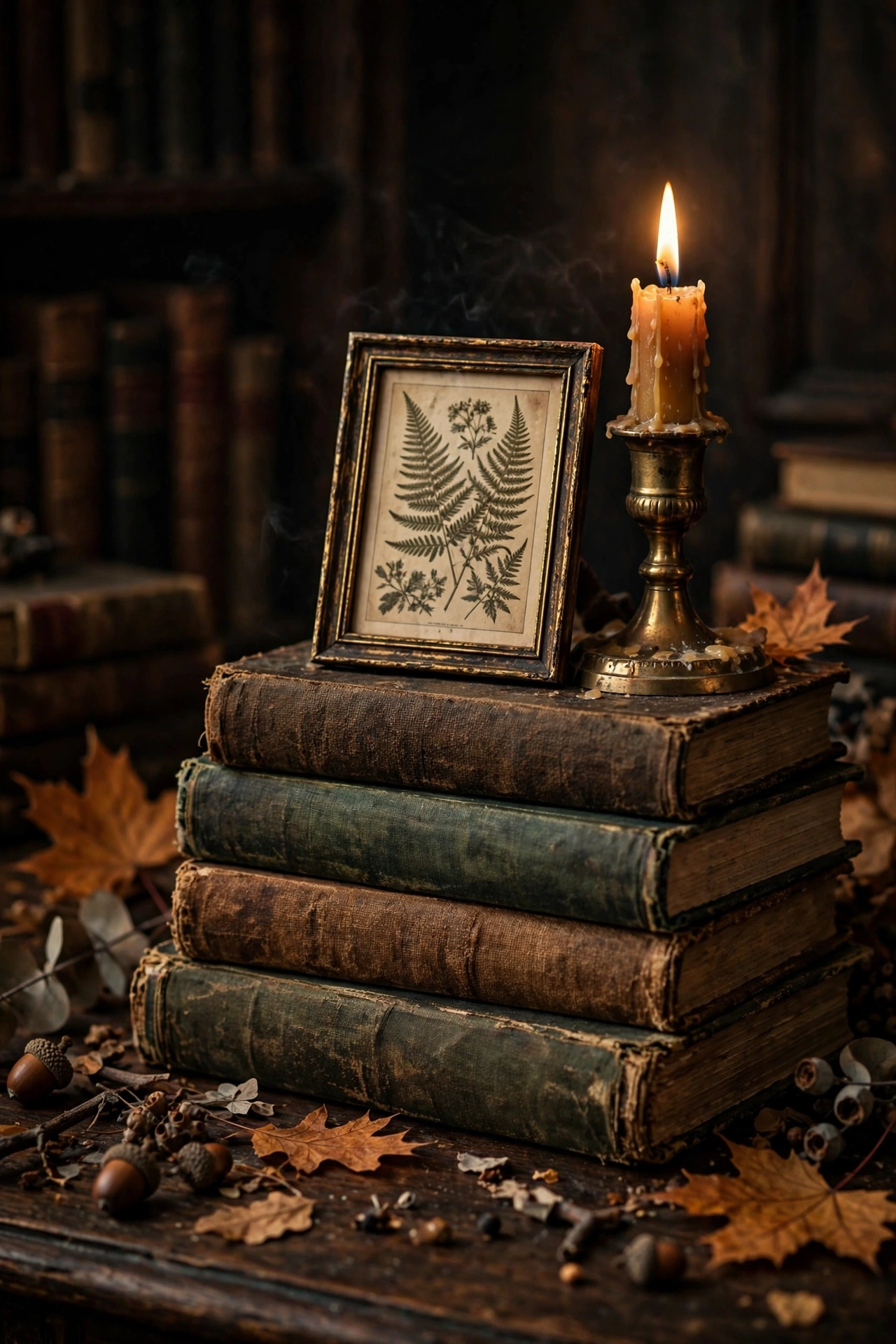
Stack books horizontally as well as shelving them upright. Leave a book open on the arm of the chair. Frame a few pages of an old atlas or a botanical print if you do not have art you love; secondhand bookshops sell damaged atlases for almost nothing, and a framed map of somewhere you have been is more personal than most prints.
Art in these rooms tends toward the moody: landscapes with weather, portraits with shadows, botanical studies on dark grounds. You do not need to buy art to get the effect; print public-domain paintings on decent paper and frame them simply. The frame should be the investment, not the image.
A bar cart fits this aesthetic naturally, all dark glass bottles catching candlelight, and if you want to style one for the season our holiday bar cart guide covers the layering technique that works just as well in autumn.
Finally, leave some surfaces deliberately empty. A fully dressed room feels like a shop; a room with one clear tabletop and a single candle feels like someone lives there and chose what matters. Restraint is the difference between romantic and cluttered.
Bringing It All Together
Dark romantic decor rewards layering rather than shopping. Start with the biggest surface, the walls, then light, then fabric, then objects, and let each layer settle before adding the next. The rooms that pull this off best are the ones that grew over a few weekends, not the ones that were bought in one go.
The test is simple: sit in the room at dusk with only the lamps and candles on. If it feels like somewhere you want to stay, with a book and a drink, the layers are right. If it feels like a set waiting for actors, take something away. Romance in a room, like anywhere else, needs a little breathing space.
Frequently Asked Questions
Will dark walls make my small room feel even smaller?
Not necessarily. Dark colours blur the corners of a room, which can actually make boundaries harder to read and the space feel cocooned rather than cramped. The trick is lighting: a small dark room needs more light sources, not fewer, and a large mirror helps enormously. If you are nervous, try the colour on one wall first.
Is dark romantic decor the same as gothic decor?
They share a palette but not a philosophy. Gothic decor leans into skulls, gargoyles, and horror imagery; dark romantic decor leans into candlelight, velvet, old books, and faded grandeur. Think nineteenth-century novel rather than haunted house. Nothing in this style should frighten the neighbours.
How do I keep a dark room from feeling gloomy in winter?
Gloom comes from flat, single-source lighting, not from dark colours. Keep three or more warm light sources at different heights, add reflective surfaces like brass and mirrors, and make sure at least one textile in the room is a warm tone, rust, cognac, warm taupe, rather than everything being grey-black. The fireplace styling ideas in our cosy fireplace guide show how a glowing focal point anchors a dark room.
Can I do this style in a rental?
Yes, and renters arguably have an advantage because the style loves imperfection. Use peel-and-stick moody wallpaper on one wall, floor-length curtains on tension rods, layered rugs, candles, dark florals, and collected secondhand objects. Nothing on this list touches the landlord’s paint.
What colours count as “dark romantic”?
The core palette is aubergine, oxblood, forest green, ink navy, and deep chocolate, accented with warm metallics and candlelight tones. Black works as an accent but a whole room of pure black tends to read modern rather than romantic. The romance comes from colours with red or purple undertones, which is why oxblood and aubergine feel warmer than charcoal.
2 thoughts