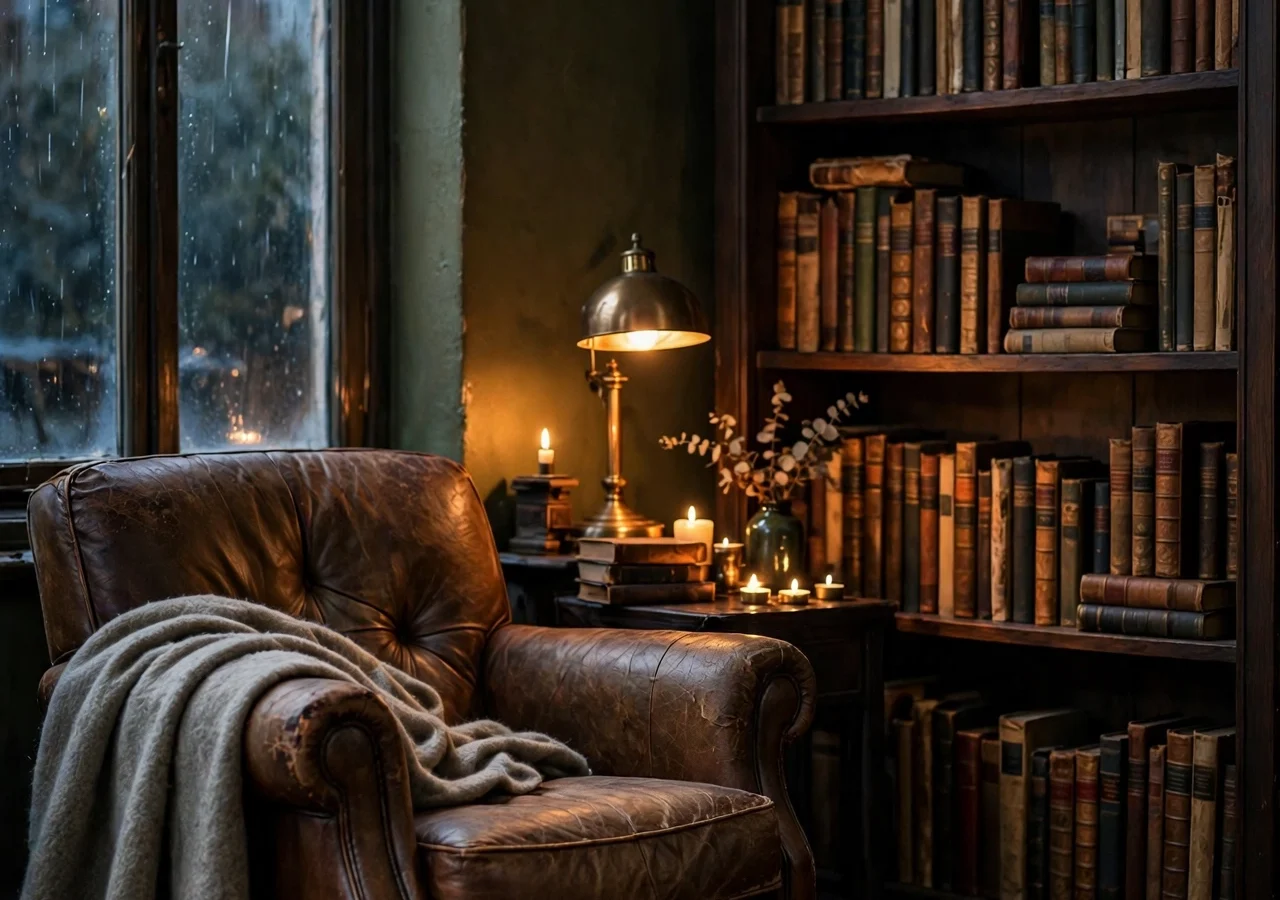
There is a particular kind of evening that poetcore was made for. Rain against the window, a lamp glowing amber in the corner, and a book waiting face-down on the arm of a chair you have owned longer than you can remember. Dark academia grew up on mood boards like this, and the Pinterest version, poetcore, is the softer cousin: less ivy-league costume, more writer’s study.
Poet aesthetic rooms are having a real moment. The poet aesthetic is up 175% on Pinterest this year, and it is easy to see why. It is one of the few trends that asks for depth instead of newness. A secondhand armchair, a wall of uneven books, a brass lamp that hums a little. You probably already own half of it.
The good news is that you do not need a panelled library or a country-house budget to pull it off. A single corner, styled with intention, carries the whole feeling. This guide walks through how to build it: the shelves, the chair, the light, the textures, and the small details that make a room feel like it belongs to someone who writes things down.
Start With the Shelf: Build a Library That Feels Lived-In
 Save
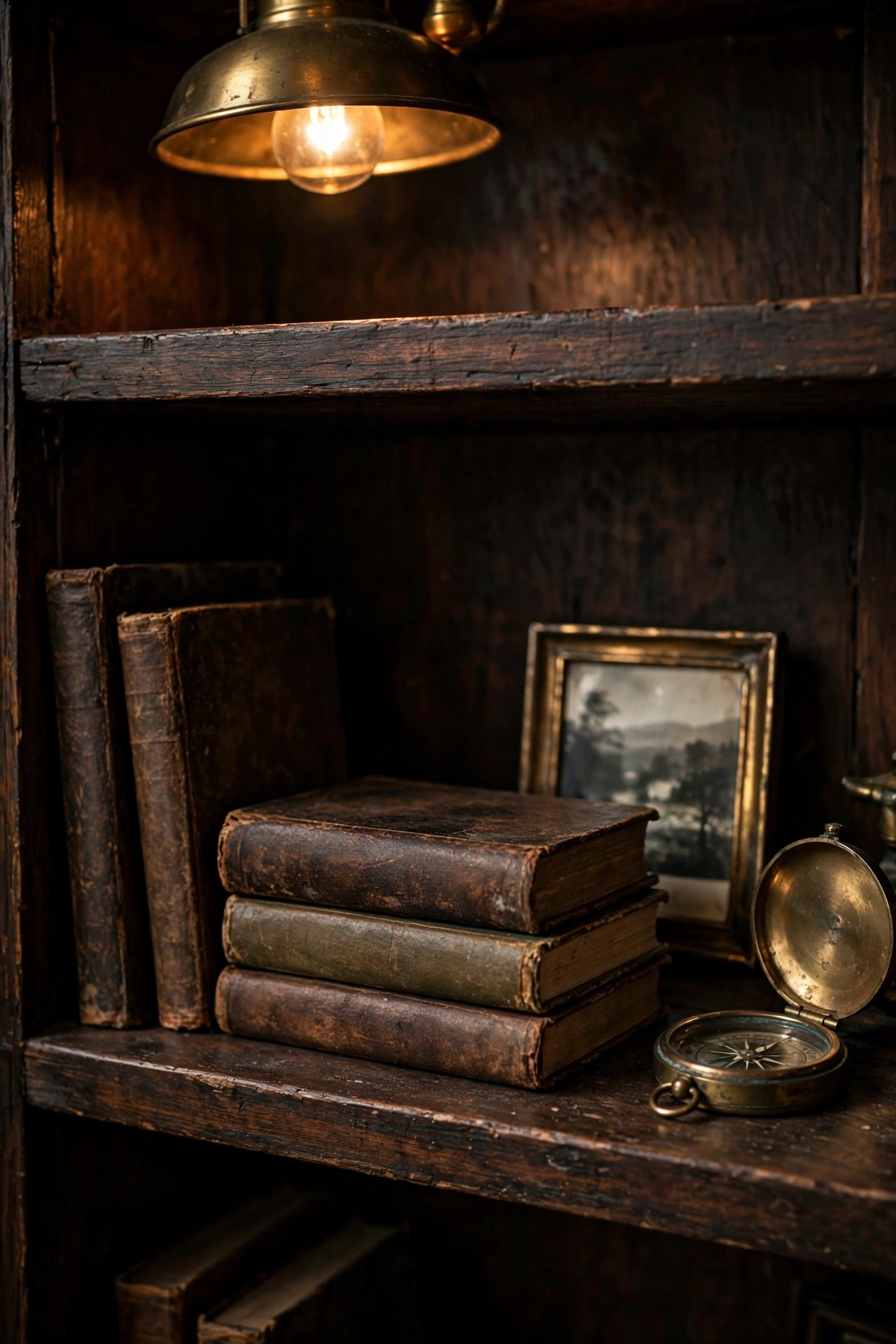
Every poetcore room starts the same way: with books that look like they are actually read. A shelf of pristine, spine-out hardcovers in matching dust jackets reads as decoration, not devotion. What you want is variety. Mixed heights, mixed colors, paperbacks leaning against hardbacks, a few stacks lying flat to break the rhythm. If you own books, let them show their real faces. If you are starting from scratch, thrift shops sell hardcover novels by the bagful, usually for less than a cup of coffee each.
Arrangement matters less than most people think. Forget rainbow ordering; that is the opposite of this look. Group roughly by size to keep the shelf stable, then let subject matter wander. Poetry next to biography next to a battered field guide. The charm of an old library is that it grew over time, so the shelf should feel like an accumulation, not a project.
Leave breathing room. A shelf packed edge to edge looks like storage. Pull a few books forward, lean a framed photograph against the stack, leave one shelf half-empty with a small ceramic object sitting in the gap. That negative space is what makes it feel curated rather than crowded.
Layering Three Levels of Light
Think of the corner’s lighting in three layers. The task light sits closest to the chair, bright enough to read by. The shelf wash, a picture light or LED strip along the top of the bookcase, softens the background. The third layer is pure mood: a candle or a small flickering lamp across the room that the eye catches at the edge of vision. Three small, warm sources beat one bright ceiling fitting every time, and each can be switched on as the evening deepens.
A cheap bookcase can carry the look if you treat it right. Paint a flat-pack unit in a dark tone like espresso or forest green and it stops reading as budget furniture. Add picture lights or a string of warm micro fairy lights along the top edge and the whole thing glows like a stage set. If the unit has open backs, line them with removable wallpaper in a damask or book-page print. It takes an afternoon and it changes everything about how the shelves read. Styling tip: turn a handful of books face-out, showing their covers, the way real bookshops do. It breaks up the vertical stripes of spines and gives your eye somewhere to rest.
Moody Walls and Warm Wood: Setting the Backdrop
 Save
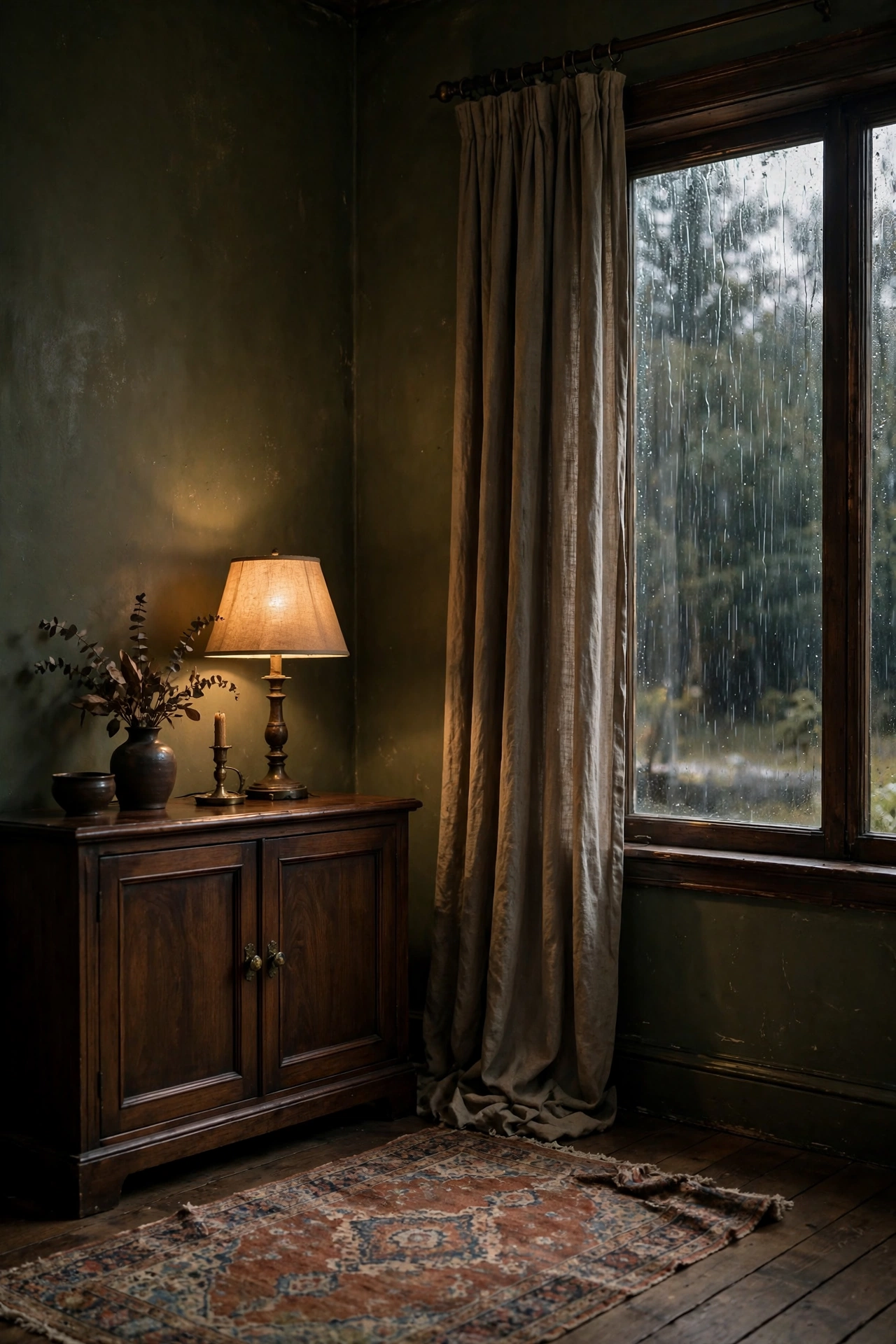
Poetcore needs a backdrop with some weight to it. The look lives in deep, muted color: olive greens, oxblood, charcoal, walnut browns, ink blues. You do not have to paint the whole room. One wall behind the shelves or the reading chair, done in a rich flat-finish paint, changes the atmosphere completely.
If painting is off the table, wood does the same job. Dark wood, whether it is real panelling, a walnut veneer bookcase, or even a secondhand sideboard in mahogany, brings the warmth that stops dark colors from feeling cold. Look for pieces with visible grain and a little wear. A desk with ring marks on the top is more poetcore than a perfect one. That history is the point.
Floorboards and rugs ground the corner too. If you have hard floors, a rug with an old pattern, a Persian-style print or a faded kilim, instantly settles the space. Layer it slightly crooked under the chair rather than dead-centre in the room. Perfectly symmetrical rugs read formal; slightly off-centre ones read lived-in. Budget swap: canvas drop cloths painted with a rug pattern are a classic theatre-set trick, but even a plain jute rug with a patterned throw draped over the chair arm gets you most of the way there.
Keep the trim and ceiling light if the walls go dark. Off-white or cream ceilings lift the gloom just enough, and pale wood skirting boards stop the room from closing in. The goal is moody, not a cave. You still want to be able to read the page. If you want to push further into the dramatic end of this palette, our guide to moody interiors shows how to keep dark rooms liveable.
The Reading Chair and the Light Beside It
 Save
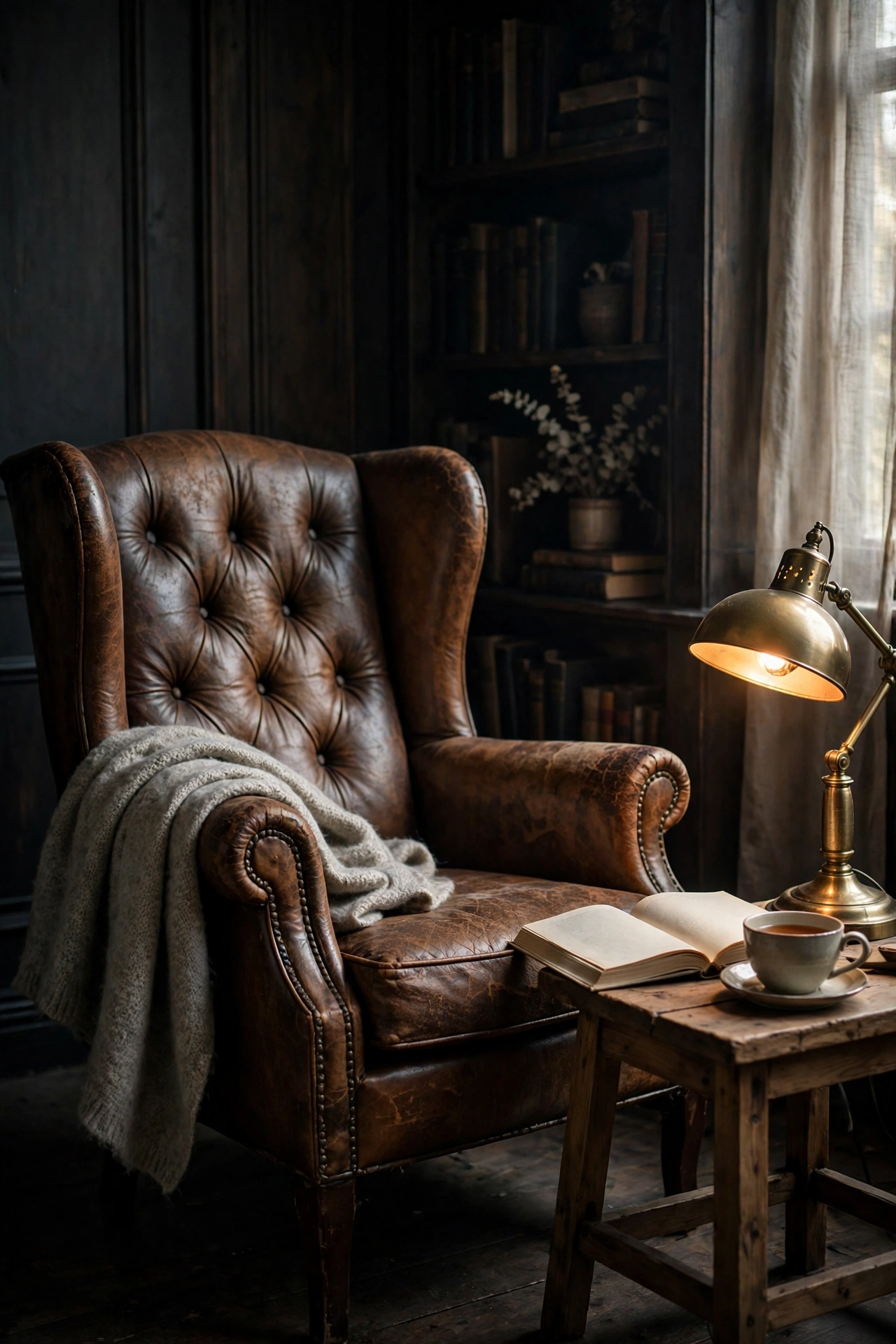
The chair is the heart of the corner, and it should look like it has opinions. A leather club chair, a deep wingback, or a wooden armchair with a sagging cushion all qualify. The common thread is comfort that does not apologize. Poetcore is allergic to anything that looks like it belongs in a furniture showroom. If the chair is new, soften it immediately: a wool throw over one arm, a cushion that does not match the set.
Position it at an angle, not squared to the wall. Angled furniture feels like someone pulled the chair into the light and never moved it back, which is exactly the energy you want. Tuck a small side table beside it, close enough to reach without standing. The table holds the whole ritual: the current book, a cup of tea, reading glasses if you wear them.
Light is the second half of the equation. Overhead lighting kills the mood, so the reading corner lives or dies by its lamp. A brass pharmacy lamp, a shaded table lamp with a warm bulb, or a floor lamp with an adjustable arm all work. The bulb matters enormously: pick 2700K or warmer, the color of candlelight, and keep the wattage modest. You want a pool of light, not a flood. Designer note: a picture light clipped to the top of the bookshelf throws a warm wash down the spines and doubles as ambient light for the whole corner. Brass is the metal this look was built around, so if you want more ways to work it in, see our roundup of brass decor ideas. Two pounds of glow, one fixture.
Layered Textures: Leather, Wool, and Aged Paper Tones
 Save
Texture is what separates a themed corner from a styled one. Poetcore leans on materials that age well: leather that darkens, wool that softens, wood that shows its grain, paper that yellows. Start with the big soft things. A heavy wool throw in a muted plaid or plain ochre, draped with one corner puddling on the floor, does more work than any accessory. Cushions should be squashy and slightly mismatched: a velvet one, a linen one, nothing in a matching set.
Window treatments earn their place here too. Heavy curtains in a natural fabric, even cheap cotton in a warm neutral, hang better and read richer than blinds in this kind of room. Let them pool a little on the floor if the fabric allows it. That small excess is pure atmosphere. Try this: if your curtains are too short or too plain, add a fabric border along the leading edge with iron-on tape. Ten minutes of work, completely transformed drapes.
Paper tones show up in the details. Cream and aged-paper colors in lamp shades, picture mounts, and book pages echo each other across the room and knit everything together. A stack of old letters tied with string, a journal with a cracked spine, a paper-wrapped parcel on the shelf. These do not need to be antiques. Anything printed on cream stock instead of bright white moves you toward the palette.
Avoid shine wherever you can. Polished chrome, glossy finishes, and plastic all fight the aged quality the look depends on. Brushed brass, matte ceramic, and unlacquered wood play much better together.
Curios and Collections: Styling the Scholarly Details
 Save
This is the layer where the room starts to feel like it belongs to a person rather than a trend. Every good study has its small museum: a shelf of odd objects that mean something to their owner. It does not matter what yours are. A collection of old cameras, a row of ceramic birds, shells from a beach trip, a brass compass that still works. The rule is simple: it should be yours, not bought as a set.
Group objects in odd numbers and vary their heights. A tall candlestick next to a low stack of books next to a medium framed print gives the eye a little journey across the shelf. Trays and shallow bowls are the secret weapon here. Corral loose small things, keys, a watch, a fountain pen, into a brass or leather tray and they instantly look intentional instead of cluttered.
Framed art should feel personal, not gallery-purchased. Botanical prints, old maps, black-and-white photographs, and framed pages from damaged books all sit comfortably in this style. Mix frame finishes: dark wood, thin brass, even a chipped gilt frame from a charity shop. Styling tip: lean larger frames against the wall on the shelf instead of hanging everything. It is more casual, it is renter-friendly, and you can rearrange whenever the mood changes.
Plants are welcome but choose wisely. A fern in a clay pot, a trailing pothos on the top shelf, or a small olive tree in the corner suit the aesthetic. Bright tropical leaves in neon pots do not. Keep planters in terracotta, stone, or dark ceramic and the greenery reads as a scholar’s greenhouse rather than a jungle.
Sound, Scent, and Small Rituals That Finish the Room
 Save
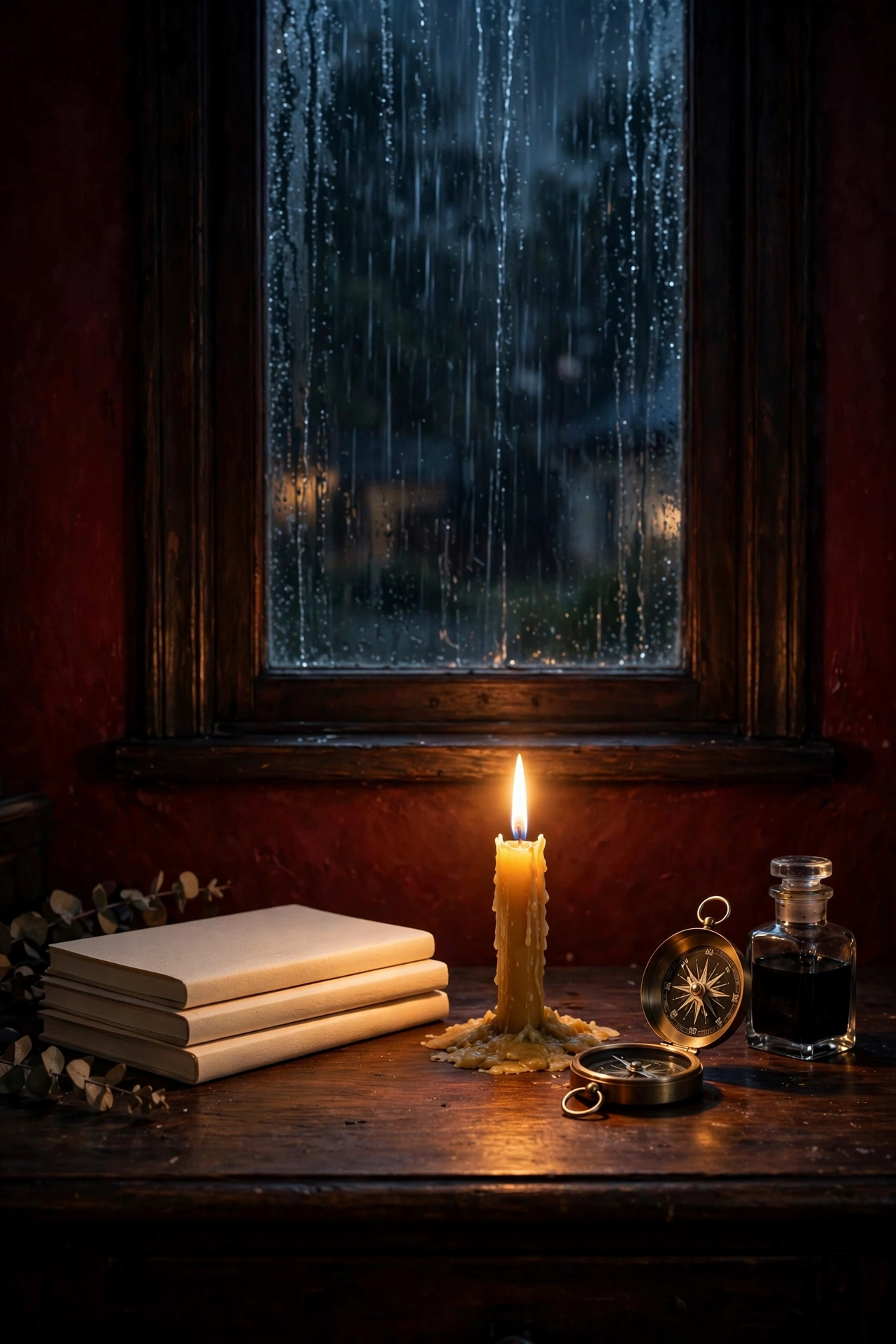
The part of poetcore nobody photographs is the part you feel. A room that smells faintly of cedar and old paper reads as dark academia in a way no object can fake. Beeswax candles are the classic choice: they burn with a warmer flame than paraffin and smell faintly of honey. A wood-wick candle adds the occasional soft crackle, which is half the atmosphere of a winter evening. Keep one on the side table and one on the shelf.
Sound matters too. Rain on the window is the unofficial soundtrack, but a small speaker tucked behind the books playing low instrumental music, piano, strings, ambient, fills the room without announcing itself. If you write or journal, keep the tools visible. A fountain pen in a cup, a stack of notebooks with bent corners, an ink bottle on the desk. Visible tools invite use, and a room that gets used develops the patina this style is built on.
Build one small ritual around the corner and it becomes yours. Morning coffee in the chair before the house wakes up. Twenty minutes of reading before bed, phone in another room. The poet aesthetic is not really about how the room looks in photographs. It is about building a place where the slower parts of your day have somewhere to happen. Style the corner, then actually sit in it. That is the whole trend. Pair it with the season’s other comforts from our cosy home checklist, and the corner becomes the room everyone fights over once the evenings turn cold.
Bringing It All Together
A poetcore reading corner is one of the most forgiving projects in home decor. There is no finish line and no wrong answer, because the style rewards accumulation, wear, and personality over perfection. Start with the shelf and the chair, warm up the light, layer in texture and the objects that are already yours. Let it grow the way a real library grows: one book, one find, one rainy evening at a time. Before long, guests will gravitate to that corner without being asked, and you will wonder why you ever left it empty.
Frequently Asked Questions
What is the poetcore aesthetic?
Poetcore is the softer, more romantic offshoot of dark academia, centred on reading, writing, and old-soul interiors. Think writer’s studies and well-worn libraries rather than school uniforms: deep colors, warm wood, leather, wool, and shelves of books that look genuinely read. It is one of Pinterest’s defining 2026 trends.
Can I create a poetcore corner in a small flat?
Yes, and it may be the best version of the trend. A single armchair, a narrow bookcase, and one warm lamp are enough to define the corner. Use a rug to mark the zone and keep everything else minimal. Small spaces suit the cosy, enclosed feeling the style wants.
Do I need to paint my walls dark for this look?
Not at all. Dark wood furniture, a deep-colored rug, and heavy curtains create the mood without touching the paint. If you do paint, one accent wall in olive, oxblood, or charcoal is plenty. Keep the ceiling and trim light so the room stays readable.
Where can I find affordable poetcore furniture?
Charity shops, flea markets, and secondhand marketplaces are the natural hunting grounds for this style, because worn and aged pieces are exactly what you want. Look for solid wood bookcases, leather armchairs, brass lamps, and old frames. A coat of dark paint unifies mismatched pieces quickly.
How is poetcore different from dark academia?
Dark academia leans collegiate and structured: blazers, libraries, classical references. Poetcore is looser and more domestic: the writer’s cottage rather than the university hall. It keeps the moody palette and love of books but trades formality for comfort, reading chairs over lecture halls.
1 thought