
You walk into your living room every day, and most days you stop seeing it. The sofa sits where it has always sat. The cushions have faded to a colour you would never pick now. There is a blank wall you meant to deal with months ago, and a coffee table that collects cups, remotes and post.
Then a friend pops round, and suddenly you see the room through their eyes. It is not ugly. It is just tired. Nothing in it feels wrong on its own, but nothing feels quite right together either.
The good news is that a living room refresh does not need a new sofa, a builder or a big budget. It needs a few deliberate changes in the right places, done in the right order. The eight ideas below are the ones that make the biggest visible difference for the least money and effort, and most of them take an afternoon or less.
Quick Tips Before You Start
- Photograph the room from the doorway before you touch anything, so you can compare afterwards.
- Pick one change to start with, not all eight at once.
- Clear one surface completely before you add anything back to it.
- Keep a bag by the door for anything that leaves the room for good.
1. Swap the Rug First
 Save
Before you change anything, take stock of three facts about the room. First, which way the light falls: a north-facing room needs warming up, while a sunny room can take deeper colour. Second, how much floor the seating area truly covers, since rug size and walkways follow from it. Third, which large pieces are staying, since the rug, paint, and cushions must all sit well beside them. Every choice below follows from those three facts.
Nothing changes a living room faster than a new rug. It covers more floor than any other single item, it sets the colour palette for everything around it, and it changes how the room feels underfoot. If your room feels flat, the rug is usually the reason.
Size matters more than pattern. A rug that is too small makes the whole seating area look scattered, like furniture that drifted apart. The front legs of the sofa and chairs should sit on the rug, with at least 15 to 20 centimetres of rug showing in front of the sofa. In most living rooms that means a rug around 240 by 300 centimetres, which is bigger than people expect.
Colour is the second decision. A pale rug lifts a dark room and makes it feel airy, but it shows every crumb. A deep-toned rug grounds a pale room and hides wear, but it can shrink the space visually. If you are unsure, a warm neutral with a subtle pattern is the safest middle ground, and you can add colour through cushions instead.
Pick the rug by what the room needs most, not by the pattern you like in the shop.
| Room | Rug choice | Effect |
|---|---|---|
| A dark room | A pale rug | Lifts the room and makes it feel airy |
| A pale room with heavy wear | A deep-toned rug | Grounds the room and hides wear |
| Unsure, or a busy household | A warm neutral with a subtle pattern | Safe middle ground; colour comes via cushions |
Placement: centre the rug on the sofa, not on the room. The sofa is the anchor, so the rug follows it.
Texture: a low, flat weave suits busy households and looks tidy; a deep pile feels luxurious but needs regular vacuuming.
Swap: if a new rug is out of reach this month, layer a smaller patterned rug over the one you have, angled slightly, for a collected look.
A hand-knotted wool rug will last for decades, while a machine-made cotton or jute rug is a fair choice when you like to change things often. Either way, buy the biggest size your budget allows. If you love the soft, earthy look of woven wool, our guide to Berber rugs in modern rooms shows how to style them without the room feeling like a showroom.
2. Move the Furniture Around
 Save
This one costs nothing, and it is the update people skip because it sounds too simple. Furniture settles into a layout and stays there for years, long after the way you use the room has changed. Moving it forces you to look at the room again.
Start by pulling the sofa away from the wall. Even 20 centimetres of breathing room behind it changes the shape of the space and makes the room feel less like a waiting area. If the room is long, try floating the sofa in the middle with a narrow console table behind it. That back table gives you a place for a lamp and a stack of books, and it makes the seating area feel like a room within the room.
Angle one chair. Two chairs facing the sofa in a straight line can feel like a job interview. Turn one chair slightly toward the other, and the conversation circle opens up. Leave at least 45 centimetres between the coffee table and the sofa so legs fit comfortably, and keep walkways around 75 centimetres wide so nobody has to shuffle sideways.
Placement: the sofa should face the room’s best feature, whether that is the fireplace, the window or the television, never a blank wall by default.
Colour: moving furniture changes how light falls on each piece, so a chair that looked dark in the corner may glow near the window.
Texture: a smooth leather chair next to a nubby linen sofa reads as intentional contrast, not a mismatch.
Try this: sketch the layout on paper first, then move only the lightest piece and live with it for a day before committing to the rest.
3. Paint One Wall a Colour You Love
 Save
Paint is the cheapest dramatic change in decorating, and one wall is enough. A single painted wall, often called an accent wall, gives the room a focal point and makes everything in front of it look more considered. The wall behind the sofa is the natural choice, since it is the one you see when you walk in.
Choose the colour by what the room needs, not by what is fashionable. A north-facing room with cool light warms up with a soft terracotta, a muted sage or a warm ochre. A sunny room can take a deeper shade, like forest green or inky blue, without feeling gloomy. Test with a large painted sample board, not a tiny swatch, and look at it in morning light and evening light before you commit.
The 3-question gate: before you open the paint tin, answer three questions. One, have you seen the sample board in morning light and evening light? Two, does the colour sit well with the rug and sofa you already own? Three, can you live with it on the dullest grey day, not just in sunshine? If any answer is no, try a lighter shade of the same colour first.
If one wall feels too timid, painting the whole room in a single colour, including the skirting and door frames, is a technique designers use to make a space feel calm and generous. It sounds bold, but a single colour with no white trim to chop it up makes walls recede and the room feel bigger. Our guide to colour drenching a room walks through the technique step by step, including which finishes to use where.
Placement: paint the wall that holds the largest piece of furniture, so the colour and the sofa work together.
Colour: keep the ceiling one shade lighter than the walls if you want height, or the same shade if you want cosiness.
Swap: if you rent, a large painted canvas or a fabric wall hanging in your chosen colour gives a similar effect with no paint at all.
Try this: paint the inside of a bookshelf or an alcove in the accent colour first. It is a small test with a big payoff.
4. Layer the Lighting
 Save
Most living rooms have one ceiling light doing all the work, and it shows. A single overhead light flattens faces, washes out colour and makes the room feel like an office after dark. Good lighting comes in layers, and three is the number to aim for.
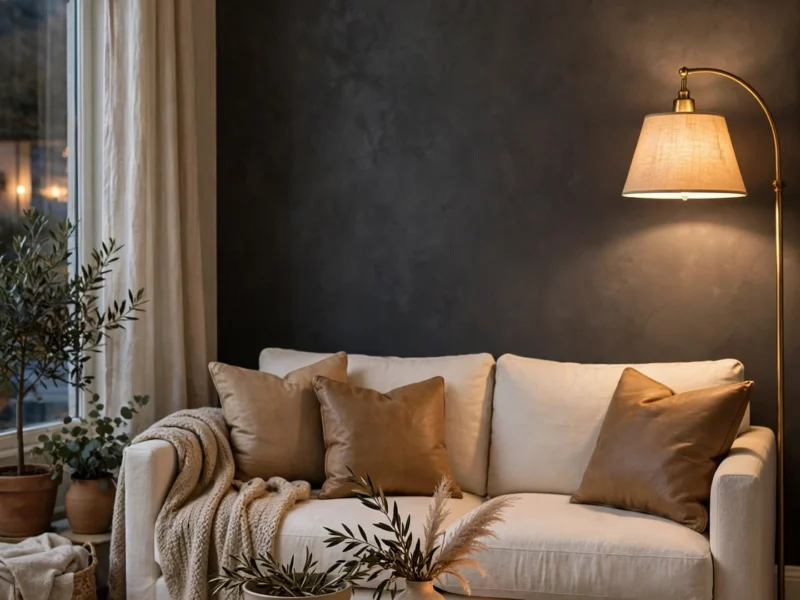
The first layer is ambient light, the general glow that lets you move around safely. The second is task light, a reading lamp beside the sofa or a small lamp on a side table. The third is accent light, a picture light, a candle or a lamp tucked on a shelf that picks out something you love. With all three on low, the room feels warm and finished. With only the ceiling light on, it feels bare.
Swap cool white bulbs for warm white, around 2700 kelvin, in the living room. The difference is immediate: skin looks better, wood looks richer, and the room feels like evening rather than a showroom. A dimmer switch on the main light costs little to fit and changes how the room behaves after sunset.
Placement: lamps should sit at shoulder height when you are seated, so the light falls on your book, not in your eyes.
Colour: a linen or paper shade softens light beautifully; a metal shade throws it in a sharper pool.
Texture: mix a ceramic lamp base with a woven shade for a handmade feel.
Try this: put your lamps on a timer plug so the room lights itself at dusk. Coming home to a lit room changes your whole evening.
If you are ready for a bigger change, a sculptural pendant over the coffee table or in a reading corner can become the room’s centrepiece. Our roundup of sculptural pendant lamps for every room shows shapes that work in small and large living rooms alike.
5. Edit the Coffee Table and Shelves
 Save
A living room refresh is as much about taking things away as adding them. Coffee tables and shelves collect objects gradually, one at a time, until they hold everything and display nothing. Editing them is free, and it is often the change guests notice first.
Take everything off the coffee table. Put back three things: something low and flat like a stack of two books, something tall like a small vase or candlestick, and something living like a small plant or a bowl of greenery. Three objects of different heights look composed. Seven objects of similar height look like clutter.
Do the same on shelves. Remove a third of what is there, then group what remains in small clusters with breathing space between them. Books look better stacked horizontally in some places and upright in others. Leave one shelf nearly empty on purpose. Empty space is what makes the full shelves look deliberate instead of crowded.
Placement: keep the centre of the coffee table clear enough for a cup of tea. Decoration should never fight with daily use.
Colour: repeat one colour from the room, in a book cover or a vase, to tie the table back to the rest of the space.
Swap: trade the books on the table every few months. A fresh cover changes the whole vignette for free.
Try this: photograph each shelf, then remove one item from the photo in your mind. If the shelf looks better without it, take it off for real.
6. Change the Cushions and Throw
 Save
Cushions are the quickest way to change a room’s colour story, and they cost far less than new furniture. A sofa in a plain fabric is a blank canvas, and the cushions are the paint. Swap them with the seasons, or whenever the room starts to feel stale.
Mix sizes and textures rather than buying a matching set. Two large square cushions in a solid colour anchor the corners of the sofa, then add one smaller lumbar cushion in a pattern and one in a contrasting texture, like velvet against linen or boucle against smooth cotton. Odd numbers look relaxed. Even, matched pairs look formal.
A throw draped over one arm or folded across the back of the sofa adds a layer of softness and a second chance at colour. Drape it loosely rather than folding it into a perfect rectangle. A throw that looks slightly undone invites people to pick it up, which is exactly the point.
Placement: put the patterned cushion in the middle of the arrangement, where the eye lands first.
Colour: pull one colour from the rug or the art on the wall, then repeat it in a cushion so the room feels connected.
Texture: combine at least three textures in the seating area, for example smooth leather, woven linen and soft wool.
Try this: buy cushion covers, not whole cushions. Covers cost less, store flat, and let you change the look in minutes.
7. Hang Art at the Right Height
 Save
Most art in living rooms hangs too high. The centre of a picture should sit at about 145 centimetres from the floor, which is roughly eye level for a standing adult. When art hangs higher than that, it floats away from the furniture and the wall looks unfinished. Lowering a picture by 15 centimetres can change a whole wall.
Scale matters as much as height. A small picture on a big wall looks lost, and a big picture squeezed over a small sofa looks cramped. As a rule, the art above a sofa should span about two thirds of the sofa’s width. If you have several small pieces, hang them as a group with 5 to 8 centimetres between frames, and treat the group as one large piece when you measure.
A gallery wall works best when the frames share something, a colour, a material or a theme, even if the pictures inside are different. Lay the arrangement on the floor first, photograph it, then transfer it to the wall using paper templates cut to the size of each frame. It takes an extra half hour and saves a wall full of extra holes.
Placement: art above a sofa should sit 15 to 20 centimetres above the back of the sofa, close enough to feel connected to it.
Colour: a frame colour repeated twice on the wall looks intentional; five different frame colours look accidental.
Swap: if new art is not in the budget, reframe what you have. A wide mount and a simple black frame can make an old print look new.
Try this: lean a large framed print on the floor against the wall for a week. If you love it there, hang it. If not, you have lost nothing.
For ideas on filling a large blank wall without buying a single oversized piece, our guide to oversized wall art ideas covers groupings, ledges and budget-friendly large-scale options.
8. Add Plants and a Scent
 Save
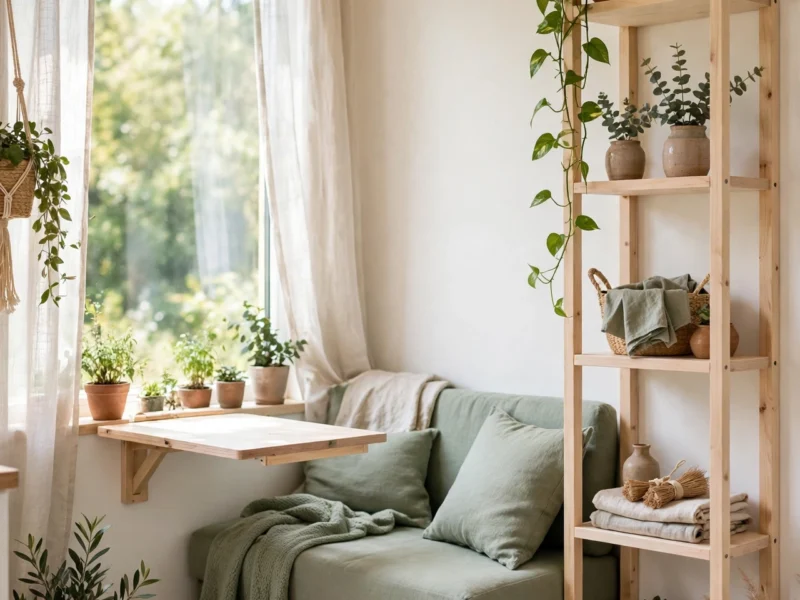
A living room without anything living in it can feel like a photograph of a room rather than a room. Plants add shape, colour and movement, and they soften hard edges in a way no cushion can. One large plant in a corner does more than five small ones scattered on shelves.
Pick plants for the light you actually have. A fiddle-leaf fig needs bright, indirect light and sulks in a dark corner. A snake plant or a ZZ plant copes with low light and irregular watering, which makes them honest choices for busy households. Put the big plant where the room has an empty vertical gap, usually a corner or beside the sofa, and let it fill the space a piece of furniture would have.
Scent is the finishing layer people forget, and it is the one guests remember. A candle, a reed diffuser or a bowl of dried eucalyptus gives the room a signature smell. Keep it subtle and consistent rather than strong and changing weekly. One scent, used for a season, becomes part of how people remember your home.
Placement: a plant on the floor needs a pot that is wide enough to look stable; a top-heavy plant in a narrow pot looks nervous.
Colour: green is a neutral in decorating, so plants work with any palette and cool down rooms that feel too warm.
Texture: pair a glossy-leaved plant with a matte ceramic pot, or a feathery fern with a woven basket, for contrast.
Try this: if real plants keep dying, a single good-quality faux olive branch in a vase still adds shape and green, with no guilt attached.
The shortcut: move the furniture, edit the shelves, then spend on the rug and the lighting, in that order.
Bringing It All Together
A living room refresh works best when you treat it as a sequence, not a shopping list. Start with the free changes, moving furniture and editing shelves, then spend on the pieces that change the room most, the rug and the lighting. Add colour through paint or cushions, hang the art lower than you think, and finish with something living and something that smells good.
You do not need to do all eight ideas. Two or three, done properly, will make the room feel different when you walk in tonight. And because none of these changes is permanent, you can adjust them as the seasons change and your taste moves on. That is the real point of a refresh. The room keeps up with you, instead of you living around a room that stopped changing years ago.
Frequently Asked Questions
How much does a living room refresh cost?
It can cost nothing if you stick to moving furniture and editing shelves, or a few hundred pounds if you add a rug, paint and new cushion covers. Set a budget before you start, spend it on the largest visual change first, usually the rug, and leave the small accessories until last.
What is the first thing I should change in a tired living room?
Move the furniture and clear the surfaces first, because both are free and they show you what the room actually needs. After that, the rug is the single purchase that changes the room most, followed by lighting.
How can I refresh my living room without painting?
Change the textiles and the art. New cushion covers, a different throw and a larger rug shift the colour palette without a paintbrush. Reframing art, moving a picture to a new wall and adding plants also change the room’s feel without touching the walls.
How often should I refresh my living room?
A light refresh twice a year, in spring and autumn, keeps the room feeling current. Swap cushion covers and throws, move a plant, and edit one shelf. A bigger refresh, with paint or a new rug, every three to five years is plenty.
Can I refresh a small living room the same way?
Yes, with lighter touches. Choose a rug that fits the seating area without reaching the walls, keep the art to one strong piece instead of a gallery, and use one floor lamp rather than several table lamps. Small rooms benefit most from editing, since every object in them is more visible.
3 thoughts