
The tree is down, the baubles are boxed, and the living room suddenly looks bare. That flat, echoey feeling after the decorations come off is familiar to anyone who goes all in for December, and January makes it worse: short days, grey light, and a room that feels like it lost its warmth along with the fairy lights. It is tempting to leave it as it is and wait for spring, but a living room does not need another round of decorations to feel inviting again. It needs layers.
Winter living room decor works best when you stop thinking about ornaments and start thinking about texture, weight and light. A wool throw folded over a sofa arm does more for a cold evening than any garland ever did, and a rug under bare feet changes how a whole room feels at seven in the morning. The ideas below are built for the months after Christmas, when the goal is a room that feels warm, calm and lived in, not festive.
Every idea here uses things you probably already own, or swaps that cost very little. If your Christmas living room was the cosy, camera-ready version of this room, think of this as its quieter January self: same comfort, no tinsel. For the bedroom, the same layering logic works just as well, and our winter bedroom decor ideas follow the same principle of adding warmth without adding clutter.
Quick Tips Before You Start
Take everything Christmas out first, right down to the last scented candle, so you can see the room as it really is. Work from the sofa outward, since that is where you sit. Choose one warm colour to repeat three times across the room, and keep the rest neutral. If a swap costs nothing, do it before buying anything.
1. Start with the Sofa: Layer Throws Like You Mean It
 Save
Before you buy or move a single layer, read the room as it is. Note the sofa colour, since throws and cushions must sit in its family. Note how much daylight the room keeps in January, since a dim room needs warm light and light-catching fabric more than it needs extra pattern. Note the floor underfoot, since bare wood or tile calls for a rug before anything else. These three checks decide which layers matter most in your room.
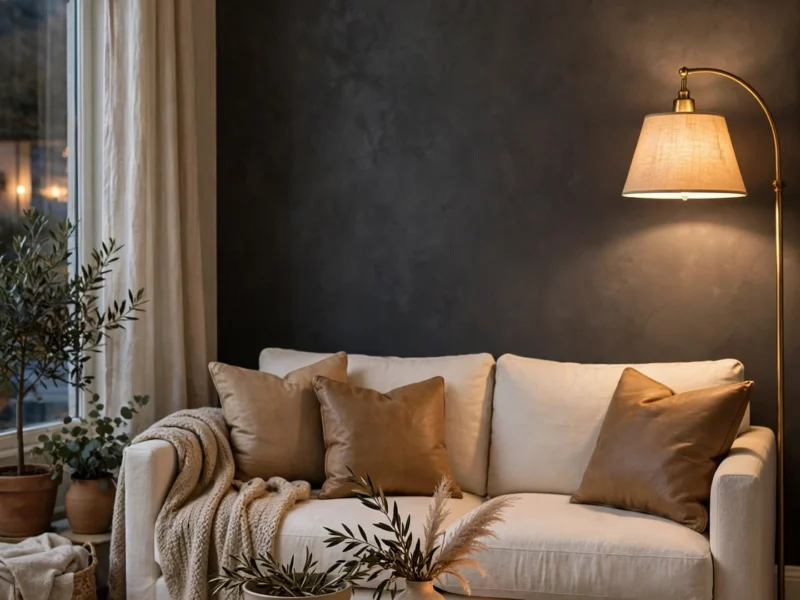
The sofa is where winter evenings happen, so it gets the first layer. One throw draped over the back is decoration. Two throws, in different weights and textures, is warmth you can actually feel. Start with a heavier wool or fleece throw folded lengthways across the back of the sofa, then add a lighter knit or cotton throw tossed over one arm, within easy reach of your usual seat. The fold matters more than the brand: a throw folded in thirds looks deliberate, while one balled up at the end of the sofa looks like laundry waiting to happen.
Colour: Pick throws that sit in the same family as your sofa rather than fighting it. A cream sofa takes oatmeal, camel and soft rust beautifully. A charcoal sofa warms up with mustard, terracotta or deep forest green. If your sofa is patterned, go plain with the throws and let the pattern do the talking.
Texture: Mix a smooth throw with a chunky one. A flat woven wool against a knitted cable throw gives your hands something to notice, and that contrast is what makes a sofa look layered instead of just covered. Avoid pairing two shiny fabrics, which slide off each other and end up on the floor by bedtime.
Swap: If you already own a summer-weight throw in linen or thin cotton, move it to a basket for now and bring out the heaviest one you have. A throw you have to fold twice to keep warm is not doing its job in January.
Try this: Drape the heavier throw so it falls just past the seat cushions, then tuck the top edge behind the back cushion. It stays put when you sit down, and it frames the sofa instead of hiding it.
2. Swap Cushion Covers for Winter Weight
 Save
Cushion covers are the cheapest seasonal change a living room can make, and they carry more visual weight than most people expect. A linen cover that looked fresh in July reads thin and cold in January. Swap it for velvet, corduroy, wool or a heavy woven cotton, and the whole sofa changes temperature, at least to the eye. You do not need a full set: two new covers on a three-seater sofa, mixed with two you already own, is enough to shift the mood.
Colour: This is where your one repeated warm colour earns its keep. If you chose rust for the throws, repeat it in one cushion, then pick a second colour that sits beside it, like deep gold or warm brown. Keep the other cushions neutral so the room does not turn into a paint chart.
Texture: Velvet catches low winter light in a way flat cotton never will, which is why it works so well in the darkest months. Corduroy adds a casual, touchable feel that suits family rooms. If velvet feels too formal for your house, a brushed wool or bouclé cover gives the same softness without the sheen.
Match the cover fabric to how the room is used before you buy a set.
| Cover fabric | How it feels | Pick it for |
|---|---|---|
| Velvet | Soft with a sheen that catches low light | A calm room where the sofa is the focus |
| Corduroy | Casual and touchable, holds its shape | A family room that gets daily use |
| Brushed wool or bouclé | Soft with no shine | A room where velvet feels too formal |
| Heavy woven cotton | Firm and matte, keeps a plain shape | A room where the sofa pattern already does the talking |
Placement: Put the largest, darkest cushion at the outer ends of the sofa and the lighter ones toward the middle. It anchors the shape and stops the arrangement looking like cushions were tossed there by accident. Odd numbers work best: three on a two-seater, five on a three-seater.
Try this: Before buying new covers, turn your existing cushions around. The side that faced the room all autumn is often faded or flattened; the reverse can look nearly new, and the change costs nothing.
3. Bring in a Rug That Warms the Floor
 Save
Bare floors are honest in summer and unforgiving in winter. If your living room floor is wood, tile or laminate, a rug is the single biggest comfort upgrade you can make, and it changes the acoustics too: a rug softens the echo that makes a room feel empty after the Christmas tree and all its soft decorations have gone. A high-pile or shaggy rug under the coffee table warms the spot where your feet actually land, which is the spot that matters.
Placement: The front legs of the sofa and chairs should sit on the rug, not beside it. A rug that floats in the middle of the floor with furniture gathered around its edges looks like a mat, not a foundation. Measure before you buy: for most living rooms, a rug that extends at least 15 centimetres past each side of the coffee table feels right.
Colour: A rug in a warm neutral, think oatmeal, warm grey or faded rust, grounds the room without competing with the sofa. If your room is already full of pattern, go plain. If everything else is plain, a rug is the safest place to introduce a subtle pattern, like a faded vintage-style print or a simple geometric border.
Texture: Layering a smaller, softer rug over a larger flat-weave one is a trick worth trying in the coldest rooms. A sheepskin-style rug draped over a jute base adds instant warmth underfoot, and you can roll the top layer up when spring arrives. Keep the top rug smaller than the base by a clear margin so the layering reads as deliberate.
Swap: If a new rug is not in the budget, move a rug from a room you use less, like a spare bedroom, into the living room for the winter. Rugs are easy to move and hard to miss where they came from.
4. Restyle the Mantel for January, Not December
 Save
The mantel is the first surface people notice, and in January it usually still carries the ghost of Christmas: a bare garland hook, a pine needle or two, and a gap where the stockings hung. The fix is not another garland. A winter mantel works with height, weight and a little greenery that is not trying to be festive. Think a tall vase with bare branches, a stack of old books, and a candle or two, grouped so the eye moves across the mantel instead of landing on one lonely object in the middle.
Placement: Build from the ends inward. Place the tallest item at one end, a medium item at the other, and keep the centre low. This asymmetry feels relaxed and stops the mantel looking like a shop display. If your mantel is wide, three groupings work better than one long line of small objects.
Colour: Keep the mantel palette to two colours plus the natural tones of wood and greenery. White ceramic, warm wood and eucalyptus or pine branches in a tall vase will carry a mantel through to March without looking seasonal. If you want a touch of colour, a single deep green or burgundy vase does the job without shouting Christmas.
For more mantel inspiration, our cosy fireplace styling ideas cover mantel arrangements that work all year, and the same grouping rules apply here.
Texture: Mix hard and soft: a ceramic vase, a woven basket, a wooden candle holder, a linen runner if your mantel is deep enough. The contrast keeps a small display from looking flat, especially under the warm light of a fire or a lamp.
Try this: Cut a few branches from the garden, even bare ones, and stand them in a tall vase on the mantel. Bare branches in January look intentional and sculptural, cost nothing, and last for weeks without water.
5. Light It Low and Warm
 Save
January light is thin and blue, and a single ceiling light makes it worse, washing the room in a flat glare that flatters nothing. Winter living rooms need light at sitting height: table lamps, a floor lamp beside the sofa, and candles on the coffee table. Three small pools of warm light beat one bright overhead every time, and they make the room feel smaller and closer in the best way, like the walls have moved in to keep you warm.
Test it first: switch off the ceiling light at dusk and turn on only the lamps and candles. Sit in your usual seat for five minutes. If every corner holds a soft pool of light, the balance is right. If one half of the room falls dark, move a lamp to that side before you buy anything new.
Placement: Put one lamp on each side of the room rather than both on the same side. A table lamp on a side table beside the sofa and a floor lamp in the opposite corner balances the light and stops one half of the room falling into shadow. Candles belong on the coffee table or the mantel, never on a surface you have to reach across in the dark.
Colour: Warm white bulbs, around 2700K, are the right choice for living rooms in winter. Anything cooler turns the room blue-grey at night and fights the warm tones of your throws and cushions. If your lamps have cool bulbs in them now, swapping the bulbs is a five-minute job that changes the whole evening.
Texture: A fabric lampshade softens light in a way a bare bulb never will, and a linen or cotton shade adds a layer of texture to the room even when the lamp is off. If your shades are white and stark, a warm cream or oatmeal shade will take the edge off the light for very little money.
Swap: Move a lamp from a room you barely use at night into the living room for the winter. Most houses have a lamp sitting idle in a spare room, and one extra pool of light is often all a dark corner needs.
6. Add Texture with Baskets, Wood and Wool
 Save
When the decorations come down, a living room can look strangely smooth: flat walls, flat sofa, flat floor. Texture is what fills that gap without adding clutter. A woven basket beside the sofa holding spare throws, a wooden tray on the coffee table, a wool pouffe by the fire, these are the objects that make a room feel touched and used rather than staged. They also solve the practical problem of where winter things live: throws need a home, and a basket is a better one than the back of a chair.
Placement: Keep baskets on the floor, not on furniture, where they belong visually and where they are easy to reach. One large basket beside the sofa and one smaller one near the door will hold throws, magazines and the odd pair of slippers without the room looking like a storage cupboard. A wooden tray on the coffee table gathers small things, a candle, a book, a coaster, into one tidy group.
Colour: Natural materials bring their own colour, and that is the point. The honey tone of a seagrass basket, the dark grain of walnut, the cream of undyed wool, these warm the room without any paint or dye. If your room leans cool and grey, natural wood and woven textures are the fastest way to warm it up.
Texture: This is the one idea where more is genuinely better. Mix woven, knitted, carved and smooth in the same corner: a seagrass basket, a knitted pouffe, a carved wooden bowl, a smooth ceramic mug. The variety is what your eye reads as cosy, and none of it needs to match.
Try this: Fill a basket with rolled throws instead of folded ones. Rolled throws look like a shop display, take up less room, and are easier to pull out one-handed on a cold evening.
7. Let the Windows Do Some Work
 Save
Windows are the hardest-working surface in a winter living room and the most neglected. In January they are dark by five in the afternoon, and bare glass turns into a black mirror that makes the room feel exposed. Curtains fix that, but the trick is choosing the right weight: heavy lined curtains in a warm fabric do two jobs at once, they insulate the draughts and they soften the glass. Close them at dusk and the room instantly feels smaller, warmer and more private.
Placement: Hang curtains high and wide, with the rod at least 10 centimetres above the window frame and extending 15 centimetres past each side. Curtains hung this way make the window look bigger and let the fabric fall in full folds, which is where the insulating and the good looks both come from. Curtains that just cover the glass look stingy and do neither job well.
Colour: A warm neutral curtain, oatmeal, warm grey, soft rust, will suit most rooms, and it is worth choosing a colour that appears elsewhere in the room so the windows feel connected to the rest of the decor. If you want a bolder look, deep green or burgundy curtains are a classic winter choice and they look especially good against pale walls. Our frosty blue winter decor ideas show the cooler end of the winter palette if your room leans that way, but for most living rooms a warm tone works harder in January.
Texture: Velvet curtains are the classic winter choice for a reason: they hang in heavy folds, block draughts better than any other fabric, and catch lamplight beautifully. If velvet is too much for your room, a thick linen or a wool-blend curtain gives most of the same benefit with a more relaxed feel.
Swap: If new curtains are not on the cards, add a sheer voile layer behind your existing curtains for daytime privacy, or simply tie your current curtains back with a thick cord or a strip of fabric so they frame the window instead of covering half of it.
8. Style a Winter Centrepiece for the Coffee Table
 Save
The coffee table is the centre of a winter living room, and after Christmas it is usually the first surface to collect clutter: remote controls, mugs, a book you finished in November. A simple centrepiece gives the table a purpose again and gives your eye somewhere to land. Winter centrepieces work best low and natural: a wooden tray with a candle, a small vase of eucalyptus or dried stems, and a stack of two books. Nothing tall enough to block conversation, nothing fragile enough to worry about when someone puts a mug down.
Placement: Keep the centrepiece to one third of the table at most, pushed slightly to one side so there is still room for mugs and feet. If your table is round, a single tray in the middle works. If it is long and rectangular, group the pieces toward one end and leave the other end clear. The empty space is part of the arrangement.
Colour: Pull the centrepiece colours from the rest of the room: the same rust as the cushions, the same green as the mantel branches, the same wood tone as the tray. A centrepiece that repeats colours already in the room looks like it belongs there, while one that introduces three new colours looks like it wandered in from another house.
Texture: This is a good place for the materials you have not used elsewhere. A stone or concrete candle holder, a brass tray, a ceramic vase, a linen coaster, each one adds a different surface for the eye to catch. Dried stems, pampas or eucalyptus, add height without needing water or attention, and they last all winter.
Try this: Use a large hardback book as a riser under the candle or vase. It adds height, gives the arrangement a base, and it is a book you actually own, so the centrepiece feels personal rather than bought as a set.
Your takeaway: two throws on the sofa, one warm rug underfoot, and three pools of low light after dark.
Bringing It All Together
A winter living room does not need a new theme, it needs its layers back. Start with the sofa, because that is where you live in the evenings, then work outward to the rug, the mantel and the windows. Add light at sitting height, bring in natural textures, and give the coffee table one small, deliberate arrangement. None of these ideas needs a big budget or a weekend of work. Most of them need an hour and things you already own, moved to where they can do the most good.
The test is simple: on the next cold evening, sit in your usual spot with a cup of tea and look around. If the room feels warm before the heating has even caught up, the layers are doing their job. And when spring finally arrives, most of these changes will still work, because a well-layered room is a comfortable room in any season. If you are carrying the same thinking into the rest of the house, our winter front porch decor ideas take the same calm, post-holiday approach outside.
Frequently Asked Questions
How do I make my living room feel cosy in winter without Christmas decorations?
Layer texture instead of ornaments. Add a heavy throw and a chunky knit to the sofa, swap cushion covers for velvet or wool, put a rug underfoot, and light the room with lamps and candles at sitting height. Warm materials and low light do the work that fairy lights used to do.
What colours work best for a winter living room after Christmas?
Warm neutrals with one repeated accent work best: oatmeal, warm grey and cream as a base, with rust, deep gold, forest green or burgundy repeated in throws, cushions and one or two accessories. Cool blues can work too, but they suit rooms that already lean cool and need a soft, icy feel rather than warmth.
Should I keep my Christmas throw pillows out after the holidays?
Only the ones that are not obviously festive. A plain velvet or wool cushion in a winter colour can stay all season, but anything with reindeer, snowflakes or “merry” lettering will make the room feel stuck in December. Swap festive covers for plain ones in the same colours and the room moves on.
How can I make a small living room feel warmer in winter?
Work with what you have: a rug that covers most of the floor, curtains hung high and wide, and one warm lamp instead of the ceiling light. Keep furniture close together so the seating area feels like one snug group, and avoid adding extra small objects, since clutter makes a small room feel smaller rather than cosier.
When should I take down my Christmas decor and switch to winter decor?
Most households take the tree down in the first week of January, and that is the natural moment to switch. Remove everything festive in one go, live with the bare room for a day so you can see what it actually needs, then add the winter layers one at a time, starting with the sofa and the lighting.
2 thoughts