
A pale living room can feel calm, but sometimes it just feels unfinished. You look around and everything is fine, nothing is wrong, and yet the room has no pull. It does not ask you to sit down and stay a while. That flat, washed-out feeling is the reason so many people are painting one wall dark and wondering why they did not do it years ago.
The worry is always the same. Dark walls sound like a cave. People picture a room that swallows the light, shrinks the sofa, and makes every evening feel like a basement. That happens when the dark is done badly, on every wall, with cold grey furniture and a single ceiling light doing all the work. Done well, dark walls do the opposite. They make a room feel deeper, warmer, and more put together, like the difference between a hotel lobby and a spare room.
Moody neutral living room decor is not about going black and hoping for the best. It is about pairing deep, warm neutrals with soft texture, warm light, and enough contrast that the room feels cosy rather than closed in. These eight ideas show you how to get there, one change at a time.
Quick Tips Before You Start
- Test paint on a large board first, then move it around the room through the day. Dark colours shift more than pale ones.
- Keep one warm undertone running through the room: warm charcoal, warm taupe, or warm olive, never all three.
- Add texture before you add more colour. A dark room with three textures feels richer than a dark room with three colours.
- Light the corners, not just the ceiling. Two lamps beat one overhead light every time in a moody room.
1. Paint One Feature Wall Charcoal
 Save
Before you pick a shade, read the room in daylight and again after dark. Note which way the windows face, since a north-facing room needs a warm undertone to stay cosy. Note how much light the room truly keeps, since a dim room needs warm lamps and pale contrast beside the dark wall. Note what already fills the room, since wood, leather, and brass each pull a dark shade warmer or cooler. Those three checks decide which dark neutral suits your room.
The easiest way into a moody living room is a single dark wall, usually the one behind the sofa or the fireplace wall. Charcoal with a warm undertone is the safest starting point. It reads as soft black in the evening and as a deep, smoky grey in daylight, and it makes everything in front of it look sharper: the sofa cushions, a brass lamp, the grain of a wooden side table.
Paint the wall in a matte or eggshell finish. Gloss bounces light around and shows every bump in the plaster, while matte soaks light in and gives the wall that velvety depth people actually want. Take the paint right into the corners and down to the skirting board, and do not leave a pale border. A half-finished edge is what makes a feature wall look like a mistake.
Colour: warm charcoal, like a soft black with brown or taupe in it, rather than a blue-grey that can turn cold at night. Placement: the wall your sofa faces away from, so you see the dark wall when you walk in. Texture: pair it with a linen sofa or a wool throw so the flat wall has something soft in front of it.
Styling tip: hang one picture with a wide cream mount on the dark wall. The pale frame edge stops the wall feeling like a black hole and gives your eye somewhere to land.
2. Layer Warm Neutrals So the Room Stays Soft
 Save
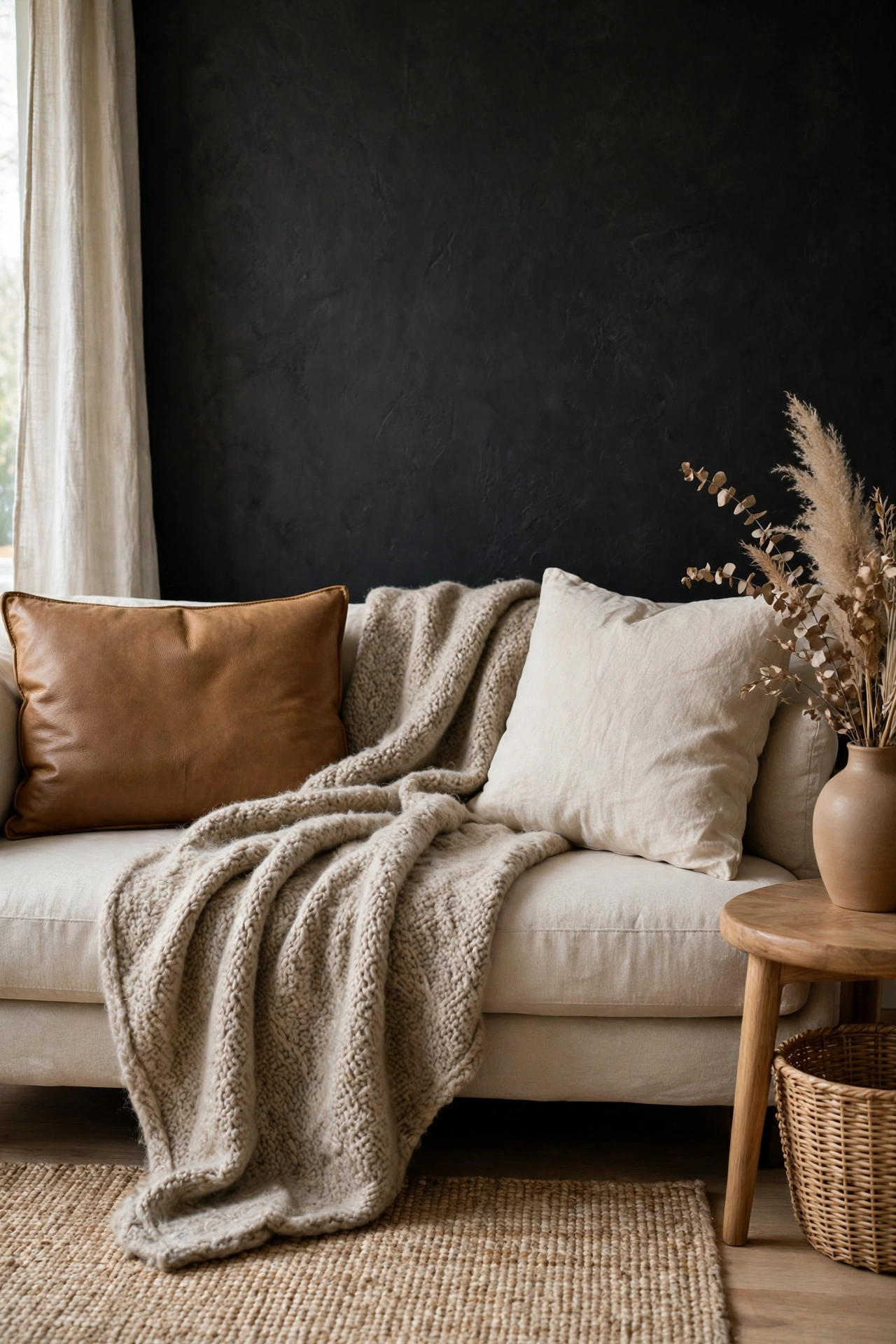
A moody room falls flat when every neutral in it is the same temperature. Grey sofa, grey rug, grey cushions, and suddenly the room feels like a showroom in February. The fix is layering warm neutrals: camel, oatmeal, mushroom, warm taupe, and a touch of cream, each one slightly different from the next.
Start with the biggest surface and work down. A warm taupe sofa against a charcoal wall already gives you contrast. Add an oatmeal throw folded over one arm, a camel leather cushion, and a cream cushion with a woven texture. None of these is a bright colour, but together they stop the dark wall from dominating the room. The eye moves from shade to shade instead of hitting one big dark block.
Colour: keep the palette inside one warm family. If the wall is warm charcoal, the neutrals should lean camel and cream, not ice grey. Texture: mix at least three: smooth leather, nubby wool, and soft linen in one seating area. Swap: if your cushions are all the same fabric, change two of them. A velvet cushion next to a linen one does more than a new cushion in a new colour.
If you want a deeper look at how one bold colour changes a whole room, our guide to colour drenching shows the same layering idea taken further, with the ceiling and trim painted to match.
3. Bring In Dark Wood and Aged Leather
 Save
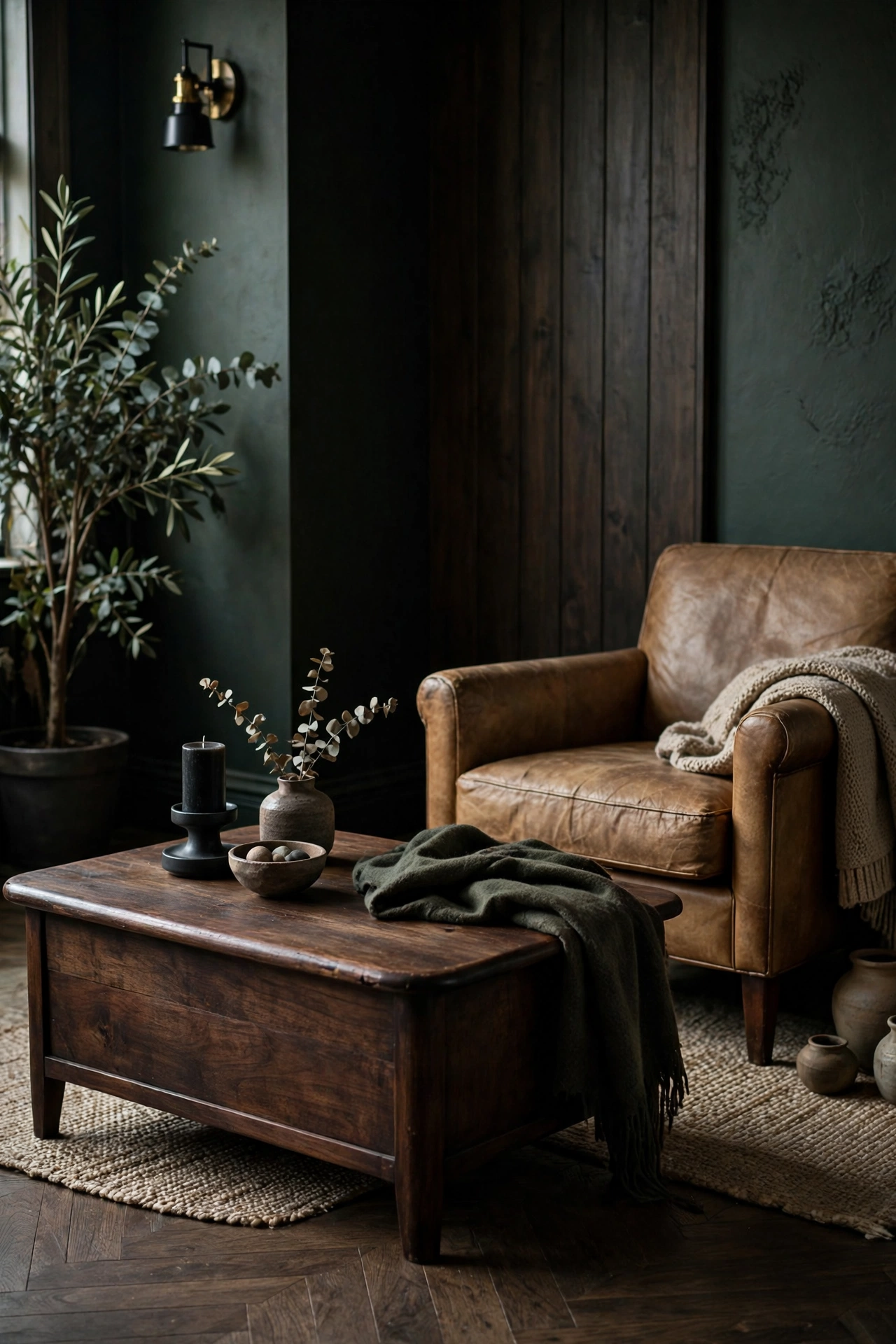
Dark walls need weight at floor level, or the room feels top-heavy. Dark wood does that job better than anything else. A walnut coffee table, a mahogany sideboard, or even a dark oak media unit grounds the seating area and gives the dark wall something to talk to. The wood grain adds pattern without adding colour, which is exactly what a moody neutral room needs.
Aged leather works the same way. A tan leather armchair against a charcoal wall is one of those pairings that never looks wrong. The leather warms up over time, picks up a shine where hands rest, and the orange-brown tone sits perfectly against cool dark paint. If a full leather chair is too much, a leather pouffe or a pair of leather-bound books on the coffee table gives you the same warmth in a smaller dose.
Placement: put the darkest wood piece on the opposite side of the room from the darkest wall, so the weight balances. Texture: rough-sawn wood, oiled leather, and a woven basket in one corner give you three natural textures that soften hard edges. Swap: trade a pale pine side table for a walnut one and watch the whole corner settle.
4. Use Warm Brass as the Room’s Jewellery
 Save
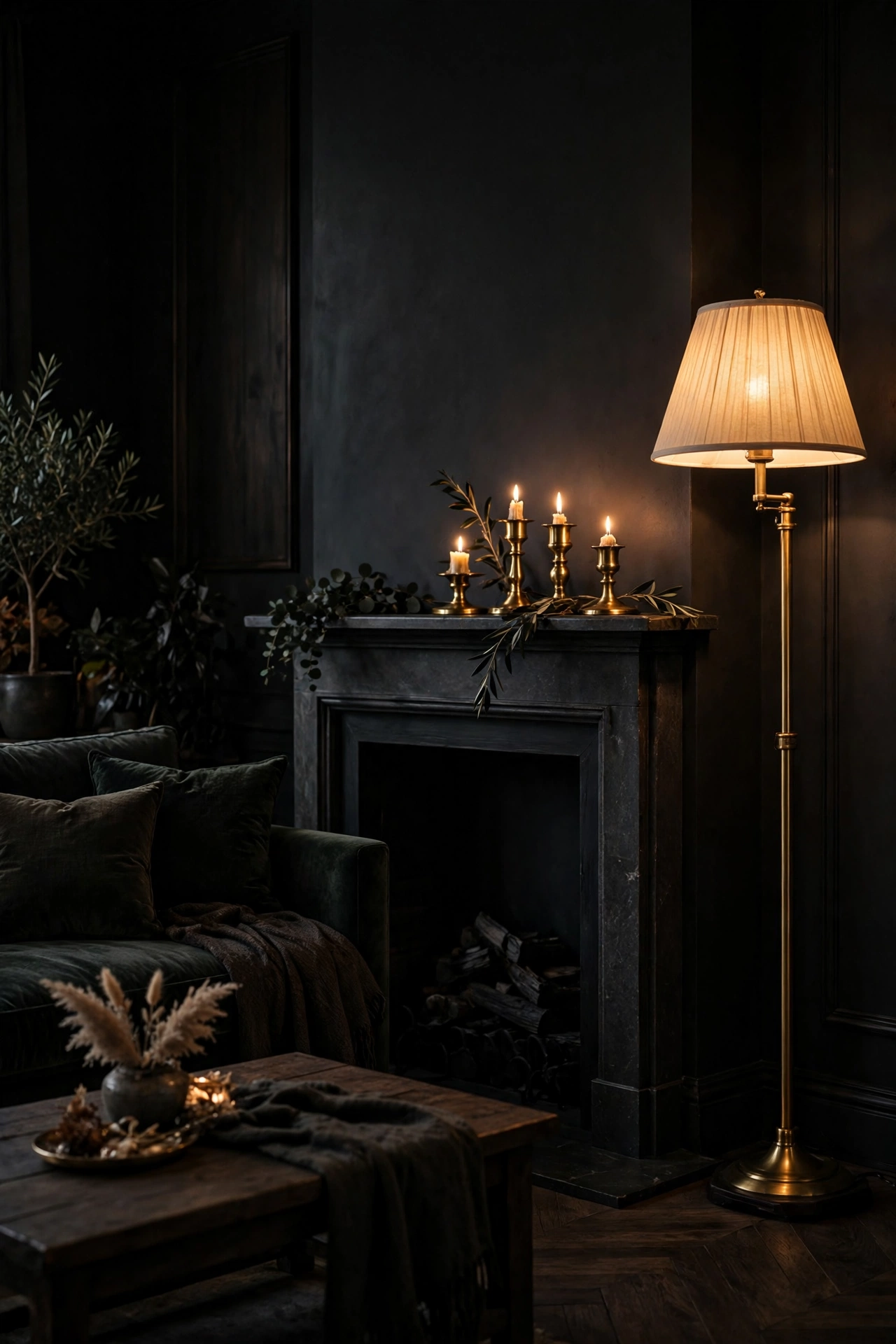
Brass is the metal that makes moody neutrals work. Chrome and nickel look sharp against dark walls, but they can feel cold. Brass, bronze, and aged gold catch the lamplight and throw it back warm, which is exactly what a dark room needs after sunset. Think of it as jewellery: small, shiny, and placed where the light hits.
You do not need much. A brass floor lamp beside the sofa, a pair of brass candle holders on the mantel, and a thin brass frame on one picture are enough. Spread them out rather than clustering them in one spot, so the warm glints appear around the room instead of in a single pile. Keep the finish consistent, either all polished or all aged, so it reads as one choice rather than a collection of random finds.
Colour: unlacquered brass that darkens slightly with age suits a moody room better than bright, mirror-polished gold. Placement: at three different heights, a lamp, a mantel piece, and a low tray, so the shine moves around the room. Texture: pair smooth brass with rough plaster or raw wood and the contrast makes both look better.
For more ways to use this metal through a whole home, see our brass decor ideas, which cover everything from light fittings to small hardware swaps.
5. Pile On Texture: Boucle, Velvet, and Linen
 Save
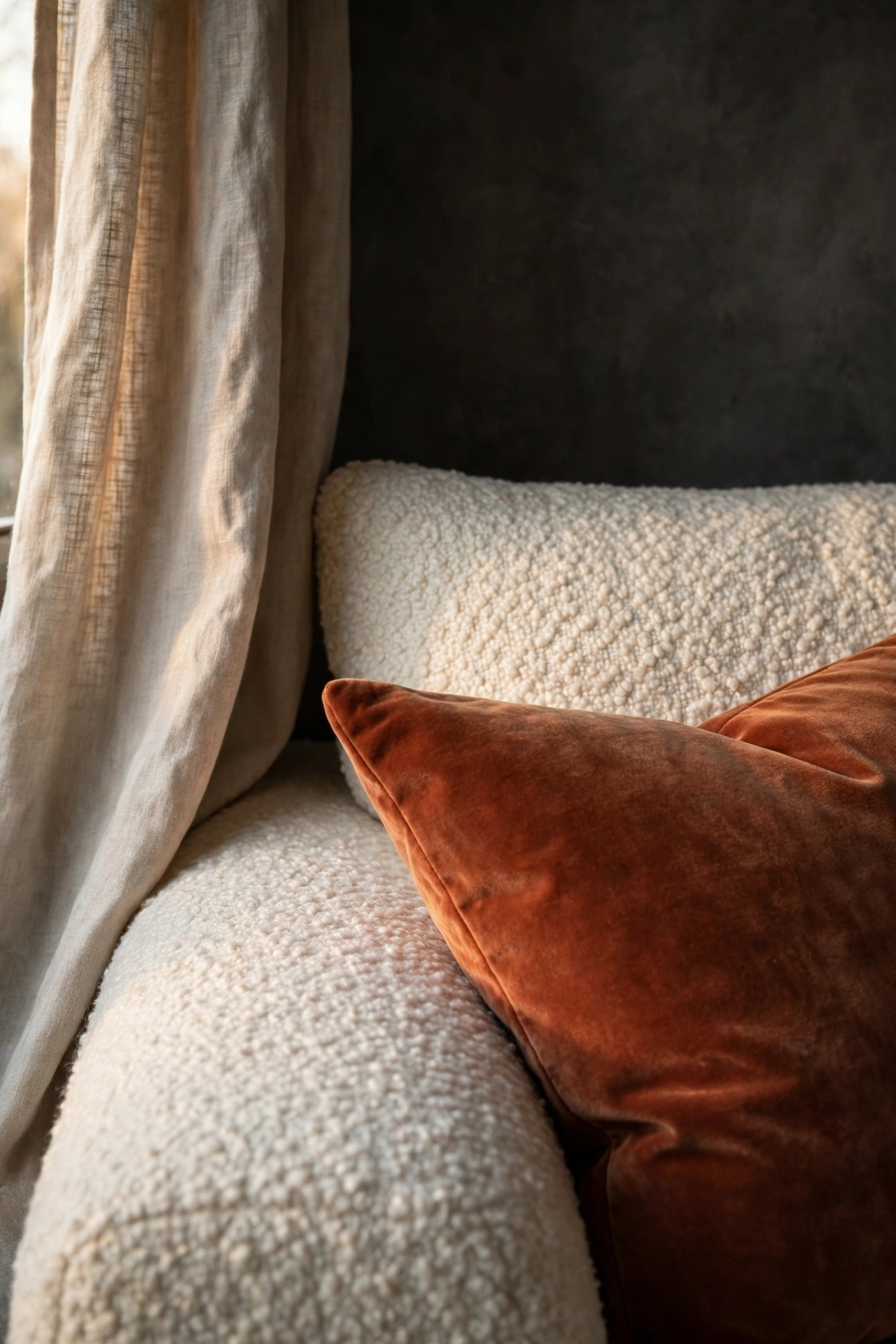
If there is one rule for moody neutral rooms, it is this: when the colour stays quiet, the texture has to do the talking. A dark wall behind a flat, smooth sofa looks like a painted backdrop. The same wall behind a boucle armchair, a velvet cushion, and a linen curtain looks like a room someone actually lives in.
Boucle is the hero here. Its looped, nubby surface catches light in tiny shadows, so a cream boucle chair glows gently against a dark wall instead of disappearing into it. Velvet does the opposite job: it drinks the light and looks deeper and richer in a dark room, which makes a velvet cushion in olive or rust feel like a small luxury. Linen keeps it all from getting too heavy, because its loose weave and soft wrinkles read as relaxed and easy.
Texture: aim for three contrasting surfaces within arm’s reach of the sofa, such as boucle, velvet, and linen. Colour: keep the textures in warm neutrals and let one deep accent, like rust or olive, appear in the smallest piece. Swap: a flat cotton throw swapped for a chunky wool one changes the whole seat in under a minute.
6. Let Warm Lighting Do the Heavy Lifting
 Save
Lighting makes or breaks a moody living room. One bright ceiling light on a dark wall is the fastest way to make the room feel like a stage set. What you want instead is several small, warm light sources at different heights, so the dark corners glow instead of disappearing.
Start with two table or floor lamps with warm bulbs, around 2700K, which is the soft yellow-white of old-fashioned bulbs rather than the blue-white of daylight bulbs. Put one beside the sofa and one across the room, so the light crosses the space. Add a dimmer to the ceiling light if you can, and keep it low in the evening. A few candles on the coffee table or mantel add a flicker that no bulb can copy, and their warm flame light is flattering on dark paint.
Test it first: wait until dusk, switch off the ceiling light, and turn on only the lamps and candles. Stand in the doorway and look at each corner. If every corner holds a warm glow, the layers are right. If one corner stays black, move a lamp there before you buy another. If the room still feels flat, swap one cool bulb for a warm one and check again.
Placement: light the corners first. A lamp in a dark corner makes the room feel bigger, because your eye can finally see the edge of it. Colour: warm bulbs only. A cool bulb against charcoal paint turns the wall grey-blue and kills the mood. Texture: a linen lampshade softens the light, while a metal shade throws it in a sharper pool, so mix the two.
7. Hang One Oversized Piece of Art in Soft Tones
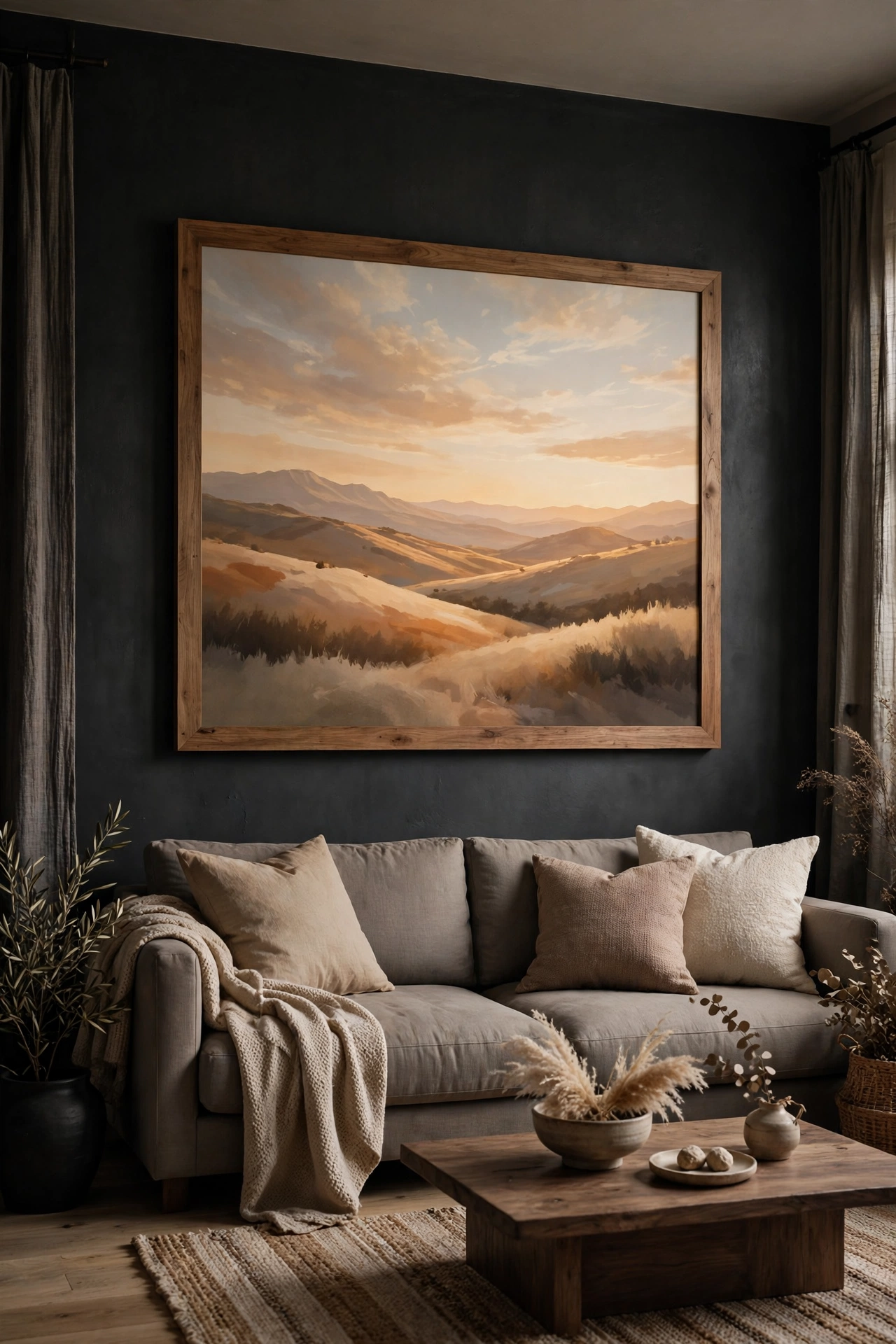 Save
A dark wall with nothing on it can feel unfinished, but a wall covered in small frames can feel fussy. One large piece of art solves both problems. It gives the wall a focal point, it fills the space properly, and it stops the room needing a dozen small decorations to feel complete.
Choose art in soft, warm tones: a landscape in muted greens and ochre, an abstract in cream and rust, or a black-and-white photograph in a pale wood frame. The picture should be big enough to matter, at least two-thirds the width of the sofa below it, and hung so its centre sits at eye level when you are standing. A wide pale mount or a light frame helps the art stand out from the dark wall without shouting.
Placement: centre it over the sofa or the fireplace, and hang it lower than you think. Most pictures go up too high. Colour: soft, warm tones with one deep note that echoes the wall. Texture: a canvas with visible brushwork or a framed textile adds a surface the eye can enjoy up close.
If your walls are still bare and you are not sure where to start, our oversized wall art ideas walk through sizing, hanging height, and framing for big empty walls.
8. Ground It All with a Big, Soft Rug
 Save
A moody room without a rug feels unfinished at floor level. Hard floors reflect sound and light, and against dark walls they can make the room feel echoey and cold. A large rug fixes that in one move: it softens the sound, warms the floor underfoot, and gives the seating area a clear boundary.
Size matters more than pattern here. The rug should be big enough for the front legs of the sofa and both armchairs to sit on it. A rug that is too small looks like a mat and makes the furniture look scattered. Choose a warm neutral with a subtle pattern or a gentle texture, such as a high-pile wool rug in oatmeal, a vintage-style rug in faded rust and cream, or a flat-weave in warm taupe. The pattern should be quiet enough that it does not fight the wall.
Placement: leave the same amount of bare floor showing on all sides, about 20 to 30 centimetres, so the rug looks placed rather than squeezed in. Texture: a thick pile underfoot makes a dark room feel warmer the moment you step in. Swap: if your rug is pale and thin, layer a smaller, darker rug on top at an angle under the coffee table for instant depth.
Choosing Your Dark Paint Shade
Not every dark neutral behaves the same way on a wall. Undertone is what decides whether a room feels warm and cosy or cold and flat, so it is worth comparing a few before you commit. The table below covers the shades that work best in living rooms, with the undertone to look for and the mood each one creates.
| Paint shade | Undertone to look for | Best for | Mood it creates |
|---|---|---|---|
| Warm charcoal | Brown or taupe | First dark wall, north-facing rooms | Soft, smoky, forgiving |
| Deep mushroom | Warm grey with pink | Rooms with lots of wood | Gentle, lived-in, calm |
| Olive green | Yellow-green, muted | Rooms with plants and leather | Earthy, rich, relaxed |
| Espresso brown | Red-brown | Cosy evening rooms, fireplaces | Warm, enveloping, classic |
| Ink navy | Warm navy, not bright blue | Rooms with brass and cream | Dramatic, deep, smart |
Test your shortlist on a board, not straight on the wall, and look at it in morning light, afternoon light, and lamplight before you decide. A shade that looks perfect at noon can turn cold or muddy by evening, and the board lets you catch that before the whole wall is painted.
The combination: one warm charcoal wall, three textures on the sofa, warm lamps in the corners, and brass where the light hits.
Bringing It All Together
A moody neutral living room is not built in one weekend, and it does not need to be. Start with the wall, then add the texture, then fix the lighting. Each change makes the next one easier to judge, because you can see how the room responds before you spend more. The goal is a room that feels deep and warm, where the dark walls make the lamplight glow and the soft textures invite you to sit down.
Keep the palette warm, keep the textures mixed, and keep the light low and golden. If a change makes the room feel smaller or colder, it is usually the undertone or the lighting, not the idea itself. Swap a cool grey for a warm one, add a lamp to a dark corner, and the room will settle. And if the rest of the room still feels tired after the walls are done, our living room refresh ideas cover the small updates that make a whole room feel new again.
Frequently Asked Questions
Will dark walls make my small living room feel smaller?
Not if you paint one wall and keep the rest light. A single dark wall adds depth, which can actually make a small room feel longer, because the eye reads the dark surface as further away. Keep the ceiling pale, add a mirror opposite a window, and light the corners, and the room will feel cosy rather than cramped.
What is the best dark neutral paint colour for a living room?
Warm charcoal is the safest first choice, because its brown or taupe undertone stays warm under lamplight. Deep mushroom suits rooms with lots of wood, and olive green suits rooms with plants and leather. Always test on a board first, since undertones shift a lot between morning light and evening lamplight.
How do I keep a moody living room from feeling cold?
Warmth comes from texture and light, not from more colour. Add wool, velvet, leather, and dark wood, then light the room with warm bulbs around 2700K instead of one bright ceiling light. Brass and candlelight help too, because they throw warm glints across the dark surfaces.
Can I do moody neutrals in a rented home?
Yes. Use peel-and-stick wallpaper in a dark textured print on one wall, or hang a large dark woven wall hanging as a feature. Dark furniture, heavy curtains, and layered rugs give you most of the look with nothing painted, and everything comes down when you move out.
Do dark walls work with a light-coloured sofa?
They work beautifully. A cream or oatmeal sofa is often the best partner for a dark wall, because the contrast makes both look better. The light sofa stops the wall feeling heavy, and the dark wall stops the pale sofa looking washed out. Add one dark cushion to tie them together.
1 thought