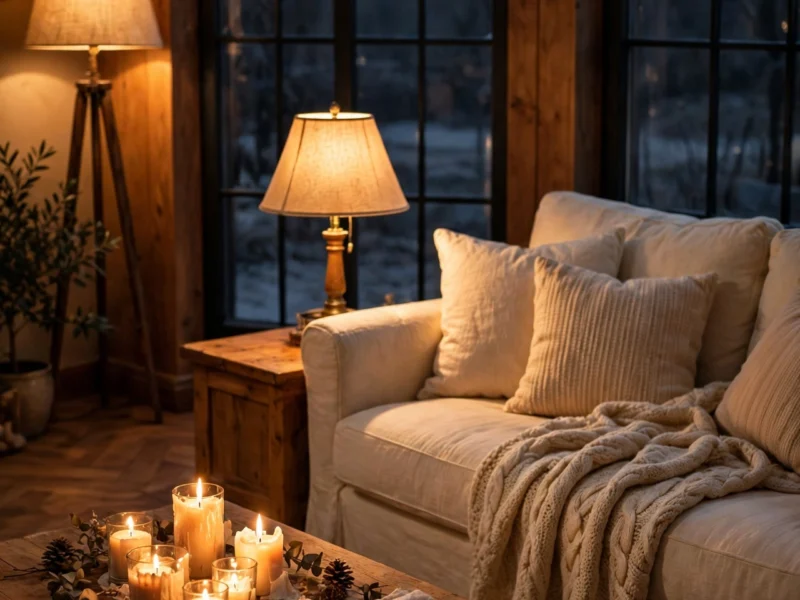
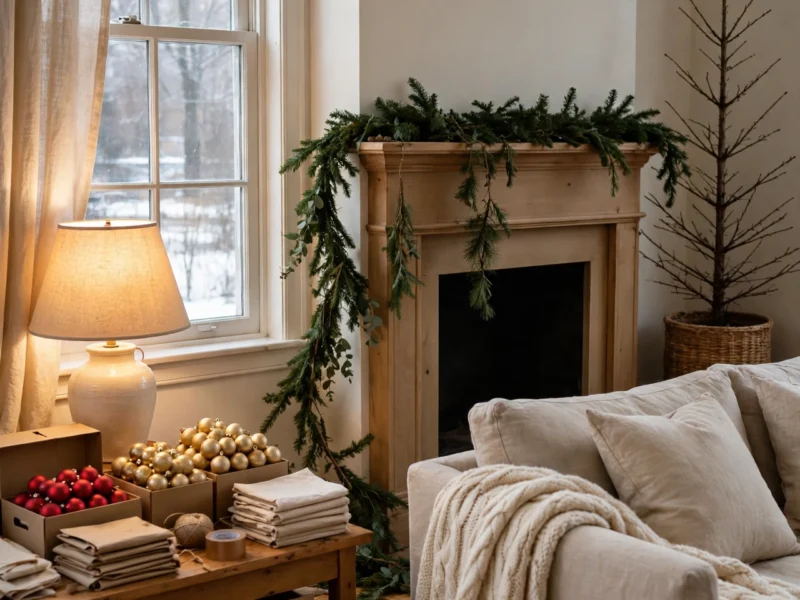
Farmhouse cottage style has quietly taken over the modern farmhouse look, and once you see the difference, you cannot unsee it. The older farmhouse was all sharp white walls, black window frames and words on signs. The cottage version is softer. It keeps the warm bones, the wood, the honest materials, but it trades the showroom polish for something that actually feels like people live there.
That is the whole point of a cottage interior. Nothing should look staged. The sofa has a throw that has been folded and refolded. The kitchen shelf holds plates you use every day, not plates you bought for a photo. A farmhouse cottage is a home that invites you to sit down, put your feet up and stay a while.
Farmhouse cottage interiors blend rustic wood, vintage finds and soft, washed-out colour into rooms that feel warm the moment you walk in. Below are eight looks that capture it, each one practical enough to start this weekend and flexible enough to suit a small cottage or a full-size family home. If your space is on the smaller side, these tiny house interior ideas use the same layered approach in far fewer square metres.
Quick Tips Before You Start
- Pick one warm wood tone and repeat it through the house so rooms feel connected.
- Choose faded, sun-washed colours over bright ones, then add depth with one darker accent.
- Mix one old piece with new ones in every room, so nothing looks like a shop display.
- Leave some surfaces bare. A crowded cottage feels cluttered, not cosy.
1. Whitewashed Walls with Warm Wood Beams
 Save
Before you change a thing, take stock of what the house already gives you. Note the timber already in place, since the one wood tone you repeat must sit beside it. Note where the light falls through the day, since whitewash and window seats both depend on it. Note the size of each room, since a small cottage needs layers more than furniture. Those three facts decide which looks below suit your house.
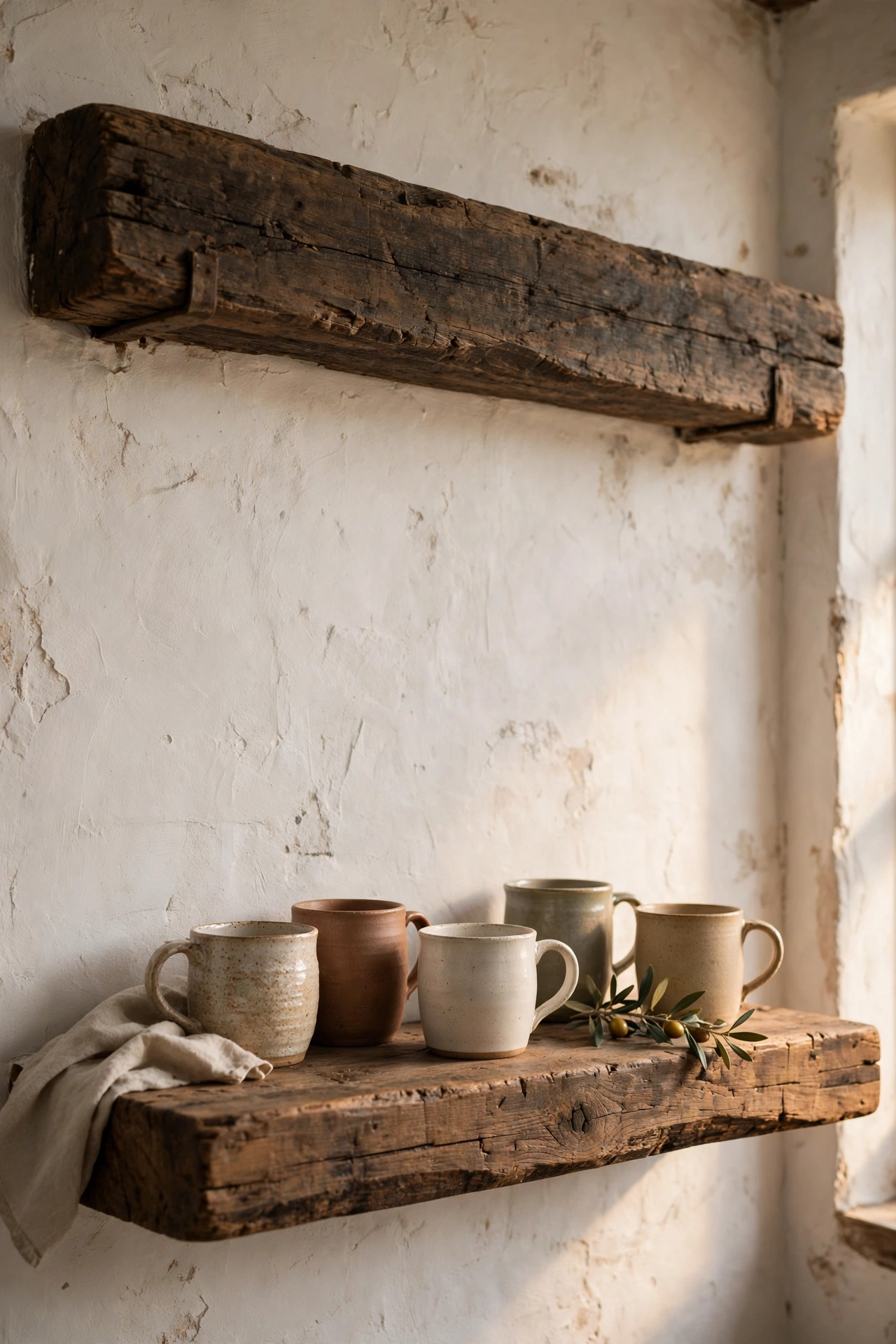
The quickest way to set a cottage mood is to lighten the walls and let the wood do the talking. A soft whitewash over plaster or painted panelling gives you that pale, chalky backdrop cottage rooms are known for, and it bounces light around in a way flat white paint never does. Against it, exposed beams, a chunky mantel or a reclaimed timber shelf suddenly look like the main event.
Start with the biggest wall in the room and keep the whitewash warm, not blue-white. A creamy shade such as a soft oat or warm bone works better than a stark brilliant white, which can feel cold next to wood. If your beams are dark, leave them alone. The contrast between pale walls and dark timber is one of the oldest cottage tricks there is, and it still works.
Pick one wood tone and repeat it through the house; this chooser matches the tone to the mood you want.
| Wood tone | Mood it sets | Pair it with |
|---|---|---|
| Honey pine | Light, warm, sun-washed | Cream walls and a sage accent |
| Walnut | Deep, rich, grounded | Warm white walls and dark beams left alone |
| Reclaimed timber | Weathered, worn, full of character | Whitewash and everyday objects on show |
Placement: Use beams and heavy timber on ceilings and around doorways, where they read as structure rather than decoration.
Colour: Warm white walls, honey or walnut wood, one muted accent such as sage or dusty blue.
Texture: Rough-sawn timber, lime-washed plaster, a woven rug underfoot.
Swap: If real beams are out of reach, a reclaimed wood shelf or a chunky wooden picture ledge gives the same warmth for far less money.
Try this: paint one wall in a warm white and hang a single timber shelf with two or three everyday objects on it. The room will feel lighter and older at the same time.
2. A Slipcovered Sofa That Invites You to Sit
 Save
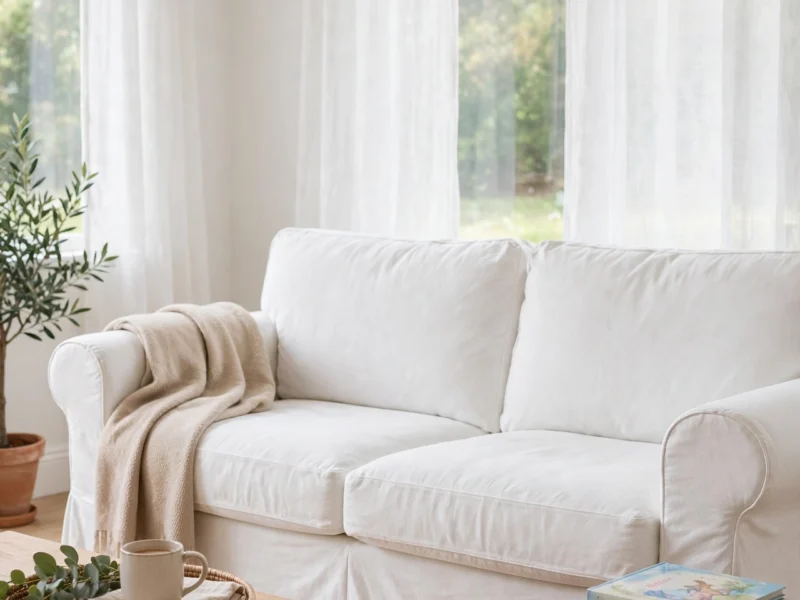
Nothing says farmhouse cottage like a sofa you do not have to be careful with. A loose linen slipcover in natural or faded cream turns an ordinary sofa into the heart of the room. It wrinkles a little, it softens with every wash, and it forgives muddy paws, spilled tea and children with felt tips. That forgiveness is the whole appeal.
Choose a natural fabric, linen or a linen-cotton blend, and skip anything shiny or stiff. The cover should look relaxed, not tailored to within an inch of its life. Tuck the corners loosely and let the skirt fall to the floor. Add two or three cushions in different textures, a washed linen, a small checked cotton, a knitted wool, and a throw folded over one arm so the sofa looks used rather than arranged.
Placement: Angle the sofa toward the fireplace or the best window, not flat against the longest wall.
Colour: Natural linen, cream, soft oatmeal, with cushions in sage, faded rose or dusty blue.
Texture: Washed linen, chunky knit, a flat-weave wool rug beneath.
Swap: A second-hand sofa with a new slipcover costs a fraction of a new one and looks more cottage than most shop-bought options.
Try this: wash the slipcover once before you put it on. The slight softening makes it sit better and look like it has always belonged there. A new cover is one of the easiest living room refresh ideas, and it changes the whole room in an afternoon.
3. Open Shelving in the Kitchen with Everyday Plates
 Save
Cottage kitchens were never built to hide things away. Open shelves stacked with the plates, bowls and mugs you actually use every day are both practical and pretty, and they cost far less than a wall of new cupboards. The trick is to keep them honest. If a plate is chipped, it still earns its place. If a mug is ugly, leave it in the cupboard.
Two or three shelves in reclaimed wood or painted to match the wall are enough. Stack white or cream plates in short piles, line up mugs by the handle, and leave a gap of breathing space between groups. A few sprigs of dried herbs in a jar or a small potted plant stops the shelf looking like a shop. Keep the top shelf for things you reach for weekly, not daily, so nothing gathers dust at eye level.
Placement: Run shelves along the wall beside the cooker or over the sink, where you can reach them without a step.
Colour: Cream and white crockery, warm wood shelves, one or two pieces of blue and white china for contrast.
Texture: Rough wood, glazed ceramic, woven baskets on the shelf ends.
Swap: Remove the doors from one existing wall cupboard and paint the inside a soft cream. Instant open shelving for the price of a tin of paint.
Try this: take everything off one shelf, then put back only what you have used in the last week. You will be surprised how much calmer the kitchen looks. For a moodier take on the same room, see our dark cottagecore kitchen ideas.
4. Vintage Finds Mixed with New Pieces
 Save
A farmhouse cottage should look collected over time, not bought in one afternoon. That is why the best cottage rooms mix a few genuine vintage pieces with newer furniture. An old pine dresser next to a new armchair. A flea-market mirror above a modern console. A chipped enamel jug holding fresh flowers on a brand-new side table.
Start with one vintage anchor per room. A worn wooden chest, an old ladder used as a blanket rack, a set of mismatched wooden chairs around the dining table. Then build around it with plain, simple new pieces that do not compete. Keep the palette calm so the old and new sit together without arguing. When the room starts to feel like a museum, add something plain and modern to pull it back.
Placement: Put the vintage anchor where the eye lands first, the wall opposite the door or the end of the dining table.
Colour: Faded paint, honeyed pine, worn brass, with plain neutrals around them.
Texture: Distressed wood, old brass, linen, and one smooth modern surface for balance.
Swap: Charity shops and car boot sales turn up solid pine furniture for very little. A light sand and a coat of clear wax can make a tired piece look loved again.
Try this: buy one vintage piece a month rather than five at once. A room that grows slowly always looks more natural than one decorated in a single weekend.
5. Layered Textiles: Quilts, Throws and Checked Cushions
 Save
Cottage comfort lives in the layers. A quilt folded at the foot of the bed, a throw over the arm of every chair, cushions that invite you to lean back. No single textile does the work alone. It is the pile-up that makes a room feel warm, and it is the cheapest way to change a room with the seasons.
Pick three patterns that share one colour and vary the scale. A small gingham check, a medium floral and a plain woven stripe will sit happily together if the colours match. Keep the base plain, a neutral sofa or plain bedding, then add the pattern on top where you can swap it easily. In winter, add a heavy wool throw. In summer, swap it for a light cotton one and the room changes without repainting a wall.
Test it first: lay the three patterns side by side on the bed or sofa before you buy. Step back to the doorway and check they share one colour. If one pattern shouts over the rest, swap it for a plainer version in the same colour. If they sit calmly together from across the room, the mix is ready.
Placement: Layer throws on chair arms and bed ends, cushions in odd numbers, a rug that is bigger than you think you need.
Colour: Cream base with sage, dusty rose, soft mustard or faded blue as the shared thread.
Texture: Quilted cotton, knitted wool, washed linen, a braided rug.
Swap: A plain cotton throw in a charity-shop find, washed and dried in the sun, looks as good as a new one and costs almost nothing.
Try this: fold a quilt in thirds at the foot of the bed instead of spreading it flat. The layered edge reads as cottage comfort straight away. Our grown-up cottagecore ideas lean into the same layered, lived-in look.
6. A Farmhouse Dining Table as the Heart of the Home
 Save
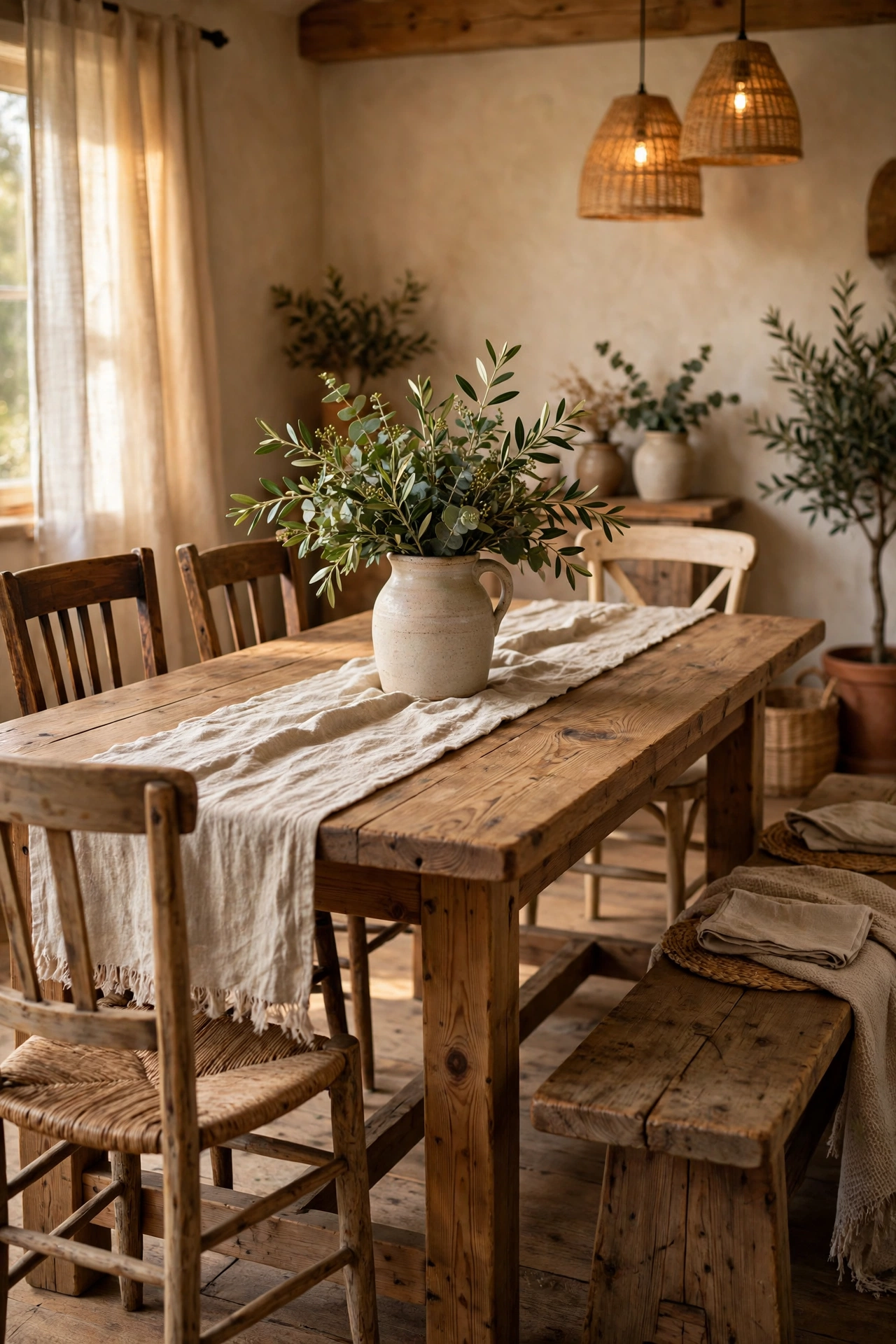
In a cottage, the dining table is rarely just for eating. It is where homework happens, where jam gets made, where friends pull up a chair with a cup of tea. A long farmhouse table in solid wood suits that life better than a delicate glass one ever will. It can take hot plates, homework, craft projects and the odd ring mark, and it only looks better for it.
Choose a table with a thick top and simple turned or square legs, in pine, oak or reclaimed timber. Pair it with chairs that do not match perfectly. Two wooden chairs, a bench on one side and an old armchair at the head is the classic cottage mix, and it seats more people than a matching set. Finish the table with a simple runner, a linen one in natural or checked cotton, and keep the centrepiece low so people can see each other across it.
Placement: Centre the table under a pendant light and leave at least 90 centimetres clear behind each chair so people can pull out comfortably.
Colour: Warm wood, cream linen, stoneware in white or soft grey.
Texture: Solid wood, woven placemats, linen napkins, a ceramic jug of greenery.
Swap: A second-hand pine table sanded back and oiled looks like a new farmhouse table and costs a fraction of the price.
Try this: set the table with a simple runner and one low jug of greenery, then leave it set. A table that is always half-ready invites people to sit down.
7. Cosy Window Seats and Reading Nooks
 Save
Every cottage needs at least one spot made for doing nothing much. A window seat with a thick cushion, a blanket and a small shelf of books turns an ordinary window into the best seat in the house. It is the kind of corner that makes a small room feel generous, because it gives the room a purpose beyond walking through it.
If you have a deep windowsill, a made-to-measure cushion and a couple of square cushions will do the job. If not, a low bench or even a sturdy chest placed under the window works just as well. Add a small wall light or a candle lantern, a basket for blankets underneath, and keep the view clear. The point is comfort, not display, so choose fabrics you can wash and colours that will not show every mark.
Placement: Pick the window with the best light, usually south-facing, and keep the seat free of clutter.
Colour: Cushion covers in a faded stripe or small check, a throw in a deeper tone for contrast.
Texture: Thick cotton cushion, wool throw, a woven basket for books.
Swap: A flat-pack bench with a thick cushion on top and a folded throw reads as a window seat for the cost of one cushion.
Try this: put a small tray on the window seat with a candle and a book. The tray keeps things tidy and signals that this corner is for slowing down.
8. Greenery and Dried Flowers in Every Room
 Save
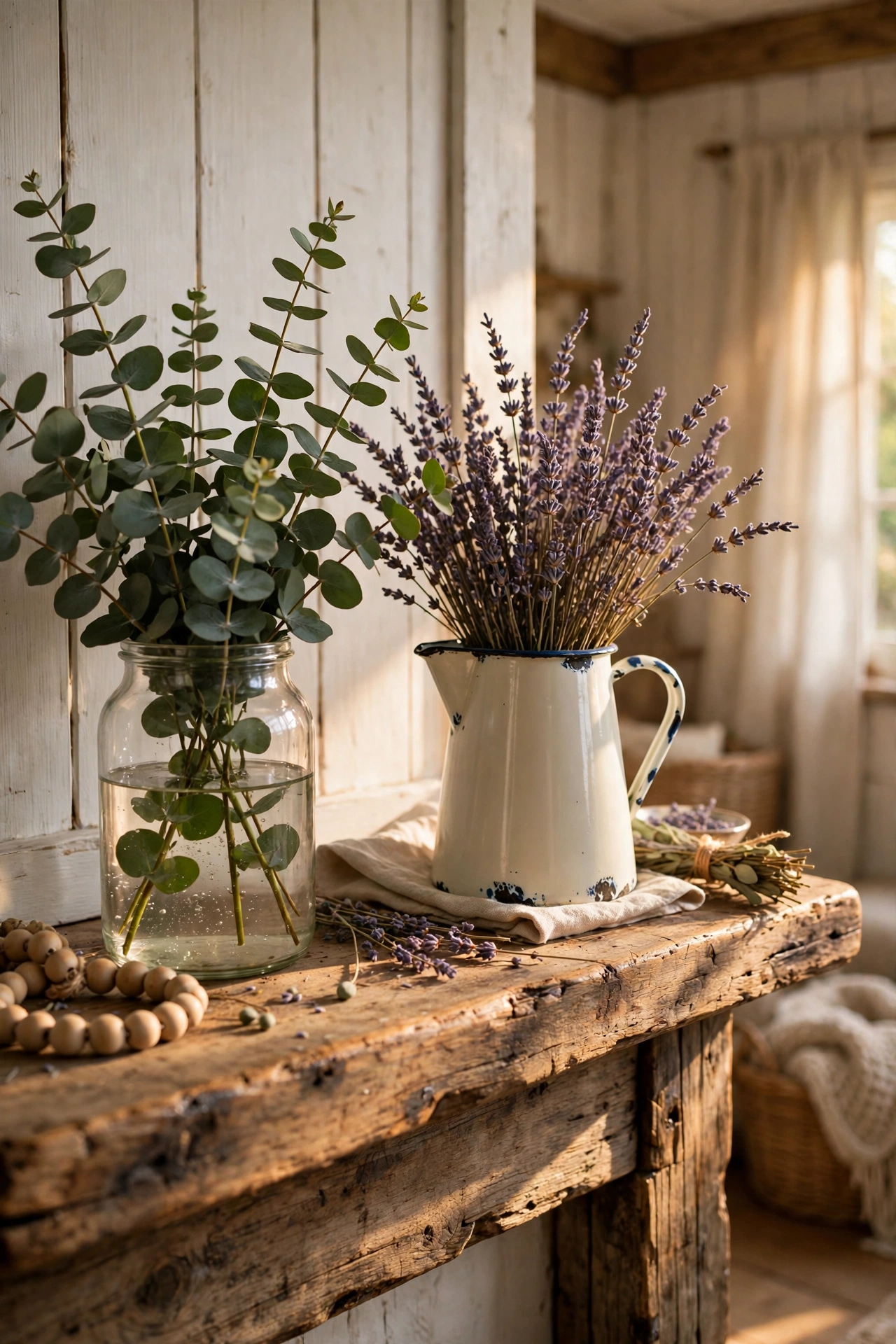
Cottage style and plants belong together. A jug of fresh stems on the kitchen table, a trailing plant on a shelf, a bunch of dried lavender tied with string by the door. Greenery softens the wood, adds a living colour that no paint can match, and costs very little. Dried flowers do the same work in winter, when fresh stems are harder to come by.
Keep it simple and a little wild. A few stems in a glass jar look more cottage than a perfect florist arrangement. Eucalyptus, lavender, rosemary and dried grasses last for weeks and smell wonderful. Place one arrangement in each room, even the bathroom, so the greenery ties the house together. Use old jars, enamel jugs and jam pots as vases. They look better than anything bought for the job.
Placement: One arrangement per room, at eye level where you will notice it, a mantel, a shelf, a bedside table.
Colour: Green against cream and wood, with dried lavender or wheat for a muted accent.
Texture: Rough stems, glass jars, woven baskets, terracotta pots.
Swap: Cuttings from the garden, a neighbour’s rosemary or a bunch of dried grasses from a walk, cost nothing and look completely at home.
Try this: hang a small bunch of dried lavender on the back of a door. It scents the room every time the door moves and costs less than a candle.
Your takeaway: warm white walls, one repeated wood tone, layered textiles, and one vintage anchor per room.
Bringing It All Together
A farmhouse cottage is not a look you buy. It is a feeling you build, one honest piece at a time. Start with the room you spend the most time in and change one thing this weekend, a slipcover, a shelf, a bunch of stems in a jar. Live with it for a week before you change the next thing. Cottage rooms grow slowly, and that slow growth is exactly what makes them feel real.
Keep the palette soft, the wood warm, the textiles layered and the surfaces a little bit lived-in. Leave room for the things that make your house yours, the chipped mug, the old chair, the quilt your grandmother made. Those are the pieces no shop can sell you, and they are the ones that make a farmhouse cottage feel like home.
Frequently Asked Questions
What is the difference between farmhouse and farmhouse cottage style?
Farmhouse style leans clean and modern, with sharp white walls, black accents and matching furniture. Farmhouse cottage style is softer and more lived-in, with whitewashed walls, worn wood, mismatched vintage pieces and layered textiles. The cottage version feels collected over time rather than decorated in one go.
How do I make a small room feel like a farmhouse cottage?
Start with pale walls and one warm wood piece, then add layers rather than furniture. A throw, a cushion and a small rug change a room more than a new sofa. Keep surfaces mostly clear, use a mirror to bounce light, and choose one vintage piece as the anchor so the room feels collected, not cramped.
What colours work best in a farmhouse cottage interior?
Soft, washed-out colours work best. Cream, warm white, sage green, dusty blue, faded rose and soft mustard all suit the style. Keep the base pale and add depth with one darker tone, such as a deep green or a warm walnut, so the room has contrast without feeling heavy.
Can I mix modern furniture with farmhouse cottage decor?
Yes, and you should. A plain modern sofa with a linen slipcover or a simple new table next to an old dresser keeps the room from feeling like a museum. The trick is to keep the colours calm and the lines simple, so old and new pieces sit together without arguing.
How do I decorate a farmhouse cottage on a budget?
Start with paint and textiles, which give the biggest change for the least money. A warm white wall, a washed linen throw and a second-hand pine piece will transform a room. Charity shops, car boot sales and garden cuttings cover the rest, and a room that grows slowly always looks more natural than one bought in a single trip.