
The tree is gone, the garlands are boxed up, and suddenly the house feels a little too quiet. January rooms have a way of looking flat after the holidays, as if all the warmth went into the attic with the ornaments. Most people leave the space bare until spring, living with beige and grey for two months. You do not have to.
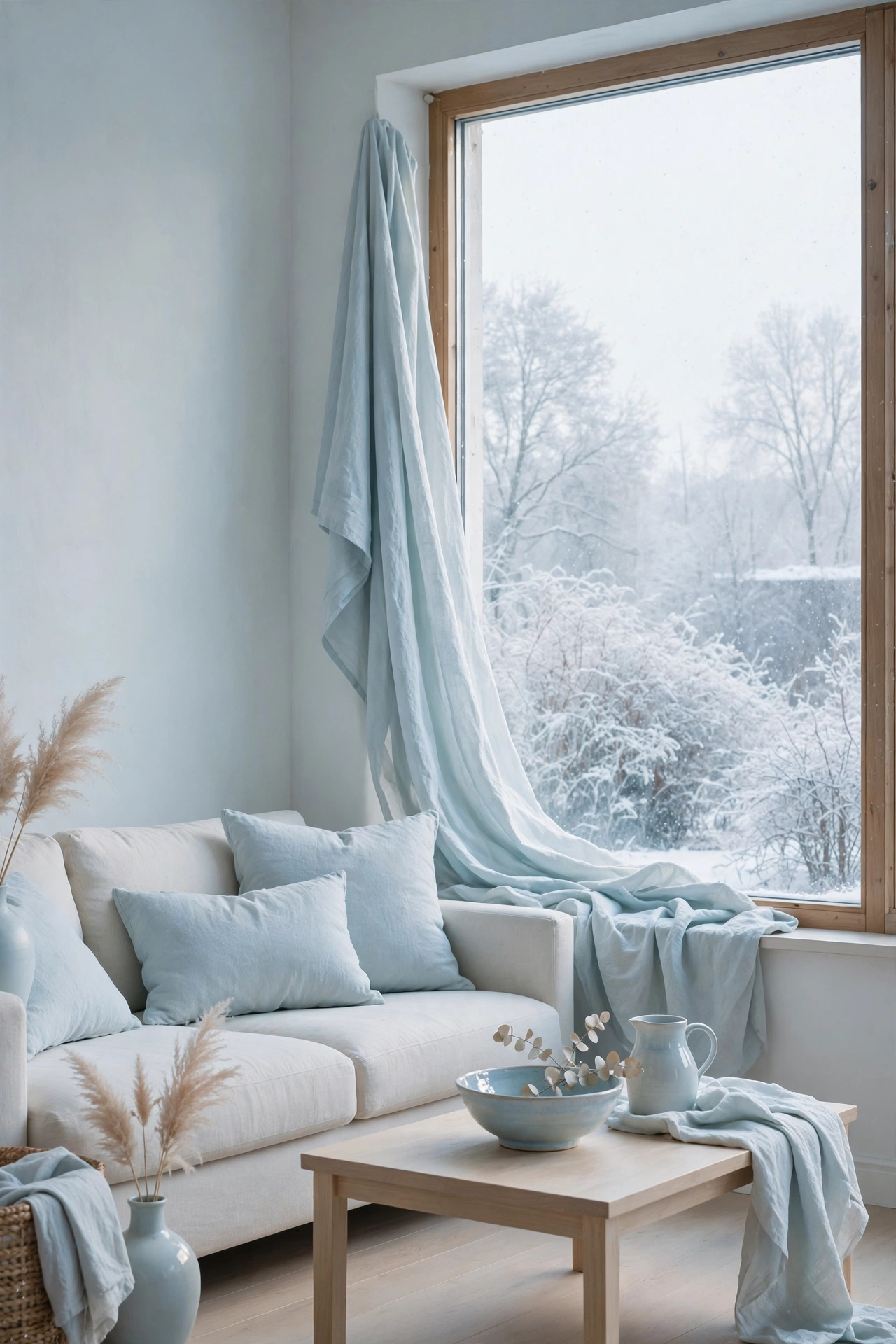
There is a better middle ground between festive overload and total minimalism. Think of the colour of a frozen lake on a clear morning: pale, bright, a little silvery, and calm in a way that deep blue never is. This is the shade that works for January precisely because it belongs to winter. It keeps the house seasonal without keeping it Christmas.
Icy blue decor is really a January reset button. It reflects the weak winter light instead of fighting it, pairs beautifully with the warm neutrals you already own, and asks for nothing expensive. Below is a room-by-room way to bring it in, starting with what you probably have at home.
Why Ice Blue Belongs to January
 Save
December rooms run on saturated colour: deep reds, forest greens, metallic golds. Once those go, anything equally intense feels like too much effort. Ice blue sits at the opposite end of the spectrum. It is light enough to read as a neutral but distinctive enough to feel like a choice, which is exactly what a post-holiday room needs.
It also answers January’s real lighting problem. The sun sits low, the sky stays pale, and north-facing rooms can look dull by two in the afternoon. Dark colours absorb that scarce light; pale cool blue bounces it around. Put a piece of ice-blue linen near a window and watch the corner brighten without a single lamp switched on.
There is a mood argument too. After weeks of visual noise, your eyes genuinely welcome a quieter palette. Cool light blues are associated with calm for a reason, and in a season when most people feel drained, a calm room does quiet work on the people in it.
Let Textiles Do the Heavy Lifting
 Save
Fabric is the fastest way to test ice blue because nothing is permanent. Cushion covers, a throw, a table runner: each one takes seconds to swap and costs little. If the shade does not suit your room, you have lost an afternoon, not a budget.
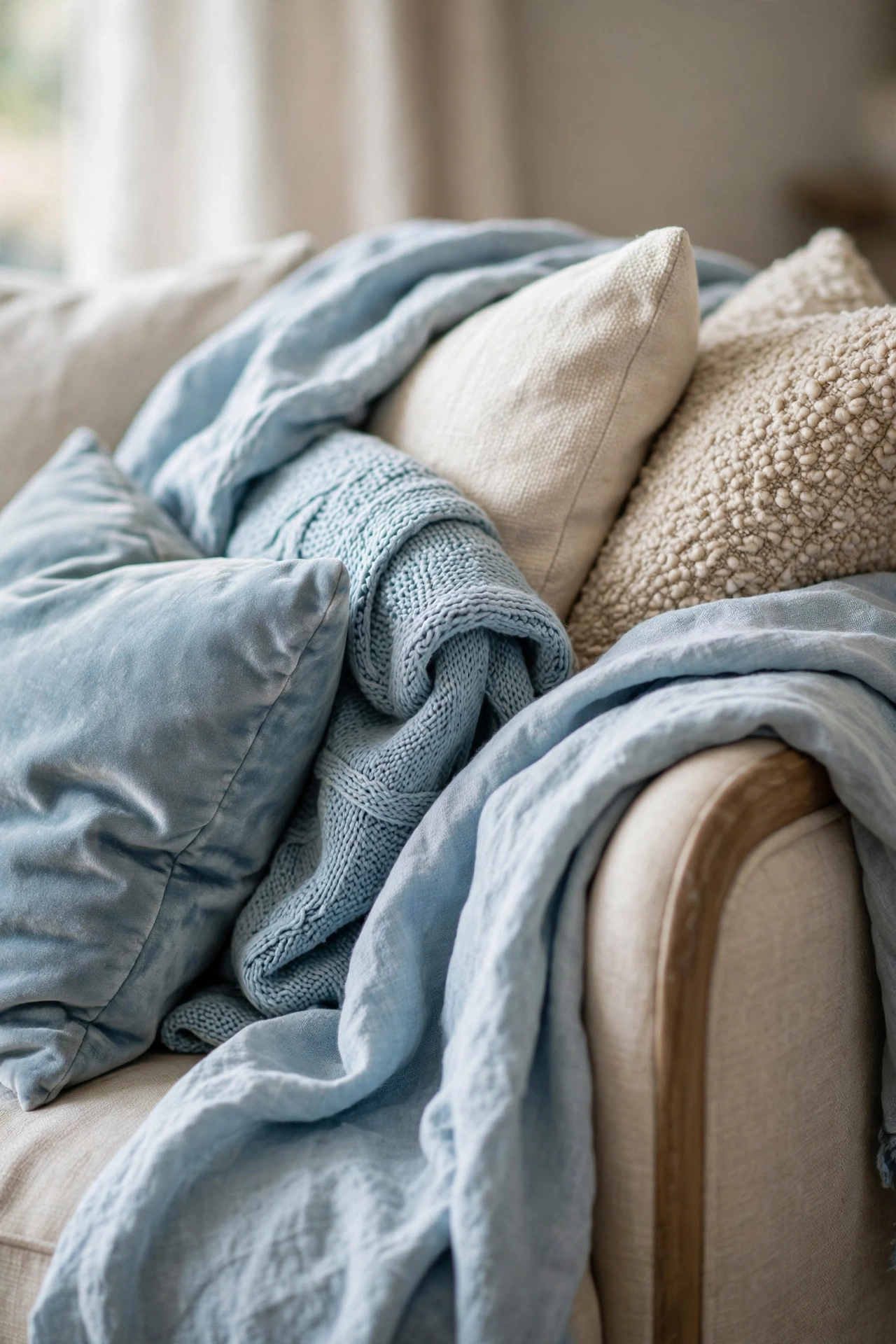
Start with the largest surface first. A throw blanket draped over the sofa arm or folded across the foot of the bed changes the room’s colour temperature instantly. Look for washed linen or a soft cotton knit in a pale, almost-silvery blue. Anything too saturated (think baby blue) or too grey (think stormy slate) misses the January mood. The sweet spot is the colour of ice seen through a window: cool, light, and a little luminous.
Cushions come second, and here mixing is the point. Two ice-blue cushions against warm beige or cream ones read as intentional, while a whole sofa in blue reads as a theme park. Vary the textures: velvet next to linen, knit next to plain weave. Different fabrics catch light differently, so a set of same-colour cushions in different textures looks layered rather than flat.
Do not forget the chair you actually sit in. A single ice-blue cushion on a reading chair or desk chair spreads the palette through the room without a big purchase, and chairs are where a colour gets noticed up close.
Styling tip: wash new linen covers once before putting them on. Fresh linen is stiff and slightly shiny; one wash softens it into the relaxed, crumpled look that makes pale blue feel cosy instead of clinical.
Windows deserve a thought as well. Sheer white curtains with an ice-blue undertone filter winter daylight beautifully, and they cost no more than plain ones. If you already have plain white sheers, they are doing the job already; this is a change to make only when curtains need replacing anyway.
Use Glass and Crystal to Catch Winter Light
 Save
Ice blue is at its best when light passes through it or bounces off it, and nothing proves that like glass. A cluster of pale blue glass vases on a windowsill turns a grey afternoon into a small light show. Mercury glass candle holders, sea-glass fragments in a bowl, a single oversized glass hurricane on the coffee table: these are the pieces that make the palette feel frosty rather than just blue.
You do not need a matching set. In fact, matched sets kill the effect. Three vessels of different heights and slightly different blue tones look collected and real; six identical ones look like a display in a shop. Charity shops and car boot sales are full of blue glass for a pound or two, and older glass often has the cloudy, hand-made quality that new pieces try to imitate.
Budget swap: fill one clear glass vase with water and drop in a few ice-blue glass gems (sold for vases and aquariums) instead of buying coloured glass. From across the room, the tinted water reads as pale blue glass for a fraction of the price.
Candles work the same magic after dark. A tea light inside pale blue glass throws a cool, moonlit glow that flatters a January evening in a way warm amber does not. Keep it to two or three at a time; more than that and the cool light starts to feel icy instead of calm.
If you want to echo this look on the outside of the house too, our guide to winter porch styling after the holidays carries the same frosty palette onto the front step.
Keep It Warm With Wood and Wool
 Save
The most common fear with a cool palette is that the room will feel cold, and it will if blue is left to fend for itself. The fix is always the same: pair every cool surface with something warm. Wood is the easiest partner. A pale blue throw on an oak bench, blue cushions against a walnut headboard, a glass vase on a chunky wooden tray: each warm element gives the blue something to contrast with, and the contrast is what makes both look better.
Wool and other chunky fibres do the thermal work. A thick cream or oatmeal knit throw next to an ice-blue cushion says “warm house” instantly, even if the blue is doing the talking. Sheepskin draped over a dining chair softens the whole corner of a room. This is the same layering instinct behind a good cosy home checklist, just shifted into a cooler palette.
Metallics need a decision. Silver, chrome, and brushed nickel love ice blue; they extend the frosty feeling. Warm metals like brass and copper fight it, so tuck those away until spring unless one small piece matters to you. Nobody is auditing your cutlery drawer, but the pieces at eye level should commit to one temperature or the other.
Plants are the wildcard that saves many blue rooms. Green foliage against pale blue is a naturally beautiful combination, and a houseplant does not care about your palette. Keep your existing plants where they are. A eucalyptus stem in a blue glass vase is January decor at its simplest and best.
Turn the Bedroom Into a January Retreat
 Save
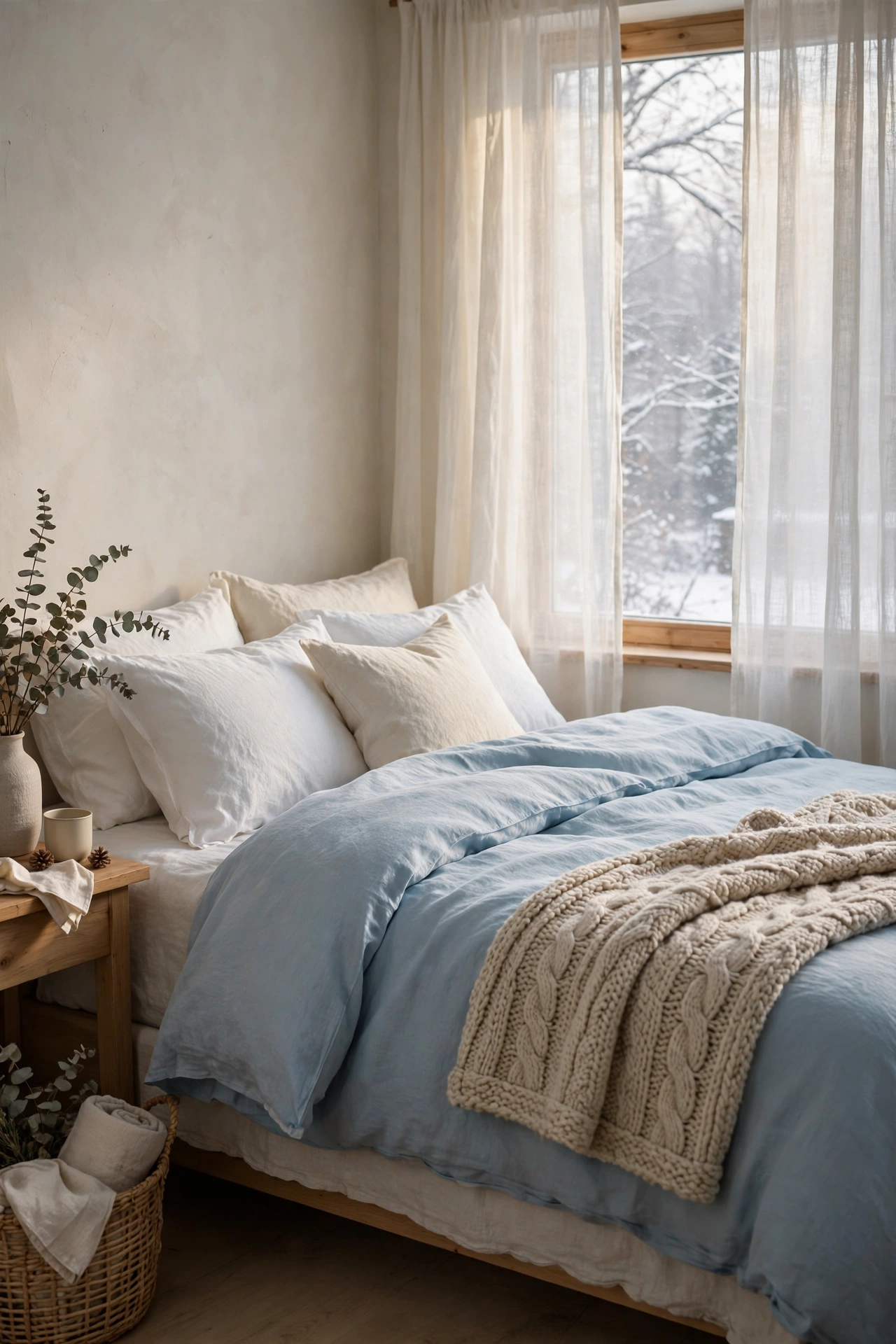
Of all the rooms in the house, the bedroom rewards this palette most. It is where you start and end the day, and a calm, cool room makes both feel slower. This is a bedding project more than a decorating one: swap the duvet cover for ice blue or a pale blue-and-white pattern, add cream pillows in front, and finish with a chunky knit throw across the foot.
Wall colour matters less than people think. You do not need to paint for a seasonal refresh. If your walls are white or warm grey, the bedding does all the work. If they are already a colour, keep the blue textiles lighter than the wall so they read as accents rather than competitors.
Bedside tables are the place for the glass trick on a small scale. One small blue glass vase, one candle, one stack of two books. That is a complete January bedside, and it costs almost nothing. We have covered deeper bedroom layering for the holiday season before, and the same principles apply here: layers, texture, and one quiet colour doing the heavy lifting.
Try this: sleep with the new bedding for three nights before deciding you like it. Colours read differently in lamplight than in a shop, and ice blue in particular shifts between morning grey and evening warmth. Three nights is a fair trial.
Laundry note worth knowing: pale blue bedding shows less wear than white (good news for real life) but can look tired if washed with darks. Wash it on its own or with other lights and it will hold the colour all season.
Start Small: Shelves, Entryways and Tables
 Save
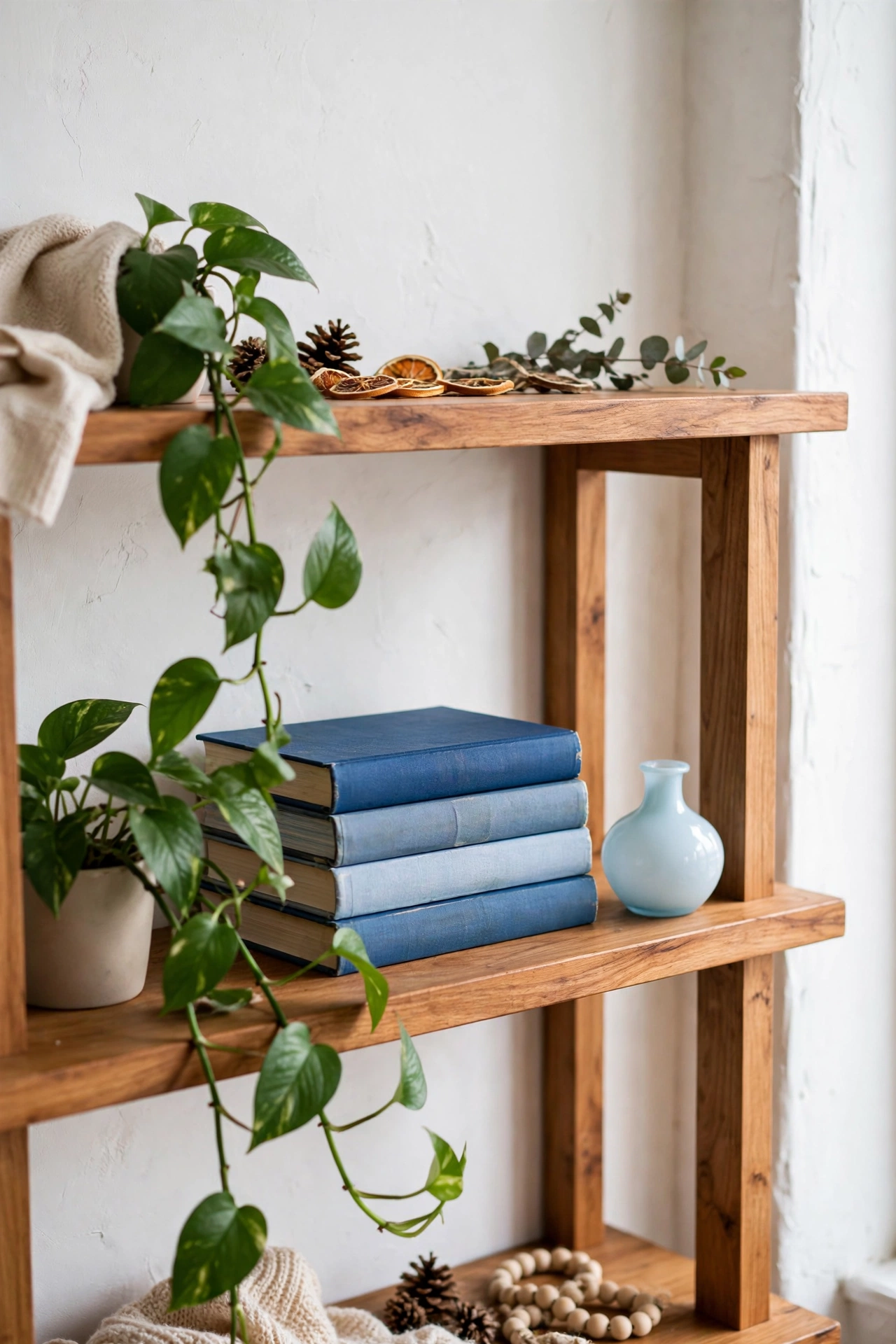
If the whole-house idea feels like too much, start with the surfaces people actually look at. Open shelves are perfect: restyle one shelf with a stack of blue-spined books, a small glass object, and a trailing plant. The rest of the room can stay exactly as it is and the shelf will still read as a deliberate winter moment.
The entryway is the second-best small project. A pale blue runner or a cushion on the hall bench greets everyone with the new season, and entryways are small enough that one or two pieces complete the job. Add a glass bowl for keys and the practical becomes the decorative.
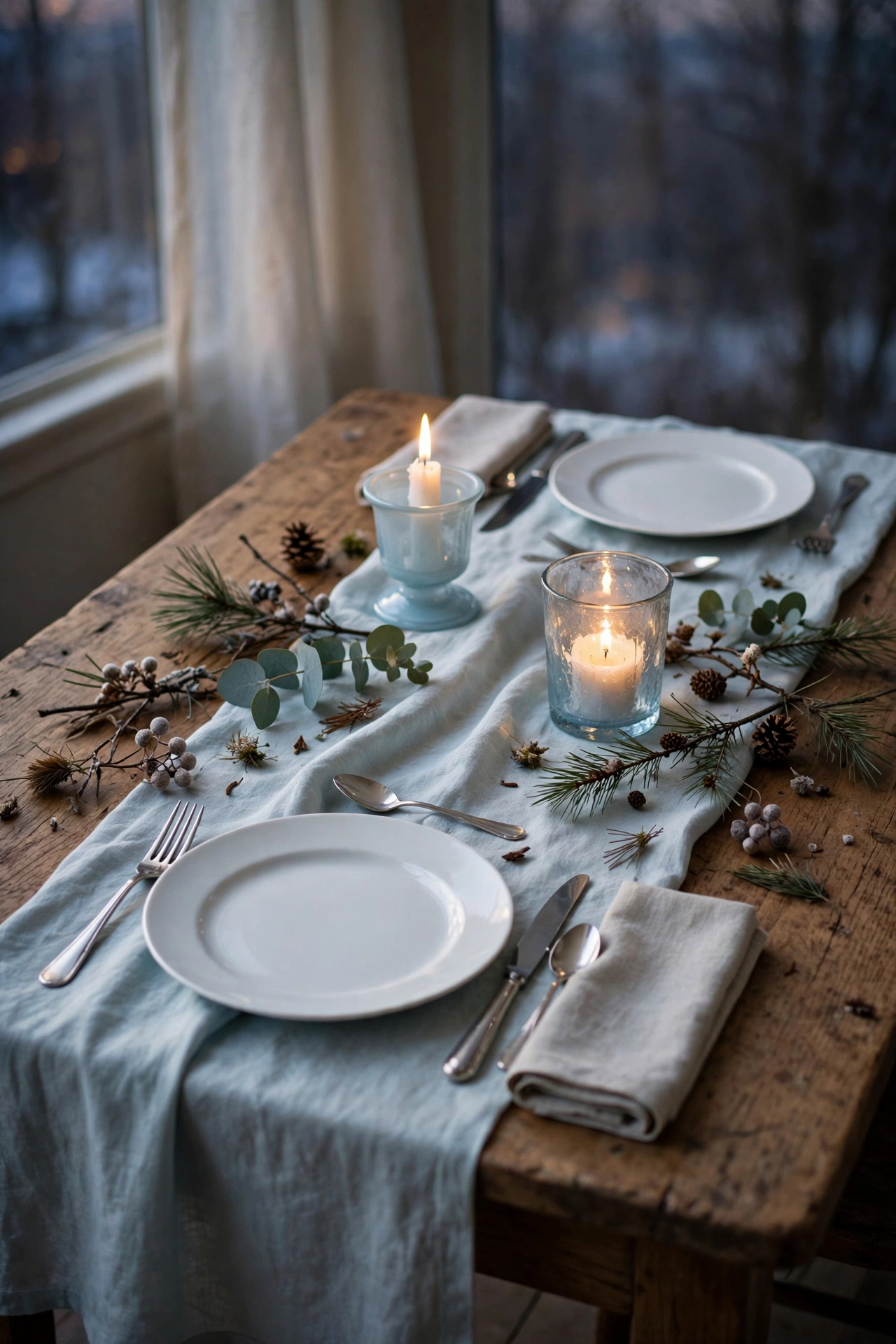
Dining tables get the simplest treatment of all. A pale blue table runner with plain white or cream place settings looks fresh for weeks, and it doubles as a base for candles on dark evenings. If you already own a neutral winter table setup, a runner is genuinely all you need to shift it into January.
Styling tip: when restyling a single shelf or table, take a photo from the doorway before and after. The camera shows proportions and gaps your eyes miss when you are standing close, and it takes ten seconds.
Bathrooms count too and are often forgotten. A set of pale blue hand towels and a small glass dish for soap is a complete bathroom refresh for the price of a takeaway. Guests notice bathroom details more than almost anything else in the house.
What to Avoid With Ice Blue
 Save
The palette is forgiving, but a few mistakes undo it quickly. First, do not mix ice blue with navy or royal blue in the same sightline. The deep blue swallows the pale one and the frosty effect collapses. If you love navy, keep it in a different room.
Second, resist the urge to add silver glitter, tinsel, or anything that reads as Christmas leftover. Ice blue works in January precisely because it is not Christmas. Snowflake motifs, frosted branches, and glittery garlands drag the look back into December. Clean shapes and plain textures keep it current.
Third, watch the grey creep. Pale blue and grey sit next to each other in many paint ranges, and a “blue” cushion that is actually grey will make the room feel dull rather than crisp. Hold fabrics up to a window before committing: true ice blue glows a little in daylight, grey just sits there.
Finally, do not paint a wall ice blue unless you are certain. Wall paint commits the whole room, and cool pale blue on a north-facing wall can read as cold rather than calm. Textiles, glass, and small objects give you 90 percent of the effect with none of the risk. Paint is a spring decision, made in good light.
Bringing It All Together
January does not need to be a decorating dead zone. A handful of ice-blue textiles, a few pieces of glass that catch the light, and one warm material in every room are enough to carry the house through to spring. The palette costs little, reverses easily, and suits the light you actually have. Start with one throw or one shelf, live with it for a few days, and let the calm build from there.
Frequently Asked Questions
Does ice blue decor make a room feel cold?
Only if it stands alone. Every cool surface needs a warm partner nearby: wood furniture, wool throws, cream cushions, or warm white lamplight. Pair the blue with at least one warm texture in each sightline and the room reads as calm, not chilly.
What colours go with icy blue in winter?
Warm whites, cream, oatmeal, and soft beige are the natural partners. Natural wood tones work in any finish, and a little green from houseplants keeps the palette alive. Keep warm metals like brass minimal and let silver or chrome handle the metallic notes.
Can I use ice blue decor if my walls are warm-coloured?
Yes, and it often looks better than on white walls. Pale blue textiles against warm beige or greige walls create a contrast that makes both colours look richer. Just keep the blue lighter than the wall colour so it reads as an accent.
Is ice blue too Christmassy for January?
Not on its own. It reads as Christmas only when combined with Christmas cues like snowflakes, glitter, red and green, or frosted branches. Used with plain textures and everyday objects, it is simply a winter colour that happens to suit January’s light.
How much should I spend on a January refresh?
Very little. A throw, two cushion covers, and a charity-shop glass vase can change a room for the price of a modest grocery shop. This is a seasonal layer, not a renovation: buy pieces you can reuse next January or fold into your everyday palette.
1 thought