A kids room has the hardest job of any room in the house. It has to be a bedroom, a playroom, a homework spot and a hideaway, sometimes all before lunch. Toys pile up faster than you can put them away, drawings appear on walls you only just painted, and the dinosaur phase that felt permanent in March is ancient history by September.
Parents feel the pressure from both sides. You want a room that feels fun and personal, not a showroom. But you also know how quickly children change their minds, and nobody wants to repaint a whole room every time a favourite colour changes. The trick is to build the room in layers: a calm, sturdy base that lasts for years, with playful pieces on top that you can swap without starting over.
These kids room decor ideas follow exactly that logic. Each one is practical enough to survive real family life, playful enough that your child will actually love spending time there, and flexible enough to grow from toddler years into the early school years without a full redo. Pick two or three to start, and let the room grow with your child.
Quick Tips Before You Start
- Start with the big pieces. Bed, storage and a desk matter more than wall art. Get those right first and the rest falls into place.
- Keep the walls calm. A soft neutral base means you can change the whole mood with bedding and cushions instead of paint.
- Leave one wall mostly blank. Children fill empty space with their own ideas, and a blank wall is an invitation, not a gap.
- Let your child pick one thing. A lamp, a duvet cover, a poster. One real choice makes the room feel like theirs.
1. A Bed That Grows Up With Them
 Save
Before you pick a single piece, measure the room as it is. Note the open floor space, since it decides the bed type and how much play area survives. Note the ceiling height, since a mid-sleeper needs room to sit up in bed. Note where the window sits, since the bed stays away from draughts and morning light while the desk wants daylight. Those three checks shape every choice below.
The bed is the biggest piece in the room and the one you will replace least often, so it deserves the most thought. A simple wooden frame in a natural finish works at four and still works at nine. Skip the car-shaped bed and the princess canopy frame. They photograph well for about six months, then they become the thing your child is embarrassed about when friends come over.
A standard single bed with a solid headboard is the safest bet. If floor space is tight, a cabin bed with drawers underneath pulls double duty, and a mid-sleeper with a desk or reading den below it can turn a small room into two zones without a single extra square metre. Just check the ceiling height first and make sure your child can sit up in bed without bumping their head.
Match the bed to the floor space and ceiling height before you buy.
| Room | Bed to pick | Why it works |
|---|---|---|
| Plenty of floor space | A standard single with a solid headboard | The safest bet, working from age four to nine |
| Tight on floor space | A cabin bed with drawers underneath | Pulls double duty with no extra floor taken |
| A small room needing two zones | A mid-sleeper with a desk or den below | Turns one small room into two zones |
Placement: Put the headboard against the longest wall, away from the window, so draughts and morning light do not wake them early. Colour: Keep the frame wood-toned or white, and let the bedding carry the personality. Texture: A washable cotton duvet cover in a pattern they love, layered over a plain fitted sheet, is easy to change and easy to wash. Swap: When tastes change, swap the duvet and a couple of cushions. The bed stays, the look moves on.
Styling tip: A slim bedside shelf or a small wall-mounted ledge beats a bulky nightstand in a small room. It holds a book, a water bottle and a night light, and it leaves the floor clear for play.
2. One Wall That Does the Talking
 Save
Every kids room needs one moment of wow, and one feature wall is the easiest way to get it without overwhelming the space. The trick is to pick a single wall, usually the one behind the bed, and let it carry all the pattern and colour while the other three stay calm.
Peel-and-stick wallpaper is made for this job. It goes up in an afternoon, it peels off cleanly when the phase passes, and it comes in every pattern a child could want, from soft rainbows and woodland animals to bold stripes and stars. If you are renting or you just do not want to commit, it is the lowest-risk way to try a big pattern. Our guide to peel-and-stick wallpaper walks through renter-friendly styles that look far more expensive than they are.
Placement: The wall behind the bed is the natural choice, since it frames the room from the doorway. Colour: Pick a pattern with a white or pale background so the room still feels bright. Texture: A matte paper finish reads calmer than glossy vinyl, and it photographs better too. Swap: When the pattern runs its course, peel it off in strips and start again. No sanding, no repainting.
Budget swap: If wallpaper feels like too much, paint a single wide stripe or a simple arch shape behind the bed in a soft colour. A tester pot and a roll of masking tape cost almost nothing, and an arch frames the bed like a headboard.
3. Storage They Can Actually Reach
 Save
Most kids room mess is not a discipline problem. It is a storage problem. If the toy box lid is heavy, the shelf is too high and the bins have no labels, tidying up is a chore even adults would avoid. Storage that sits at your child’s height changes the whole dynamic, because putting things away becomes something they can actually do on their own.
Low open cubbies are the workhorse here. A simple cube shelf at knee height holds baskets for building blocks, dolls, cars and craft supplies, and your child can see everything at a glance. Add picture labels on the front of each basket, a drawing of blocks on the block basket, a crayon on the art basket, so even a child who cannot read yet knows where things live.
Test it first: ask your child to put three toys away in the new baskets without help. If they can reach every basket and read every picture label, the heights are right. If they stretch for the top row, move those baskets down a shelf. If a basket stays empty week after week, its label or spot needs a rethink.
Placement: Keep the cubbies along one wall, not scattered around the room, so tidy-up time has a single destination. Colour: Natural wood or white baskets keep the room calm, and a couple of coloured bins add fun without visual noise. Texture: Woven seagrass or cotton canvas baskets soften the look and survive being dragged across the floor. Swap: As interests change, relabel the baskets and rotate the contents. The furniture never moves.
Designer note: Keep one basket empty on purpose. It becomes the landing spot for whatever is mid-game, so half-finished projects do not end up on the floor or the bed.
4. A Reading Nook They Will Actually Use
 Save
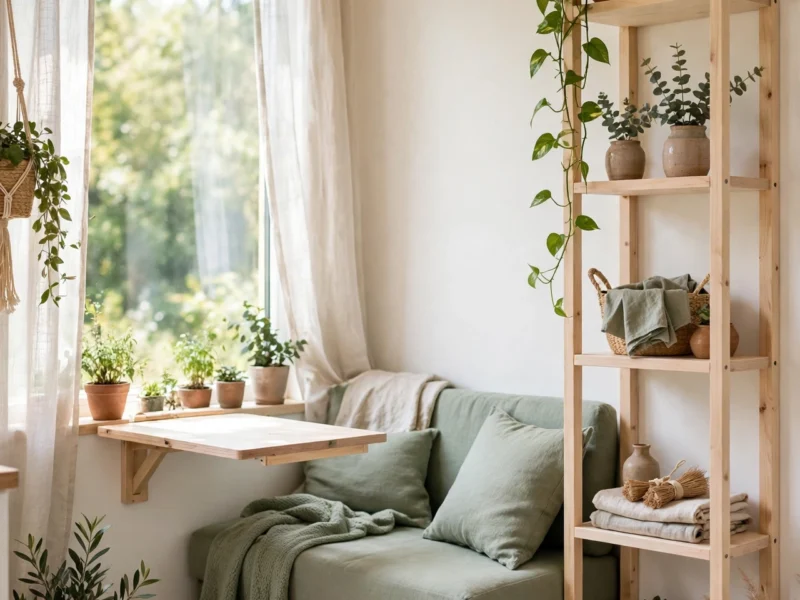
Children read more when the reading spot feels like a treat rather than a task. A corner with a soft cushion, a small shelf of books at eye level and a warm light can turn ten minutes of reading into a habit, and it costs far less than most parents expect.
You do not need a built-in window seat. A large floor cushion or a small beanbag in a corner, a low forward-facing book shelf where covers face out instead of spines, and a clip-on or battery night light are enough. Forward-facing shelves matter more than people think. Children choose books by their covers, and a row of spines is invisible to a five-year-old.
Placement: A quiet corner away from the toy storage works best, so the nook feels separate from play. Colour: Soft, warm tones help here, a cream cushion, a sage throw, a wooden shelf. Texture: Layer a sheepskin-style rug or a thick cotton mat under the cushion so the floor feels inviting even in winter. Swap: Rotate the books every few weeks and the nook feels new again without spending a penny.
Try this: Hang a simple string of fairy lights along the shelf or around the corner. They give the nook a gentle glow at bedtime and make it the cosiest corner in the house.
5. A Display Wall That Changes With Them
 Save
Children make a lot of art, and most of it ends up in a drawer because there is nowhere good to put it. A display wall solves that, and it also gives the room a personal touch no shop-bought poster ever can. The key is a system that lets you swap pieces in seconds, because a display that is hard to change is a display that stays empty.
Picture ledges are the simplest option. Two slim wooden ledges on one wall hold framed drawings, postcards and small treasures, and you can slide a new piece in without nails or tape. A cork board or a magnetic board works too, and both invite your child to curate their own display. For bigger projects, a couple of clip frames let you rotate artwork weekly, and older children love choosing what goes up.
Placement: Hang ledges at your child’s eye level, not yours, so they can reach the display themselves. Colour: Keep frames in one finish, natural wood or white, so a mix of colourful art still looks pulled together. Texture: Mix paper art with a small woven hanging or a fabric bunting for warmth. Swap: Change one piece a week and the wall stays fresh all year.
Styling tip: Save the best pieces in a simple art folder or portfolio box. At the end of the year you will have a record of how their drawing changed, and that folder becomes a keepsake in itself. If you enjoy making art for the walls yourself, our DIY canvas wall art ideas show how to make abstract pieces that look far more polished than their price tag suggests.
6. Colour You Can Swap, Not Repaint
 Save
Nothing dates a kids room faster than a wall colour chosen for a phase. The bright pink walls that thrilled a four-year-old feel babyish to the same child at seven, and repainting a whole room every two years is nobody’s idea of a good weekend. The answer is a calm base with colour that lives in things you can change.
Paint the walls a warm white, a pale sage or a soft greige, then bring the fun in through bedding, curtains, cushions and a rug. A duvet cover in their current favourite colour, a couple of cushions in a bold pattern and a rug with a playful border give the room all the personality it needs. When the favourite colour changes, you swap textiles, not paint.
Placement: Put the strongest colour on the bed, since it is the biggest soft surface in the room. Colour: One main accent plus one smaller supporting colour keeps the room lively without turning chaotic. Texture: Mix a smooth cotton duvet with a chunky knit throw and a soft velvet cushion for depth. Swap: Keep a spare duvet set in a different colourway so a change takes ten minutes.
Budget swap: A single painted lampshade, a coloured curtain tie-back or a new cushion cover can shift the whole palette for the price of a takeaway. Small changes read bigger than you expect in a small room.
7. A Homework Corner That Doubles as Craft HQ
 Save
Somewhere between five and seven, the room needs a proper place to sit and concentrate. A homework corner does not have to be big, but it does have to be theirs, with a chair that fits, a light that works and supplies within reach. Done well, it also becomes the craft table, the Lego building station and the place where birthday cards get made.
A simple desk against a wall, a chair with a footrest if their feet do not reach the floor, and a desk lamp with warm light are the basics. Above the desk, a pinboard or a slim shelf holds the timetable, a few favourite photos and the art supplies they reach for most. Keep a pot of pencils, a pair of scissors and a glue stick on the desk itself, and store the rest in a drawer or a basket underneath.
Placement: Near a window for daylight, but facing into the room rather than out of it, so the view does not steal their focus. Colour: A light wood desk with white or cream accessories keeps the corner bright and calm. Texture: A cork pinboard adds warmth and a place to pin work in progress. Swap: As schoolwork grows, swap the craft pots for a small drawer unit and the corner grows with them.
Try this: Add a small wall clock above the desk. It helps older children manage their own homework time, and it quietly teaches them to watch the clock without you hovering.
8. Soft Underfoot, Safe Everywhere
 Save
The final layer is the one you feel rather than see. A kids room floor takes a beating: bare feet, building blocks, spilled paint water and the occasional tumble. A good rug and a few safety basics make the room comfortable and give you peace of mind at the same time.
Choose a rug that is big enough for play, not just decoration. It should reach under the front legs of the bed and stretch far enough for a building-block city. Low-pile wool or a washable cotton rug is the practical choice, since both cope with spills and both feel warm underfoot. A non-slip pad underneath stops it sliding across hard floors.
Placement: Centre the rug in the open floor area, not pushed against a wall, so it defines the play zone. Colour: A pattern with a few colours hides crumbs and marks far better than a plain pale rug. Texture: A soft low pile is kind to knees and easy to vacuum. Swap: Roll it up and swap it seasonally, a lighter cotton rug in summer, a thicker wool one in winter.
Designer note: Anchor tall furniture to the wall, keep cords out of reach, and fit blackout curtains for better sleep. If you are moving up from a baby’s room, our circus nursery ideas show how to carry a playful theme forward as your child grows. And when December arrives, a few small touches from our whimsical kids’ Christmas trees guide turn the same room festive without a single permanent change.
Your takeaway: calm base, one feature wall, storage at child height, and colour in things you can swap.
Bringing It All Together
A great kids room is not finished in a weekend. It grows in stages, and that is the point. Start with the bed and the storage, add one wall with personality, then let the smaller layers, the reading nook, the display wall, the homework corner, arrive as your child needs them. The room will not look like a magazine spread on day one, and it does not have to. It has to work on a rainy Tuesday, hold a hundred small treasures, and still feel fresh when your child walks in after school.
Keep the base calm, let the playful pieces do the talking, and leave room for your child to make their mark. That is how a room stops being just a bedroom and becomes their favourite place in the house.
Frequently Asked Questions
How do I decorate a kids room on a budget?
Start with what you already own and spend only where it matters most. A calm coat of paint, a washable rug and a set of labelled baskets transform a room for very little money. Add one feature wall with peel-and-stick wallpaper or a painted arch, then swap bedding and cushions when you want a fresh look. Handmade art and second-hand furniture keep costs down and add character.
What colours work best for a kids room?
Soft neutrals on the walls, warm white, pale sage or light greige, with colour in the textiles and accessories. This keeps the room bright and gives you freedom to change the palette as your child grows. One main accent colour plus a smaller supporting colour is plenty. Avoid painting whole walls in very bright colours, since they overwhelm a small room and date quickly.
How can I make a small kids room feel bigger?
Keep furniture low and against the walls so the centre of the floor stays open. A cabin bed or mid-sleeper with storage underneath frees up space, and a mirror opposite the window bounces light around the room. Stick to one feature wall, use pale colours on the other walls, and keep toys in closed baskets so the room reads tidy even when it is not.
When should a kids room change from toddler style to big-kid style?
Most children are ready somewhere between four and six, when they start school and want a room that feels grown-up. You do not need a full redo. Swap the toddler bed for a single, lower the art display to their height, add a small desk, and let them choose new bedding. Keep one or two favourite pieces from the younger years so the change feels exciting rather than sudden.
How do I keep a kids room tidy?
Give everything a home at your child’s height and keep the system simple. Low cubbies with picture-labelled baskets, one empty basket for works in progress, and a five-minute tidy-up before bedtime do more than any storage system alone. Rotate toys every few weeks so fewer things are out at once, and let your child help choose what stays on display.