There is a particular kind of kitchen light you notice only when you miss it. Late afternoon, the sun sits low over the sink, and instead of washing across the worktop it hits bare glass, bounces straight into your eyes, and leaves the room feeling like an empty showroom rather than the place where dinner actually happens.
Most of us answer that glare by reaching for a blind. It solves the light problem and introduces a new one: the window becomes a flat, sealed rectangle, the kitchen loses its view of the garden or the street, and the whole room feels a degree more clinical. It is the right practical choice made in the wrong spirit.
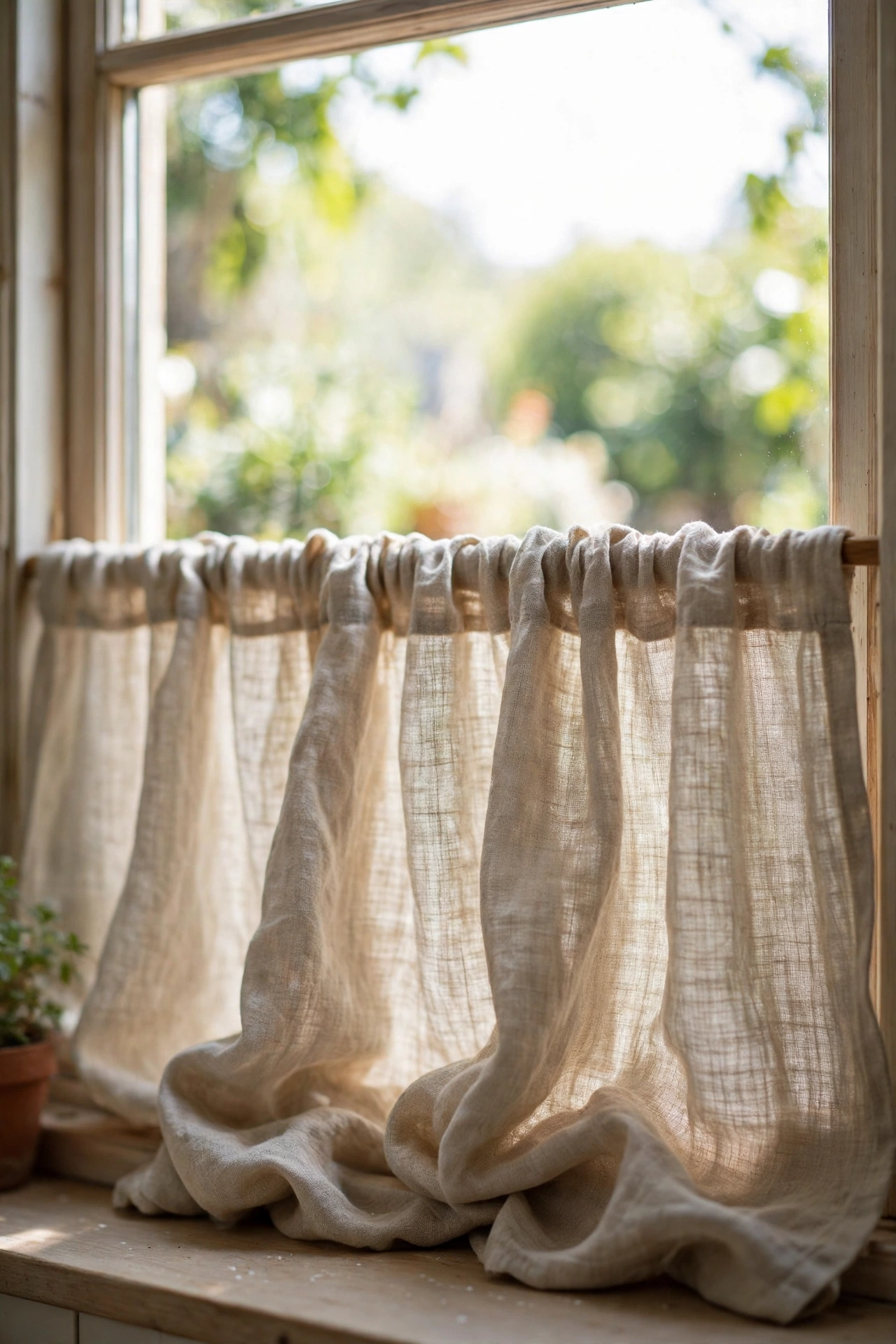
Cafe curtains fix both problems at once. They cover only the lower half of the window, so they soften harsh light and block the sightline from the pavement while leaving the top half open to sky, leaves, and whatever is going on outside. This is the half-window kitchen trend that keeps showing up in renovated kitchens right now, and it earns its popularity the honest way: it looks good because it solves real problems.
The Half Window Solves the Kitchen’s Two Biggest Problems
 Save
Kitchens ask more of a window than any other room does. You stand at the sink or the hob staring straight out for long stretches, which means a window treatment has to handle glare without stealing your view. It also has to survive steam, grease, and the occasional enthusiastic splash of pasta water.
A full-length curtain absorbs all of that moisture like a sponge and goes faintly grey at the hem within a year. A blind seals the top half of the glass, which is exactly the half you want open. Cafe curtains sit in the sweet spot: the fabric hangs below the midline of the glass, so the steamy air rising from a kettle passes above the top edge rather than through the weave.
The half-window placement also answers the privacy question kitchens actually have. From the street, nobody needs to see your drying rack and your half-finished dishwasher unload. But you still want daylight pouring in from above, and you still want to see the clouds. A cafe curtain’s top edge, usually hung at half or two-thirds of the window height, puts a soft barrier right at pavement-sightline level while the open upper glass keeps the room bright.
Styling tip: stand on the pavement or in your garden and note exactly where your eye lands on the glass. Hang the curtain rod two inches above that line. You get privacy without losing a single inch of sky you could have kept.
Getting the Length and Hang Point Right
 Save
This is where cafe curtains either look deliberate or look like a mistake, so take five minutes with a tape measure before you buy or cut anything.
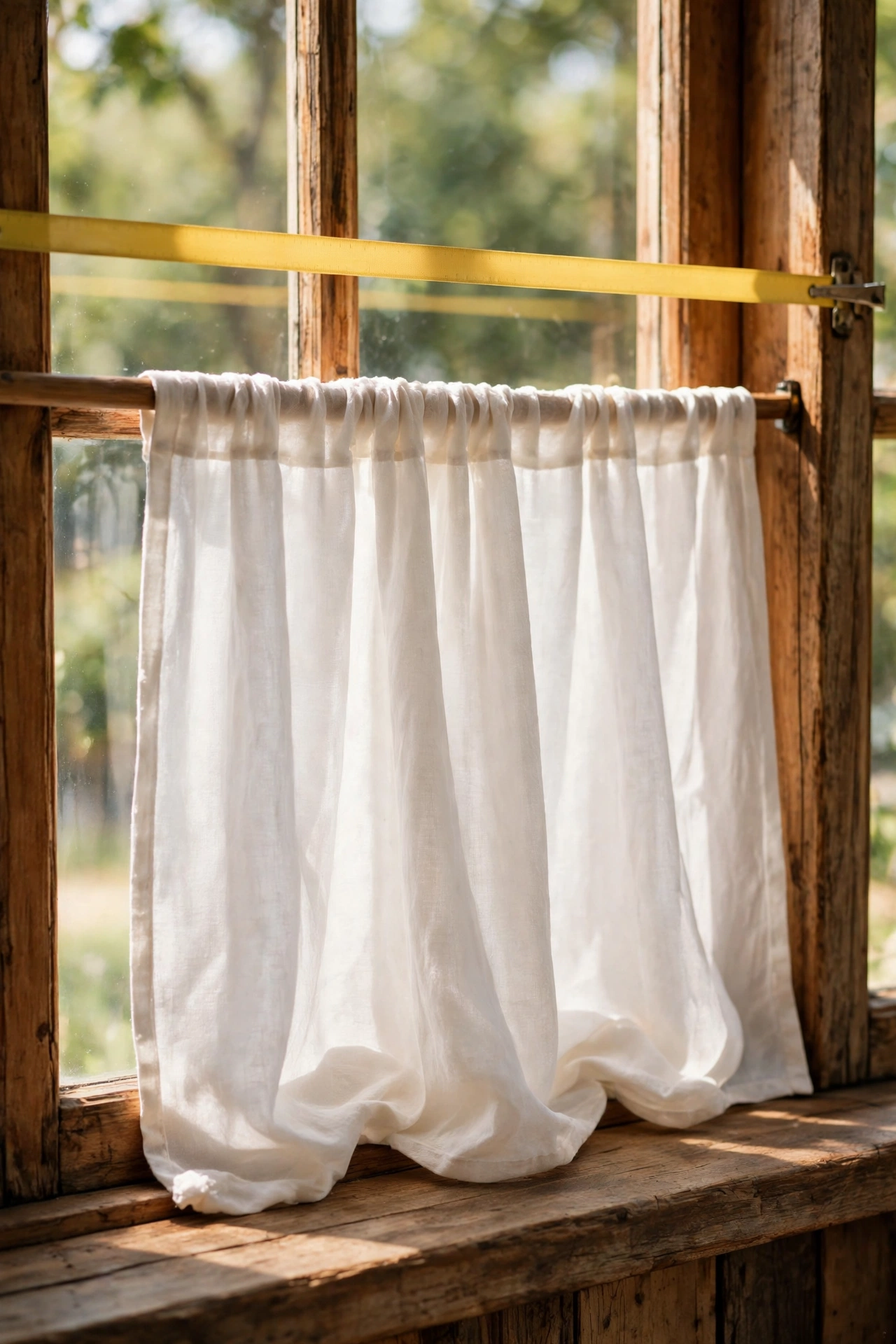
The rod goes across the middle of the window, not the middle of the wall. Measure the glass (not the frame) from the top of the opening to the bottom, and mark the halfway point. In a standard kitchen window that sits above a worktop, the half line usually lands somewhere around chest height from the floor, which feels natural for a sightline block.
Then decide how the hem should land. The classic cafe curtain hem kisses the window sill, stopping right where the sill begins. If your sill is narrow or your window sits directly above a worktop with no real sill to speak of, let the hem end one inch above the worktop. Never let it puddle. A cafe curtain that pools on a sill collects crumbs, catches drips, and looks like it was hung by someone who gave up.
The drop from rod to hem is typically 18 to 24 inches on a standard kitchen window. Measure twice, because cafe curtains look wrong the moment they are even slightly off. A hem that floats four inches above the sill reads as a measuring error; one that grazes the sill reads as a decision.
Try this: cut a strip of newspaper to the drop length you are considering and tape it across the window. Live with it for a day. You will know by evening whether the height feels right, and it costs nothing to change your mind.
Fabrics That Can Handle a Working Kitchen
 Save
A cafe curtain is not decorative fabric near a window. It is fabric near a window that sits three feet from a hob. Choose accordingly, and the curtain stays pretty for years instead of tired for months.
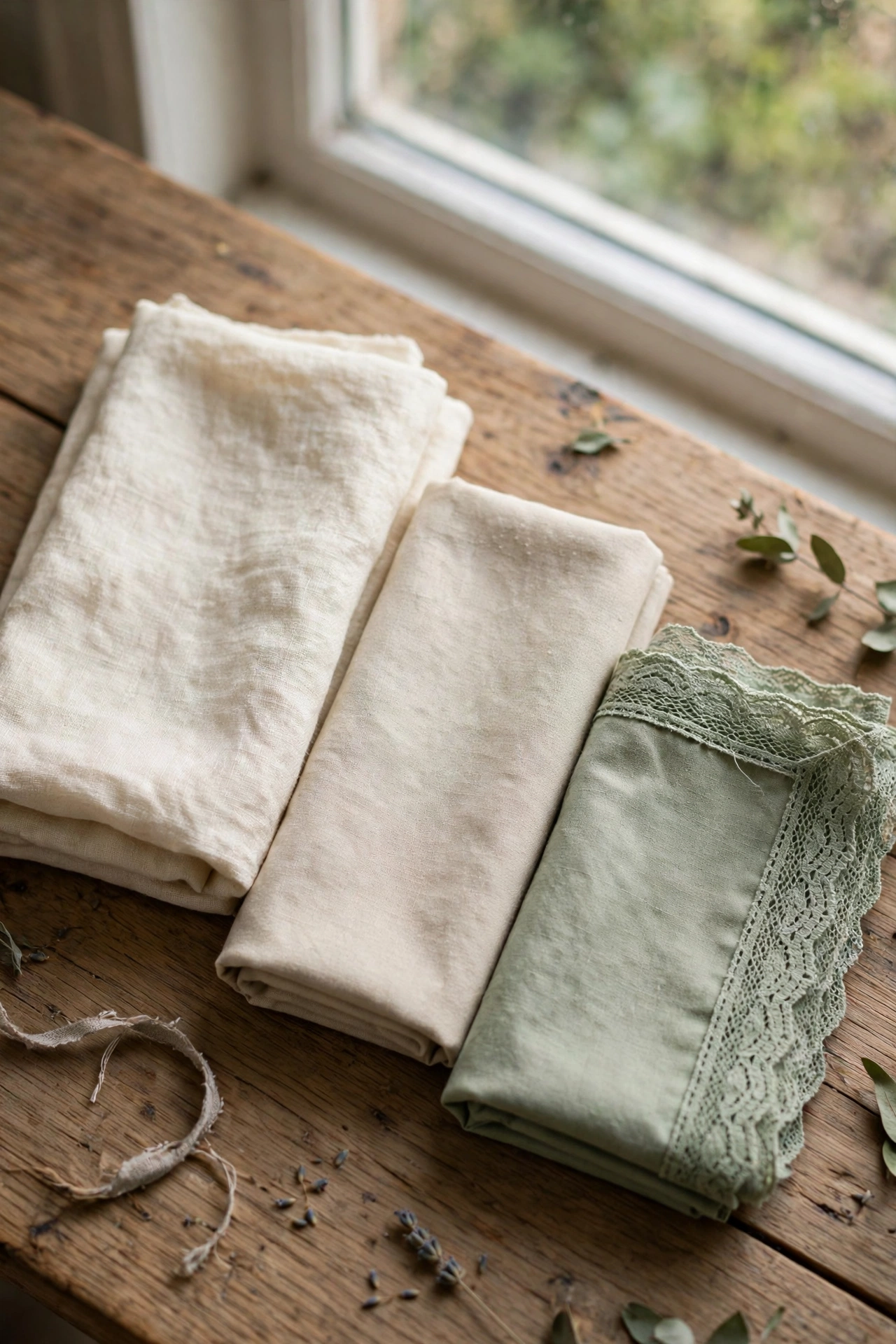
Linen and linen blends are the gold standard here. Linen breathes, so steam passes through it instead of condensing on it, and its natural slubs hide a multitude of sins: a splash mark that would show on flat cotton disappears into linen’s texture. Washed linen, the soft pre-shrunk kind, holds up to regular machine washing and looks better with every wash. It also wrinkles beautifully, which matters when the trend you are chasing has a deliberately relaxed, not-precious feel.
Cotton works if you pick the right weight. A midweight cotton, like a canvas or a tightly woven duck, shrugs off light splashes and irons flat when you want it crisp. Avoid anything gauzy or sheer unless it is a topper layer: pure voile collects grease film fast, and once that film sets into a sheer weave, no amount of washing fully lifts it.
For households that cook hard, a cotton-poly blend is the practical choice nobody wants to admit they love. It resists stains better than pure natural fibre, needs no ironing, and survives a hot wash when someone fries bacon with too much enthusiasm. The fabric snobs will never know.
What to avoid
Skip velvet, silk, and anything described as dry-clean-only. They look wonderful in a dining room and tragic in a kitchen. Skip very dark colours too, not because they look bad but because every splash of flour and every mist of cooking oil shows on them within a week.
| Fabric | Best for | Washability | Grease resistance |
|---|---|---|---|
| Washed linen | Everyday kitchens, relaxed style | Machine wash, improves with age | Good (texture hides marks) |
| Midweight cotton | Crisp traditional looks | Machine wash, may need ironing | Moderate |
| Cotton-poly blend | Busy family kitchens | Machine wash hot, no iron | Very good |
| Cotton lace | Cottage and vintage kitchens | Machine wash gentle | Fair (wash often) |
Patterns and Colours That Flatter the Space
 Save
Because a cafe curtain covers less glass than any other curtain, the fabric you choose is doing concentrated visual work. Pick with intent.
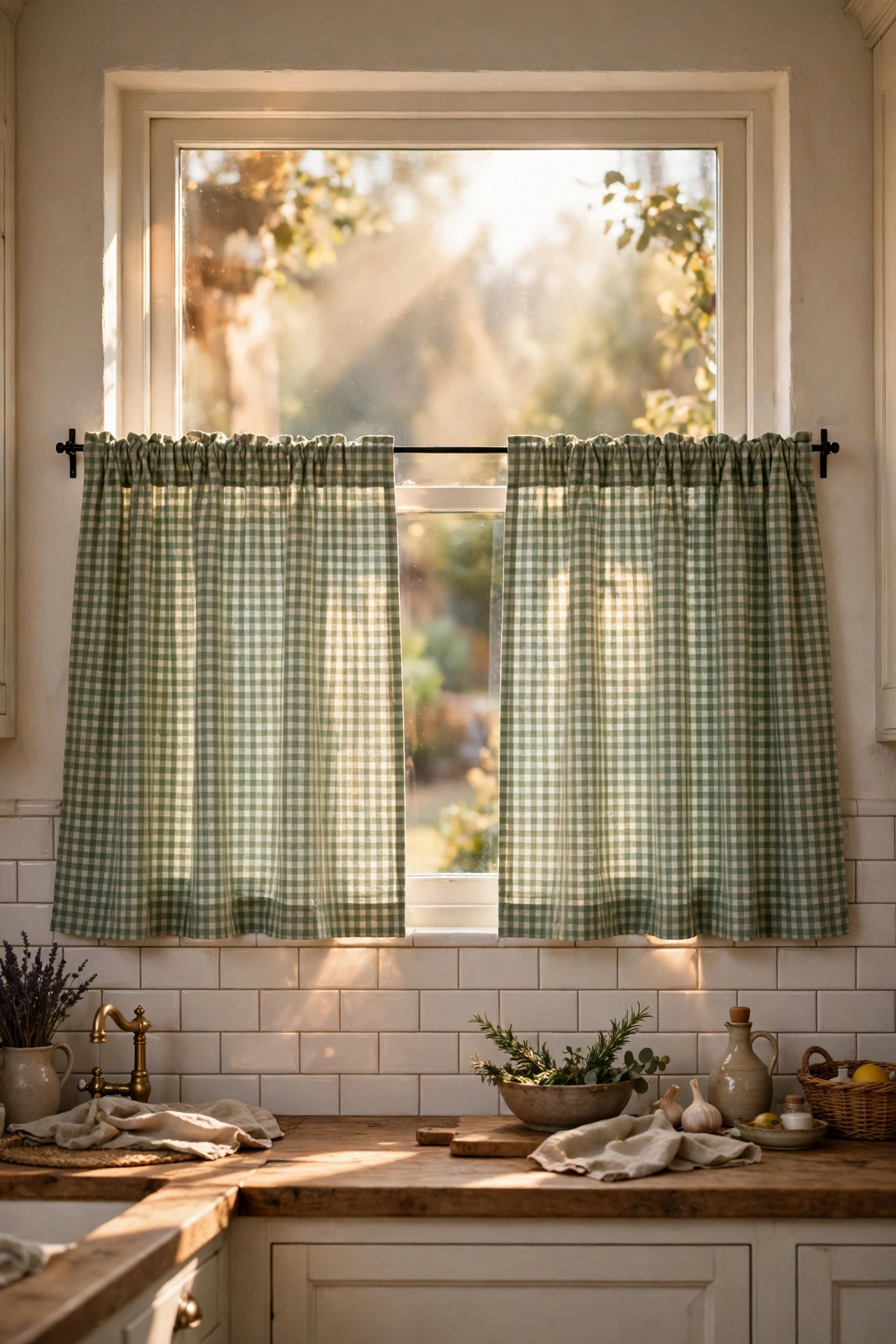
Gingham is the pattern most associated with this look, and it earns its place: a red or sage gingham check in a small to medium scale gives a kitchen an instant farmhouse pulse without any other changes. It photographs beautifully for a reason. But gingham is also the safe choice, and kitchens with strong personalities can do better.
Stripes, especially narrow ticking stripes in blue-and-white or green-and-white, read fresher and slightly more tailored than checks. They also have a visual trick built in: vertical stripes make a short window look taller, which balances the horizontal emphasis of the half-window rod. In a small galley kitchen, that small illusion matters.
If your kitchen is already busy, tiled, patterned, or full of open shelving, go plain. A plain oatmeal linen or a soft white cotton lets the curtain do its job quietly, and it keeps the room from tipping into visual noise. Plain does not mean boring here; it means the texture of the weave and the quality of the light become the interest instead of a print.
Colour-wise, take your cue from the fixed elements. Pick up the grout colour, the worktop tone, or the undertone of your cabinets. A curtain that echoes an existing warm beige or cool grey looks integrated in a way that a curtain chosen in isolation never does. And if you want a seasonal swap, this is the easiest one in the house: two cafe panels take up almost no storage space, so keep a christmas kitchen decor set folded in a drawer for December and swap them in for the season.
Hanging Them Without a Fight
 Save
Cafe curtains hang from one of three setups, and the choice affects both the look and how easily you can take them down to wash.
A tension rod is the renter’s best friend. It wedges inside the window reveal with no screws, and it works perfectly when the window has a deep enough reveal to hold one. Measure the inside width and buy the rod that spans your range; a rod that is straining at full extension will sag in the middle within weeks. Tension rods suit light to midweight fabrics only.
A slim cafe rod mounted on the frame or the wall on either side of the glass is the permanent solution. Look for rods marketed as sash rods or cafe rods: they are thinner than standard curtain rods, usually half an inch to five-eighths, which is proportionate to the small scale of the panel. Mount the brackets so the rod sits inside the window frame if you have the depth; mounted outside the frame it reads heavier.
For a softer look, skip the rod entirely and hang the panels on a length of jute twine or a thin brass S-hook rail. The informal hang suits linen and cottage styles, and it makes taking the curtains down for washing a ten-second job. This is the method I would choose in my own kitchen: the easier a curtain is to remove, the more often it actually gets washed.
The fullness rule
Cafe curtains need more fullness than you think. A panel that spans the window flat looks like a napkin on a rod. Aim for the fabric width to be one and a half to two times the rod width when gathered, so the folds fall naturally and the light filters through the curves rather than blasting through a single flat layer. If your panels look thin, add a second pair rather than stretching one pair across. Fullness is what makes the look.
Styling the Window Around Them
 Save
A cafe curtain is only half the window story. What sits on the sill and what flanks the glass completes the picture, and this is where the kitchen starts to feel styled rather than merely dressed.
Keep the sill edited. One or two things, not a collection: a small potted herb in a terracotta pot, a stack of two pretty bowls, or a single candle. The open top half of the window is the star here, so the sill should support, not compete. If you have a deep sill above the sink, resist the urge to line the whole thing with jars. Grease dust settles on everything at sill level, and six dusty jars are not a styling choice.
If your window sits near your home coffee station, tie the two together. A cafe curtain in a warm natural linen over a coffee corner makes the whole arrangement feel like a tiny cafe, which is exactly the association the name promises. A small tray on the worktop beneath the window with your cups and a jar of beans turns a corner of the kitchen into a destination rather than a pass-through.
Plants love this setup. The open upper glass gives them the light they want, and a trailing pothos or a small fern on the sill gets the best seat in the house. Just keep leaves clear of the curtain fabric, because soil and damp leaves will stain linen over time.
Budget swap: if new curtains are not in the budget this month, hem a pair of thrifted linen napkins or a charity-shop tablecloth into panels. The scale of cafe curtains is so small that you need far less fabric than a normal curtain, which makes them the cheapest curtain project in the house.
Bringing It All Together
The half-window kitchen trend endures because it is honest decorating. It does not ask you to choose between light and privacy, between a view and a finished look, or between practicality and prettiness. It gives you all of them, for the price of two small panels and a slim rod.
Start with the measurement, choose a fabric that forgives your cooking habits, and hang it with enough fullness to look generous. The rest, the sill styling, the seasonal swap, the little cafe corner, follows naturally once the window itself feels right. And if your curtains happen to be a vintage-inspired lace, echoing the doilies your grandmother kept, so much the better: some trends are just good ideas coming back around.
Frequently Asked Questions
Do cafe curtains actually give you privacy?
Yes, at the level that matters in a kitchen. Hung at half-window height, they block the sightline from the pavement or a neighbour’s ground floor, which is where casual overlooking comes from. They will not stop anyone standing on a ladder or looking down from a tall building, but that is not the problem they are solving.
What is the standard drop for a cafe curtain?
Most finished cafe panels measure 18 to 24 inches from rod to hem, sized to cover the lower half of a standard window. Always measure your own window rather than trusting the standard: a panel that is right for your glass is right, whatever the number on the packet says.
Can you use cafe curtains on a window without a deep reveal?
Yes. Mount a slim cafe rod on the window frame itself or on the wall just outside the frame. If you cannot drill, a tension rod needs only a shallow reveal, usually an inch or more of flat surface on each side. The no-drill options are genuinely good now, not a compromise.
How often should kitchen cafe curtains be washed?
Every two to three months for an average kitchen, monthly if you fry often or the window sits close to the hob. Linen and cotton-poly blends go straight in the machine. The small size of the panels means washing them is a minor chore, which is half the point: a curtain you will actually wash beats a beautiful one you will not.
Do cafe curtains work in a modern kitchen?
They do, as long as you keep the fabric modern. Plain linen in white, oatmeal, or charcoal on a slim black or brass rod looks entirely at home in a contemporary kitchen. The silhouette is traditional, but the material and the hardware decide the style. Stripes in particular bridge the gap beautifully.