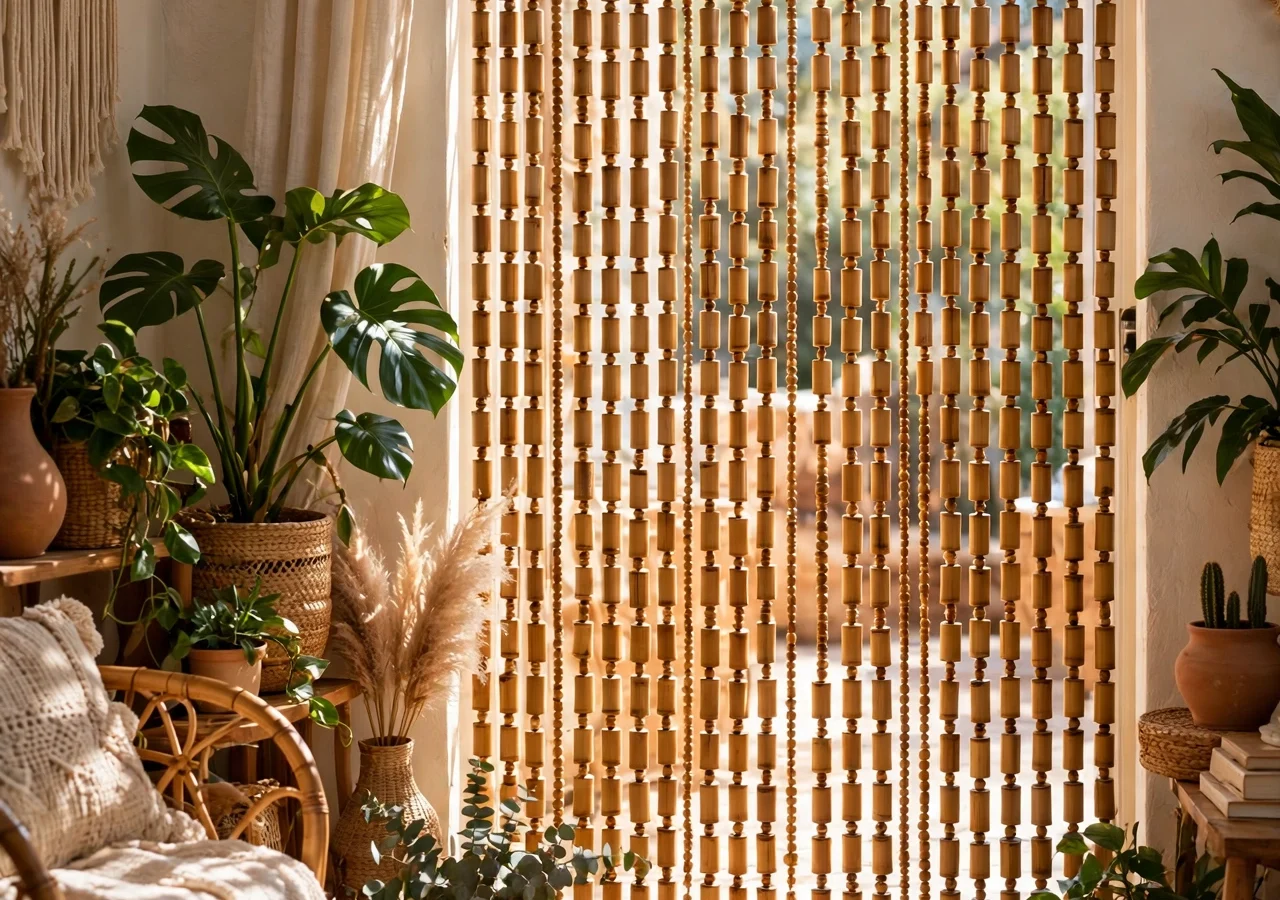
Walk through a bamboo bead curtain and something changes. The light softens, the sound dulls a little, and the room on the other side feels like a separate place even though no wall went up. There is a reason this old decorating trick keeps coming back: it is cheap, it moves, and it makes a space feel layered in a way flat paint and plain drywall never will.
The problem is that most people hang one the way they remember it from a grandparent’s hallway, all tangled strands and dusty beads, and then wonder why the room looks dated instead of charming. A bead curtain only works when the beads, the colour, and the placement are chosen with a bit of care. Get those right and it stops being a retro novelty and starts being a genuine styling tool.
Bamboo beaded curtains are having a proper moment again, driven by the same wave of natural materials, woven texture, and relaxed boho warmth that has carried rattan, jute, and limewash paint through the last few years. Whether you want a soft doorway divide, a flexible room screen, or simply a textural detail in a corner that feels flat, here is how to do it well.
Why Bamboo Beads Still Belong in a Modern Room
 Save
A bead curtain is doing three jobs at once. It defines a boundary without blocking light, it adds texture where walls and furniture are flat, and it moves, which gives a room a sense of life that static decor cannot fake. In open-plan flats and studio apartments, that kind of soft zoning matters: you can mark the edge of a sleeping corner or a work nook without a single screw, landlord argument, or bulky shelving unit.
Bamboo earns its spot over plastic because of how it looks in real light. The beads have natural variation in tone, little grain marks, and a warmth that photographs and reads as handmade rather than mass-produced. A plastic bead curtain reflects light hard and reads cheap from across the room; bamboo absorbs it and glows, especially backlit. If you have ever loved the look of natural rattan pieces in a room, you will respond to bamboo beads for the same reason: both bring an organic, sun-warmed texture that softens modern box rooms.
There is also a practical case. Beads breathe. Unlike a fabric curtain they let air circulate, so they work in warm climates, in doorways between rooms with different heating, and in kitchens where a fabric panel would trap cooking smells. They are light enough to hang on tension rods and cheap enough to replace if a strand breaks. Styling tip: stand in the doorway or opening you are dressing and look at what the beads will frame on the other side. If the view beyond is cluttered, the curtain will only blur it, not hide it. Beads soften; they do not conceal.
The trick is restraint. One well-placed curtain in the right colour reads as intentional design. Bead curtains in three doorways at once reads as a theme party. Start with a single opening and live with it for a week before deciding whether the idea deserves a second.
Doorway Hangs: The Classic Look, Done Properly
 Save
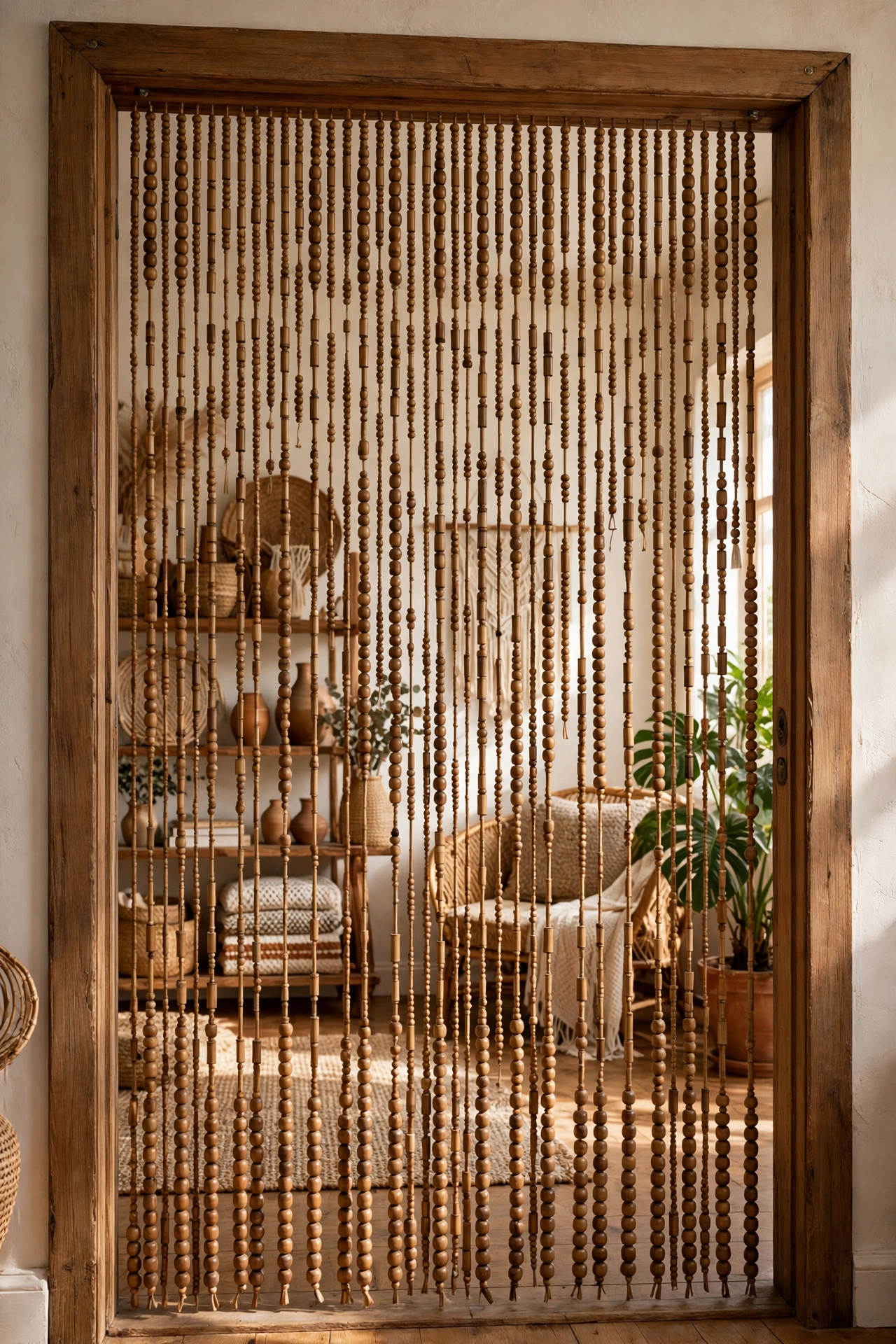
The doorway is where most bamboo bead curtains land, and it is also where they fail most often, usually because the curtain is too narrow for the opening. A bead curtain that covers only the middle of a doorframe looks like a half-finished project, strings pushed aside so people can pass. The fix is simple: the curtain should span the full width of the frame, with a few centimetres of overlap on each side. Measure the inside of the frame, then buy or build to that width, not the width of the person walking through.
Length matters just as much. Beads that stop mid-shin leave an awkward gap at the bottom; beads that pool on the floor collect dust and get stepped on. Aim for the strands to end about two to three centimetres above the floor. If the curtain is too long, the simplest fix is a strong wooden dowel rod run across the top inside the frame to raise the hanging point, or a shorter track mount. If it is too short, a valance strip of matching beads across the top fills the gap and looks deliberate.
Doorway beads also need enough strands to feel full. Cheap curtains ship with wide spacing that leaves the doorway visibly bare, so the effect reads thin and drafty. A good rule: you should not be able to see a clear person-shaped hole through the curtain at rest. Look for strand counts in the listing, or buy two of the same curtain and hang them on a double rod, one slightly in front of the other, for double density. The overlapping rows catch the light at different angles and look far more expensive than a single thin panel.
Budget swap: two identical budget bamboo curtains hung on parallel tension rods usually cost less than one premium panel and give a fuller, more dimensional finish. It is the oldest decorator trick in this category and it works every time.
Bamboo Beads as Room Dividers
 Save
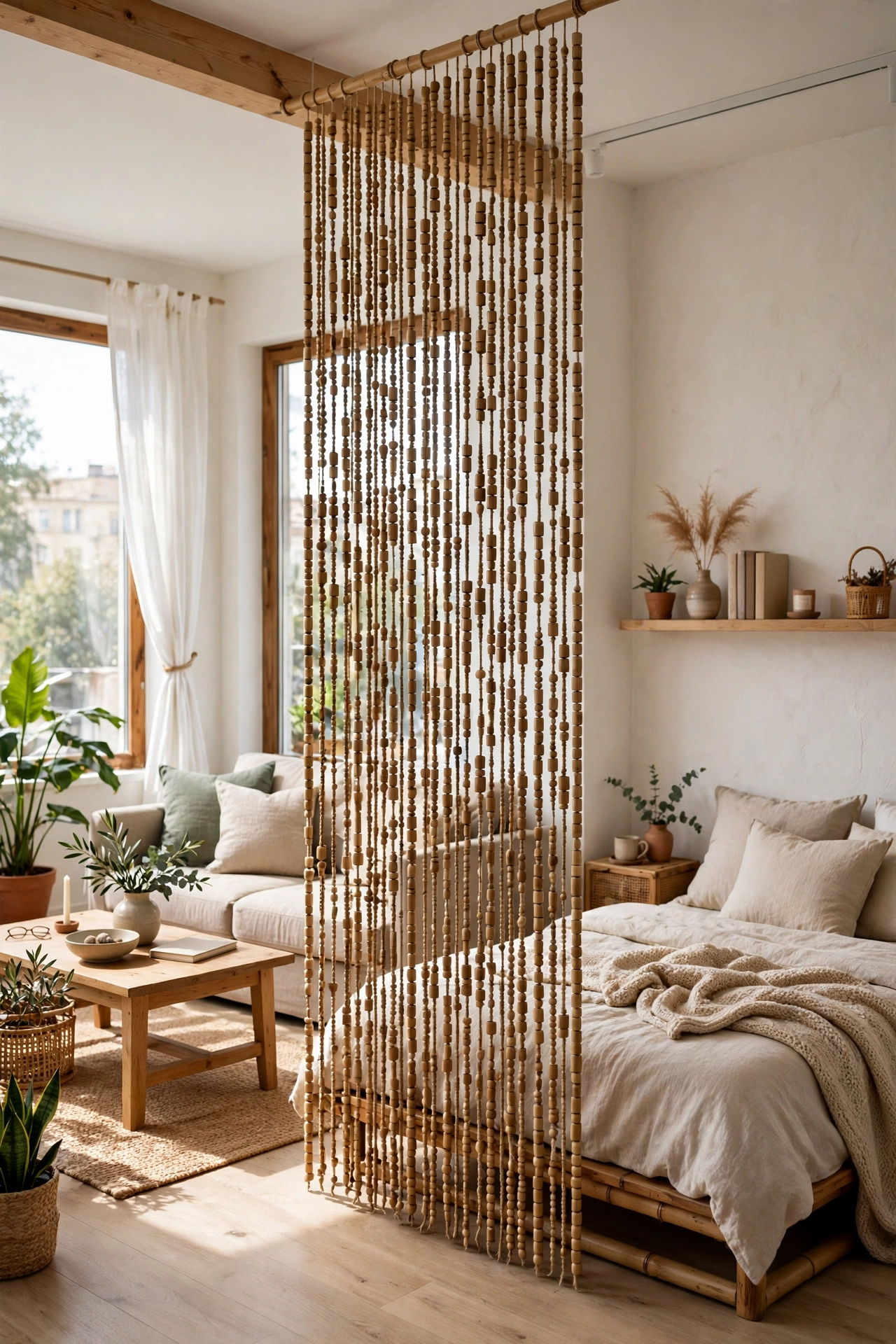
Use bead curtains as a room divider and they become something more ambitious: a flexible wall. They suit spaces where you want separation without commitment: a studio flat’s sleeping corner, a small home office nook carved out of a living room, a rental dining area that shares space with the sofa. Because beads move, the divider feels light rather than heavy; it marks territory while keeping the room feeling open and airy.
The hanging method changes when the divider is freestanding rather than set in a frame. Doorway openings give you walls on three sides to work with; a mid-room divider needs a ceiling or a frame. Ceiling tracks are the cleanest option: a slim track screwed or adhered to the ceiling, with the strands hanging in a straight plane. For renters, a tall freestanding tension setup or a ceiling-mounted shower-style rod between two high points can work, though long spans sag without a centre support.
Placement is everything. A divider that cuts a room exactly in half usually looks like a mistake; a divider that sits off-centre, protecting a small zone while the rest of the room stays open, reads as intentional. Angle matters too. Straight across the room feels rigid. A gentle curve of strands, wider at one end, can follow the natural flow of the space. Let the curtain land where the light does something interesting: a window backlighting the beads from the side creates long moving shadows that do half the decorating for you.
Density matters even more for dividers than for doorways, because there is no frame to hide thin edges. Buy wide enough, overlap if needed, and weight the bottom strands slightly. A thin bamboo dowel threaded through the bottom of each strand keeps the plane straight and stops the curtain from billowing every time the heating kicks on. Try this: hang the divider so it stops short of one wall by 40 to 60 centimetres. The gap keeps the room breathable, gives you a walkway that does not force everyone to push through beads, and makes the curtain look like a deliberate screen rather than a wall substitute.
Picking the Right Beads, Colours, and Weave
 Save
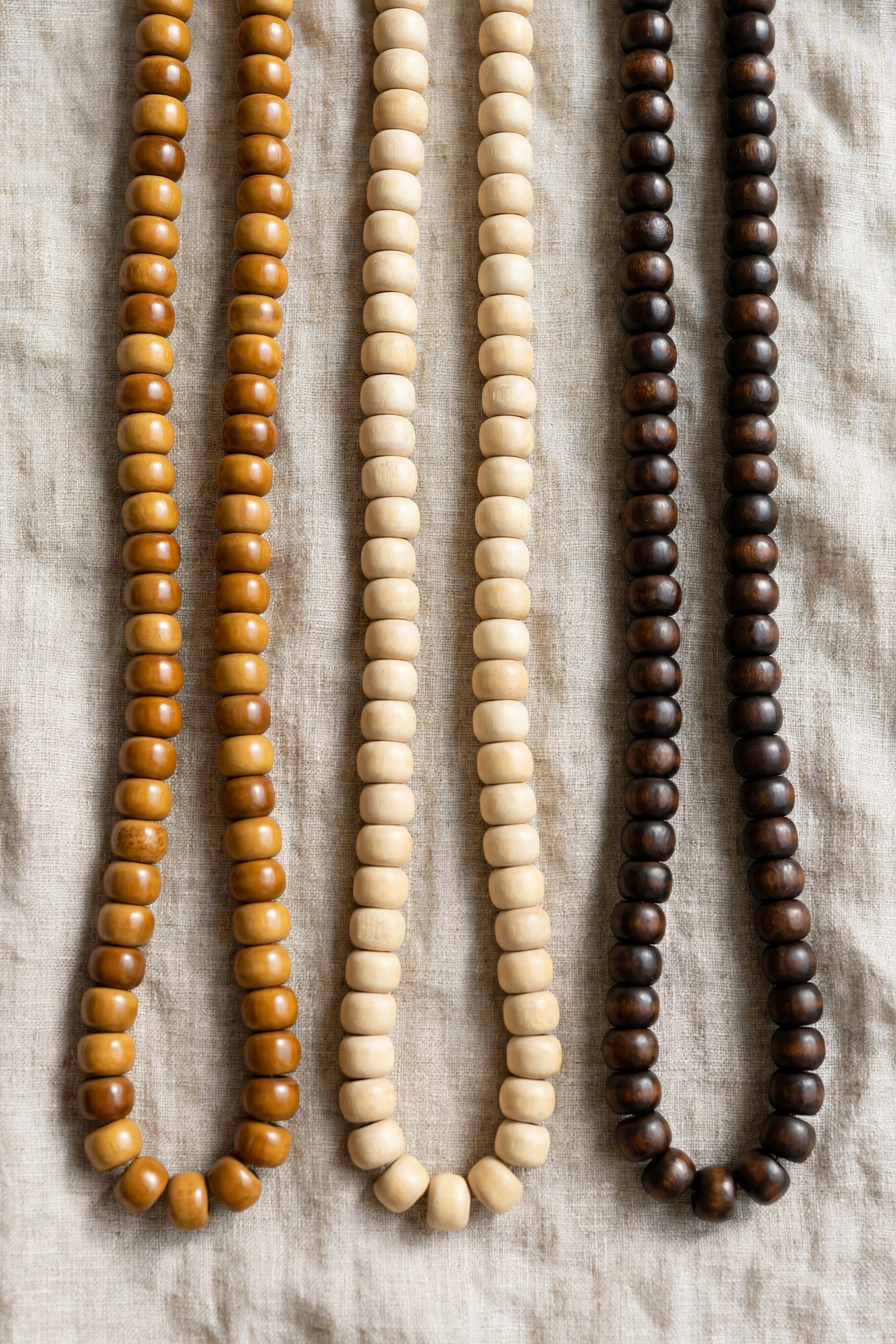
Not all bamboo bead curtains are the same, and the differences show once they are hung. Real bamboo beads are cut from cane, drilled, and strung on cord; cheaper versions use bamboo-patterned wood or plastic coated to look woody. Check the listing photos for the tell-tale signs: real bamboo has subtle grain streaks and slight tone variation between beads, while imitations are perfectly uniform. Both can look fine, but real bamboo ages better, developing a warm patina instead of fading to grey.
Colour choice sets the whole mood. Honey and caramel tones glow in warm light and pair with rattan, jute, and terracotta. Pale natural bamboo suits Scandinavian and warm minimalist rooms, keeping the look light. Dark-stained bamboo, sometimes called coffee or walnut finish, works in moody rooms with leather and dark wood, though it can read heavy in small spaces. Painted bamboo exists too, and while a sage or clay colour can be lovely, paint hides the grain that is the whole point of the material, so use it sparingly.
| Bead style | Best for | What to know |
|---|---|---|
| Natural bamboo tube beads | Boho, coastal, warm minimalist rooms | Lightest look; shows grain beautifully backlit |
| Round bamboo beads | Classic doorway curtains | Denser coverage per strand; slightly heavier |
| Honey-stained bamboo | Traditional and vintage-style interiors | Rich tone; check stain is even along the strand |
| Painted bamboo (colour) | Kids’ rooms, playful spaces | Fun, but loses the natural texture; wipe-clean |
| Bamboo + wood mix strands | Artisan, collected looks | Mixed shapes catch light differently; fuller appearance |
Weave and pattern are worth a second look before you buy. Plain uniform strands suit modern rooms. Chevron or diamond patterns, made by mixing bead colours along the strand, add a woven-textile feel that reads more crafted. Some curtains include small wood slices or coconut-shell beads between the bamboo; these catch light at odd angles and give the curtain a subtle shimmer as you walk past. Designer note: hold the curtain up to the light before hanging it permanently. The way beads glow backlit is the real product, and it is impossible to judge from a flat product photo.
Hanging Them Without the Headaches
 Save
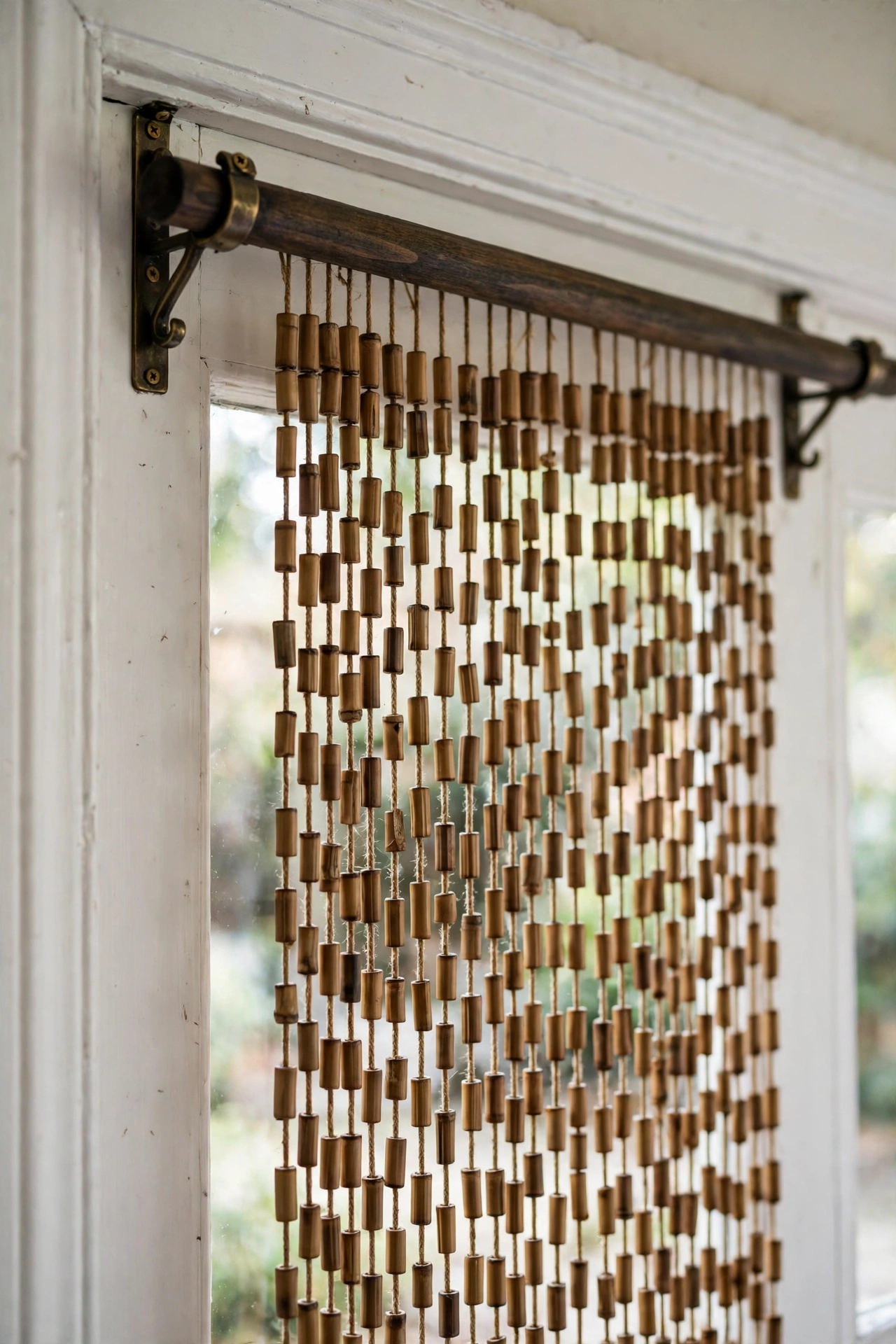
A bead curtain is only as good as its mount. The mount carries the full weight of the strands, and bamboo is heavier than it looks: a full-width doorway curtain can weigh two to four kilograms. Anything flimsy will sag within weeks, and a sagging curtain reads as neglected before a month has passed.
| Mount | Best for | Install effort | Watch out for |
|---|---|---|---|
| Tension rod | Renters, standard doorframes | Minutes, no tools | Max span ~90cm without bowing; check rod weight rating |
| Screw-in curtain rod | Owned homes, wide openings | Drill + anchors, 30 min | Needs solid wall or stud; plasterboard alone will pull out |
| Ceiling track | Room dividers, wide spans | Drill + track hardware | Ceiling must take screws; not all rental ceilings allow it |
| Adhesive hooks (heavy-duty) | Very light curtains, temporary hangs | Minutes | Bamboo is heavy; only for narrow, light panels |
For doorways, a tension rod is usually enough if the span is under 90 centimetres and the rod is rated for the curtain’s weight. Check the rating, not the guess: a cheap shower rod will bow. For wider openings, a screw-in rod with centre support is worth the effort. Many bead curtains ship with a wooden header rail, which is actually a help: the rail distributes weight along the rod and keeps the strands evenly spaced. Do not remove it to hang strands individually unless you enjoy tangling.
Styling tip: mount the rod as close to the top of the frame as possible. Beads hung from a rod set halfway down the frame leave a bare gap above that looks unfinished; a high mount makes the doorway feel taller and the curtain intentional.
Room dividers need sturdier thinking. Long spans sag, so ceiling tracks or rods with centre drops work best. If drilling is not allowed, look for floor-to-ceiling pole systems with spring tension at both ends; these can hold a bead curtain plane across a two-metre span without a single screw. Whatever you use, check that the mounting can take the weight with margin, because strands also swing and add dynamic load when people walk through.
Styling Beads With Light, Colour, and Texture
 Save
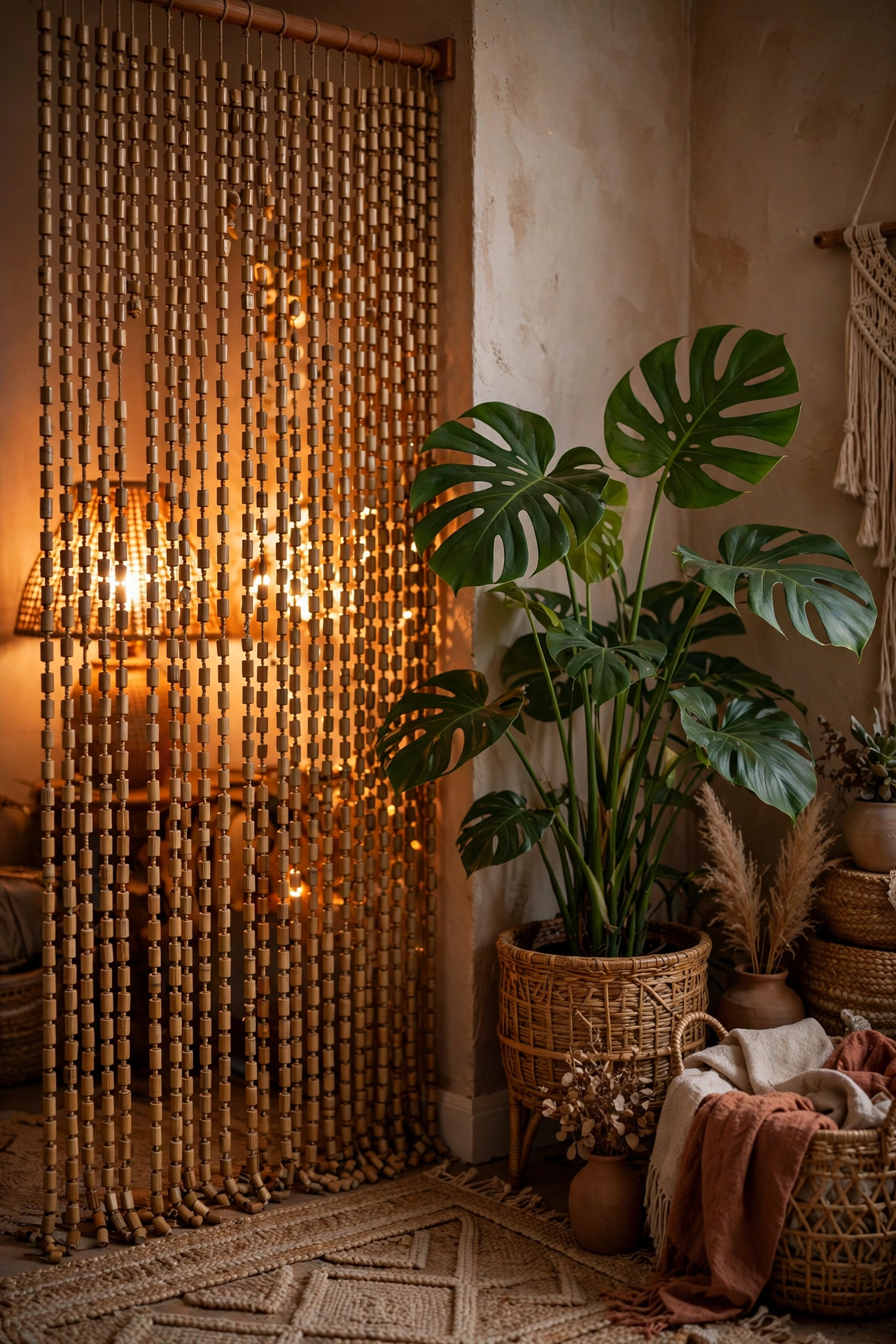
This is where a bamboo bead curtain stops being a practical screen and becomes actual decor. Beads are at their best in moving light. A curtain hung where afternoon sun or a lamp hits it sideways throws dotted, shifting shadows across the wall and floor, a slow animation that flat decor cannot produce. If your doorway gets direct sun, this alone justifies the purchase.
Colour pairing follows the room, not the beads. Natural bamboo plays well with warm neutrals, cream, terracotta, ochre, and sage; it fights with cool greys and stark white unless the rest of the room brings enough warmth to bridge the gap. In a pale room, let the beads be the warm accent. In an already warm room, match the bead tone to the dominant wood: honey beads with oak and pine, darker stains with walnut and mahogany.
Texture is the bigger lever. Beads against a smooth painted wall look flat; beads layered with other natural textures look collected and intentional. Hang plants nearby so leaves overlap the strands. Put a jute rug beneath the doorway so the texture continues at floor level. Let a linen throw or woven basket sit in the sightline. Try this: string a short strand of warm-white fairy lights behind the curtain in the evening. The beads catch and scatter the points of light, and the whole doorway glows like a lantern. It is the single cheapest way to make a bead curtain look magical after dark.
Keep the surround uncluttered. A bead curtain is already visually busy; a crowded shelf or patterned wallpaper right beside it competes instead of complementing. Give the curtain a metre of visual breathing room on each side and let it be the feature.
Living With Them: Care, Noise, and Real-Life Fixes
 Save
Be honest about the downsides, because they are manageable but real. First, dust. Beads collect it, especially the tops of the strands and the header rail. A monthly pass with a microfibre cloth or a soft brush attachment keeps them fresh; skip this and the curtain develops the dusty, sad look people remember from childhood visits. In kitchens, where cooking film settles on everything, wipe strands with a damp cloth and a drop of mild soap every few weeks.
Second, sound. Beads click. In a quiet house this is charming; at 2 a.m. in a draughty hallway, less so. If the curtain is in a bedroom doorway, weight the bottom strands so they move less, or tie the centre strands back with a simple cord tieback at night. Pets learn quickly, but a cat discovering bead strands for the first time will treat them as a toy: a bitter-apple spray on the lowest beads discourages chewing, and trimming the strands a little shorter keeps them out of reach of the most determined climbers.
Third, tangling. Strands tangle when the curtain is too long, when the spacing between strands is too tight, or when people push through grabbing handfuls of beads. The bottom-weighting dowel trick from the divider section fixes most of it. If individual strands knot, they can usually be unthreaded and restrung: keep a spare length of strong nylon cord and a handful of spare beads from the supplier, because one snapped strand should not end the curtain’s life.
Longevity is good if you treat them well. Real bamboo beads last for years indoors, outliving most fabric curtains at the same price. Keep them out of direct constant humidity, bathrooms included, because bamboo swells and the cord weakens. A doorway between a bathroom and a hallway is fine if the bathroom is ventilated; inside a steamy bathroom, choose something else.
Bringing It All Together
A bamboo bead curtain earns its place when it is chosen for the room, hung to fit, and styled with the same care you would give any other piece of decor. Full width, right length, enough density, a mount that holds: those four decisions separate the charming from the dated. Then let light and texture do the rest.
Start with one opening. A hallway doorway, the mouth of a reading corner, the edge of a work nook. Live with the soft click and the shifting shadows for a week. Most people who hang one properly end up wanting a second, not because the first failed, but because a room divided gently feels more liveable than a room divided by nothing at all.
Frequently Asked Questions
Are bamboo beaded curtains out of style?
They come and go as a fashion item, but as a functional screen they never really leave. The current wave of natural materials and woven texture has made them feel current again, especially in boho, coastal, and warm minimalist rooms. Hung well, they read as intentional design rather than retro throwback.
How do I keep a beaded curtain from tangling?
Weight the bottom of each strand with a thin dowel or small bead cluster, keep the length just above the floor, and make sure strands are not spaced so tightly they overlap. Walk through using one hand to part the strands rather than pushing through with your shoulder.
Can I hang a bamboo bead curtain without drilling?
Yes, for standard doorframes. A sturdy tension rod rated for the curtain’s weight works for spans under about 90 centimetres. For wider openings or ceiling-mounted room dividers, drilling into a stud or solid ceiling is safer; floor-to-ceiling tension pole systems are the best no-drill option for dividers.
How do you clean bamboo bead curtains?
Dust monthly with a microfibre cloth or soft brush attachment. For sticky film, especially near kitchens, wipe strands with a damp cloth and mild soap, then dry. Avoid soaking the beads or the cord, and keep the curtain out of constant humidity like an unventilated bathroom.
Do beaded curtains block sound or give privacy?
They soften sound slightly by breaking up the open doorway, but they do not block it in any meaningful way, and they do not provide visual privacy, they blur rather than hide. Use them for zoning and atmosphere, not for anything that needs a real door.