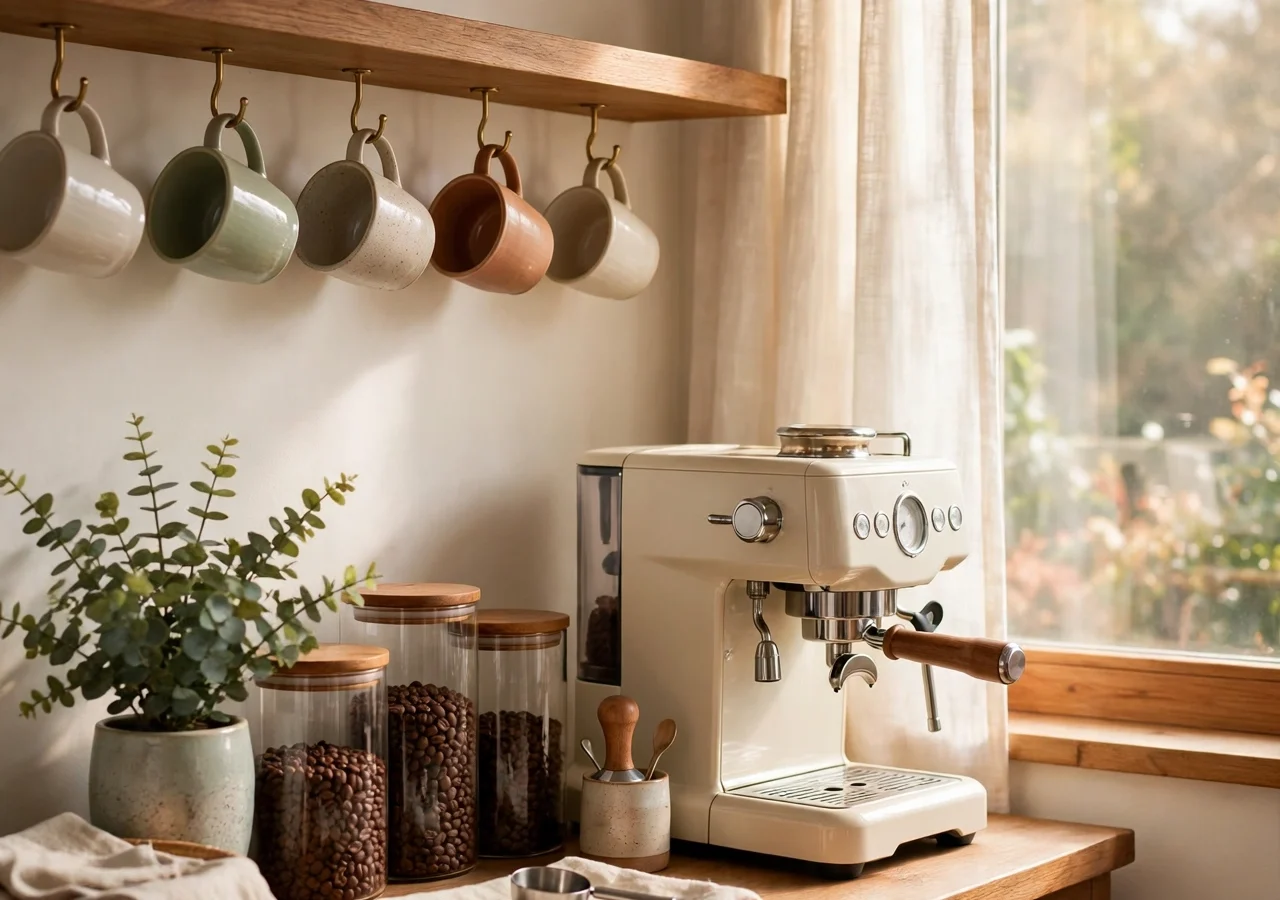
There’s a special kind of morning chaos that happens when the coffee maker lives crammed behind the toaster, the mugs are three cupboards away, and you’re half-asleep digging for the sugar. You love your coffee ritual, but the setup fights you every single day.
The thing is, it doesn’t take a kitchen renovation or a barista’s budget to fix it. A dedicated coffee station, even a tiny one, changes the whole rhythm of the morning. Everything you need sits within arm’s reach, the corner looks intentional instead of cluttered, and that first cup somehow tastes better when the scene around it is calm.
This guide walks through home coffee bar ideas that work in real houses and real apartments: where to put the station, what furniture holds it, how to style the shelves so they look good in photos and function at 6 a.m., and how to keep the whole thing tidy without fussing over it daily.
Pick the Spot: Where a Coffee Bar Actually Works
 Save
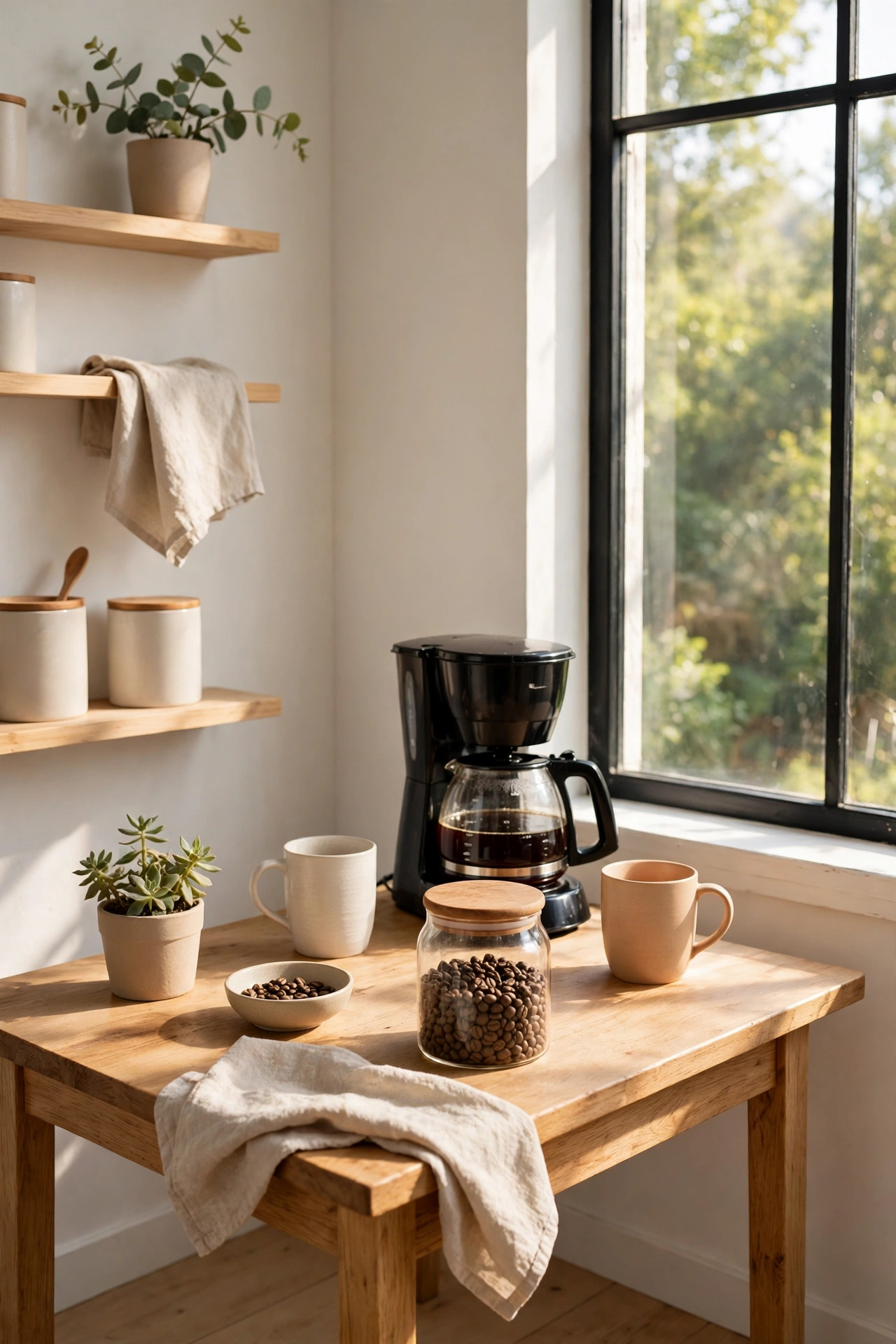
The best coffee station is the one you use without thinking, so location matters more than square footage. Look for a spot near a power outlet, close to the kitchen or dining area, with enough wall or shelf space above a surface. A kitchen corner that collects clutter, an empty stretch of hallway wall, or the dead space beside the fridge all qualify.
Measure before you fall in love with a spot. A compact machine plus a row of mugs needs roughly 24 to 36 inches of counter or tabletop width and about 18 inches of depth. If you’re planning a pour-over setup with a kettle, you need less width but more vertical room for a shelf above.
Natural light is a lovely bonus. A station near a window photographs beautifully and makes the morning routine feel brighter, but keep the coffee beans and any artwork away from direct sun. Beans go stale faster in heat and light, and paper prints fade.
Try this: stand in your kitchen at your usual coffee time and notice where your hands go. The counter you naturally reach for is your station. Build around your actual habit, not the corner that looks good on paper.
Anchor the Station: Choose Your Base Furniture
 Save
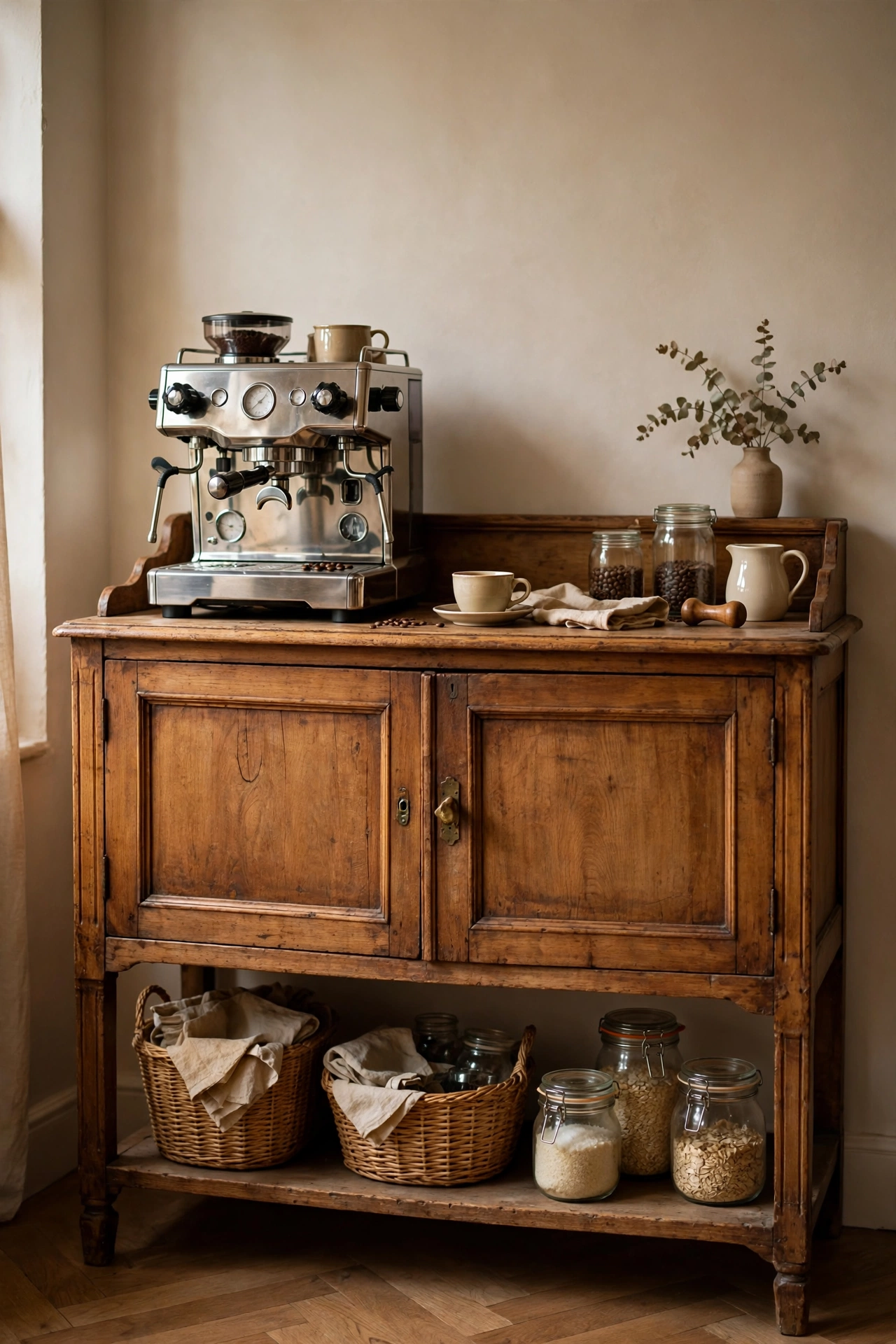
You don’t need purpose-built furniture. The prettiest coffee bars start as ordinary pieces doing a second job: a vintage sideboard, a narrow console table, a small bookshelf turned sideways, or a rolling cart that doubles as serving help during parties.
A rolling cart is the easiest entry point, and it’s forgiving. If the layout doesn’t work, you wheel it somewhere else. Style the top tier with the machine and daily mugs, use the lower shelves for beans, syrups, and a small bin of filters, and keep the whole cart near the dining table when guests come over. For inspiration on making a cart look polished rather than purely practical, see our bar cart styling ideas — the same layering tricks apply.
| Space you have | Best base | Why it works |
|---|---|---|
| A kitchen corner | Small sideboard or cabinet | Hides filters, beans, and backup supplies behind doors |
| A hallway or nook wall | Narrow console table | Slim profile, room underneath for a basket or stool |
| Truly tiny | Rolling cart | Moves out of the way; doubles as a serving cart |
| A spare closet or alcove | Inside the alcove with shelves | Doors close on the mess when you’re done |
Budget swap: instead of buying a new console, try a bookshelf you already own. Lay it flat, add a coat of paint, and suddenly it reads as a sideboard. A thrifted dresser with the top drawer removed for display space works the same way.
Set Up the Brew Zone: Equipment That Earns Its Counter Space
 Save
Here is where honesty matters. Look at how you actually make coffee and give counter space only to the tools you touch daily. If you reach for the drip machine every morning and the French press once a month, the drip machine gets the prime spot and the press lives on a shelf.
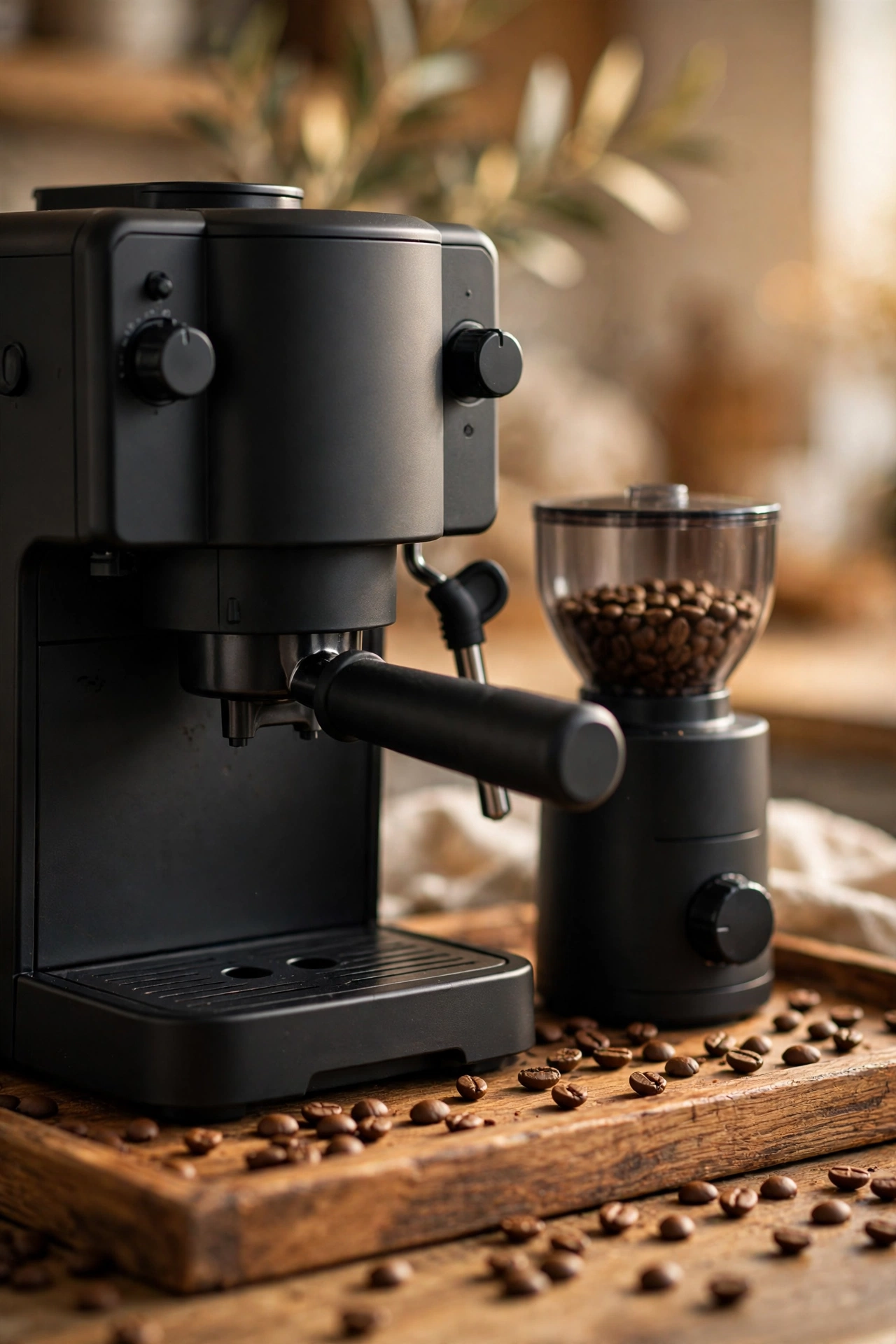
Group the daily gear together: machine, grinder, kettle. Give the grinder a small tray underneath to catch stray grounds; it saves the surface and looks deliberate. If you use pods, a drawer-style holder under the machine keeps the countertop clear while holding a week’s worth.
Cables are the fastest way to make a station look messy. Run the machine’s cord behind the furniture, use a small cord clip to keep the kettle’s cord coiled when not in use, and choose a power strip with a flat plug so the piece can sit close to the wall. One outlet, everything plugged in, nothing dangling.
Designer note: a machine in a contrasting finish becomes the anchor of the whole station. Matte black against warm wood, cream against dark walls, brass-toned accents against deep green. Pick one hero finish and let the smaller pieces echo it.
Style the Shelves: Mugs, Jars and Everyday Pieces on Display
 Save
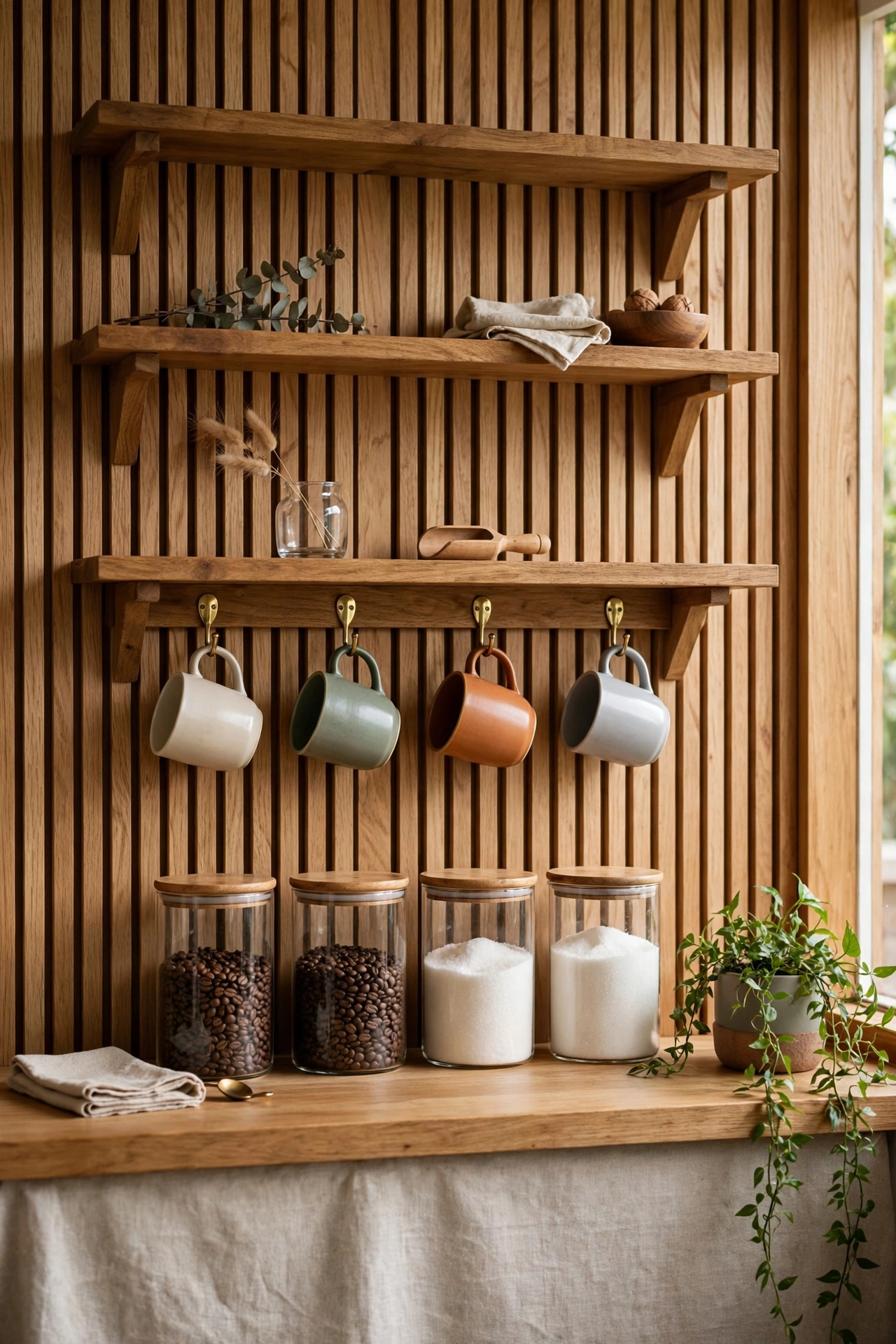
Open shelving above a coffee bar is where styling does its heavy lifting, because it has to hold real, used things. The trick is grouping by shape and material rather than by size: a row of ceramic mugs on hooks, glass canisters in a line, a small stack of saucers beside a plant.
Mug hooks under a shelf are the single most useful piece of coffee-bar hardware. They keep the mugs you reach for every day visible and off the counter, and a neat row of hooks looks intentional in a way that a jumble in the cupboard never does. Leave one or two hooks empty; the breathing room reads as calm, not unfinished.
Glass canisters earn their place by showing off what is inside. Fill them with beans, sugar cubes, biscotti, or cocoa powder, and label each one with a simple handwritten tag. Decanting the everyday supplies is the cheapest upgrade a coffee station can get, because it replaces branded packaging with a uniform look in about ten minutes.
What goes where: a simple shelf formula
- Top shelf: the pretty, rarely touched things — a small framed print, a trailing plant, a stack of linen napkins. Nothing you need in a hurry.
- Middle shelf: the daily supplies in canisters, plus tea bags and syrups. Everything labeled, everything visible.
- Counter level: the machine, one tray with the grinder and kettle, today’s mug. Nothing else.
Styling tip: repeat one material three times and the shelf looks designed. Three brass items, three pieces of warm wood, three cream ceramics. It’s a quiet rhythm that ties mismatched mugs together.
Add the Warm Details: Art, Lighting and Texture
 Save
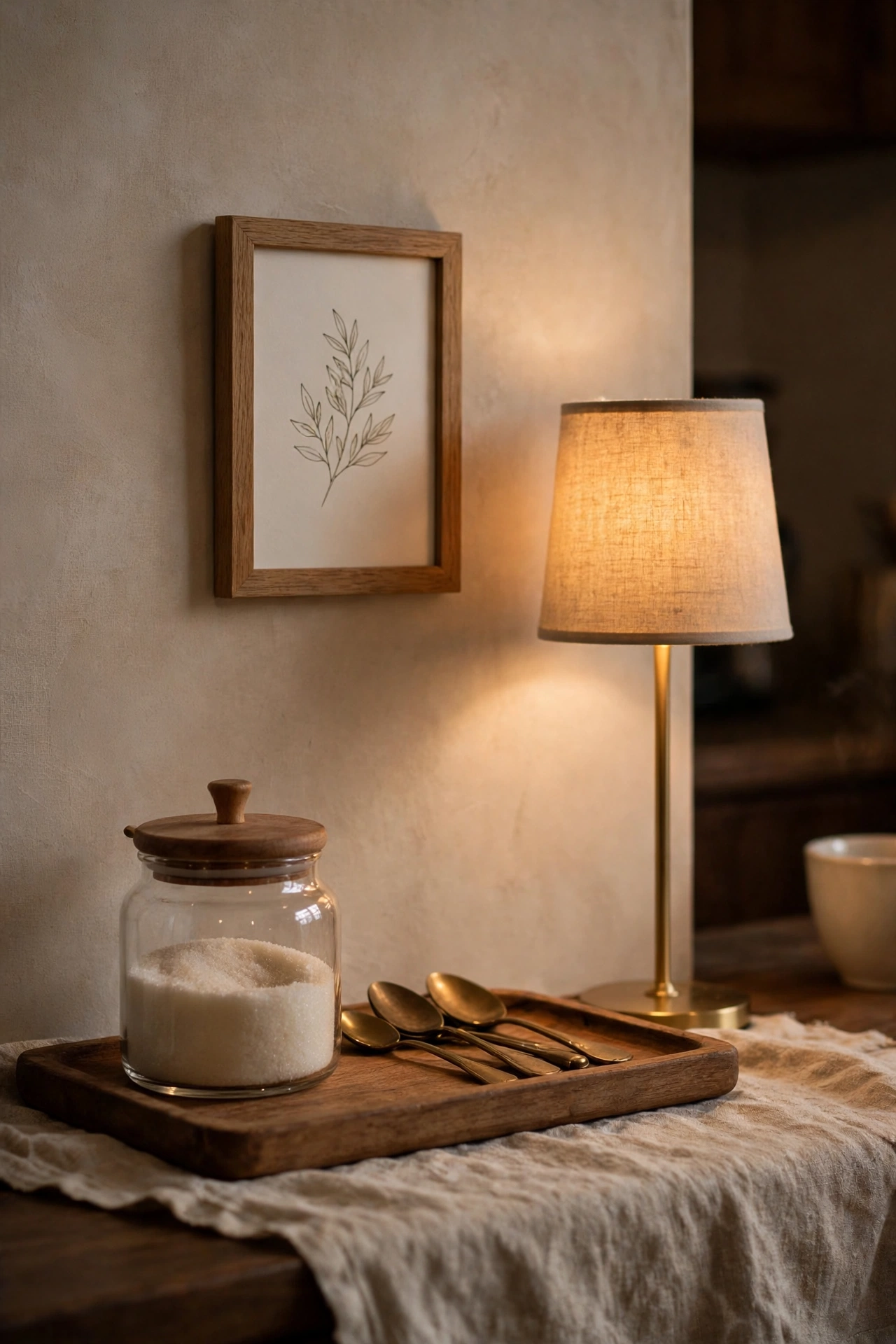
A coffee bar stops being a utility corner and starts being a styled moment when you add the details that have nothing to do with brewing. A small framed print or a vintage coffee poster gives the wall a focal point. A battery-powered picture light or a slim plug-in sconce makes the station glow in the evening, which matters more than you’d think once the days get short.
Texture keeps it from feeling like a showroom. A woven runner under the machine, a small wooden tray corralling the sugar and spoons, a linen towel folded beside the kettle. These are the pieces that say someone actually stands here every morning, and they’re also the pieces that hide the practical clutter: crumbs, drips, the spoon you always forget to put away.
Metallics deserve a special mention. A brass spoon rest, a copper-toned canister lid, or a small gold-framed print warms up a neutral station instantly. If you want to go further with the look, our guide to warm metallic decor ideas shows how to layer brass without tipping into formal.
Keep It Pretty and Practical: The Daily Ritual Edit
 Save
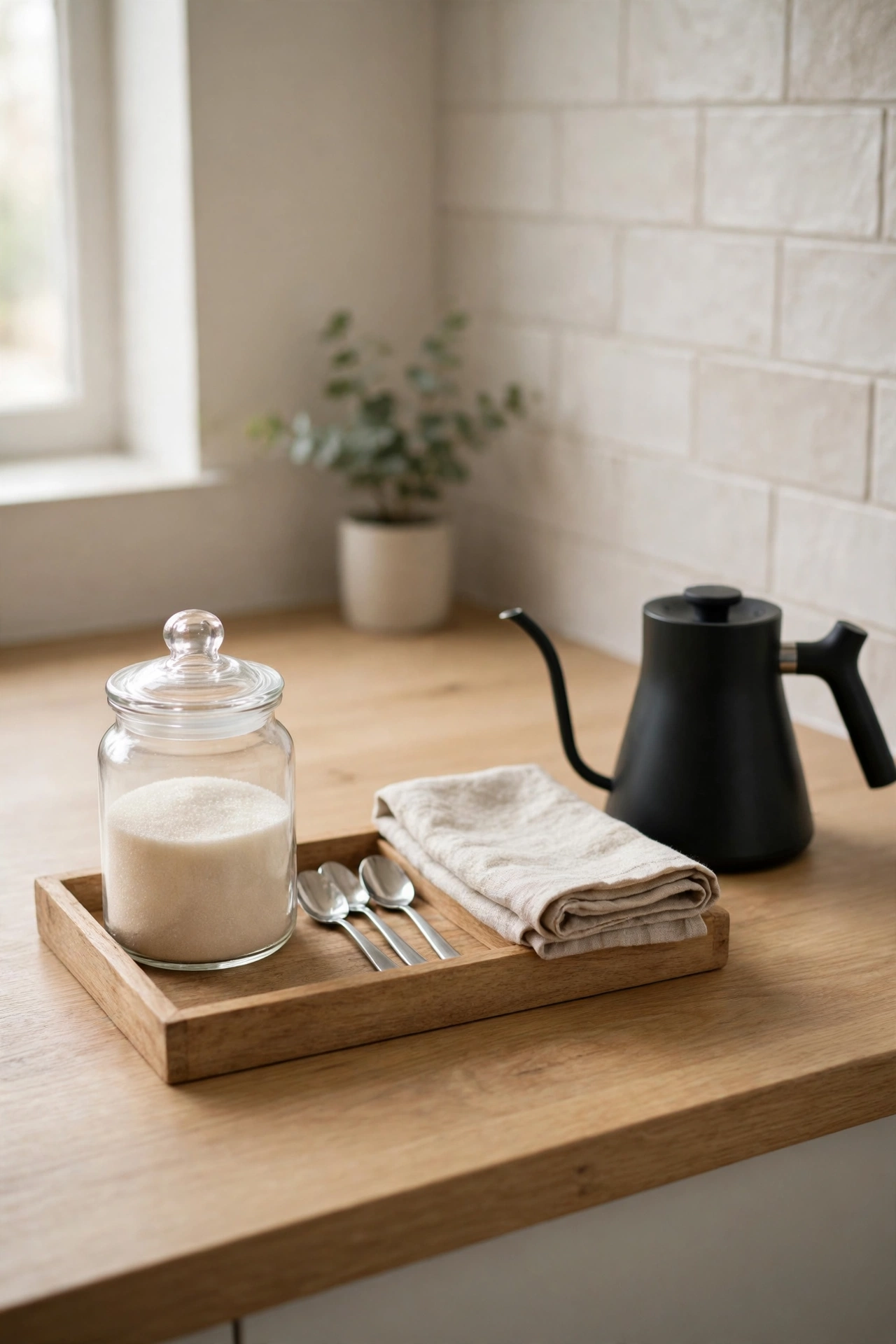
The stations that stay beautiful are the ones with a system, not the ones with a perfect styling day. Give everything a home: a small tray for the sugar, spoons, and stirrers; a lidded jar for used pods or spent filters; a dish towel that lives folded at the same spot every day.
Restock on a rhythm, not when things run out. Once a week, refill the beans, the sugar, and the filter supply. It takes five minutes and it means the station never hits that sad, half-empty Tuesday-morning look. Keep a backup bag of beans in the cabinet behind the station, not across the kitchen, so the refill actually happens.
Wipe the surface when you wipe the machine. Coffee rings stain wood and stone faster than people expect, so the tray under the machine pulls double duty: it protects the finish and it lifts out for a quick rinse. If your station sits in the kitchen, treat it like part of the nightly kitchen reset, not a separate chore.
Budget swap: skip the specialty organizers. A shallow baking tray from the kitchen aisle works as a station tray, and a set of three mismatched glass jars from a thrift shop beats an expensive labeled set once you add your own tags.
Small-Space Coffee Bars That Don’t Feel Cramped
 Save
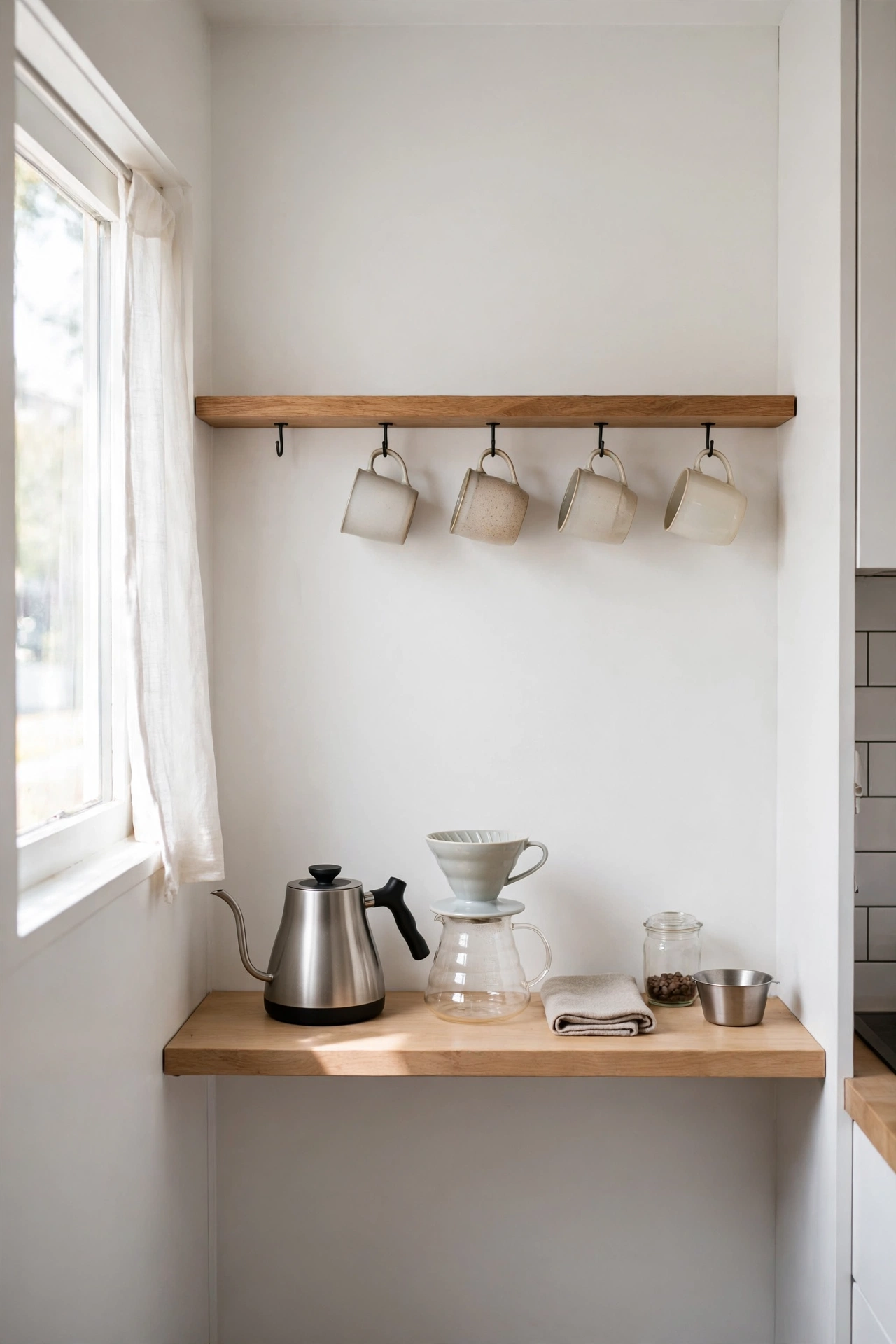
Small kitchens don’t need a full station, just a committed six inches. A wall-mounted drop-leaf shelf above an outlet holds a pour-over cone and a kettle, folds flat when you’re done, and leaves the counter completely free. It is the smallest real coffee bar you can build.
Look up, not out. In a galley kitchen or a studio, a single floating shelf with mug hooks underneath turns dead wall space into the whole station. Keep the machine on the counter below and everything else on the shelf; the footprint is exactly the footprint of the machine you already own. It is the same go-vertical thinking that saves small apartments, and it applies year-round.
For renters who can’t drill, a tension-mounted shelf or a leaning ladder shelf against the wall gives you display space with zero holes. Style it exactly like a built-in: canisters low, art high, one small plant. Nobody at the door will know it isn’t permanent.
Seasonal touches are where a small station earns its keep. A sprig of eucalyptus in a bud vase in spring, a cinnamon-scented candle in autumn, a tiny wreath hung from a mug hook in December. When the holidays arrive and the kitchen gets dressed up, the coffee bar should get its moment too; our Christmas kitchen decor ideas include a few ways to dress the station without crowding it.
Style It for Guests: The Entertaining Coffee Bar
 Save
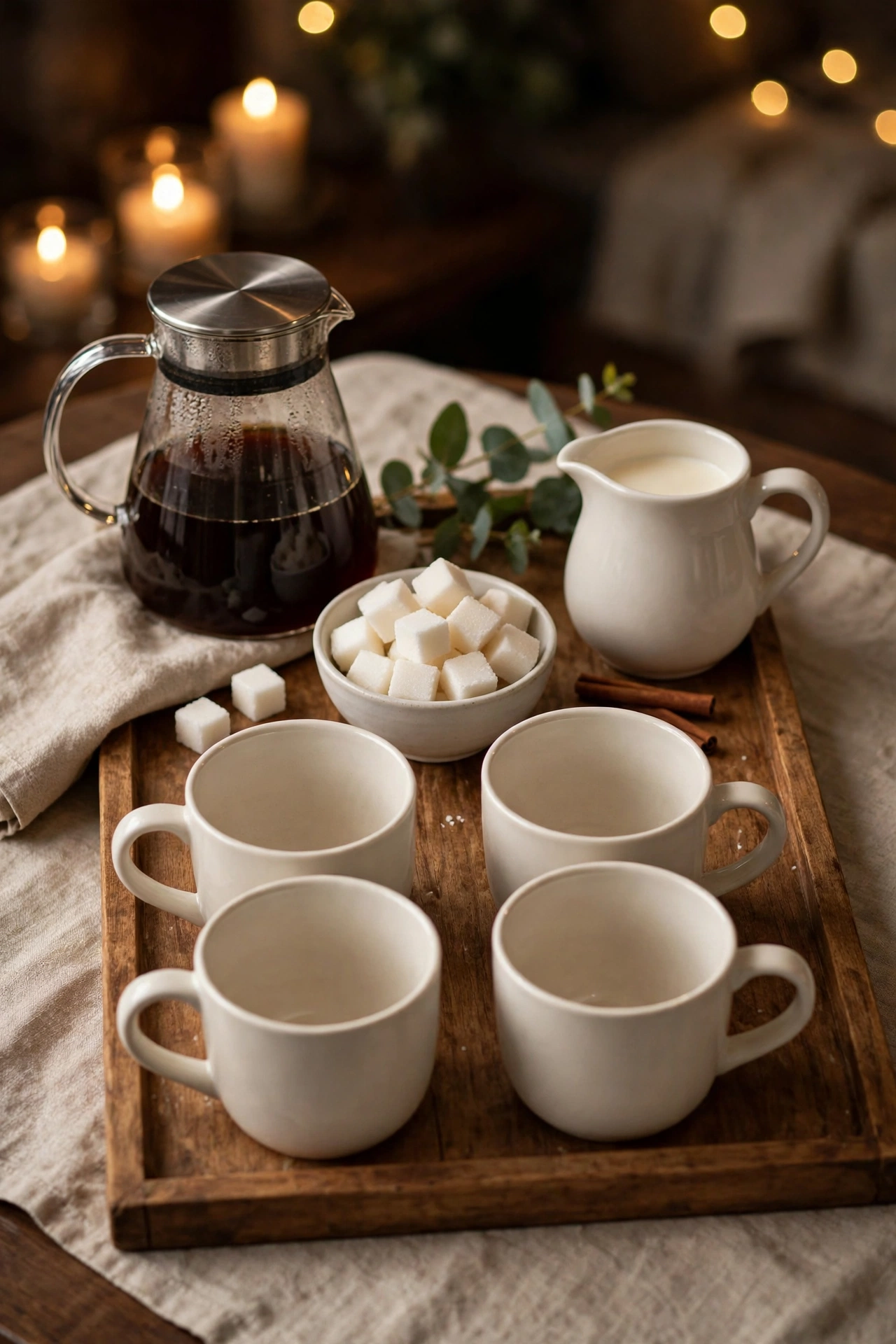
The same station that serves your weekday mornings can host a crowd with a few temporary swaps. When guests are coming, clear the everyday clutter down to the machine and one tray, then add a second tray with a carafe, a small pitcher of cream, and a bowl of sugar cubes. Set out four to six mugs instead of your usual two, choosing ones that match or at least share a color family.
A hot-drink menu card, handwritten on a small card and leaned against the back wall, is the detail guests remember. List two or three options: regular coffee, a flavored syrup, and cocoa for anyone who doesn’t drink coffee. It takes two minutes and it makes the whole setup feel like a little cafe instead of your kitchen corner.
Try this: when you’re hosting a holiday gathering, move the coffee cart or tray into the dining area after dinner. People linger over dessert and coffee together, and the station becomes part of the party instead of a kitchen errand. A few well-chosen pieces do more to make a casual gathering feel pulled together.
For kids and non-coffee drinkers, keep a small basket with cocoa packets, cinnamon sticks, and marshmallows on the lower shelf. It looks charming year-round and it means nobody stands around awkwardly while everyone else has a warm mug.
Bringing It All Together
A coffee station works when it fits your actual mornings, not someone else’s feed. Start with the spot your hands already reach for, give the daily tools a real home, decant the supplies, add one warm detail you love looking at, and build the weekly restock into your routine. The cosy morning ritual is half the point; if you need a nudge on the comfort side of things, our cosy home checklist pairs nicely with this one.
Style it once, honestly. Then let the mornings do the rest.
Frequently Asked Questions
Where is the best place to put a coffee bar in a small kitchen?
Near an outlet on the counter you already use most, or on a narrow console or cart against the nearest free wall. You need about two feet of width for a compact setup, and keeping it close to the sink makes cleanup effortless.
What do I actually need for a home coffee station?
The machine you use daily, a grinder or kettle if they’re part of your routine, mugs, beans in a sealed container, sugar and spoons, and filters or pods. Everything beyond that is styling. Start with the essentials and add decorative pieces only once the workflow feels right.
How do I keep a coffee bar from looking cluttered?
Corral small items on one tray, decant supplies into matching canisters, hide cords behind the furniture, and leave one shelf or one section of counter empty. Clutter usually comes from too many small loose items, not too much stuff overall.
Can I make a coffee bar without drilling into the walls?
Yes. A rolling cart needs no wall at all, and a leaning ladder shelf or a tension-mounted shelf gives you display space with zero holes. Adhesive mug hooks hold well on smooth tile or cabinet doors and remove cleanly.
How much does it cost to set up a coffee station?
If you already own the machine and mugs, the styling side can cost very little: a tray, two or three glass canisters, and a small plant often land under fifty dollars at thrift and discount stores. Spend first on storage and cord management, since those are the things that keep it looking good.
1 thought