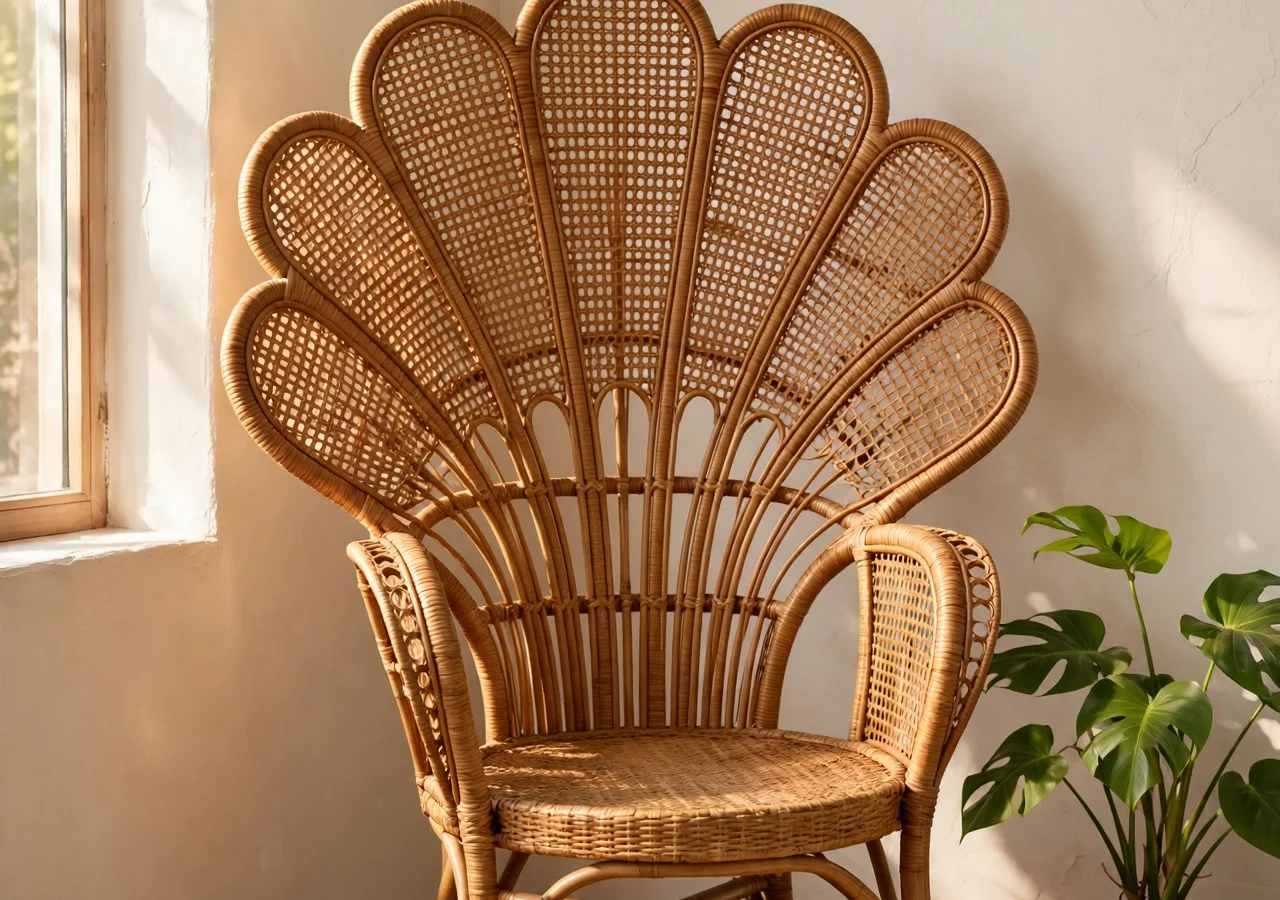
You have the sofa. You have the rug, the coffee table, the lamp in the corner. And still, the room feels one decision short of finished. More often than not, that decision is a single good chair, and lately the chair turning up in every saved folder and living-room reveal is rattan.
Buying one is where it gets tricky. Rattan spans heirloom-quality hand cane to flimsy flat-pack that creaks within a month, and product photos rarely tell you which is which. The weave might be loose, the frame stapled rather than lashed, the “natural” finish orange-stained pine.
This guide sorts that out. Below are 15 rattan accent chairs genuinely worth your money, each with honest buying notes and styling ideas that work in real rooms, not showrooms.
Rattan Chair Quick-Start: What to Check Before You Buy
- Weave tension: Press the cane webbing with your thumb. Quality rattan springs back; loose weave dimples and stays dimpled.
- Frame joinery: Look for lashed or wrapped joints (thin rattan binding around connection points). Screws with plastic caps usually signal mass production.
- Pole thickness: Main structural poles should feel solid (roughly thumb-thick or more on seating pieces). Thin, bendy frames wobble.
- Finish honesty: True natural rattan varies slightly in tone. A perfectly uniform honey colour is usually a stain over lower-grade cane.
- Indoor vs outdoor: Outdoor-rated pieces use thicker cane and sealed weaves. Standard indoor rattan swells and cracks if it lives outside.
| Chair style | Vibe it gives a room | Best spot |
|---|---|---|
| Peacock / fan-back | Boho statement, dramatic | Bedroom corner, reading nook |
| Bentwood armchair | Warm mid-century, easy | Living room, beside the sofa |
| Cane-webbing (cannage) | French, refined, light | Dining table, desk |
| Papasan / moon | Lounge, cosy, relaxed | Sunroom, teen’s room |
| Hanging egg | Playful, resort-like | Conservatory, covered patio |
1. The Peacock Chair
 Save
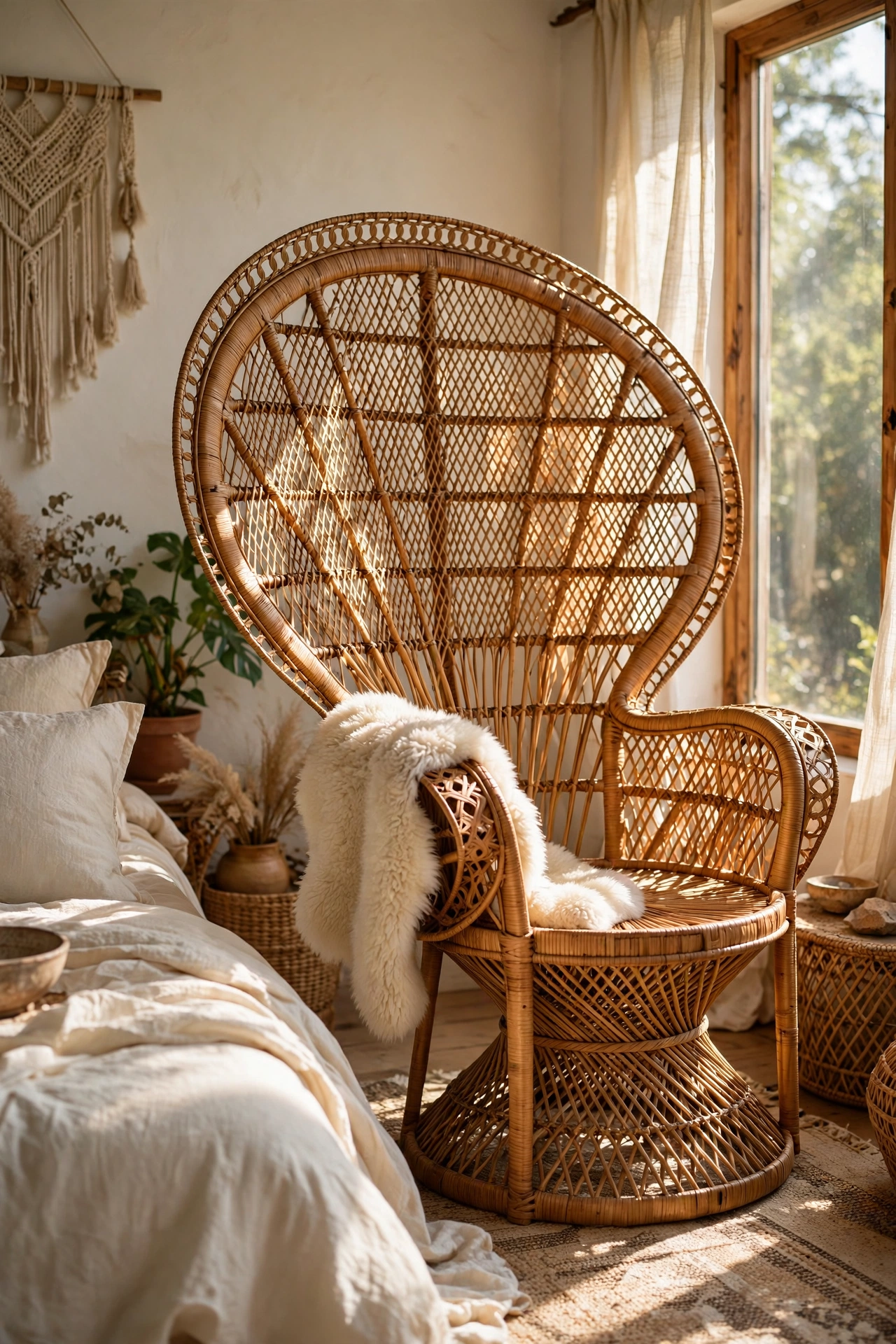
The peacock chair is rattan’s crown jewel: a tall, flared fan-back silhouette that turns any dull corner into the room’s focal point. Vintage ones fetch serious prices now; new ones range from decent reproductions to genuine hand-woven pieces.
When buying, check the fan: the strands should be individually lashed, not glued to a backing board. Sit in it: cheap reproductions look grand and feel like a deckchair. A proper one cradles your back, and the seat sits about 40 to 45 cm off the floor, easy to stand up from.
Style it as the single “moment” in a calm room: plain linen bedding, a simple side table, and let the chair carry the drama. One seat cushion softens it; a sheepskin throw over one arm adds texture without hiding the weave. Angle it toward a window so light plays through the fan.
2. The Bentwood Rattan Armchair
If the peacock chair is theatre, the bentwood armchair is your everyday favourite: steam-bent rattan poles form one continuous curved frame with a woven cane seat and back. It is the easiest chair on this list to live with.
Buy for comfort first: a slightly reclined backrest and seat depth around 50 cm. If the seat is a woven panel rather than a cushion, look for double-thick weave where you sit, because single-ply panels sag. In a living room, two of these flanking the fireplace beat stiff occasional chairs; they invite people to actually sit down.
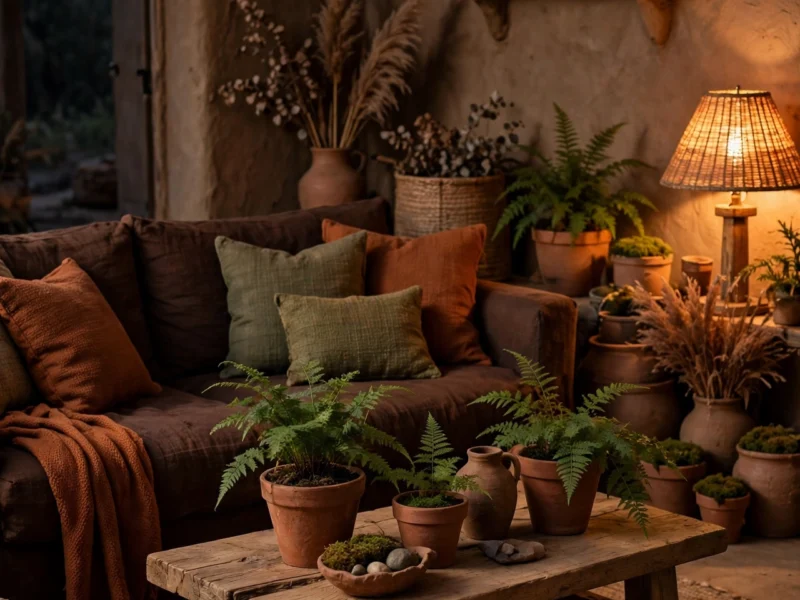
Styling tip: Pair bentwood rattan with chocolate-brown and terracotta accents: the warm wood tones echo the chair’s honey finish and the whole corner glows.
3. The Papasan Chair
 Save
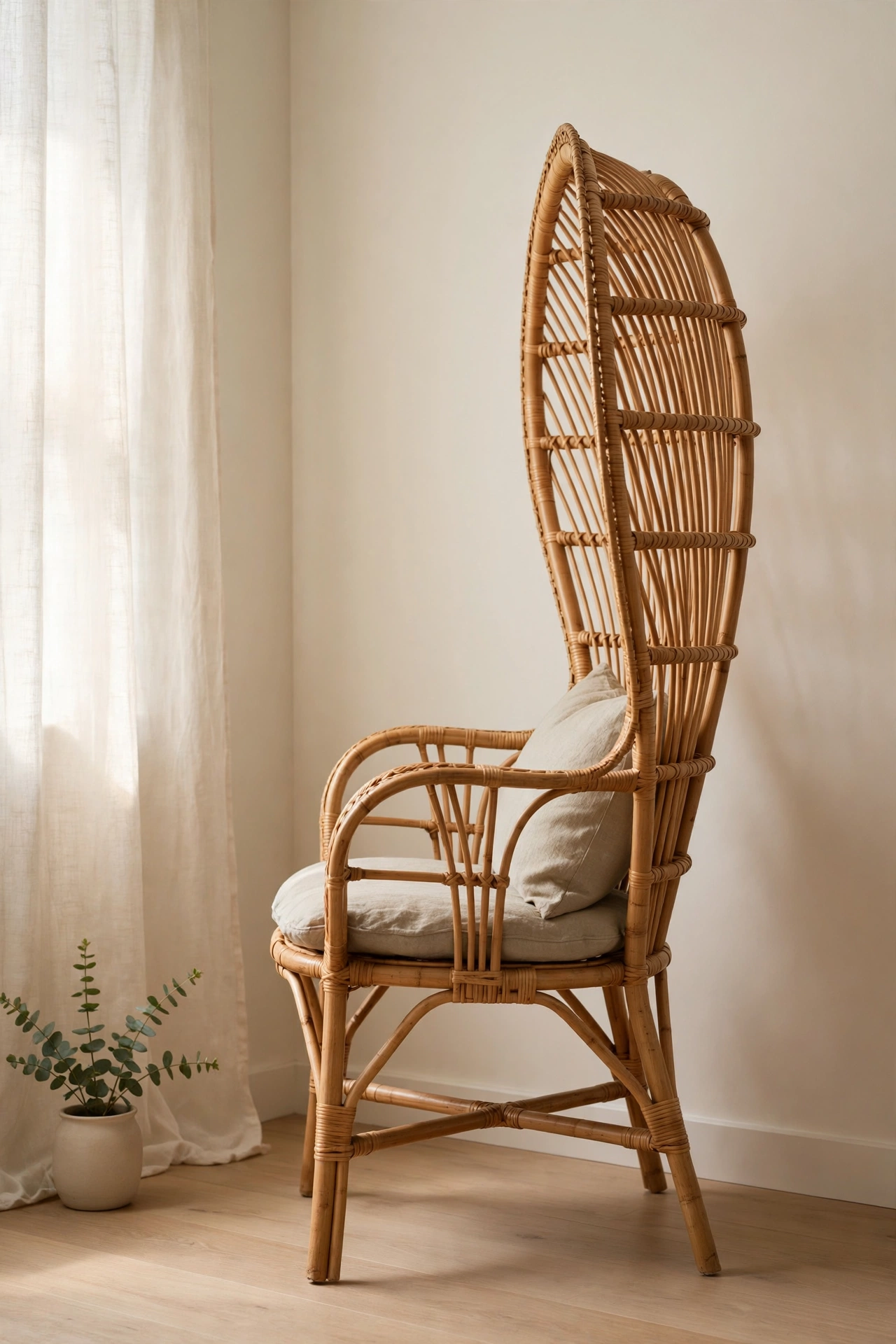
The papasan, a big round bowl seat perched on a short cylindrical base, is the reading-nook hero. It sits low, wraps around you, and does its best work in rooms where people curl up rather than perch. Families with teenagers tend to fight over this chair, so consider that your buying forecast.
The cushion matters more than the frame. A thin, flattened cushion ruins a great papasan, so budget for a thick replacement (around 15 cm of fill) if the included one feels floppy. The bowl frame should have at least three continuous rings of cane; fewer rings and the seat flexes alarmingly under adult weight.
Place it near a bookshelf or window, angled into the room rather than flat against the wall. A folded throw over the rim stops the cushion sliding.
4. The Hanging Egg Chair
Few pieces promise relaxation as loudly as a rattan hanging egg chair. Suspended from a stand or ceiling mount, it sways gently, cocoons its sitter, and reads as instant holiday, which is why it works hardest in bright, plant-filled spaces.
Structure is everything. A stand-mounted version needs a base wide enough to resist tipping when you climb in, so test the sway before trusting it. Ceiling-mounted versions need a joist, not a plasterboard anchor; if unsure, use the stand. The weave should be tight enough that you cannot poke a finger through, since your weight presses against it constantly.
Style it where light and greenery do the talking: a sunroom, a bright hallway end, or a covered balcony. A round jute rug centred underneath anchors the sway zone. One long cushion down the back and a small lumbar pillow make it genuinely comfortable, not just photogenic.
5. The French Cane-Webbing Armchair
 Save
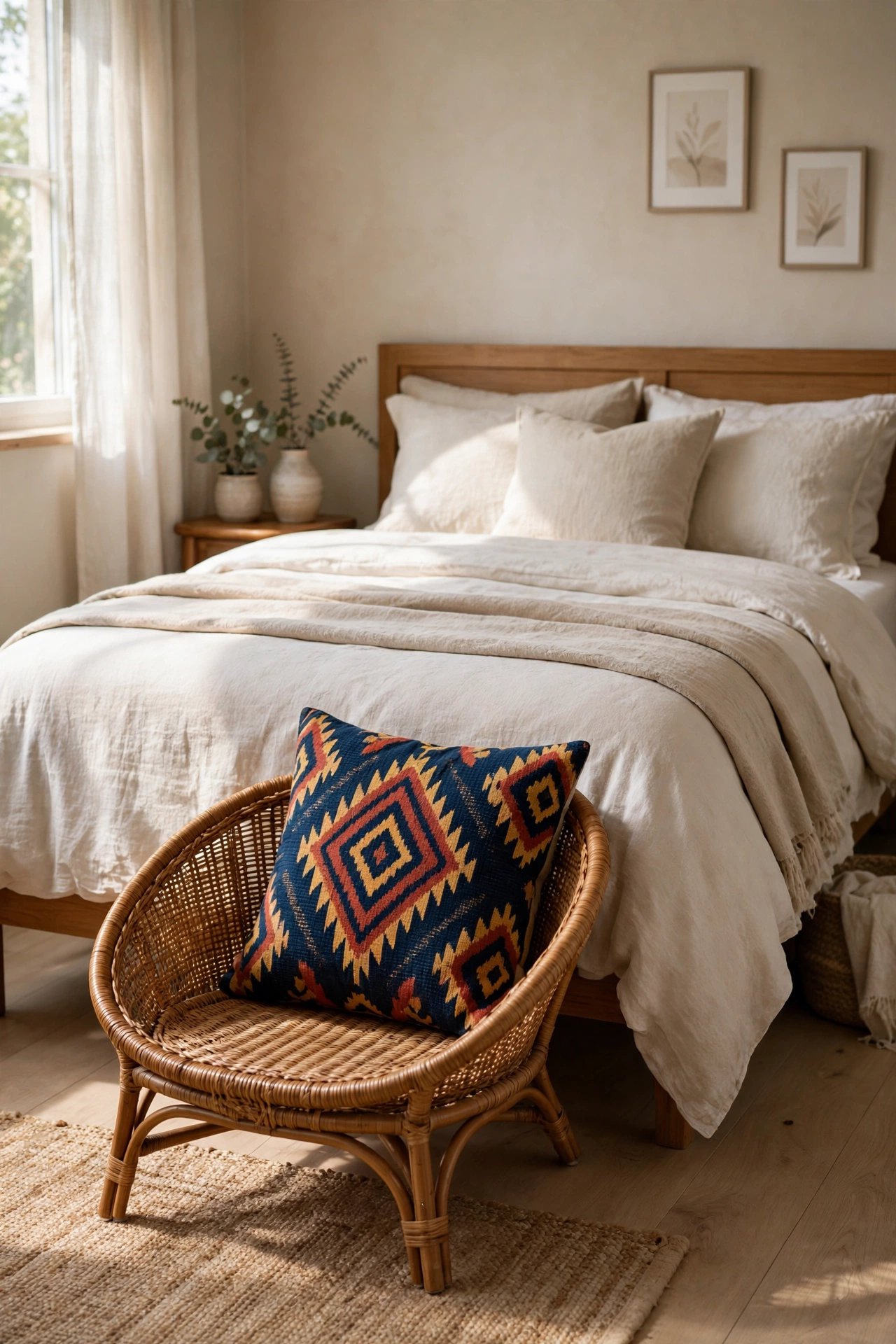
Cannage, the octagonal cane webbing pattern, is the detail that makes rattan feel Parisian. French-style armchairs pair a stained wooden frame (usually beech or oak) with woven cane seat, back, or sides. They are lighter visually than full-rattan pieces, which makes them brilliant in small rooms.
Check the webbing for brittleness: press a fingernail into the cane strands; good cane dents slightly and recovers, dried-out cane cracks or splinters. Inspect the wooden frame’s leg joints the way you would any wooden chair: wobble it hard in the shop. The cane back flexes a little as you lean, which makes these genuinely comfortable for dining.
Use them where refinement matters: a writing desk, a dining table that needs airiness, or a bedroom vanity corner. They pair beautifully with warm brass accents: a brass lamp or picture frame next to cannage reads like a Left Bank apartment, and the metal keeps the natural materials from feeling too rustic.
6. The Rattan Rocking Chair
A rattan rocking chair earns its place through pure function: it soothes babies, calms restless evenings, and gives older relatives the one seat in the house they will actually use. Modern versions have tightened up the silhouette, so they no longer read as porch-only furniture.
Rock geometry decides comfort: the rockers need a gentle, even curve. Too flat and the chair jerks; too curved and you feel tipped backward. Sit and rock for a full minute; the motion should feel effortless and quiet. Creaking joints in the showroom mean louder creaking at home at 2 a.m.
In a nursery it is the obvious call, but it also works beside a living-room window for morning reading. With natural honey weave, a cushion in sage or dusty blue stops the corner looking like a farmhouse cliché.
7. The Rattan Bucket Chair
 Save
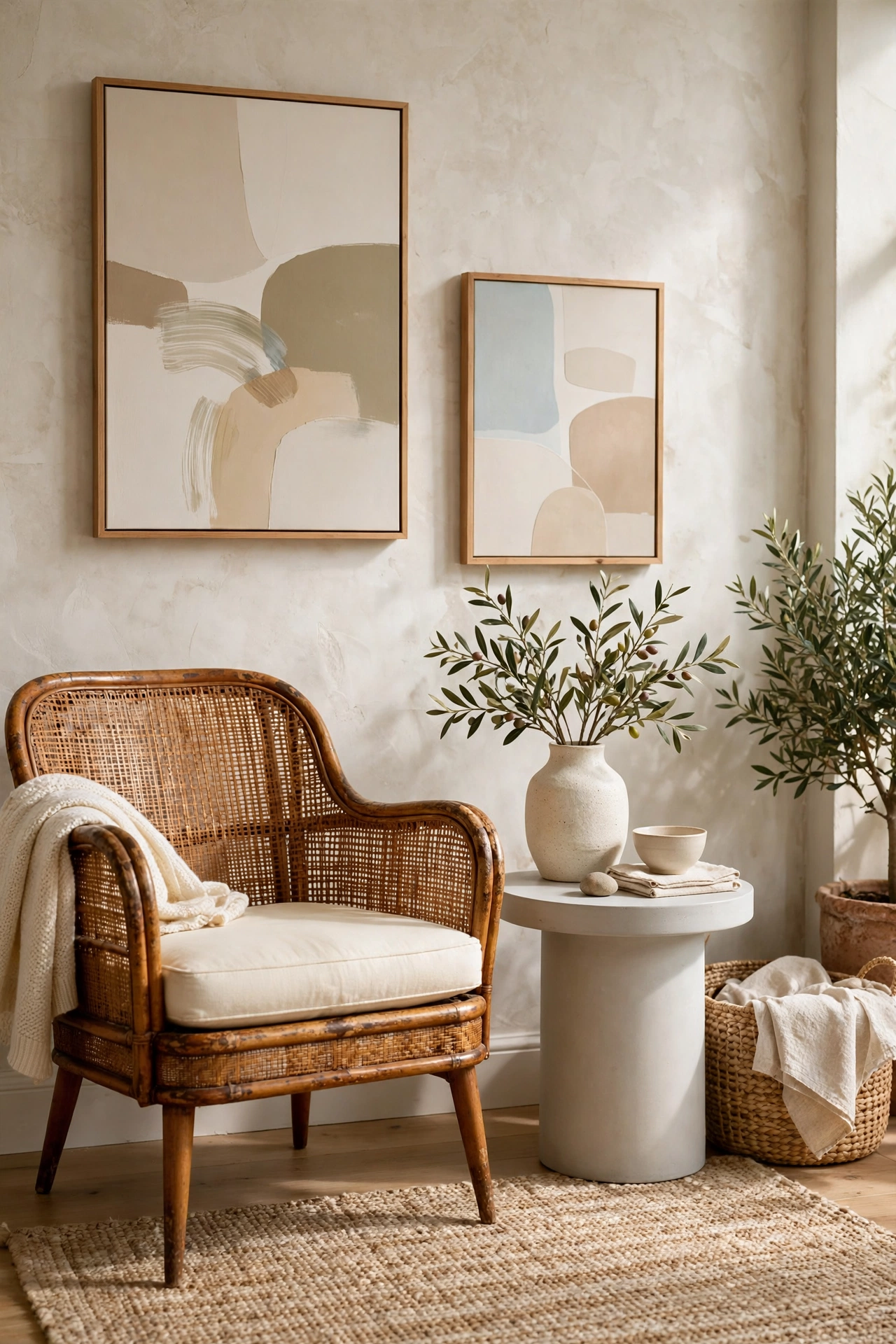
The bucket chair, a rounded, enveloping seat on a swivel or fixed base, is rattan’s most dining-friendly shape. The curved back supports without the bulk of an upholstered chair, and the open weave keeps a dining room feeling light even with six chairs around the table.
Measure seat height against your table: you want roughly 25 to 30 cm between seat and tabletop. Fixed legs are sturdier for daily meals; swivel bases are fun but loosen with constant turning. If the chairs live at a table full-time, skip deep-bowl styles: a wide bowl fights the table edge when you tuck in.
Around a round pedestal table, four rattan bucket chairs soften hard edges and make breakfast feel unhurried. Add washable seat pads for daily-use tables, because crumbs and open weave are not friends. Keep the table simple and let the chairs be the texture story.
8. The Swivel Rattan Accent Chair
A swivel base lets you pivot toward whoever is talking, which is ideal in open-plan living areas where seating flexes between the sofa, the television, and the dining zone without anyone dragging furniture.
Buy the mechanism, not the look: a smooth, silent swivel plate with memory return (the chair glides back to facing forward) marks quality; a gritty, clunky turn means a cheap plate that will loosen. A swivel chair that is too light tips when a child leans on one arm.
Place one between two zones (the gap between a reading chair and the sofa, say) so it can rotate between them. Keep its footprint clear of rug fringes and coffee-table corners. One swivel chair per room; two facing each other feels like an airport lounge.
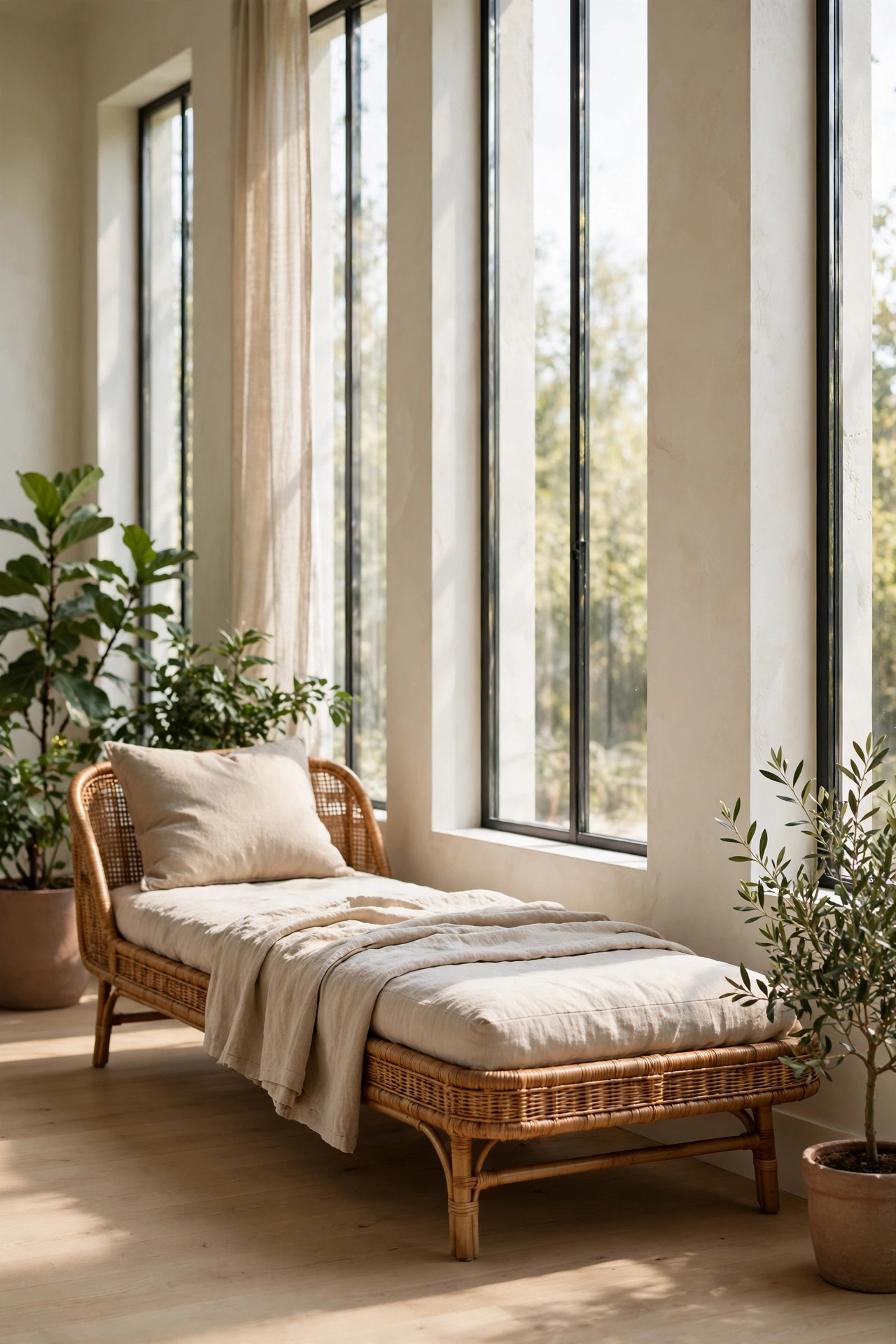
9. The Rattan Chaise Lounger
 Save
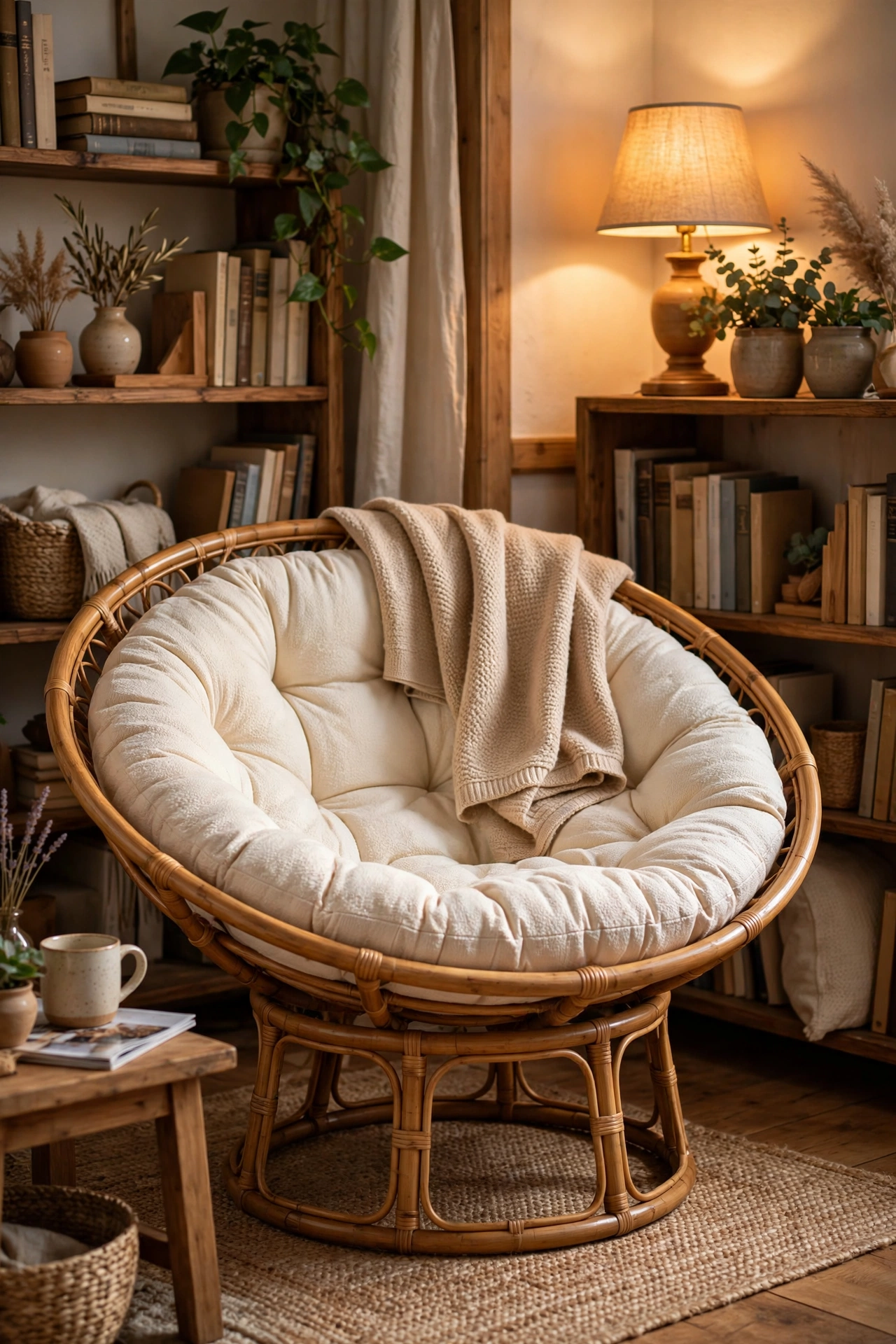
The chaise is rattan’s slow-living statement: a long, low lounger for afternoon light and long books. Adjustable-back indoor versions exist, but fixed, gently reclined ones tend to be better made and more comfortable.
Length is the buying spec. You need at least 150 cm of usable surface to stretch out; shorter “chaises” are really just wide chairs. The weave takes your full body weight here, so it should be double-layered cane over a solid frame. Press down hard on the middle of the seat and watch for excessive give.
Style it along a window wall or in a sunroom, where the horizontal line draws the eye through the space. A folded throw along the seat protects the weave and adds softness. One cushion at the head end is enough; piled pillows defeat its low, clean line.
10. The Bistro Pair
French café rattan chairs, the classic bentwood bistro chair with a woven seat, are best bought in pairs or fours. They are narrow and bring instant atmosphere to small dining corners, kitchen nooks, and balconies.
For a set, consistency matters more than perfection. Check that all chairs in the set sit level by lining them up on a flat floor and looking for rockers. The woven seats should all be the same tension; mixed tension across a set means mixed manufacturing batches.
Tuck a pair into the smallest corner that fits a 60 cm round table and you have a coffee spot. On a balcony, bring cushions in during rain and they weather plenty of use. A small round rug underneath and something green on the table complete the café illusion.
11. The High-Back Fan Chair
 Save
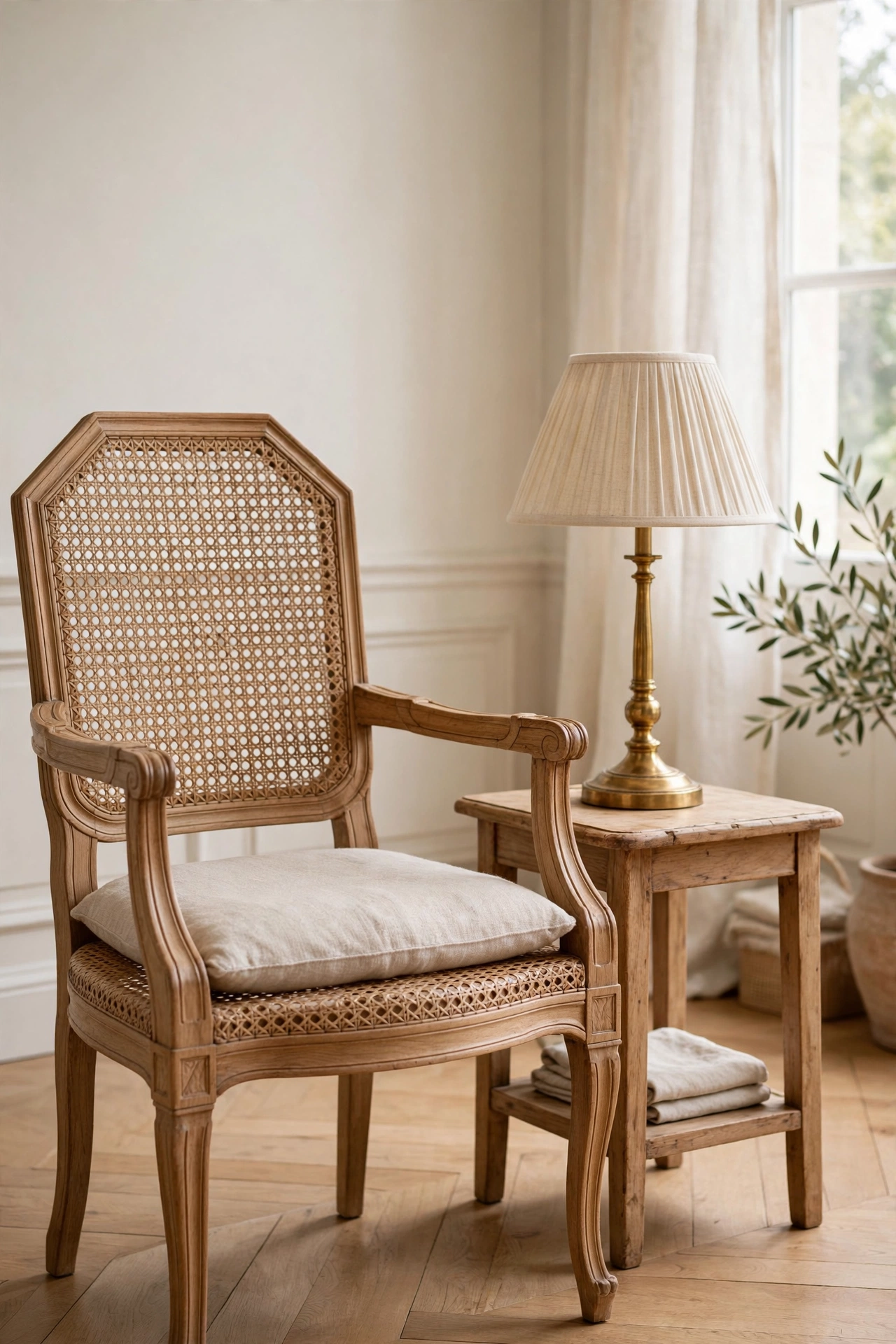
Between the full peacock and a standard armchair sits the high-back fan chair: a tall, curved back that frames the sitter without the peacock’s full theatrical flare. It is the easier, more livable version of the statement look: dramatic from behind, comfortable from the front.
Because the tall back is the selling point, check it is rigid: lean back firmly; flex or cracking means the back poles are too thin. Good versions reinforce the fan with a horizontal pole about two-thirds up. These chairs are for perching more than lounging, so seat comfort matters less than in an armchair.
It works as a bedroom dressing-table chair or at a hallway end where it can be admired from both sides. Style it against a plain wall so the silhouette reads clearly, because patterned wallpaper fights the busy weave. A single cushion ties it to the room’s palette without softening the statement.
12. The Rattan Desk Chair
Rattan at a desk sounds like a compromise, but a well-chosen cane-webbing desk chair beats a cheap office chair for both looks and breathability, especially in a home office that appears on video calls. The open weave ventilates, which matters if you sit for hours.
Ergonomics first, aesthetics second: adjustable seat height (or the exact right fixed height), a backrest that supports your mid-back, and a stable base. A purely decorative rattan chair with no lumbar support will punish you by Thursday. Some makers now build proper task-chair mechanics into a cane-webbing seat, and those are worth the premium.
Budget swap: If a true rattan task chair is out of budget, a cane-webbing dining chair with a separate lumbar pillow does the job for shorter workdays. Pair it with a footrest and you have covered the basics.
13. The Compact Slipper Chair
 Save
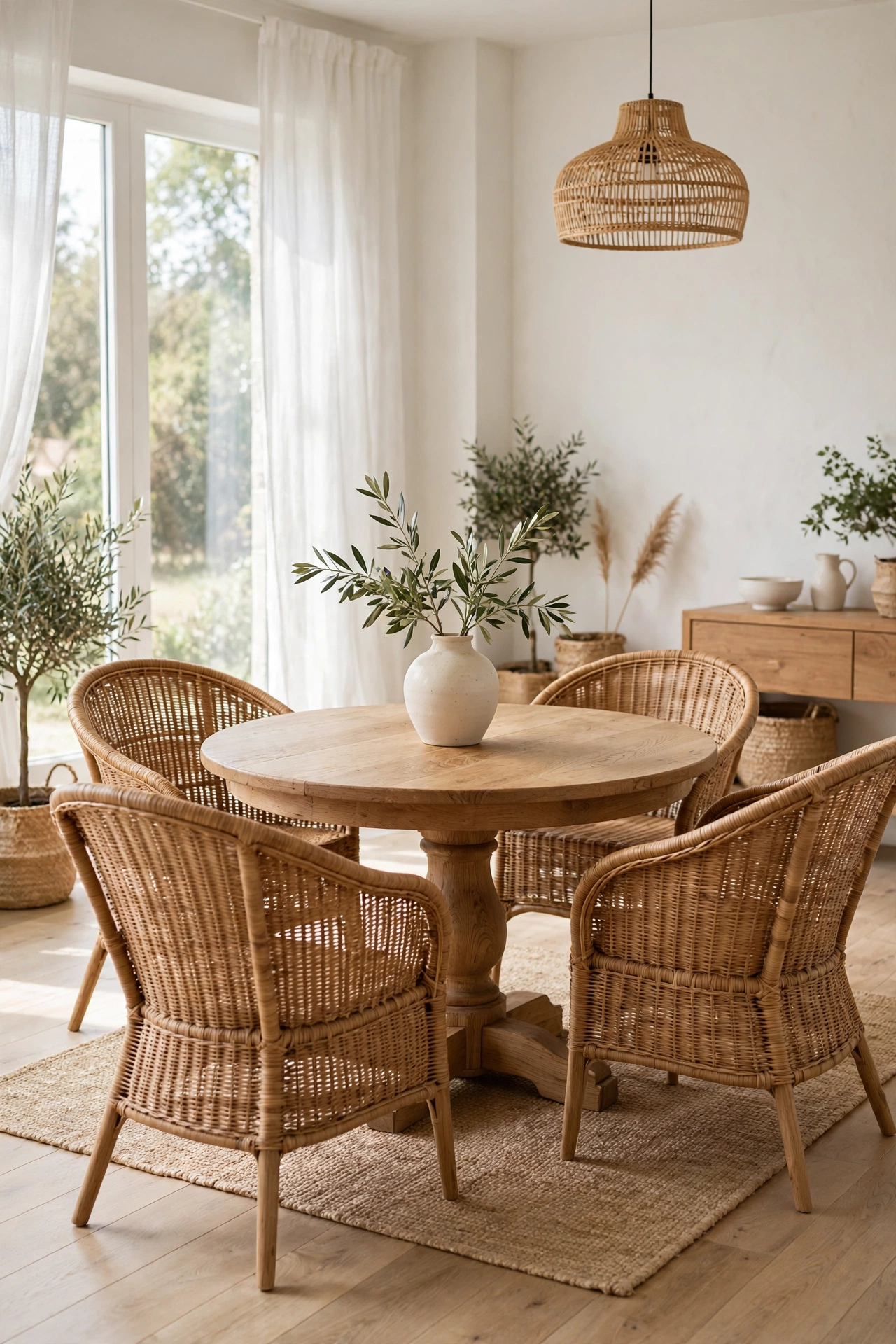
The rattan slipper chair, low, armless and compact, slides into spaces where nothing else fits: the foot of a bed, a hallway nook, beside a vanity.
Measure twice. A true slipper chair sits 30 to 35 cm off the floor with a seat depth under 45 cm; anything bigger is just a small armchair. Armless is the point: arms add 15 cm of width you do not have. Check the legs are splayed slightly outward, which stops a low chair feeling tippy when you stand up from it.
Treat it as jewellery for the room: a cushion in a bold print or rich texture does the talking while the rattan stays neutral. At the foot of a bed it holds the morning’s clothes; in a hallway it is the shoe-putting-on spot. Two slipper chairs across a tiny side table make a reading corner out of a landing.
14. The Indoor-Outdoor Hybrid
Some rattan chairs are built for both worlds (thicker cane, sealed weaves, rust-proof frames), giving you a chair that winters indoors and summers on the patio. For small homes without storage space, that flexibility is worth paying for.
Verify the outdoor claim before you believe it. “Outdoor” should mean a sealed or synthetic-cane weave and a frame that will not corrode; ordinary indoor rattan left in rain swells, darkens, and cracks within a season. Ask specifically whether cushions are weather-rated or need bringing in. The honest answer is usually that cushions come inside.
Style it seasonally: in summer it lives on the balcony with a bright cushion; in winter it moves inside with a wool throw and becomes the reading chair. Cushions in two colourways make it look like two different pieces across the year. Keep a furniture cover for unexpected downpours even on “outdoor” pieces.
15. The Vintage Thrift Find
 Save
The smartest rattan buy is often secondhand. Mid-century rattan was built from thicker cane than most modern reproductions, and a solid vintage frame outlasts a new flat-pack one. Thrift shops, estate sales, and online marketplaces are full of them at a fraction of new prices.
Inspect like a detective. Check every joint by twisting gently: a little play is fixable with re-lashing, a cracked pole is not. Smell for mustiness, which signals the cane lived somewhere damp. Surface wear, faded finish, and tired cushions are all fine; they are cosmetic and fixable. Structural cracks, broken weave strands across the seat, or a wobble you cannot source are walk-away signs.
A vintage find usually needs one refresh to feel intentional: a new seat cushion, a light clean with mild soap and a soft brush, and perhaps a coat of clear matte sealant to even out the tone. Style it with pieces that bridge eras (a modern side table, contemporary art) so it reads as collected rather than leftover. The patina on old cane is something new furniture cannot fake.
Designer note: If you are building a whole-room scheme around natural textures, our cosy autumn comforts checklist covers the layers (throws, lighting, scent) that make rattan feel like part of a plan instead of a lone purchase.
Bringing It All Together
Fifteen chairs, one through-line: buy the structure, then style the story. Tight weave, honest joinery, and the right scale matter more than any trend detail: they separate the rattan chair you keep for a decade from the one you list for sale by spring. Start with the quick-start checklist, pick the silhouette that fits how you sit, and let the styling ideas above do the rest.
Frequently Asked Questions
Are rattan chairs comfortable without cushions?
It depends on the weave. A tight double-layer cane seat is comfortable for an hour or two, especially on curved designs like bentwood armchairs. For all-day sitting (desk work, long dinners), add a cushion around 5 cm thick.
What is the difference between rattan, wicker, and cane?
Rattan is the material: a climbing palm with solid, bendable stems. Cane is the outer peel of the stem, split into strands for weaving. Wicker is not a material at all; it is the weaving technique. So a “wicker rattan chair” is rattan made using wicker weaving.
How do you clean rattan furniture?
Dust weekly with a soft brush or vacuum with a brush attachment, since dust settles into the weave and dulls it. For deeper cleaning, wipe with a barely damp cloth and mild soap, then dry immediately; rattan hates sitting wet. Once a year, boiled linseed oil or a clear matte sealant keeps the cane supple.
Will a rattan chair work with modern decor?
Yes, if you choose the right silhouette. Clean-lined pieces (cane-webbing desk chairs, simple bentwood armchairs) sit happily in modern rooms because their open weave reads as light rather than rustic. Pair rattan with glass, black metal, or sharp-lined upholstery to keep it contemporary.
How long does a rattan chair last?
A well-made indoor rattan chair lasts 15 to 25 years with basic care: kept dry, out of constant direct sun, and dusted. Vintage mid-century pieces still in daily use prove the point. Cheap mass-produced rattan with thin cane and stapled joints might give you 3 to 5 years.

1 thought