
Guests decide how your house feels within about ten seconds of stepping inside. They are still holding cold hands, a coat, and a bag of presents, and they are taking in the light, the smell, and how much room they have to move. The entryway does that work before anyone has seen the tree, tasted a mince pie, or sat down. It is a small space with an outsized job.
Most entryways fail at Christmas for a practical reason, not a decorative one. A console gets piled with post, keys, and a tangle of chargers, then a wreath is hung above it as if that alone will fix the clutter. A garland is draped across a doorframe where it catches on every coat. Fairy lights are added, but the ceiling light stays on, so everything looks flat. The result is not unfestive, exactly. It just feels hurried, and guests sense that in the first minute.
Good Christmas entryway decor starts with the welcome itself, then adds decoration around it. Clear a place for coats, give people somewhere to put a bag, make the light warm, and only then choose the greenery, the ribbon, and the scent. The eight ideas below follow that order, and they work in hallways of every size, from a narrow flat entrance to a wide country hall. Pick the ones that fit your space, do them properly, and leave the rest out.
Start at the Door, Not the Hallway
 Save
Before you hang anything, measure the entry you have. Note the hall width, the door width, and how much daylight reaches the hall at dusk. List the fixed items that must stay, such as a radiator, a shoe rack, or a mirror. A wreath size, a garland line, and a lamp choice that fit those facts will welcome guests instead of crowding them.
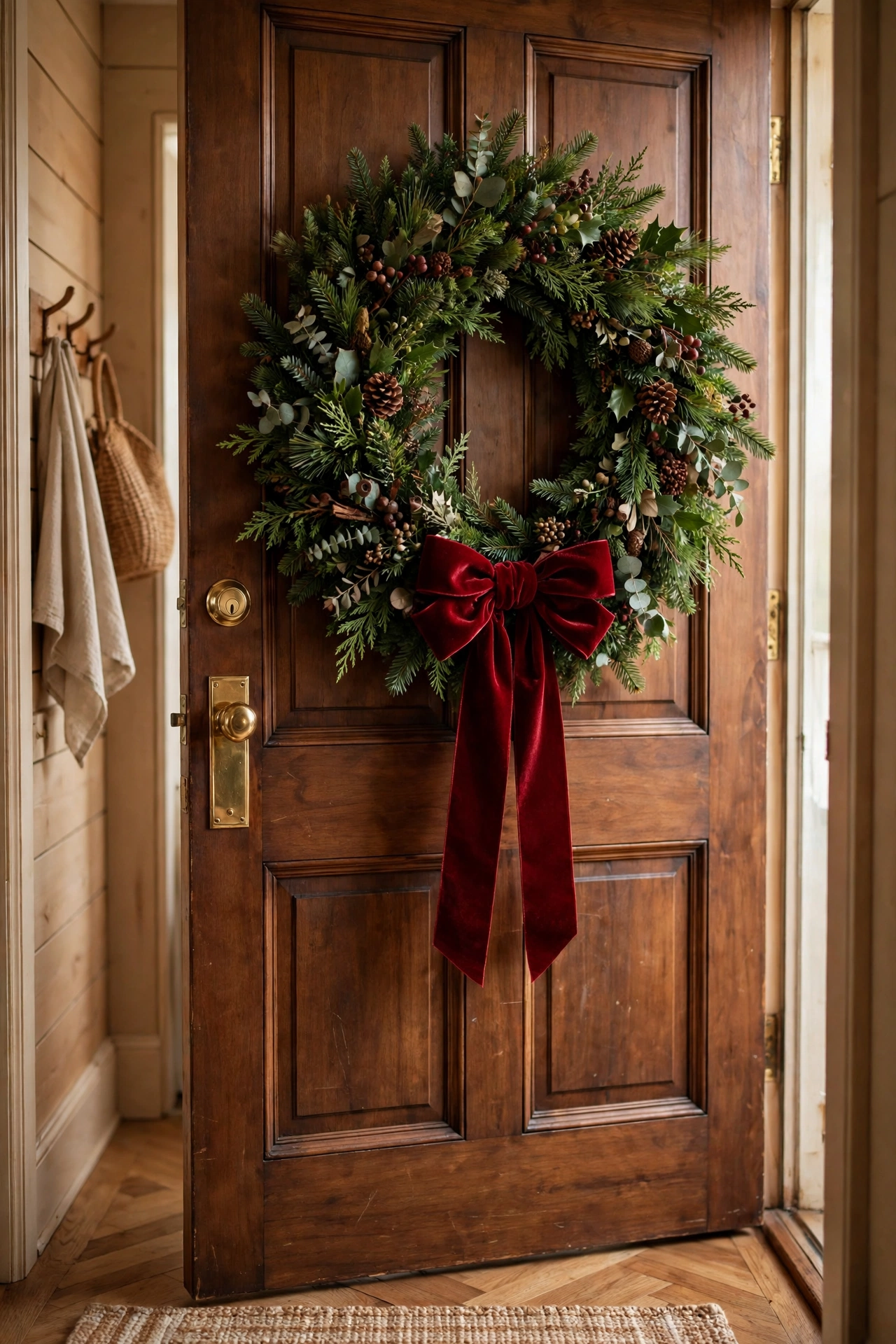
The front door is the first decoration most guests see, and it sets the tone for everything behind it. A wreath that suits the scale of the door matters more than a wreath that cost the most. On a standard door, a wreath around 50 to 60 centimetres across reads clearly from the pavement without swallowing the door. On a wide or double door, go larger, or hang two smaller wreaths side by side so the arrangement does not look lost.
Hang the wreath at eye level, not high up near the top of the door. When it sits too high, guests walk under it without really seeing it, and it looks like an afterthought in photos. A simple hook over the door, or a nail placed properly, holds it steady. Avoid suction hooks on cold glass or painted wood in December, since they tend to fail on the wettest, busiest day.
Ribbon is what turns a plain wreath into a finished one. A wide velvet ribbon in deep red, forest green, or soft gold, tied in a loose bow with long tails, adds colour without clutter. Keep the bow at the top or bottom of the wreath, never in the middle, where it hides the shape. If you want more ribbon ideas before you buy, our Christmas bows and velvet ribbon guide covers widths and tying methods that hold up all month. A warm front porch sets the same tone outside, so check that the doormat is clean, the porch light works, and nothing blocks the path before you style anything inside.
| Door and hall | Wreath to choose | Hang it | Ribbon note |
|---|---|---|---|
| Standard single door | 50 to 60 cm wreath | Eye level, steady hook | Wide velvet bow, top or bottom |
| Wide or double door | Larger wreath, or two smaller side by side | Eye level on each leaf | Same ribbon on both wreaths |
| Door with a glass panel | Slim wreath that clears the glass | Hook over the door, not suction on glass | Shorter tails so the glass stays clear |
| Narrow hall behind the door | Slim wreath, modest bow | Eye level, checked from inside | Keep tails short so coats pass clear |
Styling tip: Step outside, close the door, and look at it as a guest would. If the wreath, the mat, and the light do not read together in one glance, simplify one of them rather than adding a fourth element.
Let Light Do the Greeting
 Save
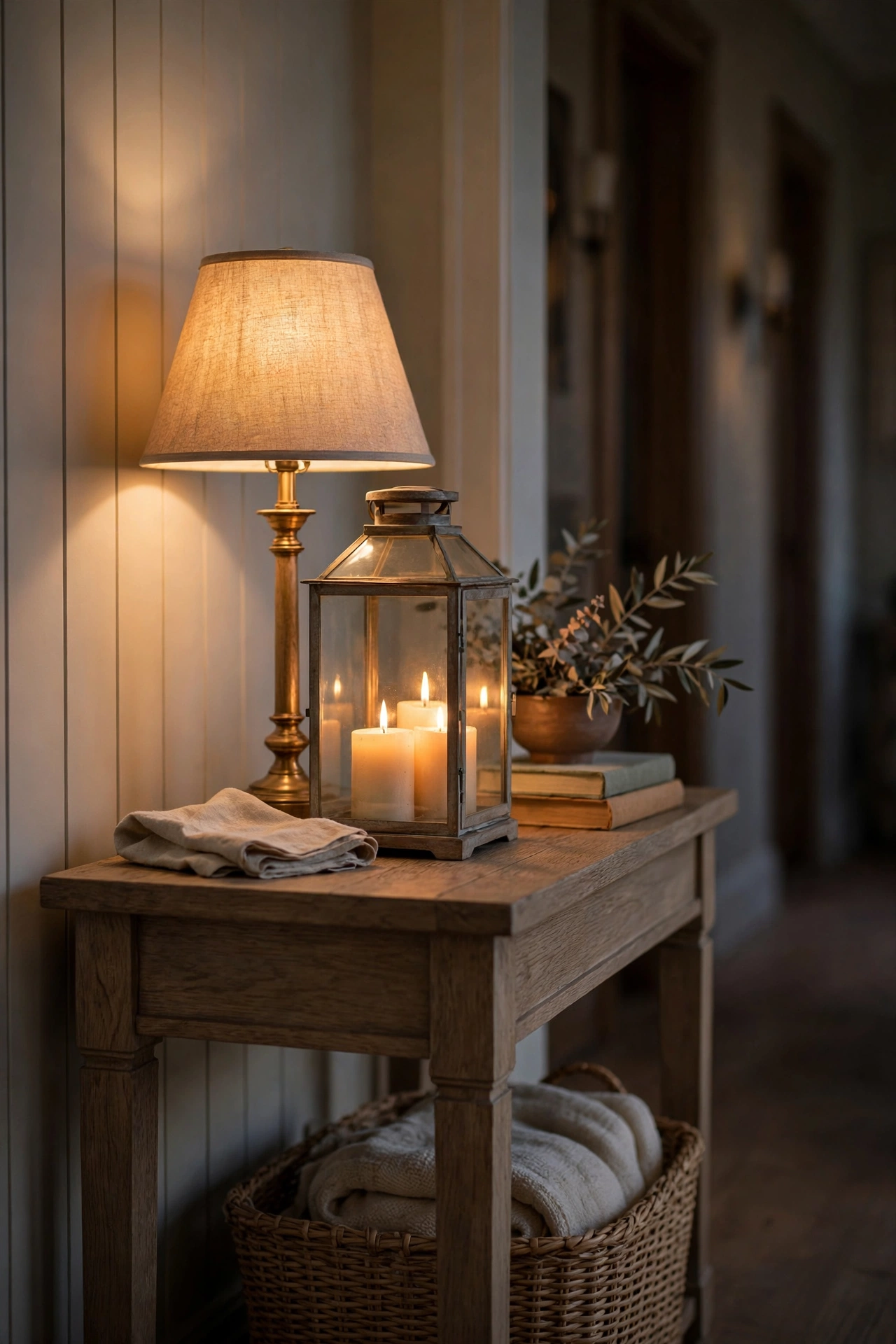
An entryway lit only by a ceiling light feels like a corridor, even when it is decorated beautifully. Overhead light flattens greenery, washes out warm colours, and makes everyone look tired in the first photo of the evening. Turn it down or off in the evening, and let two or three smaller sources carry the welcome instead.
A table lamp on the console is the easiest fix. Choose a warm white bulb, around 2700K, and a shade that throws light sideways as well as down, so the wall behind the console glows softly. Add fairy lights only in one place, along a mirror frame, inside a glass lantern, or tucked into the stair garland. Lights in three spots at once compete with each other and make a small hall feel busy.
Battery candles in lanterns by the door solve the safety worry that comes with real flames near coats and scarves. Put them on a timer so they come on before guests arrive, not after you remember them halfway through the evening. One lantern at floor level and one at console height gives the hall depth, because the eye travels from low to high instead of stopping at a single bright point.
Budget swap: If a new lamp is not in the budget, move a lamp you already own from a bedroom for December. A familiar lamp in a new spot often looks more settled than a cheap new one bought in a hurry.
Give the Console a Clear Job
 Save
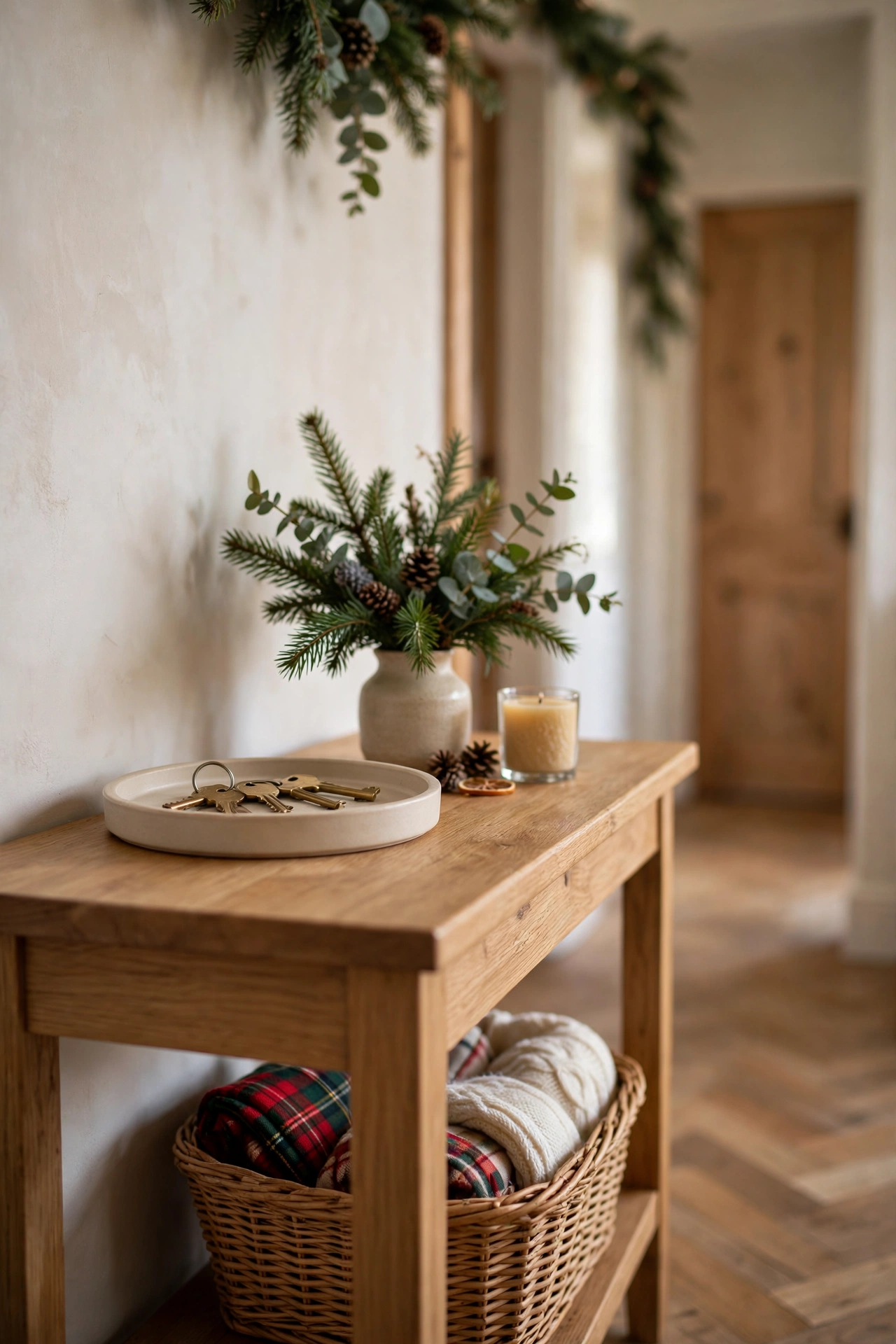
A console table in a hallway has to work, and Christmas decorating often asks it to do the opposite. It gets covered in ornaments, candles, and a bowl of baubles, leaving nowhere for keys, a phone, or a guest’s bag. The fix is to decide what the console is for during December, then style around that job.
Start by clearing it completely. Put back one tray, one lamp or lantern, and one piece of greenery, such as a small vase of evergreen stems or a low arrangement in a stoneware jug. The tray holds the practical items, keys, sunglasses, and post, in one contained group, so the rest of the surface stays clear. The greenery gives the table its seasonal character without needing five separate decorations.
If guests regularly leave bags or coats in your hall, give them a proper alternative before you style the console. A row of three sturdy wall hooks, a lidded basket by the door for scarves and gloves, or a bench with space underneath for shoes will do more for the welcome than any ornament. People relax when they know where to put their things, and a hall without a pile of coats on a chair photographs far better too.
Designer note: Leave one third of the console surface empty. That empty space is what makes the styled part look deliberate instead of crammed, and it gives guests somewhere to set down a cup while they take off a coat.
Test it first: walk in the front door carrying a coat, a bag, and a parcel, exactly as a guest would. Hang the coat, set the bag down, and put the parcel on the console. If the hooks sit too high, the tray overflows, or the empty third of the console has vanished, move one decoration off the surface before guests arrive.
Run Garland Along the Lines Already There
 Save
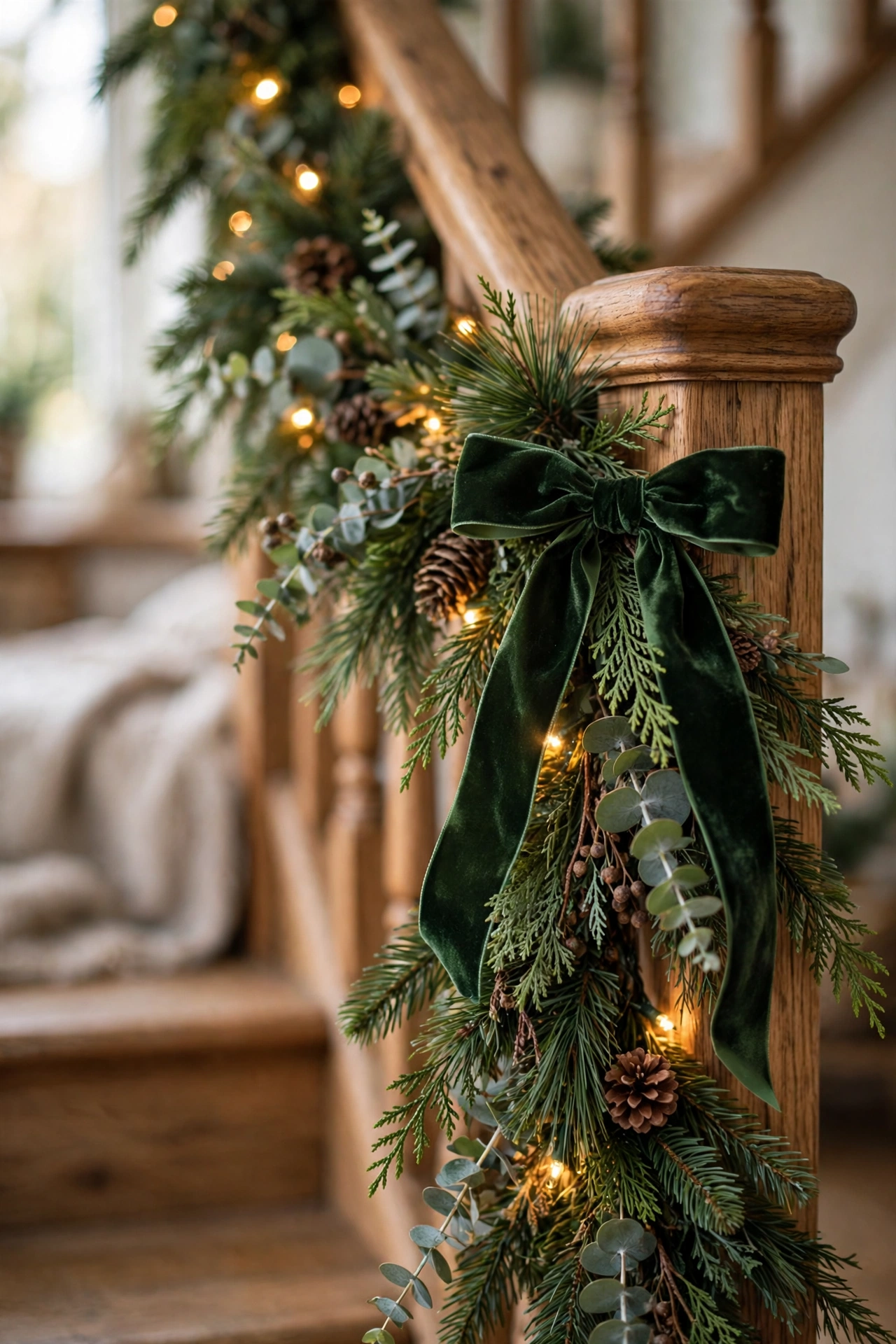
Garland works best when it follows the shape of the hall, not when it is forced across it. A staircase banister, a doorway arch, a mirror frame, and a console edge all give garland a natural line to follow. Choose one of those lines, and let the garland rest along it, rather than draping it across every surface you can reach.
On a banister, secure the garland at three points, top, middle, and bottom, with ribbon or discreet ties, so it does not slide when someone holds the rail. Let it sag slightly between the fixing points. A garland pulled tight looks stiff, while a gentle drape looks generous and photographs well. Keep it clear of the handrail grip itself, so guests can hold on safely, especially older visitors and children.
On a doorway, hang garland only if the door is rarely closed in December, or use a swag on one side instead of a full arch. A full arch over a door that swings constantly will catch, shed needles, and need fixing every day. A single swag tied at the top corner of the frame, with a bow and a few pinecones, gives the same festive signal with far less upkeep. The same thinking works on a mantel in the next room, where our Christmas mantel decor guide shows how garland and stockings sit together without crowding the shelf.
Mix real and faux greenery only if they look alike in colour and texture. A bright, glossy faux garland next to dull, real pine will clash in every photo. If you use faux, choose one with varied needle lengths and a muted green, and add a few real sprigs at the front, where guests see it up close.
Choose a Rug That Can Take December
 Save
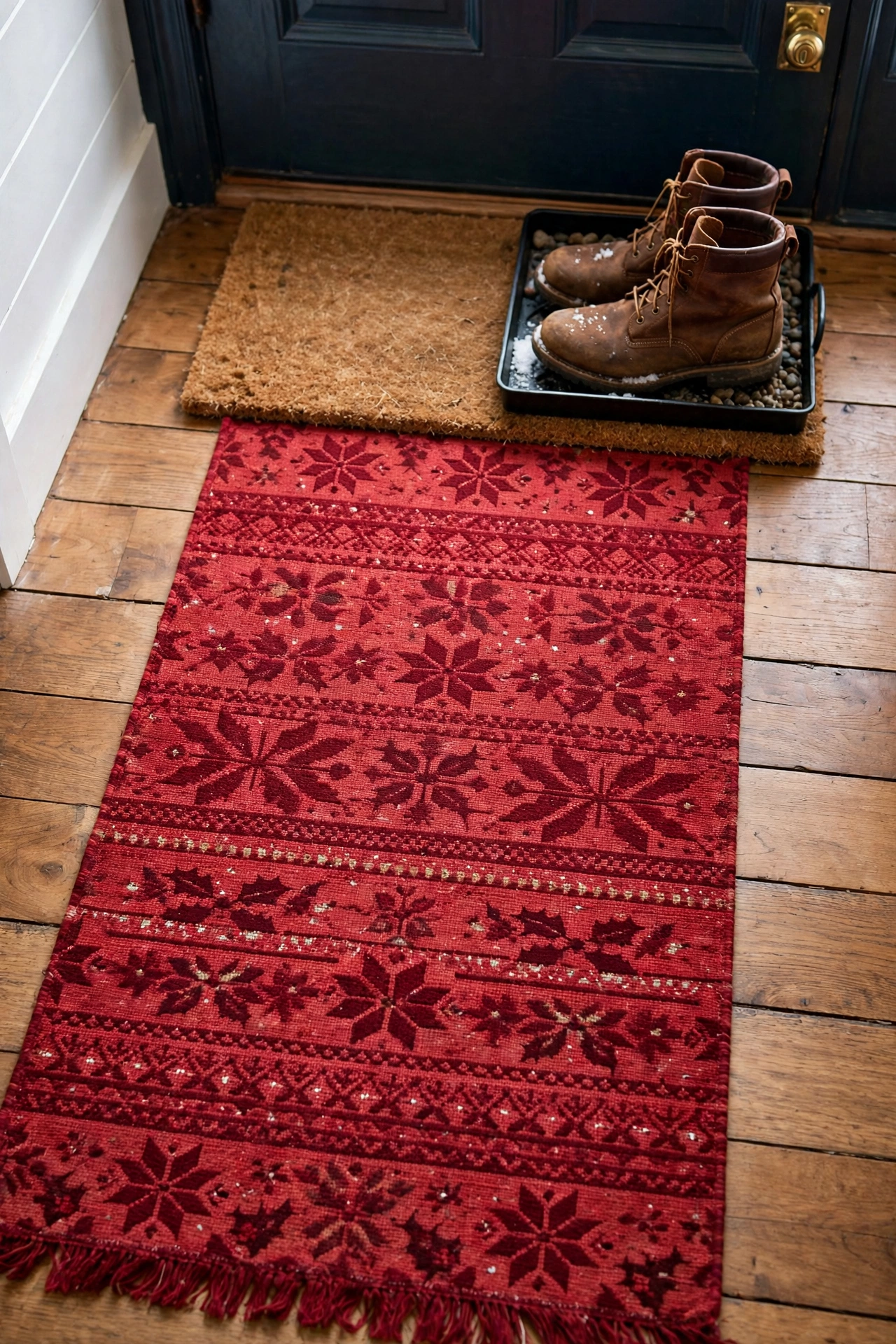
December is hard on hallway floors. Wet boots, grit from the pavement, melting snow, and pine needles all arrive in the first week, and a pale, delicate rug will show every bit of it. The entryway rug is not the place for a precious heirloom in December. It is the place for a rug you can shake out, vacuum, and wash without worry.
A flatweave wool rug, a sturdy cotton runner, or a washable rug in deep red, charcoal, or a pattern handles the season best. Darker tones hide marks, and a pattern hides them better still. A runner down a narrow hall also guides the eye toward the rest of the house, making a small entrance feel longer. Leave at least 15 centimetres of floor visible on each side, so the hall does not look carpeted wall to wall.
Layer a coir doormat outside the door and a washable mat just inside it. The outer mat scrapes off grit, the inner mat catches moisture, and together they protect the rug behind them. That unglamorous detail keeps the entryway looking good on the 23rd of December, not just the 1st.
Try this: Shake the doormats out once a week in December, and vacuum the runner twice a week. Five minutes of upkeep keeps the entrance feeling fresh, while a neglected mat makes even a beautiful wreath look tired.
Add Scent and Sound in Small Doses
 Save
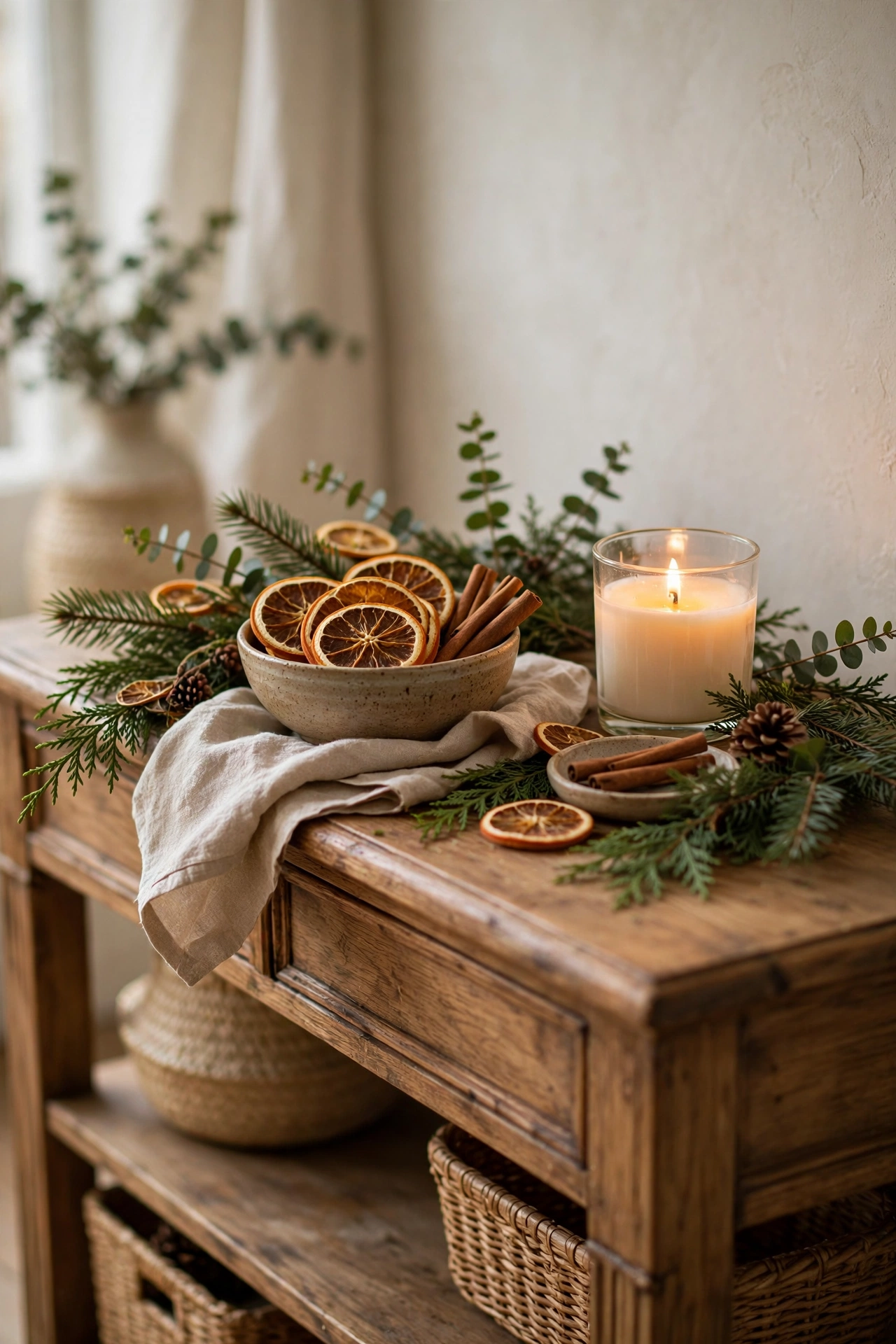
Guests notice scent before they notice most decorations, and they remember it after they leave. That makes scent powerful, but also easy to overdo. One scent in the entryway is enough. A simmering pot on the stove, a candle lit an hour before guests arrive, or a few cinnamon sticks and dried orange slices in a bowl on the console will all do the job. Two or three competing scents, a plug-in, a candle, and a reed diffuser together, smell like a shop rather than a home.
Keep scent away from the door itself, where cold air will blow it straight outside, and away from coats, which absorb it. The console or a shelf halfway down the hall are better spots, because guests walk into the scent gradually. If anyone in the household has allergies or asthma, choose unscented candles and rely on fresh greenery instead. Real pine, cedar, and eucalyptus give a gentle, natural fragrance without added chemicals.
Sound works the same way. A small speaker playing low, instrumental Christmas music adds warmth, but if guests have to raise their voices over it in the hall, it is too loud. Silence is better than loud music, and a quiet hall with warm light feels more welcoming than a noisy one.
Styling tip: Light a candle 45 minutes before guests arrive, then blow it out when they come in. The scent lingers without the flame competing with coats, scarves, and wrapping paper near the door.
Make a Small Entryway Feel Generous
 Save
Small entryways need a different approach, not a smaller version of a large hall. Cramming a console, a bench, a tree, and a garland into a space barely a metre wide will make it feel smaller, not more festive. The goal is to give the eye somewhere to rest, and the body somewhere to move.
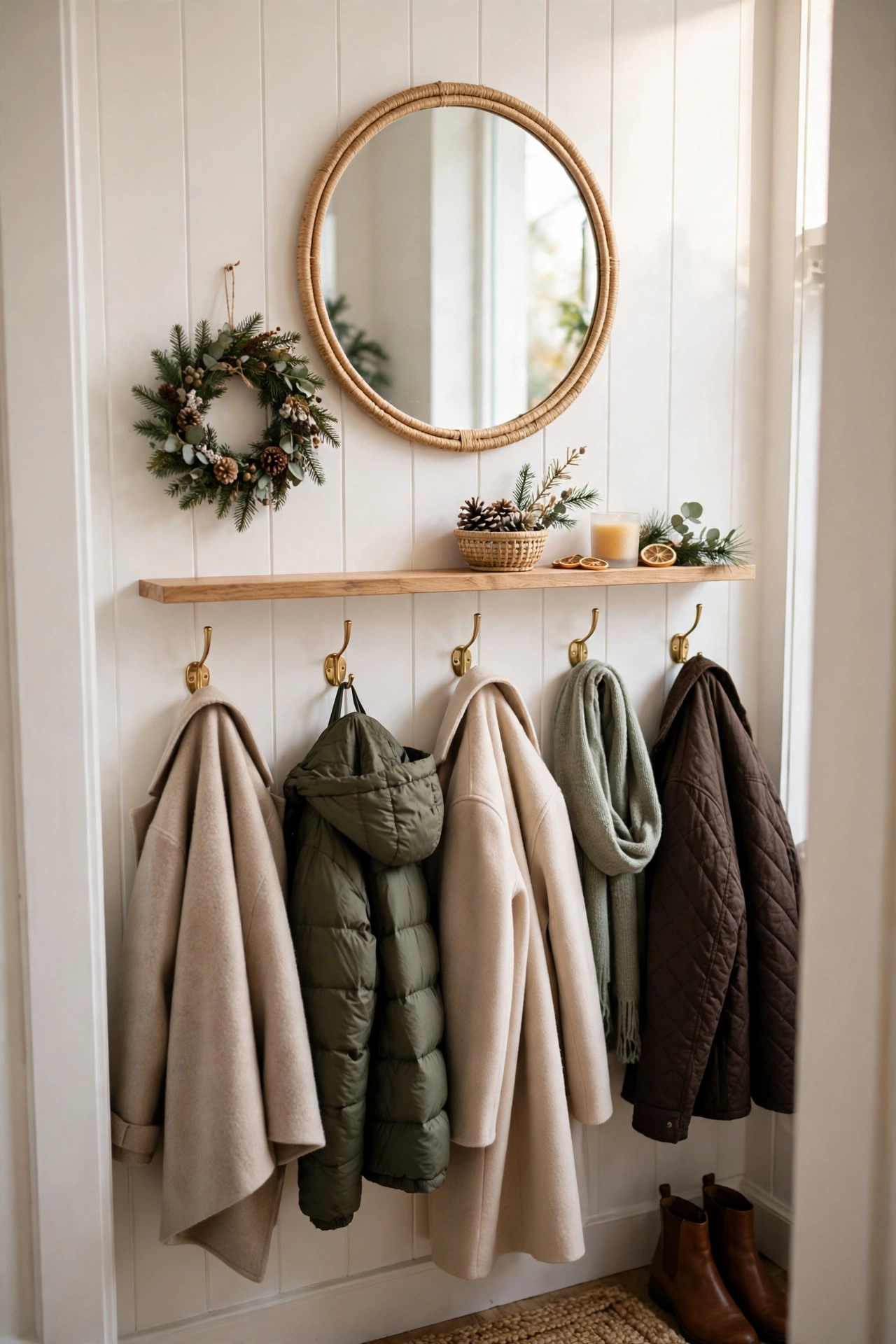
A mirror is the single most useful item in a small entrance. Hung above a narrow console or a wall-mounted shelf, it bounces light back into the hall and makes the space feel deeper. Add a simple wreath on the mirror, or a small garland along its top edge, rather than filling the wall with separate decorations.
Use the wall, not the floor, wherever you can. Wall hooks for coats, a slim shelf for keys and a candle, and a hanging planter with evergreen stems all keep the floor clear for feet. A small stool tucked against the wall gives guests somewhere to sit to change shoes without needing a full bench. In a flat, a tall arrangement of branches in a vase by the door can stand in for a tree, giving height and scent without taking up floor space.
| Small‑space problem | A fix that keeps the hall usable |
|---|---|
| No room for a console | A wall shelf 20 centimetres deep, with a tray for keys |
| Coats pile on a chair | Three hooks at different heights for all ages |
| The hall feels dark | A mirror opposite the door, plus one warm lamp |
| No space for a tree | Tall branches in a vase, with a few baubles and lights |
If your home is small overall, the entryway does not need to carry the whole Christmas look. Let it introduce the theme, a colour, a ribbon, a scent, and let the living room carry the fuller display. Our Christmas living room decor ideas show how that handover works, so the hall feels like a beginning rather than a separate, crowded room.
Keep It Looking Good on the 23rd, Not Just the 1st
 Save
The hardest part of entryway decorating is not the first weekend. It is the third week, when post piles up, parcels arrive daily, shoes multiply, and the garland starts to shed. An entryway that only looks good on the day it is decorated will frustrate you for the rest of the month. Plan for upkeep from the start, and December gets easier.
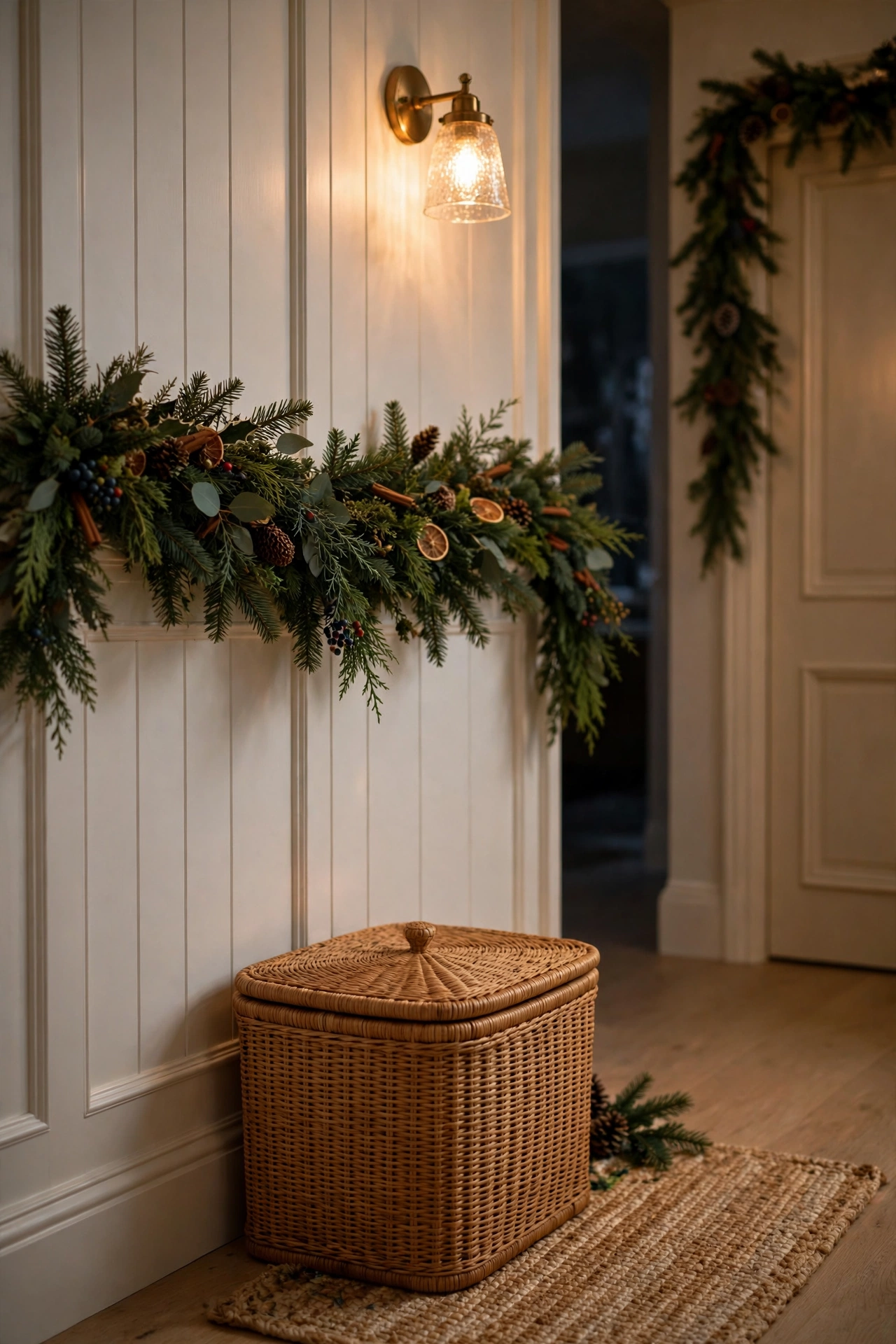
Choose decorations that age well. Faux greenery, dried orange slices, pinecones, and velvet ribbon all look the same on the 23rd as they did on the 1st. Fresh foliage needs water and a cool spot away from radiators, or it will dry out and drop needles across the floor. If you love fresh greenery, use it in one place, such as the wreath, and use faux elsewhere.
Build a five-minute evening reset into December. Hang coats, clear the console tray, shake the mat, and straighten the runner. Keep a lidded basket by the door for daily clutter, parcels, and spare gloves, and empty it once a week. Guests never see the basket’s contents, only the tidy hall around it.
Finally, plan the takedown while you decorate. Note where each item lives in January and keep the storage box near the hall. An entryway that is easy to pack away is one you will enjoy decorating again next year.
The combination: wreath at eye level, warm light in two or three small sources, console one-third empty, and greenery following one line through the hall.
Bringing It All Together
A welcoming Christmas entryway is not about having the most decorations. It is about giving guests room to arrive, light that flatters the space, a place for their coat, and one or two beautiful details that tell them Christmas has started. Start at the door, layer the light, keep the console useful, and choose greenery that follows the lines of your hall. Add scent in a small dose, make a small space work with mirrors and wall storage, and plan for the upkeep that keeps it looking good all month. Do those things, and the first ten seconds inside your home will feel as warm as the rest of the evening.
Frequently Asked Questions
How early should I decorate my entryway for Christmas?
Most households decorate the entryway in the last week of November or the first weekend of December, so it is ready for the first guests of the season. If you use fresh greenery, wait until early December so the wreath and garland stay fresh through Christmas Day. Faux greenery and ribbon can go up earlier without any loss of quality.
What is the best wreath size for a standard front door?
A wreath 50 to 60 centimetres across suits most standard doors, because it reads clearly from the pavement without hiding the door itself. Measure your door first, and choose a wreath about two-thirds the width of the door. On a wide or double door, use a larger wreath or a pair of matching smaller ones.
How do I stop hallway garland from shedding everywhere?
Choose faux garland for high-traffic spots like banisters and doorframes, and reserve fresh garland for a wreath or a vase where it is touched less often. Secure garland at three points so it does not drag, keep it away from radiators, and shake it outside once a week. A quick vacuum of the runner after shaking keeps needles from spreading through the house.
Can I decorate a tiny entryway without making it feel cramped?
Yes, by using the walls instead of the floor. A mirror, wall hooks, a slim shelf, and a tall vase of branches give festive character without taking up walking space. Keep to one main colour and one type of greenery, leave part of the wall bare, and let the living room carry the fuller display.
Is it safe to use real candles in an entryway?
Real candles need care in a hallway, because coats, scarves, and wrapping paper pass close by. Battery candles in lanterns give the same warm glow without the risk, and they can stay on a timer all evening. If you use real candles, keep them in a stable holder, away from anything flammable, and never leave them burning unattended.
3 thoughts