Most living rooms fail at Christmas for a simple reason. The tree gets all the attention, and everything around it is left to fend for itself. You end up with one sparkling corner and a sofa that looks like it wandered in from July, plus a coffee table buried under wrapping paper by the second week of December.
The result feels busy rather than festive. You keep adding bits, a new ornament here, a candle there, hoping the room will suddenly pull together. It rarely does, because Christmas decorating is not about how many things you own. It is about where the eye lands first, where people actually sit, and how the room feels at seven in the evening when the lamps are on.
Good Christmas living room decor starts with those three questions, and it builds slowly from there. The eight looks below work in real rooms, with real sofas and real clutter, and each one photographs well because it looks settled in person first. Pick two or three, do them properly, and leave the rest for another year.
Start With the Tree, Then Build Outward
 Save
Choose the tree spot before you buy a single decoration. It needs a corner or a wall stretch where it can be walked around, plugged in without a cable trailing across a walkway, and seen from the sofa. A tree squeezed behind a door, or shoved against a curtain, will fight the room all season no matter how pretty the baubles are.
Once the spot is set, pick two main colours and one metal, then stop. Deep red, warm cream and brass is a combination that suits almost any sofa colour. Forest green, soft gold and wood tones feel calmer and more grown up. Mixing every colour you own is the fastest way to make a living room look like a shop window in January, all noise and no rest.
Hang the lights first, working from the inside of the branches outward, and step back to check for dark patches before any ornaments go on. Then add larger ornaments low enough for children to admire, and save the fragile, detailed pieces for eye level and above. Finish with a simple topper that matches the scale of the tree, not a giant star that leans sideways by Boxing Day. If you want more tree inspiration before you start, our Christmas tree decorating ideas cover themes and colour schemes in detail.
Styling tip: Keep the presents out of the room until the last few days, or corral them in one basket. A tree surrounded by boxes for three weeks makes the whole corner look like storage.
Layer the Sofa Until It Invites a Long Sit
 Save
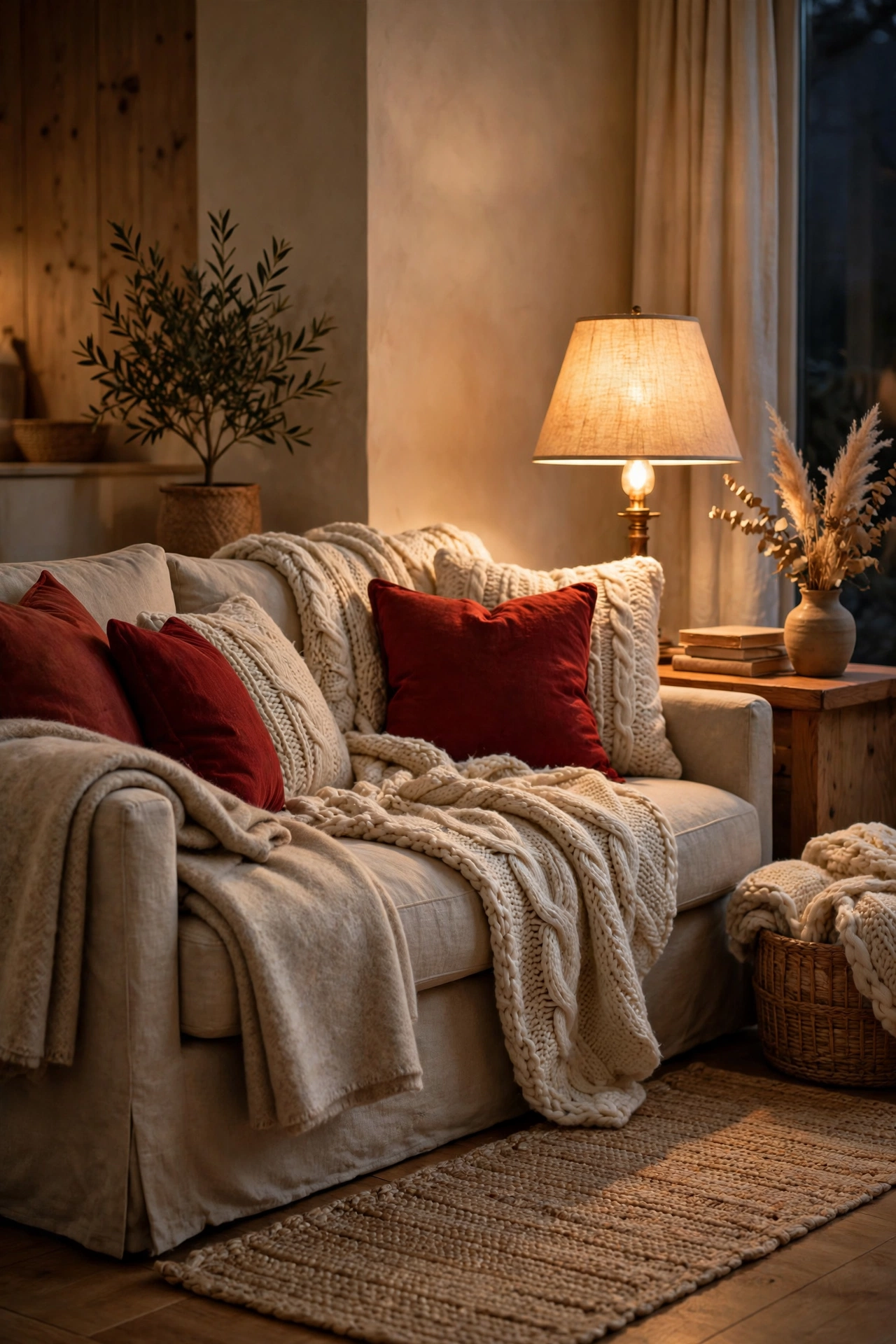
A Christmas sofa should look like somewhere you want to stay for two hours, not a display you are afraid to touch. Start with what you already have. If your sofa is grey, cream or navy, you barely need to change it. Add one chunky knit throw draped over one arm and one end of the seat, so it looks used rather than arranged.
Cushions work best in odd numbers and mixed textures. Try two velvet cushions in a deep seasonal colour, one patterned cushion that picks up a colour from your tree, and one plain cushion in the sofa’s own tone to give the eye a rest. A cushion that matches everything exactly is usually the one that makes the arrangement look flat.
Fold, do not bunch. A throw folded in thirds over the back of the sofa reads as tidy and generous, while a throw crumpled in a ball reads as laundry. Put a second, lighter blanket in a basket beside the sofa for guests who run cold. That small touch matters more than a fifth cushion, because comfort is what people remember after they leave.
Budget swap: If new velvet cushions are not in the budget, swap just the covers. Two covers in a rich colour cost far less than four new cushions and change the whole sofa.
Let the Fireplace Set the Room’s Mood
 Save
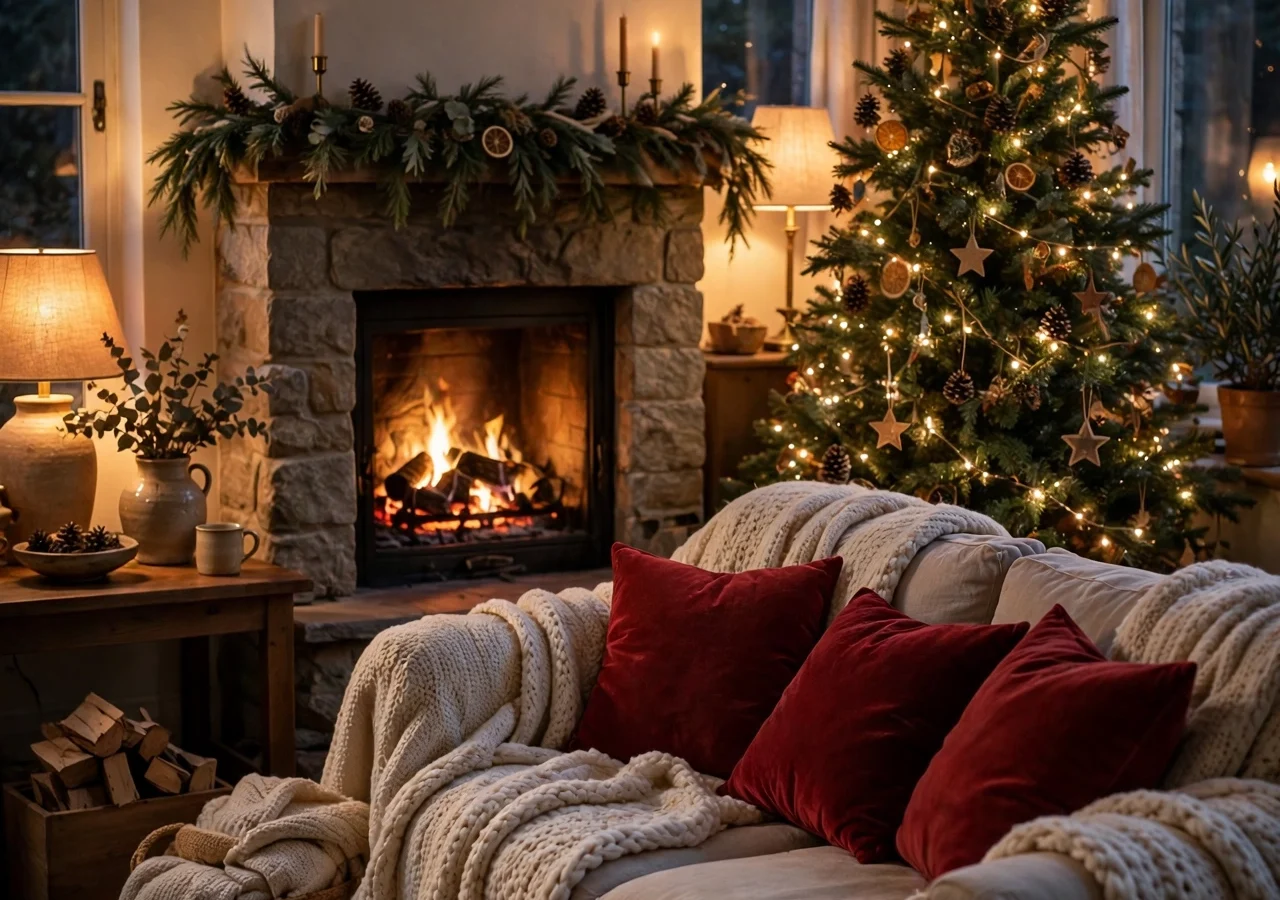
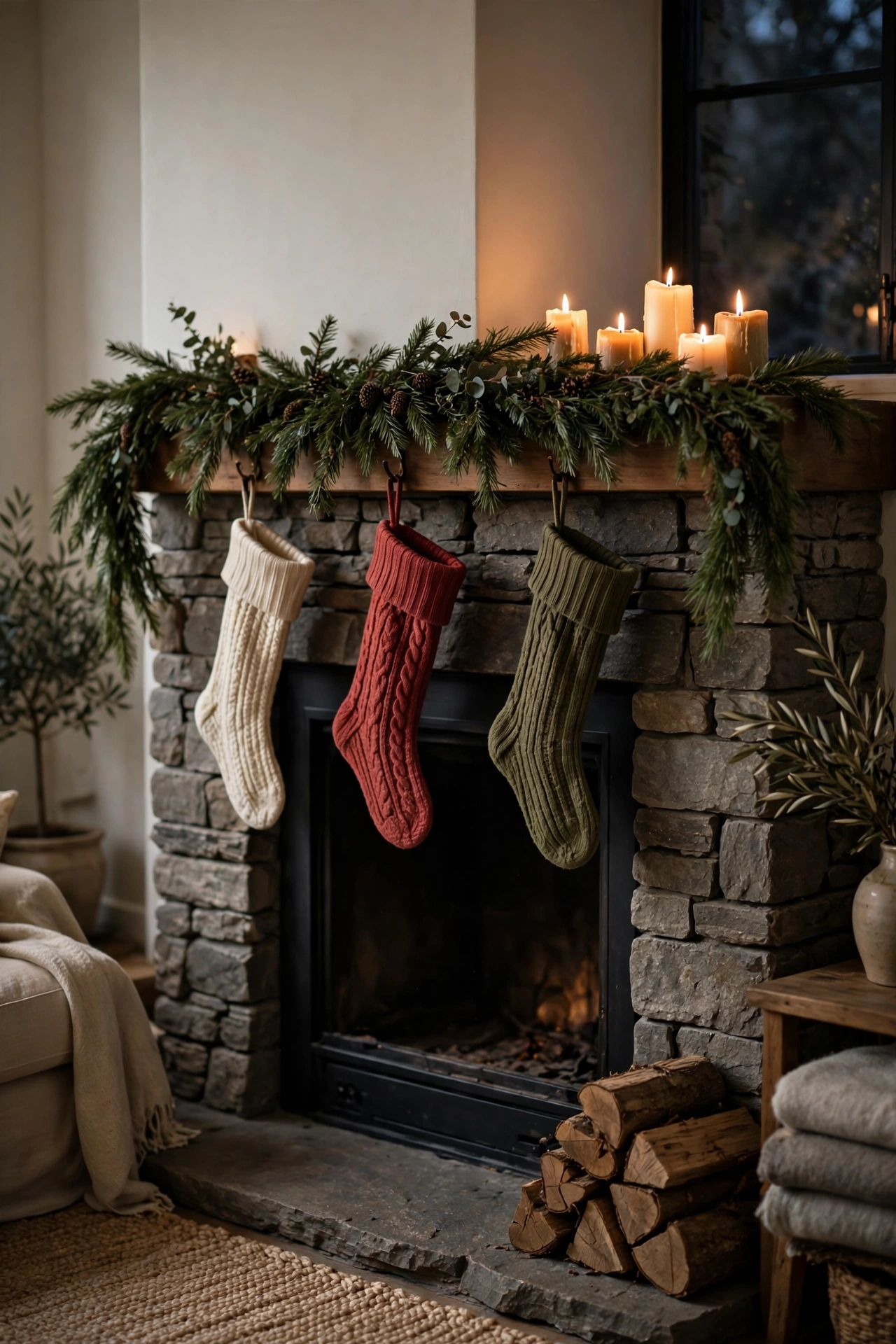
The fireplace, real or electric, is the second anchor in most living rooms, and it earns that role by being at eye level when you sit down. Keep the mantel simple. A fresh or faux evergreen garland, allowed to drape a little at each end, does more work than a row of small ornaments lined up like soldiers.
Hang stockings only if you have a safe place for them. A stocking hung from a mantel that cannot hold its weight will slide off at the worst moment, usually during a photo. Use proper stocking holders, or hang them from a console table or a wall hook instead. Three stockings with space between them look better than six crowded together.
Candles belong in groups of two or three, at different heights, and never directly under the garland if the garland is real foliage. Battery candles solve that worry completely, and they let you leave the glow on all evening without checking the flame every half hour. Add one larger item to one end of the mantel, a lantern or a framed print, so the arrangement has a clear high point. For garland and stocking combinations that suit different mantel widths, see our Christmas mantel decor guide.
Light in Layers, Not One Bright Ceiling
 Save
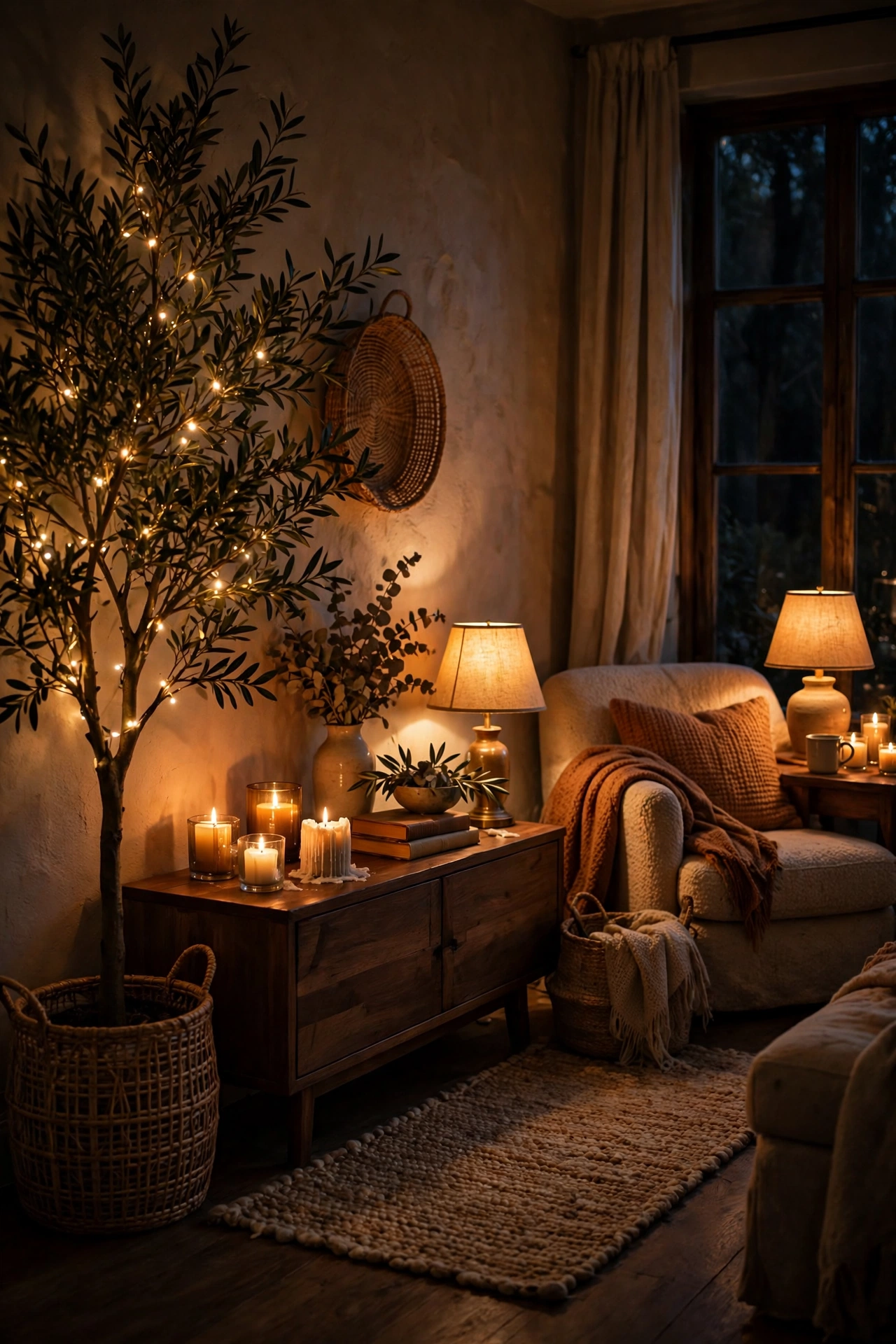
Christmas lighting fails when the ceiling light stays on. Overhead light flattens every decoration, washes out tree lights, and makes everyone look tired in photos. Turn it off in the evening, and let three smaller sources do the work instead.
The first layer is the tree itself, which should be on a timer so it glows before you sit down. The second layer is lamps, one on each side of the room if you can manage it, fitted with warm white bulbs. The third layer is candles or fairy lights on a shelf, a windowsill or a side table. Together they create pools of light with soft shadows between them, which is exactly what makes a room feel cosy on camera as well as in person.
Check your bulb colours before you mix them. Cool white fairy lights next to warm white lamps will clash in every photo, even if you do not notice it with your eyes. Warm white throughout, around 2700K, keeps skin tones soft and makes wood, brass and red look richer.
Designer note: Take one test photo with the ceiling light off and the lamps on before guests arrive. If the photo looks flat, you need one more small light source at the far end of the room, not a brighter bulb overhead.
Style a Coffee Table That Still Works
 Save
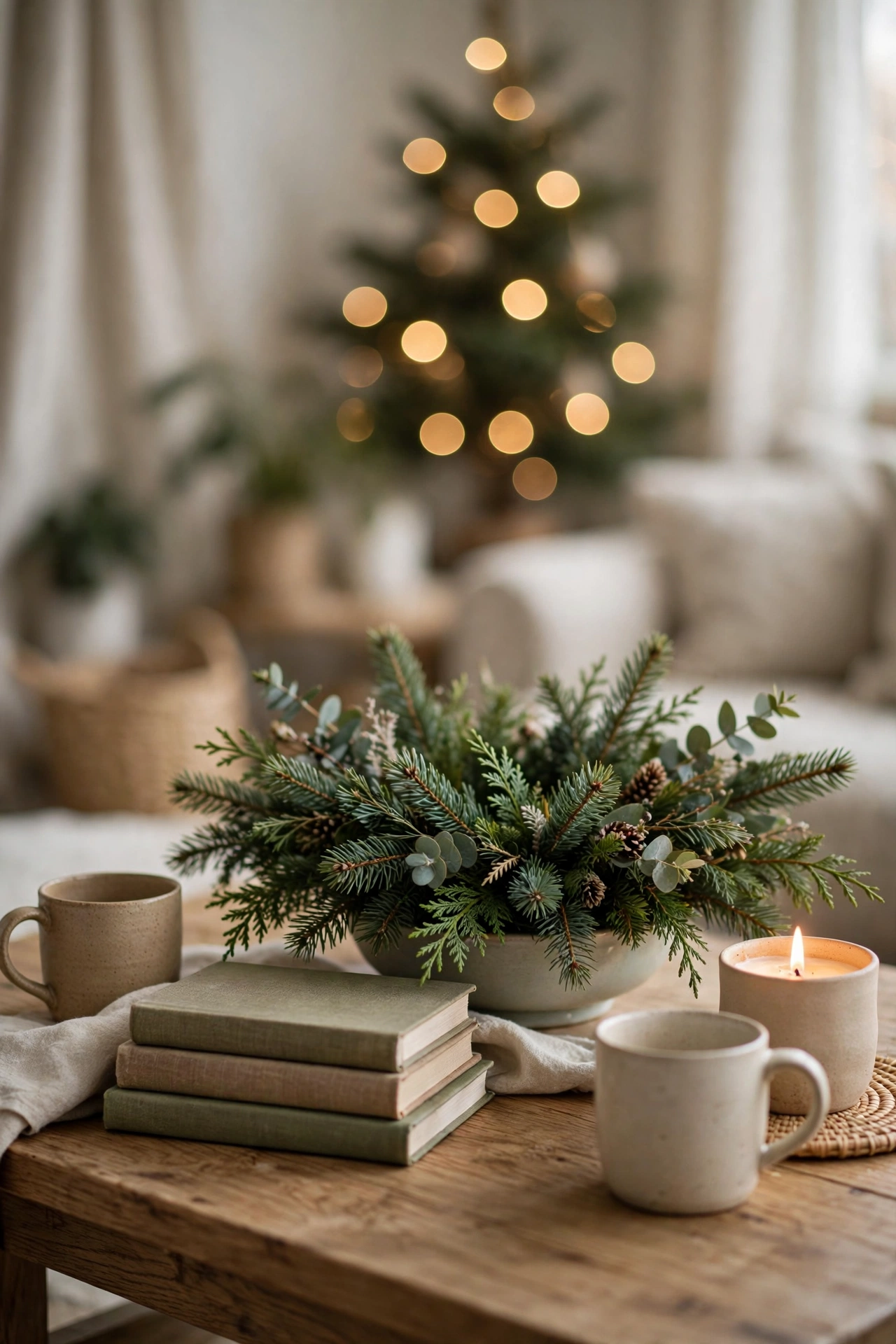
A coffee table at Christmas has two jobs, and most decorated ones only manage one. It has to look good in a photo, and it has to hold actual cups, a book and a remote without everything being moved to the floor. Start by clearing it completely, then put back only one low arrangement.
A shallow tray is the easiest fix. It holds a candle, a small evergreen sprig and a couple of ornaments in one contained group, and the whole tray can be lifted aside when you need the table for a board game. Keep the arrangement low, below eye level when seated, so people can talk across it without leaning sideways. If the coffee table also holds drinks on party night, borrow a trick from our Christmas table decor ideas and keep one arrangement low and one surface clear.
Books help more than people expect. A stack of two or three books with plain covers anchors the tray and gives the table some weight. Avoid tall candlesticks in the middle of the table, since they block conversation and get knocked over. One scented candle, lit only when you are in the room, adds more atmosphere than five unlit ones ever will.
Try this: Leave one third of the coffee table completely empty. That empty space is what makes the styled part look intentional instead of crowded.
Dress the Windows for After Dark
 Save
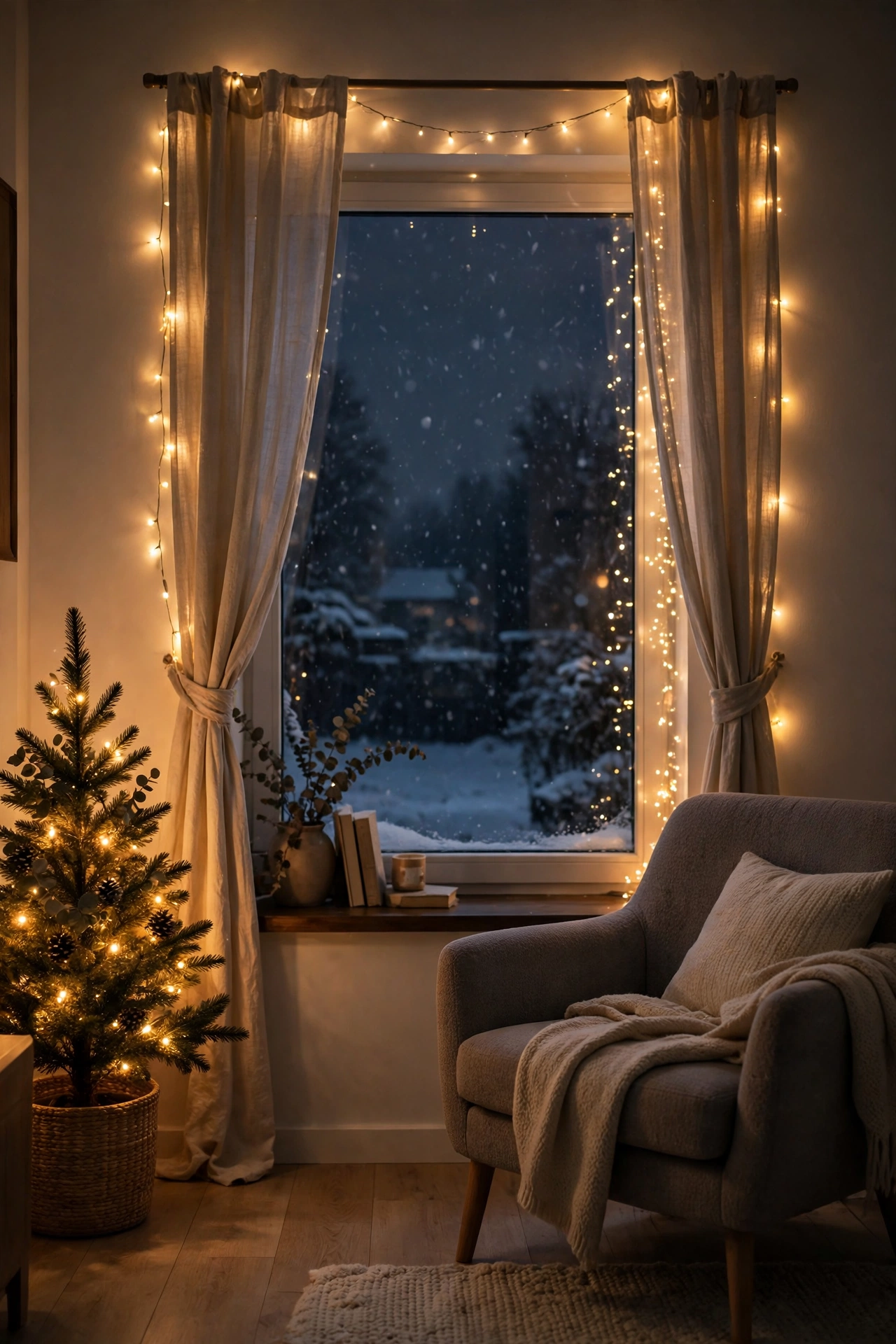
Windows matter most at Christmas after dark, when they turn into black rectangles unless you dress them. A simple set of warm fairy lights along the frame, or a wreath hung in the centre of the main window, changes the whole room from the inside and from the street.
Curtains help too, and they do not need to be new. Heavy curtains in a plain colour, pulled to the sides of the window, frame the lights and keep draughts out. If your curtains are light and thin, add a pair of heavier side panels just for December. The room will feel warmer the same evening, and the window will photograph as a feature rather than a dark gap.
Avoid covering the glass with too many window stickers or hanging ornaments at different heights. One clear idea per window reads better than five competing ones. A single star light or a simple wreath, hung at the same height on matching windows, gives the room a calm rhythm that the eye follows without effort.
Styling tip: Put the fairy light plug on a timer that switches on at dusk. Windows that glow before you think about them feel like part of the house, not a chore you keep forgetting.
Repeat One Ribbon, One Metal, One Green
 Save
This is the trick that makes a whole living room look planned, even when you decorated it over several weekends. Choose one ribbon, one metal and one green, then repeat each of them in at least three places. The repetition is what ties the tree, the mantel and the coffee table together.
Deep red velvet ribbon is a good starting point. Tie it on the tree, use a length of it on the garland, and finish a wreath with the same ribbon. Brass, repeated as ornament caps, a candle holder and a picture frame, gives the room a warm thread to follow. For the green, use the same kind of foliage on the mantel and the table, so the room does not jump between pine, eucalyptus and holly in every corner. Our Christmas bows and velvet ribbon guide shows how far one ribbon can go.
Resist the urge to add a second ribbon because it was on sale. A room with one strong ribbon looks edited, while a room with three ribbons looks undecided. The same rule holds for metals. Brass and silver can share a room, but one of them should clearly lead, with the other appearing only in small touches.
Budget swap: Ribbon is one of the cheapest ways to refresh last year’s decorations. New ribbon on old ornaments and an old garland can make the whole room feel new for very little money.
Leave One Quiet Corner for Photos and Rest
 Save
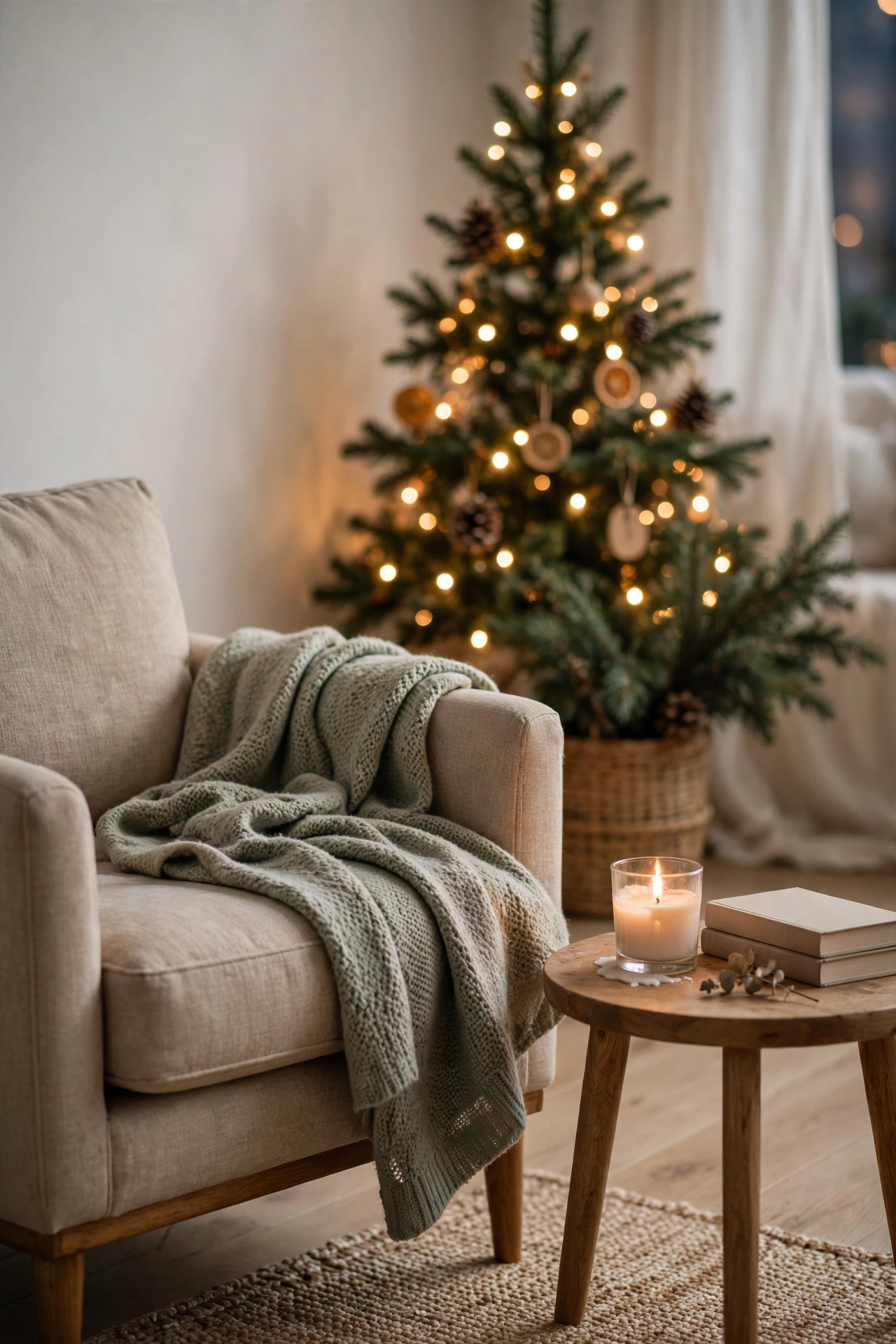
Every Christmas living room needs one corner that is not trying hard. An armchair with a throw, a small side table, a candle and a clear view of the tree is enough. This corner does two jobs. It gives one person a place to sit with a book when the main sofa is full, and it gives you the best photo spot in the room.
Keep this corner free of wrapping paper, charging cables and bags. A single framed photo or a small plant is all the decoration it needs, because the tree glow behind it does the rest. When you take photos here, sit in the chair rather than standing over it, and let the tree lights blur softly in the background. That depth is what makes a phone photo look like a magazine shot.
This corner also protects the rest of the room. When one space stays calm, the fuller, busier areas around the tree and mantel look festive rather than frantic. Rest is part of Christmas decorating, not a failure to decorate enough.
Bringing It All Together
Start with the tree spot, layer the sofa for long evenings, give the fireplace a simple garland, and light the room in warm layers. Keep the coffee table usable, dress the windows for after dark, repeat one ribbon, one metal and one green, and leave one corner quiet. Do those eight things, and the room will feel like Christmas the moment the lamps come on, without a single extra shopping trip.
Take your photos in the evening, with the ceiling light off and the tree on. That is when all of this work shows up best, and it is also when the room feels most like the place you actually want to spend December.
Frequently Asked Questions
How early should I decorate the living room for Christmas?
Most households decorate in late November or the first week of December, which gives the room time to settle before guests arrive. If you use real foliage, wait until early December so the garland and wreaths still look fresh on Christmas Day.
What colour scheme works with a grey sofa?
Deep red, forest green and brass all work well with grey, because grey stays quiet while the seasonal colours do the talking. Avoid adding silver and gold in equal amounts, since the room can end up looking cold. Pick one metal to lead and use the other sparingly.
How do I make a small living room feel festive without clutter?
Use the tree as the main feature, keep the coffee table to one low tray, and repeat one ribbon and one metal instead of adding new decorations in every corner. A smaller tree, or a slim tree against a wall, often suits a small room better than a wide tree that eats the walkway.
Can I mix real and faux greenery in one room?
Yes, and most rooms do. Put real foliage where people can smell it, such as the mantel garland or a wreath near the door, and use good faux greenery in hard-to-reach spots like high shelves. Keep the foliage type similar, so pine and eucalyptus are not competing in the same view.
How do I photograph my living room so it looks cosy?
Turn off the ceiling light, switch on the lamps and tree lights, and shoot in the evening from the doorway or the far corner. Sit or crouch slightly rather than shooting from standing height, and leave one uncluttered area in the frame so the eye has somewhere to rest.