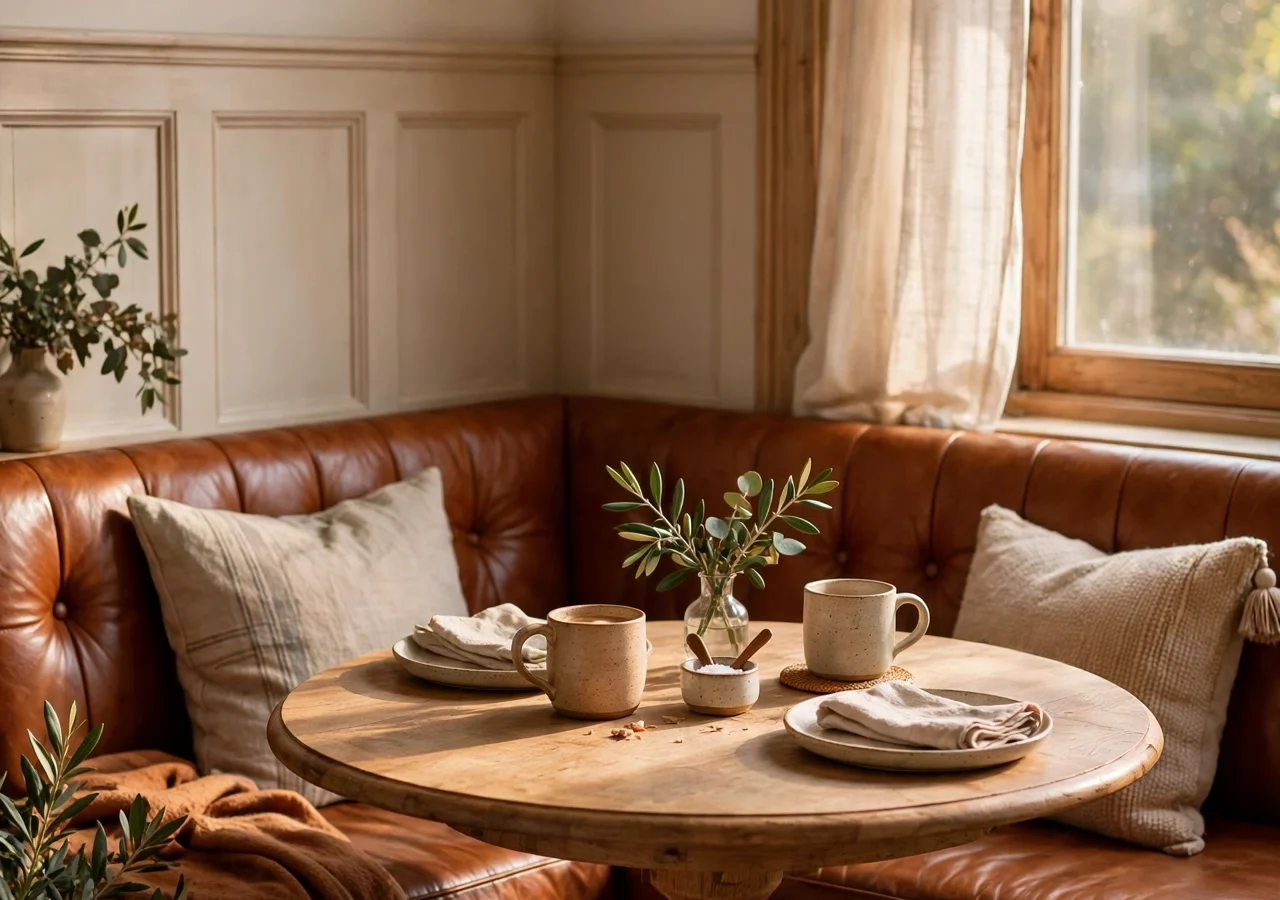
There is a particular kind of dining corner that makes people linger. It is not the formal dining room with chairs pulled up straight and a table nobody wants to scuff. It is the tucked-away nook, the bench built into the wall, the seat you slide into rather than sit down on. Breakfast tastes better there. A weeknight supper stretches into a second cup of tea. Friends stay at the table long after the plates are cleared.
A leather banquette is what gives that corner its pull. Leather has a warmth that painted wood and plain fabric never quite match, and it ages in a way that suits a well-used eating spot. A few scuffs and a softened sheen do not ruin it, they make it look lived in. The retro part is not about turning your kitchen into a museum piece. It is about borrowing the best bits of diner booths, 1970s breakfast rooms, and old hotel lounges, then fitting them to a normal home.
This guide walks through eight ways to build a leather banquette dining nook that works for real life. You will find ideas for small corners and generous ones, for bold colour and quiet neutrals, for new leather and for secondhand finds, plus the practical details that decide whether a banquette is a joy or a daily annoyance: seat height, table size, cushion depth, and how to keep leather clean when tomato sauce is involved.
Before You Build: The Measurements That Matter
A banquette that looks perfect in a photo can still fail if the numbers are wrong, so get these right before you order anything. Seat height should sit between 45 and 48 centimetres, the same as a standard dining chair, so your feet rest flat on the floor. Seat depth needs 50 to 55 centimetres, enough to sit back without perching on the edge. The table should overhang the bench by about 5 centimetres so you can slide in without the table edge digging into your stomach, and you need at least 75 centimetres of table depth per person if two people sit side by side.
Leave a gap of roughly 90 centimetres between the table edge and the opposite wall or chairs, or nobody will be able to get out of the bench without a shuffle. If the nook is L-shaped, the corner seat is the hardest to reach, so keep that spot for the person who likes to stay put longest, or plan the table on a pedestal base so there are no legs blocking the slide-in.
Styling tip: Mock it up before you commit. Tape the bench footprint on the floor, put a dining chair at the planned table height, and sit there with a plate and a mug. Ten minutes of pretending will tell you more than any plan drawing.
1. The Classic Diner Booth in Cognac Leather
 Save
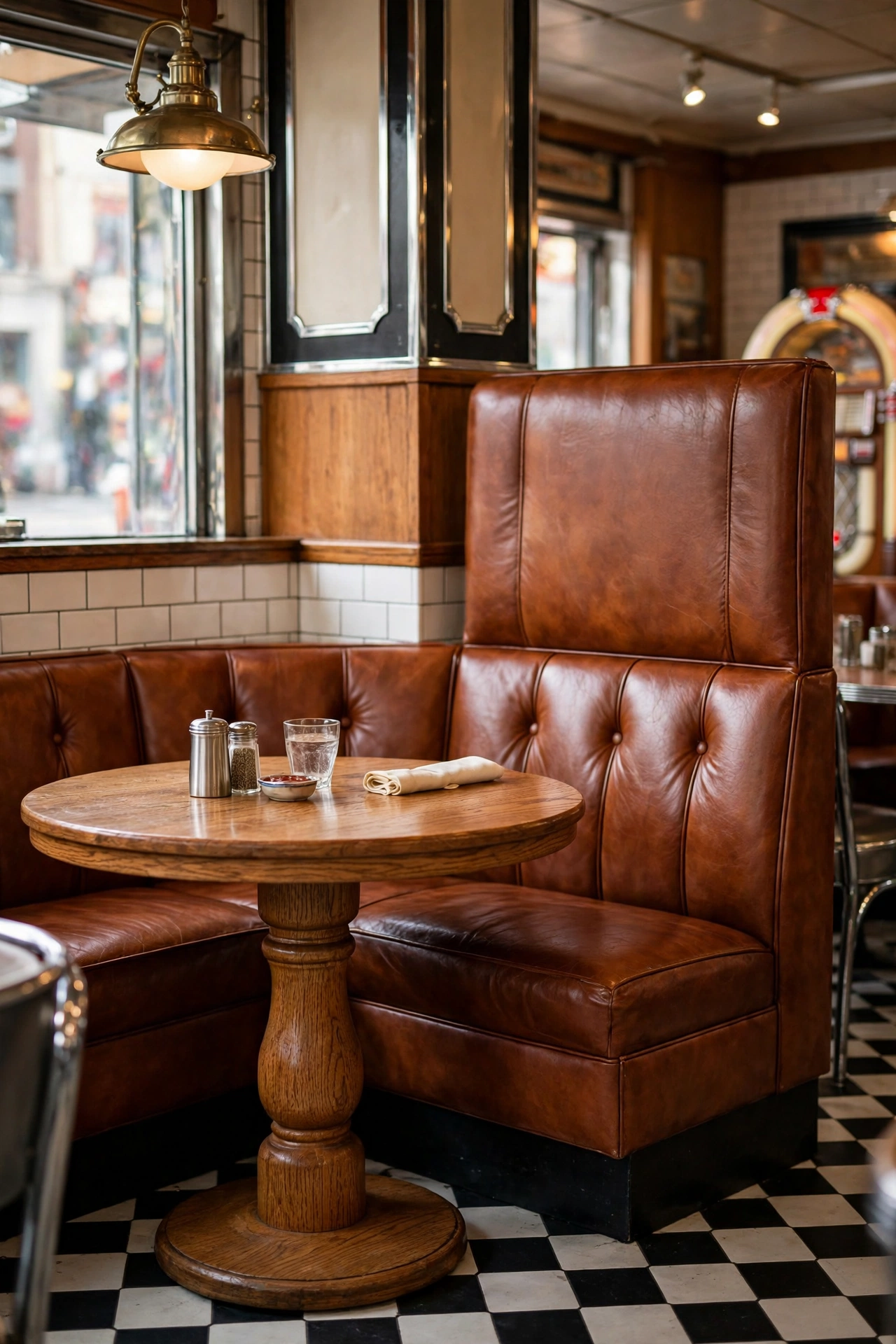
Start with the look everyone pictures when they hear the word banquette: a high-backed booth in warm cognac leather, a table with a simple pedestal base, and a bench on the other side or a pair of chairs facing it. Cognac is the friendliest leather colour for a dining nook. It reads warm under kitchen light, it pairs with oak, walnut, and painted cream alike, and it hides the odd mark far better than black or white.
Keep the backrest tall, around 55 to 60 centimetres above the seat, so the booth feels enclosing rather than perched. A slight recline of a few degrees makes long breakfasts comfortable without turning the seat into a sofa. Add a narrow shelf above the backrest if you have the wall space: it holds a small plant, a salt cellar, and a stack of cookbooks without cluttering the table.
For the table, a round pedestal top in oak or walnut works best in a tight corner, since nobody has to navigate table legs. A rectangular top suits a longer bench. Either way, keep the tabletop plain and hard-wearing, because leather and a fussy tabletop compete for attention and the leather should win.
2. Channel-Tufted Banquette in a Breakfast Corner
 Save
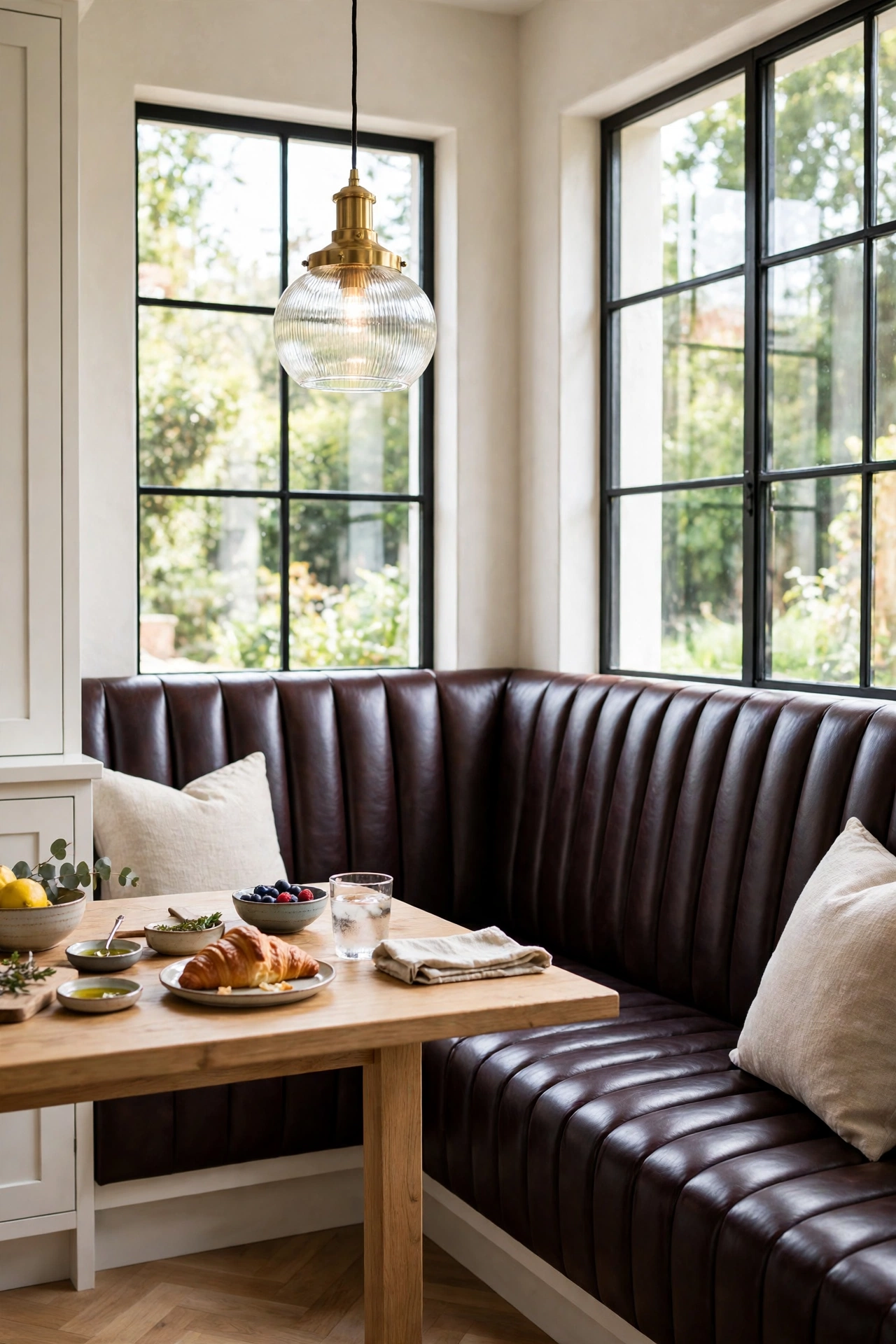
Channel tufting, those long vertical stitched channels running up the backrest, is the detail that takes a plain bench from practical to polished. It comes from mid-century lounge seating, and it suits a breakfast corner beautifully because it adds rhythm to a flat wall without adding pattern.
Choose a deep tone for this one: oxblood, dark olive, or a rich chocolate brown. The channels catch the light differently across each ridge, so the backrest looks richer than a flat panel ever would. Keep the seat cushion plain, without tufting, since a tufted seat collects crumbs in every groove and is a chore to wipe down after meals.
Pair the banquette with a pale wall, warm white or soft plaster, so the dark leather stands out. A simple pendant light hung low over the table, about 75 centimetres above the surface, finishes the corner. If your kitchen already leans toward the geometry and warm metals of the Neo Deco revival, a channel-tufted banquette in oxblood is a natural fit, and brass pendant fittings tie the two ideas together.
3. The Small-Space Banquette That Seats Four
 Save
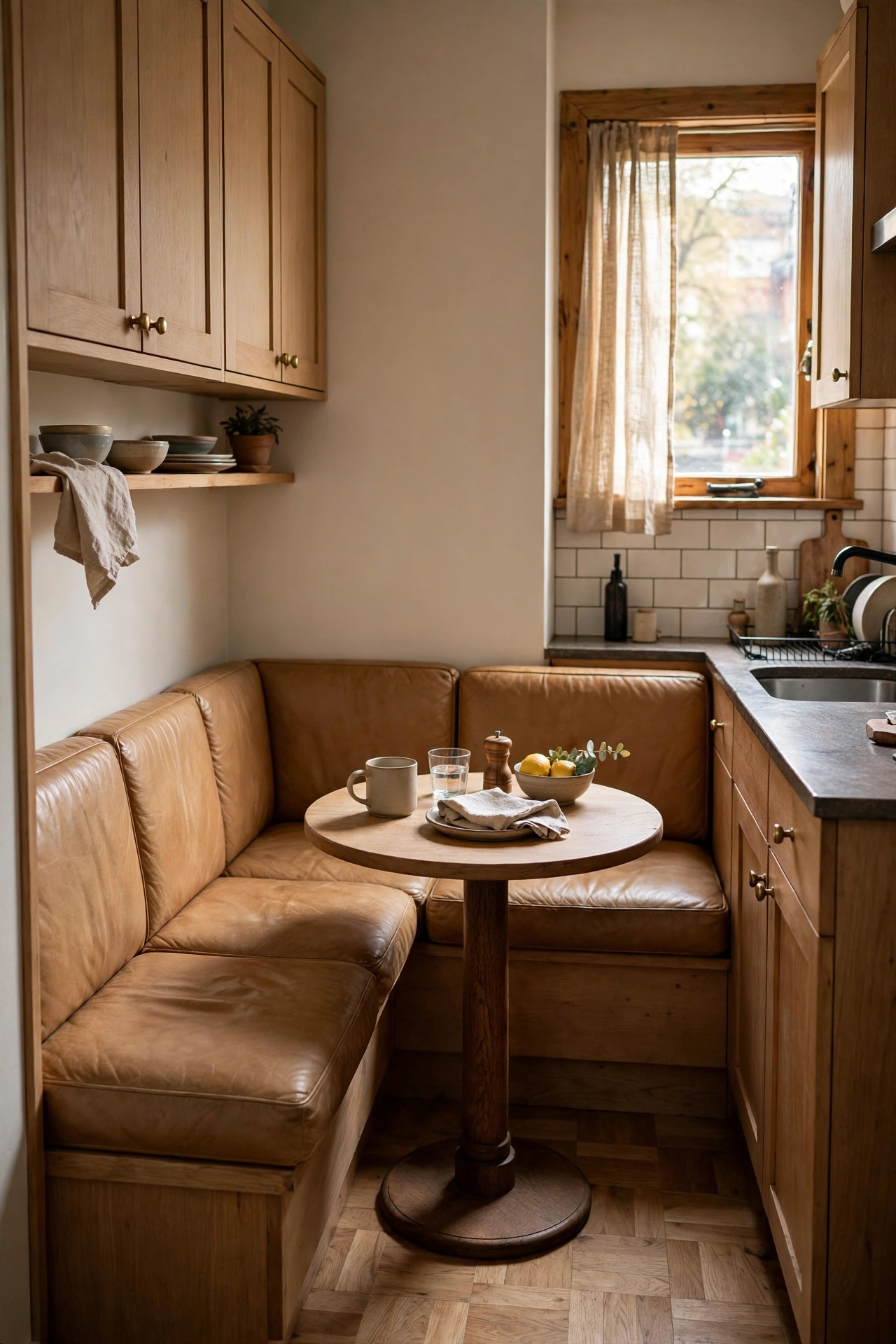
A banquette earns its keep in a small home because it seats more people in less floor space than chairs. A bench that is 150 centimetres long seats three adults comfortably, where three chairs plus the room to pull them out would need far more space. That is the whole reason banquettes show up in tiny flats and narrow kitchen corners.
For a small nook, keep the bench low-backed and the leather light: tan, caramel, or a soft taupe. A low back keeps the sightline open so the corner does not feel boxed in. Build storage into the bench base, either a lift-up seat or drawers, and use it for table linens, board games, or the rarely used serving dishes that otherwise eat a whole cupboard.
Choose a pedestal table, never four legs, and keep the tabletop no deeper than 75 centimetres so the far side of the bench is still reachable. A mirror on the wall behind the bench doubles the sense of space, and a light-coloured leather reflects more light than a dark one, which matters in a corner that gets little sun.
Budget swap: If new leather is out of reach, look for a secondhand leather sofa with a good frame and have an upholsterer cut the seat and back panels into banquette cushions. The leather is already broken in, the cost is often half of new, and the patina suits the retro look better than brand-new hide.
4. Black Leather and Brass for a Moody Dining Corner
 Save
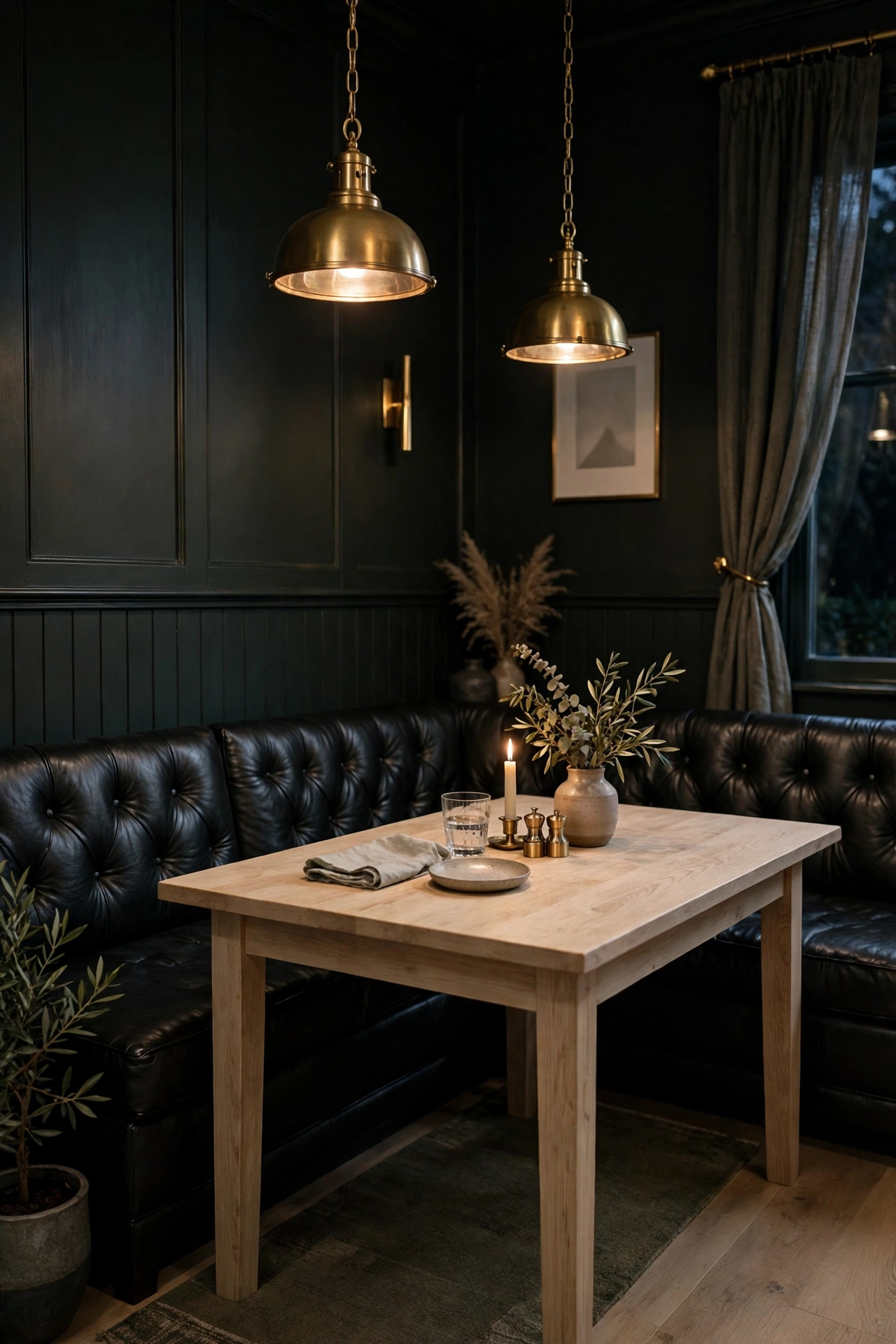
Not every nook needs to be bright. A black leather banquette with brass details makes a dining corner feel like a private club, and it works surprisingly well in a kitchen with dark cabinets or a moody painted wall. The trick is contrast: black leather against a dark wall disappears, so give it a pale or panelled backdrop, or a wall in deep green that lets the black read as a separate shape.
Brass does the heavy lifting here. Brass foot rails along the bench base, brass pendant lights, brass handles on the storage drawers underneath, and warm brass metallics on the table edge all stop the corner from feeling flat. Keep the tabletop light, pale oak or cream stone, so the black bench has something to sit against visually.
This is also the banquette to choose if your household includes teenagers or messy cooks, because black leather forgives almost everything. Wipe it down, condition it twice a year, and it will look the same in five years as it does now, which is more than can be said for pale fabric.
5. The L-Shaped Family Nook in Chestnut Leather
 Save
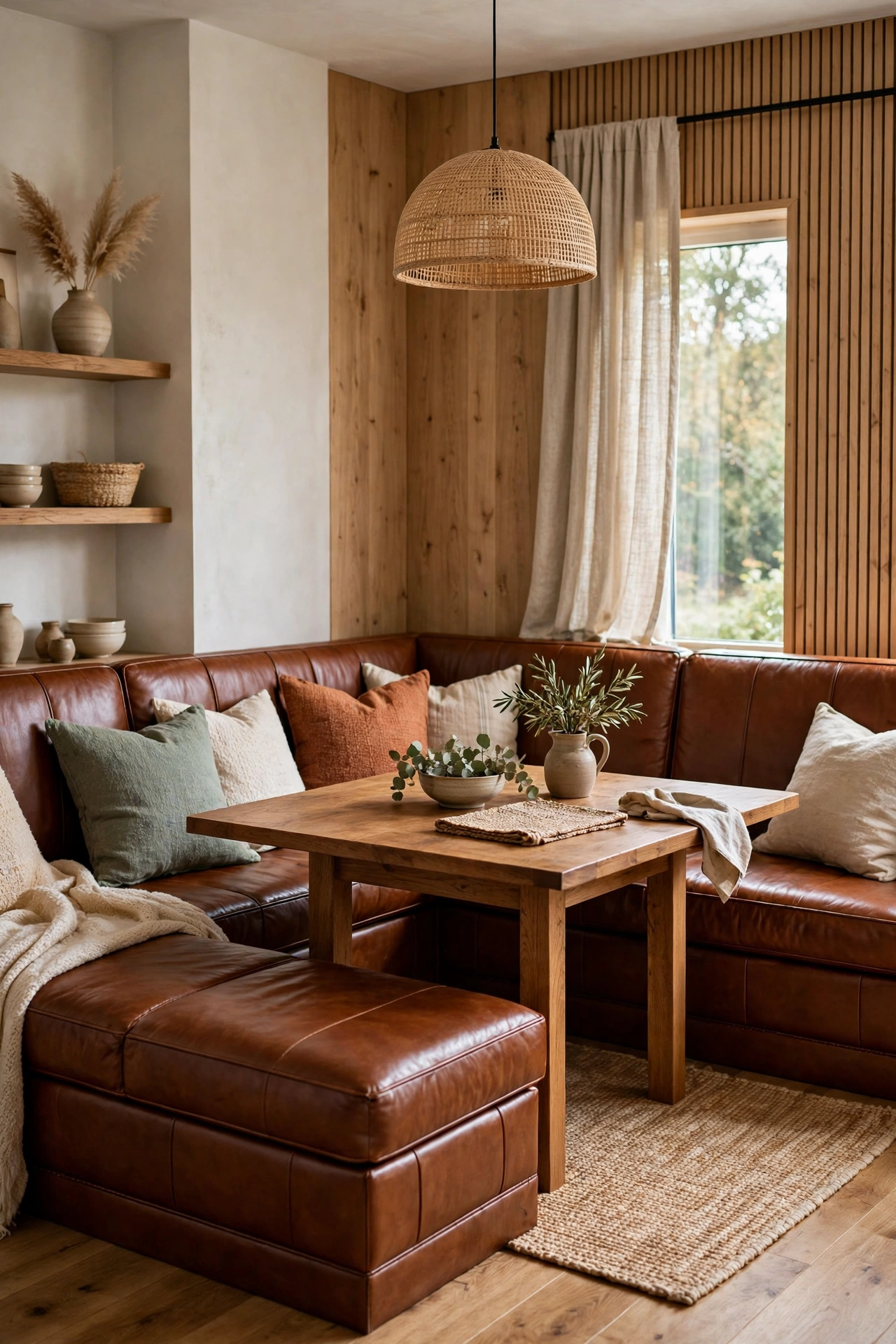
The L-shaped banquette is the family workhorse. One long bench along the wall, one shorter bench turning the corner, a square or rectangular table in the middle, and chairs on the open sides for whoever arrives last. It seats six without anyone feeling squeezed, and the corner seat becomes the favourite spot in the house within a week.
Chestnut leather suits this shape because it is warm without being loud, and it goes with the pine, oak, and painted furniture that family kitchens already have. Make the corner seat deeper than the rest, around 60 centimetres, since people sit sideways there with a leg tucked up, and add a scatter cushion or two in a washable fabric for back support. Leather backrests are firm, and a cushion makes a long Sunday lunch far more comfortable.
Practical details matter most here. Put the table on a single pedestal so nobody’s knees hit a leg when sliding around the corner. Choose a tabletop that wipes clean in one pass, and keep the bench base as closed storage rather than open shelving, because open shelves under a dining bench collect dust and stray socks at an alarming rate.
6. Retro Green Leather for a 1970s Breakfast Room
 Save
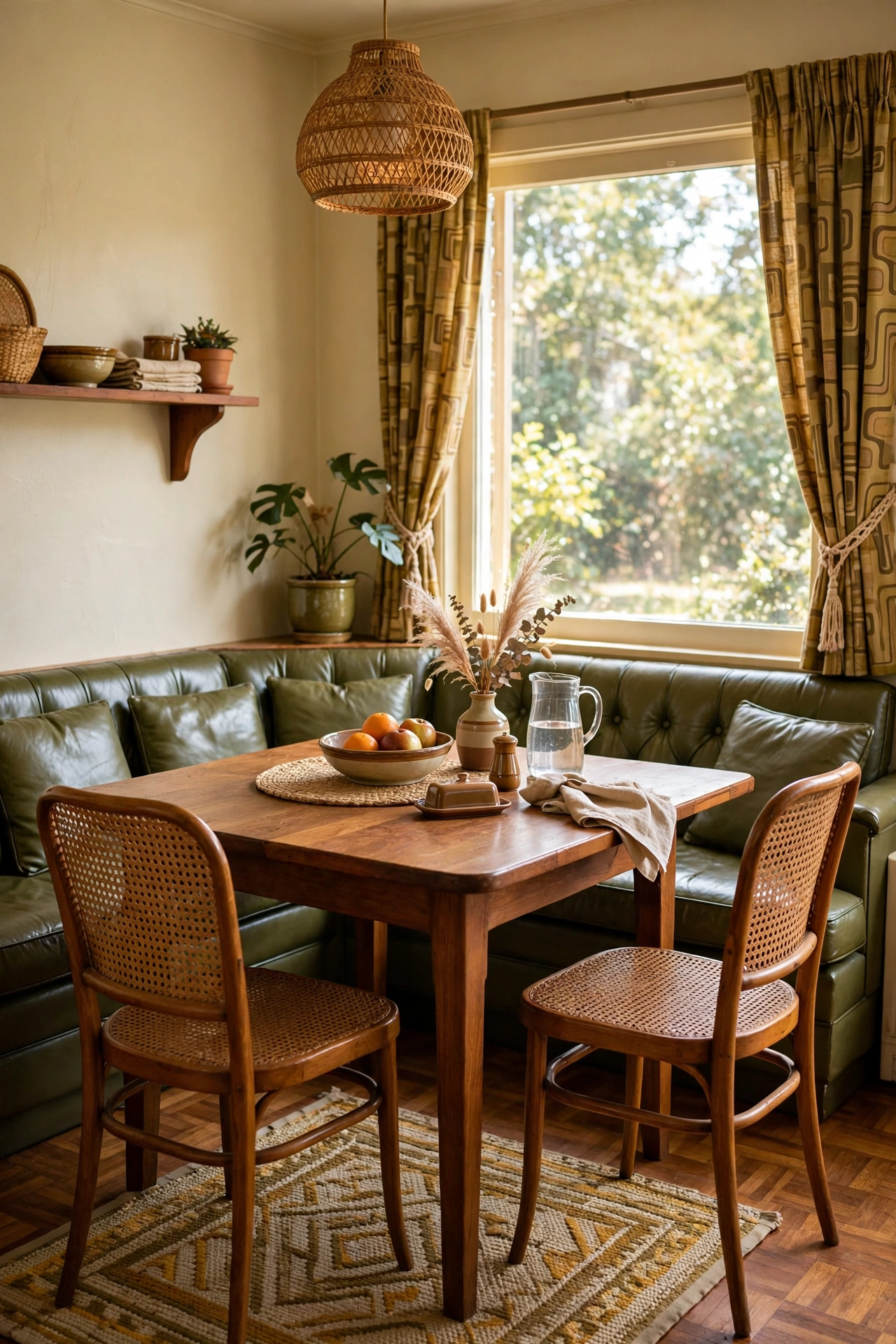
If cognac feels too safe and black feels too serious, look at green. Olive, moss, and deep bottle green leathers carry the 1970s breakfast-room spirit without turning your kitchen into a period set. Green leather pairs beautifully with warm wood, cream walls, and rattan or cane details, and it is a colour that guests remember.
Keep the rest of the nook quiet so the green can lead. Cream walls, a plain oak table, and simple linen curtains will do. Add one or two retro touches rather than a whole theme: a sunburst clock, a ribbed glass pendant, or a set of cane-backed chairs on the open side of the table. Too many vintage pieces at once tips the room from stylish into costume.
Green leather also hides wear well, which is worth knowing if the nook doubles as a homework station or a laptop spot. The colour forgives the faint marks that a laptop edge or a school bag leaves, and a quick condition every few months keeps the surface supple.
For a seasonal version of this nook, think about how a green banquette carries a holiday table. Our guide to forest-and-brass Thanksgiving table ideas shows the same palette dressed up for a feast, and the same green-and-brass pairing works year round.
7. A Banquette With a Built-In Window Seat Feel
 Save
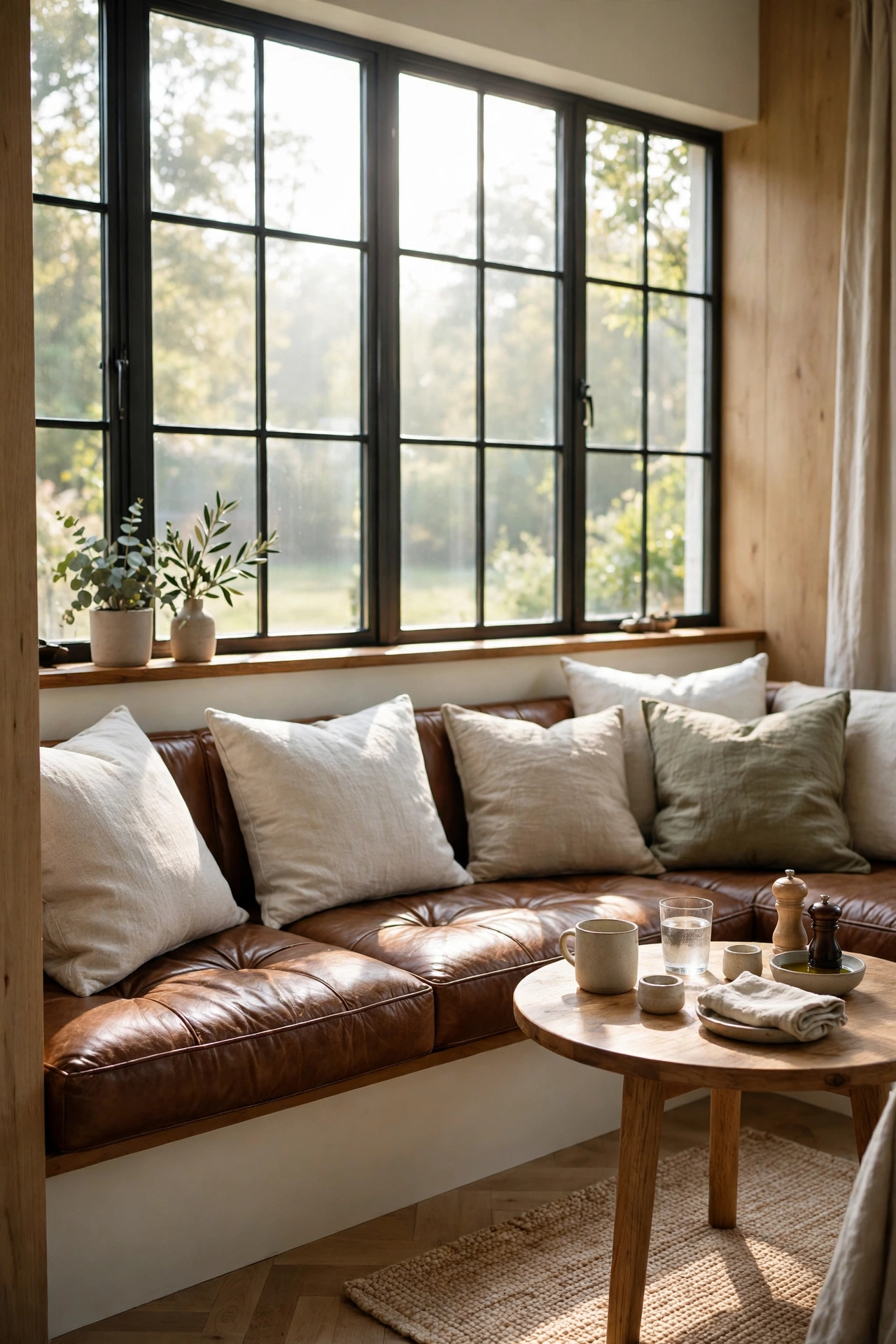
Some of the best dining nooks borrow from window seats: a bench built into a bay or under a wide window, with light falling across the table in the morning. Leather makes this version practical, since a fabric window seat in a dining spot stains fast, while leather wipes clean and does not fade as badly in sun if you choose a pigmented, protected hide.
Place the bench so the window is behind or beside the sitters, not in front of them, or the morning sun will blind everyone at breakfast. A low backrest works best here so the window stays visible, and a seat cushion in a slightly lighter leather than the backrest keeps the bench from looking like one solid block. Add a slim cushion in a patterned fabric for comfort and a touch of softness against the leather.
Storage under a window bench is a bonus, not an afterthought. Lift-up seats are best for bulky items like picnic blankets and tablecloths, while drawers suit everyday things like placemats and children’s art supplies. Either way, fit the bench snugly to the window wall so crumbs cannot fall down the back, a small detail that saves a lot of cleaning.
Designer note: If the window gets strong afternoon sun, condition the leather more often, about every three months, and keep a sheer curtain or blind as a filter. Direct sun is the one thing that ages leather faster than daily use, and a sheer layer costs almost nothing.
8. Mixing Leather With Fabric Chairs on the Open Side
 Save
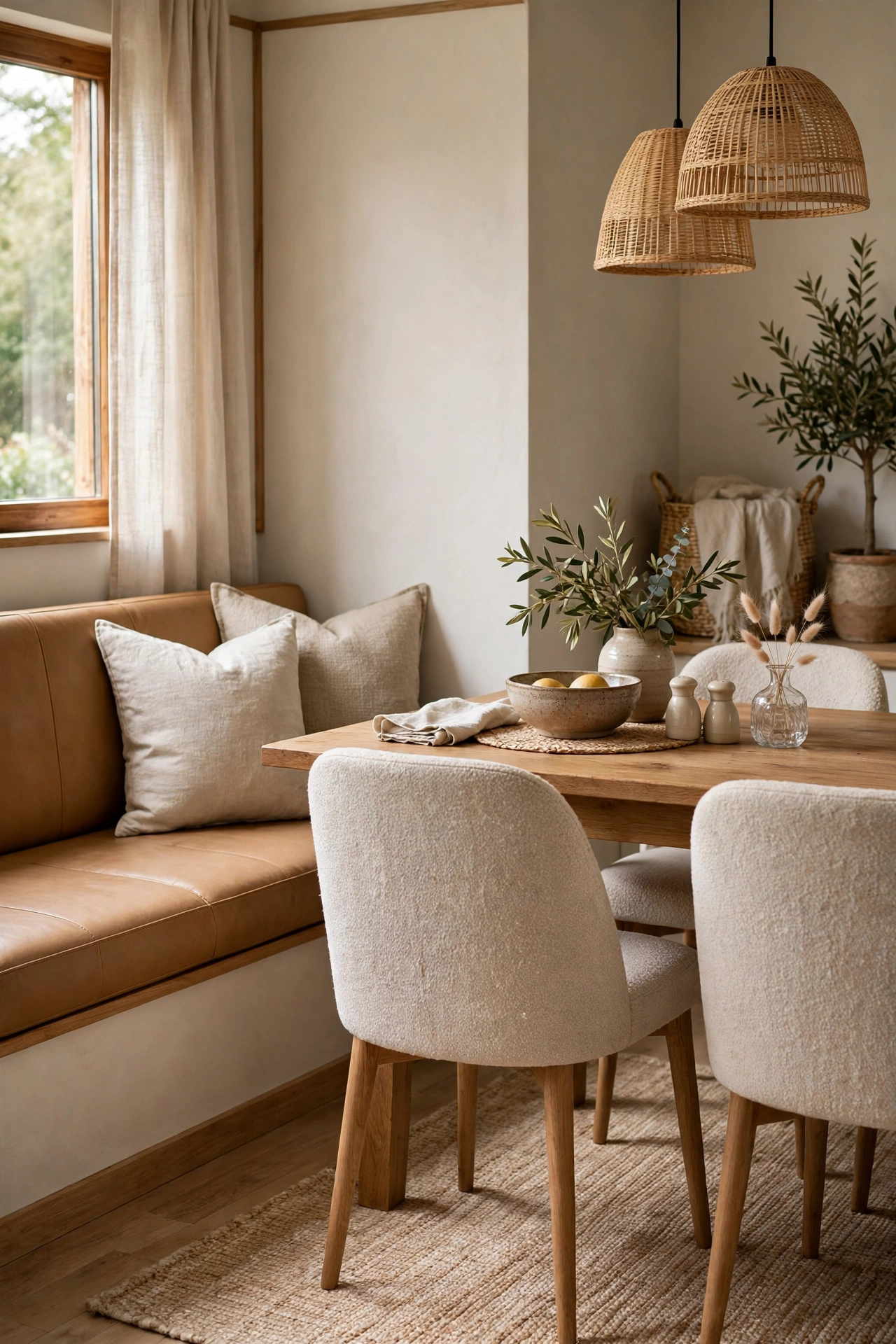
A banquette does not have to stand alone. Some of the most comfortable nooks pair a leather bench on the wall side with fabric chairs on the open side, and the mix stops the corner from feeling too heavy or too uniform. The leather gives structure and easy cleaning where food lands most, while the fabric chairs add softness and can be recovered cheaply when tastes change.
Keep one element in common so the pairing looks deliberate. That could be the same wood tone on the chair legs and the table base, the same cushion colour picked up in the chair fabric, or the same metal finish on chair feet and pendant lights. Without a shared detail, the mix reads as furniture that happened to end up in the same room.
This is also the smartest choice for a nook that hosts different groups. The bench side suits children, who can slide in and out without chairs scraping the floor, while adults who prefer a chair back and elbow room take the fabric chairs. A table with a pedestal base keeps the whole arrangement flexible, since chairs can be pulled in or pushed out without negotiating legs.
When the table is set for a crowd, the same bench-plus-chairs logic applies to bigger gatherings. Our Thanksgiving table ideas show how a fixed bench and movable chairs handle a full house without anyone being stuck at the end of the table.
Keeping Leather Looking Good in a Dining Nook
Leather in a dining spot lives a harder life than leather in a living room, so a little routine care pays off. Wipe the bench weekly with a barely damp cloth, and deal with spills straight away rather than letting them dry. Water, tea, and milk wipe off easily if caught early; tomato sauce and curry need a damp cloth plus a drop of mild soap, followed by a clean damp wipe so no soap residue stays on the surface.
Condition the leather two to four times a year, depending on sun and use, with a conditioner made for protected leather. Test any product on a hidden spot first, usually the side of the bench base, and never use furniture polish, baby wipes, or all-purpose cleaners on leather. They leave residues that build up and dull the finish over time.
Scratches happen, especially with pets and belt buckles, and most light scratches can be softened by rubbing the area gently with a clean cloth and a little conditioner, which redistributes the surface oils. Deep cuts need a professional repair, but a banquette with a few faint marks looks better than a banquette nobody dares to sit on, so do not let fear of marks stop you using the nook properly.
Bringing It All Together
A leather banquette dining nook works because it turns eating into settling in. The bench invites people to slide over, stay a little longer, and make room for one more, which is exactly what a dining corner should do. Whether you choose a cognac diner booth, a moody black-and-brass corner, or a green 1970s breakfast seat, the same rules hold: get the seat height and depth right, pick a pedestal table, choose a leather colour that suits your light, and build in storage wherever you can.
Start with the shape your room allows, then let the leather colour set the mood. The rest, the pendants, the cushions, the tabletop, follows naturally once the bench itself is right. And once it is built, expect it to become the busiest seat in the house. That is not a flaw in the plan. That is the plan working.
Frequently Asked Questions
How deep should a leather banquette seat be?
Aim for 50 to 55 centimetres of seat depth for a straight bench, and around 60 centimetres for a corner seat where people sit sideways. Shallower than 50 centimetres feels like perching, and deeper than 60 centimetres makes it hard to sit upright to eat without a cushion behind your back.
Is leather practical for a dining nook with children?
Yes, and in many ways it is more practical than fabric. Spills wipe off protected leather, crumbs do not sink into the weave, and the surface does not hold food smells. Choose a mid-tone or dark leather, avoid pale cream or white, and condition it regularly so the surface stays wipeable.
What table works best with a banquette?
A pedestal table, round for a short bench and rectangular for a long or L-shaped bench, is the best choice because it leaves the slide-in path clear. Allow the tabletop to overhang the bench edge by about 5 centimetres, and keep at least 90 centimetres of clearance on the open side for getting in and out.
Can I put a banquette in a rented home?
Yes, if you use a freestanding bench rather than a built-in one. A freestanding upholstered bench pushed against the wall gives the same look and comfort, and it moves with you. Check the bench length against your wall, and use a pedestal table so you are not tied to a fixed layout.
How do I stop a leather banquette from feeling cold in winter?
Add washable fabric cushions for back support, a folded throw over one end of the bench, and a rug under the table to warm the floor. Leather warms to body temperature within a few minutes of sitting, so the cold feeling is brief, and a cushion layer removes it almost entirely.