
January has a particular kind of quiet. The tree is down, the guests have gone, and suddenly you can see your rooms again, really see them. The baubles are packed away, but the clutter they hid is still there: a stack of cards on the sideboard, a spare chair holding gift bags, a kitchen counter that never quite got cleared before Christmas dinner.
It is tempting to answer that mess with one giant weekend purge. Most of us start it, get halfway through a cupboard, and give up by Sunday afternoon feeling worse than before. A home reset works better when it is smaller, slower, and tied to how you actually live in each room now that the holidays are over.
That is what this guide does. It walks you through a January home reset in eight practical refreshes, from the front door to the linen cupboard, with simple swaps you can do in an evening rather than a full renovation. Nothing here needs a big budget or a skip in the driveway. Just a bag for donations, a cloth, and a willingness to let January be calm.
Clear the Entryway First
 Save
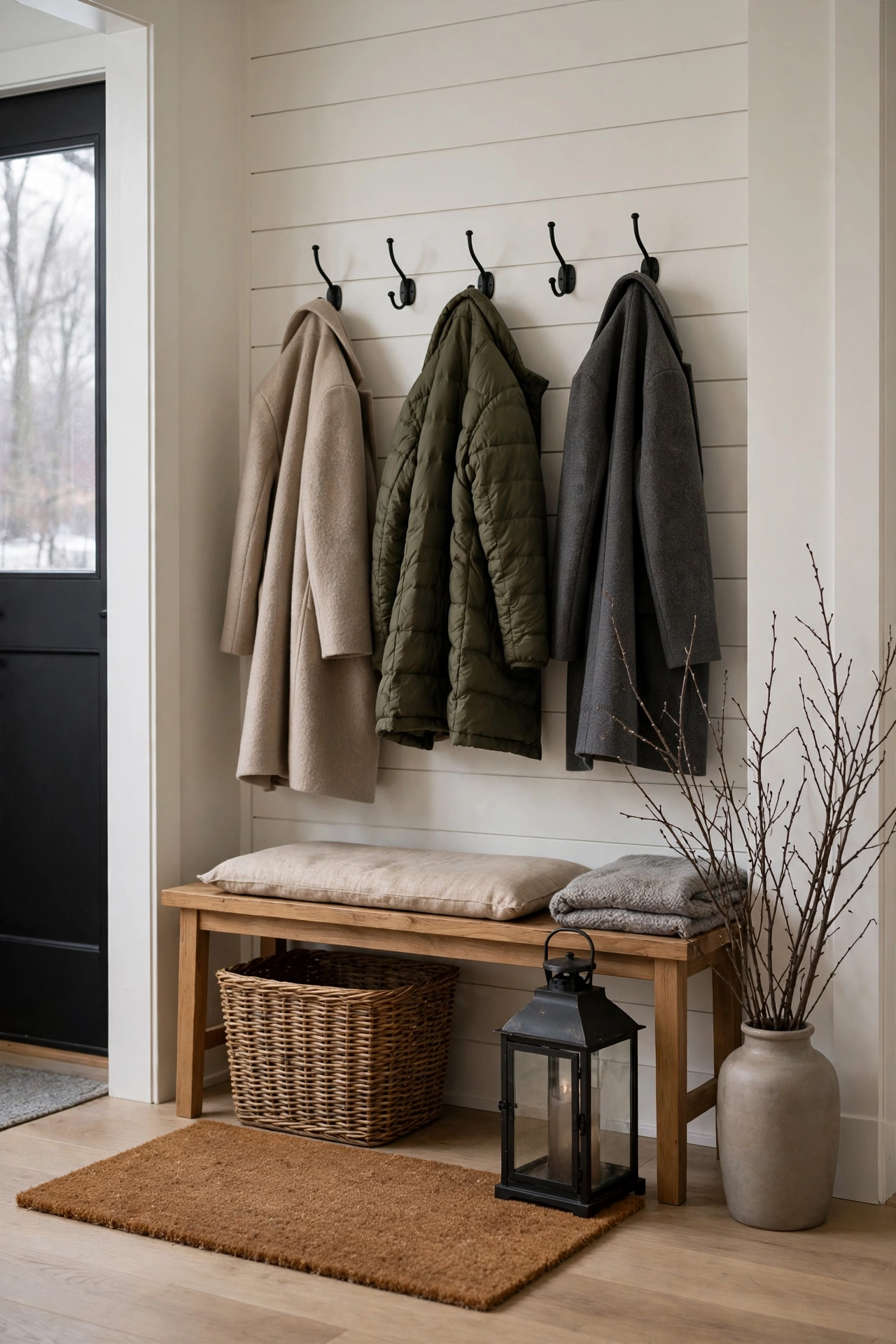
Start at the door, because it sets the tone for everything behind it. January entryways collect a strange mix: muddy boots, a coat that belongs to someone who visited on Boxing Day, a basket of wrapping paper you meant to recycle, and a doormat that has seen better days.
Take everything out first, even the things you plan to keep. Wipe the console or bench, shake out the mat outside, and then put back only what earns its place: one pair of shoes per person, coats you actually wear in winter, a single tray or bowl for keys. A small lidded basket near the door swallows gloves, scarves, and dog leads without looking like storage, and it stops the hallway from turning back into a dumping ground by February.
Styling tip: Keep one welcoming detail at the entrance, a simple winter wreath, a lantern with a candle, or a small vase of bare branches. It tells visitors, and you, that the house is cared for even when the festive decorations have gone.
If your porch still feels bare after the holiday garlands come down, our winter front porch ideas show how to keep that first impression warm without a single bauble in sight.
Edit One Room at a Time
 Save
The biggest mistake in a January reset is trying to declutter the whole house in one go. You pull everything out of every room, run out of energy, and end up living among piles for a week. Pick one room, finish it, and enjoy that finished room before you start the next.
Begin with the room that bothers you most when you wake up, usually the living room or the bedroom. Set a timer for ninety minutes. Work through it in one direction, left to right, and sort as you go: keep, relocate, donate, bin. Relocate is the category people forget, and it matters. The board games that migrated to the living room belong in a cupboard, the charger that lives on the sofa arm belongs by a socket, and the pile of books on the stairs belongs on a shelf.
When you finish, do not immediately buy storage boxes to fill the new empty space. Live with the clear surfaces for a few days first. Keep a donation bag by the front door while you work through the house, and drop it off the moment it is full rather than letting it sit in the hallway for a month. A bag that leaves the house promptly is a decision finished; a bag that lingers quietly becomes clutter again, just in a tidier container. You will learn what actually needs a home and what was only there because there was nowhere else for it to go. That pause saves money and stops you replacing clutter with matching baskets full of clutter.
Budget swap: Instead of a new storage system, reuse what you already own. A large basket from the summer, a wooden crate, or a pretty shopping tote can hold throws or magazines for a season while you decide what you truly need.
Let the Light Back In
 Save
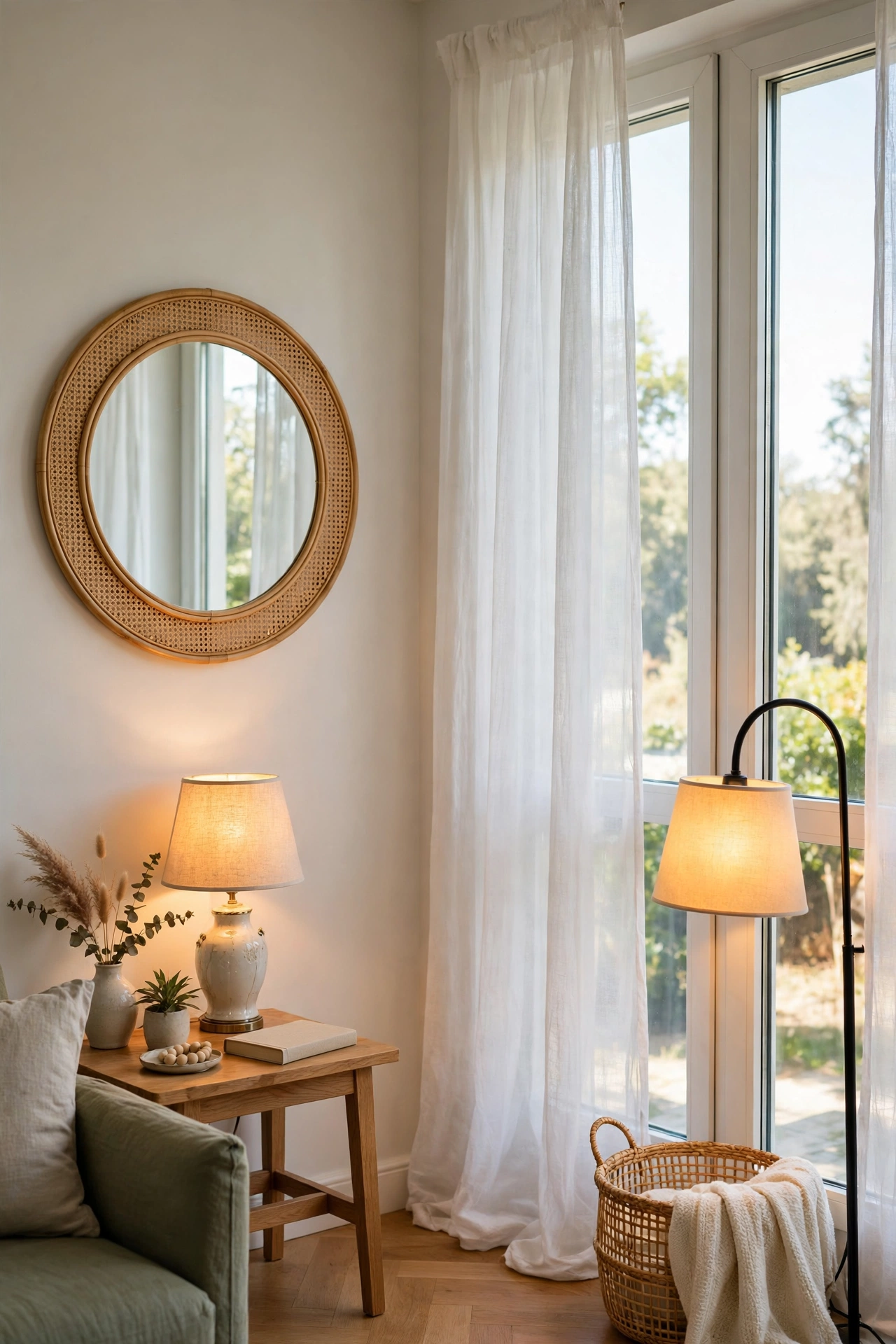
After weeks of fairy lights and candles, ordinary daylight can feel flat. January days are short, so make the most of the light you have. Start with the windows. Wash the inside of the glass, something most of us skip all winter, and take down any heavy festive window dressing that is still blocking the panes.
Next, look at your lamps. A room lit by a single harsh ceiling light always feels tired. Swap one overhead bulb for two or three smaller pools of light: a table lamp by the sofa, a floor lamp near a reading chair, a small lamp on a sideboard. Warm white bulbs, around 2700K, flatter wood, fabric, and skin far better than cool daylight bulbs in a living space.
Mirrors earn their keep in January too. A mirror opposite a window bounces daylight deeper into the room, and a mirror in a dark hallway makes the whole passage feel less like a tunnel. You do not need a statement piece. A simple round mirror above a console, or a tall leaning mirror in a bedroom corner, does the job quietly.
Try this: In the evening, turn off the big light and live by lamps for one night. You will immediately see which corners need a lamp and which ones were fine all along.
Swap Festive Colour for Calm Winter Neutrals
 Save
You do not need to repaint to make a room feel like January. Colour comes mostly from textiles, and textiles are easy to change. Pack away the deep reds, tartan throws, and gold cushions with the decorations, and bring in a calmer winter palette: warm white, soft grey, oatmeal, sage, and one muted accent such as dusty blue or moss green.
Work in layers rather than swapping everything at once. Start with the largest surface, usually the sofa. A plain throw in a natural texture, wool, cotton, or linen, changes the whole seating area. Add two cushions in a slightly different tone, not an exact match, so the arrangement looks collected rather than bought as a set. Then look at smaller touches: a neutral table runner, a plain ceramic vase, a linen napkin on the kitchen table.
This is also the moment to be honest about festive leftovers that crept into everyday decor. A red candle that suited December can look loud in January. Put it away with the decorations and bring it back next winter, when it will feel special again instead of tired.
Our guide to frosty blue winter touches shows how one cool accent colour can keep a room feeling fresh through January without turning it cold.
Restyle the Surfaces You See Every Day
 Save
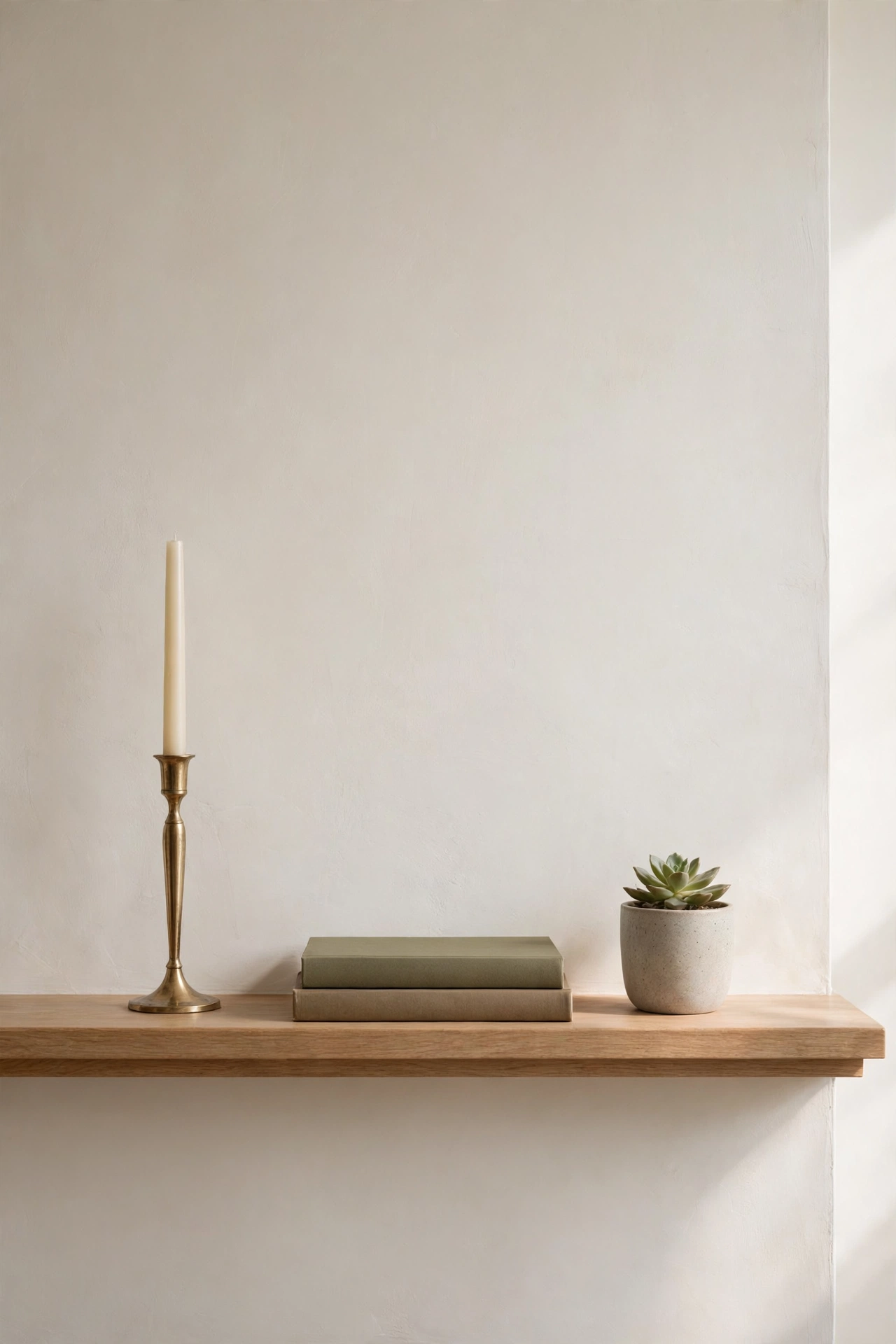
Shelves, mantels, and coffee tables are the first places clutter lands, and the first places a reset shows. Clear each surface completely, dust it, and then rebuild it with fewer pieces and more breathing room. Three objects grouped together usually look better than seven spread thinly across a shelf.
Think in terms of height and texture. A tall vase or candlestick, a low stack of two books, and one small natural object such as a stone, a pine cone, or a small plant gives a shelf shape without fuss. On a mantel, keep the arrangement low and simple in January: a pair of candlesticks, a framed print, and a small trailing plant, with plenty of empty wall above it.
Rotate rather than remove. The pieces you take off the shelves do not have to leave the house. Put them in a box in a cupboard and swap them back in spring. Rotation keeps rooms feeling fresh without spending anything, and it stops you getting bored of the same objects year after year.
Designer note: Leave at least a third of every shelf empty. Empty space is what makes the objects you keep look chosen instead of stored.
For a room-by-room take on this calmer look, the warm minimalist living room ideas in our earlier guide pair well with a January reset, especially if your living room is the room you want to finish first.
Give Every Drawer and Cupboard a Job
 Save
January is the best month to reset storage because you are already in a clearing mood, and because post-Christmas cupboards are at their fullest. Pick the two cupboards that slow you down daily, usually the kitchen junk drawer and the bathroom cabinet, and give each one a single clear job.
In the kitchen, empty the drawer completely and throw away dried-out pens, dead batteries, and mystery keys. Put back only what you reach for weekly: scissors, tape, a spare charger, a notepad. Everything else gets a labelled home elsewhere or leaves the house. In the bathroom, check dates on medicines and creams, recycle empties, and group what remains by person or by routine, morning together, evening together.
The same rule works in the linen cupboard. Fold everything the same way, stack by size, and keep one set per bed plus one spare. If a sheet set is missing a pillowcase or a towel is thin enough to see through, let it go. A cupboard that holds less but holds it neatly is far easier to use than one stuffed with things you no longer trust.
Styling tip: Use small open boxes or zip pouches inside drawers to stop items sliding back into a jumble. You do not need a matching set; one box per category is enough.
Refresh Soft Furnishings Without Buying New
 Save
New furniture is rarely what a January room needs. What it usually needs is a wash, a swap, or a repair. Start with the things your skin touches daily: cushion covers, throws, bedding, and curtains. Wash them, even the ones that look clean, and you will be surprised how much brighter a room feels.
Then swap between rooms. A throw from the bedroom might suit the living room sofa better, and a cushion that faded in a sunny window could find a second life in a darker corner. Moving textiles around costs nothing and often solves a colour problem you were about to spend money on.
Check the small repairs too. A loose button, a cushion with a flat corner, a curtain hem that has dropped, a throw with a pulled thread. Fifteen minutes with a needle, or a quick trip to a repair shop for a zip, can save a piece you otherwise would have replaced. January is a good month for these small jobs because you are indoors anyway, and each fixed item makes the room feel cared for rather than worn out.
If you want the whole house to feel cosy rather than just tidy, our cosy home checklist has affordable comfort ideas that work just as well in January as they did in autumn.
Set a Weekly Reset Ritual
 Save
A reset only lasts if it has a rhythm behind it. Without one, the same clutter creeps back by March and you are facing another giant purge next January. A weekly ritual, short and specific, keeps the house at the level you reached this month.
Pick one evening, or a Sunday morning, and give it twenty minutes. Walk the house with a basket: anything out of place goes in the basket, and the basket gets emptied to its proper rooms before you sit down. Wipe the kitchen counters, fluff the sofa cushions, fold the throw, and put one load of laundry away completely, not just washed and left in a pile.
Add one slightly bigger job each week on rotation: one week the fridge, one week a cupboard, one week the front porch, one week the linen cupboard. If you share the house, give each person one small job in the ritual rather than one person carrying it all. Children can be in charge of the basket walk, for example, while an adult handles the kitchen counters. A reset shared by the household lasts longer than one imposed on it. Four small jobs a month cover most of the house without ever feeling like a deep clean. Write the rotation on the fridge or in your phone so you do not have to decide each week; deciding is what makes people skip it.
Try this: Tie the ritual to something pleasant, a favourite playlist, a podcast, or a cup of tea afterwards. A reset that feels like a treat gets repeated. One that feels like punishment gets avoided.
Bringing It All Together
A January home reset is not about achieving a perfect house. It is about clearing the holiday leftovers, letting light and calm back into rooms you live in every day, and setting up small habits that keep the house feeling that way. Work room by room, keep what earns its place, and let the rest go without guilt.
By the end of the month, your home will not look like a showroom, and it should not. It will look lived in, but lighter, calmer, and ready for the year ahead. That is a far better start to January than a spotless weekend followed by a slow slide back into clutter.
Frequently Asked Questions
How long should a January home reset take?
A room-by-room reset usually takes two to three weeks at a relaxed pace, with ninety minutes per room and a few evenings for cupboards. Trying to finish in one weekend often leads to burnout and half-finished piles, so spread it out and enjoy each finished room.
Should I declutter before or after taking down Christmas decorations?
Take the decorations down first, then declutter. Decorations hide clutter and make rooms look fuller than they are. Once they are packed away, you can see what actually needs to go and what was only there for the festive season.
What is the best first room to reset in January?
Start with the room that frustrates you most in the morning, usually the living room or bedroom. Finishing one visible room early gives you momentum and a calm space to retreat to while you work through the rest of the house.
Do I need to buy storage to do a home reset?
No. Start with what you already own, baskets, boxes, and bags from around the house, and live with clear surfaces for a few days before buying anything. Most people find they need far less storage once the excess has left.
How do I stop clutter coming back after a reset?
Use a short weekly ritual, twenty minutes with a basket, plus one rotating bigger job each week. Small, regular maintenance keeps a reset in place far better than another big purge next year.