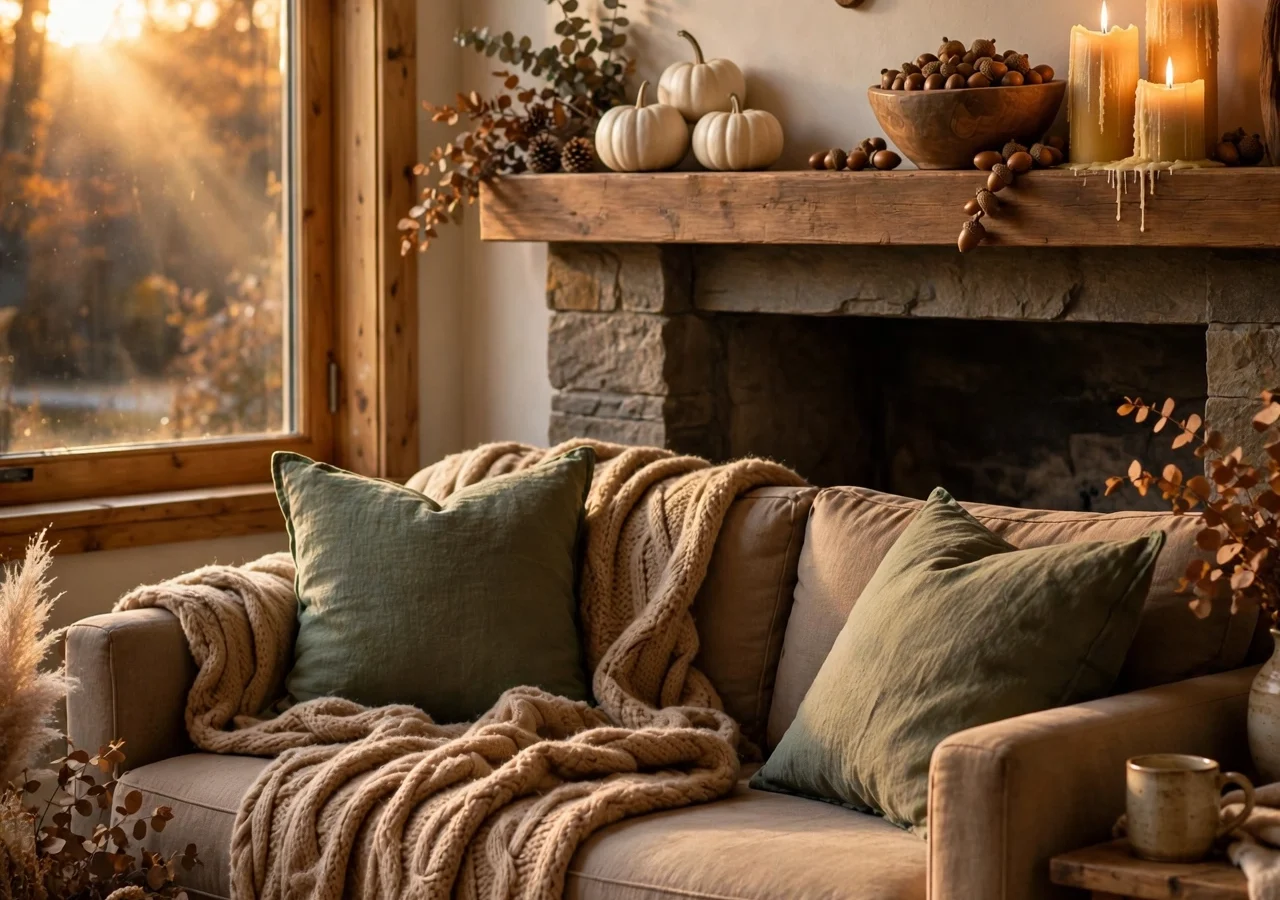
Somewhere around mid-October, every homeware aisle starts shouting. Neon pumpkins. Glitter leaves. Witches’ hats in three fonts. It’s all fun until you bring it home and your living room starts looking less like autumn and more like a costume shop that exploded.
Maybe what you actually want from fall is quieter. You want the feeling of a real October walk: damp leaves underfoot, low golden light filtering through bare branches, and (if you’re lucky) a fawn stepping out of the trees, its coat all dappled honey-brown and cream. That softness. That’s the part of autumn worth bringing indoors.
Good news: the deer aesthetic is having a real moment this season, and the styling it inspires is the calmest fall trend in years. Think fawn-inspired tones (taupe, camel, warm cream, moss) textures pulled straight from the forest floor, and small woodland details that feel grown-up instead of gimmicky. Woodland fall decor doesn’t ask you to repaint anything or buy into a theme; it just asks you to notice the colours autumn already gave us. Here’s how to do it.
Start With the Woodland Palette, Not the Pumpkin Bin
 Save
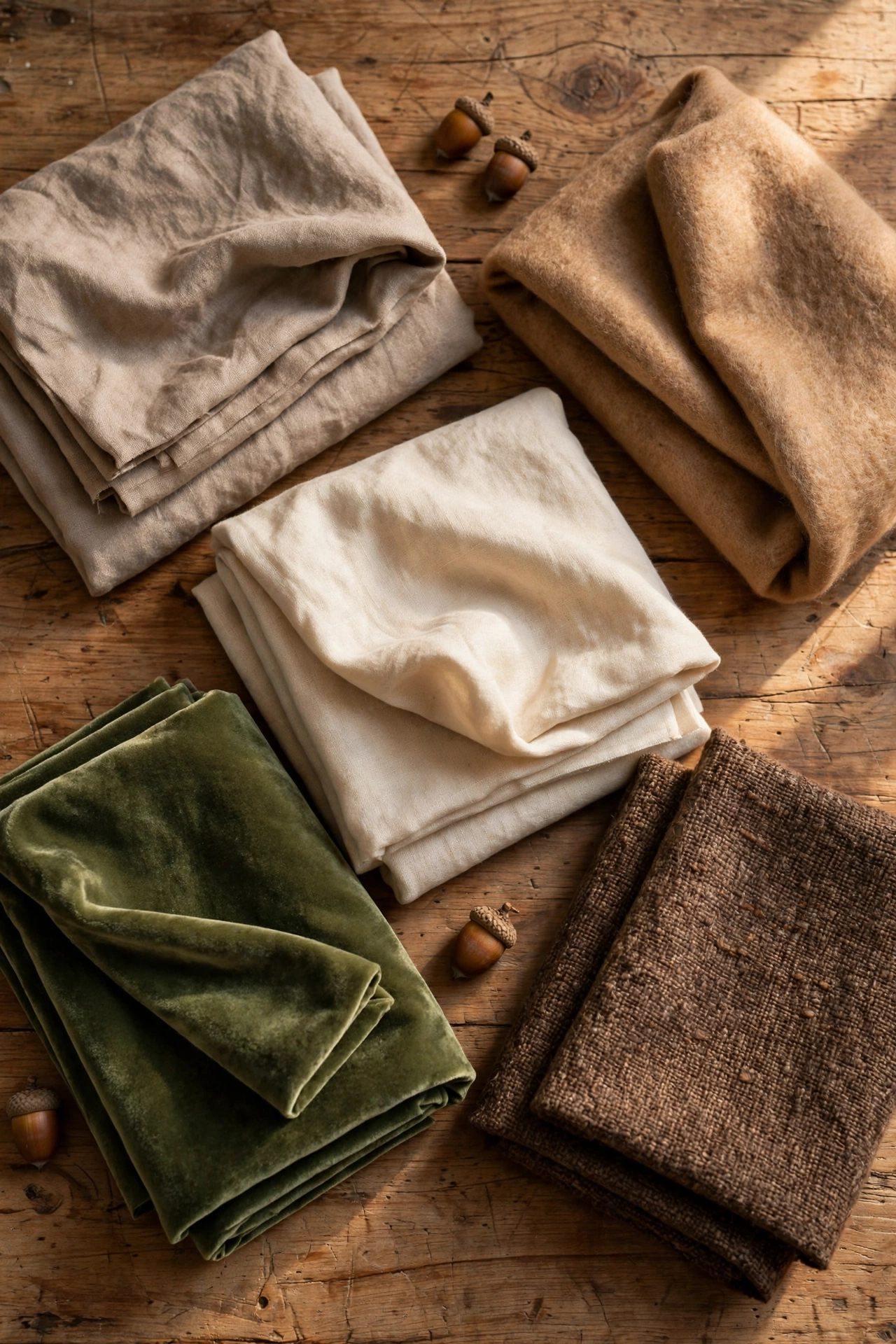
Most fall decorating goes wrong at the very first decision: the colour palette. The default is pumpkin orange, fire-engine red, and that mustard yellow that looks beautiful on trees and harsh on sofas. The woodland palette starts somewhere quieter: with the coat of a fawn. Look at one properly: creamy belly, honey-brown back, soft grey-brown legs, and the deep green of the forest it stands in. There are your five colours. Nothing screams, and everything belongs together. Our fall 2026 home decor trends roundup shows where the season’s palette is heading.
The reason this palette works in real homes is that it’s almost entirely neutral-adjacent. Taupe and camel sit beautifully on the furniture you already own (your grey sofa, your oak coffee table, your white walls) without fighting anything. You’re not layering a theme on top of your home; you’re tinting what’s already there toward autumn.
| Fawn tone | The feeling it brings | Easiest place to use it |
|---|---|---|
| Fawn taupe | calm, warm, soft | sofa throw, cushions |
| Camel | golden, cosy | armchair blanket, curtains |
| Warm cream | light, airy | candles, ceramics, bedding |
| Moss green | fresh, earthy | plants, wreaths, an accent chair |
| Bark brown | grounding, rich | wooden bowls, frames, trays |
Pick three. Two light, one deep: that’s the combination that keeps the room from going muddy. Fawn taupe plus warm cream plus bark brown is the classic; camel plus moss plus cream is the fresher take. Styling tip: pull your three colours from a single source (a throw, a piece of art, a bouquet of dried grasses) and repeat them in small doses around the room. Repetition is what makes it look intentional instead of accidental.
And here’s the permission you might need: you can skip orange entirely. A bowl of small white pumpkins, a few acorns, candlelight: the season reads clearly without a single drop of pumpkin spice. The palette IS the season.
Layer Textures the Way a Forest Floor Does
 Save
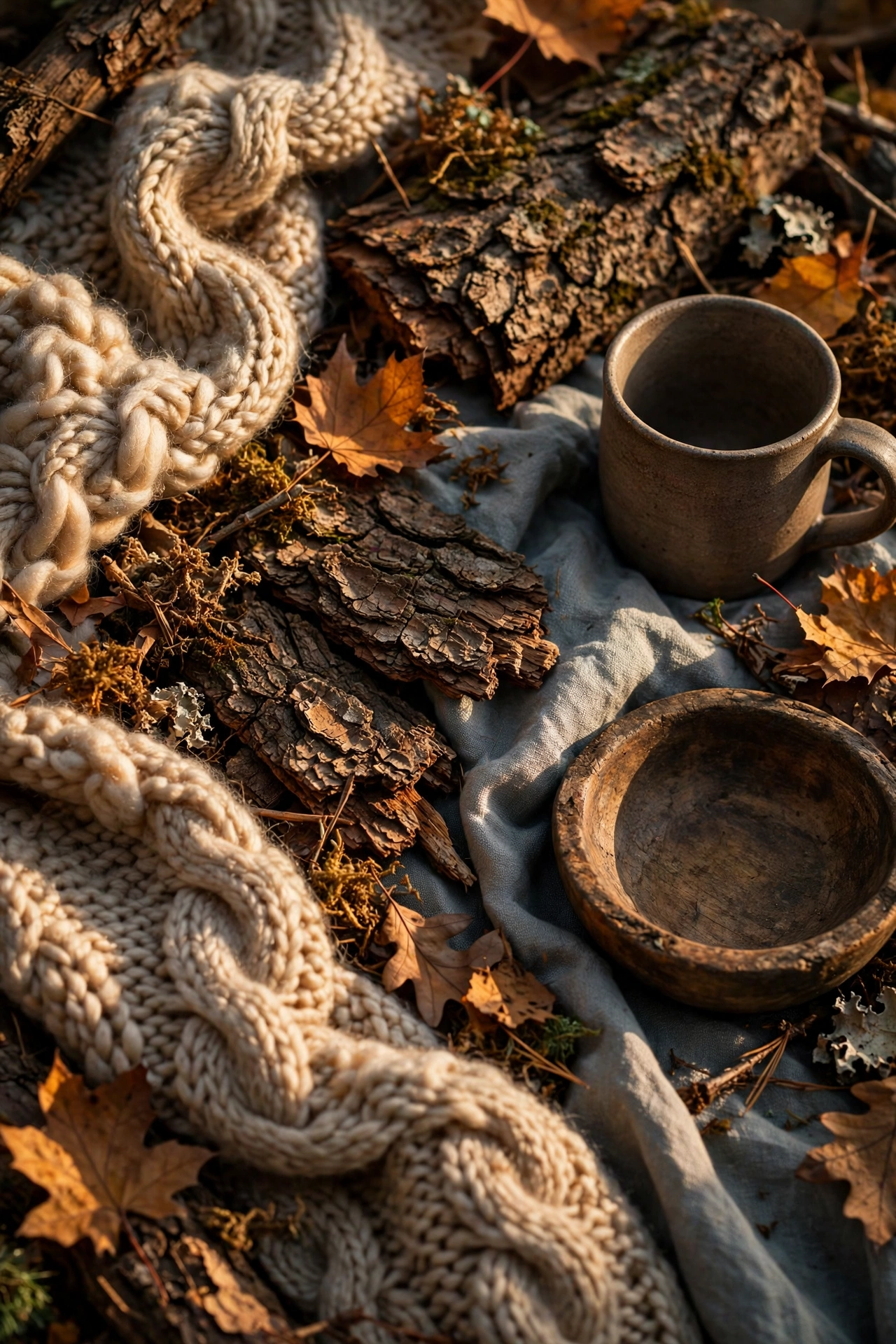
Walk through actual woods in October and notice what your feet tell you: crushed leaves, soft moss, rough bark, cool stone, twigs that snap. No single texture carries the whole forest: it’s the pile-up. Your living room works the same way. Woodland fall decor lives or dies on layered, touchable textures, and this is the cheapest part of the whole look.
Start from the bottom up, the way the forest does. A flatweave jute or wool rug as your base. Then fabric, and here is where you can stop thinking about “fall fabrics” as a category. Stonewashed linen (not crisp), chunky wool, washed cotton, a little corduroy if you’re feeling it. The common thread is matte. Anything shiny (satin, polished metal) reads as “evening out,” not “autumn walk.” Keep the shine to the candlelight itself.
Then the hard textures, which is where the woodland part really shows up. A wooden bowl with real heft to it. A bark-edged tray. Stoneware mugs instead of glazed porcelain. A handful of acorns in a low dish: free, from the park, better than anything in the decor aisle. Budget swap: before you buy a single new cushion, walk outside. Pinecones, interesting branches, dried seed heads: nature is the best wholesaler you’ll ever find, and it charges nothing.
| Base texture | Pairs beautifully with | Try it in |
|---|---|---|
| Chunky wool | stoneware, aged wood | living-room throws |
| Stonewashed linen | brass or bark, candles | bedroom bedding |
| Raw wood | wool, moss, glass | trays and bowls |
| Woven seagrass | linen, clay | baskets and storage |
One caution, because it’s easy to overdo: if every surface is rough and matte, the room goes flat. The forest has dew and rain too. A single glossy moment (a glass hurricane around a candle, a small mirror) gives the eye somewhere to rest and makes everything around it look richer. Think of it as morning light on wet leaves.
The forest-floor layering order
- Ground: rug or a floor basket. The biggest texture, so keep it simple
- Mid-level: throws and cushions on the furniture. Where the softness lives
- Eye-level: bowls, candles, branches on shelves and tables. The details people actually notice
Add Antlers, Acorns, and Quiet Nods to the Woods
 Save
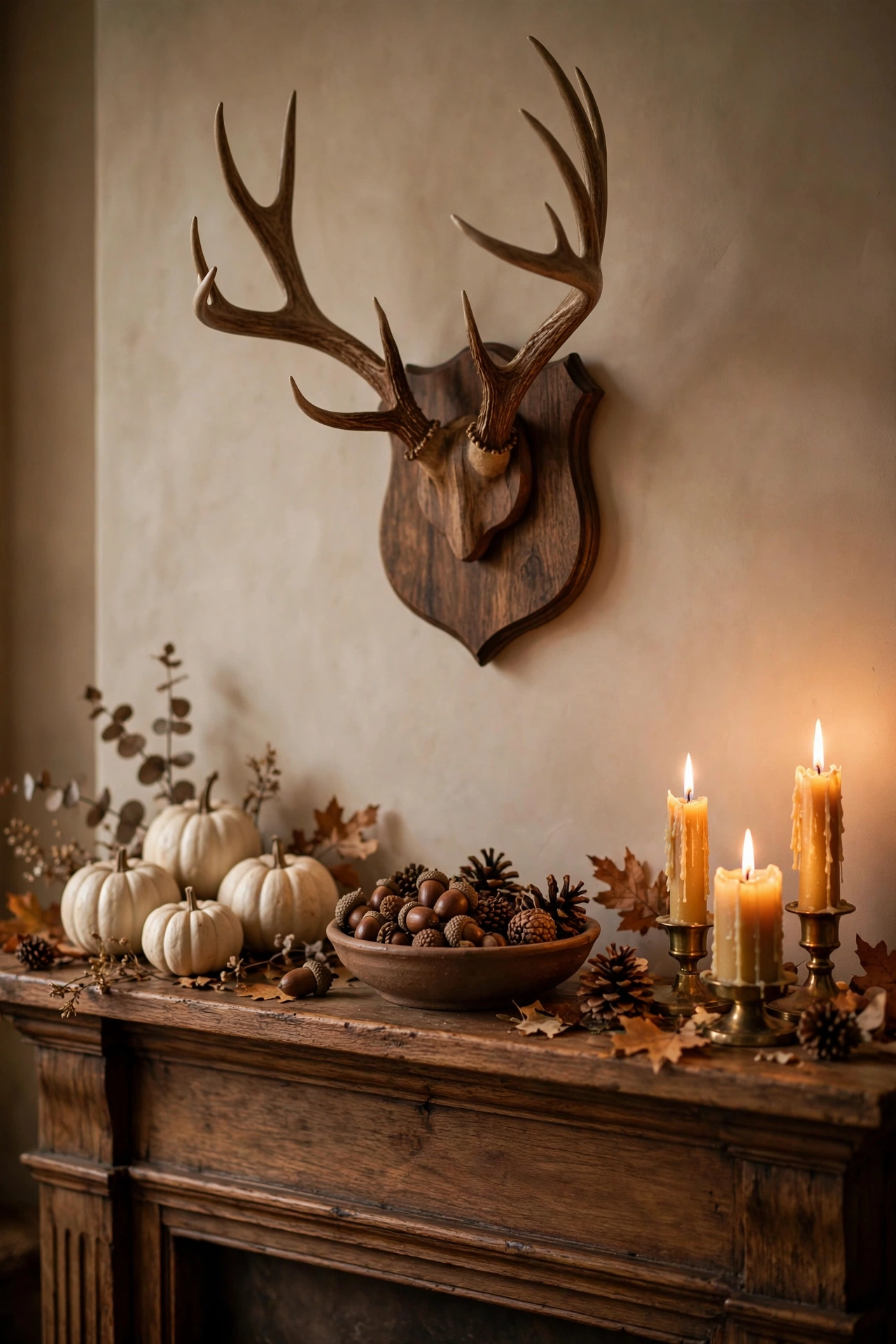
This is the section where woodland decor can go wrong, so let’s be honest about it: there’s a fine line between “serene forest cabin” and “hunting-lodge gift shop.” The difference is restraint and realism. One beautiful antler (shed, faux, or vintage) on a mantel is poetry. Five of them plus a taxidermy owl is a theme park.
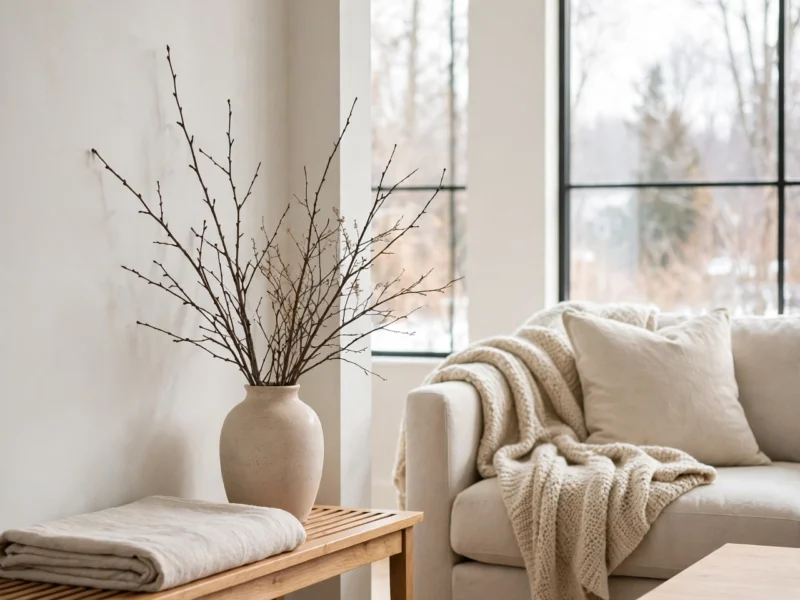
Start with the real thing where you can. Acorns, pinecones, chestnuts, interesting twigs (gathered, not bought) carry a kind of imperfect beauty that store-bought “rustic decor” rarely manages. Arrange them loosely: a low wooden bowl of mixed nuts and cones on the coffee table, a tall branch in a stoneware vase in the corner. Loose and a little wild beats symmetrical every time. Nature doesn’t do symmetry.
For the bigger statement pieces, go faux or vintage rather than new. Faux antler mounts in resin or ceramic, small vintage brass deer figurines (the 1960s and 70s ones turn up constantly in thrift stores), a framed botanical print of ferns or mushrooms. Designer note: mix one “woodland” object with two completely ordinary ones. An antler beside a stack of books and a candle. The ordinary objects are what keep it from feeling like a costume.
And the fawn motif itself? Use it the way you’d use any animal print: as an accent, never the headline. A cushion with a subtle deer silhouette, a watercolour print in the hallway, a tiny brass fawn on a stack of coffee-table books. One nod per room is plenty. The trend is called fawn-inspired, not fawn-covered: the palette and the textures are doing most of the work.
Let Warm Light Do the Heavy Lifting
 Save
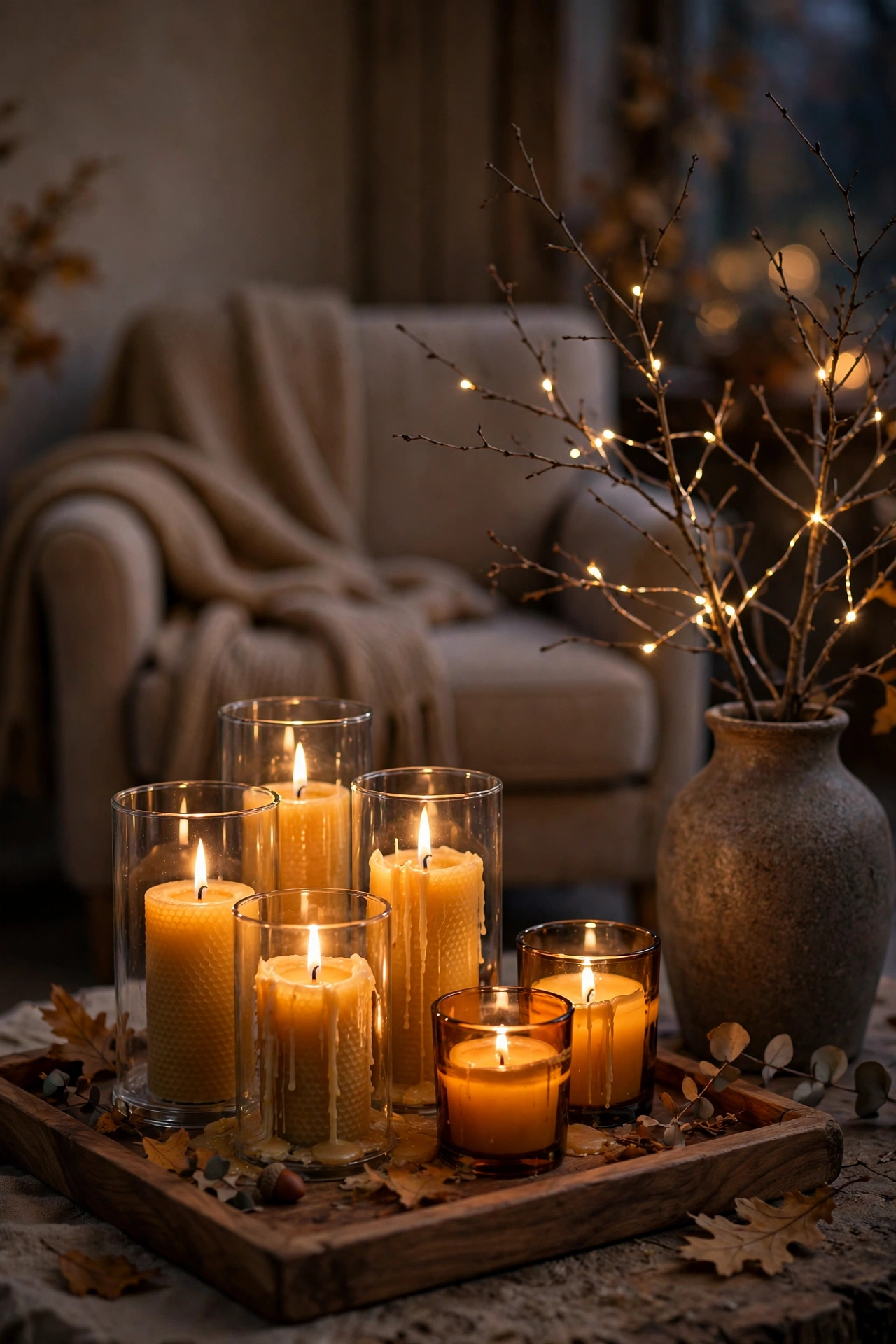
Here’s the secret nobody tells you about autumn styling: it’s mostly lighting. A room full of perfect fall textures still feels flat at noon, and a nearly empty room feels like October at dusk with the right glow. Low autumn sun, firelight, candle flames: fall light is warm, low, and a little golden. Recreate that, and the decor almost takes care of itself.
Candles are the obvious move, but the trick is in the vessels. Beeswax tapers in brass holders, chunky pillar candles in glass hurricanes, tea lights in amber glass: the container shapes the light. Styling tip: group candles in odd numbers at different heights on a tray, and light them an hour before you sit down. Candlelight needs time to change a room; flipping them on as guests arrive is too late.
Then layer the lamps. If your living room is lit by a single overhead light, October is the month to fix that. A floor lamp with a fabric shade throws the warm pool of light a forest clearing gets at golden hour. String lights (the small warm-white fairy kind, not the multicolour holiday ones) tucked into a glass jar or draped over a branch in a vase give you that dappled, through-the-trees feeling.
The colour temperature matters more than the fixture. Anything marked “daylight” or above 4000K will fight your woodland palette; it turns camel into beige and taupe into grey. Swap those bulbs for 2700K warm white: it’s a small change that does more for autumn atmosphere than any throw pillow. Try this: tonight, turn off the overheads, light every candle you own, and switch on one warm lamp. That’s the baseline your whole room is aiming for. Warm, low light is also the backbone of our warm minimalist living room ideas.
Set a Table That Feels Like an Autumn Clearing
 Save
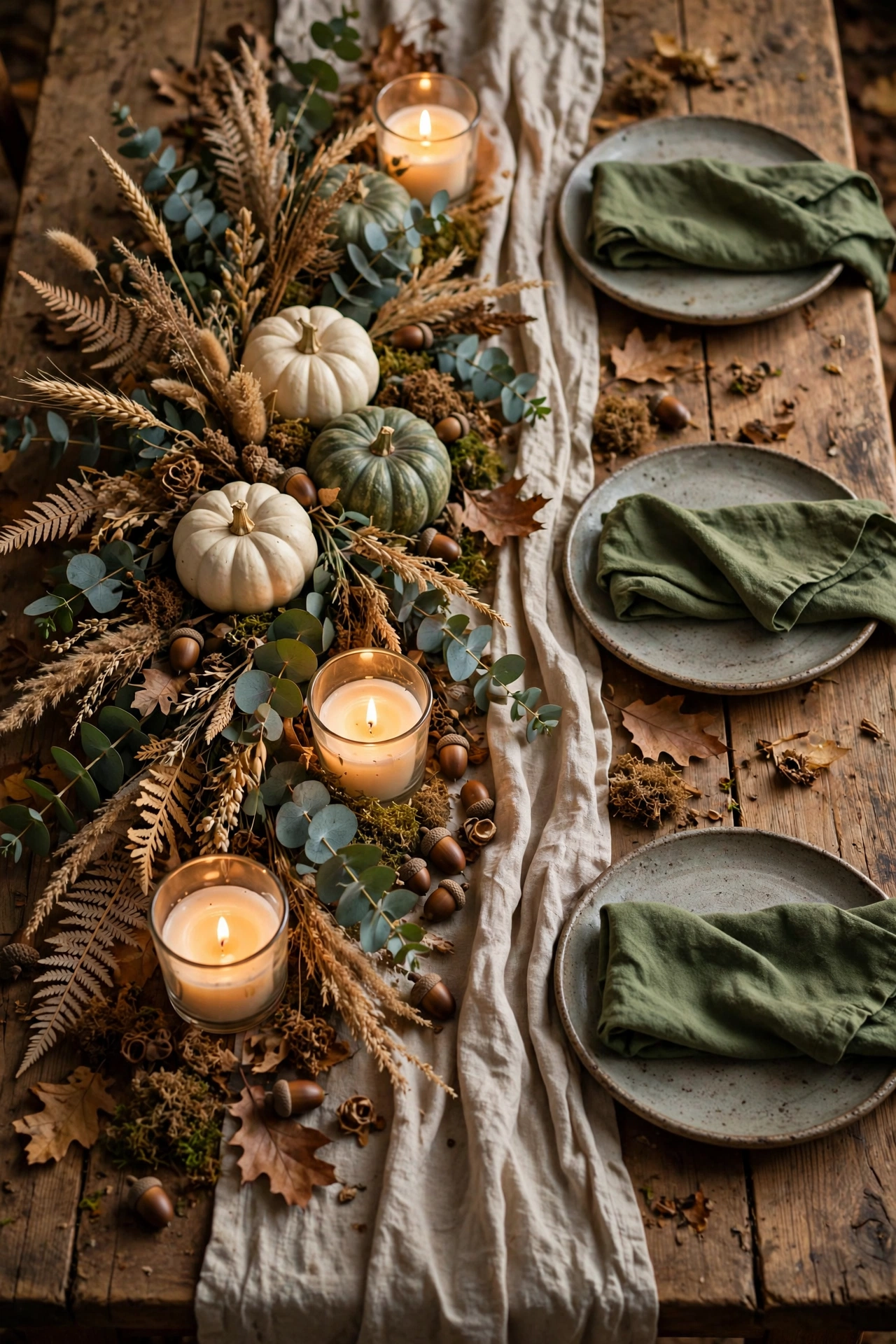
The dining table is where woodland fall decor shows off best, because a table is basically a small landscape you’re allowed to design from scratch. And the autumn-clearing look is easier than the formal tablescape everyone dreads: it’s lower, looser, and you can eat around it without moving a production.
Start with linen: a runner or a full cloth in natural, oatmeal, or warm cream, slightly wrinkled. Crisp white says “restaurant”; wrinkled linen says “someone’s beautiful farmhouse.” Down the centre, build your forest floor: a garland of eucalyptus or dried grasses (fresh is lovely, dried lasts all season), interspersed with small pumpkins in white and green, acorns, and a few candles in glass. The same low, abundant approach works for the holidays: see our Thanksgiving table decor ideas.
The centerpiece
Keep it low: nothing taller than a water bottle, so people can actually see each other. A long low wooden bowl or a simple tray as the base, filled with the eucalyptus-and-acorn mix, three candles at different heights. Done in ten minutes, and it looks like you planned it for a week.
The place settings
Stoneware plates (the handmade-looking kind, even if they came from a big-box store), a linen napkin in moss green or camel, and one small natural thing on each plate: a sprig of rosemary, a single acorn, a chestnut. It costs almost nothing and it’s the detail guests photograph.
Budget swap: you don’t need a matching set of anything. The woodland table is at its best when the plates don’t quite match and the glasses are whatever you own. Uniformity is the enemy of “gathered from the forest.” If your everyday dishes are white, just add the linen and the greenery: white stoneware against moss and bark looks incredibly chic.
Give Every Room One Small Woodland Moment
 Save
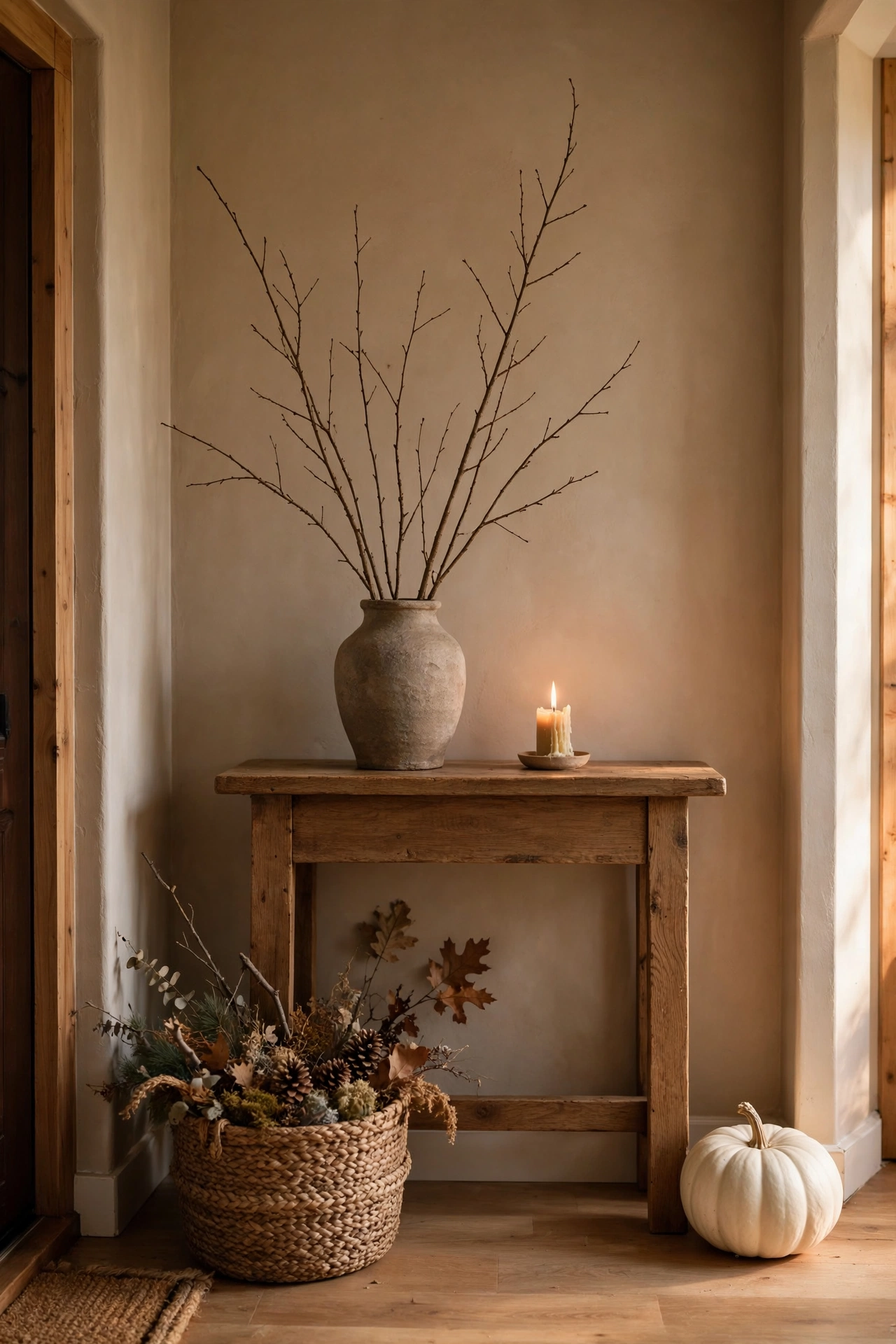
You don’t need to redecorate the house. The woodland look works best as a whisper, not a shout: one small moment per room that ties everything together. Think of it as the decor equivalent of a signature scent: subtle, consistent, everywhere.
The entryway is your first impression, so make it count but keep it simple. A woven basket for the inevitable autumn clutter (scarves, dog leads), a branch in a tall vase, a candle on the console. Guests should smell beeswax and see something natural within three seconds of walking in.
In the bedroom, swap the summer bedding for the heavier stuff: a wool throw in camel across the foot of the bed, linen pillowcases in warm cream, one piece of woodland art above the dresser. Keep the light warm and low here too; a small amber-glass lamp on the nightstand does more for cosiness than any duvet.
And don’t forget the porch or the front step, which is where Pinterest traffic actually starts: kerb-appeal pins travel far. A pair of white pumpkins, a bundle of dried corn stalks tied with twine, a lantern with a real candle. Styling tip: keep the porch to three elements max. A crowded porch reads as “storage,” not “styling.”
Bringing It All Together
Woodland fall decor isn’t really about deer, when you get down to it. It’s about choosing the calm version of autumn: the walk in the woods instead of the haunted house, the dappled fawn coat instead of the neon pumpkin. Taupe, camel, cream, moss, bark. Rough textures, warm light, a few things gathered from outside.
Start with the palette, layer the textures, add your woodland nods with restraint, and let candlelight do the rest. One small moment per room. That’s genuinely the whole formula, and it works in a studio flat just as well as it works in a farmhouse.
And the best part? When December comes, you won’t have to undo any of it. Take away the acorns, add some evergreen, and your woodland base slides straight into winter. That’s the quiet genius of decorating with nature instead of with novelty.
Frequently Asked Questions
What is woodland fall decor?
It’s an autumn decorating style inspired by forest landscapes and the fawn’s natural colouring (taupe, camel, warm cream, moss green, and bark brown) with natural textures like wool, linen, wood, and stone. It’s calmer and more neutral than traditional orange-and-red fall decor.
How is fawn-inspired decor different from rustic or cabin decor?
Rustic cabin style leans heavy: dark woods, plaid, hunting-lodge energy. Fawn-inspired woodland decor is lighter and softer: the same natural materials, but in a pale, dappled palette with more cream and camel, and less dark timber and flannel. Think forest clearing, not log cabin.
Do I need to buy a lot of new decor for this look?
No: that’s one of its strengths. The palette works with most existing neutral furniture, and the best accessories (pinecones, branches, acorns, dried grasses) are free from outside. Most people need only a throw, some candles, and a few natural finds.
Can woodland decor work in a small flat?
Absolutely: arguably better than in a big house, because restraint is built into the style. One branch in a vase, a camel throw, warm candlelight, and a small bowl of acorns can give a studio the whole feeling without cluttering it.
How do I keep antler and woodland accents from looking kitschy?
One statement piece per room, mixed with ordinary objects like books, candles, and ceramics. Choose realistic or vintage pieces over cartoonish ones, keep the surrounding palette calm, and never let the “theme” outnumber the real furniture.
3 thoughts