There is a particular kind of calm that only a deep green bedroom gives you. Not the pale, washed-out green of a spa brochure, and not the bright kelly green of a front door. The good stuff sits deeper: forest green that reads almost black after dark, olive green with a warm, earthy pull, sage green that softens everything it touches. Walk into a room dressed in one of those shades and your shoulders drop a little. That is the whole point.
The trouble is that deep green can go wrong fast. Paint it on every wall with the wrong light and the room feels like a cave. Pair it with the wrong wood and it turns muddy. Pick a bedding set that is one shade off and the whole palette argues with itself. Most people who love the idea stall at exactly this point, staring at paint swatches and wondering whether they are about to ruin their bedroom.
You are not. Deep green is one of the most forgiving colours you can put in a bedroom, as long as you know which shade does what and where to spend your effort. The nine ideas below cover the full range, from a single painted wall you can finish in an afternoon to a full colour-drenched room, and each one tells you exactly how to pull it off without the guesswork.
Quick Tips Before You Start
- Test your green on the wall for three days, in morning and evening light, before you commit. Green shifts more than any other colour.
- Pick one hero green per room. Forest, olive and sage can share a room, but one of them leads and the others support.
- Warm light bulbs (2700K) keep deep green cosy; cool white light turns it flat and grey.
- Balance every dark green surface with something pale: cream bedding, light wood, or a warm white ceiling.
1. Paint One Wall Forest Green
 Save
Before you pick a shade, read your room for one day. Note which way the windows face and when direct sun arrives, if it arrives at all. Measure the room and note the ceiling height. Then look at what stays: the wood tone of the bed, the colour of the floor, the bedding you plan to keep. Forest, olive and sage all behave differently against warm wood and cool light, so the right green is the one that suits the room you already have, not the one that looked best in the shop.
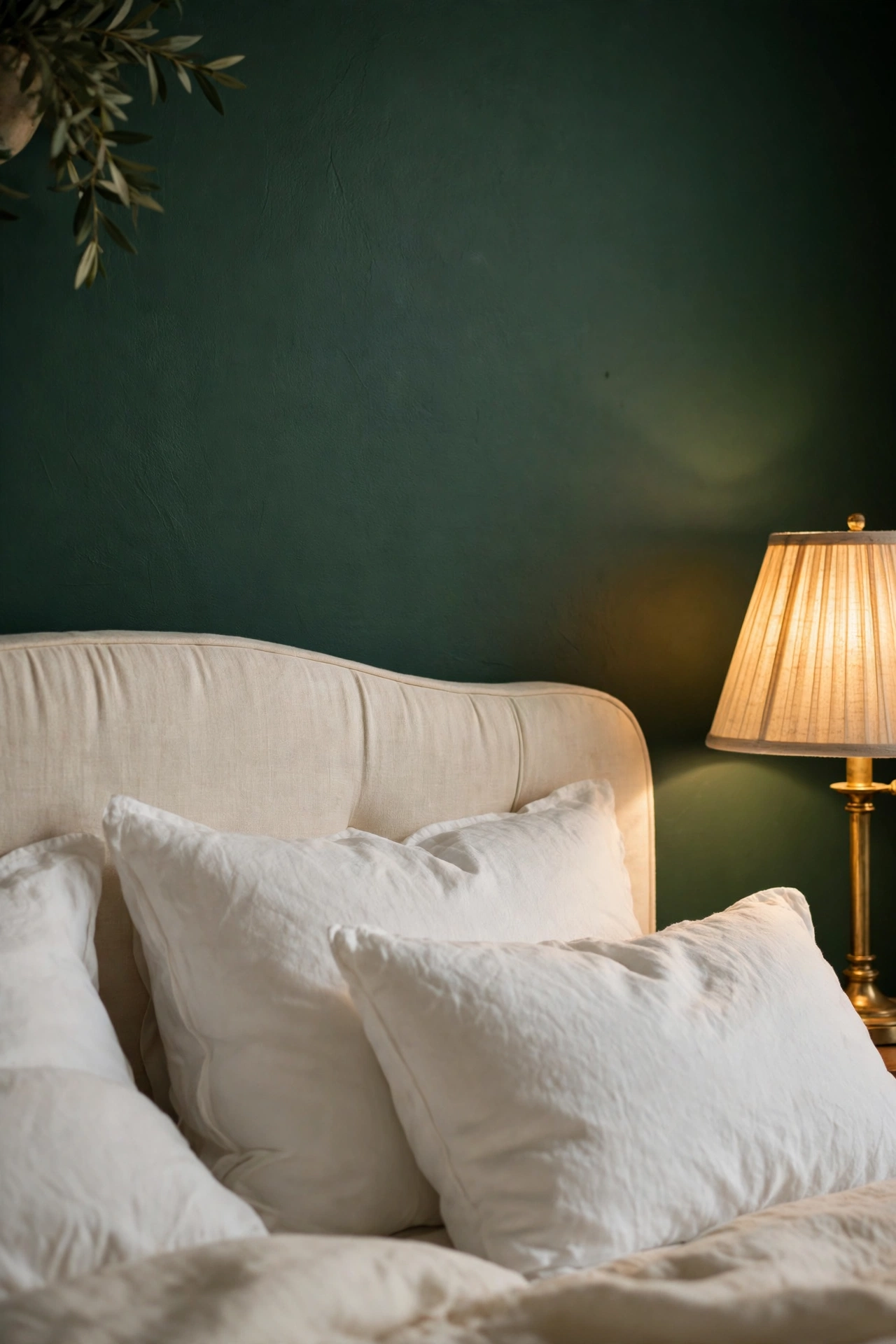
If you are nervous about committing to a dark colour, start here. One forest green wall behind the bed gives you the drama of the trend with none of the risk, and it costs a single tin of paint and a Saturday afternoon. Choose the wall the bed sits against, because that is where your eye lands when you walk in, and the headboard will break up the colour so it never feels like a flat slab.
The shade matters more than the brand. Look for a forest green with a warm undertone, something that leans a little towards pine rather than teal. Teal-leaning greens can look cold in a north-facing room, while a warm forest green stays rich even on grey days. Hold the swatch against your bedding before you buy, because a green that clashes with a cream duvet will fight you every morning.
| Shade | Light it likes | Room it suits |
|---|---|---|
| Forest green | Good natural light | Rooms where you want drama |
| Olive green | Warm, dimmer light | Rooms that need warmth |
| Sage green | Any light, safest in low light | Small or north-facing rooms |
Paint the wall in a matte or eggshell finish. Gloss bounces light around and shows every bump in the plaster, while matte drinks the light in and makes the colour feel deep and velvety. Two coats, a decent roller, and painter’s tape along the ceiling line are all you need. If your skirting boards are white, leave them white. That crisp line at the bottom stops the wall from feeling heavy.
Placement: the wall behind the bed, full width, floor to ceiling. Colour: warm forest green, matte finish. Texture: pair it with a linen or cotton headboard in cream so the wall has something soft to sit against. Swap: if paint feels too permanent, try a forest green removable wallpaper panel behind the bed instead, and peel it off if you change your mind.
2. Colour-Drench the Whole Room in Olive
 Save
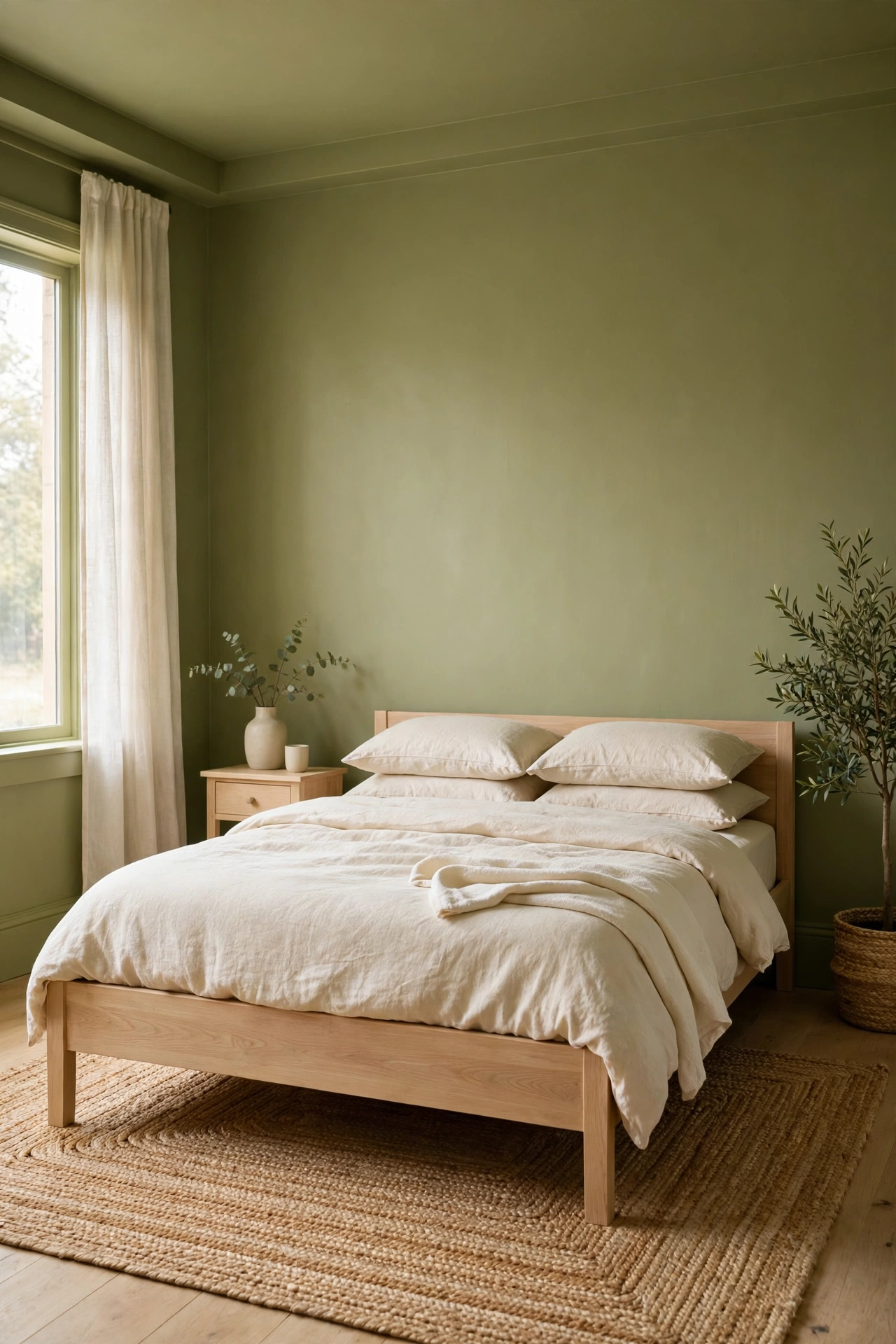
Colour drenching means painting the walls, ceiling, skirting boards and even the door in one shade, and olive green might be the best colour in the whole house to try it with. Olive is warm, earthy and forgiving, so a fully drenched room reads as intentional and cocooning rather than dark. It is the boldest idea on this list and, honestly, the one people compliment most once it is done.
The trick is picking an olive that is mid-toned rather than murky. Too pale and the room looks washed out; too dark and it reads brown in dim light. A good test is to paint a large sample board and lean it against the wall for a few days. You want a green that still looks green at 9pm under lamplight, not one that turns into muddy khaki.
Keep the ceiling the same olive as the walls. That sounds wrong the first time you hear it, but a white ceiling in a drenched room chops the space in half and kills the effect. Same colour everywhere makes the corners disappear and the room feel bigger, not smaller. Then let the furniture do the contrast work: a pale oak bed frame, cream linen bedding, and a woven rug will pop beautifully against all that olive.
For a deeper look at the technique itself, our guide to colour drenching a room one bold colour walks through finishes, prep and the rooms it suits best.
Placement: every wall, the ceiling and the woodwork in one olive. Colour: a warm mid-tone olive, eggshell finish on walls, same shade on the ceiling. Texture: linen bedding, a wool throw and a jute rug to keep the room from feeling flat. Swap: if a full drench feels too much, paint the walls and skirting olive and leave the ceiling warm white, then revisit in a month.
3. Start with Sage Green Bedding
 Save
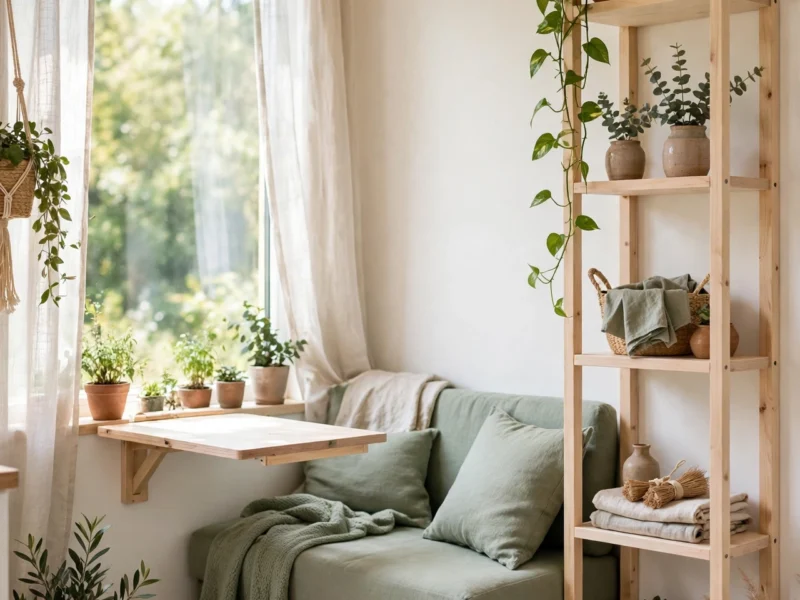
Not ready to paint anything? Sage green bedding is the lowest-commitment way into this palette, and it works in almost any bedroom you already have. Sage is the softest of the three greens here, a grey-green that sits quietly against white walls, pale wood and even existing beige furniture. Swap the duvet cover and two pillowcases and the room changes character in ten minutes.
Layer it rather than matching it. A sage duvet cover with cream or white sheets underneath, a folded throw in a deeper forest green across the foot of the bed, and one cushion in a warm rust or mustard to stop the palette going cold. The mix of greens is what makes it look designed rather than bought as a set. Avoid sage curtains and sage bedding in the exact same shade, because that matchy look flattens the room.
Fabric matters here more than colour. Linen or washed cotton in sage looks relaxed and expensive; shiny sateen in sage can look cheap and a bit slippery. If your budget only stretches to one piece, make it the duvet cover, since it covers the most surface and sets the tone for the whole bed.
For more ideas on building a bed that feels layered rather than flat, see our winter bedroom layering ideas, which work just as well in spring.
Placement: the bed is the centrepiece, so let the sage sit there and keep the rest of the room neutral. Colour: soft sage with cream underneath and one deeper green accent. Texture: washed linen or cotton, never shiny sateen. Swap: a sage throw and two sage cushion covers give you the same effect for a fraction of the price of a full bedding set.
4. Add a Deep Green Velvet Headboard
 Save
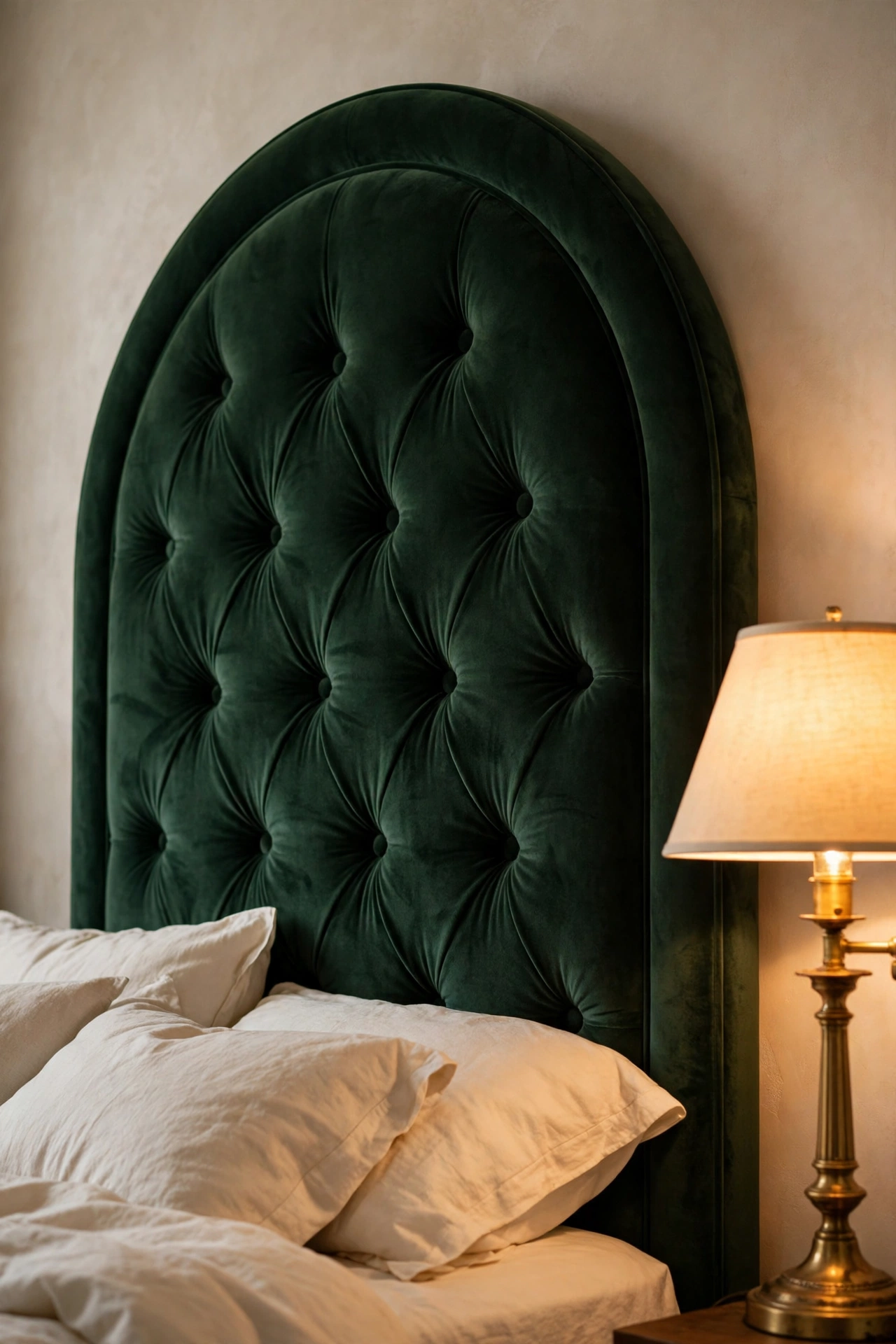
A velvet headboard in deep green does two jobs at once: it anchors the bed visually and it adds a texture that paint alone can never give you. Forest green velvet catches the light differently from every angle, so the headboard looks alive rather than flat, and it turns an ordinary bed into the kind of thing people photograph.
Shape matters as much as colour. A tall, arched headboard suits a room with high ceilings and gives you a real focal point. A low, rectangular panel works better in a small room, where a tall headboard would crowd the wall. If you already have a wooden headboard you like, a deep green velvet slipcover or a pair of tall upholstered panels mounted behind the bed gives you the same look without replacing furniture.
| Headboard | Room it suits | Why |
|---|---|---|
| Tall, arched | High ceilings | Creates a real focal point |
| Low, rectangular | Small room | Does not crowd the wall |
| Velvet slipcover or panels | You already like your wooden headboard | Same look, no new furniture |
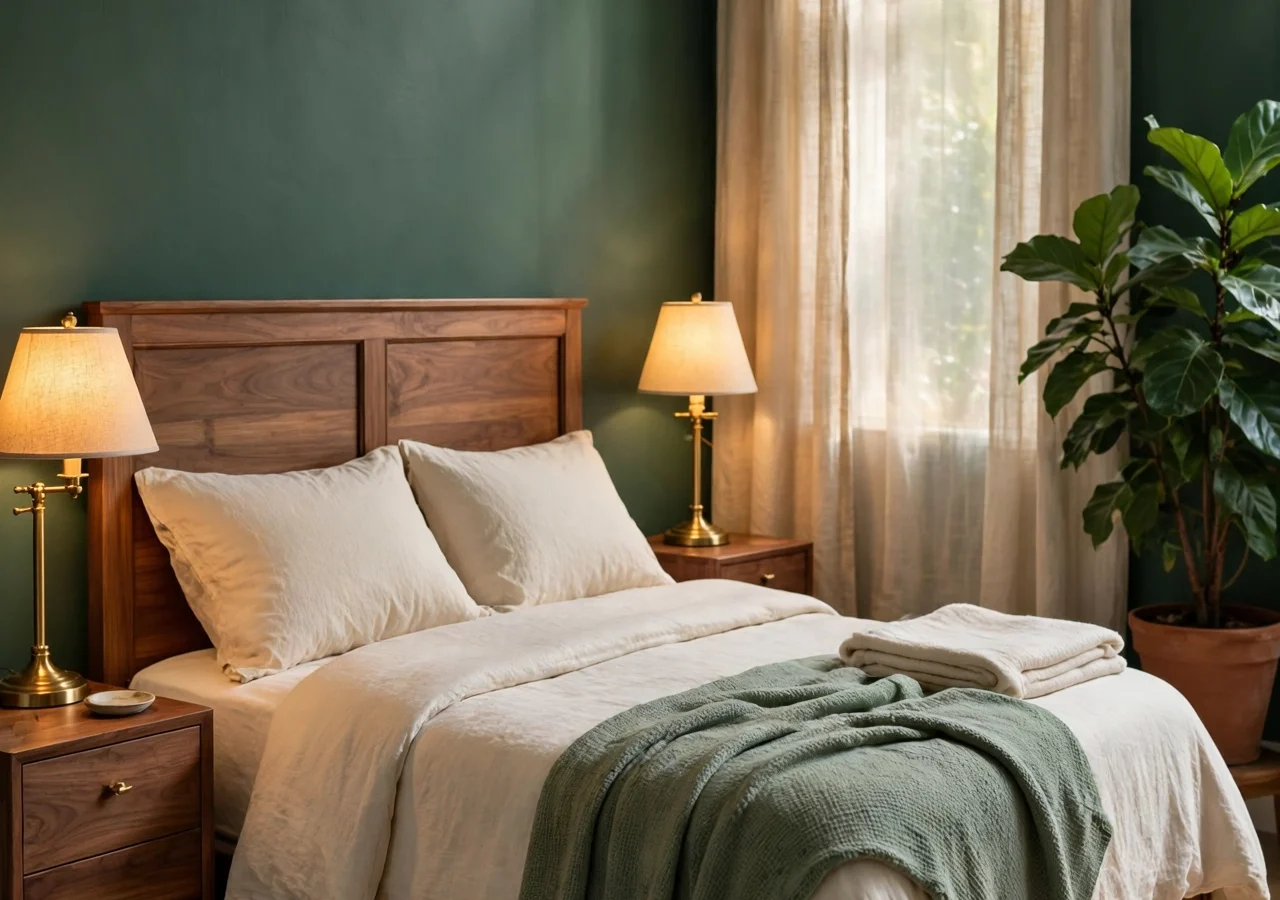
Keep the wall behind it simple. A velvet headboard against a busy wallpaper or a gallery wall fights for attention and both lose. Pale warm white, soft sage, or a single forest green wall all work, because they let the texture do the talking. Brass or warm wood bedside lamps on either side will pick up the warmth in the green and make the whole setup glow in the evening.
Placement: centred on the main wall, tall enough to clear your pillows by at least 30 centimetres. Colour: deep forest or emerald green velvet, with warm brass or wood nearby. Texture: velvet against crisp cotton bedding is the contrast that makes this work. Swap: a deep green velvet throw draped over a plain headboard gives you the colour and texture for very little money.
5. Hang Floor-to-Ceiling Forest Green Curtains
 Save
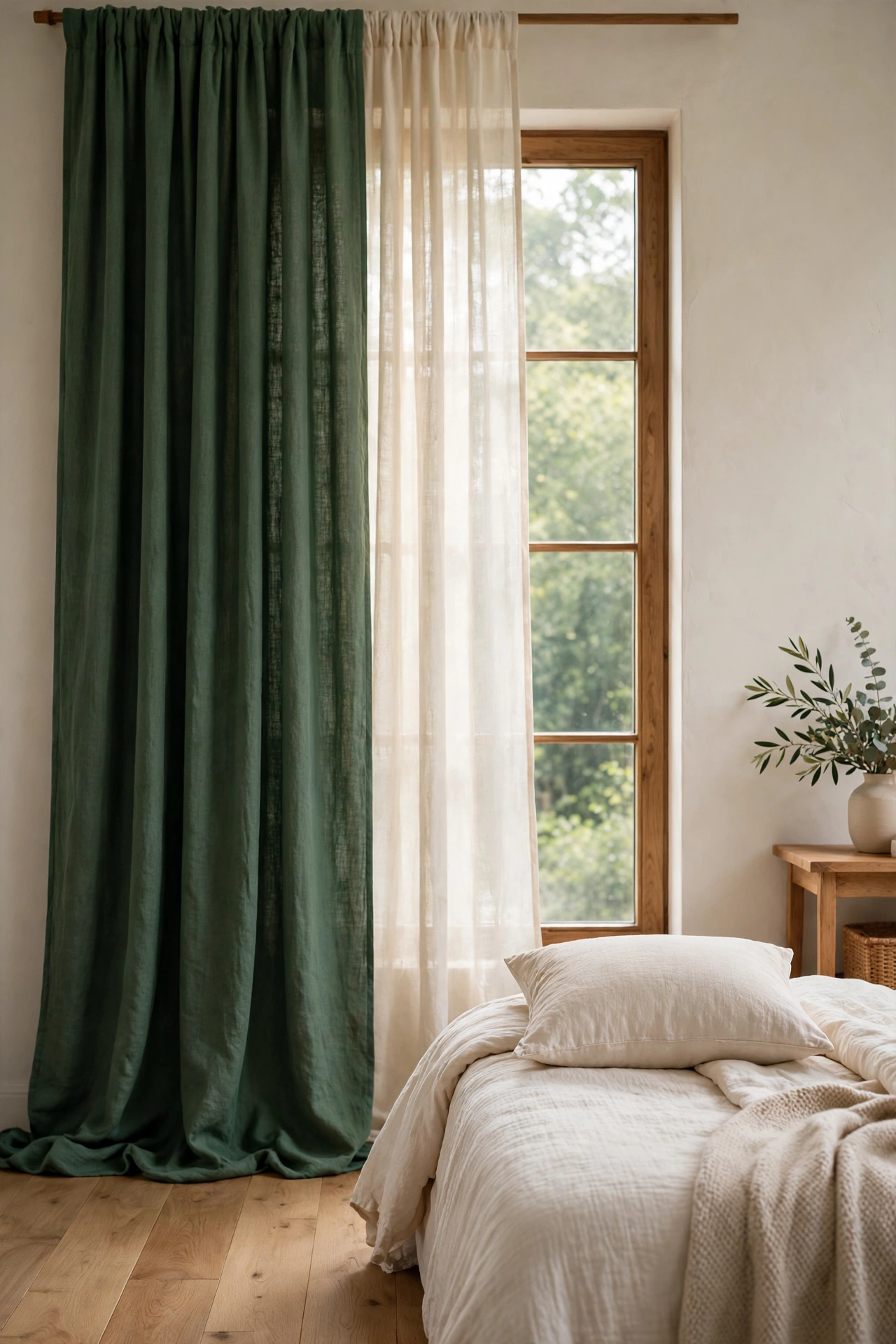
Curtains are the most underrated way to bring deep green into a bedroom, because they cover a huge area and you can take them down in five minutes if you hate them. Forest green curtains in a heavy linen or velvet, hung from a rod mounted close to the ceiling and pooling just slightly on the floor, make a room feel taller, warmer and far more finished than bare windows ever will.
Length is the whole game. Curtains that stop at the windowsill chop the wall in half and look like an afterthought. Measure from the rod to the floor and add a few centimetres so the fabric kisses the floor. Width matters too: each panel should be at least one and a half times the width of the window when gathered, or the curtains will look stretched thin when closed.
Choose a lining if you can. A blackout or thermal lining does two useful things: it keeps the green looking rich from outside at night, and it stops morning light from washing the colour out. In a bedroom, that lining also means better sleep, which is the real reason you are decorating this room in the first place.
Placement: rod mounted 10 to 15 centimetres above the window frame, panels falling to the floor. Colour: forest green in linen or velvet, with a cream or warm white sheer behind it if you want daytime privacy. Texture: heavy fabric with a soft fold, never stiff or shiny. Swap: if full-length curtains feel too formal, try a forest green Roman blind in the same fabric for a cleaner, tailored look.
6. Paint a Dresser or Nightstands Olive Green
 Save
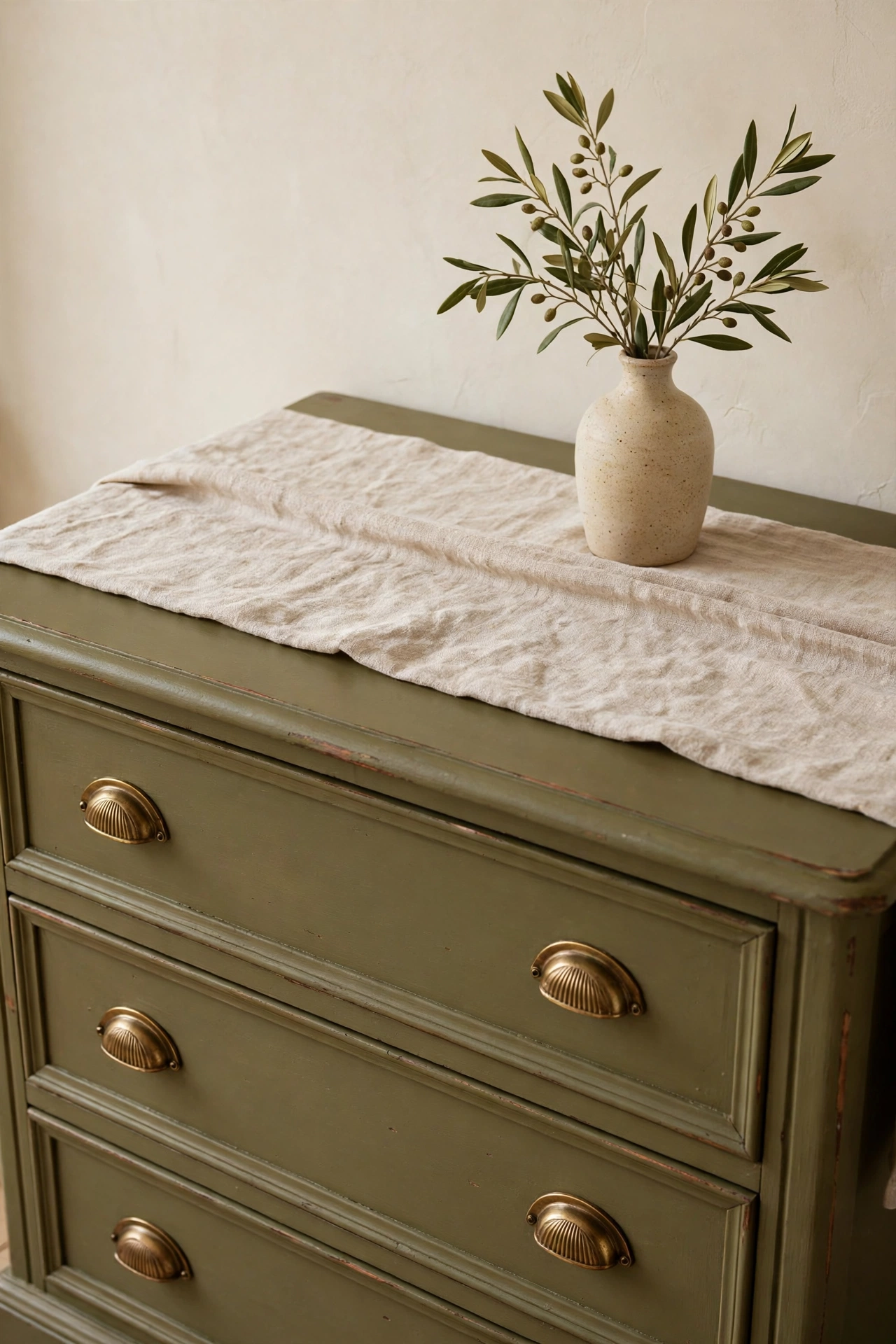
Painted furniture is the best middle ground between a painted wall and new bedding. An old wooden dresser or a pair of nightstands in olive green brings the colour into the room at furniture height, which is where your eye actually rests, and it costs a tin of furniture paint and a weekend. Secondhand dressers are perfect for this, since a few dents and scratches just add character under the paint.
Prep is what separates a good result from a peeling mess. Clean the piece, sand it lightly so the paint grips, and use a primer if the wood is dark or varnished. Two thin coats of furniture paint beat one thick coat every time, and a clear wax or matte topcoat on the top surface protects it from cups and books. Swap the handles for brass or leather pulls while you are at it, because new hardware makes a painted piece look finished rather than improvised.
One painted piece is enough. A dresser and two nightstands all in the same olive can look like a matching set from a furniture showroom, which is not the feel you want. Paint the dresser, leave the nightstands in wood, or paint one nightstand and keep the other natural. The mix is what makes it look collected over time.
Placement: the dresser on the wall opposite the bed, where you see it first thing in the morning. Colour: warm olive green, matte or satin finish, with brass hardware. Texture: smooth painted wood against a woven basket or a linen runner on top. Swap: if painting feels too final, try olive green contact paper on the drawer fronts, which peels off cleanly if you change your mind.
7. Layer Green with Warm Wood and Brass
 Save
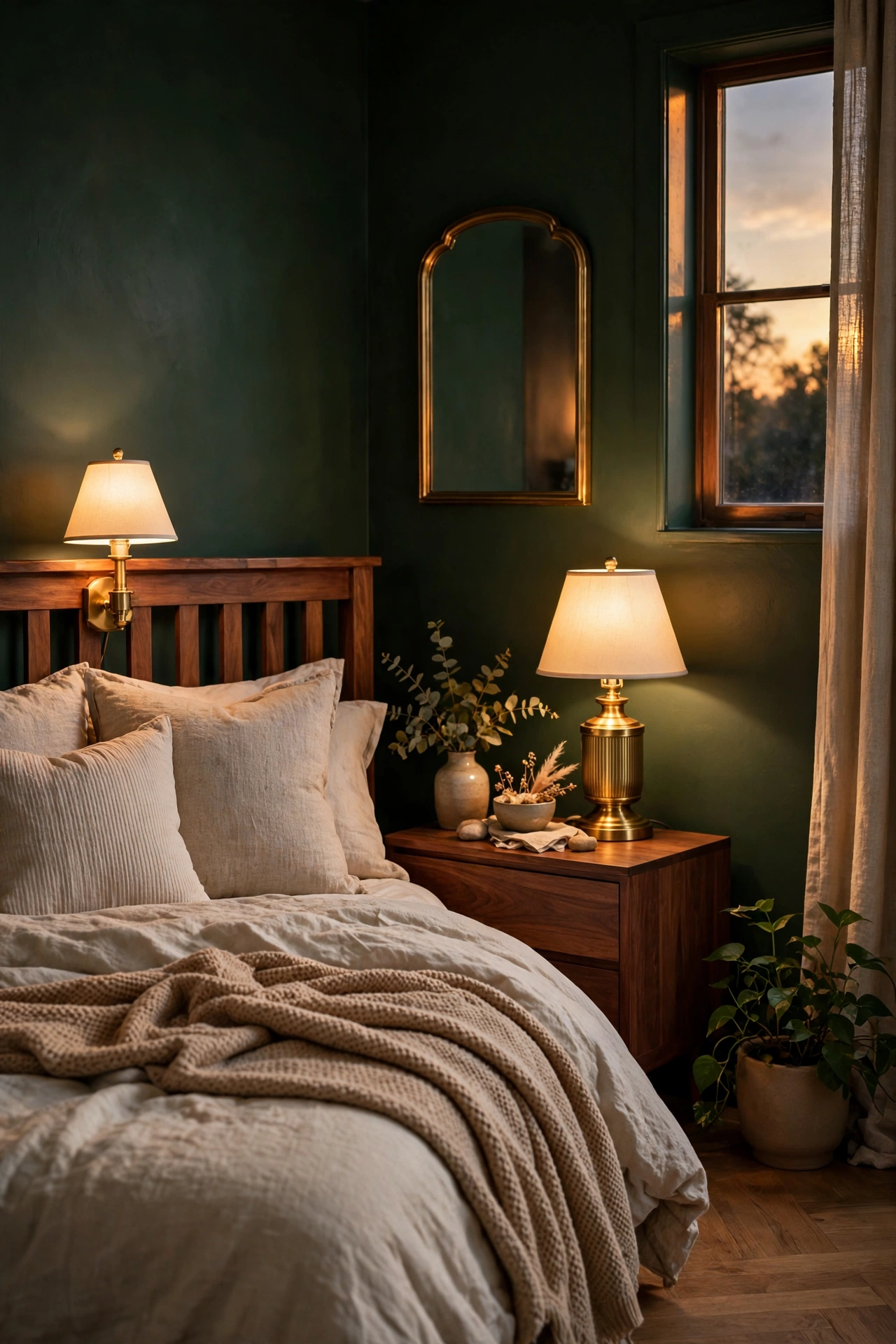
Deep green on its own can feel cold, especially in a room that does not get much sun. Warm wood and brass are the two materials that fix that instantly, and they are the reason so many green bedrooms in magazines look expensive rather than gloomy. A walnut bed frame, an oak bench at the foot of the bed, brass bedside lamps and a brass-framed mirror will warm up any shade of green you choose.
The balance is roughly two parts green to one part warm material. Too much wood and the green disappears; too little and the room feels chilly. Start with the biggest wooden piece you already own, usually the bed frame or a wardrobe, and add brass in small doses: lamp bases, drawer pulls, a picture frame, a tray on the dresser. Brass is an accent, not a theme, so a little goes a long way.
Avoid cool metals here. Chrome and silver against deep green can look stark and a bit clinical, while brass, copper and warm wood all pull the green towards cosy. The same goes for your light bulbs: warm white light makes green velvet and green paint glow, while cool white light flattens them. If your lamps feel harsh, change the bulbs before you change anything else in the room.
Placement: wood at the big furniture pieces, brass in small accents spread across the room. Colour: warm wood tones like walnut and oak, brass with a soft, aged finish rather than shiny gold. Texture: wood grain and brushed brass against smooth green paint or velvet. Swap: if new brass lamps are out of budget, spray-paint old lamp bases in a warm brass finish and swap the shades for cream linen.
8. Fill the Room with Botanical Prints and Real Plants
 Save
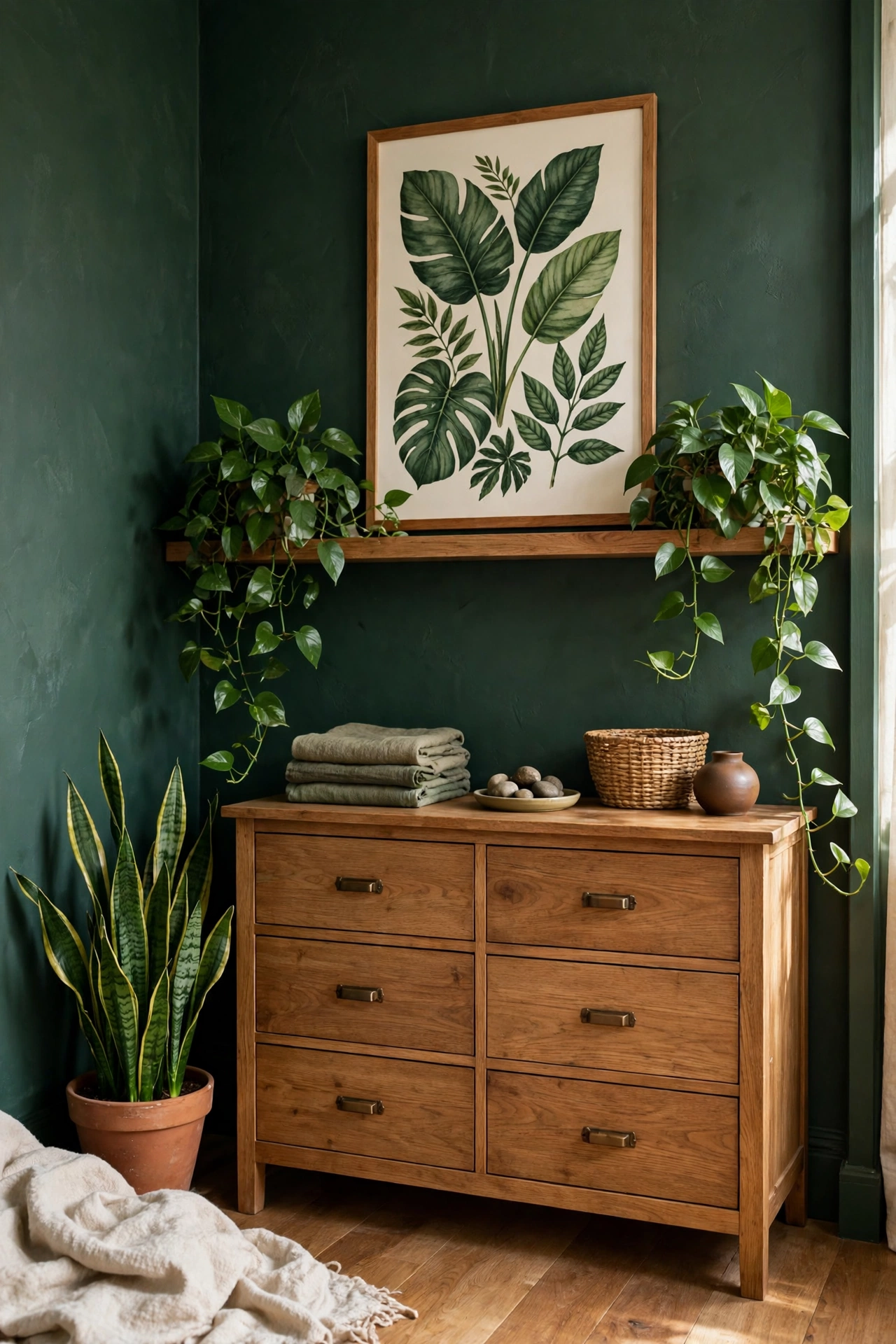
A deep green bedroom and plants belong together, and the reason is simple: plants are green, so they never clash with your palette, and they add life to a colour that can otherwise feel flat. A large plant in the corner, a trailing pothos on a shelf, and a couple of small pots on the nightstand will make the room feel fresh rather than staged. If real plants are not your thing, botanical prints in deep green frames give you the same feeling with zero watering.
Choose plants that actually survive in a bedroom. A snake plant and a pothos tolerate low light and irregular watering, which is exactly what most bedrooms offer. Put the big plant in a warm terracotta or cream pot rather than a green one, because a green pot against a green wall disappears. Group plants in odd numbers, three or five, and vary the heights so the arrangement looks natural rather than lined up like soldiers.
Botanical prints work best when they are big. One large framed print above the dresser beats four small ones scattered around the room, and a print with cream paper and deep green leaves will tie the whole palette together. Hang it at eye level, not too high, and keep the frame simple: thin black, warm wood or brass, nothing ornate.
Our guide to plant-filled bedroom ideas has more combinations if you want to go further with the botanical look.
Placement: one large plant in a corner, trailing plants on shelves, prints above the dresser or bed. Colour: deep green leaves against cream pots and warm wood frames. Texture: real leaves and linen curtains next to smooth painted walls. Swap: if you travel a lot, use high-quality faux plants in the hard-to-reach spots and keep one real plant where you will actually notice it.
9. Paint the Ceiling Dark Green for a Cocoon Feel
 Save
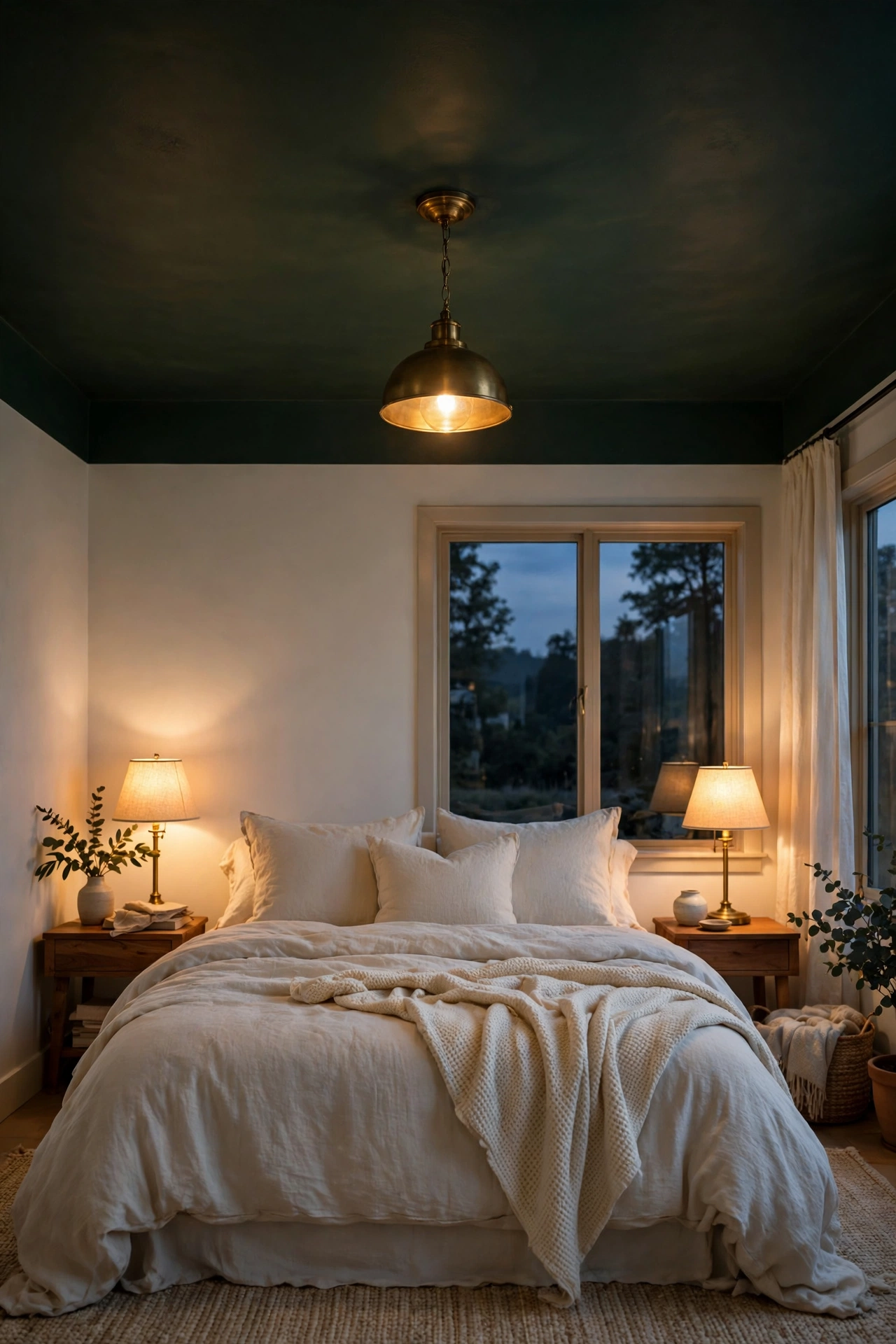
This is the bravest idea on the list and the one that surprises people most. A dark green ceiling in a bedroom makes the room feel like a cocoon, especially at night, because your eye stops travelling up to a white ceiling and settles on the room itself. It works best in rooms with decent ceiling height, but even a standard ceiling can take it if the walls stay pale.
Keep the walls light when the ceiling goes dark. Warm white, pale sage or a very soft cream on the walls gives the dark ceiling something to sit against, and the contrast is what makes the trick work. If the walls are dark too, the room can feel like a box, so this idea is a trade: dark ceiling, light walls, and the green shows up in the bedding and curtains instead.
Lighting matters more here than anywhere else in the room. A ceiling pendant in brass or warm wood will glow against the dark green, and bedside lamps with warm bulbs keep the corners from going black. Avoid a ceiling light that points straight up, since it will wash the green out. A dimmer switch is worth fitting if you do not have one, because you can tune the mood in the evening.
If you love moody rooms in general, our moody dark romantic interiors guide shows how the same cocooning idea works across the whole house.
Placement: ceiling only, in a deep forest or dark olive green, with pale walls below. Colour: one shade darker than your wall green, matte finish so it absorbs light softly. Texture: a linen pendant shade or a woven light fitting to soften the dark surface. Swap: if painting the ceiling feels too permanent, try a dark green ceiling in a guest room first, where you can live with it for a few weeks before deciding.
The combination: one hero green, one pale balance, warm wood and brass, and warm bulbs. Hold those four and any shade of green works.
Bringing It All Together
Deep green works in a bedroom because it does what a bedroom is supposed to do: it slows you down. Forest, olive and sage each do that job a little differently, so pick the shade that matches how you want the room to feel. Forest is dramatic and grounding, olive is warm and earthy, sage is soft and easy to live with. You do not need all three, and you do not need to do all nine ideas. One painted wall, one set of curtains, or one velvet headboard is enough to change the whole room.
Start with the idea that feels easiest and live with it for a month. If you love waking up to it, add the next layer. If it feels too dark, add a pale throw, a brass lamp, or a cream rug before you change the green itself. Most green bedrooms fail not because the colour is wrong but because the room has nothing pale or warm to balance it, and that is a much easier fix than repainting.
The best green bedroom is the one you actually sleep well in, so trust your own mornings. If you wake up and the room feels calm, you got it right.
Frequently Asked Questions
What is the best deep green paint colour for a bedroom?
There is no single best shade, because light changes everything. Forest green suits rooms with good natural light, olive works in warmer, dimmer rooms, and sage is the safest choice for small or north-facing bedrooms. Always test a large sample on the wall for three days before you commit, and check it in both daylight and lamplight.
Does dark green make a bedroom look smaller?
It can, but only if the whole room is dark with nothing to balance it. One dark green wall with pale bedding and a light ceiling will not shrink a room, and colour drenching can actually make a small room feel bigger because the corners disappear. Keep at least one pale surface in the room and the proportions stay comfortable.
What colours go with a dark green bedroom?
Warm neutrals are the easiest partners: cream, warm white, pale oak and walnut. Brass and copper add warmth, while rust, mustard and dusty pink work as small accents. Avoid pairing deep green with cool grey or bright white in large amounts, since both can make the green look flat and cold.
Is sage green too pale to count as a deep green bedroom?
Sage is the lightest of the three shades here, but it still belongs in the same family. If you want the deep green feeling with sage walls, add forest green in the bedding, curtains or headboard so the room has a dark anchor. Sage alone gives you a soft, calm room, while sage plus one deep green accent gives you the full effect.
Can I use deep green in a small bedroom?
Yes, and it often works better than people expect. Use the green on one wall, the bedding or the curtains rather than all four walls, keep the ceiling pale, and add a mirror to bounce light around. A small room with one deep green wall feels intentional and cosy, while a small room painted entirely dark can feel cramped.