
Every December, the same thing happens in the shops. Aisles of glossy red baubles, plastic green garlands, and glitter that sheds on everything you own. It all looks fine on the shelf, but bring it home and the magic fizzles. The house ends up looking like a storage unit for Christmas itself.
Bakery-themed decor promises something warmer. The trouble is, most of it goes straight past cosy and lands in kitsch. Lopsided cookie ornaments, novelty mugs with faces on them, and a tree that looks like it was decorated during a sugar rush. The idea is lovely. The execution usually is not.
Gingerbread christmas decor done well is a different thing entirely. It is a palette first and a theme second: deep cookie browns, icing whites, cinnamon and clove tones, a little brass or gold for warmth. Worked through the tree, the mantel and the kitchen with restraint, it gives you a house that smells of spice even before the oven is on. This guide shows you how to build that look room by room, with pieces you can make, buy once and keep.
Start With a Gingerbread Palette
 Save
A theme without a palette is just clutter with a story. Before you buy or make a single thing, decide on your colors, because every gingerbread choice you make this season will sit inside them.
The base is brown, but not one flat brown. Think of an actual batch of cookies: the deep edge of a well-baked gingerbread man, the mid-tone of the cookie center, the pale gold where the dough was thinnest. Layer two or three of those tones and the scheme gets depth instead of looking like a chocolate shop exploded. Warm taupes, caramel and cinnamon read cosy in lamplight. Cool or grey browns do not, so keep them out of the mix.
White is your second color, and it does more work than you would expect. Icing-white cushions, a cream throw, white ceramic on the shelves: these are the pauses that stop the browns from turning heavy. In a small room, lean harder on white and keep the deep browns to accents. A white sofa with gingerbread-brown cushions reads festive without a single ornament.
Metallics come last and stay quiet. Brushed brass, antique gold, a little copper in the kitchen. These pick up candlelight and fairy lights beautifully against brown. What to skip: silver, which reads cold next to all that warmth, and bright red, which drags the whole scheme back to generic Christmas.
Styling tip: Test your palette before you commit. Gather the fabrics, a candle and one ornament on the coffee table at night under your normal lamps. If the group looks warm and calm, your palette works. If anything shouts, swap it out now while it is easy.
| Palette | Browns | White | Accent | Best for |
|---|---|---|---|---|
| Classic Bakery | Deep gingerbread, caramel | Icing white | Brushed brass | Traditional homes, full trees |
| Spiced & Golden | Cinnamon, clove | Warm cream | Copper | Kitchens, rustic rooms |
| Blush Gingerbread | Milk-chocolate brown | Soft white | Blush pink | Bedrooms, softer spaces |
That third row deserves a note. Blush pink sounds like it would fight the cookie browns, but it behaves like the icing on the cookie, especially in small doses. If you like the idea, our pink Christmas decor ideas show how to keep pink festive rather than saccharine, and the blush-and-brown combination is one of the prettiest in the guide.
Dress the Tree Like a Batch of Cookies
 Save
The tree is where the theme earns its keep, and the good news is that gingerbread ornaments are some of the easiest to make or find. Felt gingerbread men in two sizes, wooden cookie-cutter shapes, and simple round baubles in cookie brown and cream give you a tree that looks delicious without a single plastic sweet.
Start with lights, warm white only, and be generous. Brown ornaments absorb light, so a tree in this palette needs noticeably more lights than a tree in red and gold to glow the same way. Fairy lights on thin copper wire tuck into the branches better than chunky strings and give you that bakery-window sparkle.
Ribbon does the heavy lifting between ornaments. A wide grosgrain ribbon in caramel, or a gingham check in brown and cream, woven in loose vertical swags from top to bottom, ties the whole tree together and fills gaps where branches are thin. Cut the ribbon into two-metre lengths rather than one long piece. It is far easier to arrange, and you can adjust each section on its own.
For texture, tie small bundles of cinnamon sticks with twine and hang them like ornaments, add dried orange slices for their amber glow, and tuck in a few sprigs of eucalyptus or pine. These natural pieces are what separate a styled tree from a decorated one. They smell good, they cost little, and they photograph beautifully against the brown and cream.
Top the tree with a simple star in wood or brass rather than a novelty cookie topper. A plain star keeps the theme from tipping into costume. If you want one playful piece, make it the tree skirt: a cream skirt with a gingerbread-house print, or a simple woven basket that holds the stand, reads intentional rather than themed to exhaustion.
Once the tree is done, stand back and check the balance from across the room. Squint if you have to. You want to see brown, cream and light in roughly equal measure, with no bare patches. For the rest of the house, our Christmas decorating ideas carry the same warm palette into every room, so the tree feels like the centerpiece of a plan rather than a solo act.
The Mantel: Gingerbread Houses, Cookies and Candlelight
 Save
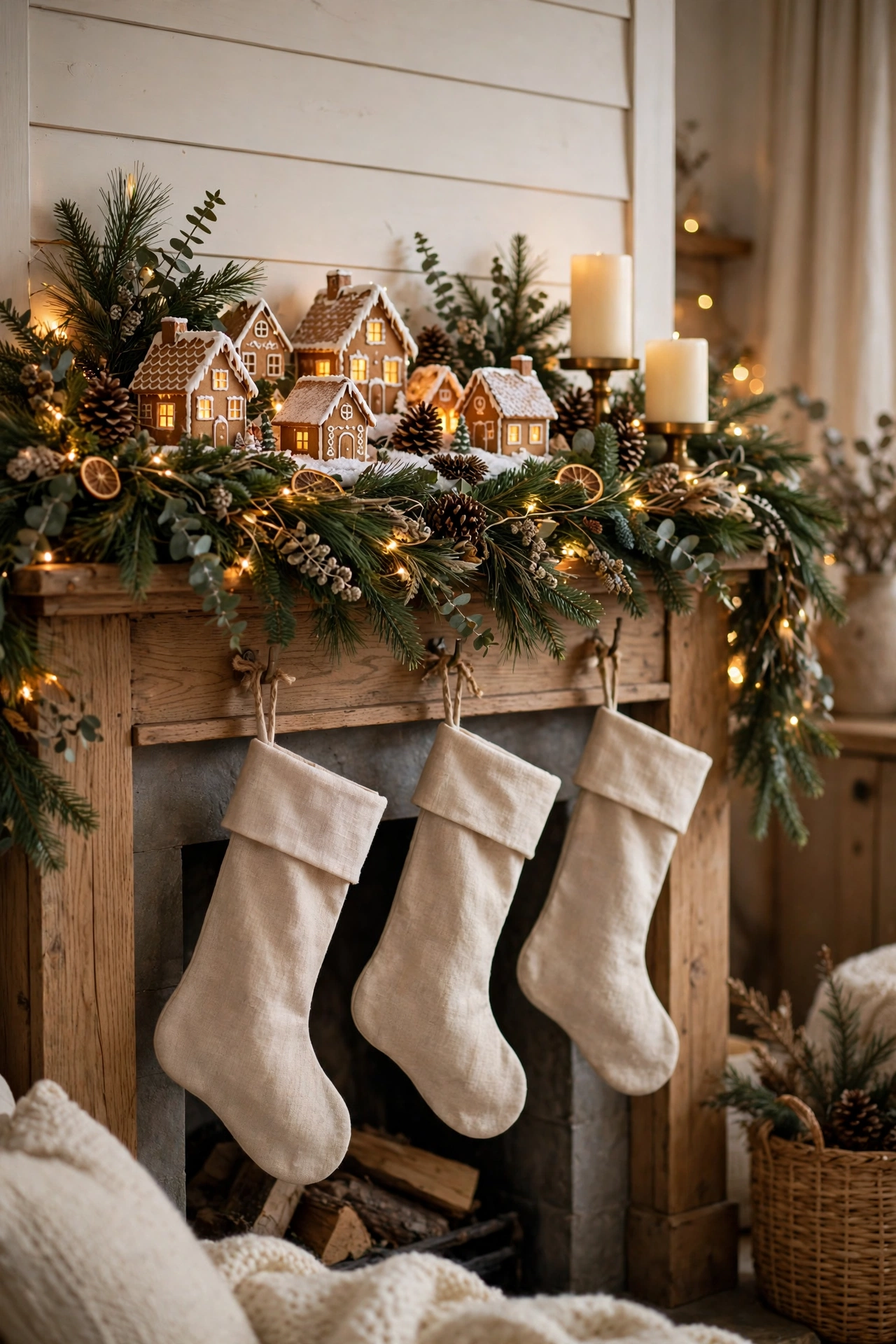
If the tree is the showpiece, the mantel is the hearth of the theme, literally. A gingerbread village along the mantel shelf is one of the loveliest things you can do with this look, and it works whether you bake the houses or buy ceramic ones that last for years.
Build the village in three heights. Tall houses or a church at the back, mid-size cottages in the middle, tiny cabins or trees at the front. Real gingerbread houses go at the back where little hands cannot reach them. Sturdy ceramic or wooden ones live at the front. A string of warm fairy lights woven through the village makes the windows glow and turns the whole shelf into a nightlight.
Anchor the arrangement with greenery. A pine or eucalyptus garland along the mantel edge, tucked behind the village, gives the eye somewhere to rest and keeps the browns from floating. Add candles in groups of three: pillar candles in cream and caramel, in brass or wooden holders, at one or both ends. Never line candles up in a perfect row. Odd numbers in loose clusters look collected rather than staged.
Stockings hang below in natural fabrics. Linen, burlap or chunky knit in cream, caramel or soft brown keep the palette intact. If your stockings are the old red velvet ones, this is the year to retire them to a bedroom hook and let the mantel stay in its lane.
Budget swap: A full ceramic village costs real money, but a single beautiful gingerbread house, flanked by pinecones, candles and a small potted rosemary trimmed like a tree, gives you the same feeling for a fraction of the price. One hero piece beats five mediocre ones every time.
Above the mantel, keep the wall simple. A wreath in natural greens with a burlap bow, or a round mirror that bounces the candlelight around the room, is plenty. For more on getting the proportions right, our mantel styling guide walks through garland, stockings and candle placement step by step.
A Kitchen That Looks Like the Bakery
 Save
No room suits this theme better than the kitchen, because here the decor and the real thing can finally meet. A kitchen styled like a bakery at Christmas is part display, part working kitchen, and guests will gravitate to it all season.
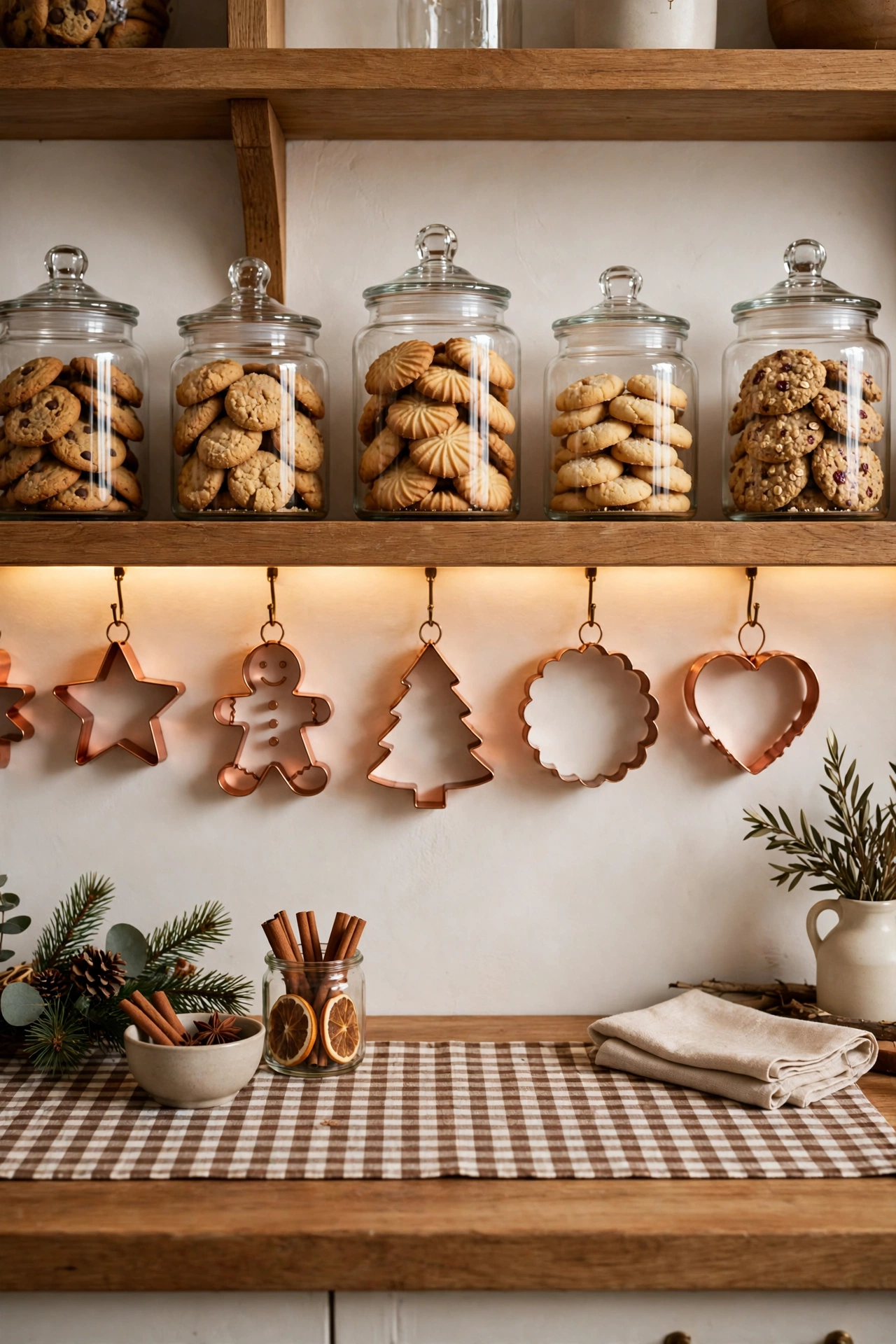
Start with open shelves or a dresser top. Line up glass cookie jars filled with actual cookies, a wooden rolling pin, a stack of mixing bowls in cream and brown, and a small potted herb or two. Group items in odd numbers and vary the heights. Three jars of different sizes beat six identical ones. Everything here should be usable, not just pretty, because a kitchen that cannot cook is a stage set.
Copper cookie cutters hung on the wall or from a rail double as art. Gingerbread men, stars, trees and snowflakes in aged copper catch the light and read instantly as the theme without a word of explanation. If you have a pegboard or a spare stretch of wall by the cooker, this is its moment.
Textiles do the seasonal work. A gingham or striped runner in brown and cream, tea towels with a cookie print, and an oven glove in caramel change the room for very little money. Swap them in on the first of December and the kitchen transforms overnight.
Keep the counters clear enough to actually bake. One styled corner, one bowl of clementines studded with cloves, and a simmer pot of orange, cinnamon and star anise on the hob when guests come. That scent is the theme in its purest form. For the full festive kitchen treatment beyond the gingerbread angle, our Christmas kitchen ideas cover lighting, seating and storage touches that work with any palette.
Try this: Fill a large glass jar with layers of cookie ingredients, flour, brown sugar, oats, chocolate chips, like a gift jar. Tie it with twine and a cinnamon stick and leave it on the counter. It is decoration, a conversation piece and a baking project waiting to happen.
Gingerbread Houses Worth Building
 Save
Sooner or later, someone will want to build the house. Whether it is you on a quiet afternoon or the whole family around the table, a few decisions separate a lovely afternoon from a sticky disaster.
First, decide: kit or from scratch. Kits are honest about what they are, and a good one saves hours of structural anxiety. From-scratch baking tastes better and lets you control the size, but gingerbread dough is temperamental in warm kitchens, so bake on a cool day and let every piece cool completely before assembly. Royal icing is the mortar. Anything thinner will slide.
Second, decorate with restraint. The prettiest houses use two or three candy types at most: white icing lines, a few jelly sweets along the roof edge, maybe pretzel sticks for a log pile by the door. Houses covered in every sweet in the packet look exciting for ten minutes and tired for the rest of the month.
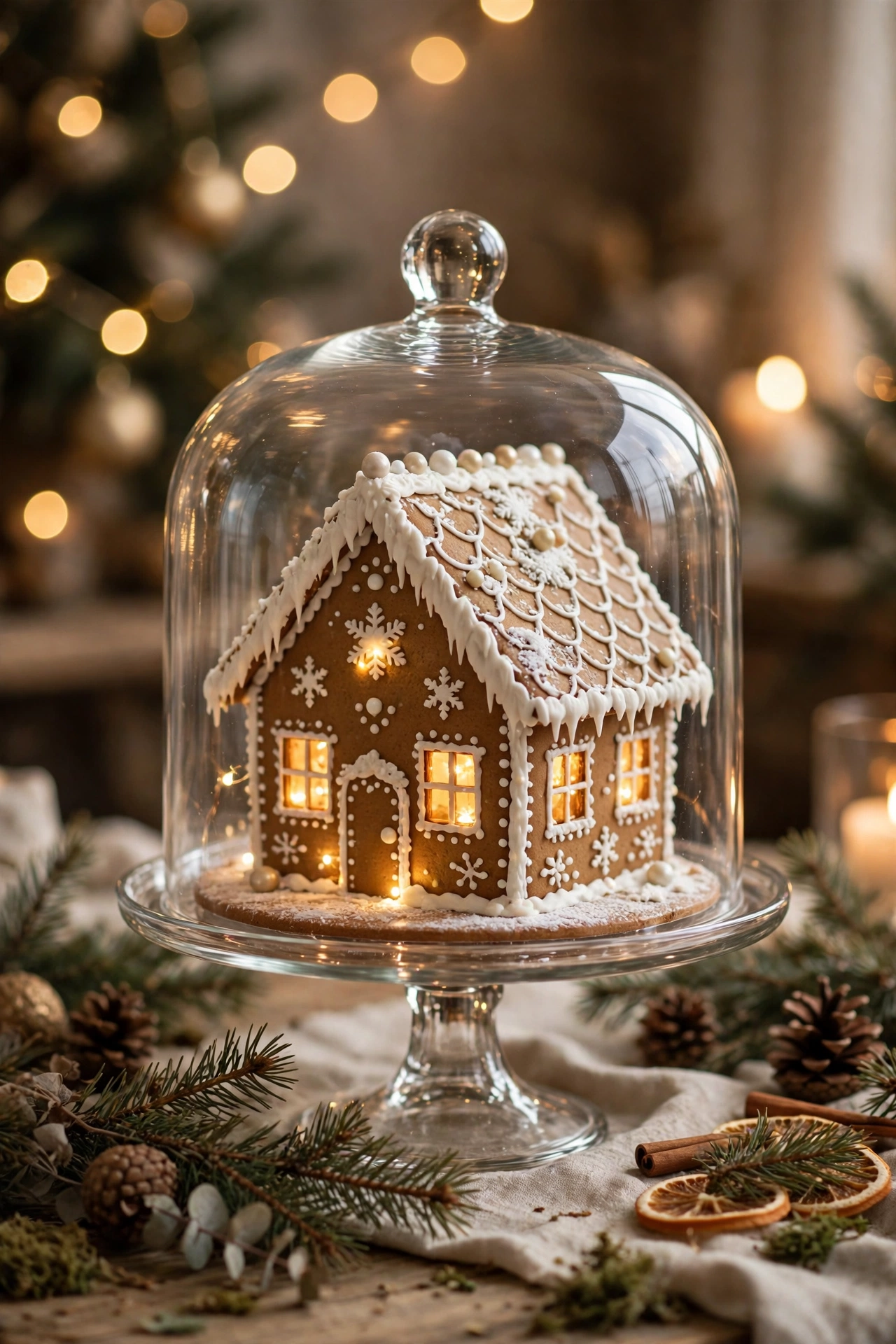
Third, think about display. A finished house under a glass cloche on a cake stand becomes a centerpiece that lasts for weeks. A tiny string of battery fairy lights inside makes the windows glow at night. Keep it away from radiators and sunny windowsills, where icing softens and colors bleed.
Designer note: If baking is not your thing, buy one beautiful house from a local bakery instead of a mediocre kit. Supporting a local baker and displaying something genuinely well made beats a lopsided DIY every time, and nobody will love you less for it.
With kids, set up a decorating station rather than one shared house. Give each child a small pre-built house or even just large cookies, plus bowls of icing and a limited selection of sweets. They get creative control, you get less arguing, and the results are charming precisely because they are imperfect.
Table Settings With a Sweet Finish
 Save
Christmas dinner in a gingerbread-themed house deserves a table that plays along, and this is the easiest win of the whole scheme. Brown and cream are forgiving colors at the table. They hide crumbs, flatter candlelight and make food look good.
Start with the base: a runner in natural linen, or brown kraft paper down the center. Kraft paper is the budget hero here. It looks intentional, guests can write on it, and you roll it up and recycle it after pudding. Layer cream napkins, simple white or stoneware plates, and the cutlery you already own. Nothing needs to be new.
The centerpiece stays low so people can talk across it. A loose garland of pine down the middle, dotted with pinecones, dried orange slices and a few battery candles in glass holders. At intervals, stand small gingerbread cookies on little easels or lean them against water glasses as place markers. Write names in icing, or on kraft-paper tags tied with twine.
Favors double as decor. A gingerbread man in a small cellophane bag tied with ribbon at each place setting looks generous and costs little. Guests eat them, photograph them or take them home. Either way they never become clutter.
Styling tip: Light every candle on the table before guests sit down, then dim the overheads. Brown and cream come alive in candlelight in a way they never do under a ceiling spot, and the whole room will feel warmer within minutes.
Keep It Charming, Never Kitschy
 Save
The difference between a gingerbread house that feels magical and one that feels like a novelty shop is restraint, and restraint is a skill you can learn. These are the rules that keep the theme on the right side of the line.
Limit your browns to three. Deep gingerbread, mid caramel and pale cookie dough is plenty. A fourth or fifth brown sneaks in through packaging and impulse buys, and suddenly the room looks muddy rather than warm. When you spot the extra brown, edit it out.
Repeat motifs in odd numbers. Three gingerbread men on the tree, not twelve. One village on the mantel, not villages on every surface. A motif repeated three times reads as a theme. Repeated thirty times, it reads as merchandise.
Mix textures, not just colors. Felt, wood, linen, ceramic, copper and real pine, all in the same brown family, keep the eye interested without adding a single new color. Kitsch happens when everything is the same shiny plastic in different shapes. Texture is what makes it feel designed.
Finally, let greenery do the balancing. Real pine, eucalyptus, rosemary and even a plain green wreath cool down the sweetness of the theme, the way a squeeze of lemon balances a rich dessert. Every brown-heavy surface in the house should have something green within arm’s reach.
Bringing It All Together
A gingerbread Christmas is not about buying a theme. It is about choosing a feeling. Warm browns, honest materials, the smell of spice in the air and light that flatters everything it touches. Start with the palette, let the tree carry the story, give the mantel its village and let the kitchen do what kitchens do best. Keep the browns to three, the motifs to odd numbers and the greenery close, and the house will feel like the inside of a storybook all season long. Sweet, warm, and entirely yours.
Frequently Asked Questions
What colors go with gingerbread Christmas decor?
Deep cookie browns, caramel and cinnamon tones form the base, with icing white or cream to keep things light. Brushed brass, antique gold or copper add warmth through metallics. Keep silver and bright red out. They fight the warm palette rather than joining it.
How do I decorate a Christmas tree with a gingerbread theme?
Use warm white lights generously, since brown ornaments absorb light. Add felt or wooden gingerbread ornaments, a wide ribbon in caramel or brown gingham, bundles of cinnamon sticks, dried orange slices and sprigs of greenery. Top it with a simple wooden or brass star.
Can I mix gingerbread decor with my existing Christmas decorations?
Yes, if you edit first. Keep pieces in brown, cream, gold, wood and natural green, and pack away anything in bright red, silver or neon for the year. Most houses only need to retire a third of their usual decor to let the theme read clearly.
How long do real gingerbread houses last as decoration?
A well-baked house kept dry and away from heat lasts the whole season and beyond. Gingerbread hardens as it ages, which actually helps it structurally. Icing is the fragile part, so display houses under a cloche or on a high shelf, away from radiators and sunny windowsills.
Is gingerbread decor suitable for a small flat?
It is one of the best themes for small spaces. The brown and cream palette is naturally cosy rather than visually noisy, and the key pieces, a styled shelf, a small tree, a single beautiful house, take up very little room. Lean on white and pale browns to keep things airy.
1 thought