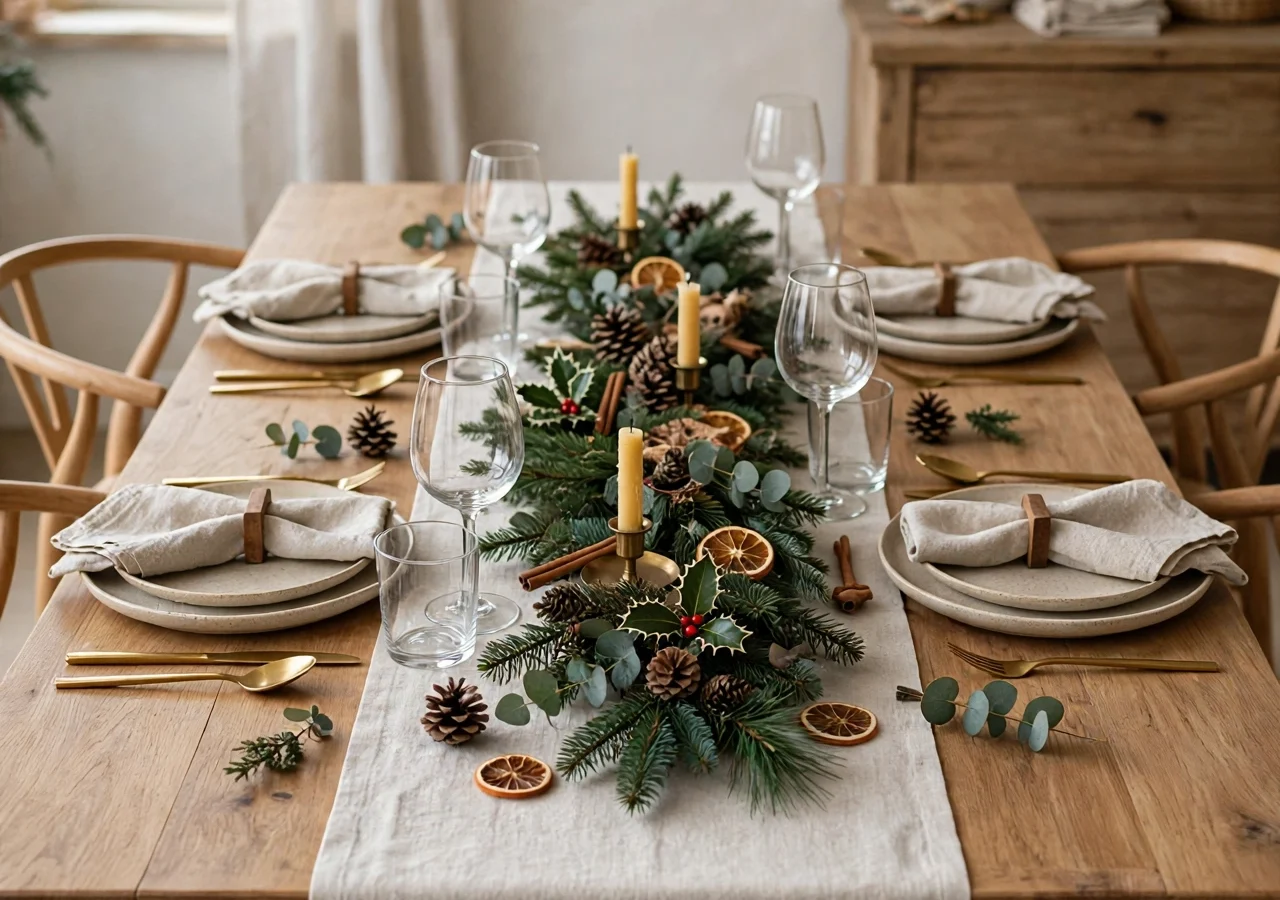
A Christmas table has a harder job than any other surface in the house. It has to look festive in photos, feel special when everyone sits down, and still leave room for the turkey, the gravy boat, and the elbow of the person passing the potatoes. Most tables fail on one of those three counts. They look wonderful empty and impossible once the food arrives, or they stay practical and never feel like Christmas at all.
The usual mistake is starting with ornaments. People buy a box of baubles, scatter them down the middle of the table, add a few candles, and wonder why the result looks like a shop display that fell over. A centrepiece is not a collection of festive objects. It is one clear idea, repeated down the length of the table, with enough breathing room around it for real life to happen.
This guide walks through 8 christmas table decor ideas that work at a real dinner table, not just in a photograph. Each one starts from something simple, a runner, a bowl, a row of candles, and builds from there. Pick the one that suits your table, your budget, and the number of people you are feeding, and let the rest of the table stay calm around it.
Start With a Runner, Not a Pile of Decor
 Save
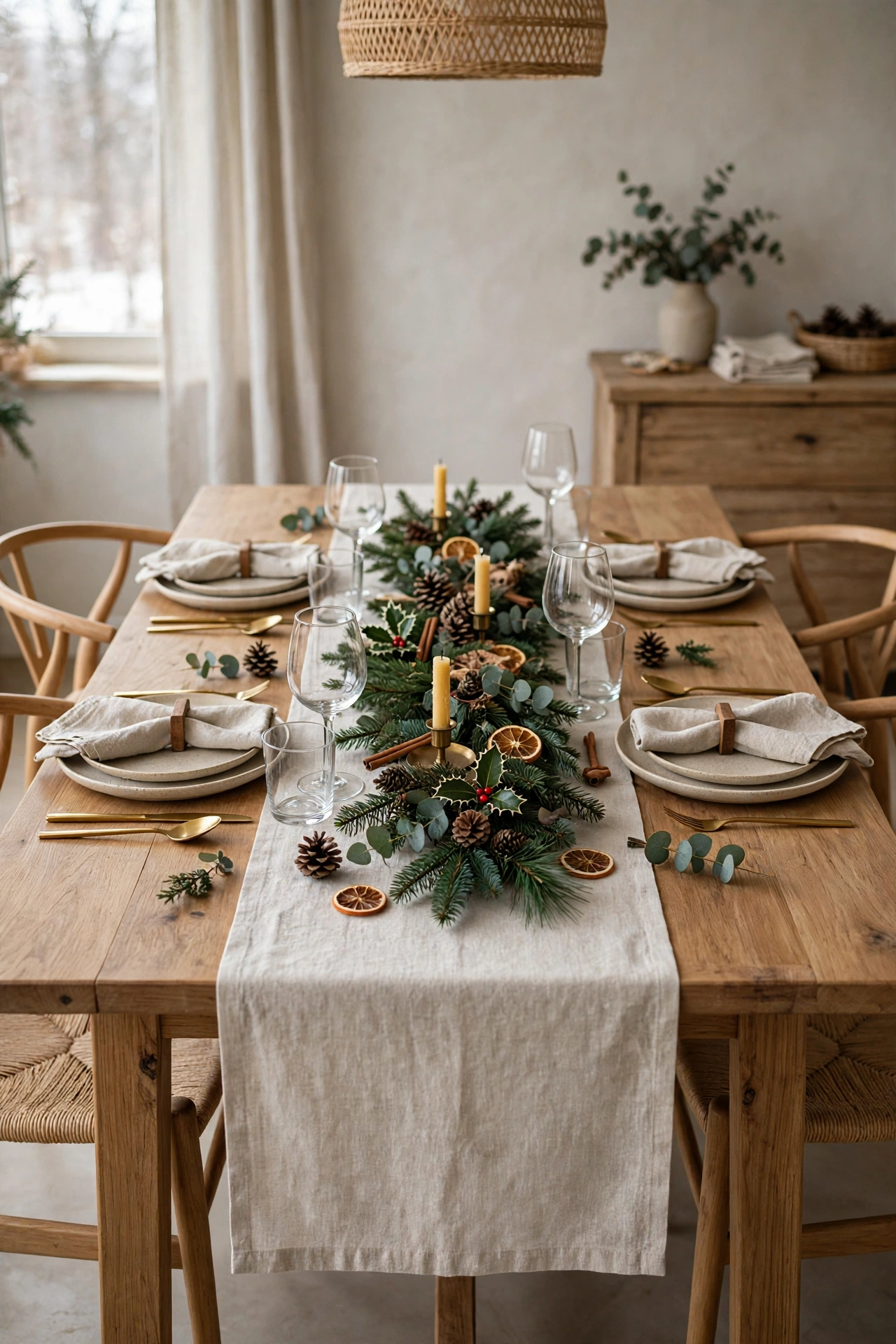
Every good centrepiece starts with a base, and on a dining table that base is usually a runner. A runner does two quiet jobs at once. It marks the centre of the table so the eye knows where to look, and it protects the wood from candle wax, pine needles, and the occasional splash of red wine. Without one, even beautiful objects tend to drift apart and look scattered.
Choose a runner that is longer than the table by about 30 centimetres at each end, so it drapes softly rather than stopping dead at the edge. Linen in cream, deep green, or a muted red works with almost every colour scheme, and a plain fabric is often better than a patterned one because it lets the centrepiece itself do the talking. If your table is round, skip the runner and use a large round cloth or a circular placemat in the middle instead. The point is the same: define the centre before you decorate it.
Styling tip: lay the runner first, then place the plates, and only then build the centrepiece in the space that is left. Working in that order stops the classic error of a centrepiece so wide that the plates have to be squeezed to the edges. You want at least 30 centimetres of clear table in front of each place setting, and a centre strip of roughly the same width for the decoration itself.
Once the runner is down, step back and look at the table from the doorway, not from directly above it. That is the view your guests will get when they walk in, and it shows straight away whether the centre line reads as one continuous arrangement or as a row of separate objects. If it looks broken, add one linking element, a thin garland, a ribbon, or a trail of eucalyptus, to pull the pieces together.
The Classic Evergreen Centrepiece
 Save
Nothing says Christmas on a table quite like fresh greenery, and a simple evergreen arrangement is still the most reliable centrepiece there is. It smells wonderful, it costs very little if you use cuttings, and it suits every style from rustic to formal, depending on how you dress it. The trick is fullness. A few lonely sprigs laid flat look like leftovers from the tree. A generous, layered arrangement looks intentional.
Start with a low, wide container, a shallow bowl, a wooden trough, or a simple ceramic dish. Fill it with florist foam or a ball of crumpled chicken wire if you want the stems to stay put, then push in branches of pine, fir, or cedar until the container disappears under greenery. Mix two types of foliage if you can. Pine gives structure, cedar gives softness, and a few stems of eucalyptus lighten the whole thing. Keep the finished height below eye level when seated, roughly 25 centimetres, so guests can see each other across it.
Dress it sparingly. Three or four baubles tucked into the greenery, a handful of pinecones, and perhaps a few dried orange slices are plenty. The greenery is the star here, and every extra object competes with it. A single string of warm white fairy lights woven through the branches transforms the arrangement after dark, and because the lights sit inside the foliage, the glow looks soft rather than spotty.
This is also the centrepiece that pairs most naturally with the rest of the house. If your mantel already carries garland and greenery, a matching table arrangement ties the rooms together without any extra planning, and our guide to Christmas mantel decor shows how to keep the two displays in the same colour family. Water the foam every couple of days, keep the arrangement away from direct heat, and it will stay fresh from the weekend before Christmas right through to Boxing Day.
Candlelight in Clusters
 Save
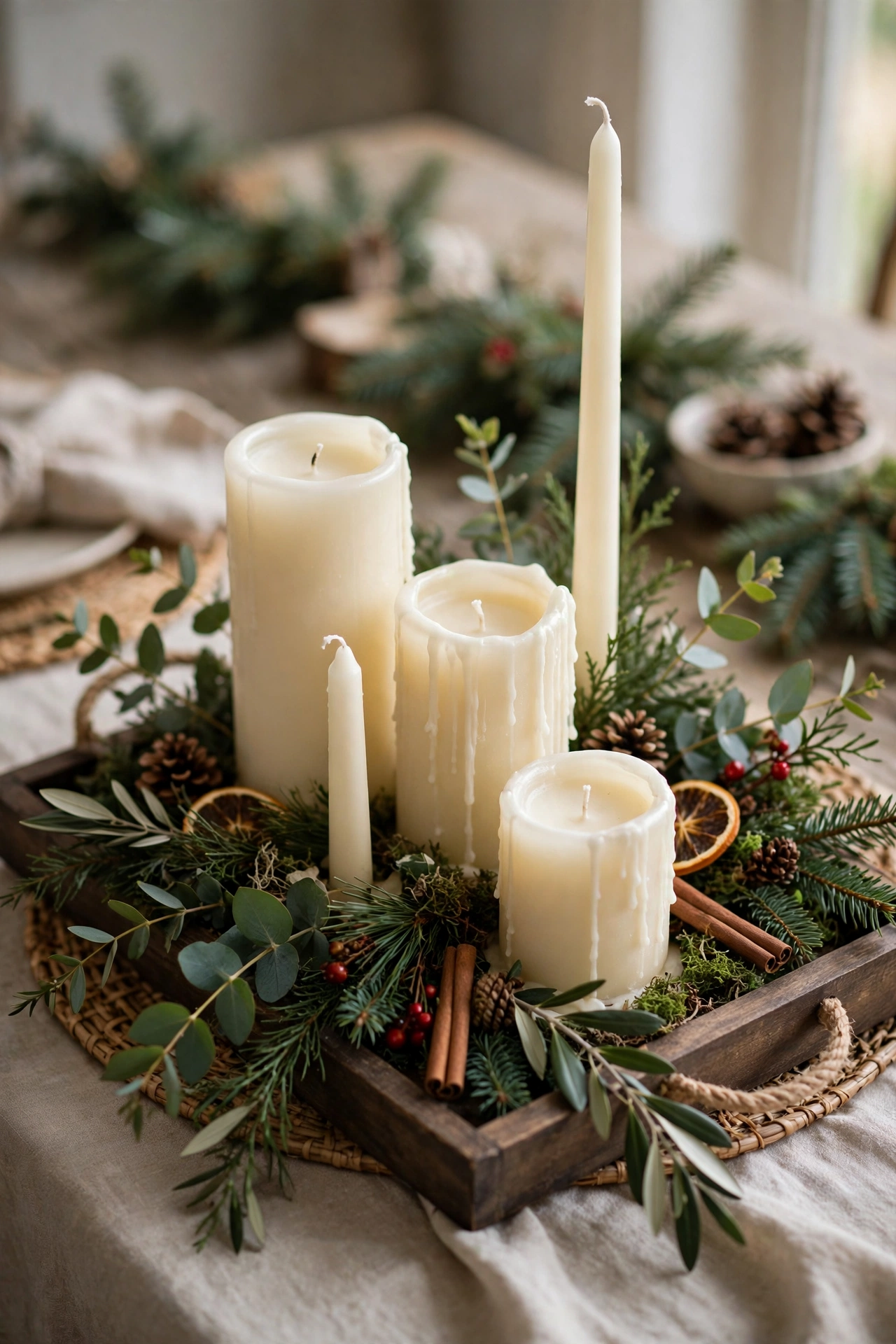
If you only buy one thing for your Christmas table, make it candles. No other single element changes the mood of a room so completely, and a cluster of candles costs far less than a large floral arrangement. The secret is grouping. One candle alone looks like an afterthought. Five or six together, at different heights, look like a deliberate display.
Use a mix of pillar candles and taper candles for the best effect. Place three pillars of different heights on a tray or a large plate, add two taper candles in simple holders beside them, and fill the gaps with a few sprigs of greenery or a scattering of pinecones. The tray matters more than people think. It contains the wax, it makes the whole group portable when you need to clear space for serving dishes, and it gives the cluster a clear boundary so it reads as one centrepiece rather than a row of loose candles.
Stick to one candle colour, ivory or white, unless your whole table scheme is built around a strong colour. Coloured candles in several shades tend to fight with the food, the plates, and the crackers. Ivory candles glow warmly, they suit every palette, and they let the holders and the greenery provide the colour instead. Unscented candles are the safer choice at a dinner table too, since a strong scent competes with the food in a way that nobody enjoys.
Budget swap: if real candles worry you, with children or pets at the table, battery candles have improved enormously in the last few years. The flickering LED versions look convincing from across a table, they can stay lit all evening, and you can place them inside greenery or glass hurricanes without any fire risk. Mix one or two real candles at the ends of the table, where they are easy to watch, with battery candles in the middle.
Safety still comes first with real flames. Keep candles at least 10 centimetres from greenery, paper, and crackers, never leave them burning in an empty room, and trim wicks to about 5 millimetres before lighting so they burn evenly and do not smoke. A beautiful table is not worth a singed tablecloth.
A Bowl of Baubles, Done Properly
 Save
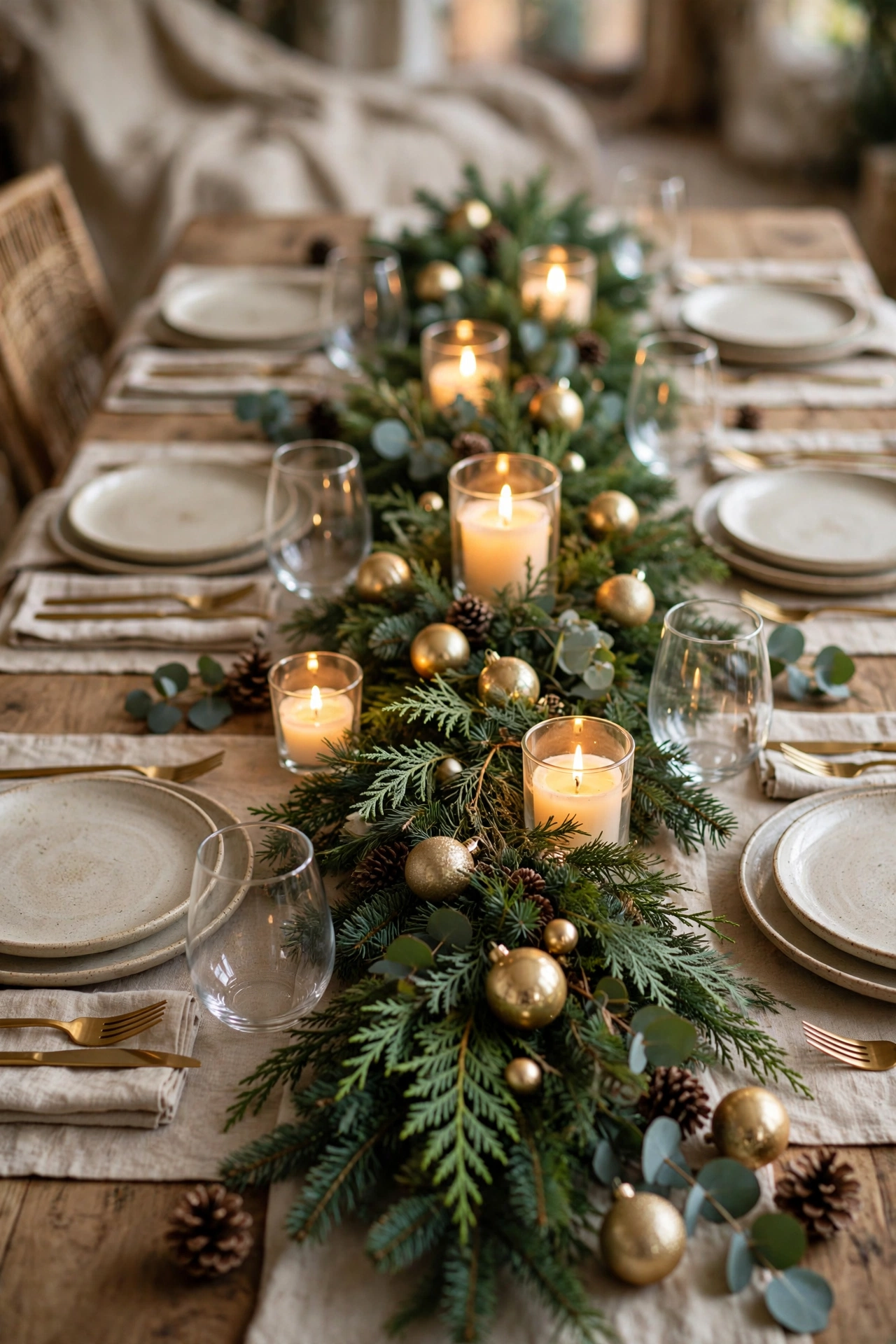
A bowl of baubles is the fastest centrepiece in this guide, and also the easiest to get wrong. The version that works is not a random handful of ornaments tipped into any old bowl. It is a considered mix of sizes, finishes, and one restrained colour palette, piled high enough to look abundant rather than half empty.
Start with a bowl that is wide and fairly shallow, so the baubles sit up where they can be seen instead of hiding inside a deep vessel. A glass footed bowl, a wooden dough bowl, or a large ceramic serving bowl all work. Fill the bottom with tissue paper or a small upturned bowl to raise the level, then layer in baubles from the largest at the bottom to the smallest on top. Mix matte and shiny finishes in the same colour family, say deep red with gold, or champagne with cream, and add one contrasting texture, such as a few velvet or wooden baubles, to stop the whole thing looking flat.
The finishing touch is what separates a bowl of ornaments from a centrepiece. Tuck a few sprigs of pine or eucalyptus between the baubles, add a short string of fairy lights if the bowl is glass, and place the bowl on a runner or a round placemat so it has a defined footprint on the table. On a long table, use three smaller bowls spaced evenly down the centre instead of one large one. The repetition looks far more polished than a single bowl lost in the middle of a long stretch of wood.
This approach is also the most practical for a house with small children or excitable dogs, since shatterproof baubles in a heavy bowl survive far better than a tall arrangement. Keep a few spare baubles aside, because one or two always roll off during the evening, and replacing them takes seconds. For colour ideas that carry through the whole room, our 2026 Christmas tree decorating ideas use the same palette logic, so your table and your tree will look like they belong together.
Citrus, Pinecones and Other Kitchen Finds
 Save
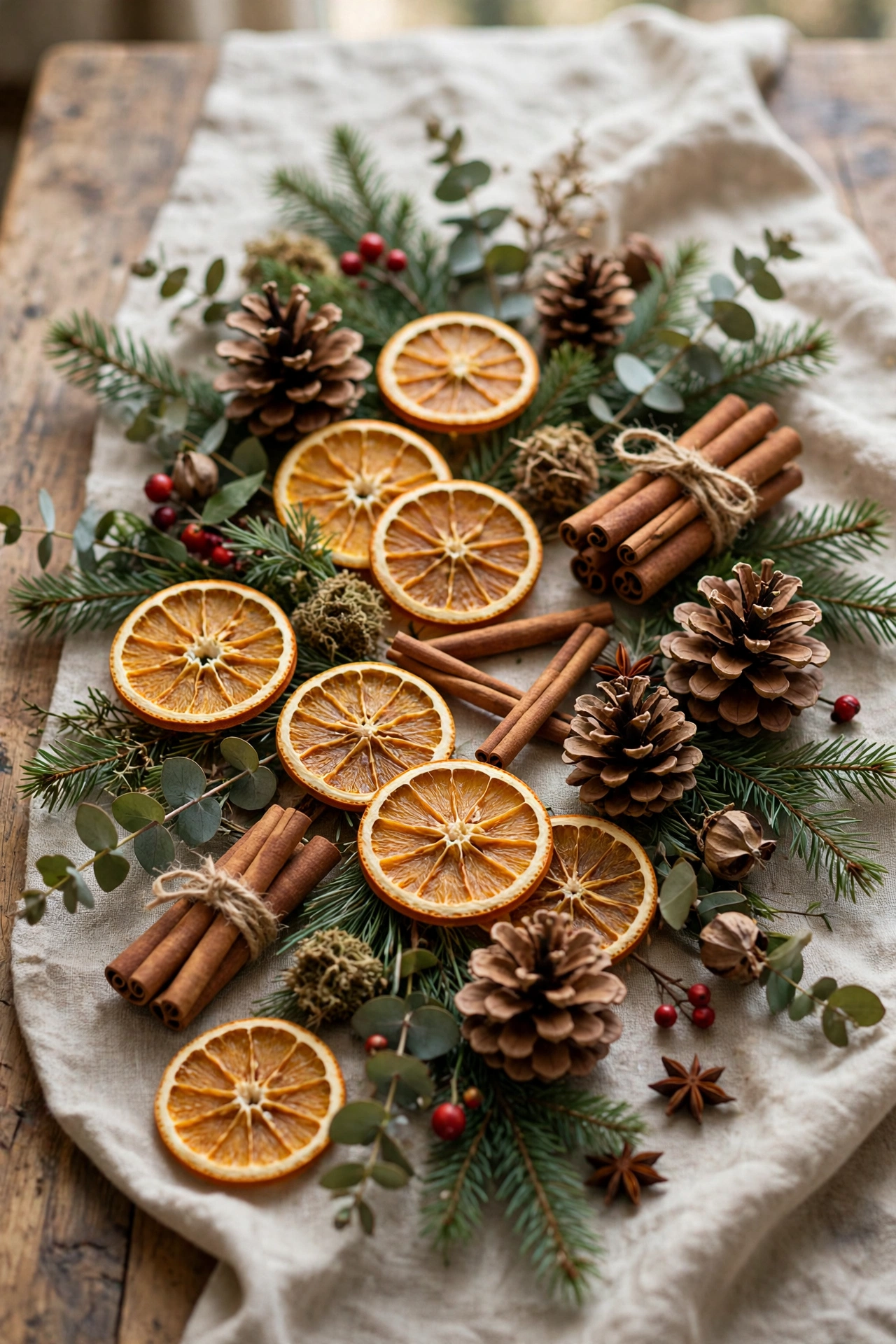
Some of the prettiest Christmas centrepieces cost almost nothing, because they are made from things already in the kitchen or the garden. Dried orange slices, pinecones, cinnamon sticks, and sprigs of rosemary or bay look festive, smell wonderful, and can be put together in an afternoon with no special equipment. This is the centrepiece for anyone who likes a natural, unfussy table.
Dried orange slices are the easiest place to start. Slice oranges about 5 millimetres thick, lay them on a baking tray lined with parchment, and dry them in a low oven, around 100 degrees, for two to three hours, turning them once. They come out translucent and amber coloured, and they keep for weeks in an airtight tin. Thread them onto twine as a garland along the runner, tuck them into an evergreen arrangement, or stand a few in a glass vase with pinecones for a simple, sculptural display.
Pinecones need a little preparation too. Bake them at a low temperature for about 30 minutes to open them up and remove any sap or insects, then leave them natural or dust them lightly with white paint for a frosted look. A little goes a long way here. Five or six pinecones scattered along a runner, mixed with sprigs of rosemary and a few dried orange slices, look far better than a table buried under a sackful of cones. The rosemary doubles as a garnish later, which guests always enjoy discovering.
Designer note: this natural style is also the most forgiving if your table has to work hard. Nothing here is fragile, nothing stains, and if a pinecone gets knocked onto the floor it is a joke rather than a disaster. The whole approach fits neatly with a low waste Christmas, and our guide to sustainable Christmas decor has more ideas for decorations that compost, recycle, or go back into the garden in January. Finish the display with a few cinnamon sticks tied in bundles with twine, and the table will smell like Christmas before anyone sits down.
One Colour, Three Textures
 Save
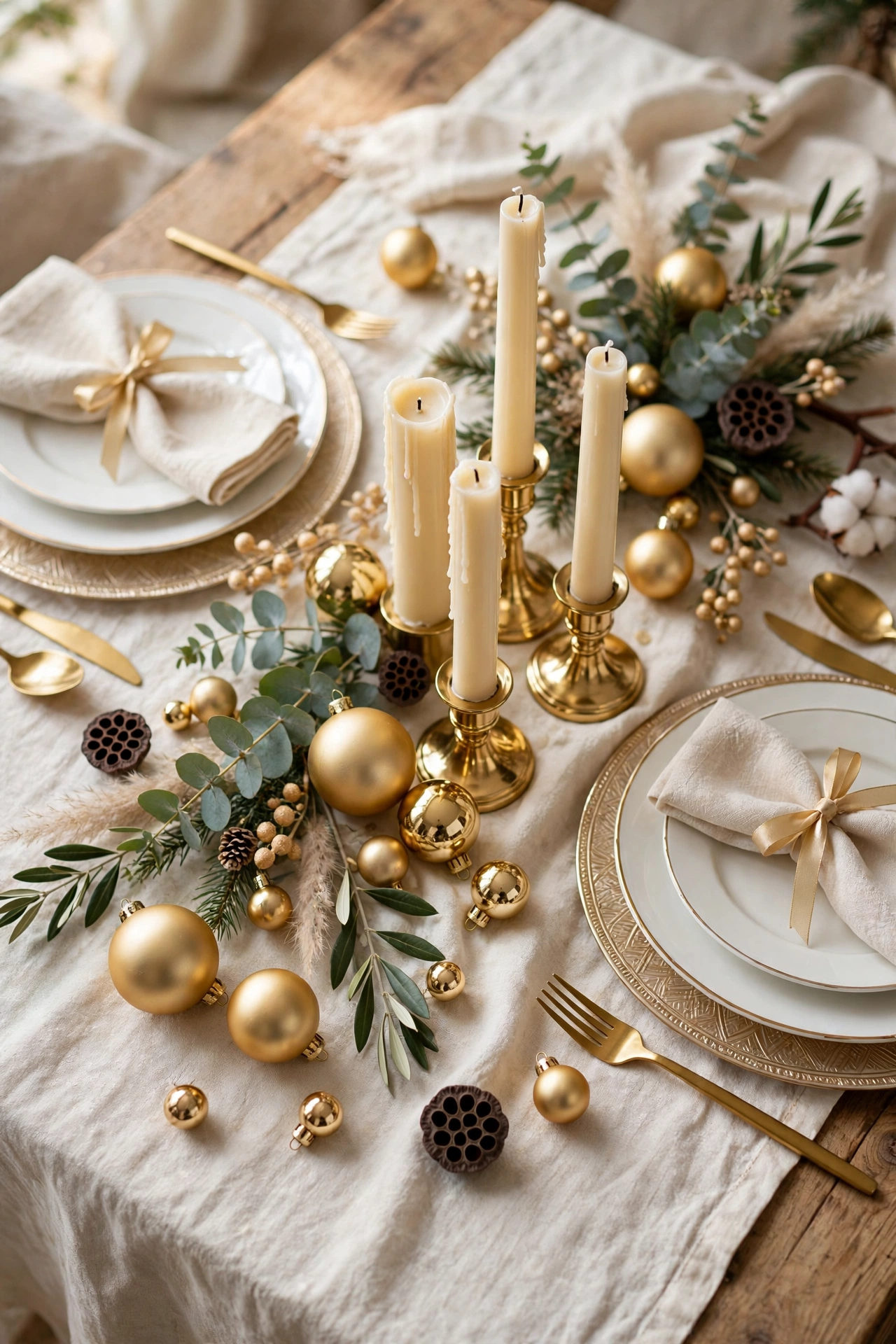
When a table looks expensive, it is rarely because everything on it was expensive. It is usually because the colours are disciplined and the textures are varied. Pick one main colour, add one metallic, and then use three different textures in that palette across the centrepiece. The result looks curated even when every piece came from a different shop.
White and gold is the classic version. A white tablecloth, gold cutlery, and a centrepiece of cream candles, gold baubles, and a few white ceramic houses or stars gives a table that photographs beautifully and suits a formal dinner. Red and brass is warmer and more traditional, with deep red napkins, brass candlesticks, and a garland of pine and red berries. For something cooler, try icy blue and silver, with frosted greenery, silver baubles, and white candles, which works particularly well in a modern room with pale walls.
The texture rule is what stops a single colour scheme from looking flat. If everything is shiny, the table glares. If everything is matte, it looks dull. Combine one shiny element, such as metallic baubles or a brass tray, with one soft element, such as velvet ribbon or linen napkins, and one natural element, such as pine, wood, or dried citrus. Those three textures give the eye something to move between, and the table feels layered even though the palette is simple.
Keep the rest of the table quiet so the scheme can breathe. Plain plates, simple glassware, and napkins in the main colour are enough. The centrepiece should be the only place where the full palette appears at full strength. If the plates, the glasses, and the crackers are all competing in different colours, even the most disciplined centrepiece will look lost.
Keep It Low, Long and Practical
 Save
The most common complaint about Christmas centrepieces is not that they look bad. It is that they get in the way. A tall arrangement blocks conversation, a wide one steals plate space, and a fragile one makes everyone nervous about reaching for the salt. Designing for a real meal, rather than a photograph, solves all three problems at once.
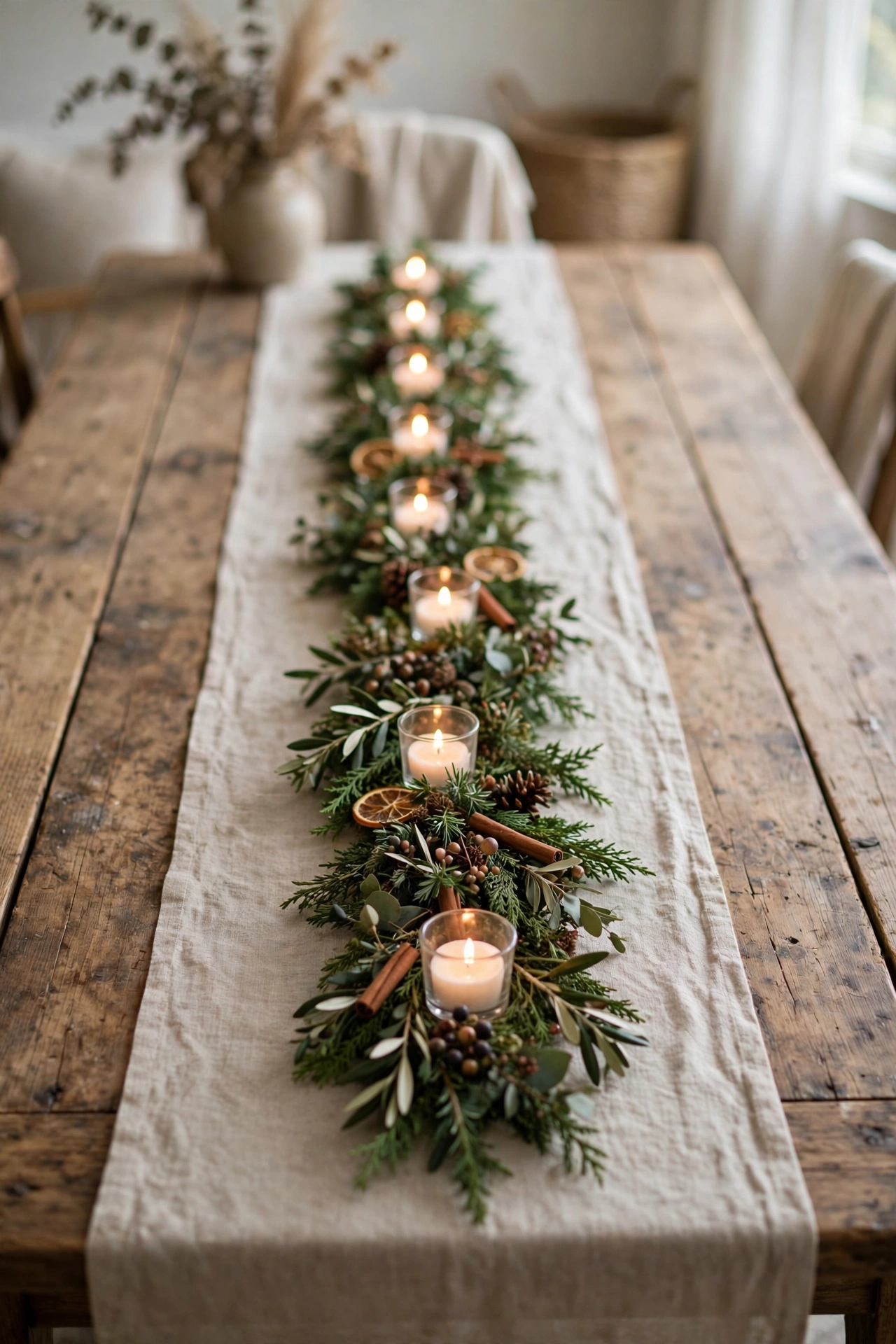
Think in terms of a low, long centre strip rather than a single tall object. A garland running down the middle of the table, a row of small vases with single stems, or a line of tea lights in glass holders all give you presence along the whole table without blocking a single sightline. Keep everything below about 25 centimetres high, and leave a gap every 60 centimetres or so where a serving dish can land. Your guests will thank you when the food arrives and nobody has to dismantle the decorations to make room for it.
This long, low approach is also the easiest to scale. For a table of four, a single small arrangement in the middle is plenty. For a table of twelve, repeat the same small arrangement three times down the table, with the same candles, the same greenery, and the same baubles in each one. Repetition reads as intentional, and it is far simpler to put together than one enormous display. Buy three of everything small rather than one of everything large.
Try this: before the day itself, set the table exactly as you plan it, plates and glasses included, and sit in every chair. Can you see the person opposite you? Can you reach the centre without standing up? Is there room for a serving dish between the centrepiece and the plates? If any answer is no, shrink the centrepiece now, while there is still time to change it. A centrepiece that survives the whole meal looks far better than a grand one that spends dinner on the sideboard, and the same practical thinking shapes our Thanksgiving table decor ideas for a crowded table.
Finish With Personal Touches
 Save
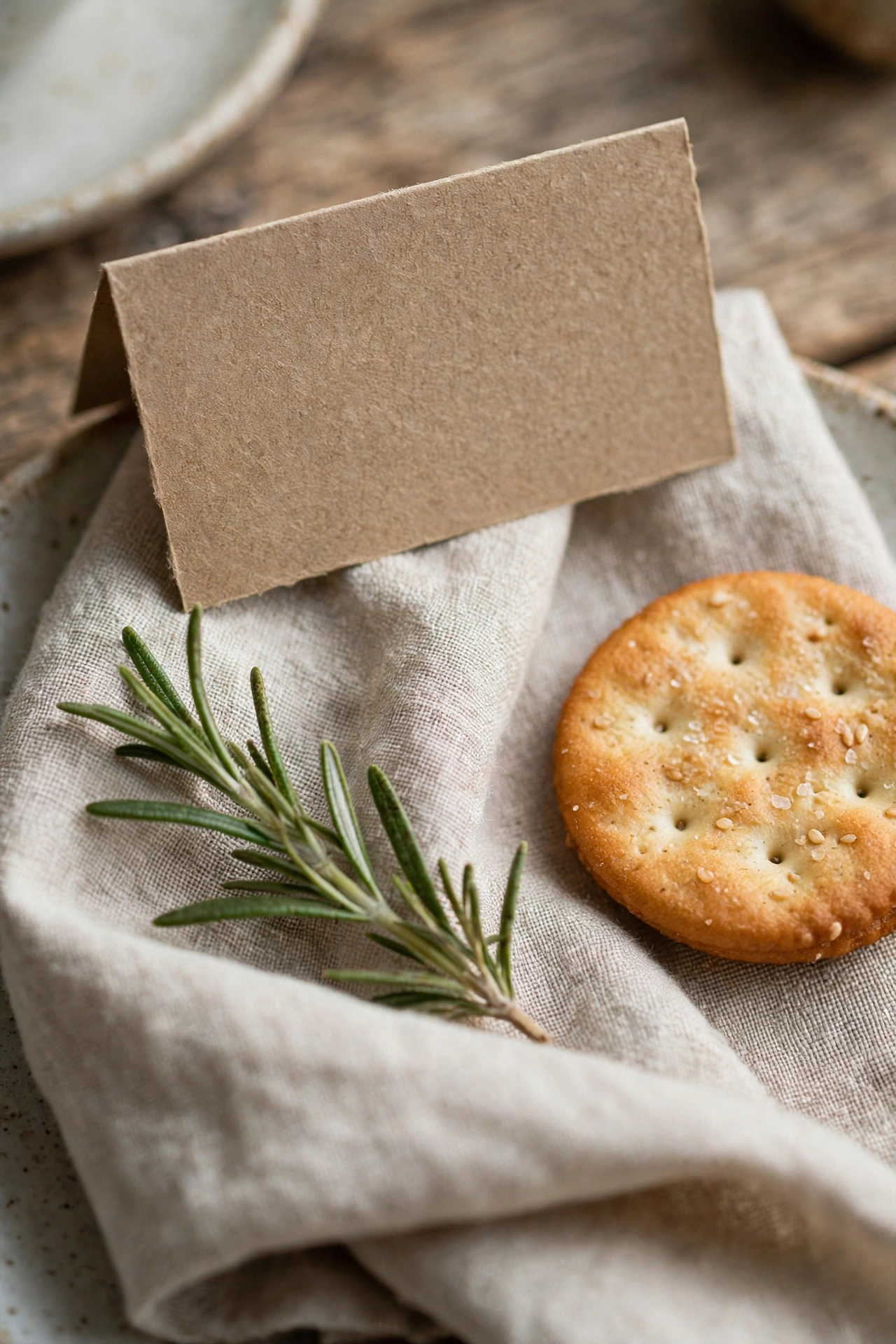
Once the main centrepiece is in place, the details that guests actually remember are often the smallest ones. A sprig of rosemary tied to each napkin, a handwritten place card tucked into a pinecone, or a single candy cane laid across each plate costs almost nothing and makes every guest feel considered. These touches also solve a practical problem, because they mark places clearly at a table where several generations are sitting down together.
Place cards are worth the effort even for a family dinner. Folded card, a pinecone holder, or a small sprig of greenery with a name tag attached all work, and children in particular love finding their own name at the table. If you are short on time, write names on brown luggage tags and tie them to the napkins with twine. The rustic look suits the season, and the tags double as a small keepsake guests can take home.
Crackers deserve a little thought too. Lay one at each place setting, angled across the plate or beside the cutlery, rather than piling them in the middle of the table where they compete with the centrepiece. If you buy plain crackers, fill them yourself with a handwritten joke, a small sweet, and a paper hat, and they become a talking point rather than an afterthought. Matching the cracker colour to your table scheme ties the whole setting together without any extra spending.
Finally, step back and remove one thing. This is the hardest step and the most useful one. A table that is slightly under-decorated looks elegant and calm. A table that is slightly over-decorated looks cluttered, however beautiful the individual pieces are. Take away the extra baubles, the second garland, or the ornaments that crept in during the afternoon, and leave the centrepiece room to breathe. Your guests came for dinner and conversation, and a table with space for both is the best decoration of all.
Bringing It All Together
A beautiful Christmas table does not come from buying more decorations. It comes from choosing one clear centrepiece idea, keeping it low enough to talk across, and letting the rest of the table stay calm around it. A runner to anchor the display, greenery or candles for warmth, and a few personal touches at each place are enough to make the table feel festive from the moment guests walk in.
Start early if you can. Set the table the night before, live with it for an evening, and adjust anything that blocks a view or crowds a plate. The best centrepieces are the ones nobody has to move when dinner arrives, and the best tables are the ones where the decorations support the meal instead of competing with it. Pick one idea from this guide, make it your own, and enjoy a table that looks as good at the end of the evening as it did at the start.
Frequently Asked Questions
How tall should a Christmas table centrepiece be?
Keep it below about 25 centimetres, roughly the height of a wine bottle lying on its side, so guests can see and talk to each other across the table. Tall candlesticks are fine if they are slim, because people can see around them, but a tall, wide arrangement blocks conversation and should be moved to a sideboard instead.
Can I use fresh greenery on the table, or is faux better?
Both work well. Fresh greenery smells wonderful and looks more natural, but it needs water and will drop needles after a few days, so put it out no more than two days before Christmas. Faux greenery can be set up weeks ahead, it never drops, and good quality faux pine now looks convincing at table distance, so choose whichever suits your schedule.
How do I stop candles from dripping wax on the tablecloth?
Use a tray, a plate, or a candle holder with a rim to catch drips, and trim wicks to about 5 millimetres before lighting so the flame burns steadily. Pillar candles in glass hurricanes are the safest option, since the glass contains both wax and draughts, and dripless taper candles are worth the small extra cost for a dinner table.
What centrepiece works best for a small table?
A single low bowl, a small cluster of three candles on a tray, or a short garland down the middle all work on a small table, because they leave room for plates and serving dishes. Avoid tall or wide arrangements, and use one idea only rather than combining several, since a small table looks crowded very quickly.
When should I set up my Christmas table decorations?
Set the table the night before Christmas Day if you are using fresh greenery or real candles, and a day or two earlier if everything is faux or battery powered. Setting up early gives you time to sit at the table, check sightlines and plate space, and fix anything that does not work before guests arrive.

2 thoughts