By four o’clock the light is already leaving, and by five the house feels like it is closing in on itself. The ceiling light goes on, the room turns flat and grey, and somehow the evening feels longer and colder than it needs to. Most of us live with that all winter and blame the dark, when the real problem is the light we switch on to fight it.
A single bright overhead bulb is the worst way to light a winter evening. It throws hard shadows under your chin, washes the colour out of the walls and makes every surface look tired. It tells your brain the day is still going when your body is ready to wind down, and that mismatch is why a room can feel gloomy even with the lights blazing.
Ambient lighting works the other way round. It builds the evening up in soft layers, low lamps, warm pools of light, a flicker here and a glow there, so the room feels sheltered instead of exposed. Below are eight ideas that do exactly that, each one practical enough to try tonight and cheap enough that most cost less than a takeaway.
Quick Tips Before You Start
- Switch every bulb to warm white, 2700K or below, before you buy anything new. One cold bulb can undo five warm ones.
- Aim for three light sources per room at different heights: low, middle and high.
- Put the brightest light where you work and the softest where you rest.
- Keep a dimmer or a lower-watt bulb within reach of every seat, so nobody has to get up to change the mood.
1. Layered Lamp Light Instead of One Ceiling Bulb
 Save
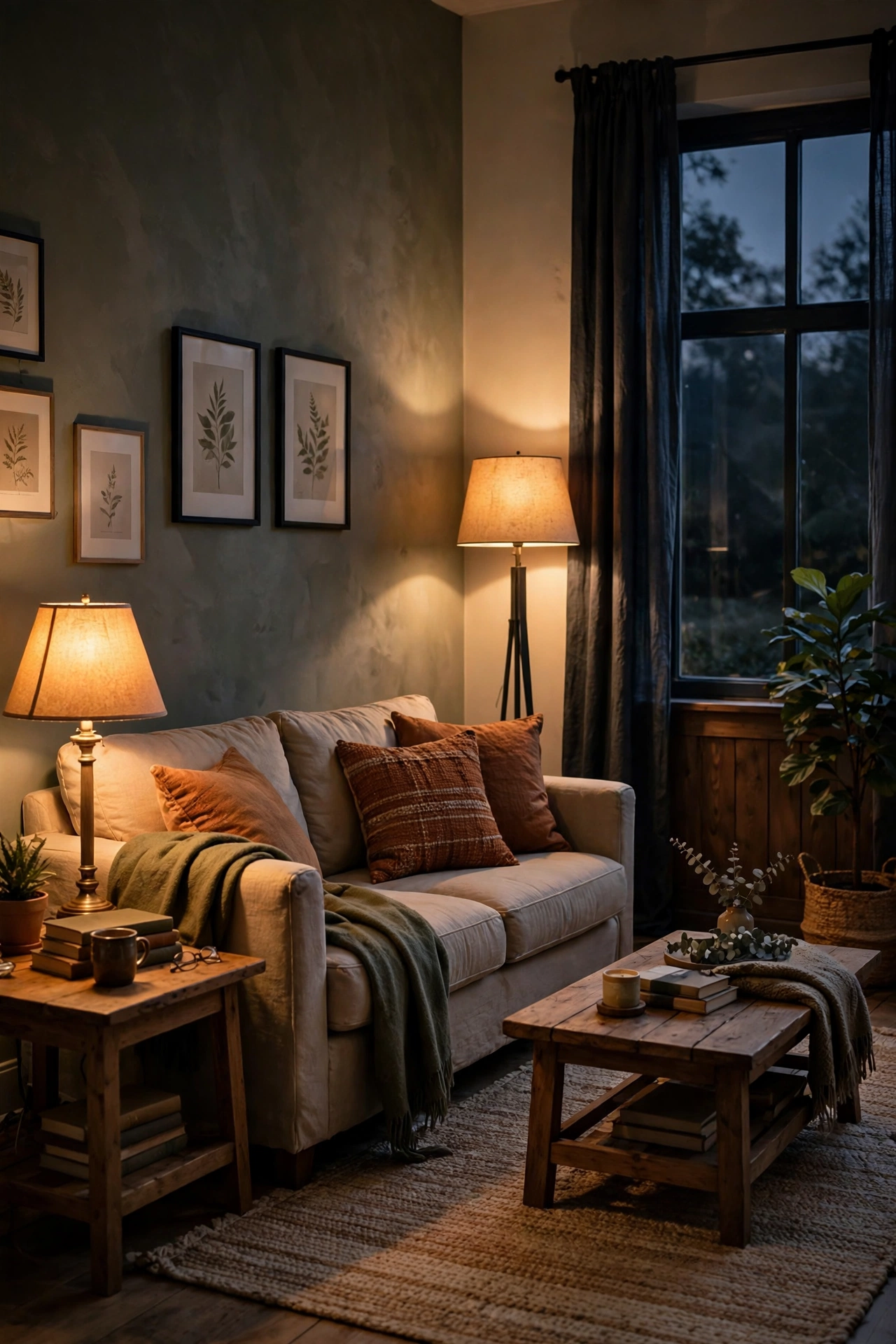
The fastest change you can make to a winter evening is to stop using the ceiling light altogether. One overhead bulb lights the room from a single point, which means everything below it is either lit or in shadow, with nothing in between. Lamps spread the light out. A table lamp by the sofa, a floor lamp behind the armchair and a small lamp on the sideboard give the room three soft centres, and your eye moves between them instead of staring into one harsh glare.
Start with the seat you use most after dinner. Put a lamp within arm’s reach of it, at roughly shoulder height when you are sitting down, and fit it with a warm bulb of 40 watts or less. Then add a second lamp on the opposite side of the room, lower and dimmer than the first, so the room has a bright end and a quiet end. The third source can be anything, a candle, a string of fairy lights, even the glow from a hallway lamp left on with the door ajar.
Placement: One lamp beside the main seat, one across the room, one small glow somewhere unexpected.
Colour: Warm white bulbs throughout, with cream or linen shades to soften the edges.
Texture: Fabric shades, wooden lamp bases and a woven basket to hide spare bulbs and cables.
Swap: If new lamps are out of budget, move a lamp from a spare room into the living room for winter. It costs nothing and changes the room at once.
Try this: turn the ceiling light off tonight and light only the lamps. Sit for ten minutes and notice how the room feels smaller, warmer and easier to relax in. If your living room needs a fuller winter rethink, our winter living room decor ideas build on exactly this layered approach.
2. Warm White Bulbs at the Right Temperature
 Save
Bulb temperature sounds technical, but it is the single biggest reason a room feels cosy or feels like an office. The number on the box is measured in kelvins, and lower means warmer. A 4000K bulb is the cool white you find in kitchens and bathrooms, and in a living room on a dark evening it reads as cold and clinical. A 2700K bulb is the warm glow of an old-fashioned filament lamp, and it is the one you want for every room you relax in.
The mistake most people make is mixing temperatures. One cool bulb in a hallway or a kitchen that opens onto the living room leaks cold light into the warm room and breaks the mood. Go through the house with a notebook and write down what is in every fitting. Replace the cool ones in living areas, bedrooms and dining rooms first, and leave the cooler bulbs only where you genuinely need to see detail, over a kitchen worktop or a bathroom mirror.
| Bulb temperature | What it feels like | Best spot in winter |
|---|---|---|
| 2200K, candle glow | Deep amber, almost firelight | Bedside lamps and candle-style fittings |
| 2700K, warm white | Soft and golden, like lamplight | Living rooms, bedrooms, dining rooms |
| 3000K, warm neutral | Bright but still friendly | Hallways and reading corners |
| 4000K, cool white | Crisp and clinical | Kitchen worktops and bathroom mirrors only |
Placement: Warm bulbs in every lamp you sit near, cooler ones only above work surfaces.
Colour: Match the bulb warmth to the room’s palette, warm bulbs suit wood, cream and earthy colours best.
Texture: A frosted bulb or a fabric shade spreads warm light more evenly than a clear bulb.
Swap: If a fitting only takes one bulb type, a lower wattage warm bulb beats a brighter cool one every time.
Try this: hold your phone torch next to a 2700K lamp and compare the two colours on a white wall. The difference is obvious, and once you see it you will never buy a cool bulb for a living room again. If a room still feels flat after the swap, check whether the walls are fighting the light, since dark walls drink it up, as our moody neutral living room ideas show.
3. Fairy Lights That Look Grown-Up
 Save
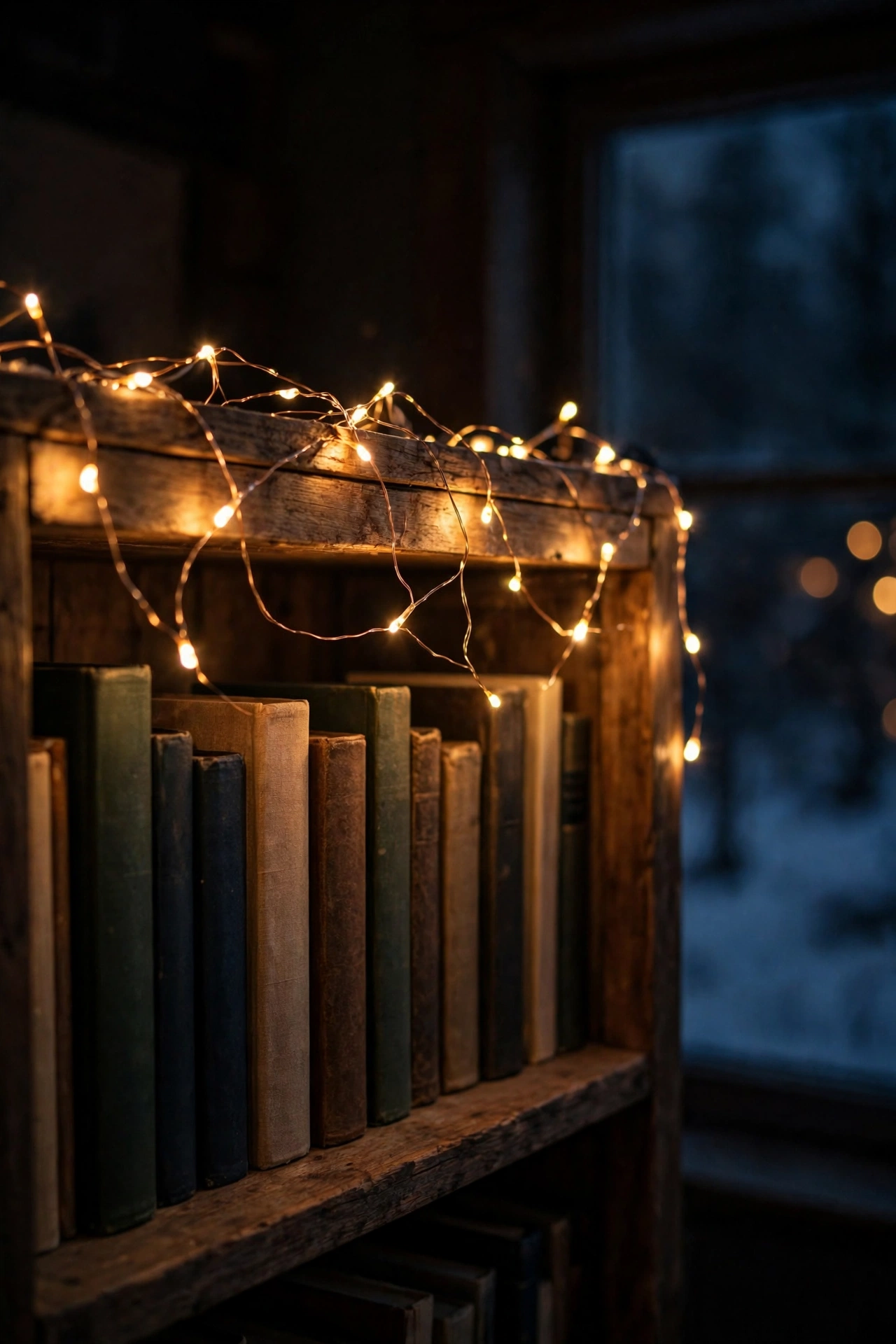
Fairy lights get dismissed as Christmas decoration, but a single well-placed string can carry a whole room through January and February. The trick is to treat them like a lamp, not like a decoration. That means warm white, not multicolour, a copper or dark green wire that disappears against wood and foliage, and a single run instead of five tangled ones.
Drape one string along the top of a bookshelf, behind a row of books, so the light spills out from behind the spines. Or coil one inside a large glass jar on a sideboard, or along the back of a mantel behind the garland. The light should look like it is coming from somewhere, not like it is hanging in mid-air. Battery packs hide easily behind a stack of books or inside a basket, and a timer plug means the lights come on at dusk without anyone touching them.
Placement: Along a shelf top, inside a jar, behind a mantel, or woven through a stair banister.
Colour: Warm white only, with a copper or dark wire that blends into wood.
Texture: Pair the lights with something natural, pine cones, dried branches or a linen runner, so they read as winter, not party.
Swap: If fairy lights feel too young for your room, a single string of larger globe bulbs gives the same glow with a more grown-up shape.
Try this: put one string of warm fairy lights in the darkest corner of the room and leave the ceiling light off. That corner stops being a black hole and becomes the place your eye rests. One string is enough, and if the room starts to look like a grotto, you have used two too many.
4. Candles in Clusters, Not Singles
 Save
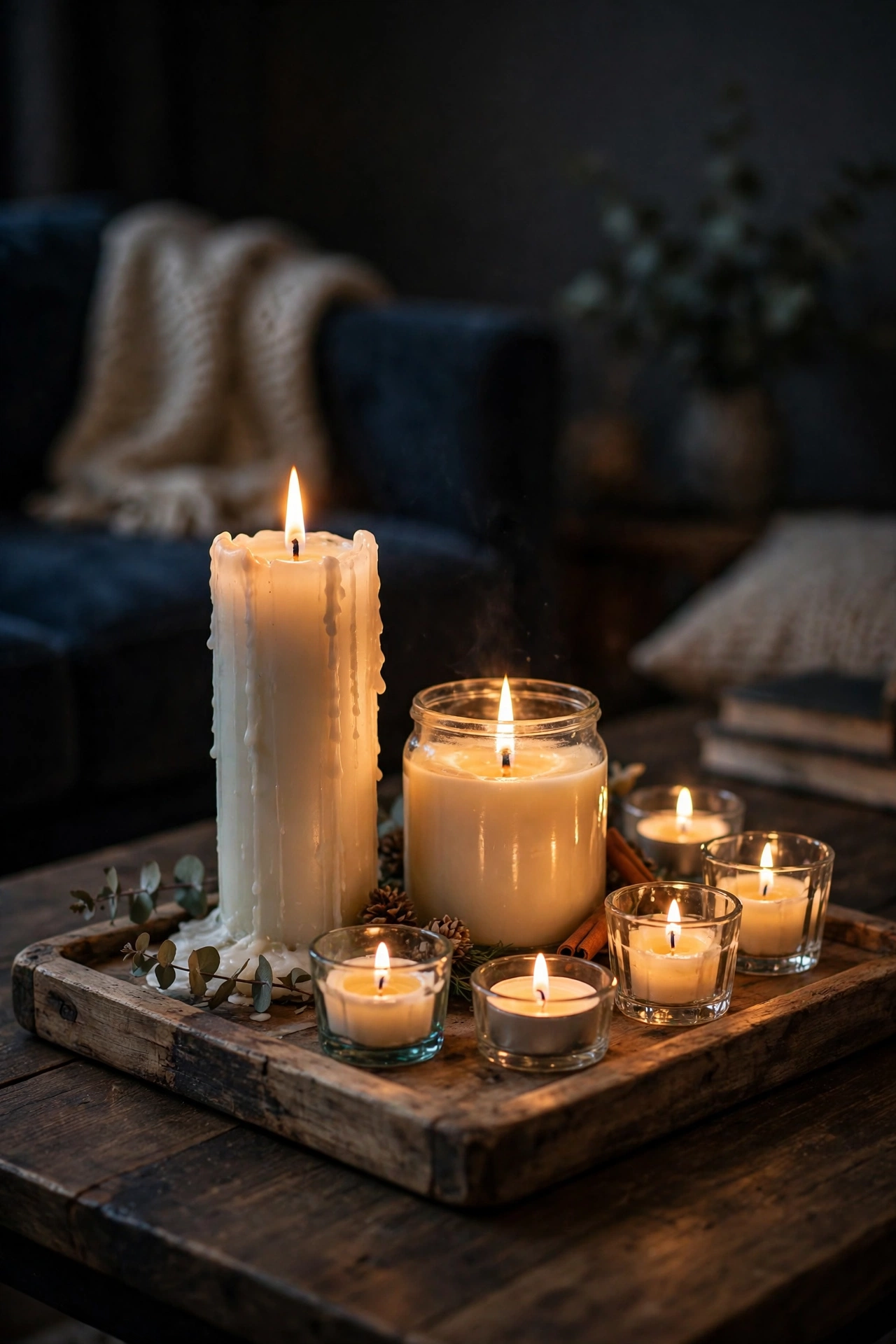
One candle on a coffee table looks lonely. Three or five together, at different heights, look deliberate, and the combined glow is enough to light a whole corner. Grouping is the whole secret of candlelight. A tall pillar, a squat jar candle and a tea light in a glass holder, set on a tray or a slate tile, give you a small fireplace effect on any flat surface.
Safety comes first with real flame, so keep the cluster on a tray with a rim, away from curtains, throws and anything that can fall on it. Never leave candles burning in a room you have left, and trim the wick to about half a centimetre before lighting so the flame stays small and steady. If you have small children or pets, put the cluster on a high shelf or inside a lantern with glass sides, or switch to good-quality flameless candles, which now flicker well enough to fool most people at a glance.
Placement: On a tray on the coffee table, a mantel, or a dining table centrepiece, always on a heat-proof surface.
Colour: Cream, honey and beeswax tones, with glass holders that catch and double the light.
Texture: Mix glass, ceramic and metal holders so the cluster looks collected rather than bought as a set.
Swap: Flameless candles with a timer give you the same evening glow in a house with toddlers or cats, with no worry at all.
Try this: gather every candle in the house onto one tray tonight and light them all at once. The room will feel like a different place, and you will wonder why they were scattered one per room. If candles feel too fussy for your household, a lantern does the same job with the flame safely behind glass.
5. A Reading Nook Lamp with a Real Job
 Save
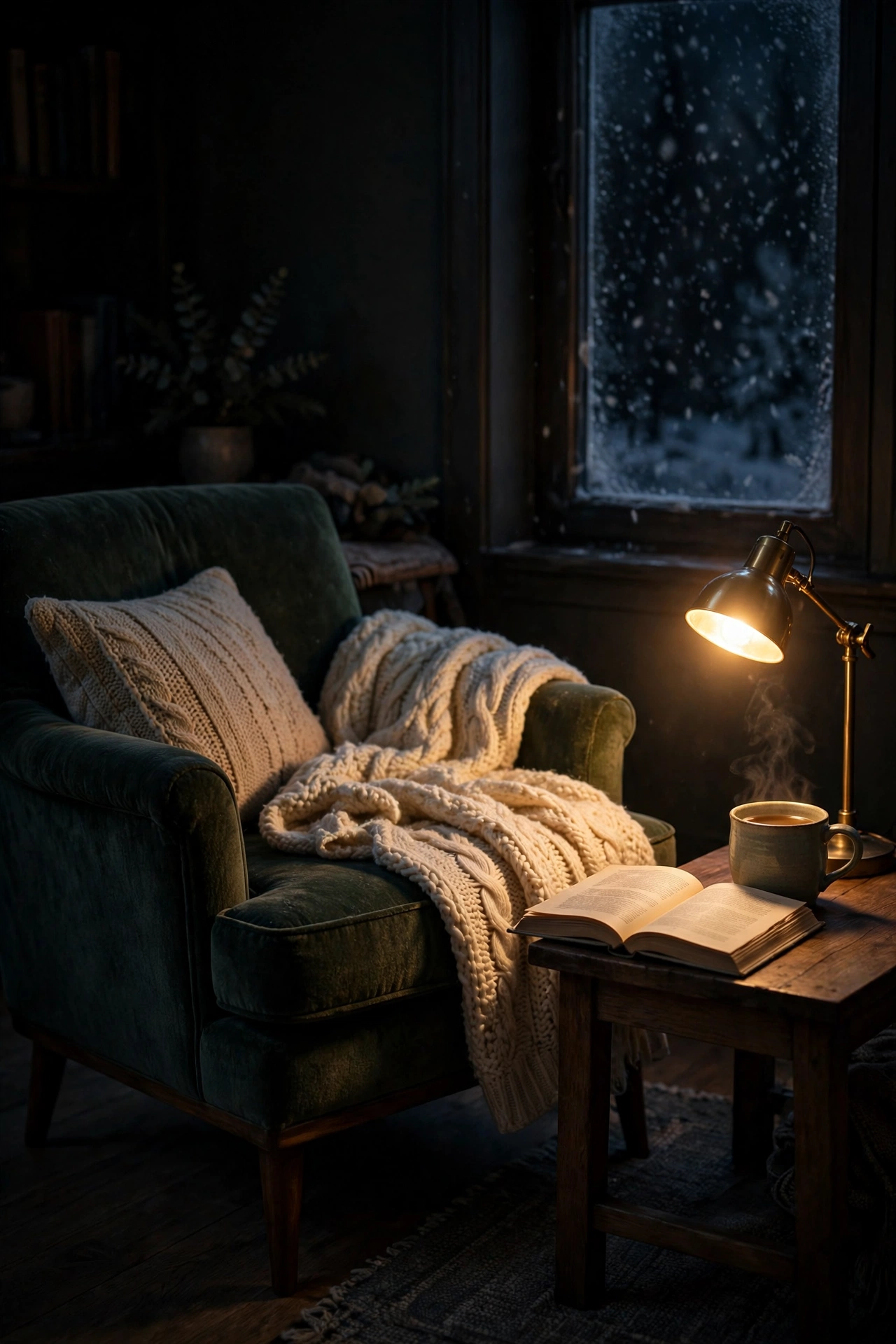
Every home has a chair that gets used for reading, scrolling or just sitting with a cup of tea, and that chair deserves its own lamp. A dedicated reading lamp does two jobs at once. It gives you enough light to read by without lighting the whole room, and it marks that corner as the warm place in the house, the one everyone drifts toward after dinner.
Choose a lamp with an adjustable head or a shade that angles downward, so the light falls on the page and not into your eyes. A swing-arm wall lamp is ideal if floor space is tight, and it keeps the side table free for the book and the mug. Fit it with a warm bulb and, if you can, a dimmer, so you can turn it down once the book is closed and the chair becomes a place to sit and talk instead.
Placement: Just behind and to the side of the reading chair, at shoulder height when seated.
Colour: A warm bulb in a shade that matches the chair, so the nook reads as one piece.
Texture: A knitted throw over the chair arm and a small rug underfoot make the pool of light feel like a room within the room.
Swap: A clip-on book light works for reading, but it will not warm the corner, so pair it with a small plug-in lamp if that is all you have.
Try this: sit in your usual chair tonight and notice where the light actually falls. If you have to tilt the book toward the ceiling light, the lamp is in the wrong place. Move it until the page is lit and the rest of the room stays soft. A good reading corner is the heart of a cosy bedroom too, as our winter bedroom decor ideas prove.
6. Uplighting That Makes Low Ceilings Feel Taller
 Save
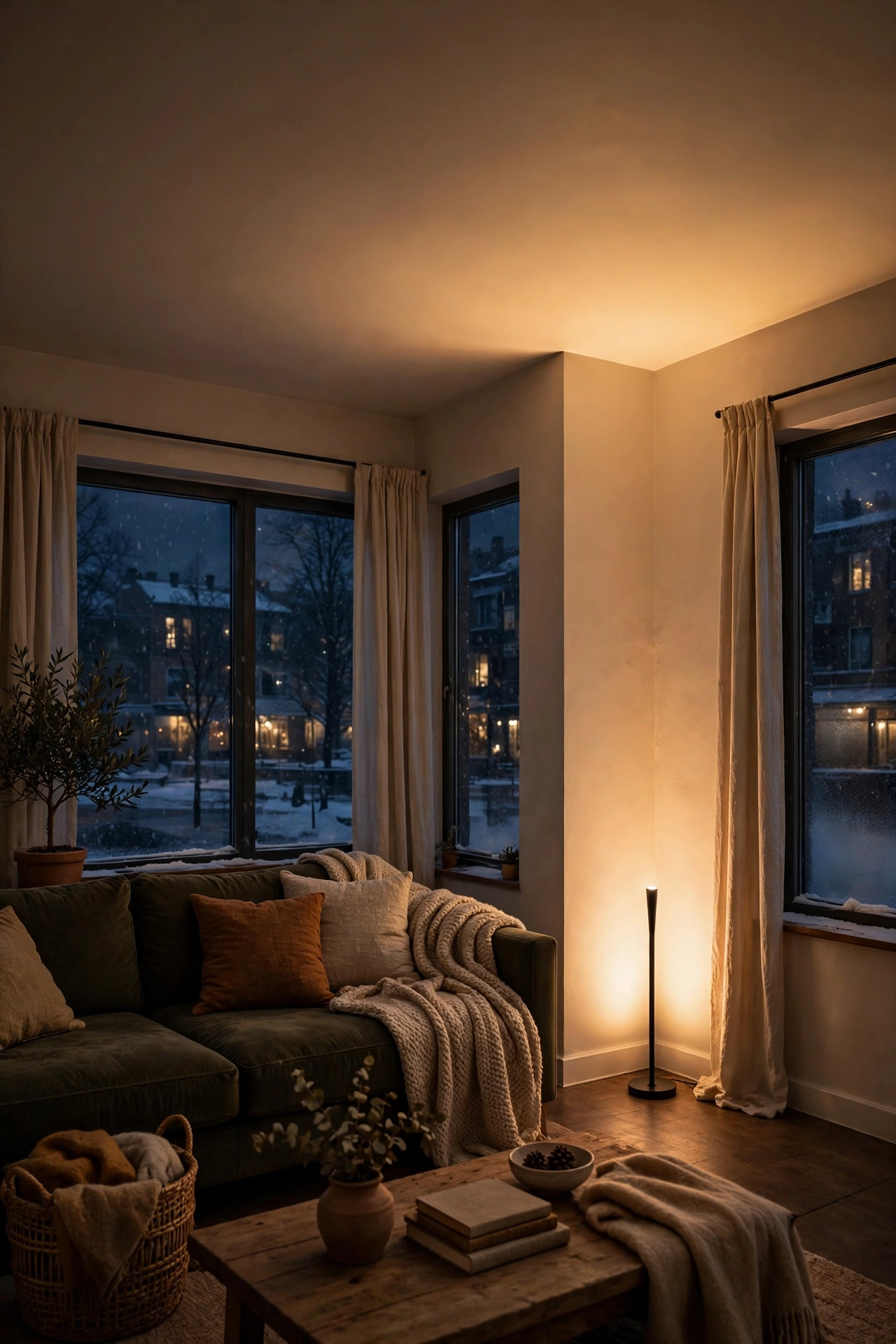
Low ceilings are the hardest part of a dark winter, because a ceiling light hangs right above your head and makes the room feel lower than it is. Uplighting flips that around. A light aimed at the ceiling bounces back down as a soft wash, and the ceiling itself becomes the light source, which makes it feel higher and the room feel bigger.
The simplest version is a floor lamp with an upward-facing shade, often called a torchiere, tucked into a corner. A more flexible version is a small plug-in uplight or a strip of warm LED tape fixed to the top of a tall bookcase or wardrobe, aimed up at the ceiling. Keep it dim, because the point is a gentle glow, not a second ceiling light. One uplight per room is usually enough, and it pairs well with a low table lamp on the other side.
Placement: In a corner behind a tall piece of furniture, or on top of a bookcase aimed at the ceiling.
Colour: Warm white, matched to the other bulbs in the room so the ceiling glow does not clash.
Texture: A plain ceiling takes uplight best, so skip it in rooms with heavy beams and let the beams catch the light instead.
Swap: If you cannot buy an uplight, a table lamp turned to face the wall gives a similar soft bounce for free.
Try this: stand in the middle of the room and look at the ceiling with the uplight on, then with it off. The difference in how tall the room feels is immediate. If the ceiling still feels low, keep the light low and warm everywhere else, and let the uplight do the lifting.
7. Dimmer Switches on Everything You Can
 Save
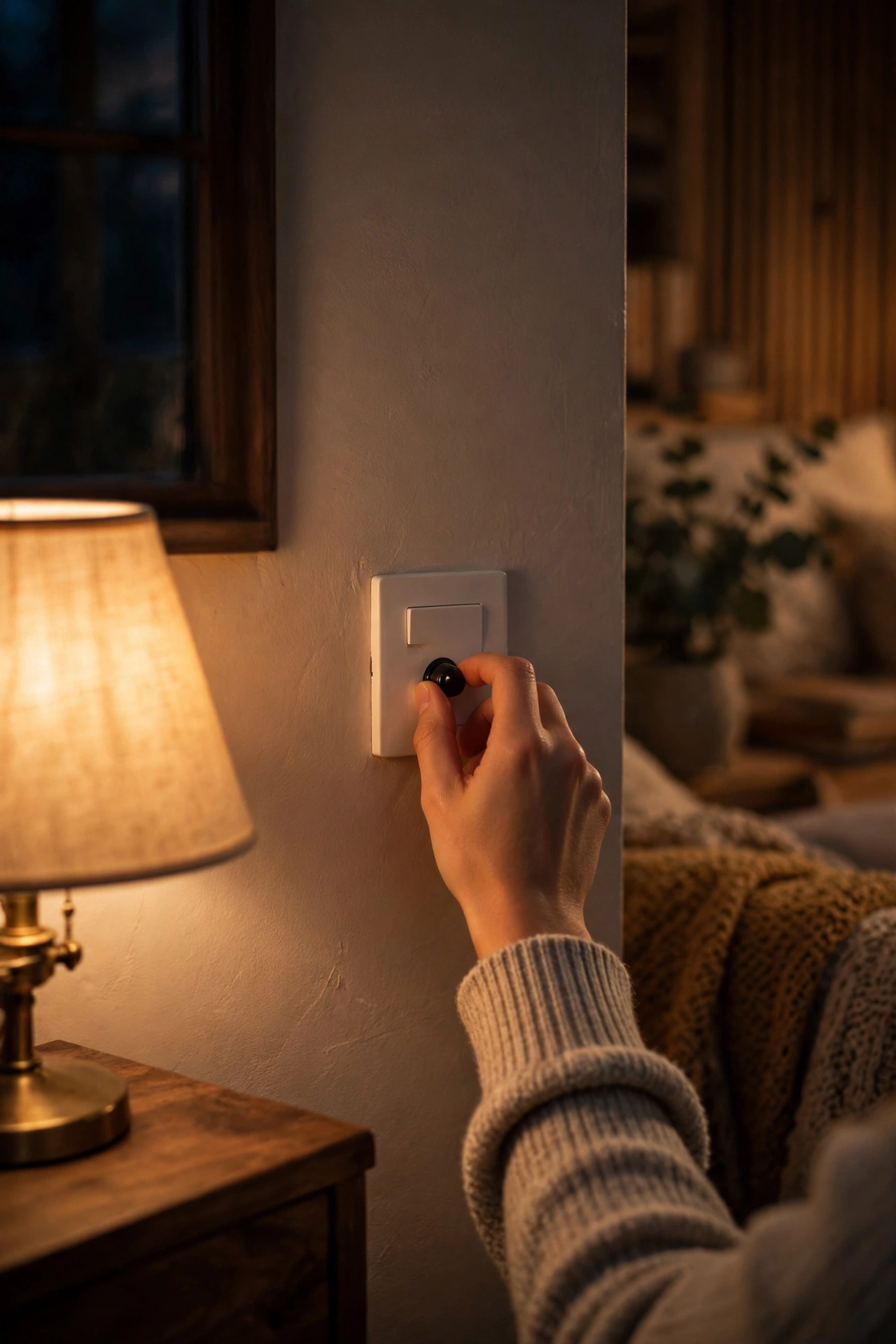
A dimmer is the cheapest way to make one room work for two different evenings. Full brightness for tidying up and finding things, low and golden for sitting down with a film or a book. Without one, every light in the house has exactly one mood, and it is usually the wrong one for seven o’clock on a January night.
Plug-in dimmers exist for table and floor lamps and need no wiring at all, which makes them perfect for rented homes. For ceiling lights, a replacement dimmer switch is a small job for an electrician and worth doing in the room you use most. Check that your bulbs are dimmable before you buy, because not all LED bulbs are, and a non-dimmable bulb on a dimmer will flicker or buzz. Smart bulbs are the other route, and they let you dim and warm the light from your phone, though a simple plug-in dimmer costs far less.
Placement: One dimmer on the main lamp in each room you relax in, plus one on the dining light.
Colour: Dimming a warm bulb makes it warmer, which is exactly the shift you want as the evening goes on.
Texture: A dimmer does not change the shade or the furniture, it just lets the room breathe as the night deepens.
Swap: If a dimmer is not possible, keep two bulbs for the same lamp, a brighter one for daytime and a low-wattage warm one for evenings, and swap them at dusk.
Try this: turn the main lamp down to about a third tonight and sit with it for a while. Most people find a third is brighter than they expected, and half is more than enough. If the room feels too dark at first, give your eyes five minutes to adjust before turning it back up.
8. A Glowing Window That Invites You In
 Save
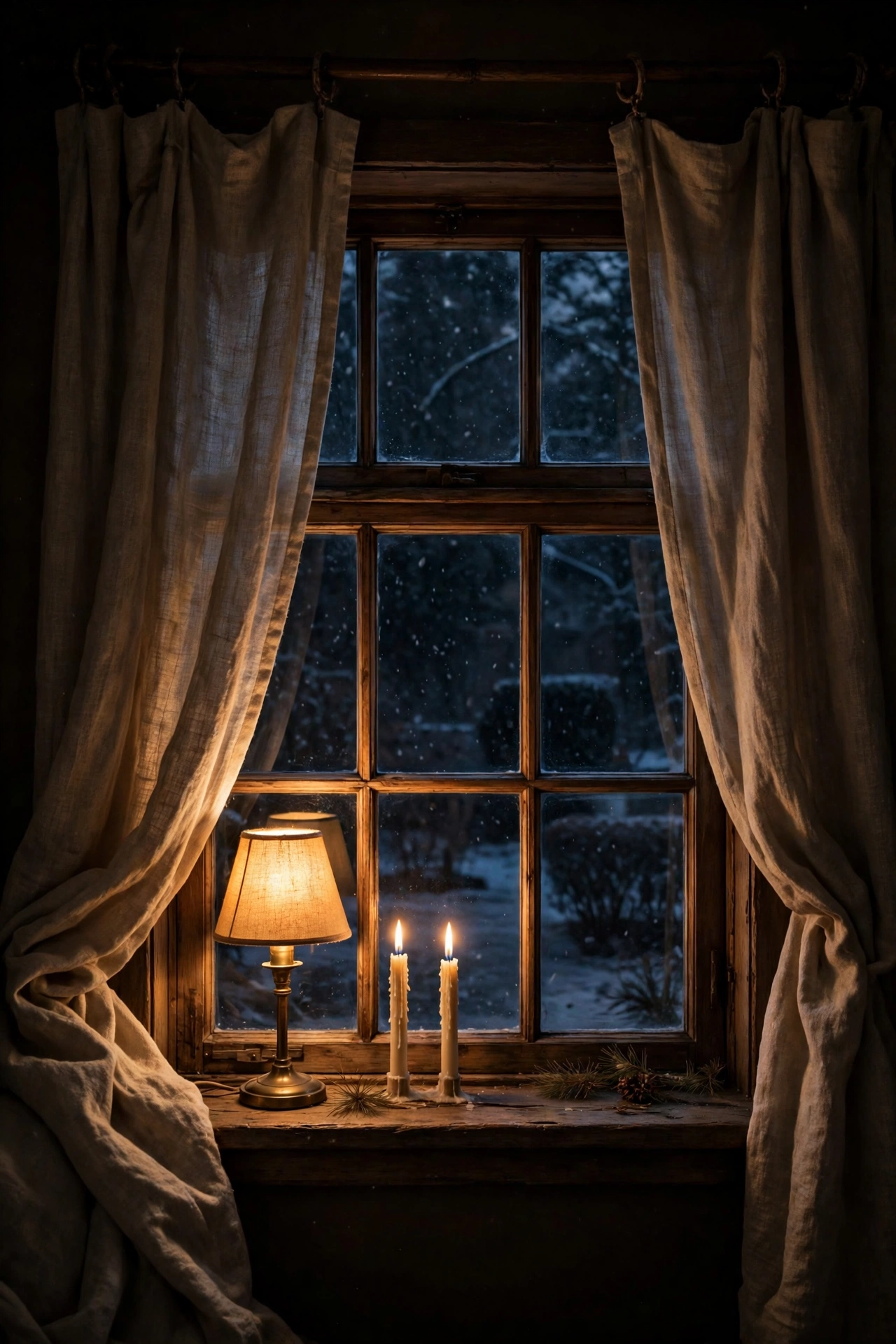
The last idea is about the view from outside as much as the view from inside. A window that glows warm on a dark evening makes the whole house feel welcoming, and it makes the room feel bigger, because your eye travels out to the light instead of stopping at a black pane of glass. Curtains make the difference here. Heavy curtains drawn across a lit window trap the warmth inside and frame the glow, while a bare window with a single bulb behind it just shows a dark garden.
Put a lamp on the windowsill or just inside the window, with a warm bulb and a shade that throws light sideways rather than straight out. A pair of slim candles in the window, real or flameless, is the classic version of this and works in any style of house. From the street it looks like a welcome. From the sofa it means the window is no longer a black rectangle, it is a soft frame of light.
Placement: A lamp or candle pair on the sill, or a floor lamp just inside the window frame.
Colour: Warm white or candlelight, never cool white, which reads as a security light from outside.
Texture: Linen or velvet curtains in a warm tone hold the glow and stop draughts at the same time.
Swap: If the windowsill is too narrow, a small lantern on a stool beside the window gives the same glow without cluttering the sill.
Try this: stand outside your own front door tonight and look at the house. The windows that glow warm are the ones that look like home, and the dark ones look empty even when someone is sitting right inside. One lamp by the window changes what the whole street sees.
Test it first: switch the ceiling light off for one evening and live on lamps alone. If a corner stays dark, that corner needs the next layer, not a brighter bulb. If the room feels flat, change one bulb to 2700K and compare it with the rest before you buy a full set.
Bringing It All Together
None of these ideas needs a new room or a big budget. The whole point of ambient lighting is that it works with what you already own, a lamp moved here, a bulb swapped there, a few candles gathered onto a tray. Start with the bulb temperature, because it costs the least and changes the most, then add one layer a week until the room has three sources of light at three different heights.
Winter evenings are long, and the dark arrives early whether you are ready or not. A room lit in warm layers does not fight the dark, it makes a shelter inside it, and that is what makes people stay in the room instead of drifting off to bed at eight o’clock. Light the lamps, turn the ceiling light off, and let the evening feel like an evening.
Frequently Asked Questions
What is the best bulb colour temperature for a cosy living room?
2700K warm white is the safest choice for any room you relax in. It gives the golden glow of old filament bulbs and suits wood, cream and earthy colours. Cooler bulbs above 3000K read as clinical in a living room and undo the work of every lamp and candle around them.
How many lamps does a living room need in winter?
Three light sources at different heights is a good rule, for example a floor lamp, a table lamp and a candle cluster or fairy lights. One source leaves hard shadows, two can leave a dark corner, and three gives your eye somewhere warm to rest wherever you sit.
Are fairy lights only for Christmas?
No, warm white fairy lights work all winter as long as you treat them like a lamp rather than a decoration. Use one string, hide the wire against wood or foliage, and keep it to a single shelf, jar or mantel. Multicolour lights and tangled strings are what make them look seasonal.
Can I use dimmer switches in a rented home?
Yes, plug-in dimmers fit between a lamp and its socket and need no wiring, so they are ideal for rented homes. For ceiling lights, ask your landlord before changing a wall switch, and use a smart bulb instead if you would rather not touch the wiring at all.
Is candlelight safe with children or pets in the house?
Real candles are safe only on a stable, heat-proof tray away from curtains and out of reach, and never left burning in an empty room. With small children or pets, flameless candles or a glass lantern give you the same glow with no open flame to worry about, and a timer means they switch themselves off.
The Combination to Keep
The combination: warm 2700K bulbs in every lamp you sit near + three light sources at three heights + one candle cluster on a tray + a dimmer on the main lamp. Start with the bulbs tonight, add one layer a week, and the ceiling light can stay off all winter.