Most St Patrick’s Day decorating goes wrong in the same way. A few bright green accessories arrive, then a few more, and by March 17 the living room looks like a party supply aisle exploded. The intention was festive. The result feels loud, temporary, and a little embarrassing once guests leave.
The frustration is real because the holiday itself has such good raw material. Deep greens, natural wood, candlelight, fresh plants, and a touch of gold are genuinely beautiful together. They belong in a grown-up home. The problem is never the colour green. It is the shade, the quantity, and the plastic.
This guide takes a calmer route. These eight St Patrick’s Day decor ideas use green the way a good room uses any strong colour: as an accent with breathing space around it, grounded by neutrals and real materials. Nothing here needs to come down in a panic on March 18. Most of it can stay up into spring.
Quick Tips Before You Start
- Pick one green and repeat it: deep forest or soft sage, not five competing shades.
- Let plants do half the work: real greenery reads festive without a single novelty item.
- Keep gold to three small touches per room, maximum.
- Swap textiles first: cushions and throws change a room faster than any wall decor.
- Buy nothing plastic and shiny if you can help it: matte, woven, and wooden finishes age better.
1. A Green Entryway That Welcomes, Not Shouts
 Save
First impressions set the tone for the whole house, and the entryway is where restraint pays off most. One thoughtful arrangement at the door says “we celebrate this” far better than a porch covered in banners.
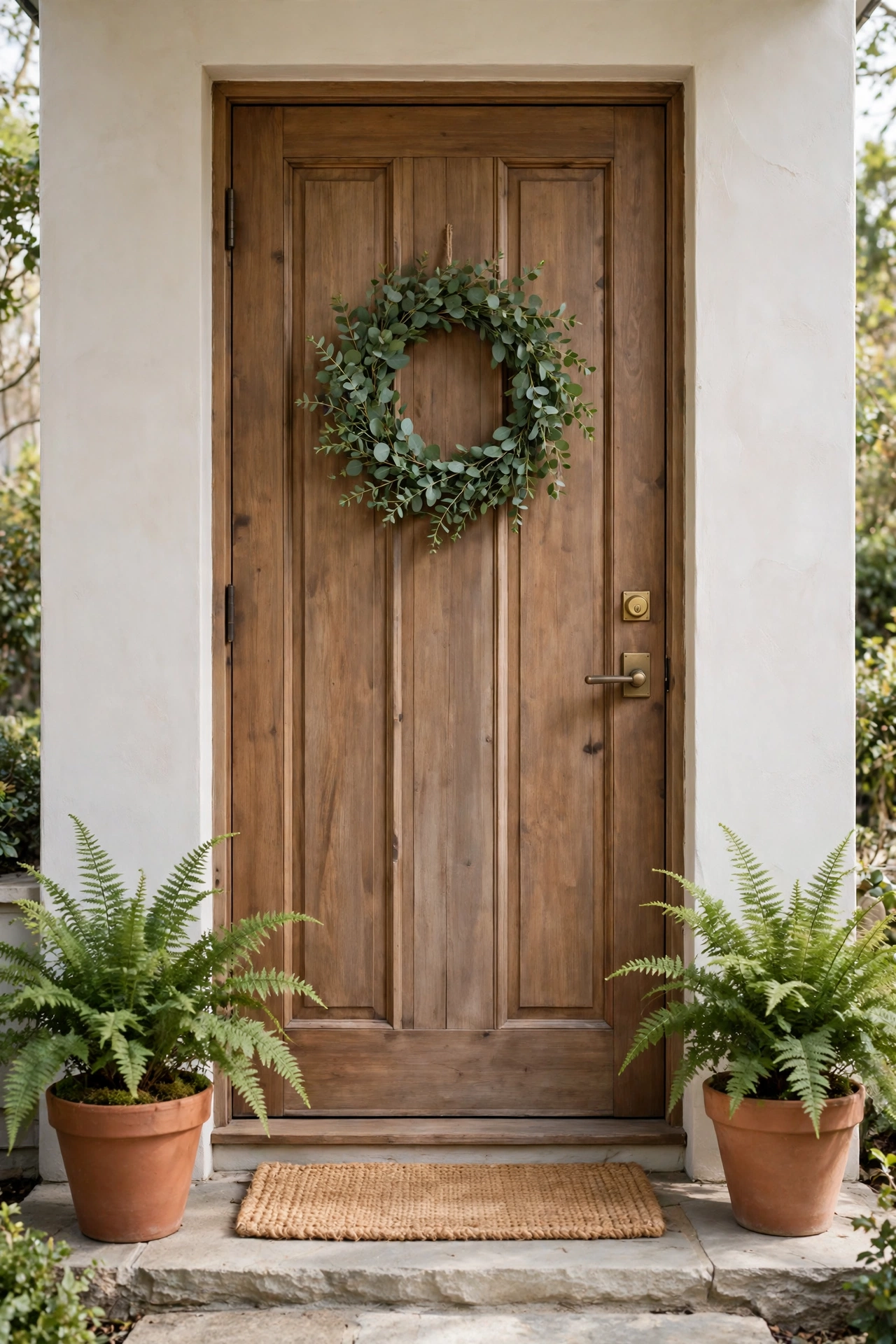
Start with a simple wreath. A plain eucalyptus or boxwood wreath works beautifully on its own, and a narrow dark green ribbon tied at the top is all the holiday signalling it needs. Skip the glitter shamrocks glued to the front. If your door is already painted a strong colour, keep the wreath small so the two do not compete.
Next, flank the door with plants rather than ornaments. Two potted ferns, a pair of small olive trees in terracotta pots, or even one generous trailing plant on a step stool all read as spring as much as St Patrick’s Day. That is the point: the display still looks right on March 20.
Finish with one small, practical swap. A dark green doormat or a woven basket by the door for shoes keeps the theme grounded in everyday use. A welcoming front porch works the same way in any season: layers of natural texture, one clear focal point, and nothing that blocks the path.
Placement: wreath at eye level, plants at the sides, mat centred on the door.
Swap: trade the ribbon for a plain linen bow after the holiday and the wreath stays up all spring.
2. Living Green Plants as the Main Decoration
 Save
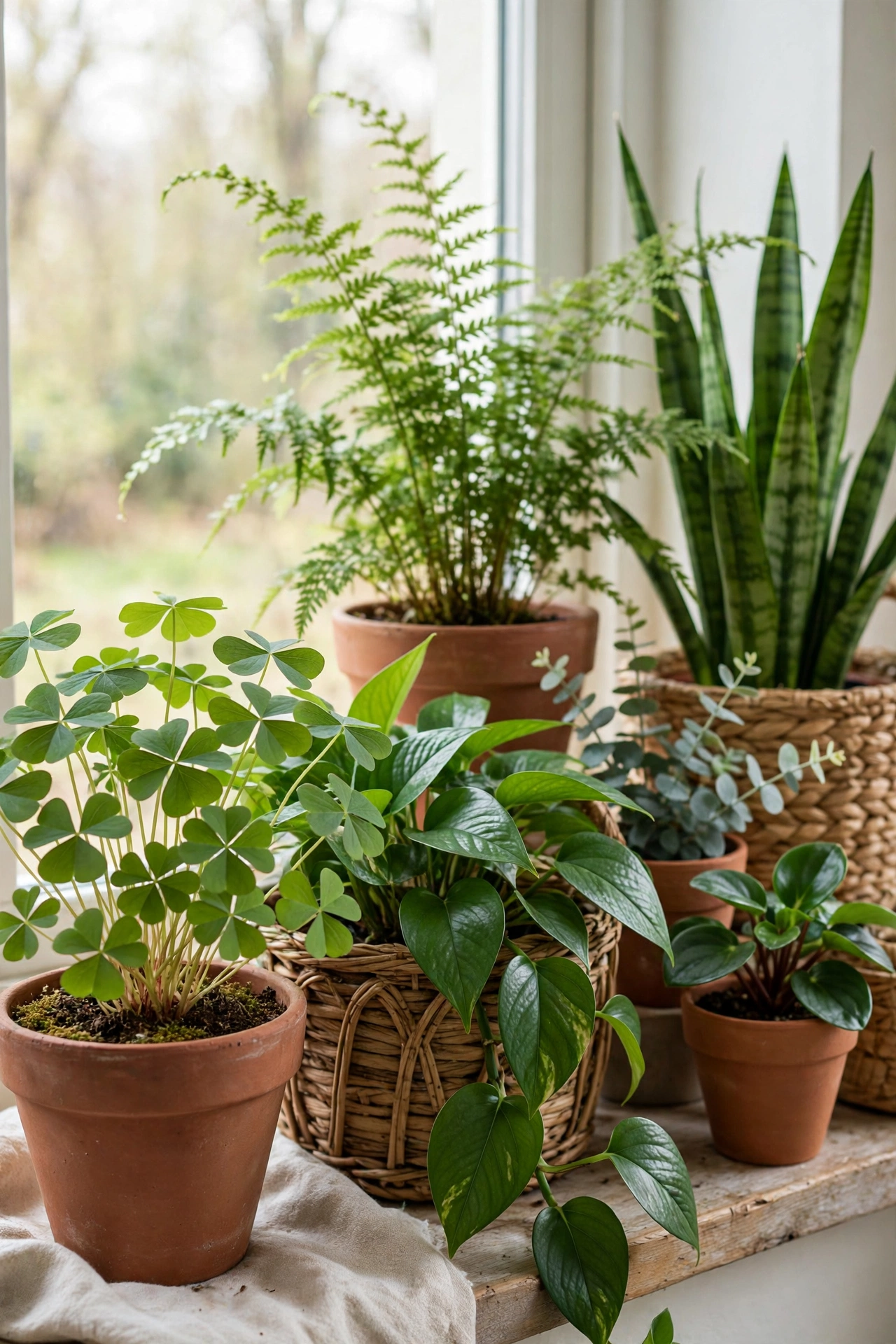
If you buy one thing for St Patrick’s Day, make it a plant. Nothing else delivers the colour so honestly, and unlike a novelty decoration, it keeps giving long after the day itself.
Group plants in odd numbers on a console, a sideboard, or a windowsill. Three plants of different heights look intentional where three identical ones look like a display. Mix leaf shapes too: a trailing pothos next to a structured fiddle-leaf fig cutting or a fern softens the arrangement and keeps the eye moving.
Choose pots with care, because the pot is half the styling. Terracotta, matte ceramic, and woven baskets all suit the earthy mood of the holiday. Avoid shiny metallic pots here; you will use gold elsewhere, and the two metallic finishes fight each other when they share a shelf.
Water and wipe the leaves before guests arrive. Dusty leaves dull the green and undo the whole effect. A plant that looks cared for makes the whole room feel cared for, which is really the trick behind most good seasonal decorating. For more ideas on letting foliage carry a room, see our guide to greenery-filled rooms and how plant groupings change the feel of a space.
Placement: a trio on the brightest surface you have, tallest at the back.
Colour: stick to true leaf greens and let the pots supply the warmth.
3. A Table Setting in Deep Greens and Natural Wood
 Save
The St Patrick’s Day table is where people overdo it most, usually with themed plates and printed napkins that can never be used again. A calmer table starts with what you already own and adds green in layers.
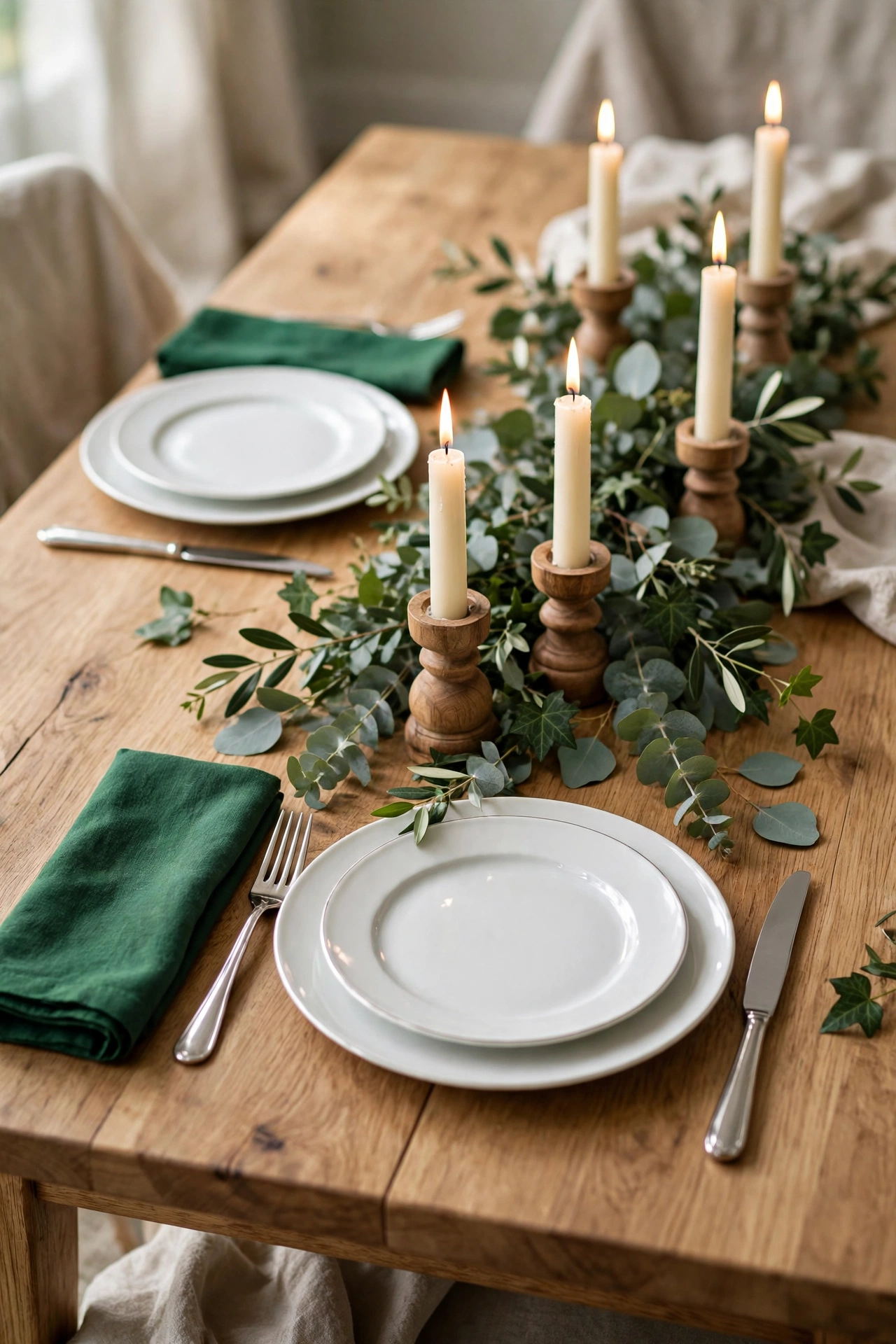
Lay a natural linen or cotton runner down the centre of a bare wood table. If you have no runner, a length of plain muslin or even a folded throw works. The texture matters more than the formality. On top, place a low arrangement of greenery: eucalyptus stems, olive branches, or a few potted herbs in small jars. Keep it low enough that guests can see each other across it.
For place settings, use white or cream plates and let the green come from the napkins and the glassware. Dark green linen napkins folded simply look elegant against white plates, and a single sprig of rosemary or eucalyptus tucked into each napkin ring adds scent as well as colour. If you collect green glassware, this is its moment, but one green glass per setting is enough.
Candles finish the table. Plain ivory tapers in wooden or brass holders give the warm light that makes green tones look rich instead of flat. A forest-green table built on the same principles shows how far wood, linen, and candlelight can carry a seasonal meal without a single themed purchase.
Placement: greenery runner low and centred, candles in clusters of three.
Texture: linen, wood, and glass only; skip anything printed or glittery.
4. Gold Accents, Used Sparingly
 Save
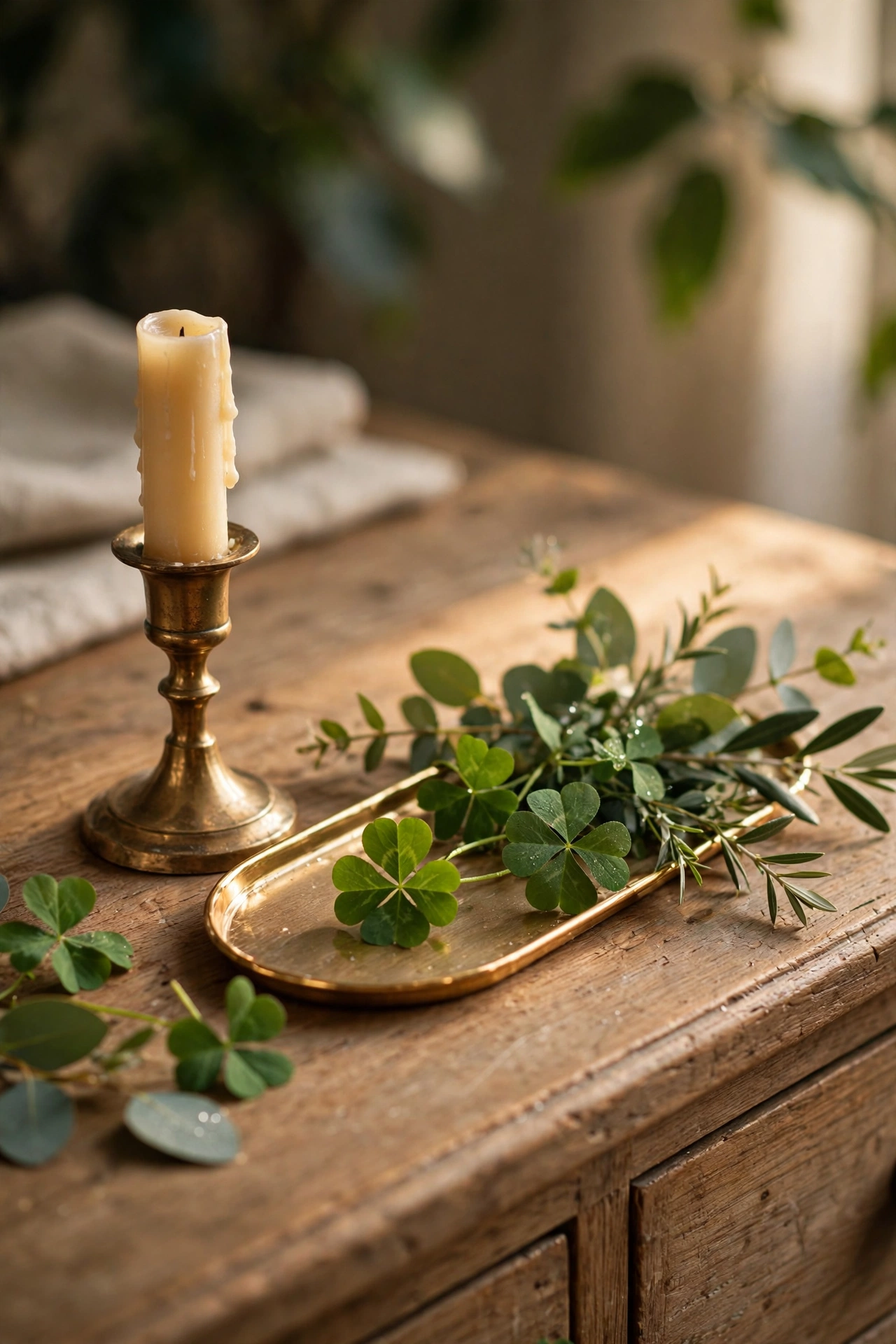
Gold is the accent that makes green feel celebratory instead of merely leafy. It is also the accent that ruins a room fastest when it multiplies. The rule is simple: three small gold touches per room, and no more.
Good candidates are things you already own. A brass candlestick, a small gold-framed photo, a thin gold tray under a plant, or a set of brass cutlery laid out for dinner. Each one catches light and draws the eye briefly. Together they create a thread through the room. Add a fourth and a fifth, and the thread becomes a tangle.
Keep gold away from green in equal measure. Gold should be the minority partner, roughly one part gold to five parts green and neutral. That ratio keeps the room feeling like a home that happens to be celebrating, not a themed set. If you are unsure whether a piece counts, hold it up against the room: if your eye lands on it first and stays there, it is too big or too shiny for this scheme.
Test it first: set out your three gold pieces, leave the room for five minutes, then walk back in and notice what your eye finds first. If a gold piece wins every time, remove it or swap it for a smaller one. If your eye moves across plants, wood, and candlelight before landing on gold, the balance is right. Try the same check in the evening with candles lit, since gold catches far more light after dark.
Brass is often a better choice than bright gold paint. Its softer, warmer tone sits naturally beside wood and linen, and it does not demand attention. Our guide to warm brass accents has more ideas for using metallics without letting them take over a room.
Placement: one gold piece per surface, never two side by side.
Swap: swap brass candlesticks for wooden ones after the holiday if the shine feels seasonal.
5. Textile Swaps: Throws, Cushions, and a Runner
 Save
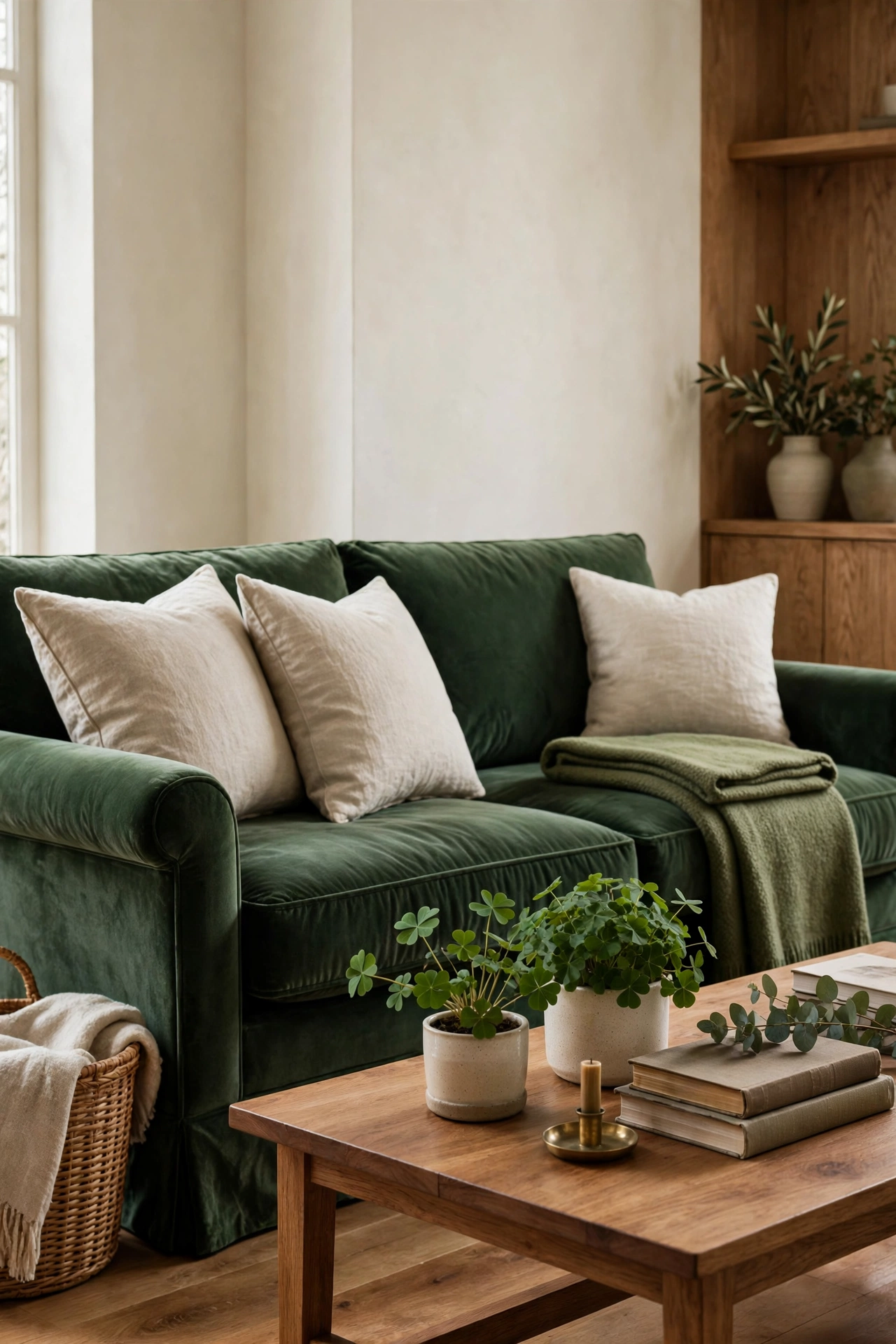
Textiles are the fastest, cheapest way to change a room for a holiday, and they are fully reversible, which makes them perfect for a one-day celebration. You are not committing to green walls. You are swapping a few soft layers.
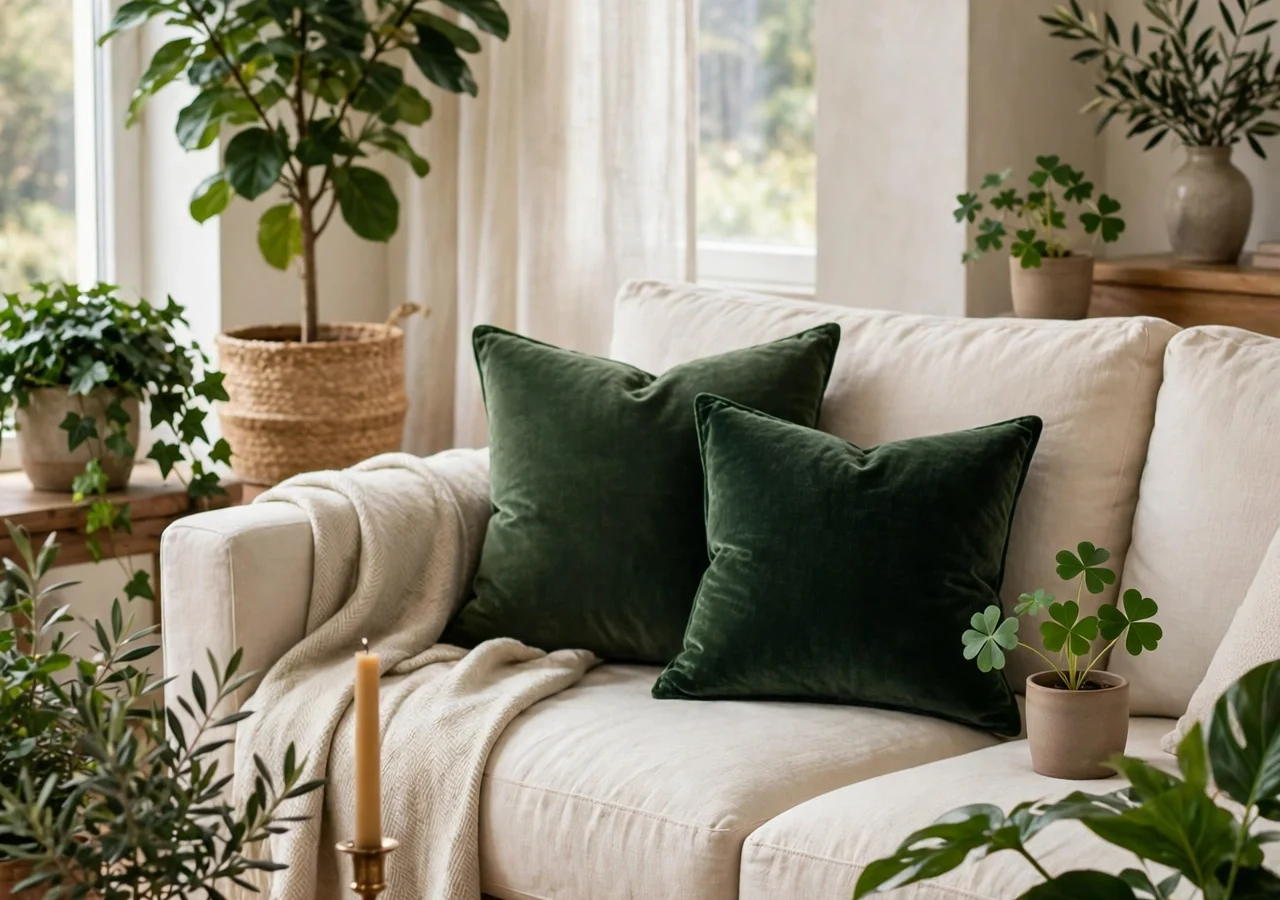
Start with the sofa. Replace two cushion covers with deep green ones in different textures: one velvet, one linen or wool. The contrast between the two fabrics keeps the colour from looking flat, and the rest of your cushions stay neutral so the green has space around it. Drape a green or moss-toned throw over one arm, folded neatly rather than tossed.
In the bedroom, the same trick works with a single throw across the foot of the bed and one green cushion among the usual set. The bedroom does not need a full holiday treatment. One deliberate touch reads as thoughtful; a full set reads as a costume.
Choose shades that suit your existing furniture. Forest green flatters warm woods and cream walls. Sage green suits grey sofas and pale rooms. Olive green works with leather and dark wood. Buy the shade that already belongs in your home, and the swap will look like it was always there.
| Your room already has | Pick this green | Why it works |
|---|---|---|
| Warm wood and cream walls | Forest green | Deep tone sits calmly against warm neutrals |
| Grey sofa and pale walls | Sage green | Soft tone keeps a cool room from feeling cold |
| Leather and dark wood | Olive green | Earthy tone matches rich, aged surfaces |
| White walls and light wood | Moss green | Muted tone adds depth without darkening a bright room |
Colour: one green shade across all textiles, in two different textures.
Tip: fold throws instead of draping them loosely; a tidy fold looks intentional, a heap looks accidental.
6. A Candlelit Mantel or Shelf Display
 Save
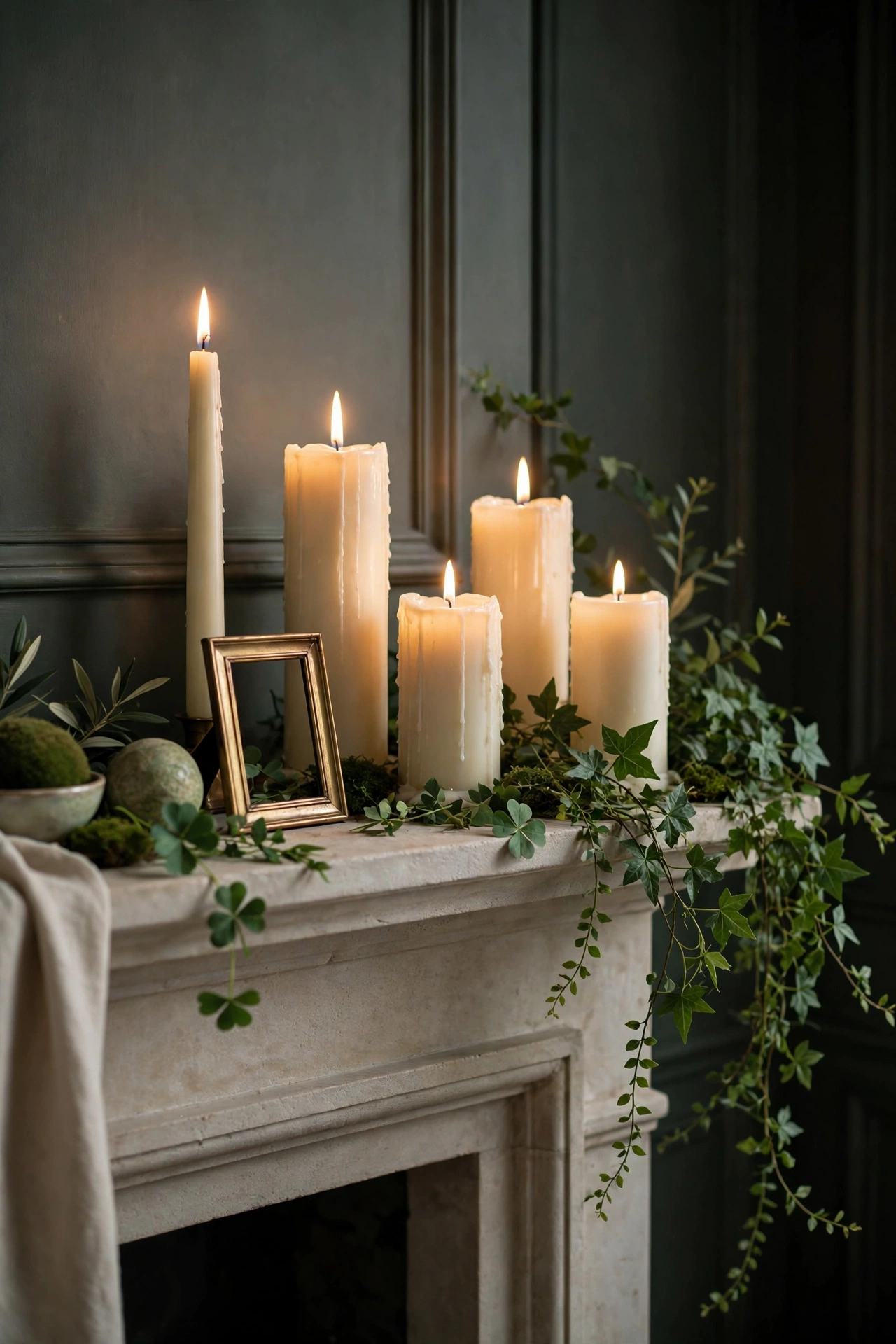
A mantel or a long shelf is the natural stage for a small St Patrick’s Day scene, and candlelight is what makes it feel grown-up. The trick is to build the display around height and shadow rather than around themed objects.
Place three candles of different heights at one end of the mantel. Ivory or beeswax tones work best; green candles often look waxy and cheap when lit. Next to them, set a small stack of books with a trailing plant on top, or a simple wooden bowl holding a few moss balls. Add one gold piece, such as a small brass frame, at the far end to balance the candles.
Leave empty space between the groupings. A mantel crammed edge to edge reads as clutter, while the same objects with breathing room read as a display. Step back and squint: you should see two or three distinct shapes, not one long green line.
If you have no mantel, a console table or the top of a bookcase works the same way. The principles do not change with the surface. Height variation, breathing room, and candlelight do the work, and the green comes from the plant and the books rather than from anything bought for the day.
Placement: candles grouped at one end, plant at the other, empty space in the middle.
Tip: light the candles only in the evening; daylight shows the arrangement, candlelight shows it off.
7. Kitchen Touches: Herbs, Glassware, and Linen
 Save
The kitchen deserves a little attention too, since it is where most St Patrick’s Day gatherings actually happen. The good news is that a working kitchen already contains most of what you need.
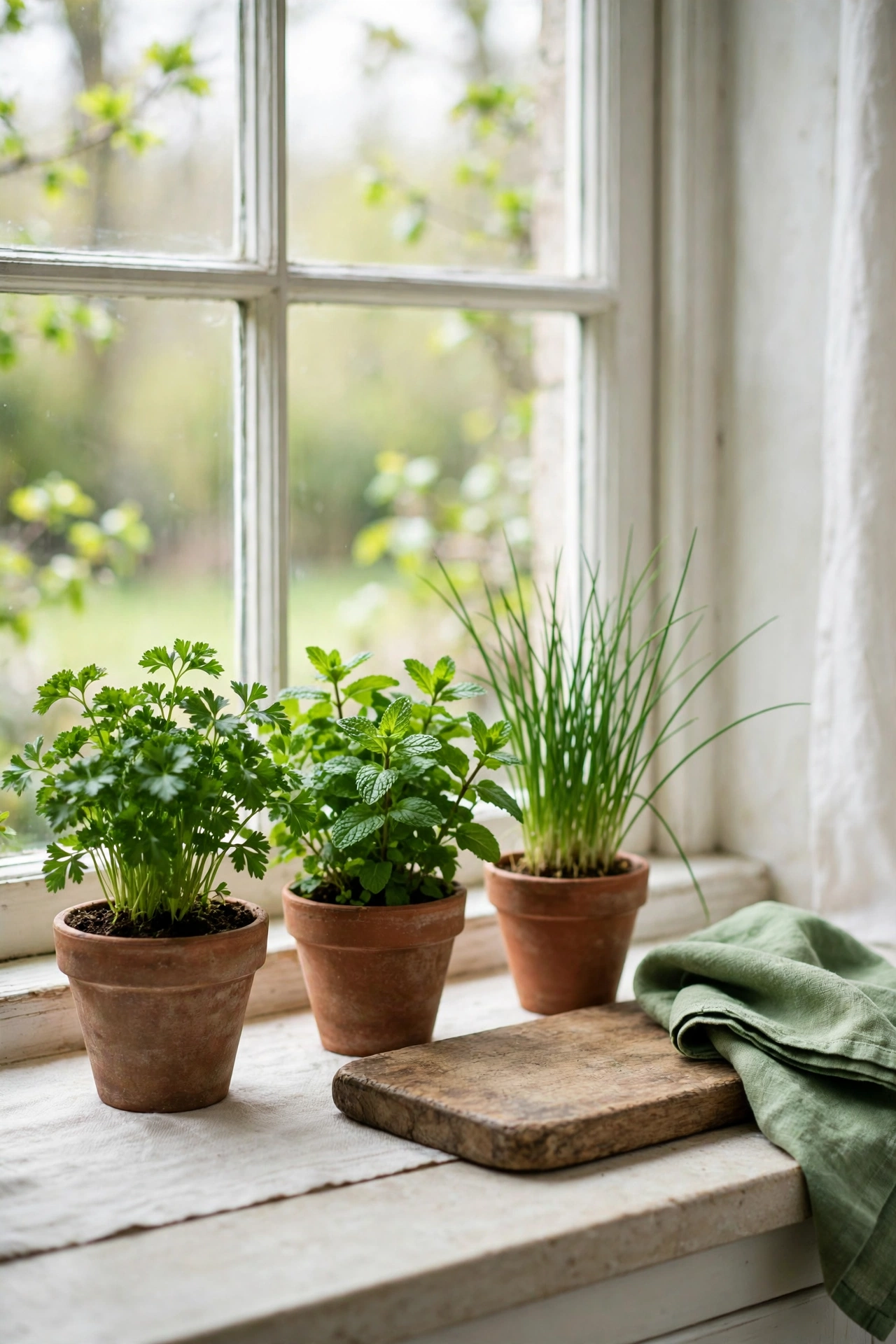
Start with herbs. A pot of parsley, chives, or mint on the windowsill is both decoration and ingredient, and a small wooden board with a few herb pots becomes a centrepiece for the counter. Tie a sprig of rosemary to a jar of honey or a bottle of olive oil with plain twine for a detail that guests notice when they reach for it.
Swap the tea towels for dark green or natural linen ones, and fold a green linen napkin over the bread basket. These are tiny changes, but kitchens are small rooms, so tiny changes register. If you have open shelving, turn one green glass or jug to face outward and let it catch the light.
Keep counters clear otherwise. A kitchen decorated for a holiday should still function as a kitchen. Clear the baking trays, wipe the surfaces, and let the herbs and linen do the talking. A tidy kitchen with two green touches feels more festive than a cluttered one with twenty.
Placement: herbs by the brightest window, linen on the towel rail and bread basket.
Swap: herb pots move to the garden or balcony once spring truly arrives.
8. A Handmade Garland for the Afternoon
 Save
If you enjoy making things, a handmade garland is the one St Patrick’s Day project worth your time. It costs little, it looks better than anything mass-produced, and making it is half the fun.
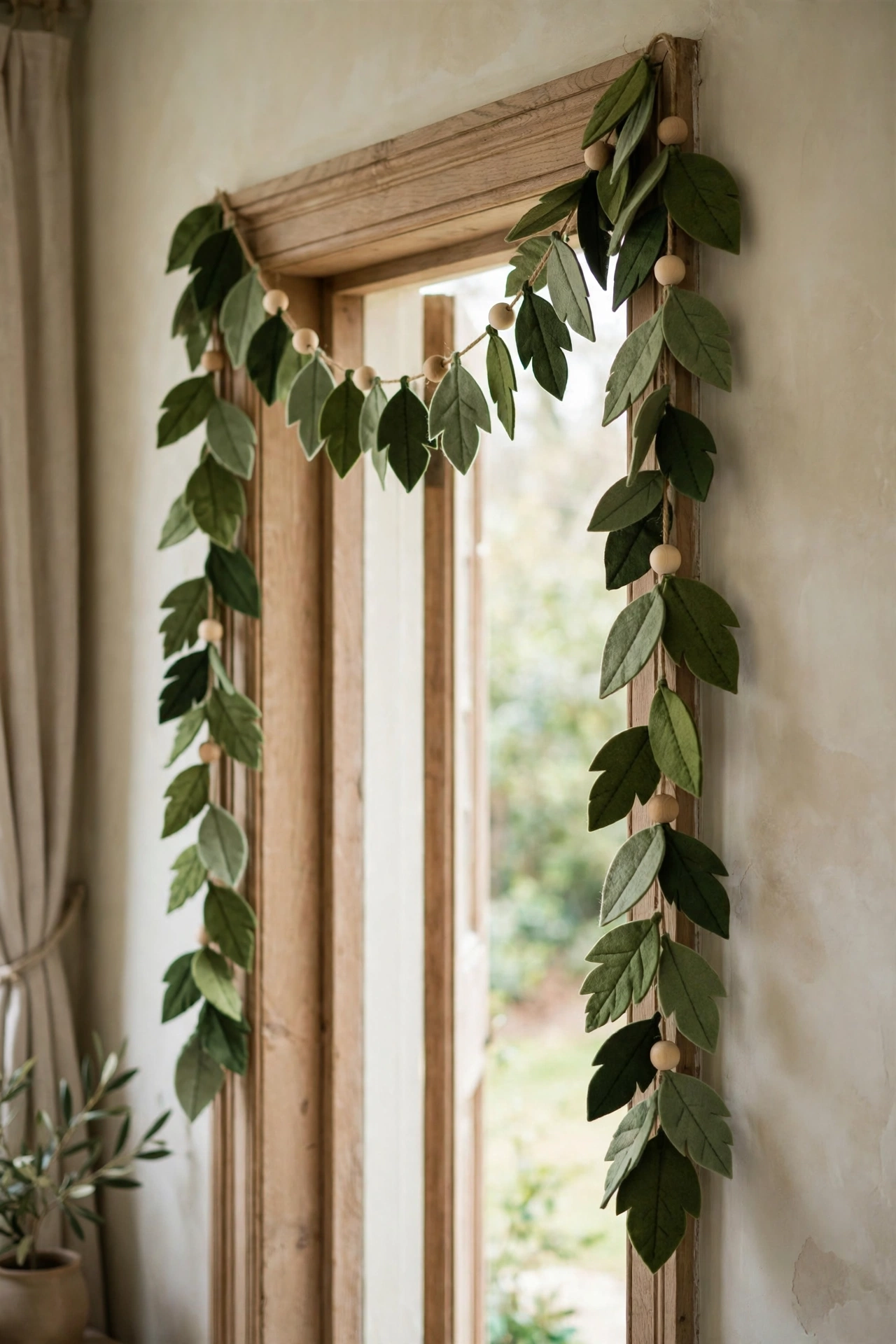
Cut leaf shapes from felt, fabric scraps, or sturdy green card in two or three shades of green. String them on twine with a knot or a small wooden bead between each leaf to keep them spaced. Hang the garland along a doorway, a mantel, or a staircase rail, and let it dip naturally in the middle rather than pulling it taut. A slight sag looks handmade in the good way; a tight line looks tense.
Mix in a few natural elements if you like: dried orange slices, small pinecones, or sprigs of eucalyptus tied at intervals. These additions keep the garland from looking like a classroom craft and tie it to the rest of your natural, earthy scheme.
Make it with whoever is around. A garland assembled at the kitchen table with family or friends becomes part of the celebration itself, not just decoration for it. Store it flat in tissue paper afterwards, and it will last for years, which is more than can be said for most holiday purchases.
Placement: doorways and mantels suit garlands best; keep them high enough not to catch hair or hats.
Tip: two shades of green plus one natural material beats five shades of green alone.
The combination: one deep green repeated in plants and textiles, warm wood and linen underneath, and three small gold touches and no more, and the whole scheme stays up happily into spring.
Bringing It All Together
St Patrick’s Day decorating does not need to be loud to be joyful. Pick one deep green, ground it in wood and linen, let real plants carry the colour, and use gold the way you would use jewellery: a little, well placed, never all at once. Choose the two or three ideas here that suit your home and skip the rest. A room with three thoughtful touches always beats a room with thirty thoughtless ones, and when March 18 arrives, most of what you put up can simply stay where it is.
Frequently Asked Questions
Do I have to use bright green for St Patrick’s Day decor?
No, and you probably should not. Deep forest, sage, olive, and moss greens all read as St Patrick’s Day when they are grouped together, and they suit real rooms far better than neon or lime shades. Bright green works only as the tiniest accent, if at all.
How early should I decorate for St Patrick’s Day?
A week before is plenty for a one-day holiday. Textile swaps and plants can go up earlier since they suit spring generally, but save the garland and table setting for the weekend before so the house does not feel themed for a fortnight.
How can I decorate without shamrocks and leprechauns?
Lean on the natural symbols of Ireland instead of the novelty ones: green landscapes, plants, wood, linen, and candlelight. A room full of plants and deep greens feels Irish in spirit without a single printed shamrock, and it photographs far better too.
Can I reuse St Patrick’s Day decor after March 17?
Most of the ideas in this guide are designed for exactly that. Plants, green cushions, linen napkins, and a eucalyptus wreath all belong in a spring home. Only the garland needs storing, and even that keeps well for next year.
What colours pair best with green for this holiday?
Cream, natural wood, and warm brass are the safest partners. White keeps green fresh, wood keeps it grounded, and brass adds the celebratory note. Avoid pairing green with orange or purple unless you are deliberately going for a bold, playful look.